Tag Archives: garden recipe

Fall Herbs

Paula taught a class at our garden last week about fall herbs.  She gave us the name of a new sage: New’re Year’re Sage and gave it the thumbs up for taste.  We will all have to look at Dallas garden centers to try to find it.

She reminded us to plant Cutting Celery, which smells and tastes like celery.  Chop up the slender stalks and leaves of Cutting Celery for tuna and  in any dish that call for celery.  I’ll bet she uses it in Bloody Mary’s too!

Fall Herbs For Texas Gardens

We talked about Bay which Paula uses fresh in her recipes and doubles the amount of leaves.  For instance using 4 when her soup recipe says 2.  When purchasing Bay, you want to make sure you are buying the culinary version.

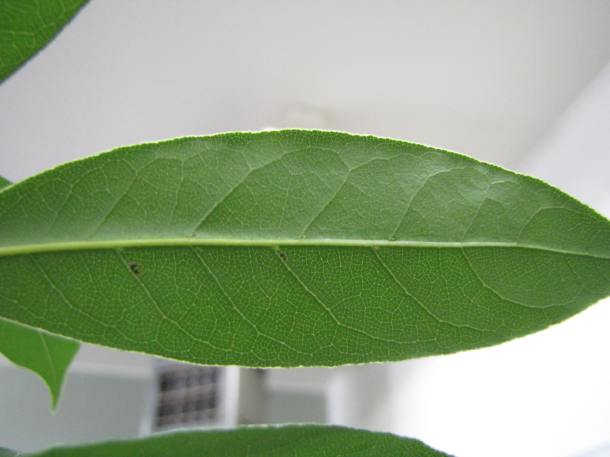
Bay Leaf

Paula says hold a leaf up to the light; if you can see the veins of the leaf, you have the correct Bay.

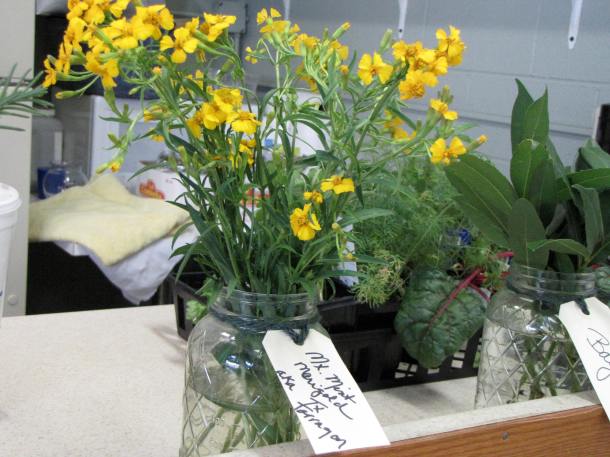
Mexican Mint Marigold

 Texans use the licorice flavored leaves of Mexican Mint Marigold as a Tarragon substitute and the flowers as an edible garnish.  It is blooming now in our Demonstration Garden.

It’s not too late to harvest Basil to make a few batches of Basil Butter for the holidays or Basil Ice Cubes.  Use your Basil now because it will be gone after the first frost.  
 
Basil Ice Cubes: Wash and dry your Basil and remove the leaves from the stems. Discard the stems. Finely chop the leaves. Fill an ice-cube tray with chopped Basil, scooping one tablespoon of the Basil into each cube. Fill the cubes with vegetable or chicken broth. When they freeze, pop them out of your tray and into a Ziploc bag in your freezer.  Yum-Basil all winter to be added to soups and vegetables!
 
We can also rely on Rosemary, Hot and Spicy Oregano in salsa and enchiladas, Lemon Verbena, and Italian Parsley to perk up our fall menus.

Ann

Pomegranate Jelly

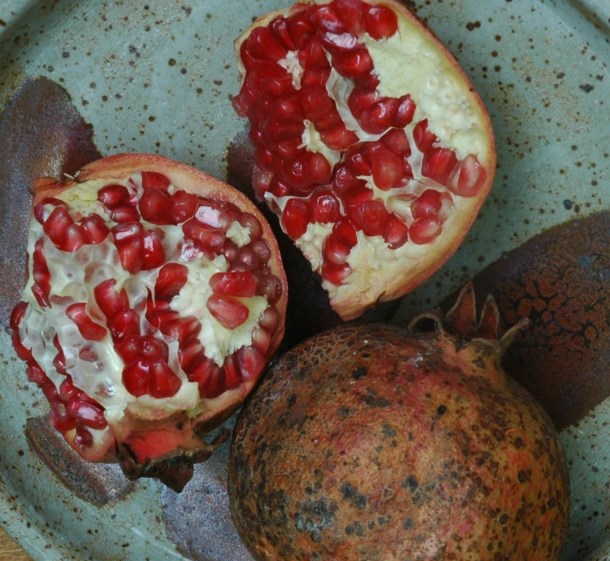
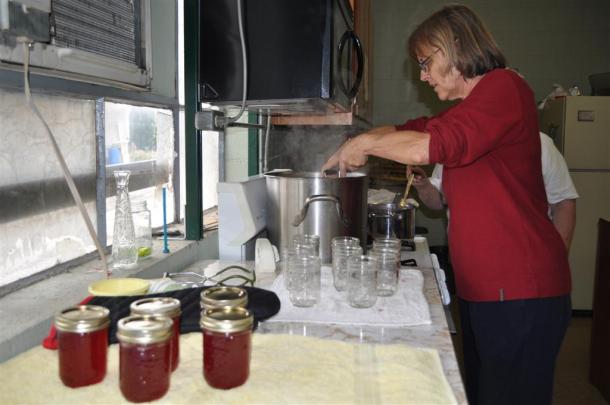
Pomegranate harvested from our tree, pottery by Lisa's daughterWe are wild about pomegranates at the Demonstration Garden.  Our three year old tree produced enough pomegranates to fill 12 quart bags of pomegranate seeds and make two dozen jars of jelly. 

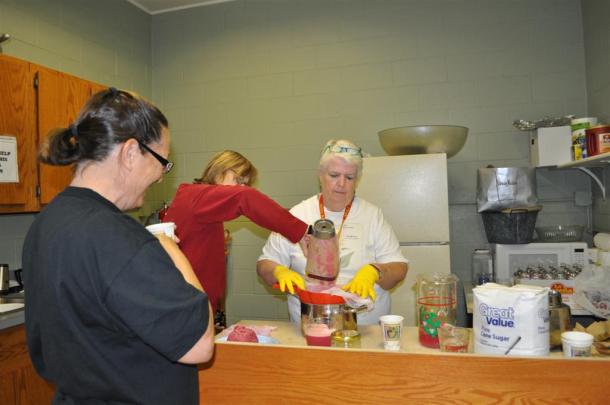
Pomegranate Jelly Making-First Step

Sarah provided the recipe and tutelage. You should have been in our kitchen last week! Extracting Juice From The Pomegranates Seeds

The pomegranate juice, lemon juice, and sure jell was brought to a rolling boil, sugar was added and more boiling.  This was carefully poured into sterilized jars and processed in a boiling water canner.

Processed Jars of Pomegranate Jelly

Last step-refuse goes to the compost pile!

Pomegranate Hulls Will Be  Composted

Actually, you can help us with one more step! Please purchase a jar of Pomegranate Jelly at the October 25th Master Gardener meeting at Winfrey Point, Dallas, Texas. The proceeds will provide a little  for the upkeep of our gardens!

Ann

Thanksgiving’s Coming, Plant Sage Now!

Have you ever thought of putting a bit of sage in your spaghetti sauce? Hmmm. I’ll pass on that one. The beloved herb Salvia officinalis actually is a Mediterranean native that has migrated around the world and now lends its woodsy flavoring to our Thanksgiving table.

Classic Green Sage

If you want to have a patch of sage ready for holiday picking, now is a great time to tuck it in the herb garden. Marian Buchanan, the Dallas herb expert, suggests planting herbs in a generous half day of sunlight, preferably morning light with some afternoon protection.  Good drainage is critical with herbs; Marian says to add at least 2-3 inches of organic compost and expanded shale before planting. Like rosemary, thyme, oregano, marjoram, and fennel, sage is sensitive to overwatering.  Marian suggests watering thoroughly, then let the soil dry a bit.

I visited the herb section of our local nursery last week and like jelly beans at the mall candy store, I wanted a variety of each color.  The classic green garden sage is perfect for turkey stuffing and flavoring stock.  Try this sage blended into mild cheese or minced with other herbs in a delectable melted butter. 

Berggarten SageThe ‘Berggarten’ sage leaves are quite a bit larger and more rounded than oval-leafed garden sage.  If dried, this sage can lose its flavor and taste more medicinal after awhile.  Try freezing the fresh leaves for better flavor.  ‘Berggarten’ translates to ‘mountain garden’ in German.  The name comes from the gardening plots of the Herrenhausen Gardens in Hanover, Germany, built in 1666 to supply produce for the Herrenhauser Castle in Lower Saxony.

On your herb buying trip, you also might see the adorable ‘Tricolor’ sage. The pink, white and green leaves have the classic sage taste and are popular asTricolor Sage a garnish for roasted turkeys.  Crushed or chopped leaves add a wonderful flavor to soups, teas, vegetables, salmon or tilapia fillets.  If you want to keep the lovely pink edge on this sage, be sure to plant it in sufficient sunlight.  Otherwise, the leaves will fade to just green and white. 

Linda has tempted our blog readers with so many of her recipes.  She’s culling her holiday files now for Thanksgiving classics, many featuring sage. 

In my kitchen, I’m like the Chinese in the 17th century who so admired sage from the Dutch merchants that they would trade three chests of Chinese tea for one chest of sage. 

Elizabeth

Cinnamon Basil Swirl Cake

Cinnamon Basil Cake Swirl Cake

CAKE

2 tablespoons minced cinnamon basil leaves

1 ½ cups all-purpose flour

1 teaspoon baking powder

1/8 teaspoon coarse salt

6 tablespoons unsalted butter, softened

¾ cup granulated sugar

2 eggs

2 teaspoons vanilla extract

1 cup sour cream

1 teaspoon baking soda 

SWIRL

1/3 cup granulated sugar

2 tablespoons (packed) light brown sugar

2 teaspoons ground cinnamon 

1.  Preheat oven to 350 degrees.  Grease a 10-inch springform pan. 

2.  In a small bowl, whisk together cinnamon basil leaves, flour, baking p0wder, and salt; set aside. 

3.  In a large bowl, beat butter and sugar on high speed until light and fluffy.  Beat in eggs, 1 at a time until fluffy and well blended.  Beat in vanilla. 

4.  In a small bowl, whisk together sour cream and baking soda until smooth.  With mixer on low speed, beat half the flour mixture into the butter mixture just until blended.  Beat in sour cream mixture, then remaining flour, beating just until blended.  Spread into prepared pan. 

5.  Make swirl:  In a small bowl, whisk together granulated sugar, brown sugar and cinnamon.  Sprinkle evenly over batter; swirl into batter with the tip of a knife, being careful not to touch the knife to base of the pan. 

6.  Bake cake for 40 to 45 minutes, until a toothpick inserted in the center comes out clean.  Cool completely (or nearly so) on a wire rack before removing pan side and slicing.  Serve warm or at room temperature. 

Yield:  8 to 12 servings

Linda

Cinnamon Basil Chicken

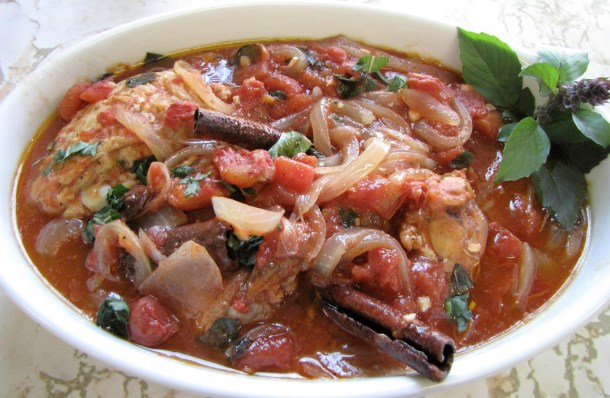
Cinnamon Basil Chicken Garnished With Cinnamon And Basil 

1 frying chicken, about 4 ½ pounds, cut into 8 pieces with the backbone

Kosher salt and freshly ground black pepper

2 tablespoons olive oil

1 large onion, halved and sliced from root end to top

2 cloves garlic, finely chopped

1 ½ tablespoons finely chopped fresh ginger

One (28-ounce) can diced tomatoes, drained of half the liquid

Three 3-inch cinnamon sticks, preferably “true” cinnamon

3 star anise pods

1 ½ cups torn  leaves cinnamon basil, or sweet basil,  gently  packed

Season all sides of the chicken with salt and pepper.  Heat the olive oil over medium-high heat in a large skillet with a tight-fitting lid.  When the pan is hot, put the chicken pieces in the pan, skin side down, and cook uncovered until the skin turns deep golden brown, at least 6 to 8 minutes.  Turn the chicken and cook another 2 to 3 minutes on the other side.  Take the chicken out of the pan and pile it on a platter.

Reduce the heat to medium and add the onion, garlic, and ginger to the pan.  Stir them around for 3 to 4 minutes, or until they soften and begin to brown.  Add the tomatoes, cinnamon sticks, star anise, and 1 teaspoon kosher salt.  Put the chicken back in the pan.  When the tomatoes come to a simmer, cover the pan, turn the heat to very low, and cook for about 50 minutes, or until there is little resistance when you pierce a thigh with the tip of a paring knife.  If the sauce seems watery, turn the heat to high and boil it uncovered until it thickens.  Scatter in the basil as you toss the chicken in the sauce with tongs.  Serve right away. 

Yield:  4 servings

Adapted from The Herbal Kitchen by Jerry Traunfeld

Linda

Peach And Red Onion Relish

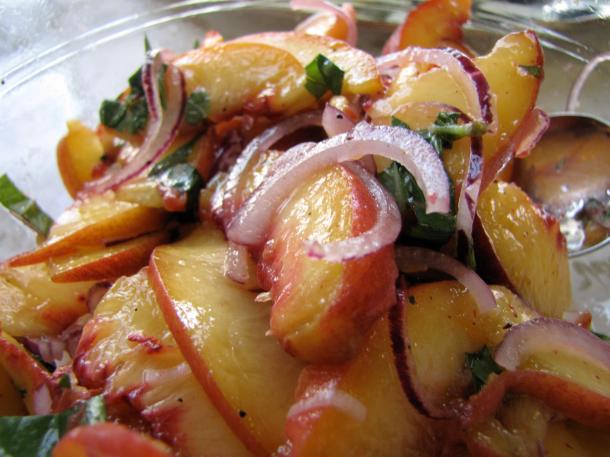
Peach And Red Onion Relish 

1 tablespoon honey

1 tablespoon fresh lemon juice

1/8 teaspoon cayenne pepper

Coarse salt and ground pepper

¼ small red onion, very thinly sliced

2 ripe peaches, very thinly sliced

2 tablespoons chopped fresh cinnamon basil leaves 

In a small bowl of ice water soak onion for 10 minutes;  drain, blot dry and return to bowl.  Add peaches, honey, lemon juice and cayenne pepper.  Season with salt and pepper.    Let stand 15 minutes.  Toss with cinnamon basil.

Linda

Apple Basil Cake

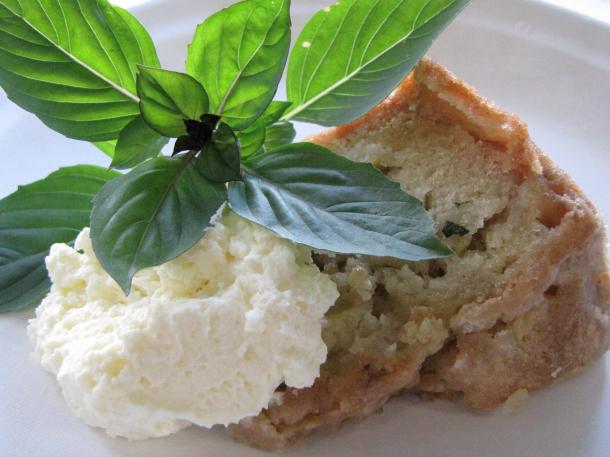
Apple Basil Cake With Cinnamon Spiked Whipped Cream And Basil Garnish

CAKE 

3 cups all-purpose flour

1 teaspoon baking soda

¾ teaspoon coarse salt

2 tablespoons (packed) minced cinnamon basil or sweet basil leaves

1 ¼ cups vegetable oil, preferably canola oil

1 ¾ cups granulated sugar

3 eggs

2 teaspoons vanilla extract

3 ½ cups unpeeled, coarsely chopped cooking apples, such as Granny Smiths

GLAZE 

3 tablespoons unsalted butter

3 tablespoons packed light brown sugar

3 tablespoons granulated sugar

3 tablespoons heavy cream

1 teaspoon vanilla extract

1.  Preheat oven to 325 degrees.  Grease a 10-inch removable-bottom tube pan.

2.  Sift together the flour, baking soda, and salt.  Whisk in basil leaves until thoroughly dispersed in the flour; set aside.  In a large bowl, beat together oil and sugar on low speed.  On medium speed, add eggs 1 at a time, beating well after each addition.  Add vanilla and increase speed to high; beat for 30 seconds.  On low speed, add flour mixture and beat just until blended.   Mixture is very dense.

3.  Fold in apples with a spatula; spread batter in prepared pan.  Bake for 1 hour and 15 minutes, until a toothpick inserted in the cake comes out clean.

4.  Just before cake is done, make glaze:  Over medium heat, melt the butter in a small saucepan and whisk in both sugars, cream, and vanilla.  Boil glaze for 1 minute.

5.  When the cake comes out of the oven, immediately pour the hot glaze over.  Let cake cool completely on a rack before removing from pan.  To remove from pan, run a knife around the edge to release it, then run a thin knife between cake and pan bottom; invert to release and invert again to place on platter, so glaze side is up.

Yield:  12 to 16 servings

This recipe is from “Desserts from an Herb Garden” by Sharon Kebschull Barrett.

Linda

Check Out Cinnamon Basil

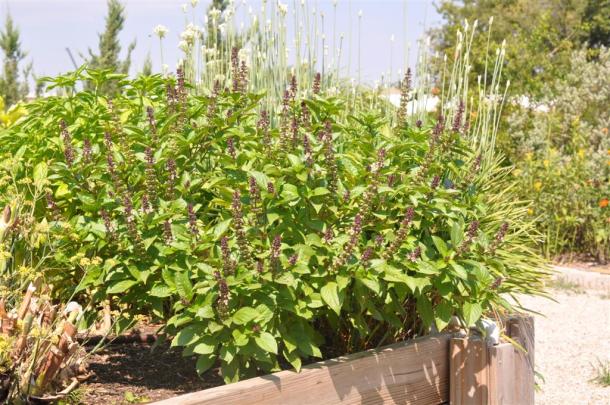
 Cinnamon Basil Growing In A Rasied Bed At The Demonstration Garden

Cinnamon basil is a cultivar of Ocimum basilicum (sweet basil).  It contains cinnamate, the same chemical that gives cinnamon its flavor, and has the strongest scent of cinnamon.

Cinnamon basil has reddish stems, lavender spiked flowers and small- to medium-sized serrated green leaves.  The leaves have a cinnamon-like taste and odor.  It can grow up to 3 feet tall and 3 feet wide.  Growing it in the garden may deter other pests that don’t like the smell of it.

If you’ve never grown or cooked with cinnamon basil, the following recipes might change your mind.  Intensely  fragrant, it can be used for baking, sauces, teas and as a “finisher” for many dishes.

Go ahead and give it a try.  The Cinnamon Basil Chicken recipe is so divinely aromatic while cooking  you might feel as though you’ve been transported to some foreign land – maybe the streets of Morocco or the Spice Markets of Istanbul.    You might encounter flavors you’ve never experienced before.   Toss it in your sliced summer peaches and red onion salad with  honey lemon vinaigrette for a real burst of seasonal flavor.  And, don’t forget to satisfy your sweet tooth with the wonderfully moist Apple-Basil Cake.   Whether sweet or savory, this delightful herb gets high marks for satisfying the senses!   

Linda

Okra, An Olympic Hopeful For Dallas Gardens

This morning I woke up wanting to be like Gabby, the American gymnastics darling of the Summer Olympics.

I wanted to look like her, smile like her, have her discipline, WIN like Gabby!

My next thought was of my garden and what I needed to do out there in the early morning before it gets hot.  Before any more depressing thoughts of never winning an Olympic gold medal entered my head,I jumped out of bed and into my vegetable garden to coax my veggies into looking like Olympiads.

At this time of year, tomatoes are hanging on waiting for fall, cucumbers have stopped producing and the leaves look weathered, bell peppers and red peppers are stable but also wait for a drop in temperature. 

The super performers for Texas gardens in August  are okra, eggplant, and jalapeños. 

Maybe I am more like Gabby’s Olympic coach, Liang Chow. Okra will be my Olympic hopeful.
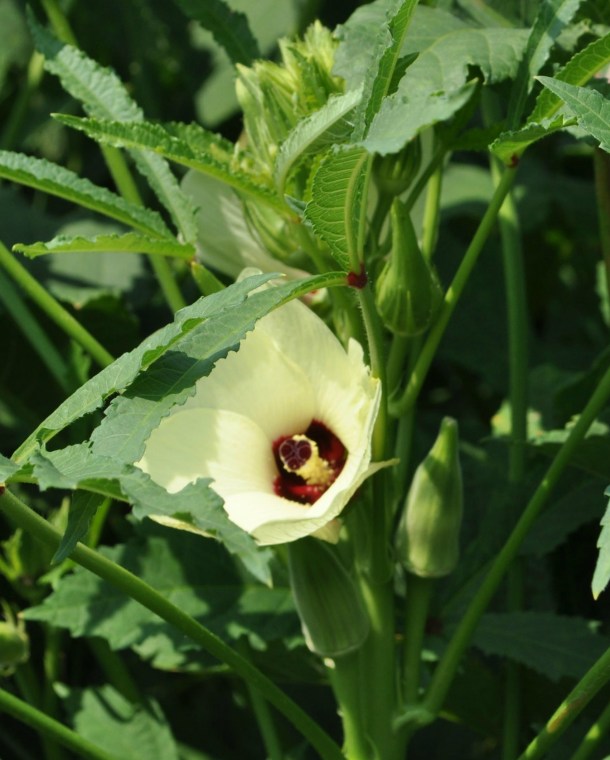
Okra Blossom and Okra Pods

 I will squirt the aphids off my okra with water, pick okra pods on time before they get too big and stringy tasting, and turn them into culinary delights that will cause even the pickiest of eaters to say, I LOVE OKRA!

Now I am imagining stands filled with fans, chanting we want okra, we love okra, and okra can win!

If you want to be a winner with okra remember these tips:

Planting Time: Don’t plant too early, the soil temperature needs to warm up and minimum average temperature should be above 65°. Plant seed in April for summer harvest and July15-August 25 for fall harvest.

Needs: Full Sun, adequate spacing, moderate water needs. Texas A&M recommends one inch of water weekly in the absence of rainfall for good production.

Harvest: pick the pods every day; they should be less 3-3 ½ inches in length. 

Varieties:  We have had great success with Clemson Spineless at the Demonstration Garden. Try Burgundy for the burgundy colored okra pods.  Other suggested varieties are Emerald, Louisiana Green Velvet, Annie Oakley (smaller stature-I like this one), Red Velvet and Beck’s Big.

Cooking:    Click here for a good Dallas Morning News okra recipe.

The burgundy varieties turn green when cooked and taste just like the green okra pods.  Okra blossoms are edible.

Ann

Basil Lime Shortbread

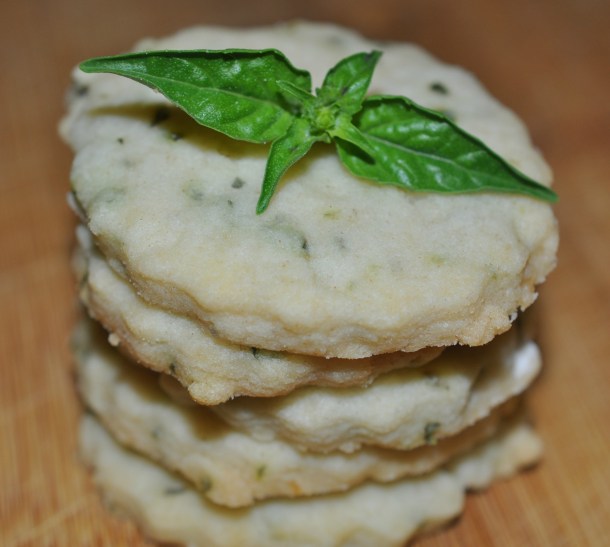
Basil Lime Shortbread With Basil Sprig

¾ cup unsalted butter

½ cup confectioner’s sugar

¼ teaspoon vanilla extract

¼ teaspoon salt

1 ½ cups all-purpose flour

¼ cup finely chopped fresh basil

2 tablespoons fresh lime zest

 1.  In a medium bowl and using an electric mixer at medium speed, cream the butter and confectioner’s sugar together until light and fluffy.  Beat in the vanilla extract and salt.  

2.  In a small bowl, toss together the flour, basil, and lime zest.  With the mixer at low speed,  add the flour mixture to the butter mixture, and mix until the dough just comes together and forms a ball.  Remove the dough from the bowl, wrap tightly with plastic wrap, and refrigerate for 2 hours. 

3.  Preheat oven to 350 degrees.  Line 2 baking sheets with parchment paper, and set aside. 

4.  On a lightly floured surface, roll the dough out to 1/8-inch thickness, and using a 2-inch round fluted cutter, cut cookies.  Place on prepared baking sheet, and bake for 8 to 10 minutes, or until edges begin to brown.  Cool on wire racks before serving. 

Yield:  24 cookies

Recipe from Victoria Bliss Magazine, March/April 2009

Linda