If you’re contemplating a substitute for boxwood, consider these words from Cyrus Hyde, the late garden herb folklorist and founder of Well-Sweep Herb Farm in New Jersey. He referred to germander as “poor man’s box”. Why then, has it not received more recognition in the world of herbs?
Even our first president, George Washington was such an admirer of germander that it was planted at his Mount Vernon, Virginia estate. But sadly, it seems to have faded from view until recently when garden centers began featuring lesser known herbs alongside the more desirable customer favorites. Thankfully, it was a wise decision with germander finding its place as a decorative evergreen border plant and as a substitute for boxwood in the beloved knot-garden design.
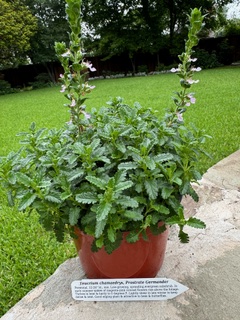
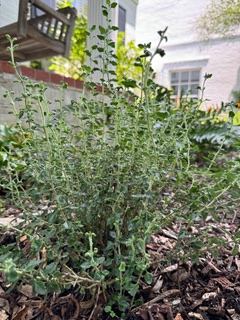
Germander ‘Upright’ surrounding the children’s statue in the Edible Landscape at Raincatcher’s GardenGermander ready to be planted at Linda’sGermander thriving in MG’s Patty Brewer’s Garden.
Germander is a Mediterranean native in the mint family (Lamiaceae) with small, dark green scalloped leaves and a mild garlic-spice aroma. It is a hardy perennial and evergreen, keeping its tidy appearance throughout the year. In early summer whorls of purple-pink flowers appear. Bees are attracted to the tiny flowers.
Grow it:
*Space plants 2 feet apart and at least 3 feet away from companion plants.
*Germander prefers full to partial sun and well-drained soils.
*Follow a regular watering schedule to establish, then cut back to maintain health.
*Fertilize lightly with an all-purpose organic fertilizer once or twice a year.
*Pruning right after bloom will help to renew the plants faster.
Germander with single stem gerbera daisies gently nestled in the glossy green foliage
Linda Alexander, Dallas County Master Gardener Class of 2008
Did you know that not all cukes are created equal? To simplify, there are two main types of cucumbers, American and English. Both can be used for pickling and slicing. This year I decided to try the English variety in my raised garden bed. Also, to save space, I used a trellis type support system for growing it vertically. That proved to be a very good decision.
13 inch long English cucumber ready to be harvested from my garden
After about two and a half months in the ground, my little cucumber transplant has covered the trellis and produced over a dozen cucumbers. English cucumbers generally grow thinner and straighter than their American counterparts and can grow in the range of 12 to 24 inches long. So far, I’ve been harvesting them at around 12 to 14 inches in length.
English cucumbers have a sweeter flavor and delicate skin that is less bitter than that of other cucumbers. Many sources say that English cucumbers tend to have very few seeds but, as you can see from the photo, mine had a generous amount.
Seeding an English cucumber with a serrated grapefruit spoon
Tips for growing:
*Plant in an area of the garden that receives a minimum 6 hours of sunshine daily.
*Prepare the soil by tilling well while adding aged compost to a depth of 6 inches.
*On average, cucumbers require: 1 inch of water per week in moderate conditions, twice per day when temperatures exceed 90°F.
*Add a 4-inch layer of organic mulch around base, but not touching the stem.
One of my favorite cucumber recipes is from a place in the Texas hill country where my husband and I, for over 35 years, always enjoyed having lunch. It was an absolutely charming restaurant in Fredericksburg known as ‘The Peach Tree Tea Room’. The Pedregon family opened their new venture in the fall of 1984. It brought in diners from all over the United States and internationally, as well. Sadly, it closed a few years ago leaving a void in the Fredericksburg culinary scene. Thankfully, over the years, I purchased all three of their wonderful cookbooks. The recipe I’m sharing is from their first cookbook, published in 1990. It is the recipe for ‘Chilled Creamy Cucumber Soup’.
Making the recipe over the weekend brought back cherished memories from those early days in Fredericksburg. It was especially rewarding to use three of the ingredients called for in the recipe from my garden; English cucumbers, parsley and garlic that was curing in my pantry.
Chilled Creamy Cucumber Soup Garnished with Freshly Chopped Parsley and Tomatoes
Hope you will be inspired to take a cool and refreshing break with ‘Chilled Creamy Cucumber Soup’. In the meantime, chill out with these tasty, sliced cucumber appetizers.
English cucumber slices topped with Herbed Cream Cheese, Salad Burnet and Borage Blossoms
And, just in case you were curious about the title…’Cool as a Cucumber’. I did a quick online search and learned something new. First, the inside of cucumbers are approximately 20 degrees cooler than the outside air. And the phrase ‘cool as a cucumber’ first appeared in a poem by the English author John Gay in 1732. It expresses the narrator’s angst regarding a woman with unreturned love! Today, that phrase is used to describe someone who tends to remain calm, assured and composed in any situation.
Linda Alexander, Dallas County Master Gardener Class of 2008
It’s as common in the garden and grocery isles as parsley but there seems to be a level of misunderstanding that needs addressing. First Coriander and Cilantro are the same plant. The confusion is found in the seeds. It is also sometimes referred to as Chinese parsley because of its long history of use in that cookery. To clarify, the name “coriander” comes from the Greek koris, meaning bug, in reference to the odor of the leaves. And who hasn’t heard the taste of cilantro described as having a “soapy” character?
Historically, coriander has been used for culinary and medicinal purposes for over 3,000 years. It is mentioned in Sanskrit texts, on Egyptian papyri and in Tales of the Arabian Nights.
In the Bible it is compared with manna. (Exodus 16:31 – “And the people of Israel called the bread manna. It was white like coriander seed and tasted like wafers made with honey.” NASB)
Coriander was brought by the Romans to Europe, where it now grows wild. In Mexico and throughout the Southwest you’ll find cilantro leaves used as a necessary flavoring ingredient in salsas, salads, soups, chicken and meat dishes.
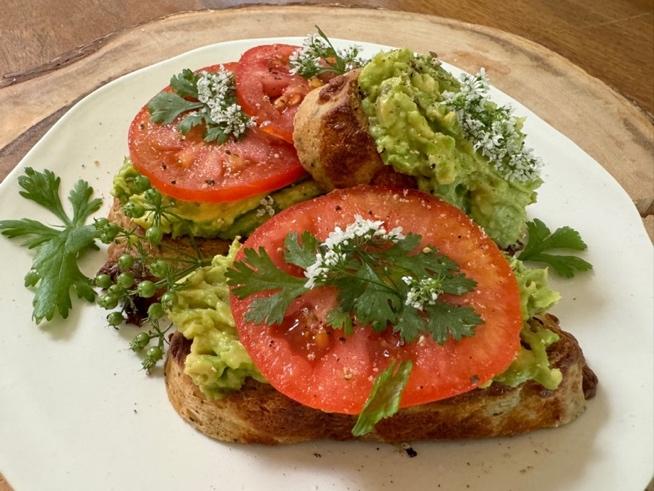
Today, coriander is grown primarily for the leaves, but chefs are discovering new ways of using the entire plant. Interestingly, for me, while working in the garden last week, a cilantro plant filled with lacey, petite white flowers caught my eye. After taking a few colorful photos, I couldn’t resist snipping a delicate umbel and popping it into my mouth. While the leaves of coriander/cilantro have a much more assertive personality, the flowers offered a milder, citrus-like taste that was cool and refreshing. It was an “ah-ha” moment for me. Never before had I considered using the delicate flowers in my cooking. I’m now convinced that a creative approach to using them will be enjoyed and appreciated. It is recommended cilantro flowers always be used fresh, never dried.
(Avocado Toast with Tomato Slices, Freshly Snipped Cilantro Flowers and a Splash of Apple Balsamic Vinegar)
(Asian Noodle Salad with Fresh Cilantro Flowers)
*Finally, here’s an easy way to simplify the confusion. When people speak of cilantro, they are referring to the stems, leaves and flowers of the plant. Coriander usually refers to dried seeds. All are edible so, please, enjoy using the entire the plant in your future cooking adventures.
Linda Alexander, Dallas County Master Gardener Class of 2008
According to the calendar, the first day of spring was Friday, March 20, 2024. Dallas natives know that early signs of spring started appearing in late February. One of the happiest moments for me was when two new additions to my garden in 2023 announced their comeback from winter’s cold. They are now showing signs of an exciting springtime welcome.
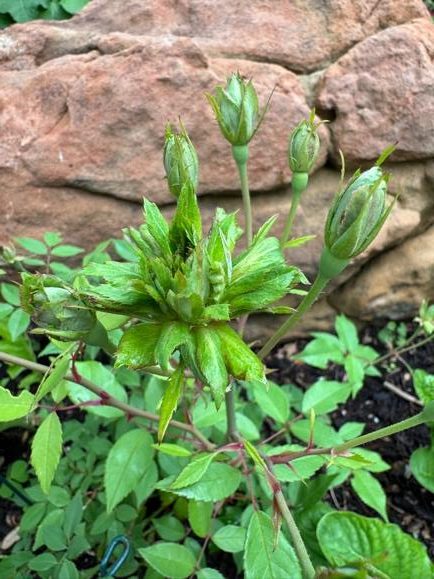
*Veggie Green Rose (Planted April 2023) – It has easily doubled in size, producing new buds over the past two months.
*Green Gage Plum (Planted September 2023) – It was thrilling to see both trees filled with delicate white blossoms during the last few days of February, continuing into March. Fresh, new green leaves started appearing in late March and early April. It’s now May and all is well.
*Black Sage (Planted September 2023) Sadly, this one did not survive those few days/nights of below freezing temperatures. But I’m not giving up on growing black sage in my garden. This time I’m trying a different strategy. Last month I ordered four new 4” plants from the same grower in California. Each one was planted in a different location of the garden with varying degrees of sun to shade. I’m encouraged today that all four plants have almost doubled in size. Hopefully, by this coming fall they will all be well established and ready for our unpredictable winter weather.
(Black Sage planted in early April 2024 is thriving)
A recent Savannah Bee email featured their Black Sage Honey and the amazing story of how it thrives in the lower mountain slopes and upper desert regions of the Sierra Nevada mountains. It is a fascinating look at what it takes to produce this uniquely flavored honey. Thankfully, I still have a few jars left from my last order!
Linda Alexander, Dallas County Master Gardener Class of 2008
Walking in the garden early this morning just as sunlight was spreading its glowing rays, I stopped for a moment to gently caress the winter savory. Dew had fallen softly upon it, leaving the cascading branches with a shimmery presence. It seemed to be saying…” use me please”. And that is exactly what happened!
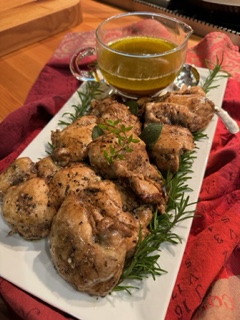
My husband and I love a cozy wintertime dinner by the fire. Thankfully, my winter herb garden had supplied me with the three ingredients needed to infuse the marinade for Balsamic Herb Baked Chicken Thighs: fresh rosemary sprigs, sage leaves and winter savory. This herb-garden inspired recipe delivered a pleasing amount of comfort and flavor for the perfect fireside meal.
Balsamic Herb Baked Chicken Thighs prepped and ready to bakeReady to serve!
Hopefully, you are growing a nice selection of herbs in your winter garden. If so, remember that they liked to be snipped, trimmed and used for culinary and decorative purposes in your home.
*For information about growing winter savory, click here.
*All herbs were harvested just before the cold front and freezing temperatures arrived. They were kept in a damp paper towel lined plastic baggie for two days.
Linda Alexander, Dallas County Master Gardener Class of 2008
If African Blue Basil could speak it might first suggest introducing you to the “parentals”. In this case, that would be a good idea. The African parent is a perennial shrub from forests of Kenya, Tanzania and Uganda.
In 1983, African Blue basil was first seen by a nurseryman named Peter Borchard, owner of Companion Plants in Athens, Ohio. He noticed it growing in the path between beds of the two presumed parents, East African basil and ‘Dark Opal’. Borchard dug the hybrid out and brought it into the greenhouse hoping to save seed. No seed formed leaving Borchard with the task of growing more plants from cuttings. Shortly thereafter, African Blue Basil (Ocimum gratissimum) entered the market.
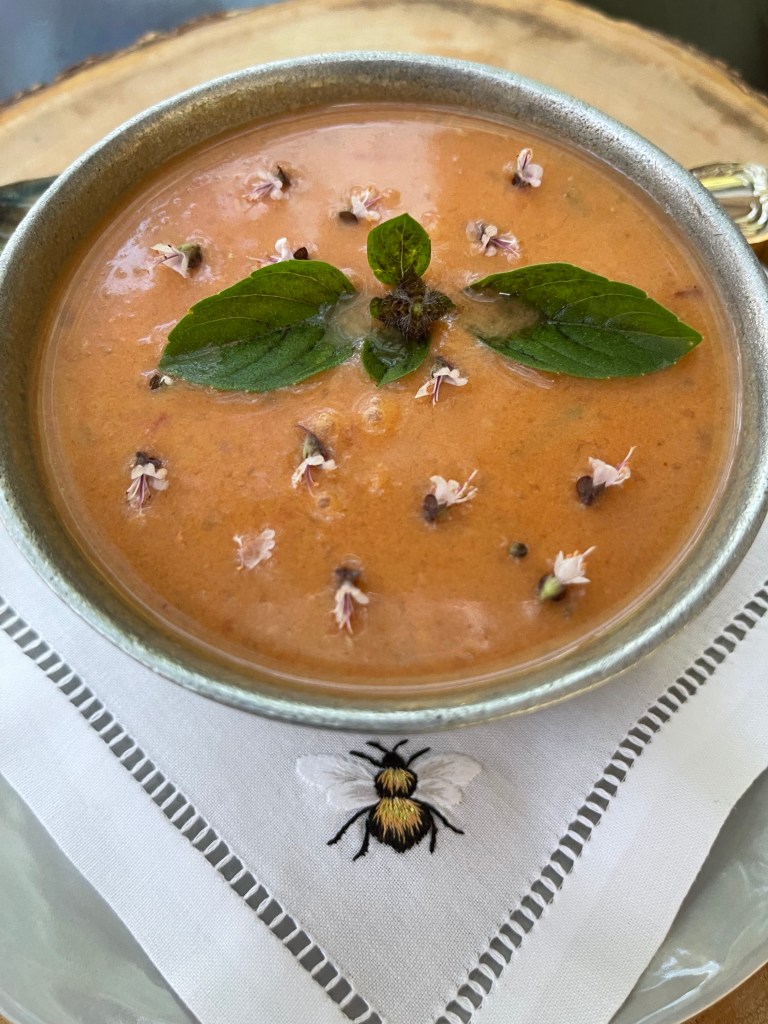
African Blue basil is now identified as a hybrid plant in the Lamiaceae family made by crossing East African camphor basil and a varietal of purple sweet basil called ‘Dark Opal Basil’. Its strong camphor scent was inherited from the East African basil used to breed the plant. Though some people may find the camphor odor and taste too strong to use in the kitchen, others embrace its culinary uses. While doing morning chores in the garden, the dark purple leaves of African basil tempt me to experience their crisp, semi-chewy and woodsy flavor with notes of menthol, musk and cloves. With a refreshing and earthy taste filling my mouth,it’s time to move out of the way and give the honeybees time to forage for nectar.
Before planting in the garden, familiarize yourself with its specific characteristics. African Blue basil is a rare, aromatic, perennial shrub that can grow up to five feet tall in some gardens. Plants produce abundant flowers that are pink with a dark purple base, making it attractive to bees and beneficial wasps. African blue is one of the few basils that is sterile, meaning it will not produce seeds. Fortunately, this unique trait allows the plant to stay in bloom for a longer season. As with other basils, African Blue does best in well-draining soil amended with compost. Plants thrive in full sun and will form rounded mounds.
Suggestions for cooking with African Blue basil offer a wide range of possibilities. While best suited as a fresh flavoring or garnish, the leaves may also be used in pesto’s, chimichurri sauce, salad dressing and dips or sprinkled over soups, tossed into salads or layered over bruschetta. Also, try it mixed into pasta, spread over sandwiches, used as a pizza topping or for elevating desserts.
Along with the leaves, African Blue basil flowers are edible and can be used as a garnish in soups, salads and grain bowls.
They can also be incorporated into cocktails, floated on sparkling beverages or stirred into teas. African Blue basil pairs well with parsley, cardamom, ginger ale, champagne, green beans, tomatoes, potatoes, lentils, rice, and feta cheese. For best quality and flavor, use the leaves and flowers shortly after harvesting.
Linda Alexander, Dallas County Master Gardener Class of 2008
‘Brilliant Pink Iceberg’ Floribundaand onion chives at Raincatcher’s in the edible landscape
Imagine me and you, I do… I think about you day and night, it’s only right!
Just as the Turtles sang to us in 1967, some things belong together. In the plant world this loving and beneficial relationship is commonly referred to as “companion planting.” You might even have heard the popular expression…” roses love garlic.” Let’s consider several reasons why.
From the New York Botanical Garden
*Members of the onion family such as chives, ornamental alliums and edible onions are rumored to increase the perfume of roses, ward off aphids and prevent black spot. Herbs and other aromatic plants make wonderful rose companions.
According to Birds and Booms
*Garlic protects roses from not only bad bugs, it can also help prevent fungal diseases. Aphids don’t love garlic, they hate it!
The Garlic Farm offers this advice –
*Plant three to four cloves in a circle around each rose bush, and the sulphur present in the garlic will disperse into the soil and be taken up by the roses – making it a less palatable treat for little bugs.
Gardening Know How says –
*Rose lovers have planted garlic, chives, garlic chives and onions in their rose beds for many years. Garlic has been known to repel many pests that bother rose bushes. Garlic chives have interesting foliage, repel some pests and their pretty little clusters of white or purple flowers look wonderful with the rose bush’s foliage.
Seasoned gardeners offer these tips –
Included in the list of rose companion plants are alyssum, lavender, marigolds and parsley.
Be sure to check on the companion plant’s growth habit as to height. In many cases, you might want lower-growing companion plants. Herbs will work well planted in the rose beds but, again, check their growth habits to be sure.
Pairing members of the allium family with your roses helps to ward off aphids with their strong scent and may prevent black spot.
So glad we knew about this dynamic relationship when planting our beautiful rose topiary a few years ago and surrounding it with garlic chives. As you can see from the photo, they seem to be saying… yes, we are indeed happy together!
Linda Alexander, Dallas County Master Gardener Class of 2008
After many years of service as a storage facility for both the church and garden, the old red shed was in a state of disrepair. Rotted floors, bulging sides, leaking roof and collapsing doors made it unsafe for volunteers to use. Watching as it was torn down gave us a sigh of relief.
What happened next, with nothing left but an empty space, allowed for a time of reflection. The area bordering the north side of the shed had been transformed into a lovely sensory garden, one of our newest additions to the edible landscape. Expansion to the now vacant area would require the installation of an irrigation system but the church had suggested that they might need the space for future use. The other option was to relocate the sensory garden. Our decision was something unexpected which, ultimately, proved to be a magical solution.
Just a few yards away and bordering the stone pathway was a garden area we had previously christened as “The Kaleidoscope Bed”. With an eclectic mix of evergreen and perennial flowers and herbs as well as colorful annuals, it seemed as if we were being invited to consider yet another transformational opportunity. In the blink of an eye followed a sweet smile of happiness, the blending of gardens began. The Kaleidoscope Bed would graciously surrender its name while allowing existing plants and ornamental features to remain in place.
Our plan going forward is to maximize the sensory impact that the garden has on its visitors. Adhering to the 70/30 rule, our primary focus will be the addition of more edibles supported by a small percentage of non-edibles. We’ll be including textural plants such as lamb’s ear for it’s soft, fuzzy feel and an upright, aromatic rosemary for both smell and touch.
For real summertime garden beauty, we’re going to feature Balsamic Blooms Basil once again. It’s the basil that received a Texas Superstar designation in 2017. We first fell in love with its deep purple blooms and the sweet flavor of its gorgeous foliage in the spring of 2018. When we learned that this was the first basil to have flowers and leaves growing at the same time, our vote was unanimous to move it to the top of our seasonal list. Balsamic Blooms will always have a place of honor in the edible landscape.
Balsamic Blooms Basil and Begonias
Our newly relocated and appropriately named Sensory Garden offers triple the amount of space than before to feature a wide variety of plants that stimulate the senses. Come by for an inspirational visit and let your soul be nourished by the wonderful world of nature.
Linda Alexander, Dallas County Master Gardener Class of 2008
It was only a few years ago when just an ordinary piece of toast topped with gently smashed avocado became the rage. You’ll find it now on menus across the country from small cafes to upscale restaurants. Everyone seems to have created their own version by using an alphabetical listing of edibles including everything from artichokes and micro greens to tomatoes and tarragon for appeal. My approach tends to be more simplistic in style.
An early morning harvest from my edible garden provides a seasonally fresh selection of blossoms, greens, herbs and vegetables. On Saturday mornings from April until November a visit to our local farmer’s market gives me additional options. Here are a few delicious suggestions that my husband and I have recently enjoyed but be creative with your choices because any combination that pleases your palate is a winner.
Springtime
*Thinly Sliced French Breakfast Radishes, Onion Chives and Nasturtium Blossoms
*Broccoli Florets, Arugula and Mrs. Taylor’s Scented Pelargonium Blossoms
*Thinly Sliced Carrots Topped with Caraway Sprigs
*Swiss Chard Perpetual Spinach and Nepitella Blossoms
Summertime
*Sliced East Texas Peaches and French Tarragon
*Campari Tomatoes Sprinkled with Chopped Balsamic Blooms Basil Leaves
*Sliced East Texas Peaches, Sweet Banana Peppers and Purple Basil
*Armenian Cucumbers with Salad Burnet and Watercress
Avocado toast is something we enjoy for breakfast, brunch, lunch and as a delightful appetizer. For a light summer dinner we often serve it alongside homemade gazpacho or chilled cucumber soup. Our goal is simply to use garden fresh ingredients! The only exception is when I’ve made a visit to purchase fresh eggs from my master gardener friend who raises chickens at her ranch. A delicately fried egg sitting on top makes for a very scrumptious breakfast experience.
**Additional edibles from summer’s bounty will include anise hyssop blossoms, blueberries, shaved yellow crooked neck and zucchini squash, onions, jalapeno and shishito peppers. To complete the flavor kick be sure to consider a sprinkling of these herbs; anise, dill, fennel, lovage, mint, papalo, pipicha, lemon thyme and rosemary or any of your personal favorites.
Linda Alexander, Dallas County Master Gardener Class of 2008














 DALLAS GARDEN BUZZ