Make plans to join us on Saturday, October 14, for a unique day-long educational event sponsored by the Dallas County Master Gardener Association and Dallas College featuring well-known horticulturalists Felder Rushing and Callie Works-Leary. The $20 cost of registration includes lunch. To review the schedule of presentations, to read more about our speakers, and to register, visit dallascountymastergardeners.com. All who love gardening are welcome to attend!
Old sayings are so often true and in the garden this summer, there is no doubt at all.
No way, is this post full of cheer, the summer is miserable for gardeners and plants alike. But as always we can learn a lot and really we have to. Like it or not gardens are just essential for birds and lizards and insects of all sorts. They count on plants for their very life—and what would a gardener be—without a garden —so what to do?
Don’t forget about grasses. This is seep muley, not dramatic but looks good in a quiet way.Common Mullein has lots of bad habits but don’t overlook all the good ones.
Observation comes to the rescue and brings a bit of joy and hope. Some plants are holding on—and even blooming—if not right this minute they are planning to—soon. These are the plants we must remember, be sure to plant again for the next summer—which we sincerely hope will be more pleasant but –we can’t count on it.
Mealey blue sage is a self seeder, sometimes too much, but tries hard and what lovely color in hard times.When plants self seed, they find what works for them and are often far healthier than the ones planted by us.
Some of these plants are not the most spectacular but they are lovely in their own right and most important provide essential nutrition for the little lives counting on the garden. Fennel is a host plant for black swallowtails, plus we can enjoy using fennel and it is still alive.
Carry on watering mulching deadheading and trimming—it honestly isn’t so bad early in the morning. But don’t stop there. Take pictures make notes do what it takes to keep the plants that are surviving and even succeeding in your garden in your mind. That way there will be less wasted work and money next year. Sadly of course remember also what failed miserably. When the going gets tough—some plants just give up. More than likely not their fault at all they just were never intended for this weather. Best to face it and remember it clearly.
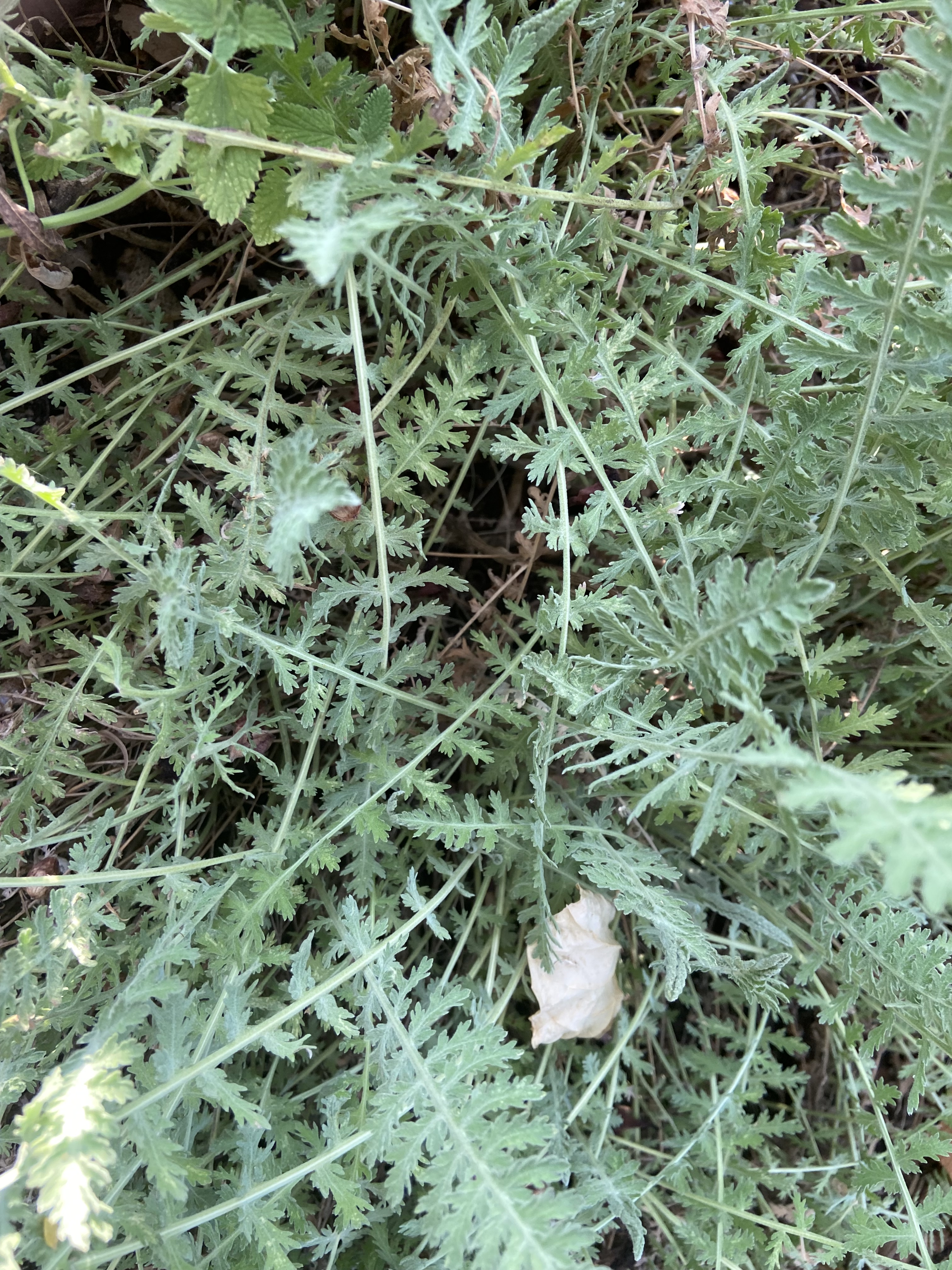
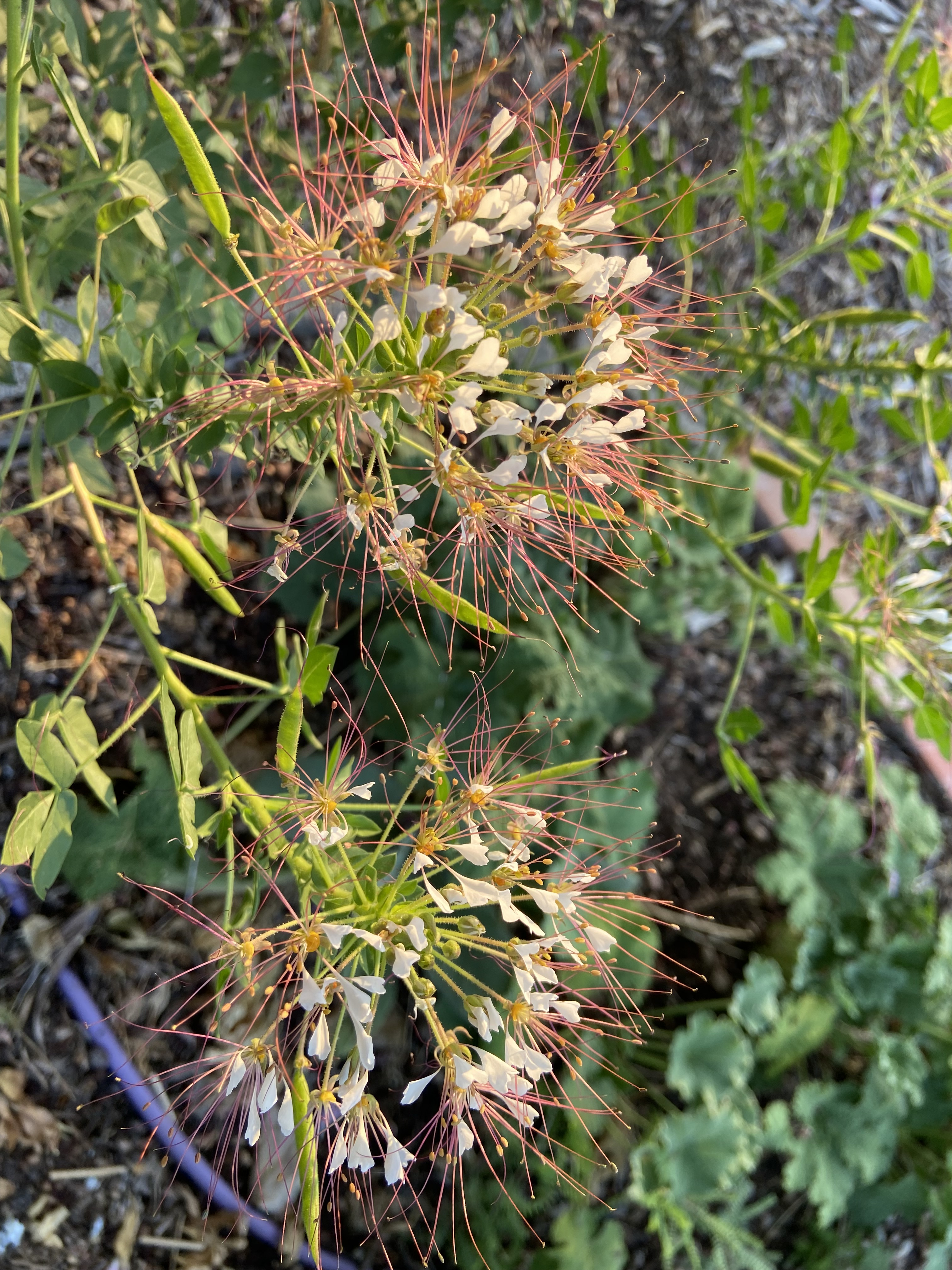
Yarrow, not blooming, but healthy and will bloom again when the time is right.Candelstick trees seend themselves then send down roots before they grow tall. This is a great plant for dealing with adverse conditions.Amaranth has a long history of living in hot places.Clammy weed doesn’t give up. This plant is in a little shade which helps.Tithonia requires upkeep but it’s worth it for flowers in serious heat.
Hope isn’t the best strategy for the summer garden –at least around here. Look at what works in your garden and in gardens you visit, Raincatcher’s welcomes visitors any time. Tuesday mornings there will be gardeners available to answer questions. You might even enjoy summer gardening!
Make experience; even of this dreadful summer—count for knowledge of what works—and what doesn’t. That will make us all better gardeners!
Susan Thornbury, Dallas County Master Gardener Class of 2008
You’ve probably noticed them in numerous landscapes across the metroplex. Their bold, bodacious, fluffy flowers create an eye-catching spectacle in the garden. They grow tall and strong in almost any type of environment from morning sun to full sun, dappled shade to mostly shade. How can you not love those dramatic blooms that hang around from late June until mid-October with colors ranging from lime green to creamy white to dusty rose and sometimes burgundy?
Of course, this proven winner beauty is the plant known as ‘Limelight’, Hydrangea paniculata. It’s a unique hydrangea that has literally revolutionized landscaping across North America. Mine were planted in a backyard bed flanking our fire pit area about a year ago and I am still captivated by their huge, football-shaped irresistible flowers. During periods of extreme heat (100 – 110+) as we’ve experienced most of August, blossoms will go through a time of weeping and loosing their vibrancy. Just hold on until September when a refreshing rain will perk them up!
Driving around neighborhoods in our area and beyond, I’ve seen them used in some pretty imaginative ways: as a showy flowering hedge to screen off those unsightly air conditioning units, in circular beds surrounding old, stately live oaks, and in large entry way stone containers welcoming guests to a front door.
For me, the real bonus is found in the drama they bring to floral displays in my home. When height is needed, Limelight stems are snipped close to the ground and used in long, slender vases. Shorter stems can be carefully arranged in floral foam for a low-profile option. Placed in the center of a dining room table set for dinner with guests or gracing a cherished antique entry chest they never fail to lend an air of elegance to any room.
Another summer flower that goes into my garden around mid-April and stays until late October is the showy, colorful little darling known as Pentas (Pentas lanceolata). Did you know that they are also known as Egyptian stars for the bloom’s five-pointed petals?
Pentas color palate offers gardeners a profusion of jewel tones that range from white to pink, red, lavender and purple. Across Dallas you’ll find everything from single tone beds to the most stunning mixed combinations of two, three or four colors. The possibilities are endless with pentas filling both in ground beds and gorgeous containers. Each year I like to experiment with a different color combination. So far, my favorite is pink, purple and red!
Some of the perks for growing pentas include:
*Pentas are low maintenance plants. Give them plenty of water, sunshine and heat and they will perform beautifully and reward you with an abundance of flowers.
*They are not prone to many diseases.
*Once in the ground, their blooms continue until a cold snap or light freeze. In Zone 8 we get to enjoy them for around six to seven months.
*Pentas can be enjoyed as cut flowers for your indoor arrangements.
*Bees love pentas!
FYI…After taking so many photos of limelight’s, I’ve observed that when the temperature soars to 100+ degrees they tend to do best with some afternoon to evening shade. The limelight’s flanking our firepit are covered with shade starting at 3:00pm and continuing for the remainder of the day.
Limelights in the Spotlight and Pentas on Parade
Linda Alexander, Dallas County Master Gardener Class of 2008
Beginning this month, dallasgardenbuzz.com will introduce a new idea which allows the natural world to speak to us as seasons change and our gardens evolve. Once each month, we hope to share with our readers the joy of using seasonal gifts from the garden in floral displays, arrangements and more.
Look for fresh and innovative ways of gathering unusual combinations of flowers, herbs, branches and other natural ingredients to display in your home. Let creations from your garden bring happiness to a friend, neighbor or family member. Embrace a mindset of filling your life with beautiful gifts from the garden every month of the year.
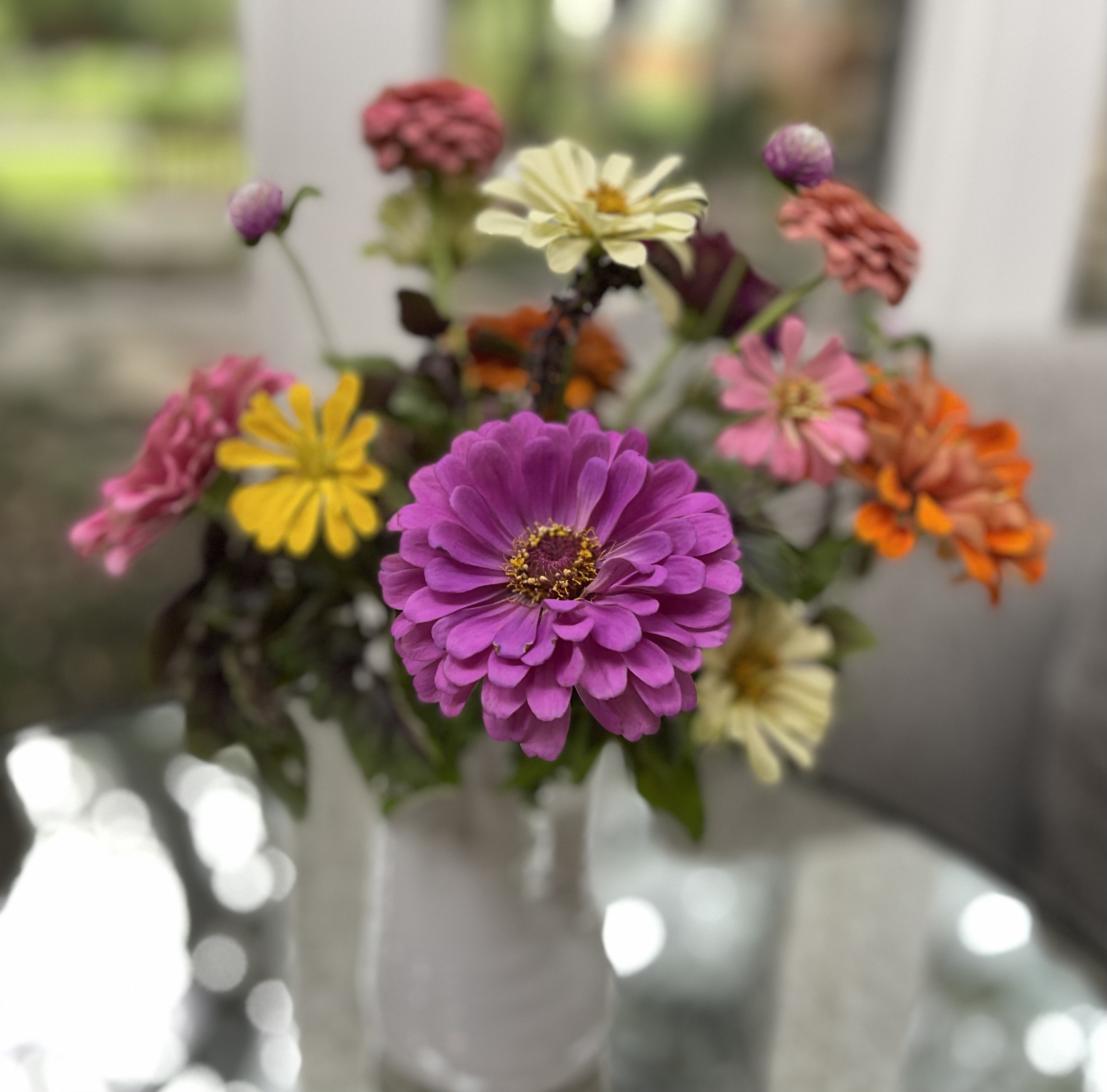
To start, we’ll begin with a quintessential summer flower – zinnias! Offering one of the most colorful palates found in the garden, zinnias bold and bright blooms range from white to orange, pink, yellow, purple and red. We’ve chosen to combine our blooms with another plant that is thriving in the Dallas heat – basil.
With dozens of varieties to consider, two types currently growing in the garden were the perfect complement to our monthly arrangement. Basil ‘Wild Magic’ is a robust grower with purple/violet flowers and dark green leaves with purple margins. For leaves with an even deeper purple presence, ‘Red Rubin’ also adds an aromatic touch to arrangements.
If a compact, tight arrangement seems a little too crowded, consider going in a different direction. Give each zinnia space to breath while making its own individual statement. A flower show judge might suggest that a more open design reflects the natural habit of flowers growing in the garden. In this type of arrangement, there’s plenty of room for “a butterfly to move from bloom to bloom”.
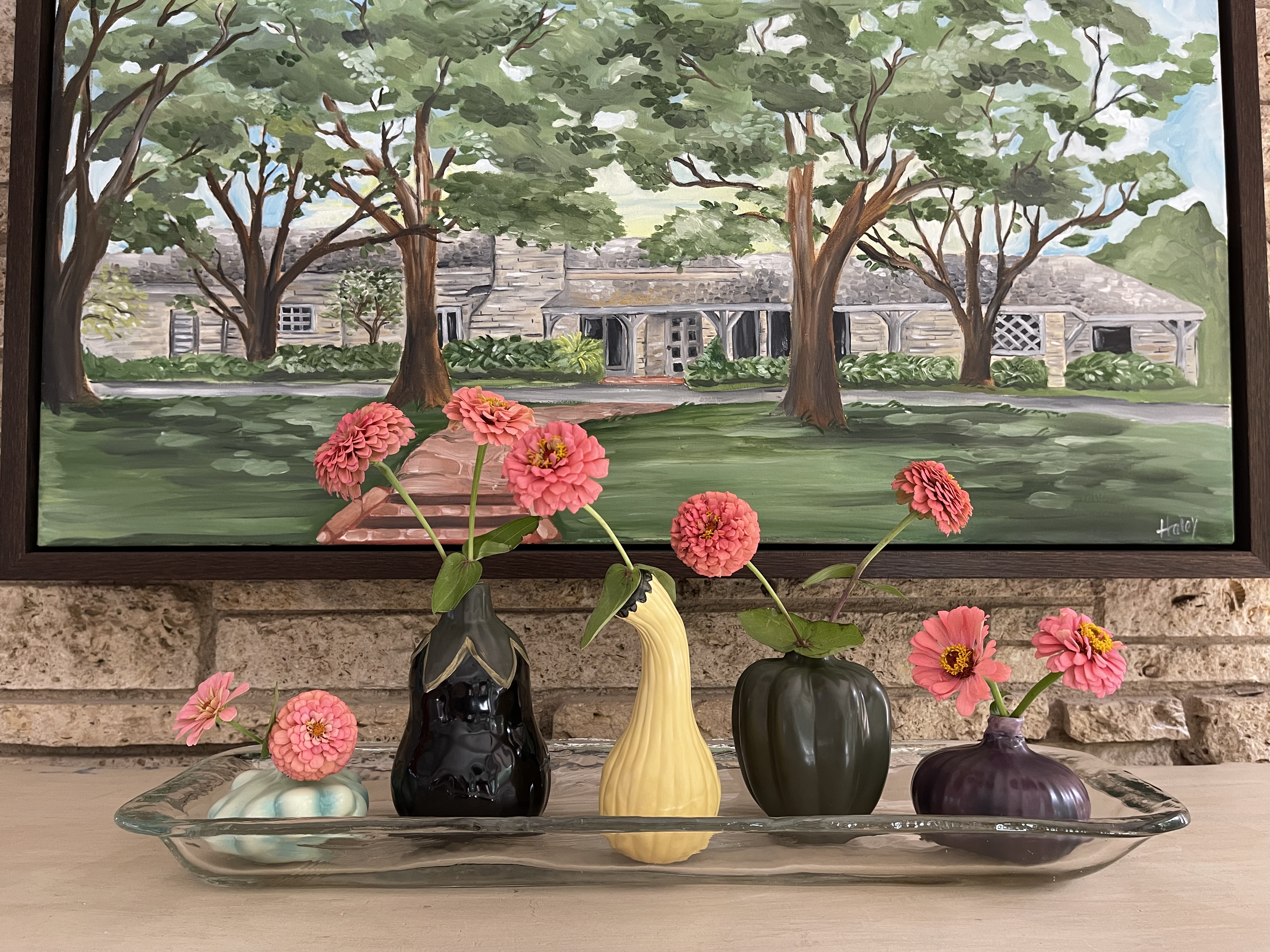
And finally, for a moment of simplicity, use individual blooms as illustrated in this arrangement. A collection of vintage ceramic vegetable vases sitting under an oil painting of our house needs only a delicate touch to enhance its beauty. The soft tones of puffy little salmon zinnias are the right choice!
Our promise to you is that all of our displays will feature botanical material growing in the home garden. In other words, these are not flower shop creations. We want you to be inspired and encouraged to appreciate the simple elegance of using gifts from your garden to bring a touch of beauty and charm to everyday life.
Linda Alexander, Dallas County Master Gardener Class of 2008
Caprese Roasted AsparagusFettuccine with Cashew, Mint and Cilantro PestoBlueberry Zucchini Muffins
Asparagus, blueberries, garlic, jalapeno peppers, zucchini, tomatoes, basil, cilantro, Italian parsley, and mint are some of our Zone 8 seasonal garden crops. If you’re growing any of these springtime and summer favorites, consider giving them a starring role for breakfast, lunch, brunch or dinner. Each recipe calls for a list of ingredients which can be picked, snipped and harvested directly from the garden. The combined flavor profiles will elevate that fresh-from-the-garden taste experience we find so satisfying to our palates.
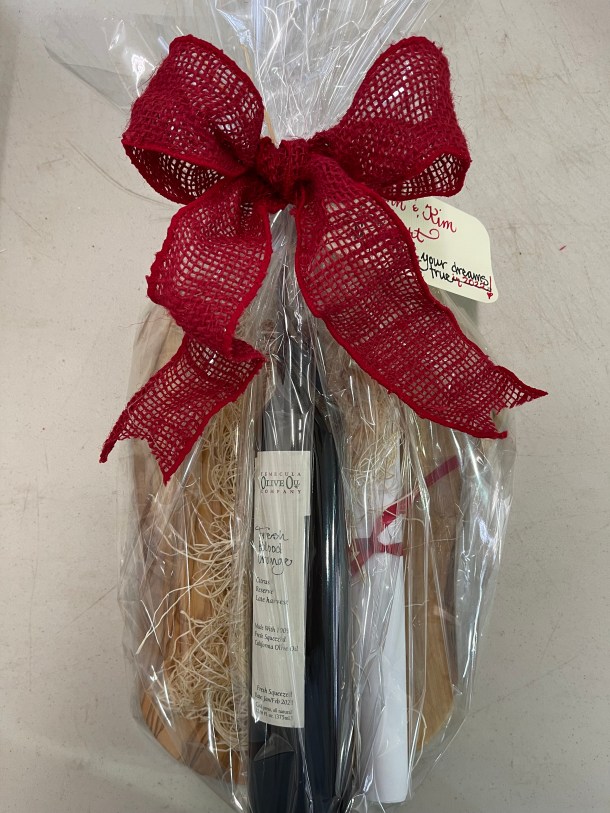
You may have noticed that the common thread in each of these recipes is olive oil. This past Christmas, family members and close friends received themed gift packages from my husband and me featuring olive oil and olive wood products. From olive wood boards, bowls and spoons to different varieties of olive oil, each one was customized for the recipient. A recipe for my favorite olive oil cake was included with each gift.
As the spirit of giving continues, throughout 2022 our family and friends are receiving a monthly recipe featuring new and unusual ways of cooking or baking with olive oil. The three recipes listed above were for March, April and May. Summer recipes calling for olive oil will include farm fresh garden vegetables (corn, tomatoes, peppers, squash, etc.) and zesty, flavorful herbs. I’m even sharing a cobbler recipe that calls for ¼ cup of lemon olive oil!
If you are an olive oil fan, check back for monthly recipes featuring this versatile product and its variety of uses. Writing in The Illiad, Homer revered olive oil as having the qualities of “liquid gold”. Let’s discover those possibilities together over the next seven months.
A Bit of Trivia…It was the ancient Greeks who invented the salad dressing which was comprised of extra virgin olive oil, vinegar, sea salt and honey.
Linda Alexander, Dallas County Master Gardener Class of 2008
After waiting for over a year and a half to resume monthly meetings, The Pierian Club of Dallas chose Raincatcher’s Garden of Midway Hills for their first event. The much anticipated gathering was filled with hugs, laughter and smiles of happiness on the faces of those who attended. We were thrilled to welcome them to learn about our approach to gardening in North Texas and to enjoy a garden-themed lunch prepared by our “Friends of the Garden” volunteer culinary team.
The story of The Pierian Club is very fascinating. It began in 1888 and has continued to evolve for over 133 years. The purpose of the club is to increase knowledge. Their motto states, “A little learning is a dangerous thing; drink deep or taste not the Pierian Spring. Their shallow draughts intoxicate the brain, and drinking largely sobers us again.” In Greek Mythology, it was believed that drinking from the Pierian Spring would bring you knowledge and inspiration.
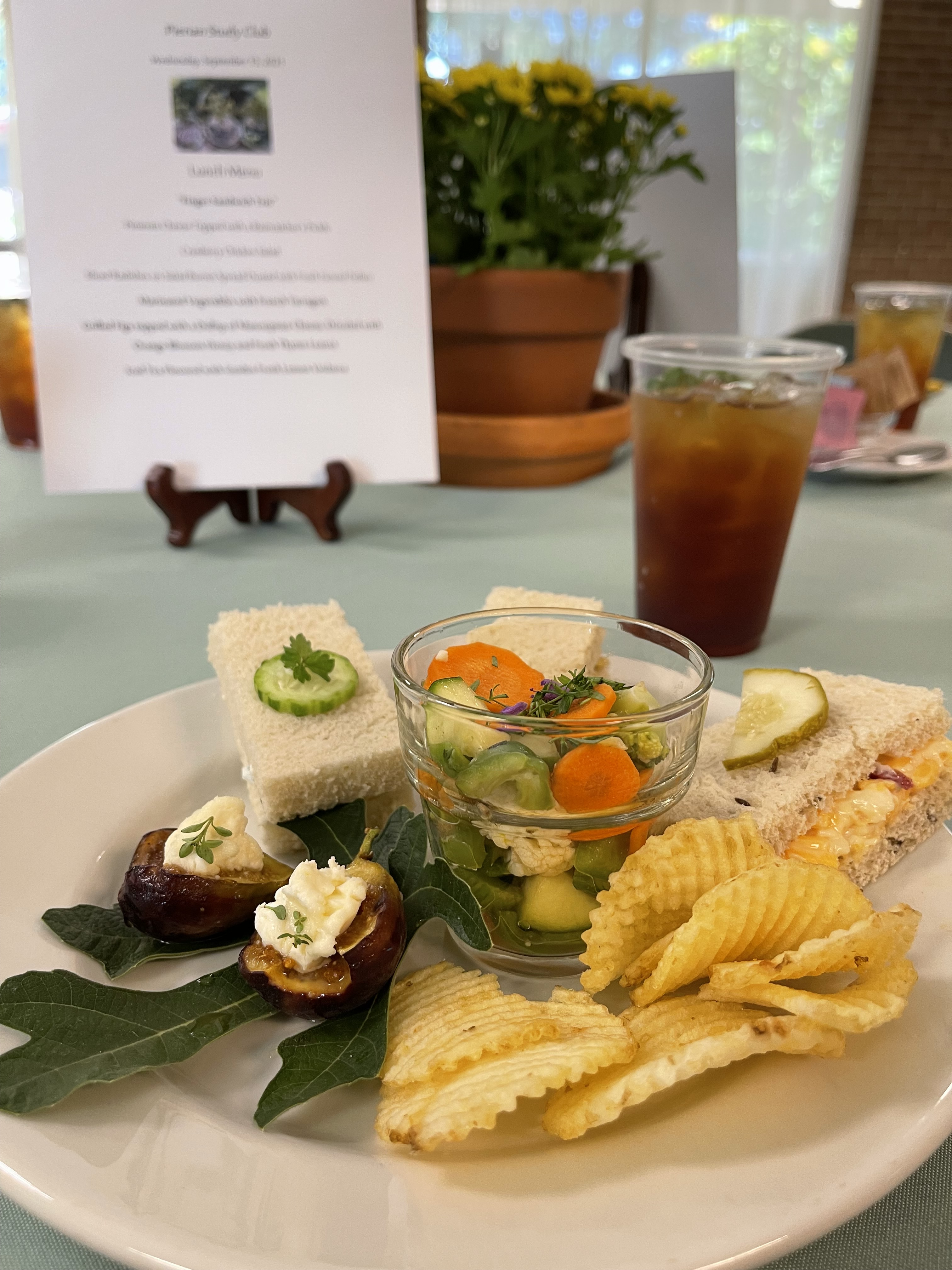
With a focus on seasonally fresh herbs and vegetables from our edible gardens, we treated them to a flavor-filled menu that stirred the senses. A brief explanation of how the menu was developed includes comments about several carefully chosen items.
The Pierian Study Club
Wednesday, September 15, 2021
Lunch Menu
“Finger Sandwich Trio”
Pimento Cheese topped with a Raincatcher’s Pickle
Cranberry Curry Chicken Salad with Orange Blossom Honey
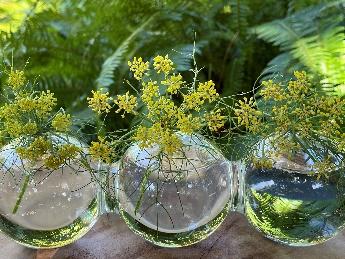
Sliced Radishes on Salad Burnet Spread Dusted with Fresh Fennel Pollen
Marinated Vegetables with French Tarragon and Anise Hyssop Blossoms
Grilled Figs topped with a Dollop of Mascarpone Cheese, Drizzled with Orange Blossom Honey and Fresh Thyme
Iced Tea Flavored with Garden Fresh Lemon Verbena
Our finger sandwich trio included the following:
1. A tribute to Martha Stewart’s favorite sandwich…buttered white bread topped with thinly sliced radishes sprinkled with salt. Taking inspiration from herbs growing in our garden, we substituted a spread made with whipped cream cheese, freshly snipped salad burnet leaves and onion chives. Radishes were added next, sprinkled with sea salt and then lightly dusted with delicate fennel fronds. Each sandwich was topped with a thinly sliced Armenian cucumber brought in from the garden.
2. Pimento Cheese. This recipe is a favorite from a recently closed restaurant in Fredericksburg, Texas…The Peach Tree Tea Room. While the original recipe calls for jalapeno juice, we omitted it, as requested, for this event. Each sandwich was topped with a pickle made by one of our volunteers. Pickles were made from the variety, ‘Homemade Pickles,’ currently growing in our garden.
3. Cranberry Curry Chicken Salad with Orange Blossom Honey. We love using this special honey from Savannah Bee and available locally at Central Market. It adds just the right amount of sweetness to the earthy flavor of curry.
Marinated Vegetables were embellished with fresh-picked French tarragon from our edible landscape. Served in individual clear glass flowerpots, they made a colorful addition to the menu with pretty purple anise hyssop blossoms scattered over the top.
Dessert was on the lighter side. Fig leaves from the garden cradled two figs halves that were lightly grilled and topped with a dollop of mascarpone cheese and a drizzle of Orange Blossom Honey. Tiny lemon-flavored thyme leaves added that fresh from the garden effect that rounded out the meal.
Following lunch, a short program introducing the Raincatcher’s Garden of Midway Hills was presented by Dallas County Master Gardener, Lisa Centala. Master Gardener volunteers then joined Lisa and our guests for a delightful tour of the demonstration gardens. With their newly acquired horticultural knowledge, members of the study group left inspired and feeling as if they had been refreshed by drinking from the Pierian Spring.
Linda Alexander, Dallas County Master Gardener Class of 2008
Dallas County Master Gardeners welcome visitors. If you would like to come to our garden at 11001 Midway Road while we are working, come Tuesday mornings. For a planned visit, leave a note in our comment section.
Ann Lamb
Pictures by Starla Willis
Sign up for our Taste the Heat Pepper event. The educational class and lunch will be at our garden on Wednesday, July 28th. Deadline to sign up is Sunday.
Kaleidoscope Garden Glass Ball to be Placed in the New Garden Area
July 16, 2021
The history of a much-loved children’s toy takes us back to Great Britain in July of 1817. British patent no. 4136 “for a new Optical Instrument called “The Kaleidoscope” for exhibiting and creating beautiful “Forms and Patterns of great use in all the ornamental Arts” had just been granted to its inventor Sir David Brewster.
The name is derived from the Greek words kalos (“beautiful”) eidos (“form”) and skipein (“to view”). Interestingly, kaleidoscope roughly translates to beautiful form watcher. From the Brewster Society we discovered this lovely explanation of its purpose. “Kaleidoscopes are portals of remembrance that open onto the familiar, yet unexpected. Allowing the eye to marvel, the mind to explore and the heart to leap, the mirrored tubes of magic have developed into a significant new art form.”
When searching for a more illustrious and descriptive name for our underused Forest Garden bed Beverly Allen, Master Gardener Class of 2018, thoughtfully tossed out the idea of a Kaleidoscope Garden. After spending over an hour discussing the possibility of embracing not only the concept but the practical approach to its design and functionality, we agreed that it would be an exciting project. Here is Beverly’s description of how she views our new garden bed through the lens of the natural world.
“The idea of light diffused through the overhanging oak branches brought to mind a kaleidoscope. We realized this was a good opportunity to use color and pattern to engage the mind and senses. It is challenging to find a variety of edible plants that will look and perform well in a setting that transitions from morning sun on the east end to bright afternoon sun on the west end with deep shade in the middle.
Planning a themed garden is captivating. Stay tuned as we consider the possibilities of such plants as tulips, peonies, lilac, elderberry and a surprise herb we are hoping to feature.”
-Beverly Allen
And so, our newly named Kaleidoscope Garden has been introduced. It will remain as is during the heat of July and August. Moving into September and cooler fall temperatures, watch for an explosion of color and patterns to appear within its borders. We hope you will experience its childlike wonder.
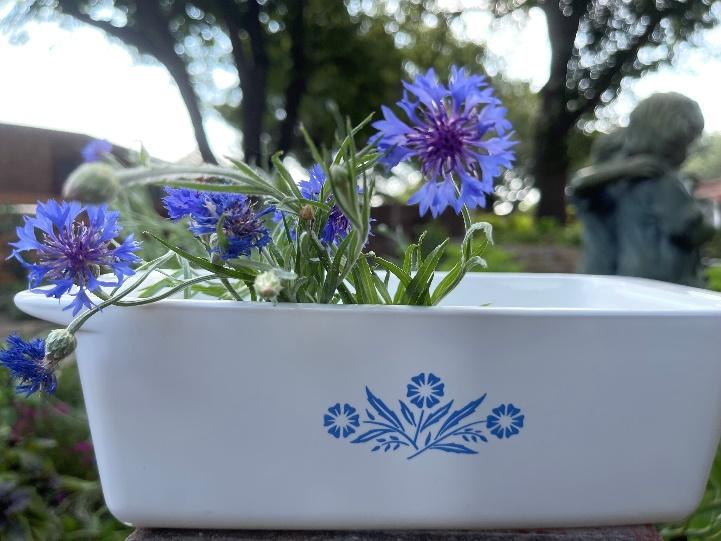
If you are a baby boomer like me, this is probably a familiar dish. Chances are you might have received similar pieces as wedding gifts during the late 60’s – 70’s. I certainly did. And for the early part of our marriage, corning ware was used often in my kitchen. But I never gave much thought to the blue floral design embossed on the side until we started growing bachelor’s buttons at Raincatcher’s in the edible landscape cottage garden.
A quick google search led me to a fascinating story dating back to the time of Napoleon. As Queen Louise of Prussia was being pursued by Napoleon’s army, she sought protection for her children by concealing them in a field of cornflowers. In order to distract them and keep them quiet, she made wreaths from the flowers. In 1871, the year of Germany’s unification, Wilhelm, son of Queen Louise, honored his mother when he made the cornflower the symbol of unity. Later, the cornflower became the National flower of Germany.
The name “bachelor’s button” refers to a time when single men with an interest in a specific woman wore them on the lapel of their jacket. If the flower faded too quickly, it was a sign that a woman’s interest in him was not mutual. Additionally, English maidens wore the cornflower as a sign they were eligible for marriage. If the girl concealed the cornflower under her apron, she had her choice of bachelors.
So, why then, did Joseph Baum, an artist at the Charles Brunelle Advertising Agency in Hartford, Connecticut, choose to feature the cornflower as Corning Ware’s trademark design in 1958? That part of the story seems to have been lost but an endearing answer might be found in the flower’s symbolism. Today, the cornflower symbolizes remembrance, anticipation, fertility, wealth, prosperity, love and the future. Could it be that he was suggesting we should use our lovely corning ware dishes for favorite family recipes that would transcend time? If so, I’m thrilled to still have one of those memorable vintage dishes in my kitchen. And, that adorable blue cornflower emblem on the dish has a new and special meaning for me.
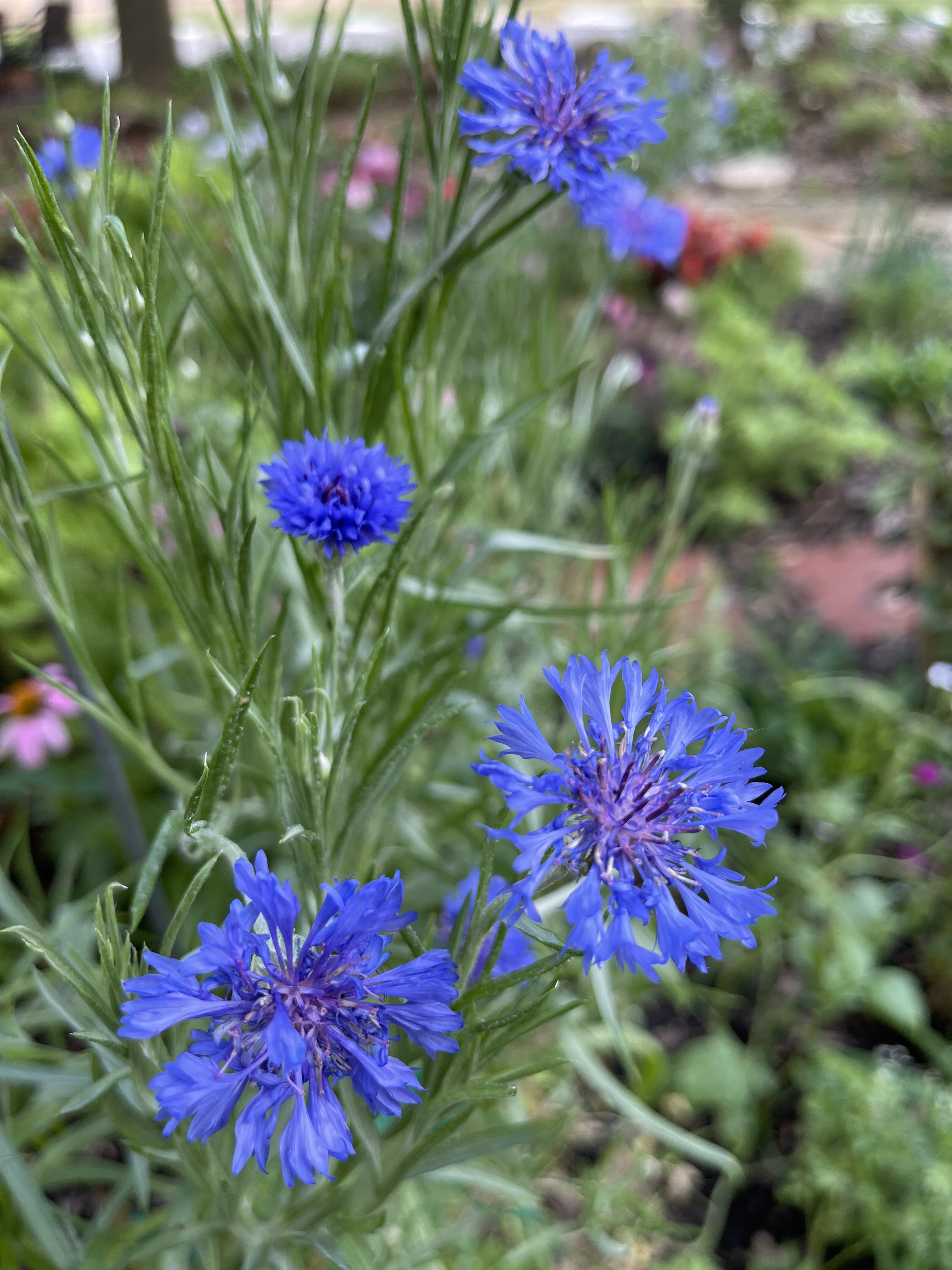
Tips for Growing Cornflowers (Centaurea cyanus)
*To get the most blooms and sturdier stems, plant in a location that receives full sun. (At Raincatcher’s, our cornflowers get a little afternoon shade.)
*If soil is predominantly clay or is sandy, mix in some organic material. We add compost yearly.
*Place plants at least 7 inches apart. Mature growth height is around 15-30 inches.
*Deadhead plants regularly to prolong their flowering periods. For taller species, staking may be necessary. We’ve had ongoing issues with them falling over so all plants are now supported with bamboo stakes.
*Mulch around plants with bark to keep soil moist and to prevent the root system from getting too much sun.
*Regular watering will keep the plants healthier.
*Cornflowers make excellent cut flowers and attract bees, butterflies and other pollinating and beneficial insects.
*Cornflower seeds are easy to harvest. When the seeds are ripe, the seedpods open up. Once this happens, extract the seeds for next year.
*Enjoy the vibrant blue flowers in salads, raw or cooked. Their sweet to spicy flavor will remind you of cloves.
A bit of trivia:
Bachelor Buttons were the favorite flower of President John Kennedy. His son John John wore one at his wedding to honor his father.
And, it has been reported that the most valuable blue sapphires are called Cornflower blue, having a medium-dark violet-blue tone.
Cornflowers Growing in the Edible Landscape Cottage Garden
Linda Alexander, Dallas County Master Gardener Class of 2008














 DALLAS GARDEN BUZZ