Apple-Sage Tarte Tatin

A rustic and comforting dessert.

6 Granny Smith’s apples, peeled, cored, sliced into 8 wedges

1 Tablespoon fresh lemon juice

3/4 cup firmly packed light brown sugar

6 tablespoons unsalted butter

3/4 cup granulated sugar

3 tablespoons minced sage leaves

 Pillsbury Refrigerated Pie Dough

Garnish:  fresh sage leaves; lightly sweetened whipped cream optional
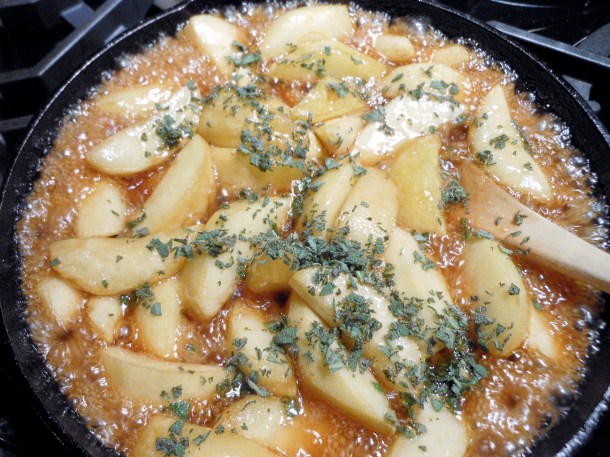
Apple-Sage Tart Cooking In Iron Skillet

Preheat oven to 425°.

Put apples, lemon juice, and brown sugar in a large bowl and toss to mix; set aside.  Melt butter in a 9-10 inch cast iron skillet or other heavy, oven-safe skillet and stir in granulated sugar.  Cook over medium high heat, stirring, until mixture turns * pale golden.  Add apple mixture and cook, tossing occasionally to coat apples, for 5 minutes.  Add sage leaves and cook 5 minutes more, stirring occasionally.  Set aside while you roll out the dough.

On a lightly floured surface, roll out the dough to about 10 inch circle for a 9 inch skillet or an 11 inch circle for a 10 inch skillet, lifting dough and turning to prevent sticking to the surface.  Fold the dough in half or quarters and place it over the apples in the skillet.  Unfold the dough, tuck the overhang under the edge of the dough into the skillet and cut 4 slits in a circle at the center of the dough.  Bake 20 minutes until the crust is deep golden.

Using heavy oven mitts, remove skillet from oven and shake lightly to dislodge any stuck apples.  Place a a serving platter over the pan and, gripping the pan and plate lightly together, flip the tart over onto the platter.  Let stand a few minutes before serving or serve at room temperature.  do not refrigerate.  Garnish with a few fresh sage leaves, and serve plain or with whipped cream.
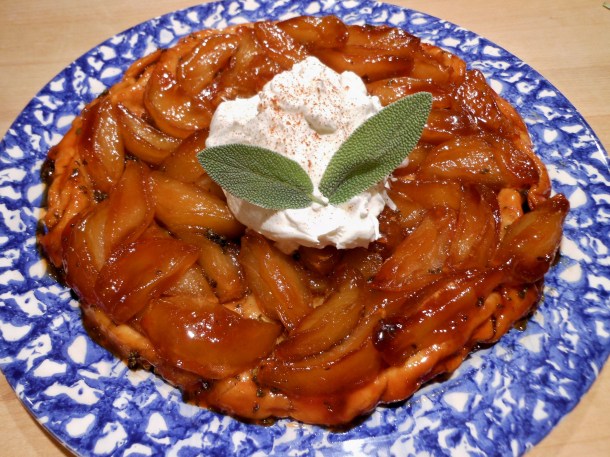
Apple-Sage Tarte Tatin With Sweeetened Whip Cream and Sage Garnish

8 servings.

 *Be sure to only let the mixture get a “pale golden color”.  You really have to watch closely to keep it from getting too brown.

Recipe and Pictures from Linda, adapted from DESSERTS FROM AN HERB GARDEN
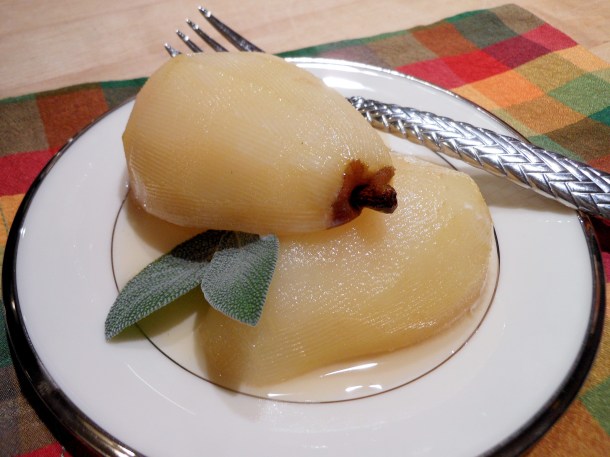
Poached Pears With Sage-Honey Glaze

Finish a heavy meal with a lighter touch.

Poached Pear Dessert With Sage-Honey Glaze

6 cups water

3/4 cup granulated sugar

1 tablespoon fresh lemon juice

4 pears, preferably bosc or d’Anjou

1/3 cup honey

2 tablespoons chopped sage leaves

Garnish: sage leaves, heavy cream optional

In a dutch oven or large saucepan, stir together water, sugar, and lemon juice. Bring to a a simmer.

Meanwhile, peel pears and halve them, leaving the stem intact on one half. Working from the bottom, insert an apple corer or melon baller to remove cores.

Gently place pears in sugar syrup and cook, uncovered, at a steady simmer.  Cooking time may be anywhere from 8 minutes to 30 minutes, depending on the pears’ ripeness; pears are done when they are tender and a paring knife can be inserted easily.

Meanwhile combine honey and sage leaves in a small saucepan an bring them just to a simmer over medium-low heat.  Remove from heat and let stand until pears are done.

When pears are done, remove them with a slotted spoon, draining them well, to a large plate, flat sides down.  Reheat sage honey if needed to make it liquid enough to brush onto pears;strain out sage leaves.  Brush honey over each pear (don’t brush the flat sides).  Arrange on serving plates with the stem half of each pear propped on the other half.

Serve pears garnished with sage leaves; drizzle with a little cream if desired.

Recipe and photo by Linda, adapted from DESSERTS FROM AN HERB GARDEN

Cheddar Cheese and Sage Biscuits

Throw a log on the fire and enjoy these “cheesy” biscuits with your favorite bowl of soup.  Makes about 16.

Sage From Linda's Garden

4 cups all-purpose flour, plus more for work surface

4 teaspoons baking powder

1 teaspoon baking soda

1 teaspoon salt

1 teaspoon sugar

1/2 teaspoon paprika

1 cup (2 sticks) chilled unsalted butter, cut into small pieces

3 cups grated cheddar cheese (9 ounces)

2/3 cup finely sliced fresh sage leaves

2 cups buttermilk

1 large egg, lightly beaten

1 tablespoon heavy cream

Preheat oven to 375° F. In a medium bowl whisk together flour, baking powder, baking soda, salt, sugar, and paprika.  Using a pastry blender or two knives, cut in butter until mixture resembles coarse crumbs.  Stir in cheese and sage. Add buttermilk, stir with a fork until mixture just comes together to form a sticky dough. On a lightly floured work surface, with floured hands, pat dough into a 1-inch thick round.

Using a 2 1/2 inch biscuit or cookie cutter, cut out biscuits as close together as possible, dipping cutter into flour each time to prevent sticking. transfer biscuits to a baking sheet.

In a small bowl, stir together egg and cream.  Lightly brush the top of each biscuit with egg wash. Bake until golden brown rotating baking sheet halfway through, 20 to 30 minutes. Transfer to a wire rack. Serve warm or at room temperature.

Recipe and photo by Linda, adapted from  NEW ENGLAND OPEN HOUSE.

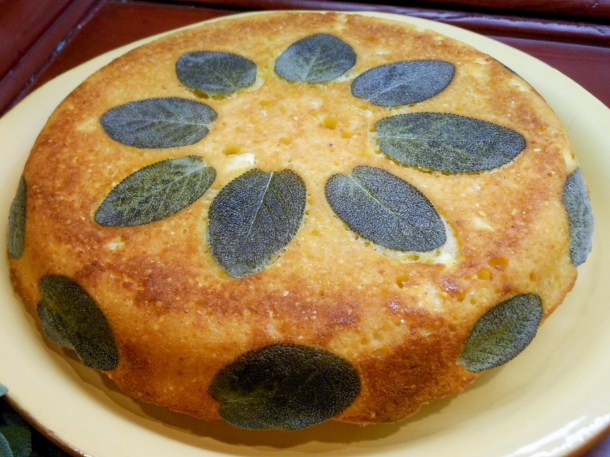
Sage-Feta Cornbread

 Remember a few weeks ago we promised sage recipes for your Thanksgiving menus.  Over the next few days we will be giving dessert, bread, and vegetable recipes using sage.

Dazzle your guests with this artistic display of garden sage. 

Sage-Feta Cornbread

Sage leaves, arranged in the buttered pan before the batter is poured in, form a beautiful pattern on the crust of this bread and distinctly flavor it throughout.  Crumbled feta contributes moistness and a salty bite.

1 tablespoon unsalted butter, softened for the pan

18-24 large sage leaves

3/4 cup stone ground cornmeal

1 cup all-purpose flour

2 teaspoons baking powder

2 teaspoons sugar

1/2 teaspoon fine salt

2 large eggs

1 cup buttermilk

1/4 cup olive oil

4 ounces (1 cup) crumbled Greek feta

Preheat the oven to 400°F. Smear the butter on the inside of a 9 inch glass pie plate.  Press the sage leaves into the butter in a circular daisy pattern, saving about 6 to press into the side of the pie plate horizontally.

Stir the cornmeal, flour, baking powder, sugar, and salt together with a wire whisk in a medium mixing bowl.  Whisk together the eggs, buttermilk, and olive oil in a second bowl.  Stir the liquid into the dry ingredients until the lumps smooth out.  Stir in the cheese.

Pour the batter into the pie plate over the sage leaves. Bake for about 25 minutes, or until the crust is browned and the bread springs back in the middle when you press on it.  Let cool for about 10 minutes in the pan.  Loosen the sides with a paring knife, then flip the cornbread out onto a plate or board with the sage leaves on top, and serve while still warm.

Recipe and Photo by Linda adapted from HERB GARDEN

Beets And Turnips From A Dallas Garden

When my husband called tonight and asked “what’s for dinner”, I said “beets”. Silence ensued. What he didn’t know was that a stampede almost took place in the garden today when we were harvesting our turnips and beets.  Our Dallas County Master Gardeners know eating your vegetables is not only good for you, it is downright tasty. 

Beets And Turnips Harvested At The Demonstration Garden

Turnips can be mashed like potatoes or used in gratins, couscous, or  frittatas.

Tokyo Cross Hybrid Turnips Grown At The Demonstration Garden

Tired of pickled beets?  Try a beet cocktail for something different.  Eat the tops of both of these vegetables for an extra nutrition boost.

Burpee Golden Beets

 Aside from the enthusiasm over our harvest, the most astonishing thing was that just six weeks ago we were planting these crops by seed.  We planted Purple Topped and White Tokyo HyBrid Turnips, Detroit Dark Red Beets and Burpee’s Golden.  We are hoping for a repeat performance when it is time to plant beets and turnips again February 1.

All the talk was of dinner when we left the garden today and I knew each pot would hold some of our harvest.  We had Beets and Beet Greens with Maple Walnuts. Now he’s talking!

Ann

Poppy And Larkspur Seed Planting For Dallas Gardens

Before the seed there comes the thought of bloom. –E. B. White

 Poppy Blooming In Front Of Climbing Pinkie Rose In Our Rose Trellis Garden

Plant Poppies and larkspur seed now for early spring blooms!

They require cool weather to germinate.  If you want gorgeous color for a low price, take this simple step and throw down these seeds in your garden right away.

Sow poppy and larkspur seeds on top of a well-prepared bed but do not cover with dirt. Tamp down the soil with the back of a hoe or pat down with your hands. Do not mulch.  

With a little rain, they will begin to germinate and next spring you will be well on your way to an heirloom, cottage garden look. Time is of the essence.  Do it now, you will be thanking us next spring! 

Ann

Bushels Of Butternuts

Even the name—butternut—brings fall to mind.  Nature brings us such end of the season treats in November.  The queen of winter squash hides hers in a soft beige overcoat, revealing the rich, orange-yellow flesh when cut.

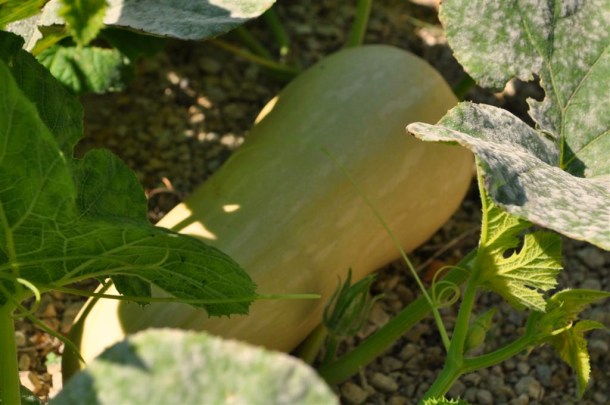
Butternut Squash Growing In Our Garden With Unfortunate Mildew On Leaves

Jim, our vegetable expert at the garden, has harvested bushels of lovely butternuts.  He planted the exuberant vines in the heat of the summer, with harvest plans for November. All squash are types of gourds.  Butternuts should be harvested when firm, well shaped, and heavy for their size.  Unlike their thin-skinned summer cousins, winter squash have a hard tough shell.  Butternuts can be stored for several months in a cool, dark place. 

Of course, the fun is deciding how to serve butternuts.  Soup? Such a lovely, rich addition to the Thanksgiving table.  Roasted? Add a bit of fresh ginger and butter. Or enjoy its sweet, slightly nutty flavor in filled pastas, spicy curries, or stews. 

Butternut–and other winter squash like acorn, pumpkin, and Hubbard–are a nutritional bonanza. They are rich in Vitamin A (beta-carotene), fiber, folate (folic acid) and potassium.

Butternut Squash Harvested From Our Garden Atop A Store Bought Pumkin

So don’t pass up these lovely winter squash for your Thanksgiving table.   You might try my daughter Molly’s favorite: Butternut Squash Soup.

Butternut Squash Soup 

1 Tbs olive oil

5 oz. pancetta, cut into small dice

1 yellow onion, chopped

1 tsp sugar

1 tsp minced garlic

1 sprig fresh sage leaves

3 ¼  cups low-sodium chicken broth

3  cups butternut squash, peeled, seeded, and cut into 1 ½ inch chunks

 1 ½ Tbs. Marsala wine

Salt and pepper to taste

¼ cup heavy cream

Lightly whipped cream for garnish

¼ cup hazelnuts, toasted and chopped 

In a stockpot over medium-low heat, warm the olive oil.  Add the pancetta and cook, stirring occasionally, until lightly crisp, 5-7 minutes.  Transfer to a paper towel-lined plate; reserve the oil in the pot.

Add the onion and sugar to the pot and cook, stirring occasionally, until the onion is tender and slightly caramelized, 8-10 minutes. Add the garlic and sage sprig and cook, stirring, for 1 minute.  Add the broth and squash and simmer, covered, until the squash is tender, 20-25 minutes.  Remove the sage sprig and discard.  Add the Marsala and season with salt and white pepper.  Simmer for 3 minutes, and then remove the pot from the heat.

Puree the soup in a blender until smooth, then whisk in the cream.  Ladle the soup into warmed bowls.  Garnish with the pancetta, a dollop of whipped cream, and hazelnuts.

Adapted from a Williams-Sonoma recipe 

Elizabeth

Plant Your WildLife Habitat

The flowers that are blooming in our WildLife Habitat right now were selected with a purpose.  We wanted to provide food for all kinds of creatures and yes, they are flying in to feast on our plants and eat our berries.   Monarch, Gulf Fritillary, and Giant Swallowtail butterflies have been identified. Skippers, bees, dragonflies, and birds are in residence.

Consider these Suggestions from landscapers around the USA of  The National Wildlife Federation for Your Backyard Habitat:

In every landscape I design and with the volunteer consultations that I do there is one plant that I always suggest: Asclepias (milkweed). I try to use native varieties, and A. incarnata (swamp), A. speciosa (showy) and A. verticillata (whorled) milkweeds are my gold medal winners—the wildlife garden equivalents to Shaun White. I like them not just for their importance in habitats—they are host plants for the monarch butterfly—but because of their educational value for children. My kids love to go out into our flower garden and check to see if there are any new monarch eggs, larvae or chrysalides, and they love watching the butterflies fly in to feed on the nectar.”—Mat Paulson of Moorhead, Minnesota.

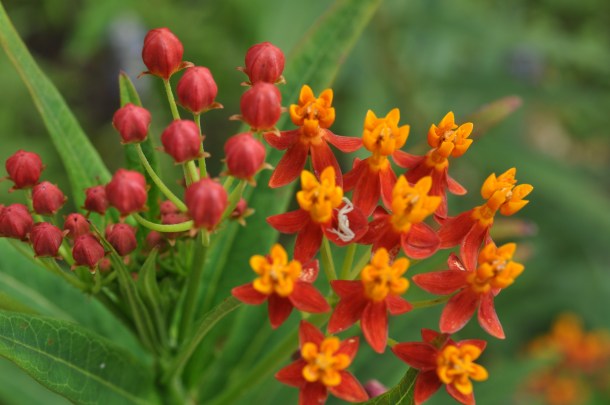
 At the Earth-Kind® Water Wise Demonstration Garden we have planted Asclepias currassavica, tropical milkweed. (Love the super star reference made to Shaun White-Olympic snowboarding Gold medalist.)

Tropical ButterFly Weed In The Wildlife Habitat

 “The purple flowers of aromatic aster (Aster oblongifolius) provide color in the late summer and fall and attract swarms of pollinators. The plant’s short, shrublike appearance makes it a good candidate for more formal landscaping applications. The silvery checkerspot butterfly, pearl crescent butterfly, and asteroid moth utilize this plant as a host. Tolerance to poor soil conditions has allowed me to add it to my own suburban residential lot. This aster is naturally found in the eastern and north-central United States.”—Perry Eckhardt of St. Charles, Missouri

Aster Growing At The Demonstration Garden Wildlife Habitat

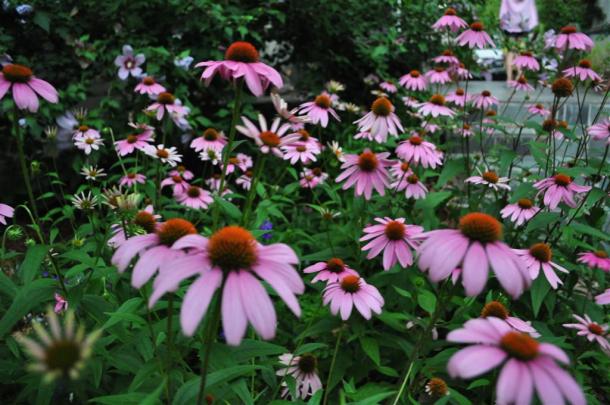
“Purple coneflower (Echinachea purpurea) is a great nectar plant in any butterfly garden and is used by many other insects as well. I think it’s like candy to them. Purple coneflower is also a favorite of American goldfinches and sparrows, who love the seeds. Plant big clumps for the best effect.”—

Purple Coneflower In A Dallas Garden

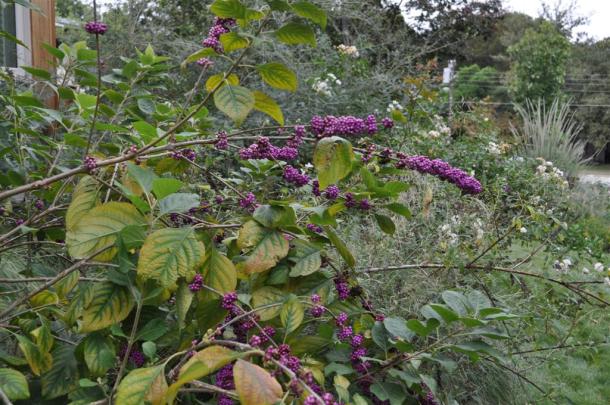
“One of my favorite native beauties, which is also a hit with the birds, is the American beautyberry. This large shrub makes a wonderful understory plant, perfect for shady areas in your yard or along riparian areas in need of restoration. This beautyberry takes care of itself in the maintenance department, requiring little effort on the part of the caretaker. The open branching structure, brilliant green leaves, and fuchsia-colored berries of this plant make it a lovely addition to any habitat garden. The birds will thank you by devouring the tasty berries, and the butterflies will come calling to taste the sweet nectar of the dainty whitish pink flowers.”—Alice Nance of Austin, Texas

Butterfly Weed, Aster, Coneflower, and Beauty Berry are a benefit to our Demonstration Garden and we thought you might like to include them in yours!

Ann

Texas Style Fall Color

Fall Gardens in Dallas trump summer gardens!   Remember this instead of  falling into discouragement in our 100° plus days with hardly a drop of rain. The Dallas County Master Gardeners who garden at the Demonstration Garden on Joe Field Road all agree we  love our version of fall color!

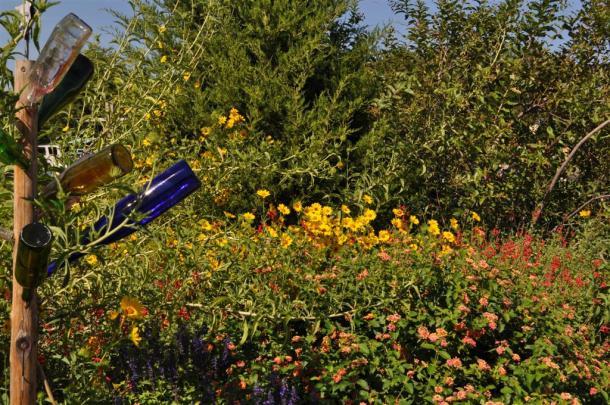
Bottle Tree Framing a view of Maximillian Sunflower, Desert Sage, Lantana, and Salvia Blue Spires

This area of the garden is relatively carefree after amending the soil, careful plant selection, and mulch, mulch, mulch!

Rosy Creek Abelia, Salvia Blue Spires, Muhly Grass, Papyrus On The Right In Our Pond

We do have an agonizing  bind weed issue that keeps us humble, but we will save that part of the story for another time. 

 Enjoy the mellow quality of Autumn in Texas. Temperatures are less and color is more!

Ann

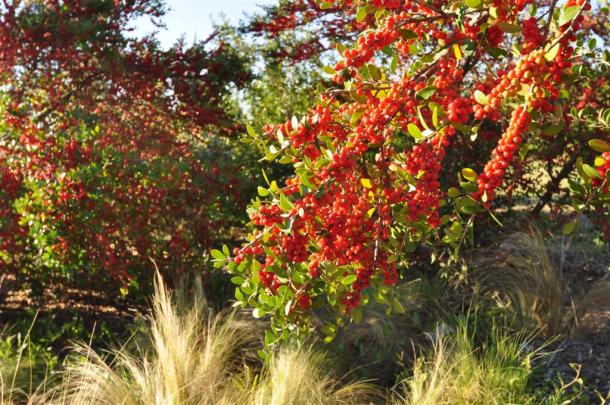
Yaupon Holly, Full Of Fruit In The Fall

 We have three female Yaupon Holly (Ilex vomitoria) trees in the Wildlife Habitat of the Raincatcher’s Garden.  The fruit ripens in the fall and will attract Northern Mockingbirds, Cedar Waxwings, and other fruit-eating birds.  The evergreen foliage provides good cover and sometimes nesting sites, for songbirds.  Although the the foliage will be more dense in full sun than in part-shade, this species is well adapted to both.  Pruning practices also affect the density of the cover it provides.

When buying yaupon trees, the easiest way to be sure you will get fruiting trees is to select them in the late summer or fall, when you should be able to see fruits on a female tree.  Because yaupons are dioecious, pollination by a male tree is required for the female tree to produce fruit, so you may want to plant a male (non-fruiting) tree among your females.  However, Dallas has many yaupons, and female trees often seem to be pollinated by males from other gardens.   Fortunately, fall is our best season for planting trees. 

'Pride of Houston' Yaupon Holly At The Demonstration Garden

The beautiful fruits are properly called drupes rather than berries, because there is a single seed in the center of the fruit, surrounded by an outer skin and a fleshy middle layer.

Deirdre