Mexican Chocolate Cake with Praline Frosting

Mexican Chocolate Cake Served At April Master Gardener Meeting 

1 cup boiling water

3 ounces unsweetened chocolate

½ cup butter, softened

1 teaspoon vanilla extract

1 ¾ cups brown sugar

2 eggs

1 ¾ cups plus 2 tablespoons flour

1 teaspoon baking soda

¼ teaspoon salt

½ cup sour cream

½ cup finely chopped pecans

Pour water over chocolate in bowl.  Stir to melt and set aside to cool.  With mixer, cream butter and vanilla, add brown sugar and blend well.  Beat in eggs, 1 at a time.

 Sift flour, soda and salt into creamed mixture and mix well.  Blend in sour cream and chocolate mixture.  Pour into greased  9×5 inch loaf pan.  Bake at 350 for 1 hour and 15 minutes.  Cool for 10 minutes and frost.  Garnish with pecans.  May be prepared ahead.

Frosting 

½ cup butter

1 cup brown sugar

¼ cup milk

1 to 2 cups confectioners’ sugar, sifted

½ teaspoon vanilla

Blend butter and brown sugar in saucepan.  Boil over medium heat for 2 minutes, stirring continuously.  Add milk and bring to a boil.  Remove from heat and cool to lukewarm.  Gradually stir in sugar until frosting reaches desired consistency.  Mix in vanilla.  

Serves 12

Linda
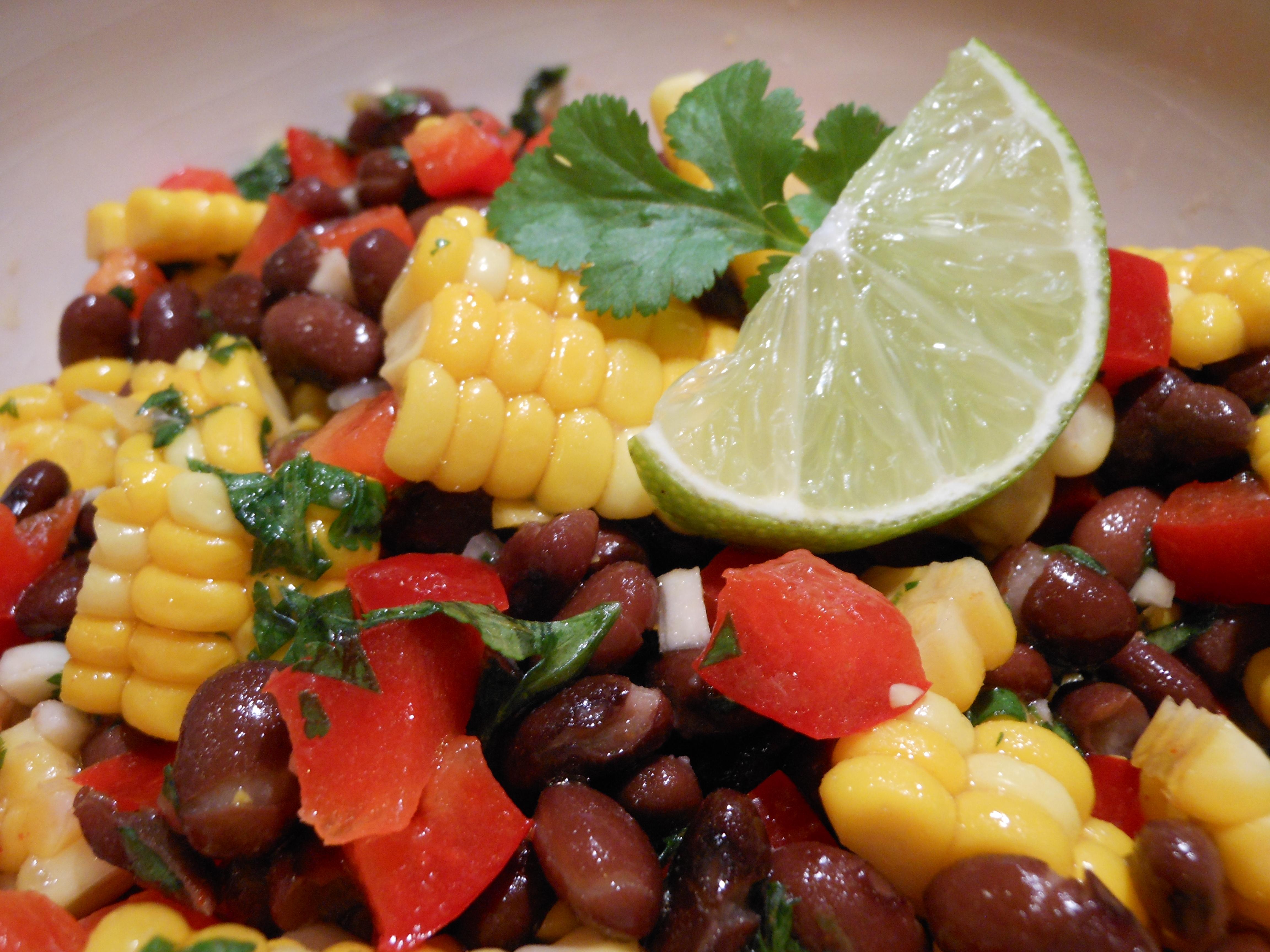
Black Bean Salad with Lime Cilantro Vinaigrette

Black Bean Corn Salad with Lime Cilantro Vinaigrette

Black Bean Salad with Corn, Red Peppers, Avocado

and  Lime-Cilantro Vinaigrette 

2 15-ounce cans black beans, rinsed and drained

3 ears fresh cooked corn, kernels cut off the cob

2 red bell peppers, diced

2 cloves garlic, minced

2 tablespoons minced shallots, from one medium shallot

2 teaspoons salt

¼ teaspoon cayenne pepper

2 tablespoons sugar

9 tablespoons extra virgin olive oil, best quality such as Colavita

1 teaspoon lime zest (be sure to zest limes before juicing them)

6 tablespoons fresh lime juice

½ cup chopped fresh cilantro, plus more for garnish

2 Haas avocados, chopped 

Instructions 

Combine all ingredients except for avocados in a large bowl and mix well.  Cover and chill for a few hours or overnight.  Right before serving, add avocados and mix gently, being careful not to mash avocados.  Garnish with more chopped cilantro, if desired.

Serve at room temperature. 

Servings: 6-8

Linda

Cream of Cilantro Soup

Cream of Cilantro Shooters

½ cup butter

½ cup chopped fresh cilantro, divided

1 medium onion, chopped

2 celery stalks, chopped

1 ½ teaspoons ground cumin

1 garlic clove, chopped

2 jalapeno peppers, seeded and chopped

1 shallot, chopped

½ cup all-purpose flour

4 (14 ½ ounce) cans chicken broth

1 bay leaf

¼ teaspoon pepper

2 cups whipping cream

1 cup (4 ounces) shredded Monterey Jack cheese 

Preparation 

Melt butter in a large Dutch oven or stockpot over medium-high heat; add ¼ cup chopped cilantro, onion, and next 5 ingredients.  Cook, stirring constantly, 5 to 7 minutes or until tender. 

Stir in flour, and cook mixture over medium heat, stirring constantly, 7 minutes or until mixture is golden brown. 

Add chicken broth, stirring rapidly until blended; add bay leaf.  Bring mixture to a boil; reduce heat, and simmer 20 minutes. 

Stir in pepper and whipping cream; cook 5 minutes. 

Pour mixture through a wire-mesh strainer into a bowl, discarding vegetables. 

Add shredded Monterey Jack cheese and remaining ¼ cup chopped cilantro. 

Pour soup into individual serving bowls. 

Yield: 2 quarts

Linda

Picture by Starla

Spinach and Mushroom Enchiladas with Cilantro Cream Sauce

Spinach Mushroom Enchiladas with Cilantro Cream Sauce 

Cilantro Cream Sauce: 

3 cups heavy whipping cream

¼ teaspoon cayenne pepper

1 ½ teaspoons coarse salt

3 cups chopped cilantro leaves (about 1 bunch)

5 teaspoons cornstarch dissolved in 5 teaspoons cold water 

Mix together the cream, cayenne, salt, cilantro and the dissolved cornstarch in a 2-quart saucepan over medium heat.   Cook and stir until thickened, about 10 to 15 minutes.

spinach mushroom enchiladas sign (2) 

Enchiladas: 

1 teaspoon butter

½ large onion, diced

8 ounces fresh button mushrooms, stemmed and quartered

20 ounces frozen chopped spinach, cooked

½ cup stale bread crumbs

1 teaspoon white pepper

1/8 teaspoon nutmeg

¼ teaspoon chili powder

1 egg

coarse salt

2 cups shredded Mexican blend cheese, divided

10 flour tortillas 

 Preheat the oven to 350F.  Melt the butter in a skillet over medium heat.  Add the onions and mushrooms, and sauté until the onions are transparent.  Remove from heat and set aside.  Squeeze the excess water out of the cooked spinach.  Place the spinach, bread crumbs, white pepper, nutmeg, chili powder and egg in a food processor and pulse until blended thoroughly; season with salt.  Transfer the spinach mixture to a large mixing bowl and stir in the reserved onion-mushroom mixture and 1 cup of the cheese.  Spoon about ¼ cup of the filling onto each flour tortilla, roll up and place seam side down in a 9 x 13-inch baking dish.  Pour the Cilantro Cream Sauce evenly over the enchiladas and sprinkle with the remaining 1 cup of cheese.  Bake for 30 minutes or until brown and bubbly. 

Note:  For a special presentation, line the center of the tortillas with fresh spinach leaves before filling and rolling them and garnish with *Spicy Sauce.

Adapted from “Peace Meals”

*Spicy Sauce 

1 large tomato, finely chopped

½ cup finely chopped onion

2 canned jalapeno peppers, seeded and chopped

¼ cup tomato juice

½ teaspoon salt 

Combine all ingredients; stir well.  Chill until serving time.  Yield 1 cup

Linda

Pictures by Linda and Starla

Bluebonnets

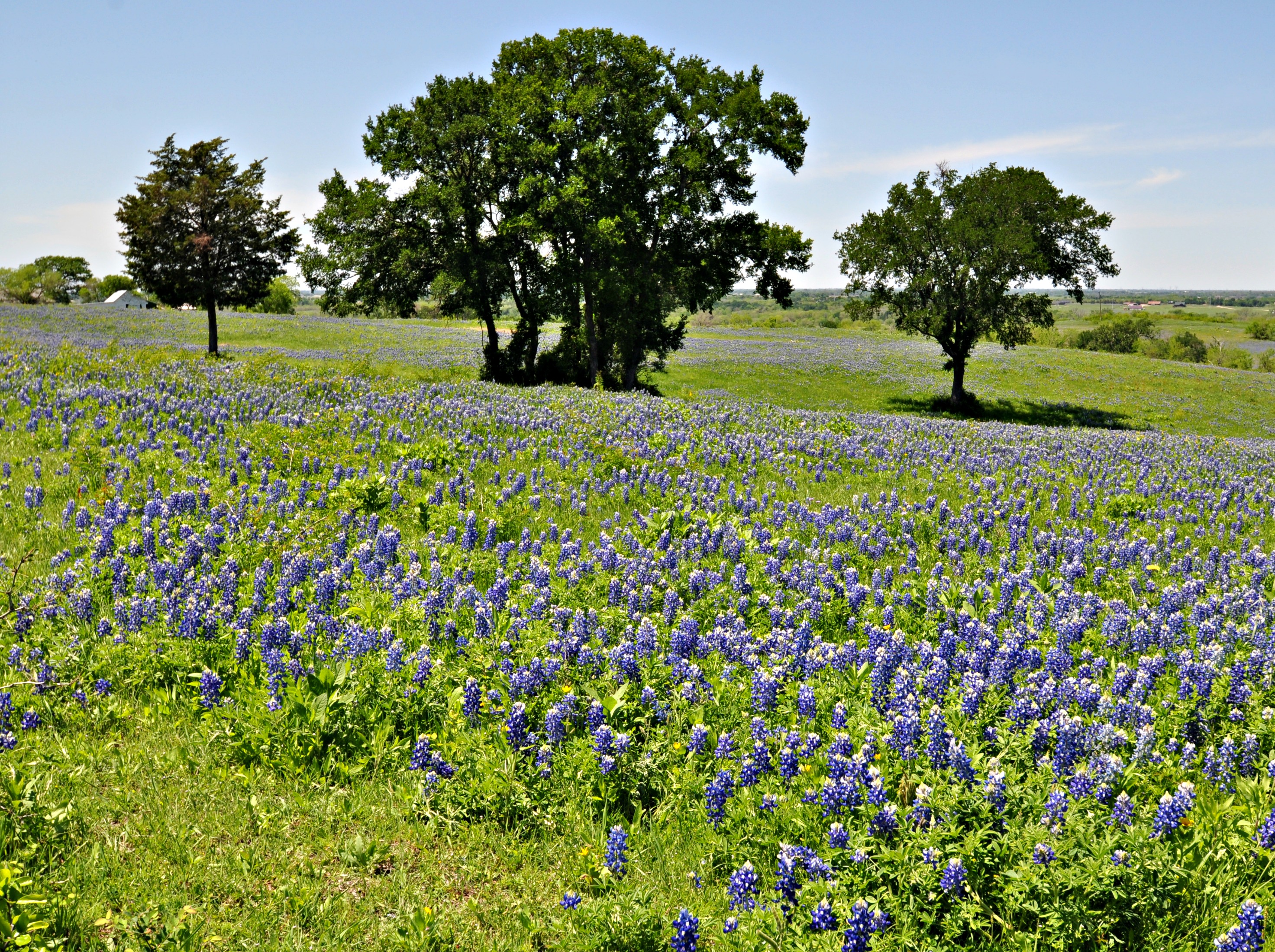
 On April 20th a short one hour drive from Dallas to Ennis, Texas brought us to beautiful Bluebonnet fields.”The bluebonnet is to Texas what the shamrock is to Ireland, the cherry blossom to Japan, the lily to France, the rose to England and the tulip to Holland.” (quote by Jack McGuire) 

To get this field of blue, you have to plant seeds in the fall when spring thoughts are  distant. If you need a little reminder, we will be happy to oblige.  In October we will remind our readers to plant Bluebonnet seeds.

Close up of Bluebonnets in an Ennis field

And remind you to purchase a field.

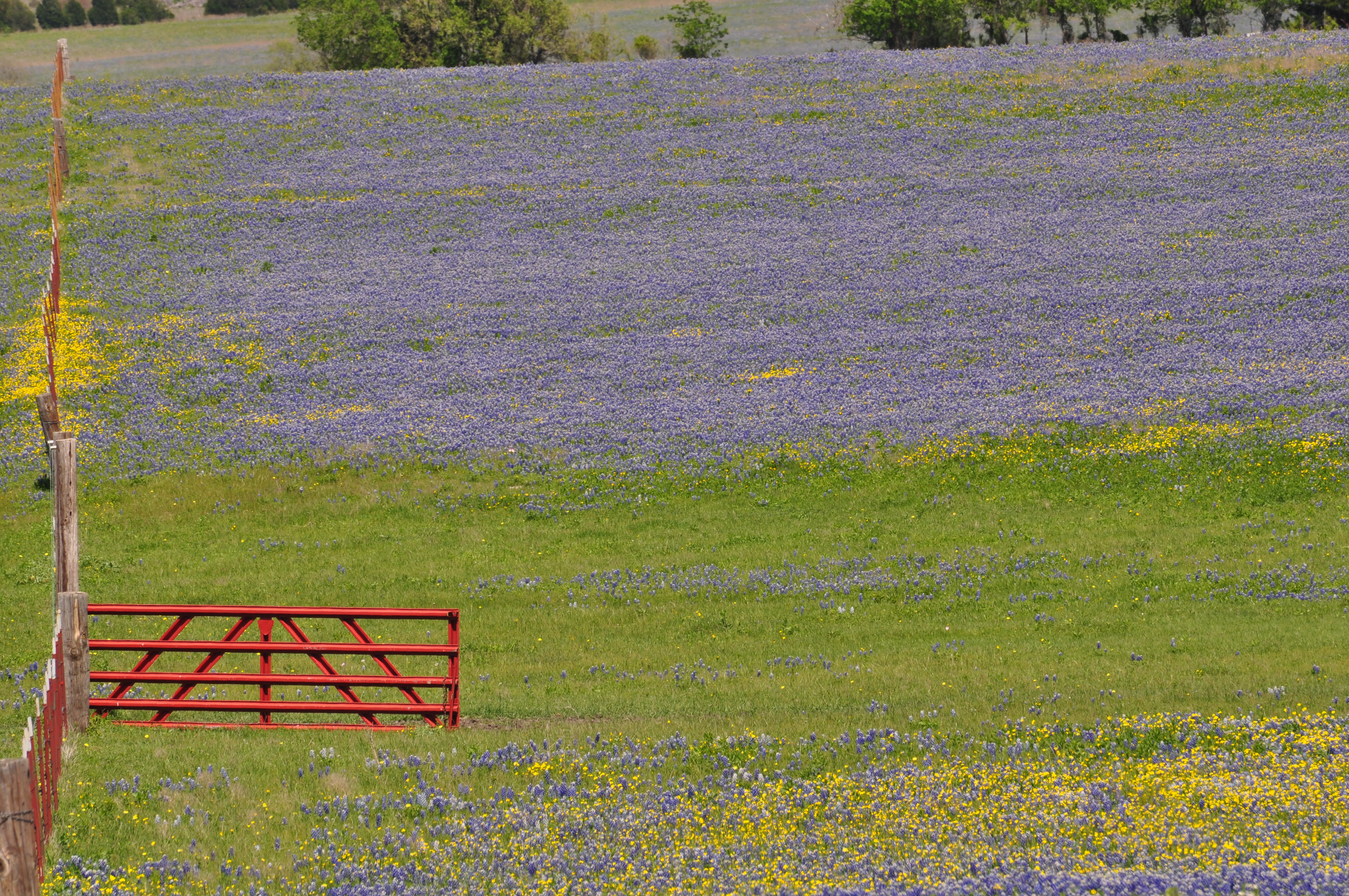
Bluebonnets Covering an Ennis Hillside

And to paint  the gate.

Bluebonnet Field in Ennis, Texas With Red Gate

Ann

Penelope, An Earth-Kind® Rose In Our Garden

In 2007, we had the idea of having a rose trellis made out of rebar.

Rose Trellis Being Shown Off By Gail, Kim, Cindy, Jane

We planted three Penelope Roses on it.

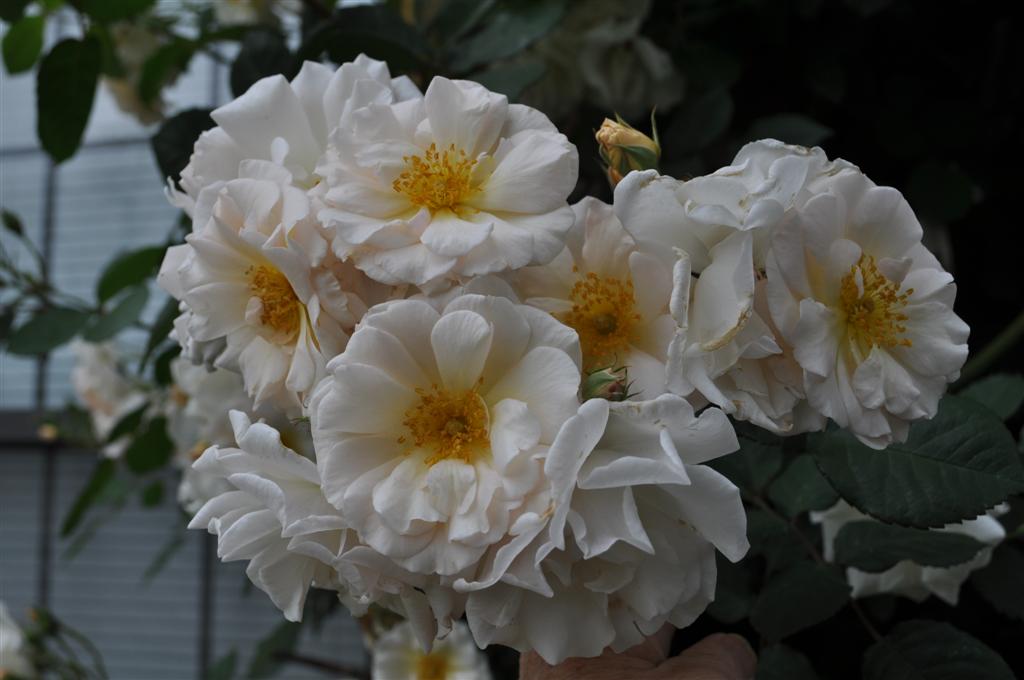
Here is what Antique Rose Emporium says about Penelope: Massive clusters of large, pale pink, semi-double flowers fading to peaches and cream adorn this chunky shrub during the growing seasons. Fat, orange-pink hips weigh down the bush in fall and winter. This rose is an excellent choice for hedging as the bush is dense with beautiful foliage and fragrant flowers and will mature quickly.

Penelope Rose Clusters

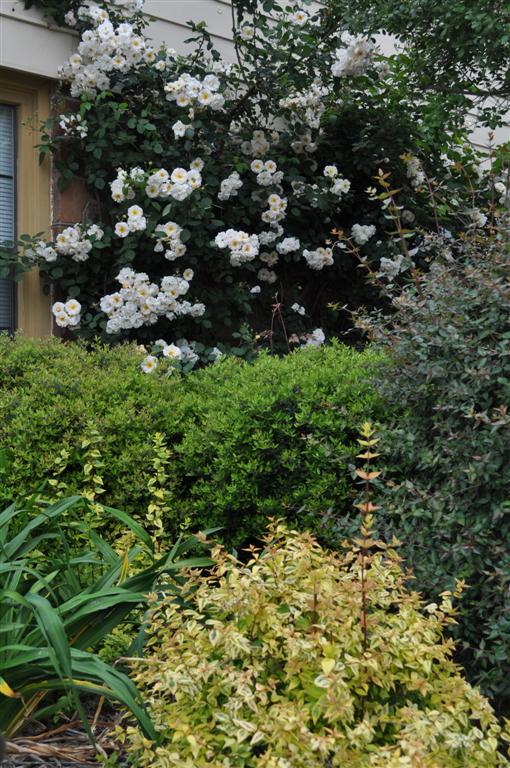
This is the  iron trellis in 2013 smothered by Penelope and  with Abelia, ‘Edward Goucher, Abelia ‘Kaleidescope’, Dwarf Yaupon Holly, and Daylilies at her feet.

Penelope, Abelias, Daylily foliage, Dwarf Yaupon Holly

Ann

April Dallas County Master Gardener Meeting

 Nothing short of a tornado should keep you from the April 25 Master Gardener meeting at the Earth-Kind Water Wise Demonstration Garden, 2311 Joe Field Rd. , Dallas. 

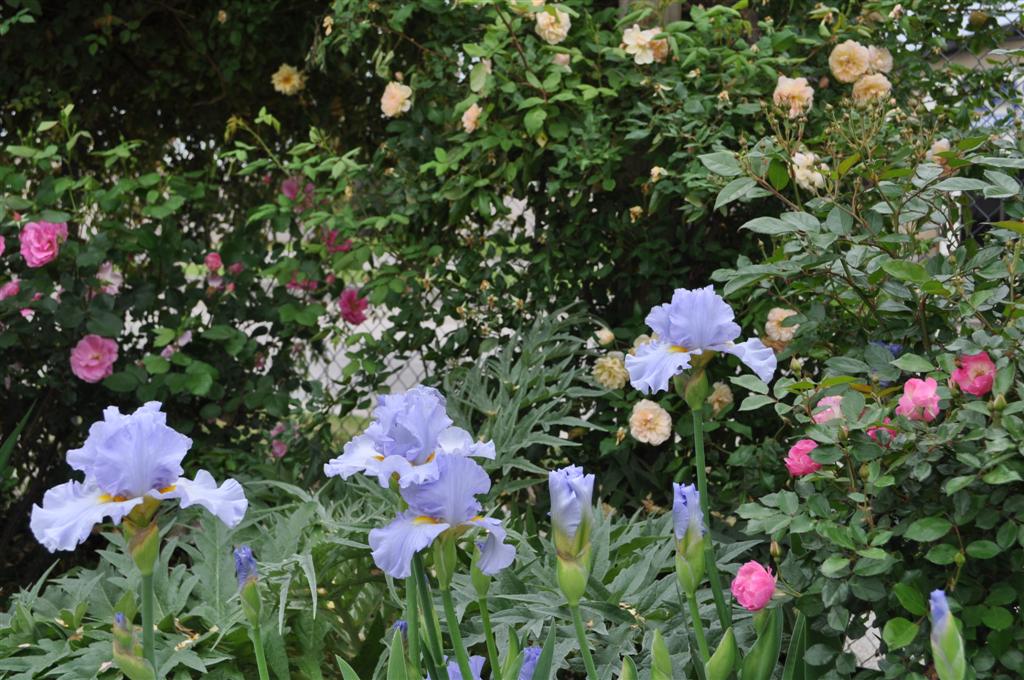
Blue Iris and Earth Kind Roses at the Demonstration Garden

Not only is the Garden in full, best of April, boisterous bloom.  But Linda  tested Mexican recipes for months to perfect a lunch menu using our home grown cilantro that will leave you weak in the knees: Cream of Cilantro Soup; Spinach and Mushroom Enchiladas with Cilantro Cream Sauce; Black Bean Salad with Corn, Red Peppers, Avocado and Lime-Cilantro Vinaigrette; Spicy Salsa; and Mexican Chocolate Cake with Praline Frosting. 

Cilantro Growing In Raised Bed At The Demonstration Garden

What would lunch be without a Plant Sale? Master Jardineros will sell 4-inch, quart, and gallon plants for rock bottom prices.  Plants include: lyre leaf sage, artemesia, Victoria blue salvia, stick verbena, Indigo Spires salvia, Star sedum, fall asters, blackberries, Blue Gamma grass, tall pink “Chi Chi” Ruelia, white and purple Hyacinth bean, and compost.  Check or cash only, please. 

Note: Please bring your own folding chair.  The meeting begins at 11:30.  Gina Woods a fellow Master Gardener will be presenting a program on Tillandsias and Bermulaids .  She will be bringing plants to show and sell.

Elizabeth

Learning In The Garden

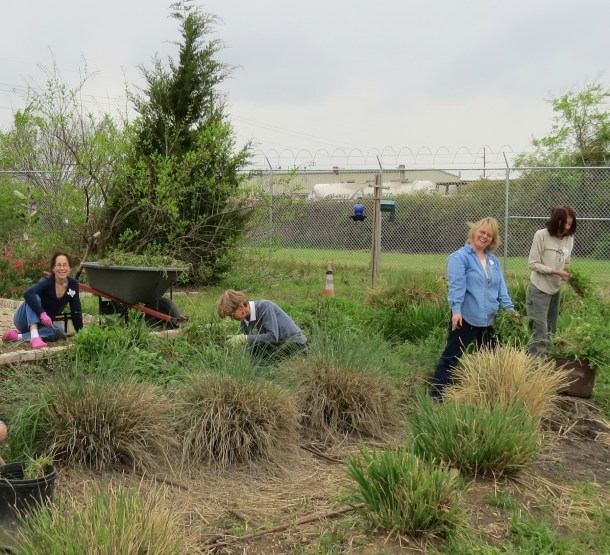
Tuesday, April 7, the Denton County Master Gardener School came to Dallas to learn from the Dallas County Master Gardeners at The Earth-Kind® WaterWise Demonstration Garden on Joe Field Road.

Did you know blackberries have primocanes and  floricanes and perennial roots and biennial tops?

Tim Allsup and blackberry lessons

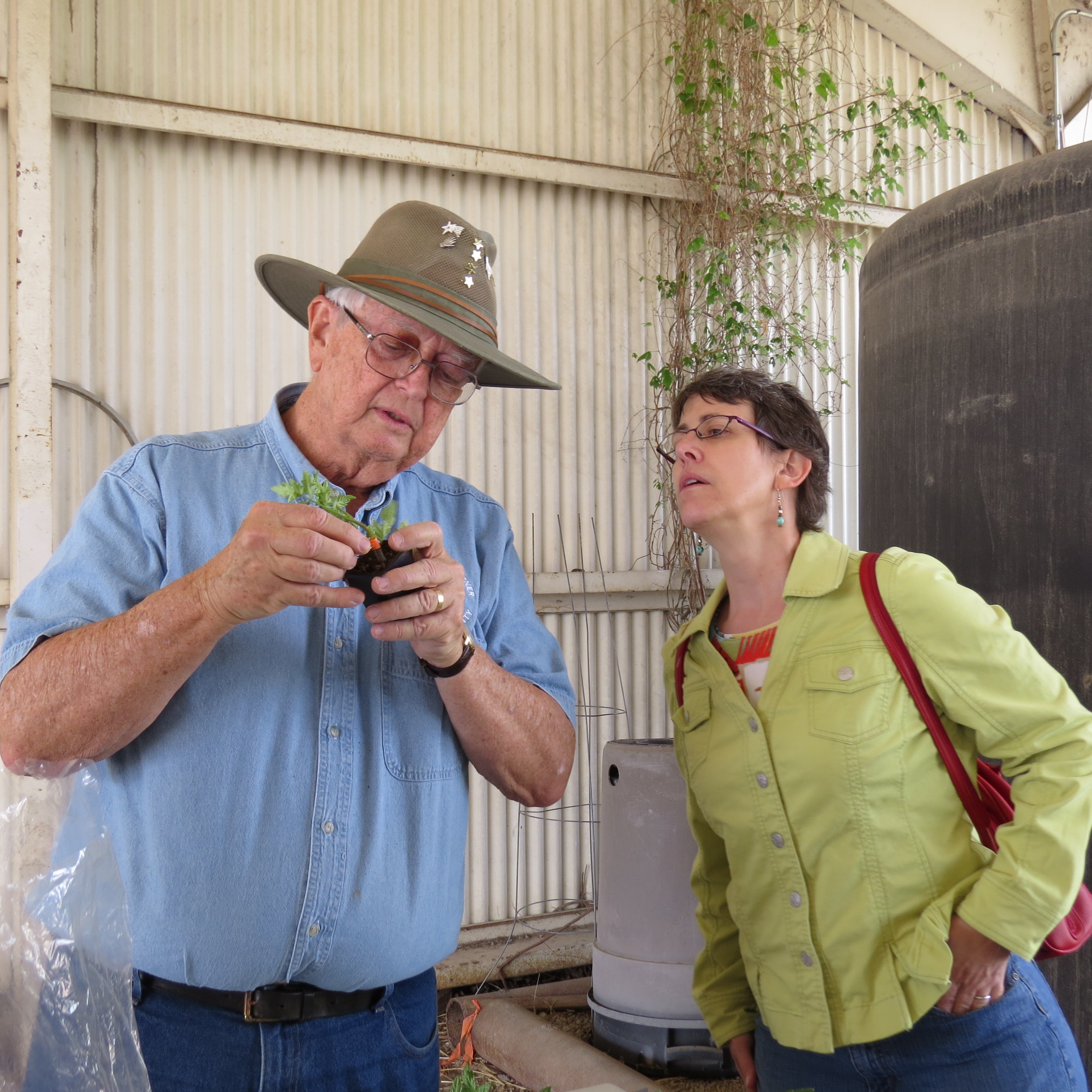
Have you ever grafted a Cherokee Purple Tomato onto a Celebrity Tomato?

Jim Teaching Tomato Grafting

Are you aware of the virtues of vermiculture?

Michele and Sue Teaching At The Dallas Demonstration Garden On Joe Field Road

We just can’t help it.  We love sharing  garden know- how with other gardeners.

Yearning to learn in the garden?  Future classes will be advertised on this blog.  Y’all come!

Ann

Pictures by Starla.

In The Spring…

From Wheat To…….. Bread?

One of the most fascinating aspects of being a gardener is learning about the history of certain plants that are growing in the garden.   Our DemonstrationGarden has many plants that have long and interesting pasts.  From the Garden’s “vegetable lambs” (a.k.a. cotton) to the fascinating stories behind many of the herbs, the Garden provides a mini-history lesson to the school children who visit. 

     Around 10,000 BC three grass species are thought to have crossed, giving rise to the plant we now call “wheat.”  Archeologists have found evidence of wheat in pits and caves used by humans as far back as 8000 BC.   By 6700 BC Stone Age man was using stone tools to grind the wheat into flour.  In fact, it is postulated that the “domestication” of wheat and other cereal crops might have been responsible for turning ancient nomadic hunter-gatherer communities into agrarian, stationary societies.  By 5000 years ago many civilizations grew wheat as a major crop.  The Egyptians were the first to make loaves of bread rise, possibly as a result of using beer, rather than water, as the liquid while making their bread.  Wheat bread was so important in Egyptian culture that in the tombs their dead were provided with miniature granaries to provide food for the afterlife.  An Egyptian museum even displays a loaf of bread found in one of the tombs.   This gives a whole new meaning to the words “stale bread.”

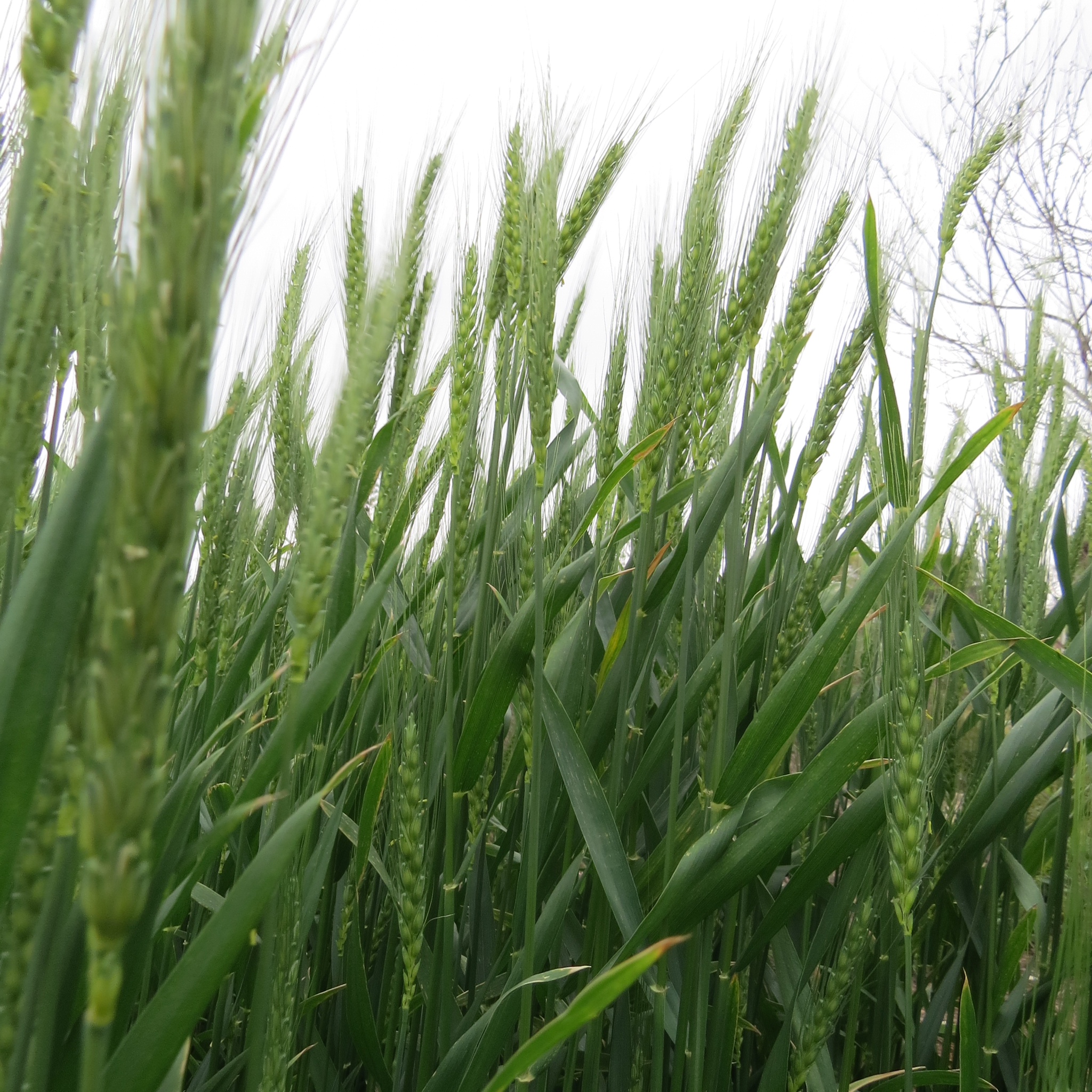
     For the past three to four years, the Demonstration Garden has grown a crop of wheat.  There are two different types of wheat:  fall wheat and spring wheat.  For years, the Garden’s wheat seeds (the name of the variety is unknown) were planted in a long raised bed in the spring.  However, few wheat stalks made it to maturity.  So, after talking to Fred Burrell, who was the County Extension agent at the time, in 2012 the seeds were broadcasted in the fall about 1”-2” apart and about 1”-2” deep in the raised bed.   Judging from the plants,

Wheat Growing At The Demonstration Garden on Joe Field Road, Dallas

it looks as if a good crop of mature wheat will be obtained this year.  By late summer the stalks will turn golden and be harvested.

     Until now, the Garden’s wheat crop has been used primarily for educational purposes to show school children an actual wheat plant.  In the past, the few wheat stalks that made it to maturity were cut and used for decoration.  However, at some point, it is hoped that enough wheat can be grown to actually produce a loaf of bread (or maybe a mini-muffin, since it takes about 10 square feet of planted wheat to make one small loaf of bread). 

     If you would like to find out more information on growing your own wheat to make bread, there are several articles on the internet describing the process.  Mother Earth News  has a detailed article on how to go about planting, reaping, threshing, winnowing, and turning the wheat into flour.  Growing your own wheat to make bread isn’t as easy as buying a loaf at the store, but it certainly makes one appreciate what our ancestors and even some people today still do to obtain wheat flour.  So, as you are eating your morning toast, think about the history of wheat as an important food crop.  And, if you have ever grown your own wheat for bread, we would love to hear from you.

Carolyn

Picture by Starla