Well, Summer has arrived and things are heating up. This is garden2.0 in my raised beds . The radishes and carrots were eradicated on Mothers Day, and now, a month later considerations of “what next” crosses my mind.
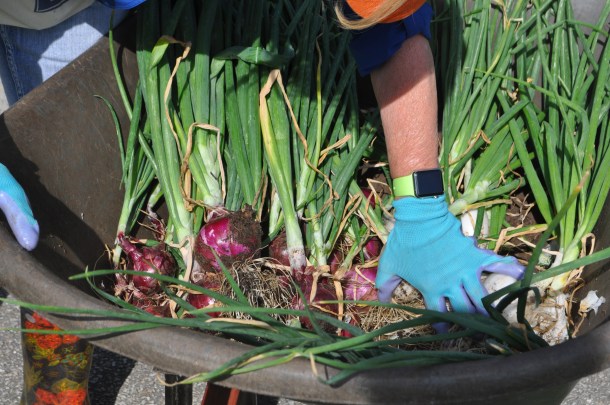
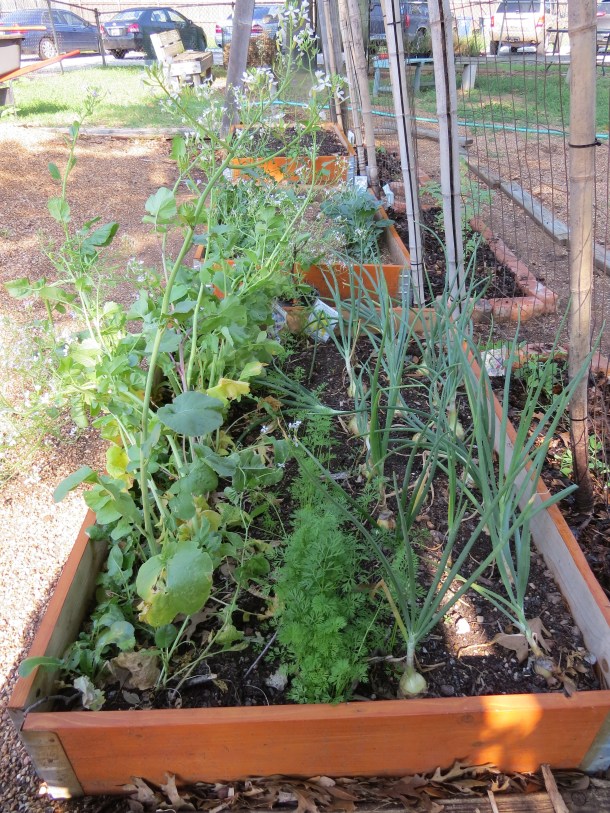
The last vestiges of the Fall garden,1.0 are waning. The onions , still in the ground have not become very bulbous, but the green tops will make a nice addition to a summer salad– the kale needs to come out but hasn’t quite made the trip – And then there is the dill – It has reached to the sky and given us a beautiful show of delicate green but now it is very sad looking, with brown clumps of dill seeds hanging on the umbels.
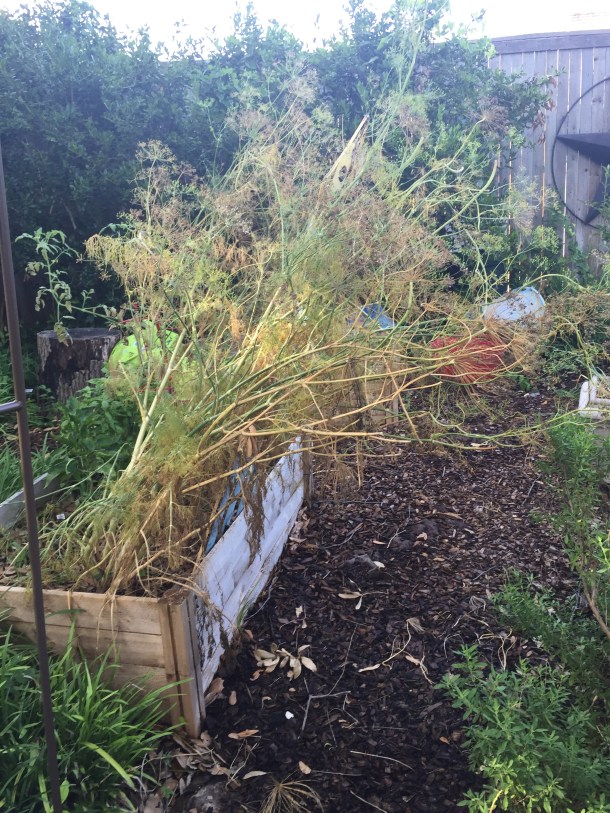
Yes, it is time to come out– it’s in the way of my path, it’s ugly and it must go …But wait,– hold on, after making the decision to remove, but before I yanked it out, I spy not one, but 2 caterpillars munching on the dill seeds while enjoying the morning sun! This plant must stay, at least a few days longer to house the honored guests. So much for a neat and tidy garden right now – Maybe garden 3.0.

The Honored Guest:
A Black Swallowtail Caterpillar on Dill
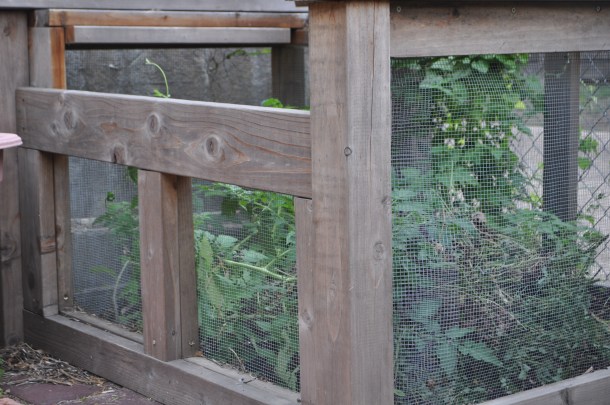
Tomatoes, peppers, cucumbers and beans, are putting on new growth and blossoms The tomatoes are surviving — I wouldn’t say thriving, but they are not dead and gone — I even get a few golden and red gems that never seem to make it back to the house.
The cucumbers were planted sinfully late, but are climbing up the wrought iron fence and acting like they want to perform. I must remember to water regularly, but with a trip planned, not sure how that is going to go. But I continue, learning with each step and misstep, and enjoying the journey.
Thus continues the saga of this little garden that brings me joy in the most unexpected ways.
Starla


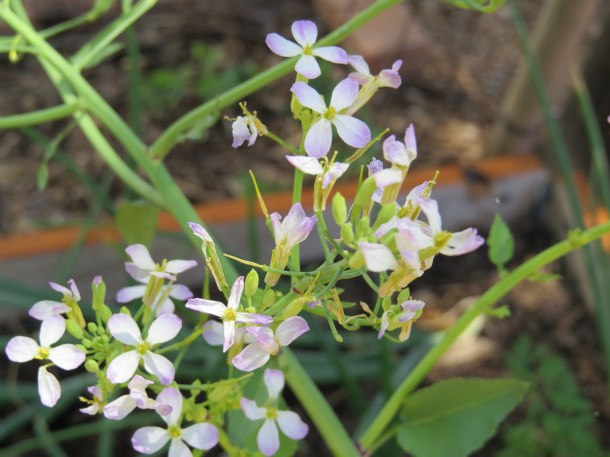
 As with many plants, Tagetes lemmonii is known by so many common names (Copper Canyon Daisy, Mexican Bush Marigold, Mountain Marigold, Mount Lemmon Marigold, tangerine-scented marigold, and Perennial Marigold) that it is almost easier to refer to it by its Latin nomenclature. Yet even its Latin name has a fascinating story behind it.
 There is one word of caution when pruning or working with Tagetes lemmonii. Some people are extremely sensitive to the oils in the leaves and can develop a painful, itchy rash when their skin is exposed to sunlight. Sometimes this rash can continue for several days. Therefore it might be best not to plant Tagetes lemmonii where it can be brushed against, be sure and wear gloves and long sleeves when working with it, or at least wash your skin well with soap and water after handling.
 Broccoli and cabbage went in first along with a few herbs, followed by lettuce and arugula in October. I had some success with broccoli, but not so much with the cabbage, lettuce or arugula ( they bolted). Radishes and carrots were planted from seeds. After the first of the year onions were added and then potatoes came and went (I had the wrong soil, so they never sprouted). There was minimal success with the radishes (not properly thinned), but the carrots – I waited, looking for a glimpse of the carrots(roots)? under the leafy tops — until right before Mother’s day, and then I pulled them. Once again the results were mixed; I had a range of carrots from 1/4 inch to over 6-7 inches long and counted 26 of the prettiest multicolored carrots I have ever grown.





 DALLAS GARDEN BUZZ