Wonders of the Garden

Is it true that sometimes good things come in small packages? In this case, yes, except for me it was a box. Waiting on my doorstep was the package clearly marked ‘Please protect from freeze and extreme heat’. With the thermometer quickly climbing to the 100+ mark, heat was the main concern of this precious piece of cargo. Why all the fuss?

In March of this year our Raincatcher’s edible landscape team had just started to install the first green material for our newly redesigned garden. Converting the church’s abandoned children’s playground into a place of tranquility and sensual delight was a challenging task.

It had already been determined that one specific area, a 12’ square to be exact, would be anchored by a stately bay laurel. Surrounding it in grand Victorian style, would be those aromatic jewels of the garden, the fragrantly pleasurable scented geraniums.

Numerous trips to our local garden centers yielded a disappointingly small number, 4 chocolate scented and 8 nutmeg. Call, after call resulted in the same answer; “No”, we don’t have any old-fashioned rose scented geraniums this year. Finally, after one month of searching, the answer we had hoped for came from an internet supplier. “Yes”, we only have 8 left and this is the last of the crop. “I’ll take them”, was my immediate answer!

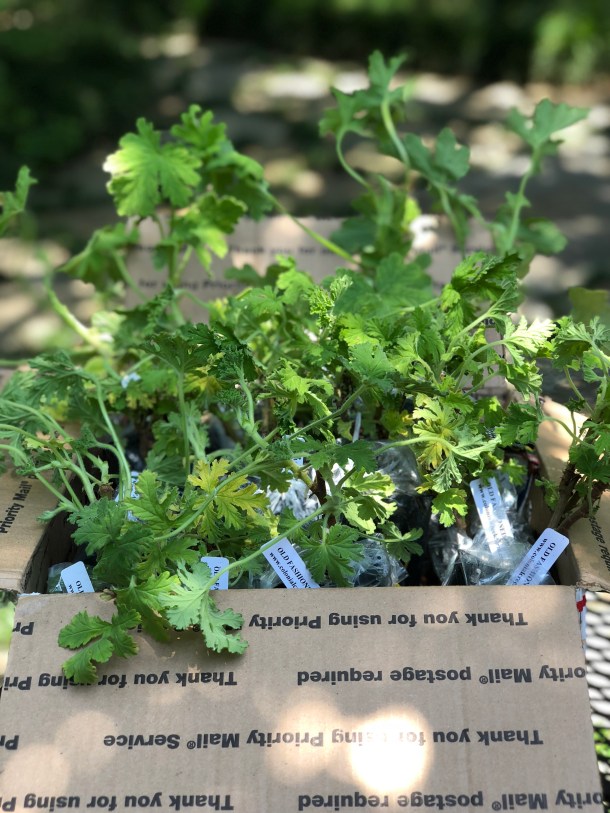
Carefully opening the box and sifting through layers of slightly dampened newspapers, my eye caught the tip of a jagged little leaf peaking through. And then, there they were in all their Victorian glory, 8 beautiful…happy and ready to be planted in our garden…’Old-Fashioned Rose’ Scented Geraniums. After a moment of delicately crushing and bruising the leaves, my head was filled with their heavenly scent. Yes, of course, it was worth the wait. And, we promise next month to share photos of their progress along with a few recipes using the leaves in some of our favorite baked goodies.  

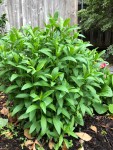
Scented geraniums to be planted in the edible landscape at The Raincatcher’s Garden.

Note: If you happen to notice more than 8 plants, SURPRISE, I couldn’t resist the temptation when the lady from Georgia taking my order said that she also had 4 peach scented geraniums available. Rubbing their fuzzy little leaves in between my fingers, I caught the gentle scent of a fresh Texas peach. For me, it was a moment of pure summer bliss.

After a night at my house, our precious cargo will go to its new home; the Raincatcher’s Garden of Midway Hills. Please visit us at 11001 Midway Road. We’re in the garden every Tuesday from 9:00 – 12:00noon tending to our babies.

Linda Alexander

Two events coming up at Raincatcher’s:

Peach Fever-June 26

Edible Landscaping Lecture and nibbles from the edible  garden-June 28

Garden Bloggers Fling Day 1 and Stop 1

A rainy view of the entrance to Lady Bird Johnson Wildlife Center.”My special cause, the one that alerts my interest and quickens the pace of my life, is to preserve the wildflowers and native plants that define the regions of our land — to encourage and promote their use in appropriate areas, and thus help pass on to generations in waiting the quiet joys and satisfactions I have known since my childhood.”

Lady Bird Johnson Wildflower Center was our first stop on Friday. As we gathered for the group picture, they mentioned that rain was headed our way.  Being a native Texan, I should have heeded the warning when I heard “squall line”, but I was intent on seeing the treasures that awaited us.

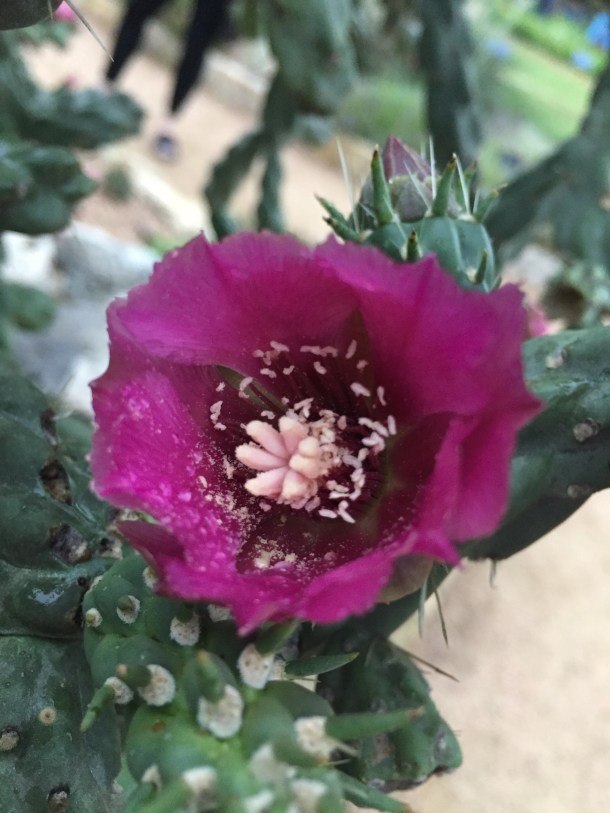
Even in the rain, the cholla in the demonstration garden beckoned. It’s magenta blooms caught my eye through the stone window.

Cholla cactus blooms

  It began to sprinkle -colorful ponchos dotted the gardens and then it started to rain, then it began to go sideways, so we scurried to find shelter. It didn’t take long to realize that the elements were winning, but so was the garden – the much needed rain was a welcome sight, even though it came torrentially.

A caterpillar sighting lured some of us out of the stone alcove, but the elements were getting the upper hand –everything was soaked-our pictures were blurred , cameras were malfunctioning…

We retreated to the main entrance where we sought refuge under the eaves and ultimately in the gift shop. A beautiful bouquet of wildflowers brightened our dampened spirits (pun intended) in the restroom.

As we left, the sound of the stone cistern filling up was music to the ears. Even though it was a wash in some ways, it wasn’t all for naught.  It’s not often you get to see Lady Bird Wildflower Center through the rain.

Starla Willis

May Harvest At The Raincatcher’s Garden

A wheelbarrow of leeks, onions, garlic. Bush beans are growing in raised bed behind the harvest and our mulch piles are in the upper right corner.

Blackberry Pickings; these will make delicious jelly or cobblers.

This is a view of our raised beds brimming with healthy veggie plants and bordered by grapevines. You can see Dorothy and Syann measuring tomatoes in Bed #1.

Ann Lamb

Why would you measure tomatoes plants and weigh harvest? 

Growing blackberries in Dallas


Garden Bloggers Tour Austin Gardens

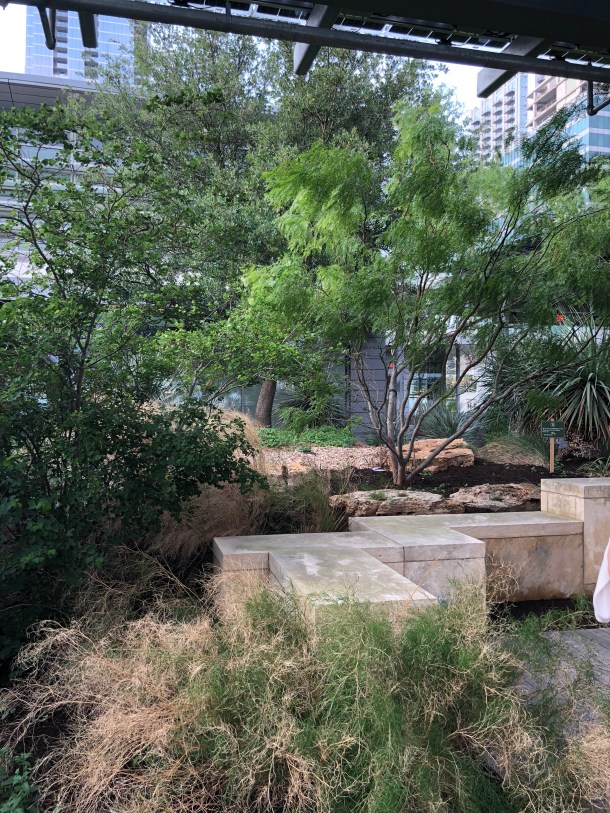
Garden bloggers from all over the United States, Canada and England gathered in Austin in early May to tour the finest and best gardens.  The Lady Bird Johnson Wildlife Center, the Zilker Botanical gardens and fourteen private gardens were viewed over three days. The first night’s event started at the Austin Central Library where we enjoyed their rooftop sustainable garden with a view of Shoal Creek and Lady Bird Lake. This eco-friendly building and its landscape were a perfect start for the Garden Blogger’s Fling.

Rooftop Garden of Austin Central Library

We saw many garden styles from large estates to cottage plots. All of them shared a fondness for yucca and agave (I have never seen so many different kinds), deer resistant plants, water-conserving methods, and phenomenal hardscaping (usually using rocks from their own property.)

Yucca baccata in front of sun-baked limestone wall

What we didn’t see in Austin is a story in itself: no bedding plants and hardly any bushes because of deer pressure and no weeds because of the true grit of the owners themselves or in some cases, staff.

I am awed by my fellow Texas gardeners.  We say gardening in Dallas is tough but Austin gardeners may be tougher!  Less water, rocky soil and more critter problems (deer bedding down in the garden, eating the garden and rutting in the garden.) In the truest sense, they turned problems into brilliant design.

Starla and I want to share pictures from the Garden Bloggers Fling 2018 over the next few weeks. We think you will be inspired, learn and renew your commitment to good gardening.

Ann Lamb

April Box Lunches

Hungering for the what was in the box lunches at the April Master Gardener meeting?

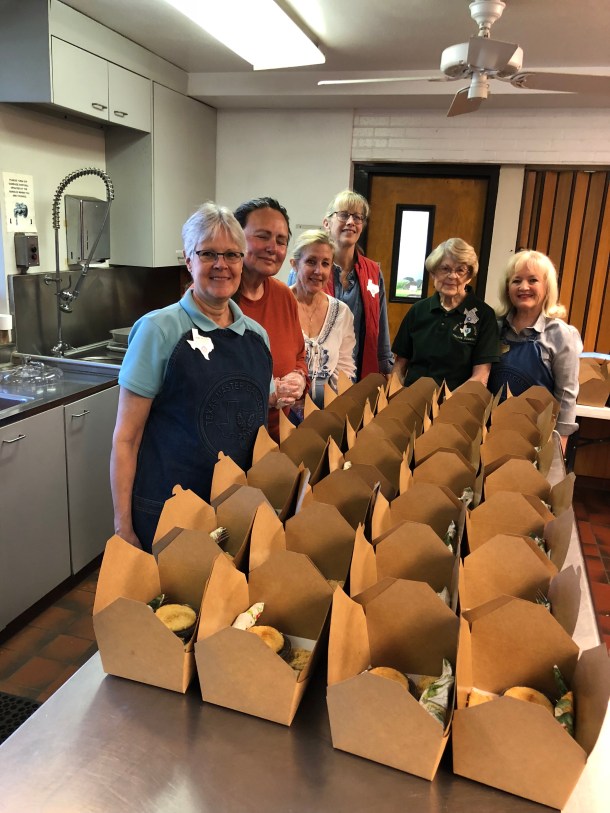
April Box Lunches Prepared by Master Gardeners

Here’s our menu:

Three finger sandwiches made with jalapeno pimento cheese, salad burnet spread  and almond chicken salad,* marinated vegetables and *snicker doodle cookies and *apricot bars.


Marinated Vegetables

Trio of garnished finger sandwiches!

Almond Chicken Salad

6 cups cooked chicken breast, cut into ½ inch cubes

2 cups celery, thinly sliced, about ¼ inch

1 cup red onions, finely chopped

3 green onions, finely chopped

4 garlic cloves, minced

1 cup mayonnaise (good quality prepared)

¾ cup sour cream

Mexican Mint Marigold, garden view!

1 tablespoon fresh Mexican Mint Marigold, finely chopped

2 teaspoons salt

1 teaspoon pepper, freshly ground

¾ cup golden raisins

1½ cups sliced almonds, toasted

Place all ingredients in a mixing bowl. Toss lightly until combined. Refrigerate until ready to serve.


Yield: Makes 12 cups

Linda Alexander

*Marinated vegetables, Grandmother’s favorite snicker doodle cookies, and apricot bar recipes are available by asking Linda or leaving a comment and she will contact you.


Harvest It and They Will (be) Come(ly)

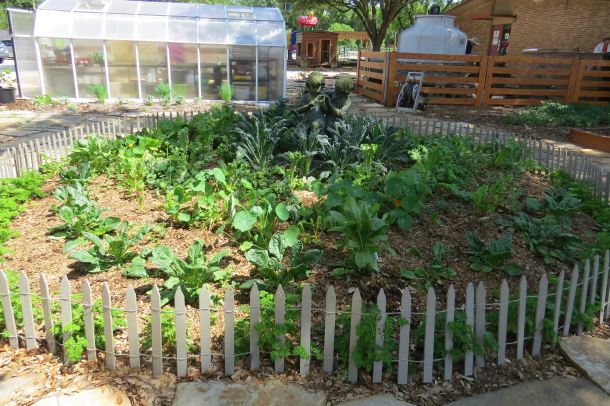
One of the concerns about edible landscaping is that if you eat your edibles, you’ll lose your landscape!  That’s a valid concern.  So here at the Edible Landscape of Raincatcher’s garden, we have pictorial proof to poof away your fears!  We planted our circle of greens in our shade bed about two months ago from 6-inch transplants.  The bunnies in our neighborhood really liked the swiss chard, so we added a little fence to discourage their visits.

Our bed of greens this morning when we arrived.  Full and lush and beautiful.  Can’t you see that gracing your front yard?

Our bed of greens this morning when we arrived.  No, wait!  This is After we harvested from it.  Can you tell the difference?  Maybe it looks even a little more neat and tidy.  I guess maybe we didn’t harvest too much from it.

Our harvest.  Really!  How many people could you feed with all these lovely greens?  We’ve got kale, mustard greens, French sorrel,  parsley and spinach and we can use them raw in a salad or steamed, tossed in a little cream sauce over pasta, or chopped up and thrown into a soup.  If you like a little challenge, how about juicing them and using the juice to make a green pasta?  Or chopping  and mixing with bread dough for rolls?  If this was in your yard, you could harvest a little every day and no one would know you’ve been eating your landscape.

There’s going to be a talk on Edible Landscaping at 11001 Midway Road on Thursday, June 28 at the June Master Gardener meeting. Lecture starts at noon.  Come join us and see our edible landscape in person.  Or stop by any Tuesday morning, we’ll be out there, harvesting our greens.

“This post comes from The  Edible Landscape team at Raincatcher’s,
Lisa Centala
Pictures by Starla Willis

Poppies In My Garden And Bees

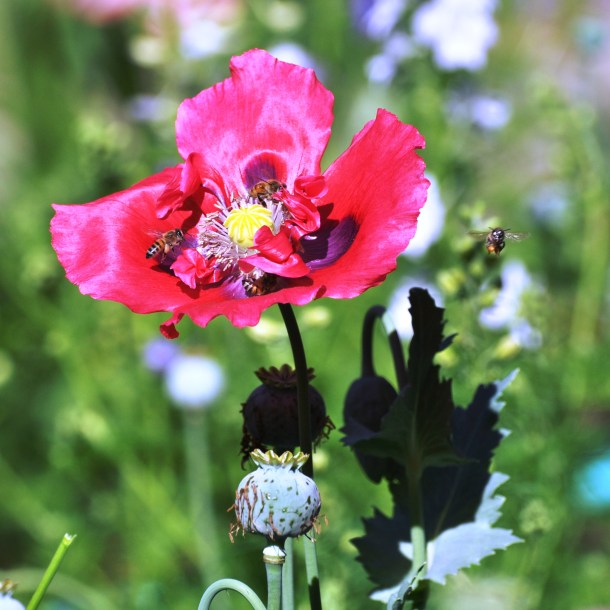
Like the title of the book All I Really Need To Know I Learned In Kindergarten, I could say all the plants I really need  to know came from  Master Gardeners. For example, these beautiful poppies.


They self seed all over my garden and at Raincatcher’s.

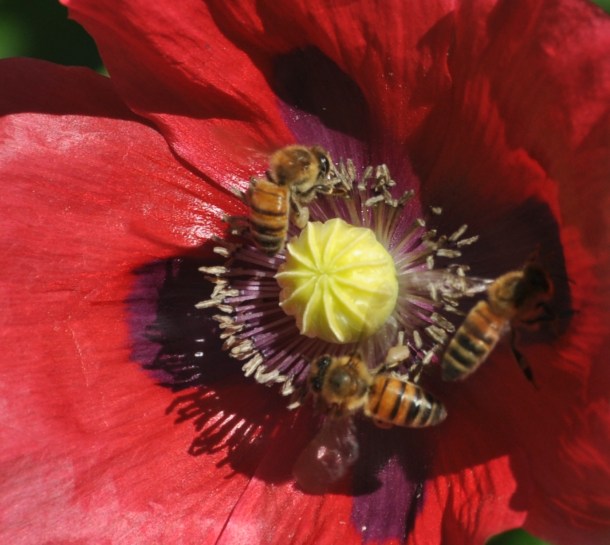
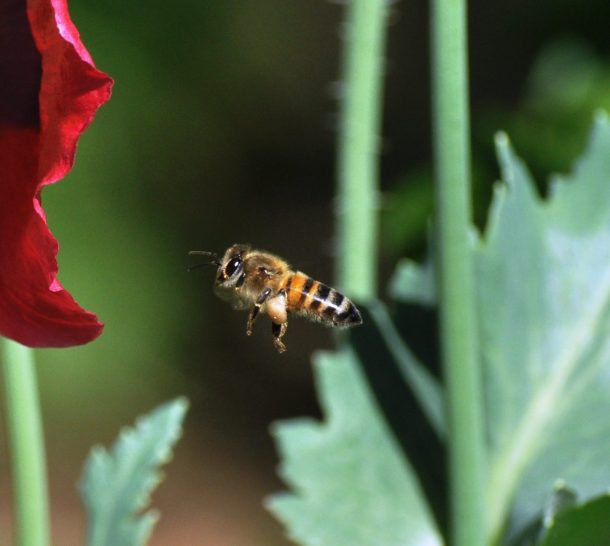
A close up tells the story: bees also love poppies!

This loaded honey bee is happy about the choice of flowers in my garden, which is something to consider! Note, bees prefer these single petal blooms rather than double.

Load up on information about poppies. Remember to sow seeds in the fall.

Poppies

Poppy and Larkspur Planting

Ann Lamb

Wildflowers at the Farm!

First of all, I need to confess this is not my farm and these are not my pictures or Starla’s.

Patti Brewer from the Master Gardener class of 2012 took these pictures and runs the family farm pictured below with her husband and family.

Patti, where is this crazy beautiful place?

The farm is in Lone Camp, Palo Pinto county, Texas.   Palo Pinto county is the beginning of the northern hill country.  I am not sure of our farm’s exact date of purchase but my mom who was born there would be 100 years old this year. Land was purchased at different times and some of it was owned by my great grandparents. Some of the land was partitioned to their sons and daughters including my grandfather.

Your farm is meaningful to your family but also important in terms of habitat. Who shares your farm?

Wild life on this farm include turkey, dove, deer, aoudad-or Barbary sheep, coyotes, cotton tail rabbits, roadrunners, hawks, buzzards and skunks. Of course, we have rattlesnakes and copperheads.We occasionally see horned toad lizards and have a decades old hill of red ants that stretches as wide as my outstretched arms reach. Red ants are  #1 on the diet for horned toads. We have Texas spiny lizards too. Birds we see are hummers, house wrens,  cardinals, blue jays,tufted titmouses, chickadees, meadowlarks, whippoorwills,  and owls. We have once or twice seen painted buntings. In the area are habitats of golden cheeked warblers, an endangered bird.

We have 5 tanks on the ranch and seasonal creeks and a rocky canyon area where the aoudads hang out.

 Patti,  Could you tell us about the barn?
The barn used to hold livestock feed bags.  A hand cranked dried corn shucker driven by gears was in barn until it was stolen. Field corn was grown by my grandfather for supplements for cattle and chickens. It was fun to crank that old thing. The corn shuck was ejected when the kernels all popped off!

What about the wildflowers. We are drinking them in!!! Just gorgeous!

These pictures are from March/April 2017, when we had a trifecta of blooms at one time.

Bluebonnets, pink phlox, orange Indian paintbrush and crossvine on the fence.
This year we only had phlox and bluebonnets at the same time, but amazingly thick stands of bluebonnets.

Bluebonnets, we can’t get enough!

 More about the wildflowers:  we do not mow any bluebonnets until seeds are thrown out. The first mowing of the bluebonnets occurs usually right before July 4th. Mowing continues through about late August if  needed. Texas heat burns everything up by August.  Harvested bluebonnet seeds are given to friends. If you have never been in a field of bluebonnets that are throwing off their dried seeds, then you are missing something to behold.  What you hear sounds just like popping popcorn on the stove.  The first time I heard this I thought a rattlesnake was very close to me in the knee high bluebonnets!

Indian Paintbrush blazing!

The Indian paintbrushes are mostly in pastures that we don’t mow. Unfortunately, our cows  eat the Indian paintbrush that grow in their pastures.  About May or June every year we have another field that sprouts  Indian blankets and then that field is not mowed until the seeds are dried on the plants.  We  have an abundance of antelope horn milkweed and some butterfly weed and I have planted frost weed for years.
 We  see a tremendous variety of butterflies including Monarchs.  Bumble bees and honey bees are busy at our farm. Sitting outside on a summer evening listening to the hum of the honeybees is one of my favorite things to do.

Patti Brewer

Wildflowers at Raincatcher’s


Raincatcher’s Plant Sale, April 26, 2018

Our annual plant sale will be held in conjunction with the April 26, 2018 meeting of the Dallas
County Master Gardener Association. Before the meeting: 10:00 – 11:30 After the meeting:
1:00 – 2:00


Come shop the great variety of plants we have to offer!! We have divided our perennials,
potted volunteers, started seeds, taken cuttings, dug bulbs..

We have herbs, succulents,
bulbs, houseplants, Louisiana iris, annuals, perennials, natives and adapted plants as well as
ornamental plant markers and other garden items.


Don’t forget our tomato and pepper plants, ready to go home with you!


Cash or Check preferred….Credit Cards accepted

11001 Midway Road, Dallas, Texas

Recipes From The Glorious Greens Lecture and Lunch

Our new edible garden, where it all began. More classes to be coming from this garden to you. Subscribe to Dallas Garden Buzz for more info.

Creamy Cauliflower Soup with Greens

Ingredients

1 tablespoon extra-virgin oil, plus more for drizzling

1 medium onion, chopped (about 1 cup)

4 cloves garlic, chopped

Sea salt

1 medium head cauliflower (about 3 pounds), florets and stems cut into 1-inch pieces (8 to 9 cups)

4 ½ cups filtered water

¼ cup chopped fresh dill, plus more for garnish

5 large kale or collard leaves, or a combination, tough ends removed and leaves roughly chopped

Freshly ground black pepper

Directions

Heat oil in a large pot over medium heat; cook onion, covered, until soft, 4 to 5 minutes. Add garlic and a pinch of salt, and cook for 3 minutes more.  Add cauliflower, and pour in filtered water until it reaches just below the top of the cauliflower

Bring to a boil over high heat. Add 2 tablespoons dill. Reduce heat to low, and simmer until cauliflower is just tender, about 10 minutes. Stir in greens, and simmer for 3 minutes.

Let sit for 5 minutes to cool slightly. Stir in remaining 2 tablespoons dill.  Puree soup in batches in a blender until very smooth, adding more water (about ½ cup) if it’s too thick. Return to pot and reheat. Season with salt and pepper. Garnish with dill, black pepper, a drizzle of oil, and pinch of sea salt.

Yield: Makes 8 cups

Evelyn and Susan, pesto making!

Spicy Mustard Green Pesto

Ingredients

3 cups fresh mustard greens, stem removed, washed and rough chopped

2 teaspoons fresh chopped garlic

1 teaspoon fresh lemon juice

3 tablespoons pine nuts, toasted 7-8 minutes at 350˚F

⅛ cup shredded Parmesan cheese

3 tablespoons olive oil

2 teaspoons Kosher salt

1 teaspoon ground pepper (white or black)

Directions

Blanch greens in lightly salted boiling hot water for 15 seconds. Drain thoroughly.

Place all ingredients in a food processor and blend thoroughly to combine. Adjust seasoning as necessary. Refrigerate at 40˚F if not used immediately.

Yield: Makes 2 cups

Dedicated to our greens, note the green nail polish!

The Ultimate Classic Collards

3 (1-lb.) packages fresh collard greens or use fresh from your garden

12 smoked bacon slices, chopped

2 medium-size yellow onions, chopped

3 garlic cloves, minced

3 cups reduced-sodium chicken broth

¼ cup apple cider vinegar

2 Tablespoons honey

1 (12- to 16-ounce) smoked ham hock

Kosher salt

Freshly ground black pepper

Remove and chop collard stems. Chop collard leaves. Cook bacon in a large Dutch oven over medium heat, stirring occasionally, 12 to 15 minutes or until almost crisp.  Add onion, and sauté 8 minutes or until onion is tender. Add garlic, and sauté 1 minute.

Stir in chick broth and next 2 ingredients; add ham hock. Increase heat to high and bring to a boil. Add collards in batches. Reduce heat to medium-low; cover and cook 2 hours or until desired tenderness.

Remove meat from ham hock; chop meat, and discard bone. Stir chopped meat into collards. Season with salt and freshly ground pepper.

Yield: Makes 6 to 8 servings

Ready to plate! Thanks Evelyn, Patty, Abbe, Sarah, Ann, Linda, and other Master Gardeners!

Spring Quiche with Leeks and French Sorrel

For the Crust:

1 ¼ cups all-purpose flour

¼ teaspoon salt

8 tablespoons (1 stick) unsalted butter, chilled and cut into cubes

3-5 tablespoons ice water

1 tablespoon apple cider vinegar

For the Filling:

1 large egg white

2 tablespoons extra virgin olive oil

1 large leek (white and light green parts only), cleaned and sliced into ½-inch pieces (should yield about ½ cup)

3 large eggs

¼ cup grated Parmesan cheese

½ cup 2% milk

½ cup half and half

¼ cup part-skim ricotta

1 teaspoon Kosher salt

½ teaspoon freshly ground black pepper

2 tablespoons chopped dill (fresh or dried)

1 tablespoon chopped rosemary (fresh or dried)

2 cups fresh French sorrel, washed and dried well

Make the Dough:

In a food processor, pulse together the flour and salt a few times to combine. Add the cubes of butter and pulse continuously until the mixtures starts to look like tiny pebbles. With the food processor running, drizzle in the apple cider vinegar, followed by the ice water, stopping when the mixture just begins to come together. Working quickly, form the dough into a flat disk, wrap it in plastic and refrigerate for 1 hour or up to 2 days.

Prepare the Crust:

Preheat the oven to 375˚F. On a large floured surface, roll the dough into an approximately 12-inch circle. Gently press into a 9-inch tart or pie pan, trimming any overhang. Line the dough with aluminum foil and dried beans (or pie weights) and bake for 20 minutes.

Remove the pan from the oven and take out the foil and beans. Brush the crust with the egg white and prick the bottom with a knife or a fork to allow air to release and prevent bubbling. Place back in oven and bake for an additional 5 minutes

Make the Filling:

In a medium-sized pan over medium heat, heat the olive oil and add the leeks. Stir until they are coated in oil, then turn down the heat to medium-low and cover the pan. Cook the leeks until golden brown and caramelized, about 20-25 minutes. Check their progress after 15 minutes to ensure you don’t burn them (depending on what kind of pan you’re using; the cook time can vary slightly).

Meanwhile, whisk together the eggs, Parmesan cheese, milk, half and half, ricotta, salt pepper, dill and rosemary.

When the leeks are done cooling, lay them out on top of the pre-baked crust. Place the pan on top of a cookie sheet for easy transport. Pour the filling on top of the leeks and place the quiche in the oven. Bake for 30 minutes, or until the top of the quiche has puffed and is set in the middle and just slightly golden.

Allow the quiche to cool slightly, about 12 minutes. If you put the sorrel on while the quiche is piping hot, the delicate greens will brown. Sprinkle the sorrel on top, slice and serve. Quiche is best served room temperature the day it is made although it will keep just fine covered in the refrigerator for up to 2 days (the sorrel is just going to get a bit wilty).

Yield: One 9-inch Quiche (Serves 6 as an entrée or 8 smaller slices)
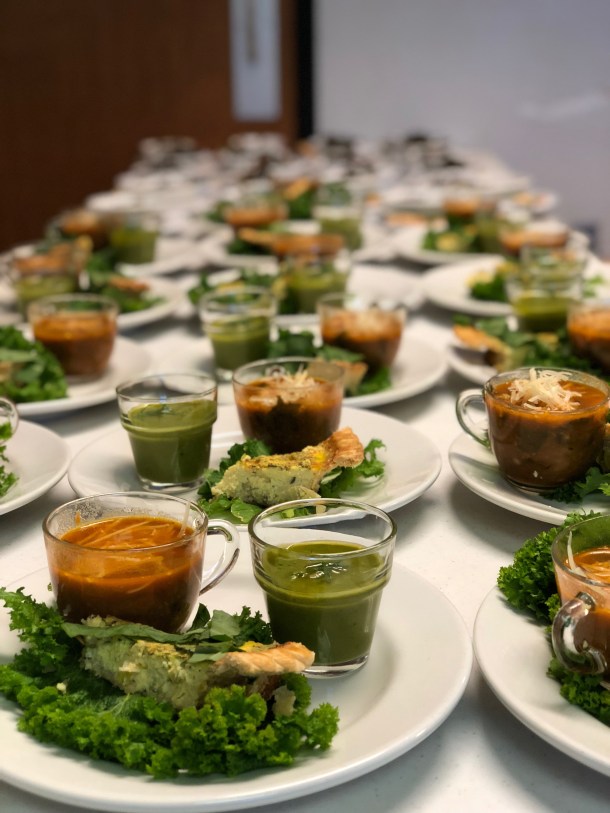
Glorious greens ready to eat. Plates garnished with mustard greens, of course! Both soups delish!

Minestrone Soup

Ingredients:

⅔ cup small pasta, cooked according to package directions, drained and set aside

3 tablespoons olive oil, divided

1 ½ pounds ground beef

1 large onion, chopped

3 large carrots, peeled and cut into ¼ inch rounds

3 large celery stalks, cut into ¼ inch slices

2 garlic cloves, pressed

1 pound fresh Swiss chard, center vein removed, chopped

1 large turnip, peeled and cut into small cubes

1 large baking potato, peeled and cut into small cubes

1 (28-ounce) can crushed tomatoes

2 (16-ounce) cans beef broth

2 (15-ounce) cans cannellini beans

1 (32-ounce) box good beef stock

1-inch piece of Parmesan cheese

½ cup grated Parmesan cheese

3 tablespoons fresh parsley, chopped

Salt and pepper

Directions:

Preheat 1 tablespoon oil in a large pan over medium heat.  Add ground beef and cook, breaking it up, until it is no longer pink.  Season with salt and pepper.  Set aside.

In a large stock pot, add 2 tablespoons olive oil. Add onions, salt and pepper to taste and cook over medium heat until translucent, about 4 minutes.

Add carrots and celery to the pot.  Cook for 10 minutes.  Add garlic and cook for 1 minute more.

Add Swiss chard, turnip and potato to the pan.  Cook for 4 minutes or until the chard begins to wilt.

Add the crushed tomatoes and the 2 cans of beef broth to the pot and simmer for 15 minutes or until the chard breaks down.

Meanwhile, combine half of the drained cannellini beans with ½ cup of beef stock in a blender.  Blend until smooth.

Add the blended cannellini beans, remaining drained beans, remaining beef stock, the 1-inch piece of Parmesan, reserved ground beef, cooked pasta and the handful of Parmesan cheese to the pot.  Stir to mix and simmer for 25 minutes.  Stir occasionally.  Vegetables should be fork tender.

Season with salt and pepper, to taste.  Add fresh parsley and serve.

Yield: 8-10 servings

Linda Alexander

Our thanks to Jeff Raska for the garden education.

Save the date for our next education/lunch event-Peach Fever.

Date: Tuesday, June 26th, reservation information to follow