Join Linda Alexander and Beverly Allen for a “Pop Up” Presentation
Friday, November 5th, 1:00pm
Shade Pavilion, Raincatcher’s Garden of Midway Hills
11001 Midway Road
Limited to 30 * Please RSVP
Master Gardeners Earn 1 Hour CEU
Sit back, relax and enjoy a refreshing cup of Roselle Hibiscus tea along with a taste of lightly sauteed hibiscus leaves, cookies and jam.
The season for growing Roselle Hibiscus is ending. Let’s bid farewell to a garden favorite with a closer look at this amazing plant. In this class you will learn some of the following:
*Why everyone should be growing Roselle Hibiscus
*When and where to plant
*Growing characteristics
*Using the plant from leaves to flowers and seeds
Class concludes with a tour of our Roselle Hibiscus plants where you will be given an opportunity to harvest some seed pods for next year’s crop.
Sign up today here. Class RSVP open until noon on Thursday, November 4th.
Over four years ago, plans were approved for a new Dallas County Master Gardener project on the campus of Midway Hills Christian Church. The area once used as a children’s playground would be repurposed as an edible landscape. Our mission was to provide attractive and easy to implement landscape design ideas using only edible plant material.
As the space has evolved, our volunteer team has grown in our understanding of seasonal expectations and requirements. Through numerous failures we’ve learned how environmental factors such as soil structure, shade, moisture and even pest invasions can teach you how to be a better gardener. Thankfully, we’ve also enjoyed great success while venturing into new avenues with different varieties of plants. It has been fun to celebrate those victories.
Looking ahead, we believe that it is now time to move the edible landscape forward with a slightly different approach. Starting this fall, our edible landscape team will begin the process of integrating non-edibles into our lovely garden spaces. This will give us the ability to demonstrate, more fully, how to creatively use both edibles and non-edibles together in well-planned garden projects. We’re hopeful, that as we introduce an artistic palette of harmonious colors, shapes and textures, others will be inspired to use them also.
We invite you to join us in this journey as we continue to explore exciting new possibilities. Our desire is to provide a place where the natural world gives you a feeling of peace and serenity. As the garden evolves may your spirits be lifted and your soul refreshed.
Linda Alexander and Fern Brown, Co Leaders
Beverly Allen, Research and Seed Selection Coordinator
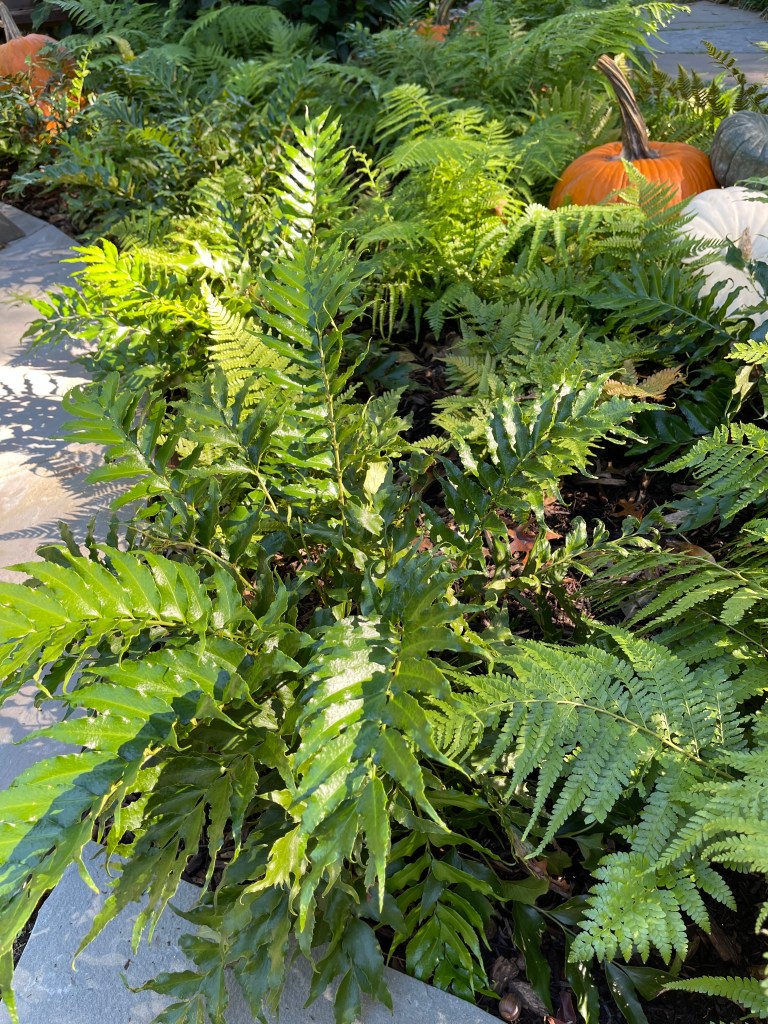
In honor of our new Co Leader, Fern Brown, it seemed very appropriate that the first non-edible introduction to the Edible Landscape Garden would be a lovely assortment of “ferns”. A “tip of the hat” to Fern for donating holly ferns from her yard to get us started.
Just a few steps into the garden and the air is suddenly filled with a soothing fragrance that leaves you mystified and, yet, curious to find its aromatic source. Moving closer in, hints of heady anise softened with a gentle touch of sweetness begins to calm your spirits. It only takes a moment to realize that you’ve been drawn into an intriguing area of the garden overflowing with the intoxicating fragrance of Mexican Mint Marigold (Tagetes lucida).
Also known by its other names, Winter Tarragon, Texas Tarragon and yerba anise, this semi hardy perennial makes a spectacular showing in the fall garden. Slender stems rising unbranched from the base comprise the upright clumping shape of each plant. Tiny buds that started forming in late summer find their glory in the sunny days of autumn. Golden yellow clusters of marigold-like flowers dance gently across 3 feet tall stems in a show-stopping performance.
Mexican Mint Marigold in the Edible Landscape at Raincatcher’s Garden
Mexican Mint Marigold originated in the cool mountains of Mexico but has become a superstar addition to many Texas gardens. Grow it from seed sown after danger of frost has passed or divide plants in spring or fall. One simple suggestion is to arch a stem to the ground, cover the center with soil, and the stem will often root at the nodes. For optimum flower production plants should be located in an area that receives full sun to moderate afternoon shade.
You’ll find Mexican Mint Marigold used as a substitute for the more temperamental herb, French Tarragon. Both the flowers and leaves are edible and used often in teas, salads, poultry and fish dishes. For a heavenly taste explosion use the leaves in an irresistible dessert we discovered a few years ago, Strawberry Sorbet with Texas Tarragon.
Strawberry Sorbet with Texas Tarragon
Don’t be disappointed when your Mexican Mint Marigold plants take their winter nap. After dying down to the ground for a few months, they will reappear again in Spring just in time to start rehearsing for their next performance.
Linda Alexander, Dallas County Master Gardener Class of 2008
he North Garden continues to thrive with a crew of three to five gardeners on Mondays and help with hardscaping from the regular workday group on Tuesdays.
We were especially grateful for the substantial progress made on Intern Day in the new Donation Garden where we will be demonstrating ridge and furrow gardening and donating the produce to area food banks.
Making progress on the Donation Garden
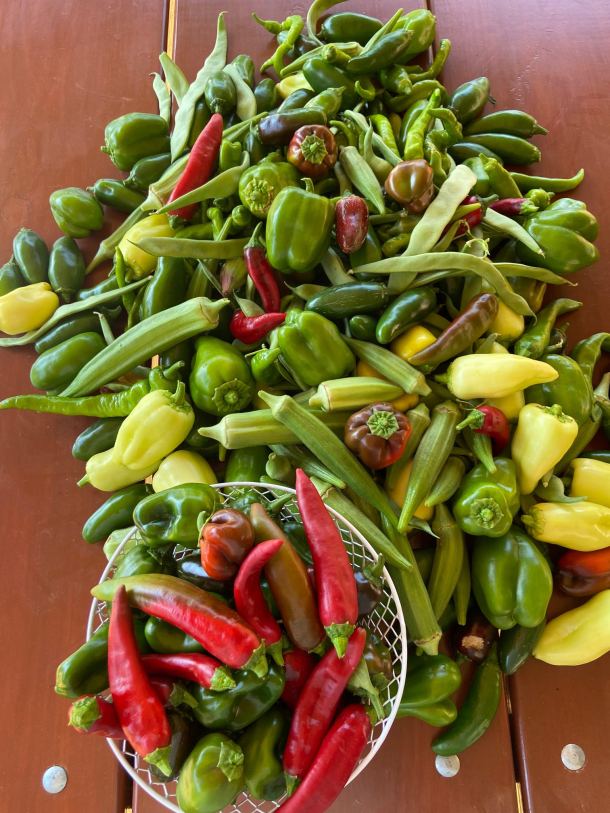
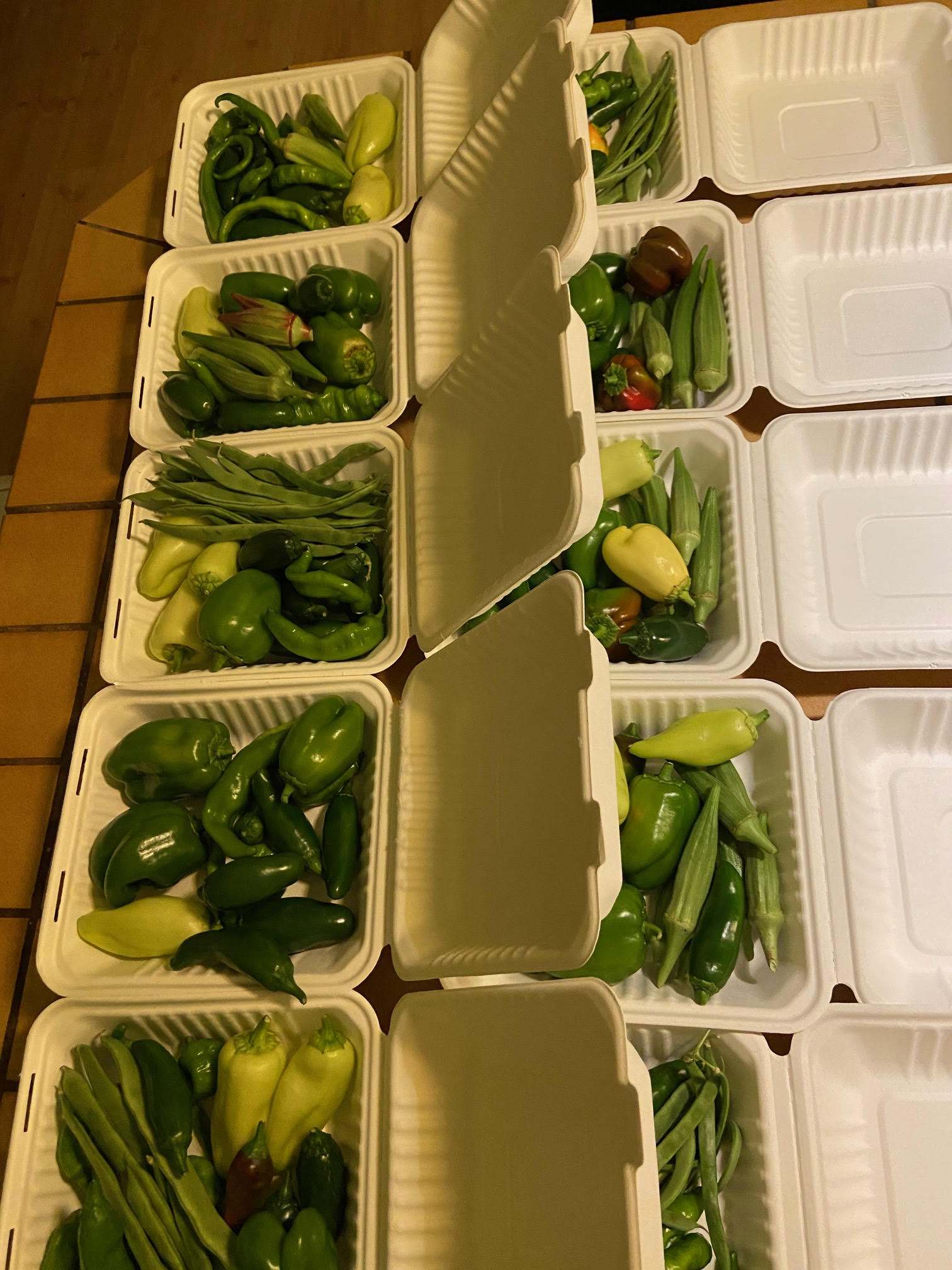
This week we harvested peppers, okra and pole beans and put together 10 family packs of the vegetables for donation. There were plenty of peppers left for the jam and jelly team to make their popular jalapeño jelly. We also harvested the calyces of Roselle Hibiscus for jam.
Monday’s Harvest
Vegetables packed for donating
The pepper varieties we have growing are North Star, Gypsy, Jimmy Nardello, Tajin, Emerald Fire, Poblano, and Sweet Roaster. North Star and Gypsy peppers are heavy producers and 0 on the Scoville Scale. North Star is known for production under a wide range of conditions. Both it and the Gypsy variety are very easy to grow. The Jimmy Nardello peppers are not quite as productive but they have an excellent sweet taste and nice crispy texture.
The Tajin and Emerald Fire are very productive jalapeño hybrids with low to moderate degrees of spiciness. We didn’t see many Poblanos in the Spring and Summer but now that temperatures have dropped, the plants are heavily laden with mild green peppers. The Sweet Roasters were productive and flavorful but unexpectedly hot.
We also grew Clemson Spineless and Hill Country Red okra. The Clemson Spineless is very productive but must be harvested daily to keep the pods from getting tough and stringy. The Hill Country Red is not as productive but it tastes great and the pods are very tender despite their ridged barrel shape.
The Northeaster pole beans are surprisingly delicious. Several gardeners and visitors have tasted them in the garden and all were in agreement that they were very enjoyable even uncooked.
Raincatchers volunteers are always welcome to sample any produce growing in the North Garden. It’s a great way to tell if you would like to grow the same variety in your home garden.
Beverly Allen, Dallas County Master Gardener Class of 2018
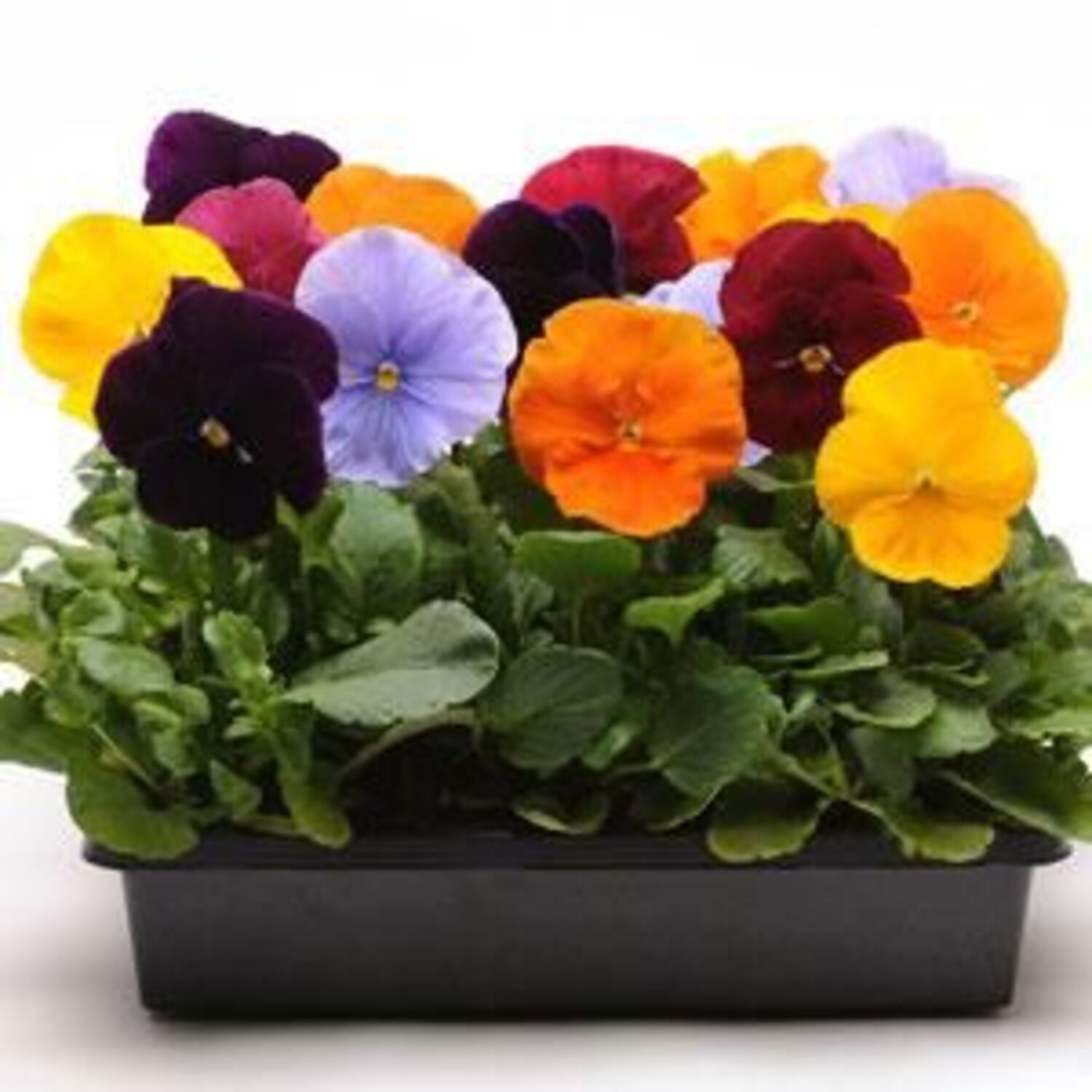
Raincatcher’s Garden of Midway Hills is pleased to offer pansies and violas at a fantastic price for your fall and winter landscape color. “What’s the difference?” you might ask. Pansy blooms are larger than viola blooms, but violas are reported to have more blooms per plant and be somewhat more cold-tolerant. We love them both! We’ve also added alyssum this year – so pretty in container plantings. All plants are sold in 18-count flats of 4” pots.
Sale Date: 10/7 at 7am through 10/11 at noon. All flats $19 (including tax)
Pick up purchased plants at Raincatcher’s on Wednesday, 10/27, 1-4pm (details below)
All pansy orders must be paid for by Thursday, October 14th. If you opt out of paying through Signup Genius, you may bring cash (exact change only please) or check made out to DCMGA to the Raincatcher’s Garden on Tuesday, 10/12, from 9am until noon or email Lisa Centala at lcentala@gmail.com to make other arrangements.
All prepaid pansies and plants may be picked up at Raincatcher’s from the shade pavilion in the north garden on Wednesday, 10/27, from 1pm until 4pm. Raincatcher’s is located on the campus of Midway Hills Christian Church at 11001 Midway Road, Dallas, TX. We offer delivery in the Dallas area for large orders of 10 flats or more. Please indicate “delivery requested” in the comments section of the signup, and we will notify you to make arrangements. Volunteers will be available to help pull and load your order.
Place your order using the following link:
Sale Dates: 10/7 at 7am through 10/11 at noon. All flats $19
Fall in Texas is a relief. The air is cooler, welcome rains return and the searing temperatures of summer that last into the night dissipate. It is also a time for planting.
Fall is the best time to get ready for next year’s growing season. The cooler air and warm soil temperatures are ideal for establishing new transplants. Trees, shrubs and perennials planted in fall, develop strong roots and continue to grow through our mild winters and thus, are more established when hot summer weather arrives.
If you choose to plant in the fall, your perennials will bloom more profusely the following spring than spring plantings. This head start will help new plants take off earlier and more vigorously and be in better shape to face the challenging conditions of our summers.
Timing is everything. Hopefully, you are ready to dig!
Ann Lamb, Dallas County Master Gardener Class of 2005
Pansy Lovers: In the next few days, information will be coming to you on Dallas Garden Buzz about our pansy sale. The prices are super and the selection is excellent. Your purchase helps us. I am doubling what I bought last year!
In our search to connect with others and the natural world around us, the joy of using herbs is a delightful way to embrace nature’s love language. Learning the meaning of herbs and including them in our daily lives provides us with beautiful ways of expressing feelings of gratitude, kindness, love and affection for others. Open your heart to the love language of herbs. Let them speak their special language for all to enjoy.
Anise, Anise Hyssop (Cleanliness)
Basil (Love) Bay Laurel (Success) Borage (Courage)
Mint (Virtue) Oregano (Joy) Nasturtium (Patriotism)
Parsley (Gratitude) Rose (Love, Desire) Rosemary (Remembrance)
Sage (Wisdom) French Tarragon (Permanence) Thyme (Courage)
Violet (Loyalty) Yarrow (Healing)
A few simple ideas for creating a personalized gift that expresses your sentiments for someone you care about:
*Fill a small vase with borage blossoms, sage and thyme twigs. Include a personal note wishing wisdom to a family member facing a difficult decision and courage to take the next step.
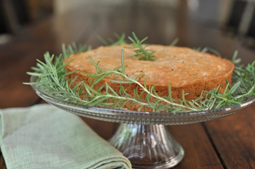
*Show your gratitude for a friend’s kindness by baking him a ‘fresh from the garden’ rosemary (for remembrance) spice cake.
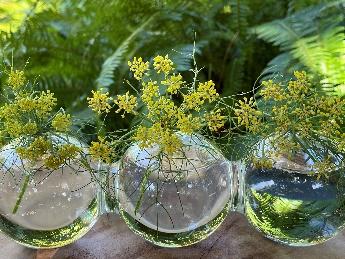
*Your daughter just landed her dream job. Send a sweet note accompanied by a beautiful arrangement of fennel (worthy of praise) bay laurel (success) and roses (love).
Linda Alexander, Dallas County Master Gardener Class of 2008
After waiting for over a year and a half to resume monthly meetings, The Pierian Club of Dallas chose Raincatcher’s Garden of Midway Hills for their first event. The much anticipated gathering was filled with hugs, laughter and smiles of happiness on the faces of those who attended. We were thrilled to welcome them to learn about our approach to gardening in North Texas and to enjoy a garden-themed lunch prepared by our “Friends of the Garden” volunteer culinary team.
The story of The Pierian Club is very fascinating. It began in 1888 and has continued to evolve for over 133 years. The purpose of the club is to increase knowledge. Their motto states, “A little learning is a dangerous thing; drink deep or taste not the Pierian Spring. Their shallow draughts intoxicate the brain, and drinking largely sobers us again.” In Greek Mythology, it was believed that drinking from the Pierian Spring would bring you knowledge and inspiration.
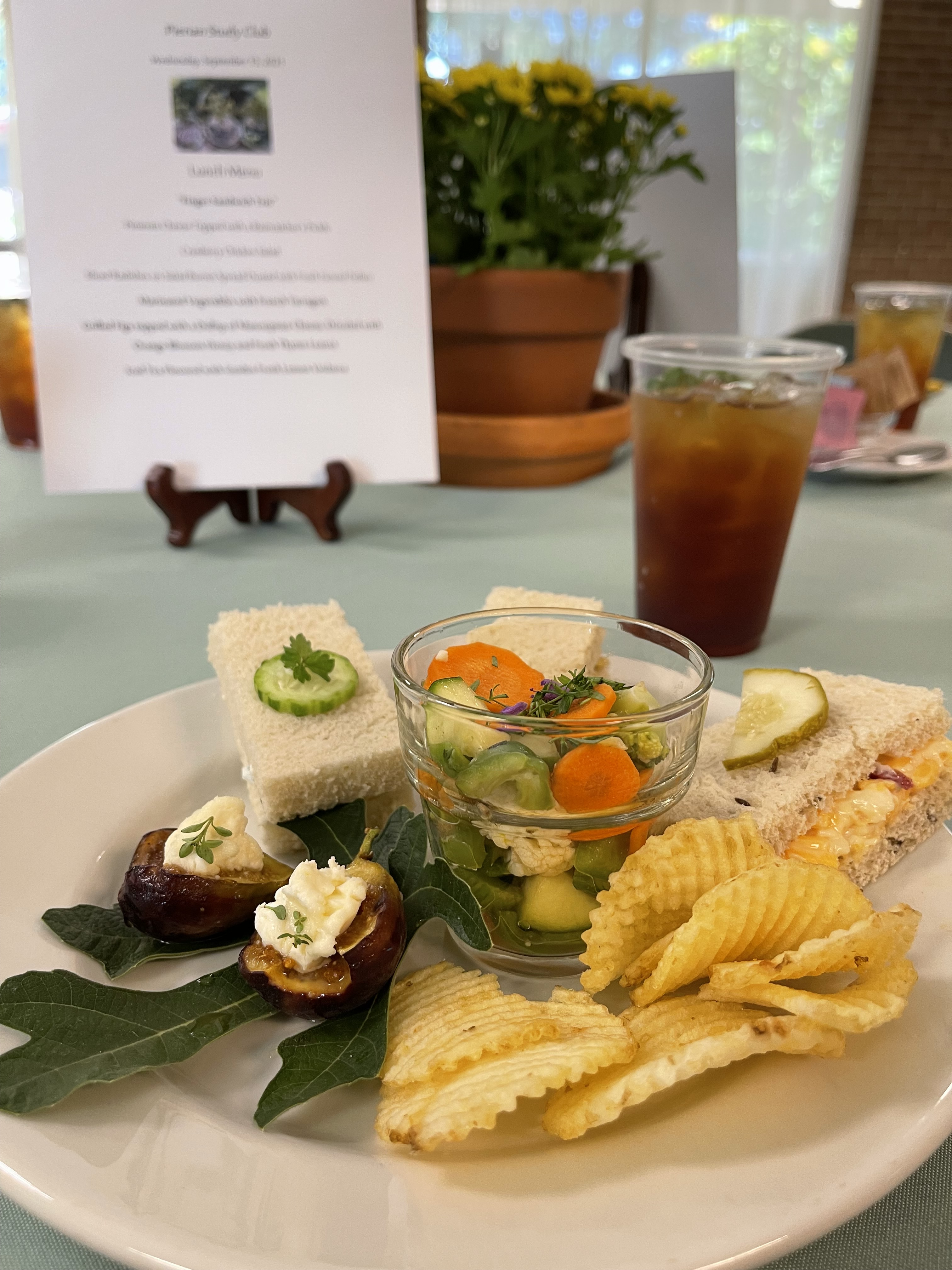
With a focus on seasonally fresh herbs and vegetables from our edible gardens, we treated them to a flavor-filled menu that stirred the senses. A brief explanation of how the menu was developed includes comments about several carefully chosen items.
The Pierian Study Club
Wednesday, September 15, 2021
Lunch Menu
“Finger Sandwich Trio”
Pimento Cheese topped with a Raincatcher’s Pickle
Cranberry Curry Chicken Salad with Orange Blossom Honey
Sliced Radishes on Salad Burnet Spread Dusted with Fresh Fennel Pollen
Marinated Vegetables with French Tarragon and Anise Hyssop Blossoms
Grilled Figs topped with a Dollop of Mascarpone Cheese, Drizzled with Orange Blossom Honey and Fresh Thyme
Iced Tea Flavored with Garden Fresh Lemon Verbena
Our finger sandwich trio included the following:
1. A tribute to Martha Stewart’s favorite sandwich…buttered white bread topped with thinly sliced radishes sprinkled with salt. Taking inspiration from herbs growing in our garden, we substituted a spread made with whipped cream cheese, freshly snipped salad burnet leaves and onion chives. Radishes were added next, sprinkled with sea salt and then lightly dusted with delicate fennel fronds. Each sandwich was topped with a thinly sliced Armenian cucumber brought in from the garden.
2. Pimento Cheese. This recipe is a favorite from a recently closed restaurant in Fredericksburg, Texas…The Peach Tree Tea Room. While the original recipe calls for jalapeno juice, we omitted it, as requested, for this event. Each sandwich was topped with a pickle made by one of our volunteers. Pickles were made from the variety, ‘Homemade Pickles,’ currently growing in our garden.
3. Cranberry Curry Chicken Salad with Orange Blossom Honey. We love using this special honey from Savannah Bee and available locally at Central Market. It adds just the right amount of sweetness to the earthy flavor of curry.
Marinated Vegetables were embellished with fresh-picked French tarragon from our edible landscape. Served in individual clear glass flowerpots, they made a colorful addition to the menu with pretty purple anise hyssop blossoms scattered over the top.
Dessert was on the lighter side. Fig leaves from the garden cradled two figs halves that were lightly grilled and topped with a dollop of mascarpone cheese and a drizzle of Orange Blossom Honey. Tiny lemon-flavored thyme leaves added that fresh from the garden effect that rounded out the meal.
Following lunch, a short program introducing the Raincatcher’s Garden of Midway Hills was presented by Dallas County Master Gardener, Lisa Centala. Master Gardener volunteers then joined Lisa and our guests for a delightful tour of the demonstration gardens. With their newly acquired horticultural knowledge, members of the study group left inspired and feeling as if they had been refreshed by drinking from the Pierian Spring.
Linda Alexander, Dallas County Master Gardener Class of 2008
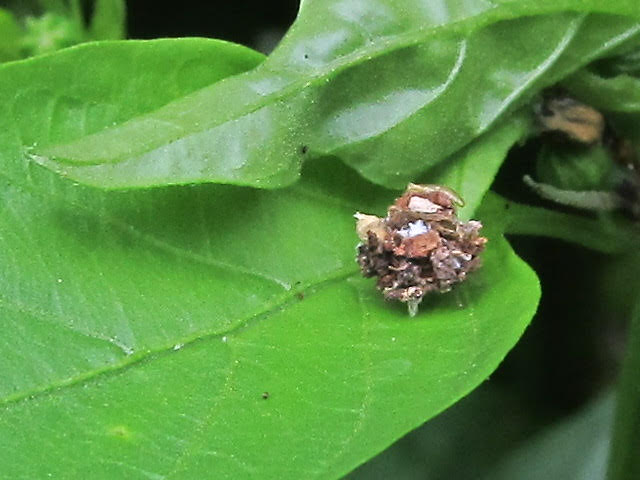
Diane, a frequent visitor to Raincatchers Garden, saw a little bit of debris on a leaf. To her surprise it began to move purposefully. She learned that the debris was called a junk bug. It covers itself with the bodies of insects it has preyed upon. This creates a convincing camouflage that fools birds and the ants that tend aphids. Aphids are a frequent snack.
Junk Bug with a purpose!
The junk bug is a larva that becomes a green lacewing, a beautiful insect with delicately veined gossamer wings.Per Diane, “I almost missed it till it started moving, and this is my very first one to ever see, or even hear of.”
Thanks, Diane, for your close observation. It’s great to know we have an insect ally to help us keep the aphids in check.
P.S. The eggs on a stalk shown in the picture above are also part of the lifecycle of this beneficial insect.
Beverly Allen, Dallas County Master Gardener Class of 2018
PIctures by Diane, a friend of The Raincatcher’s Garden
“The greatest gift of the garden is the restoration of the five senses.”
-Hanna Rion
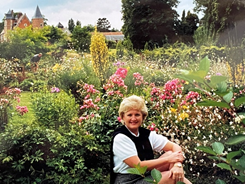
Almost thirty years ago, my husband and I took our first trip to France. Our destination was Paris but along the way we scheduled a romantic anniversary visit to the lovely town of Reims. It is considered an essential stop on France’s champagne trail with big-name bubbly houses headquartered there among wide boulevards and well-preserved medieval churches.
Linda at The Garden of the Five Senses
Our three-night stay was at an elegant boutique hotel known as Domaine Les Crayeres. Nestled discreetly in a seven-hectare park full of lush vegetation, it remains one of my most treasured travel memories. During our stay, it was suggested that we visit a little-known sensory garden in a charming village just outside of town. We were told that not many tourists take time to visit the garden but because of our desire to experience the lesser-known places, we were excited to make the trip. The cost to enter the garden was minimal but the joy we shared that afternoon was priceless. Our enchanting visit was to a place called, “The Garden of the Five Senses”.
It was a beautiful day in August with temperatures hovering comfortably in the seventy-degree range. Unlike summer weather in Texas, we had chosen a perfect time to spend the day outdoors. An incredible bottle of French champagne led to countless toasts and smiles as we leisurely enjoyed a beautiful afternoon in the garden.
Each of the five individual gardens were created using a loosely defined circular formation. Plants were carefully selected for the role they would play in stirring up the senses: sight, smell, taste, sound and touch. Unhurried and totally caught up in the moment, our hearts and souls were rejuvenated. A quaint, little “off the beaten path”, and privately owned garden, had given us the gift of a lifetime memory.
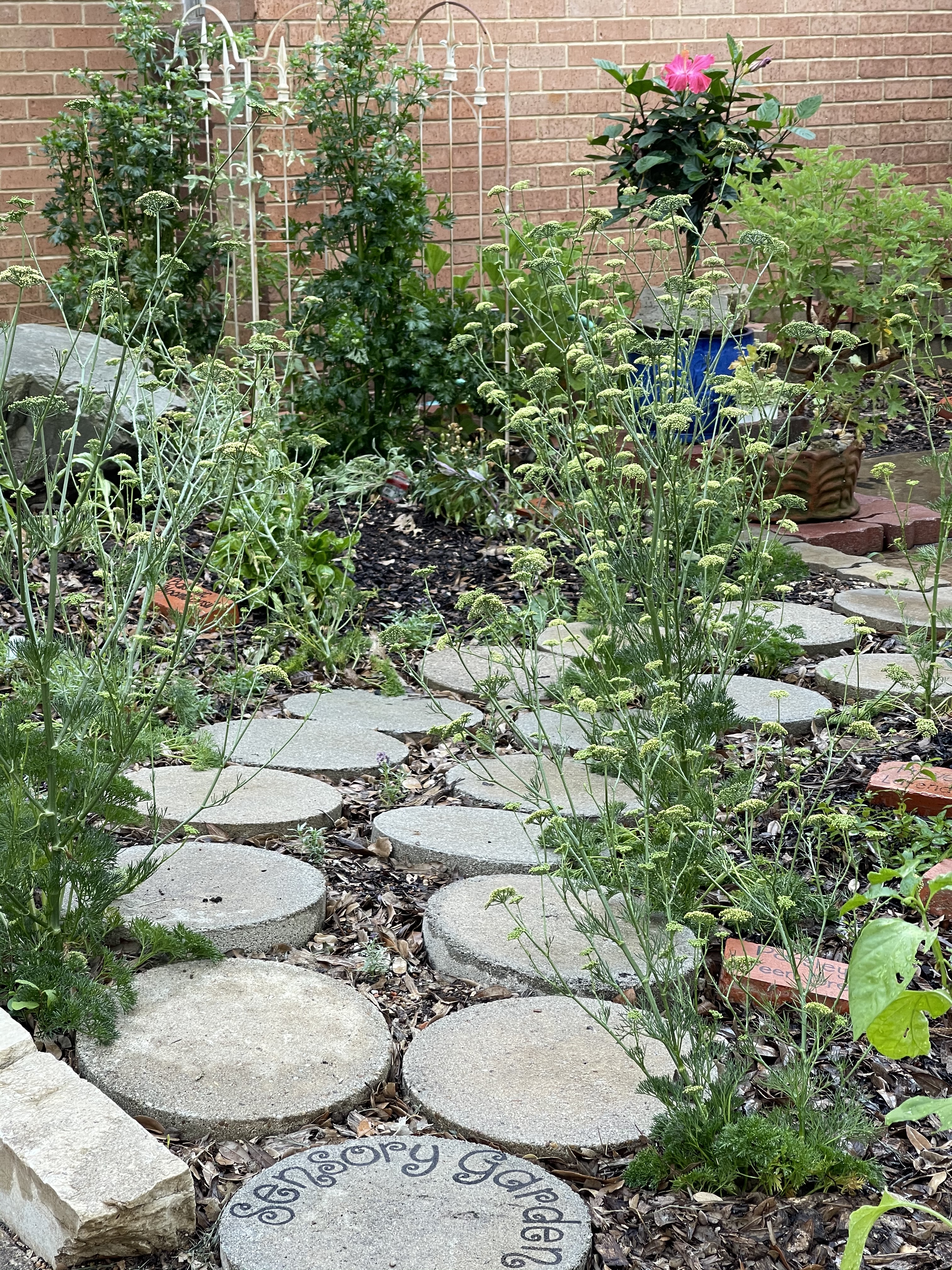
Reflecting on that wonderful day in France, this spring our volunteers introduced a Texas style version of a sensory garden to the edible landscape. Our sensory garden is on a much, much smaller scale than the one in France, but we’ve packed in a pleasing variety of edible plants. Summer into early fall we will be featuring some of the following:
We invite you to visit the sensory garden anytime you’re in the area. You might even consider bringing along a bottle of bubbly to celebrate the experience.
10 Tips for Creating a Sensory Garden
1. Choose an ideal location. Find a quiet place in your yard or somewhere that naturally draws you into a “time-out” or relaxing place in the garden.
2. Measure the space and create a map of the area. Detailed information is beneficial when the time comes for selecting plants.
3. Decide what plants and features will best achieve the atmosphere that is desired. Accessories like gazing balls, mirrors and sculpture can add to the visual effect.
4. Provide a bench, swing, or some place to sit and relax. A unique idea would be to install a chamomile lawn. The recommended variety of chamomile for this particular purpose is Roman Chamomile (C. nobile ‘Treneague’).
5. Create a safe place using plants that are non-toxic, non-allergenic and with no pesticide application.
6. Choose plants that will keep the senses aroused each season of the year.
7. When selecting plants pay close attention to growing conditions whether sun or shade, poor or good drainage, clay or other types of soil.
8. Decide which plants are best for stimulating each of the five senses. Start with 3 plants for each one, then expand as space and growing characteristics allow.
9. Feature elements that appeal to the five senses:
Color – may be seasonal, grouped in clusters or spaced for maximum contrast.
Texture – use plants that add a variety of tactile stimulation.
Water and Wind Chimes – items like bird baths, fountains and small ponds provide a refreshing sensory experience for sight, sound and touch while attracting birds, butterflies and other pollinators to the garden. Enhance the sense of sound with wind chimes and/or whirligigs.
10. Be inspired throughout the process. Creating a sensory garden will elevate your environment into one that gives interest and stimulation to people of all ages.
Linda Alexander, Dallas County Master Gardener Class of 2008










 DALLAS GARDEN BUZZ