Working with our veggie team at Raincatcher’s last Monday, January 16th, spring was definitely in the air and now we have had over an inch of rain to further encourage our spring longings.
We sat at tables under our education pavilion planting tomato seeds with dreams of epic tomatoes. For a list of tomato varities we are seeding, see below.
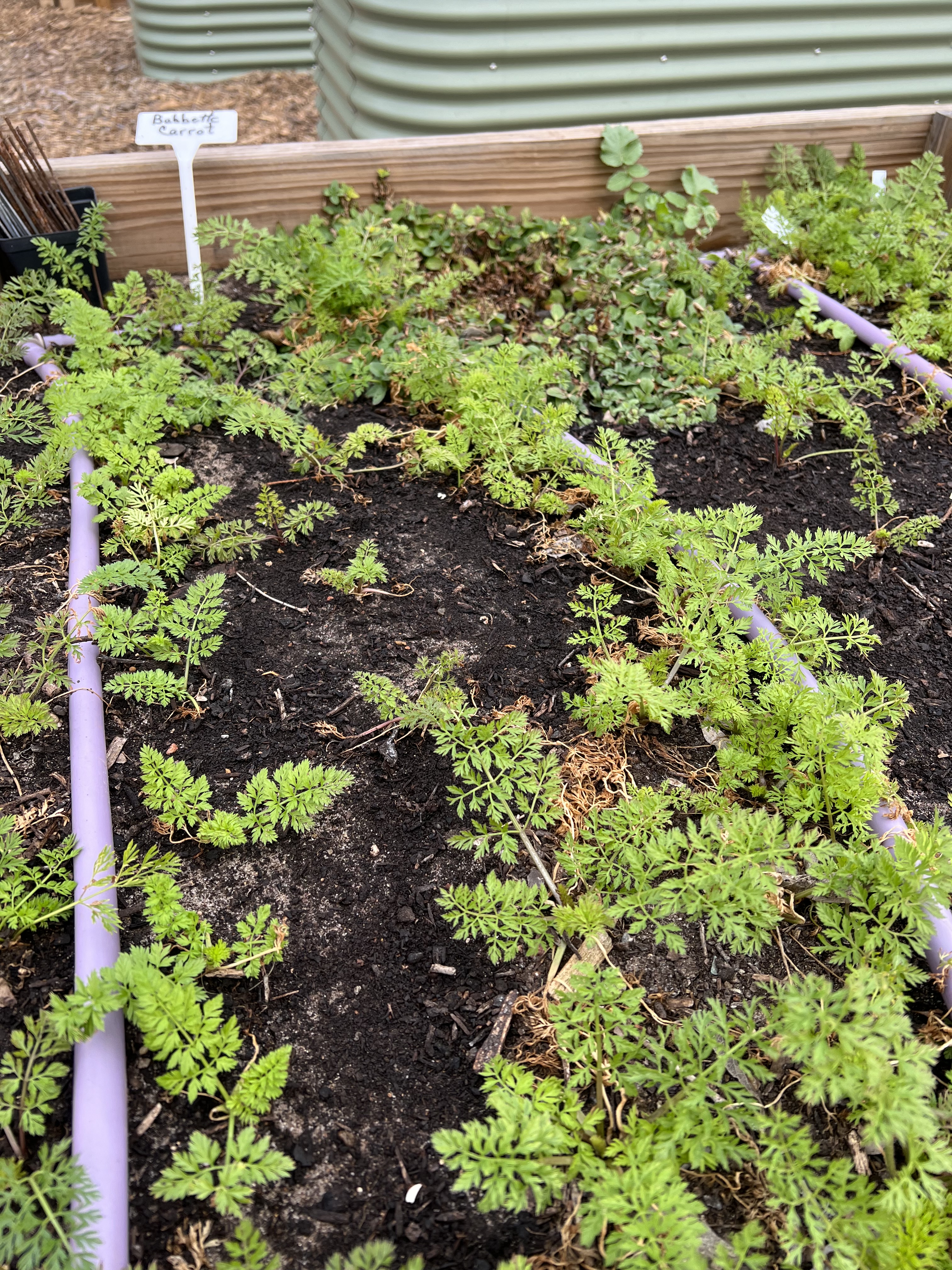
Elephant garlic planted in November, to be harvested in June, was examined. We considered the carrots that took a hit during the December low temperatures but have rebounded.
Last year the Raincatcher’s Garden delivered 700 pounds of fresh vegetables and fruit to North Dallas Shared Ministries Food Pantry. The goal for 2023 is 1,000 pounds of harvest. With the dedication of this band of Master Gardeners and expert leadership, I am sure they will succeed.
Ann Lamb, Dallas County Master Gardener Class of 2005
Tomato varieties and place purchased are as below.
Johnny’s Selected Seeds – Hybrid Cherry BHN-968, Early Girl, Five Star Grape, Tasmanian Chocolate and Juliet.
John Scheepers Kitchen Garden Seeds – Cherry Falls.
Botanical Interests – Patio Choice Yellow.
Tomato Growers Supply Company – Red Robin and Wild Cherry.
In the “paint” world, each new year begins with the big reveal. For 2023, Pantone has taken inspiration from the natural world with the announcement of Viva Magenta as their color of the year. Described by the company as a powerful and vibrant shade of red deeply rooted in nature, it promises to be “bold and fearless” while adding a joyful and optimistic tone to your interior.
Pantone’s glamorous appeal is convincing; “Viva Magenta descends from the red family and is inspired by the red of cochineal. The cochineal beetle is an insect that produces carmine dye, one of the most precious, strongest, and brightest natural dyes the world has known”. They add, “it was chosen to reflect our pull toward natural colors.”
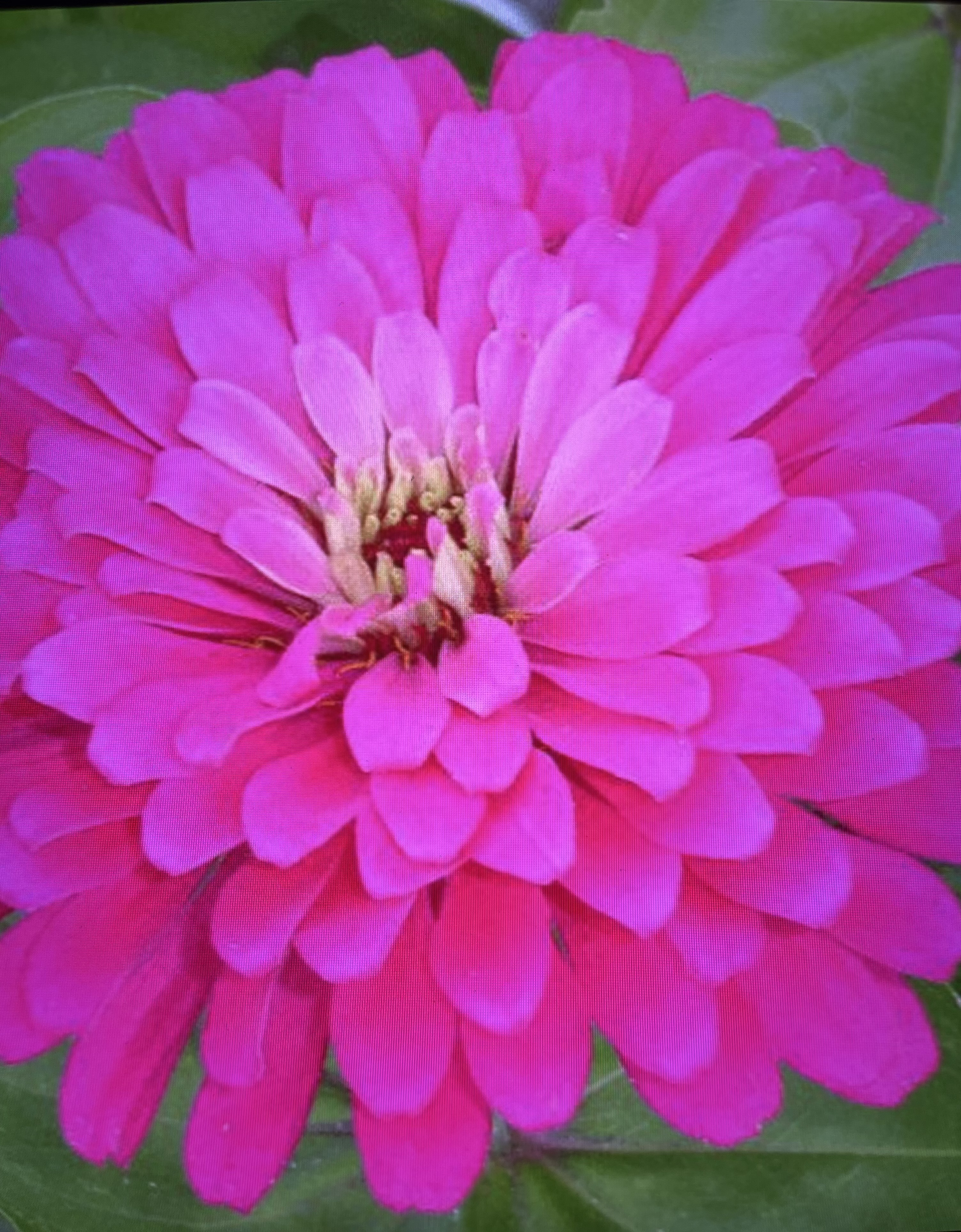
Seems the botanical industry has taken notice with promotional ads now featuring a stunning array of floral options for your landscape. Not surprisingly, it would be difficult to find a flower that more dramatically captures the true essence of “magenta” than the zinnia.
As you can see from this stunning photograph, I was, indeed, “drawn in” and quick to imagine the perfect sunny location for it in my summer garden. It’s from The Gardener’s Workshop in Newport News, Virginia.
The name and description they’ve given this zinnia is impressive; ‘Uproar Rose’. It is being held as the next knock-out zinnia by cut flower growers everywhere.
My seeds have been ordered and will be planted directly into the garden after our last danger of frost. I’ll follow their very professional harvesting tips:
*Harvest the blooms when fully mature.
*Make the first harvest cut above the bottom two side shoots as this establishes a branching habit for the season.
*Make future cuts at the base of the stem.
Linda Alexander, Dallas County Master Gardener class of 2008
Joy in the garden and what to expect in your fall and winter gardens:
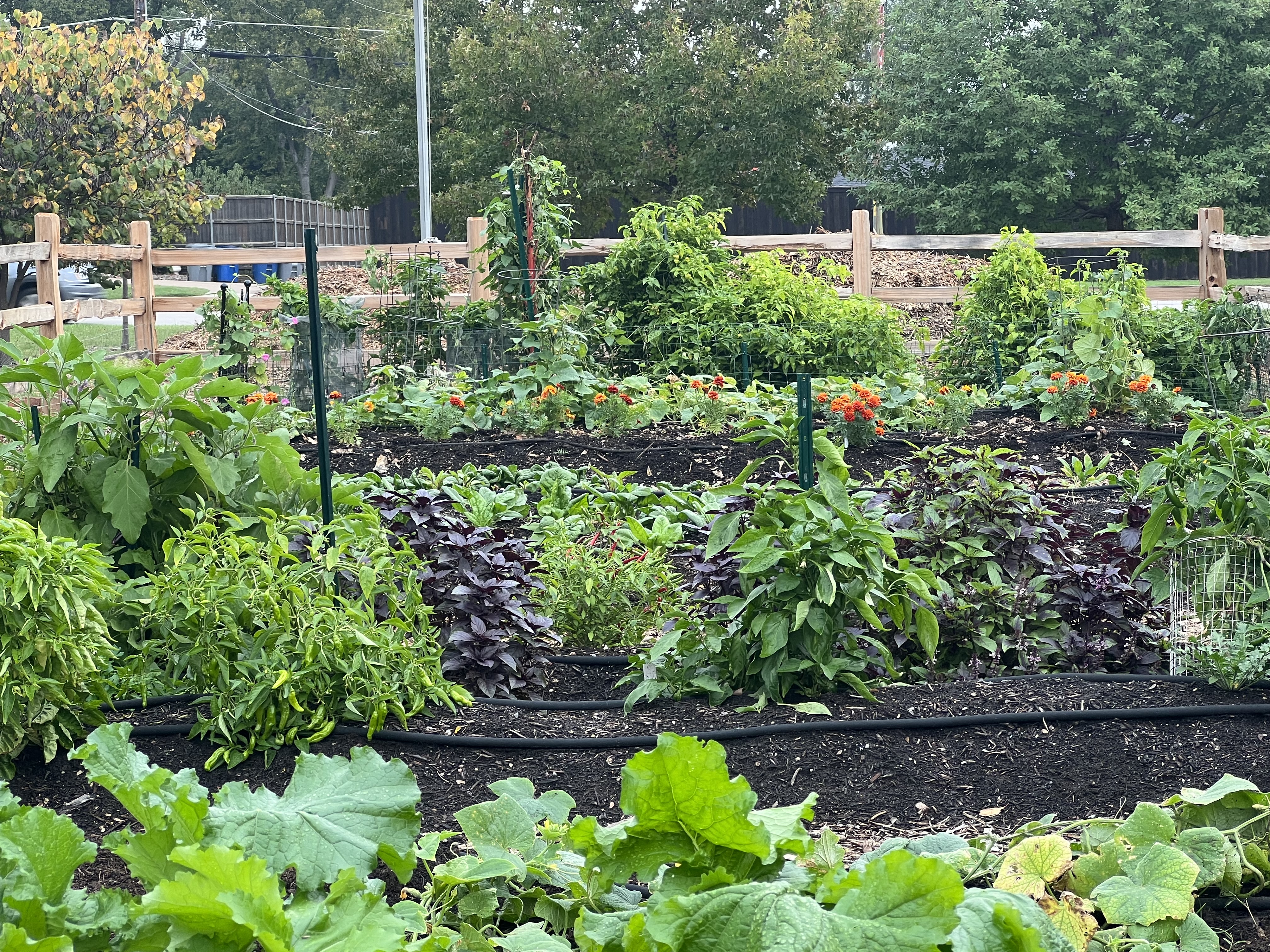
Our gardeners who work in the gardens pictured are called the “vegetable team.” Beverly writes-I have been thinking about the gratitude the vegetable team has for the harvests we have donated. (over 675 pounds donated) When we are trying a variety that is new to us, we taste it-often as a part of lunch before we go home from our workday. I’m grateful for that fellowship. I’m also grateful for the gardeners who start seeds for us at their homes. The loofah and Zucchino Rampicante (Baker Creek Heirloom Seeds) escaped the raised beds and trellises after the worst of the summer heat was over. The loofah seeds were saved from a prior year and direct sowed. Aji Dulce peppers are mild and productive. They become very sweet when allowed to turn red. Our seeds were a gift and we save them from year to year. They are becoming easier to find at some of the specialty seed outlets.
We planted small varieties of carrots such as “Little Finger” from Botanical Interests and kept the soil consistently moist until they germinated.
Even though garden centers have turned their inventory to Christmas trees, you can still find lettuce, Swiss chard, spinach, kale,and herb transplants. Also, keep direct sowing radishes. You may get a wonderful winter crop of vitamin packed vegetables.
Ann Lamb and Beverly Allen, 2 Dallas County Master Gardeners
Pictures by Starla Willis, Dallas County Master Gardener-2008
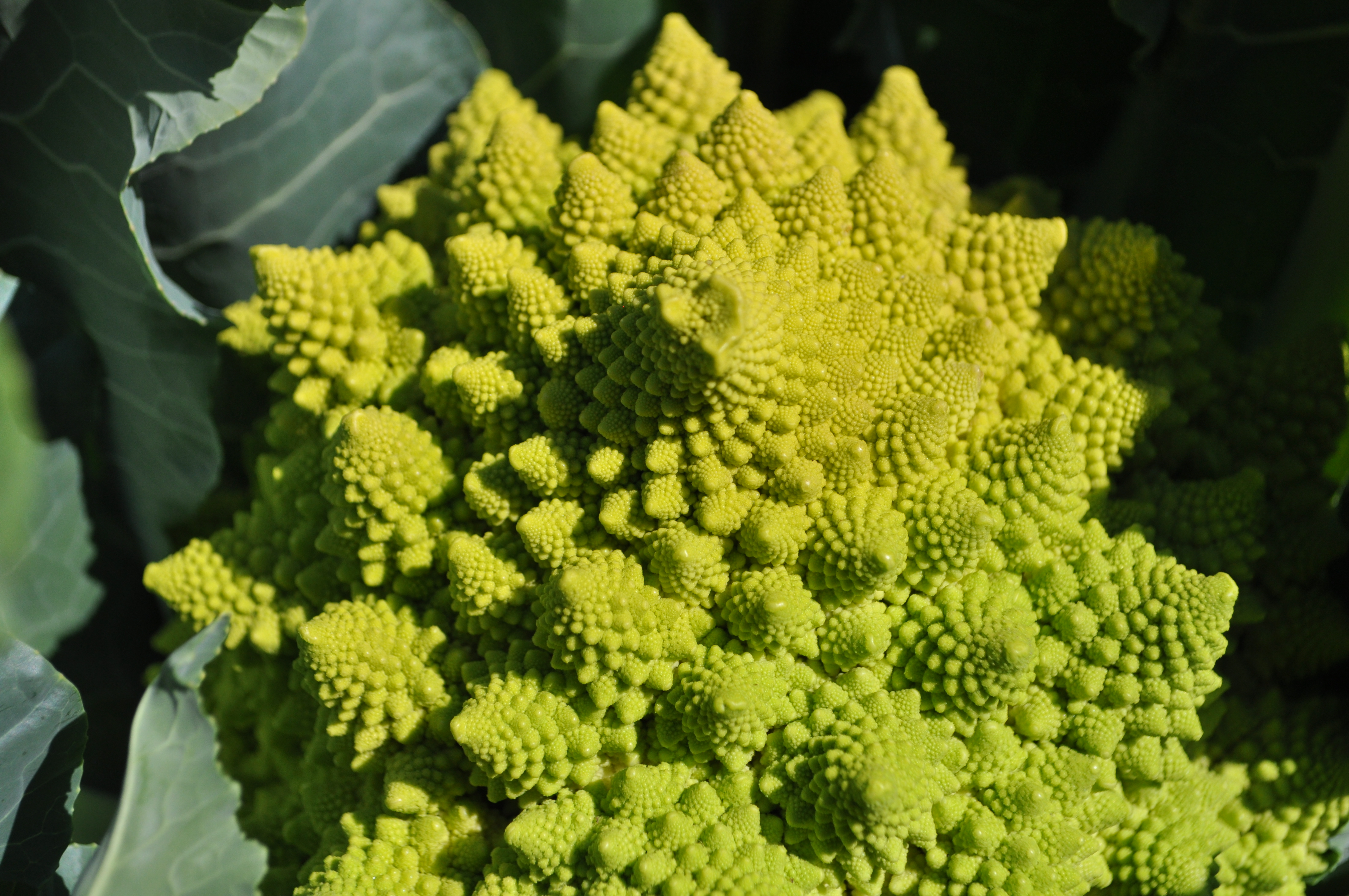
Grow your own garden art! Romanesco is a cole crop with characteristics of broccoli and cauliflower. It is widely grown in Italy and gaining popularity in Texas. Thanks to Romanesco, vegetable gardening is not just rewarding and nutritious it is also beautiful.
Romanesco produces thick stalks and wide, rough leaves. Leave a large space to grow this vegetable. The central head grows very large and eventually the plant can span 2 feet in diameter.
Me-Ann Lamb holding a Brocolli Romanesco from my garden in 2016
Sow seeds in a fertile location from February 1 to March 5 for a spring crop or August 20 to September 20 for a fall crop. Fall crops are ofter more sucessful as this plant thrives in cool weather. Sow seeds tinly and cover with 1/2 inch of fine soil. Keep evenly moist. Seedlings will emerge in 10-21 days. Thin to about 16 inches apart when seedlings are 1-2 inches high. Transplants are also available and much easier to grow. These plants will reach maturity in 75-100 days. To harvest, pick the enitre head before it begins to seperate.
Romanesco is a true photo opportunity. Take a close-up shot and it looks like and apple-green mountain range. The scientific name for this unusual ordering of rows is a “fractal.” Fractals can be thought of as never-ending patterns-nothing wrong with bringing math into the kitchen.
Susan Thornbury, Dallas County Master Gardener Class of 2008
Photo by Starla Willis, Dallas County Master Gardener Class of 2008
I thought I would follow up the beautiful fall photos Starla submitted to the blog with these photos of our garden that I recently received from our friend, Diane Washam.
Check out this bee visiting our Mexican Honeysuckle Plant. This plant blooms from late spring to fall. I have never seen garlic chive seeds look so beautiful! This lizard looks quite comfortable on the spotted manfreda plant.Mexican Mint Marigold looking pretty after the rain.Lambs Quarter is in the same plant family as spinach, chard and beets.This is the Fidalgo Roxa pepper. We planted it on the courtyard as an ornamental plant. The beautiful, colorful peppers look like candy! However, don’t let the candy like appearance fool you as this pepper is extremely hot. It was a good year for peppers! This is one of the many pepper plants that we planted in the edible garden, the donation garden and the courtyard garden. Many of these wonderful peppers were donated to the food bank, many of them were used to make our jalapeno jellies and a few were just there as ornamental plants to add interest to our gardens.
Jackie James, Dallas County Master Gardener Class of 1993
This is look at The Raincathcher’s Garden before the first frost. Temperatures may drop this weekend and then around mid to late November you can expect our first frost. Take a good look now through these pictures from Starla. She snapped many pictures and kept saying “the garden looks amazing.” Starla saw butterflies, a Texas spiny lizard and laybugs enjoying our fall garden.
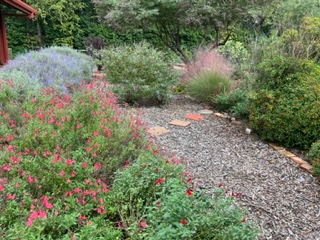
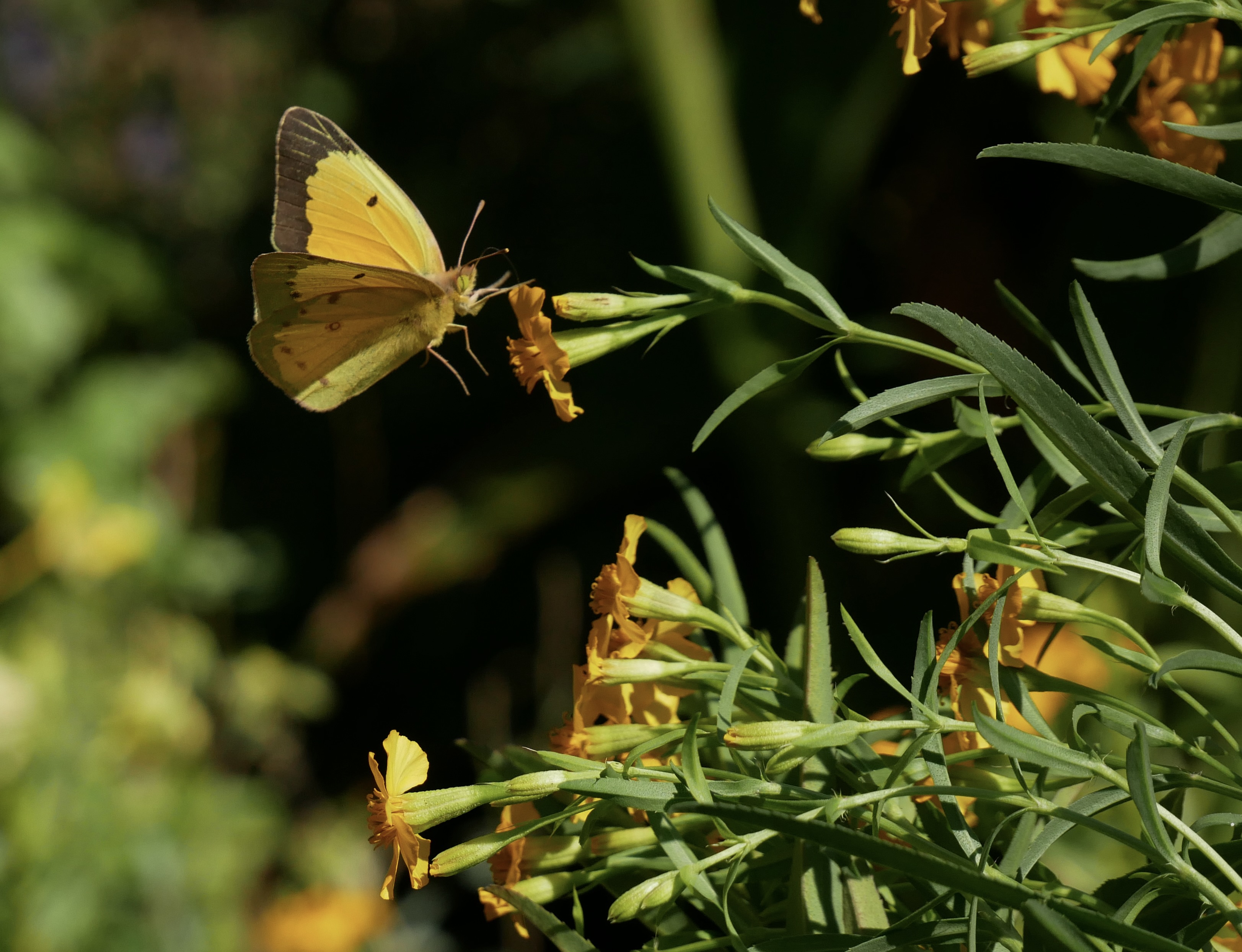
Gorgeous walkways brimming with colorLots of pollinators like this Orange Sulphur on Mexican Mint MarigoldA Gulf Fritillary on Red SalviaA Queenpoised for her next flight And a Morning glory blossom hosting a honey bee
Ann Lamb, Dallas County Master Gardener Class of 2005
All photos by Starla Willis, Dallas County Master Gardener Class of 2008
Today is the pick-up day for The Raincatcher’s Pansy and Plant Sale 2022. Thank you all for your orders! We’ve had a very successful sale and can’t wait to see you today for pickup.
If you haven’t already made arrangements for delivery (larger orders only) or late pickup, please plan to come by the garden on Wednesday afternoon between 1pm and 4pm to pick up your order. There will be volunteers on hand to help you load them from the north parking lot at the shade pavilion.
Raincatcher’s is located on the campus of Midway Hills Christian Church at 11001 Midway Road, Dallas, TX.
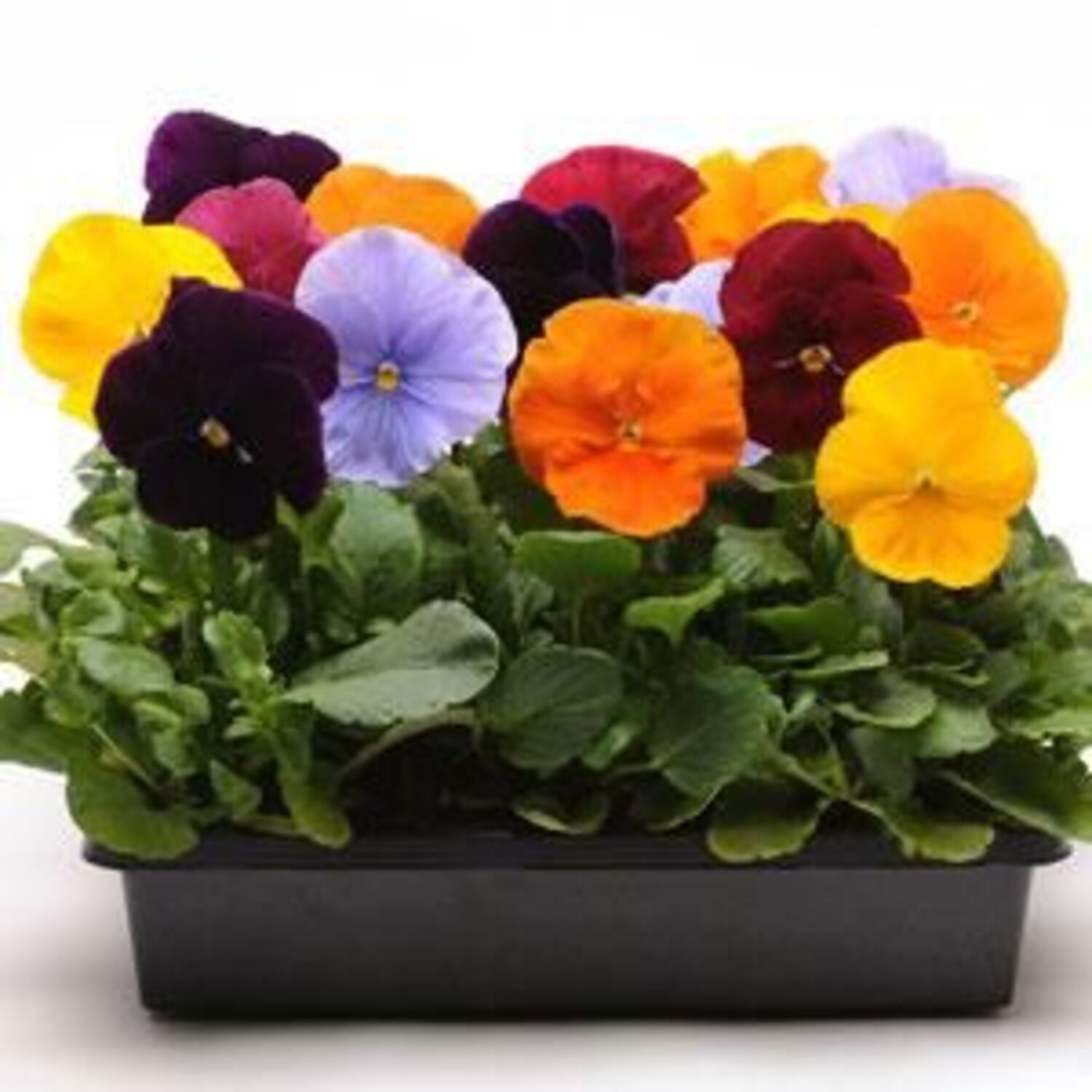
Raincatcher’s Garden of Midway Hills is offering fall annuals at a fantastic price for your fall and winter landscape color. Pansies, violas, and alyssum are $20/flat of 18 4″ pots, which includes tax. The online sale begins at 7am on Saturday, 10/15, and ends on Thursday, 10/20, at midnight. Flats will be delivered to the garden on Wednesday, 11/9, the peak time for fall planting, and are available to be picked up from 1pm until 4pm.
All orders must be prepaid, either through Signup Genius using your credit or debit card (fast and easy) or by check. Orders will be placed with the nursery after payment is received.
Order your fall annuals through our convenient Signup Genius account and find out more information about the sale by clicking on the following link:
Thank you for your support! Funds raised support Raincatcher’s Garden of Midway Hills, a Research, Education and Demonstration project of Dallas County Master Gardeners, a program run by Texas A&M AgriLife Extension Service and supported by the Dallas County Master Gardener Association. Follow us to learn about gardening in our North Texas climate and soil conditions and to find plant recommendations, recipes and stories from the garden. You can find our garden on the campus of Midway Hills Christian Church at 11001 Midway Rd, Dallas, TX.
I have to say that the squash vine borers (SVBs) were getting me down. After spending the summer of 2021 removing borers from the squash plants and still not seeing much of a harvest, I swore off growing squash, almost.
The SVB larva grows inside the squash vine (often killing the plant) and then makes a cocoon that overwinters in the soil. The adult moth emerges from the cocoon in spring and lays eggs on the undersides of the squash leaves. The eggs hatch and the larvae begin destroying your plants again.
One solution is not to have any squash handy for the adults to lay their eggs on (thus the almost swearing off). You can also interrupt this cycle by finding and removing the eggs. That is a real challenge unless you have a small number of plants and time to check every single leaf every day.
We started off the spring season with some lovely Italian cucumbers that were producing well but suddenly began to droop just like the squash had the previous summer. It turns out that if they don’t find any squash, the borers may settle for your favorite cucumber. It almost seems spiteful.
I was persuaded by a team member to try growing butternut squash in late summer. Cucurbita moschata has a reputation for borer resistance. Throwing caution to the wind, we decided to try zucchino rampicante and calabacita as well.
Despite my skepticism, we have a raised bed full of butternut squash maturing now with no sign of SVBs.
Cucurbita moschata, Butternut squash
The zucchino rampicante is in the same family and has a hard stem that I assumed the borers would not be able to breach. However, we found a few larvae in the stems and removed them. The plant now has huge beautiful leaves and vines that run about 12 feet. It is producing two foot long fruits that weigh a pound or so.
Calabacita and zucchino rampicante Zucchino rampicante
The calabacita (Cucurbita pepo), also known as tatume or Mexican zucchini, has a tough, thin vine and has shown few signs of distress from SVBs. It is taking up a lot of garden space but makes up for it by being very productive. The fruit may be eaten like a thin skinned summer squash or allowed to grow into a soccer ball sized pumpkin.
Going forward I will swear off swearing off.
Beverly Allen, Dallas County Master Gardener Class of 2018
One is known as having a special affinity for beans of every sort, the other is considered “not worth the trouble of growing” because it lasts for such a short time in the hot South. Differences aside, both are worthy of consideration. Summer Savory (Satureja hortensis) and Winter Savory (Satureja montana) are aromatic, flavorful and make delightful additions to the herb garden. Both varieties are currently growing in the Edible Landscape at Raincather’s Garden of Midway Hills.
Summer Savory is a cold-tender annual herb native to Southeastern Europe and the Mediterranean. It is the sariette (savory) of France, otherwise known as an essential ingredient in the herbs de Provence blend. Though not as popular as its perennial cousin, some believe it has the most superior flavor.
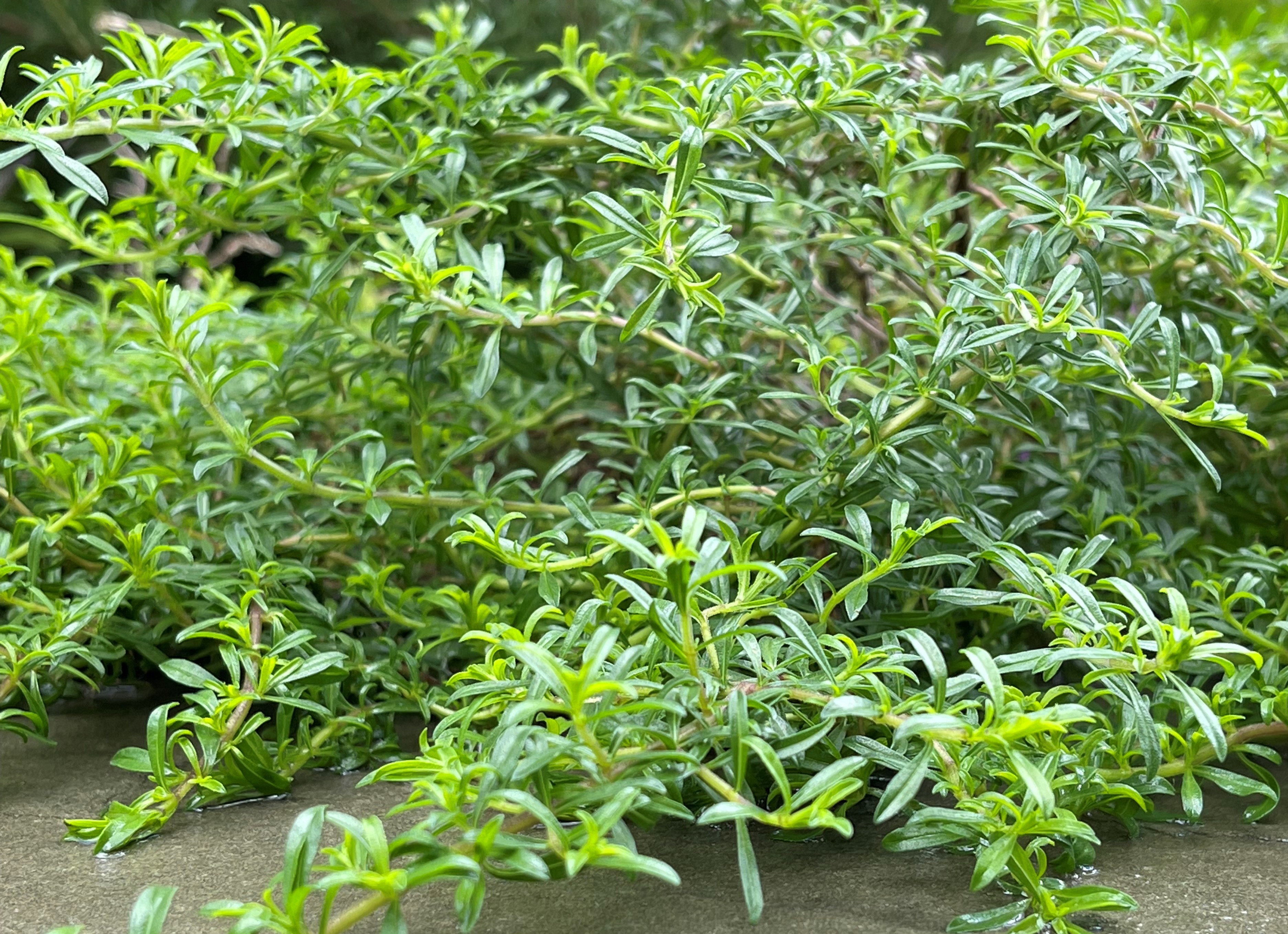
Winter Savory is also called dwarf savory or mountain savory. It is an especially decorative, low-growing and densely spreading shrub. Classical Greeks and Romans were familiar with this herb. Virgil, the Roman master of poetry, advised putting honey (saturated with the aroma of roses, thyme and savory) into the bee house as a solution to swarm’s disease. Hippocrates ascribed medicinal properties to it. Early American settlers treated colds and fever with savory tea.
Planting: Start seed in the winter, set out transplants in the spring.
Height: 8 to12 inches or somewhat taller
Spread: 20 inches
Bloom/Fruit: Blooms are small, white-to-lilac whorls of small star-shaped flowers.
Growth Habits/Culture: Summer savory is more upright with aromatic, dark green leaves and grows a little taller. It features square-shaped stems covered in tiny hairs. The ideal temperature range is 55-85˚F. Winter savory is more compact, low and spreading with needle-like, dark green leaves. It is a stiffer, woodier evergreen plant that will survive winter temperatures to around 23˚F. Savory requires rich, moist well-drained soil.
Taste: While both have a definite peppery bite reminiscent of thyme and marjoram, summer savory is fruitier, like apples and floral with a hint of lavender and basil. Winter savory with its coarser aroma and flavor is welcome at summer’s end when a fresh herb is desired during the cooler months.
Harvesting: When summer savory reaches 6 to 8 inches in height, start harvesting. After blooming, the plant is not as vigorous so be attentive about snipping off buds. Once summer savory flowers, its leaves are at their most flavorful. At this time, the entire plant can be clipped and used. Winter savory can be harvested for fresh use at any time.
Culinary Uses: Both summer and winter savory are traditional companions to all kinds of bean dishes, including soups, salads and spreads. Winter savory can be an alternative to sage in poultry dressing. Milder summer savory adds a flavorful punch to egg dishes, creamy soups and rich, cheesy casseroles. A liberal sprinkling of fresh leaves from either one gives new life to cooked vegetables. The good news is that both varieties can be used in much the same ways and are fairly interchangeable. When replacing winter savory with summer savory, add a touch more than called for in the recipe. When substituting summer savory with winter savory, start with about half the amount called for in the recipe and adjust according to taste.
Linda Alexander, Dallas County Master Gardener Class of 2008
If you’re growing shishito peppers in your summer garden, this recipe should be on the menu. Blackened, blistered and dipped in a creamy Greek yogurt flavored with papalo, it’s a global experience not to be missed.
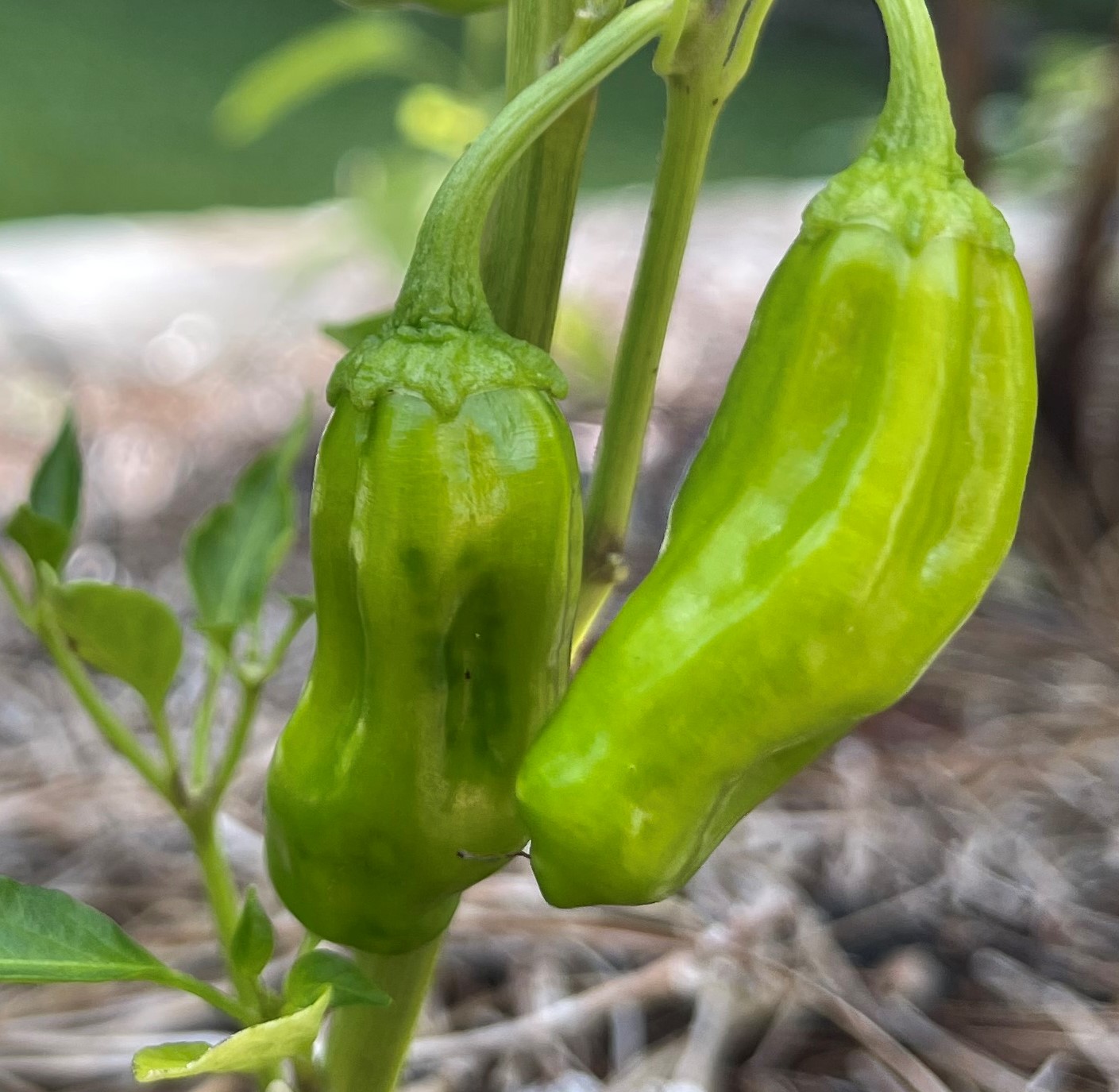
As you may have guessed, shishito peppers originated from Japan. The name “Shishito” is derived from the combination of “shishi,” “lion,” and “togarashi,” which means “chili pepper.” Take a closer and decide for yourself, “does the creased tip of the small and finger-long shape somehow resemble a ferocious lion?”
Grrrrr…ferocious lion or tasty pepper?
After blistering your harvested peppers in a cast-iron pan, sprinkle with fine, gray sea salt from France. The history of this unique salt will inspire you to use it in many other dishes. But take note, due to its robust flavor, use only ⅓ of the amount of salt you would normally use.
(In Guerande, western France, pristine Atlantic, seawater passes through the locks of the salt marshes and rests for six months until the salt is ready to be harvested. In summer, the salt is gathered by hand using wooden tools, as it has been for centuries. The rich clay in the marshes lends a pale gray color to this salt and also adds beneficial trace minerals.)
Next, mix up a little Greek yogurt for dipping. Its rich flavor and thick texture offers a higher concentration of protein and probiotics than traditional yogurt. Stir in some grated garlic, lime juice and zest to give it a little kick. Chop up a few fresh papalo leaves from Mexico if you desire a cilantro-like finish. When cilantro succumbs to our summer heat papalo rises to take its place. Use it in any dish where a substitute for cilantro is needed.
Shishito peppers have an interesting flavor profile and one that calls for a bit of caution. About one in ten peppers contains a fiery punch that dials up the heat factor. Overall, though, you can expect a sweet, typically mild spiciness that registers between 50 and 200 Scoville heat units. Their grassy, citrusy taste touched with a slight hint of smoke makes the shishito pepper’s flavor pretty unique. Not surprisingly, today they can be found as a popular appetizer on many restaurant menus. Are you ready now to take an international trip with shishitos?
Do shishito peppers “pop” when being blistered, charred, etc.? The short answer is “yes”. *Is there a way to prevent the “popping”? Yes, just use your handy cake tester or a toothpick. Poke a hole in each pepper before blistering to prevent popping.
Note: Now is the time to start planting peppers for a fall crop.
One local Italian restaurant features a lovely “Little Gem Lettuce Salad” drizzled with Charred Shishito Vinaigrette. Delizioso!
Linda Alexander, Dallas County Master Gardener Class of 2008

















 DALLAS GARDEN BUZZ