Category Archives: Vegetable Gardening in Dallas

Starla’s Garden Adventures #2

Well, Summer has arrived and things are heating up.   This is  garden2.0 in my raised beds .  The radishes and carrots were eradicated on Mothers Day, and now, a month later considerations of “what next” crosses my mind.

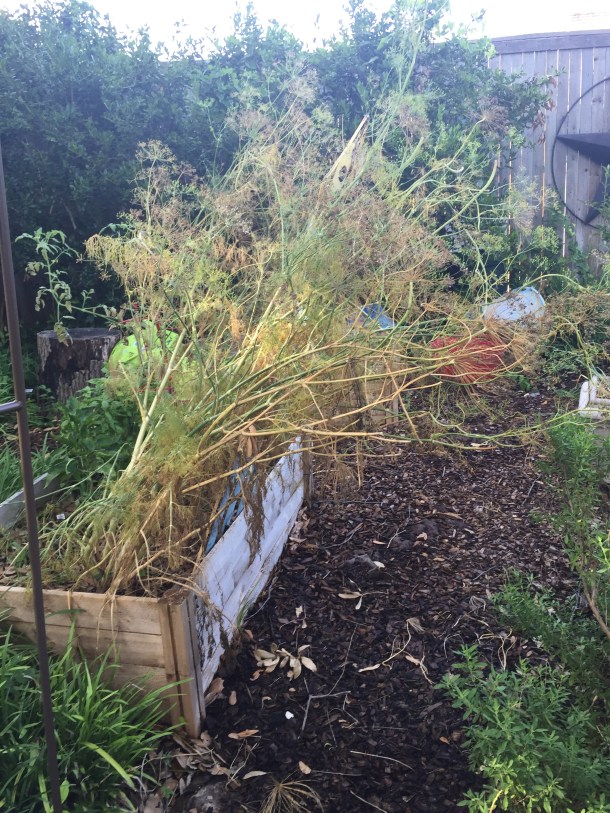
The last vestiges of the Fall garden,1.0 are waning. The onions , still in the ground have not become very bulbous, but the green tops will make a nice addition to a summer salad– the kale needs to come out but hasn’t quite made the trip  – And then there is the dill – It  has reached to the sky and given us a beautiful show of  delicate green but now it is very sad looking, with brown clumps of dill seeds hanging on the  umbels.
dill Starla

Yes, it is time to come out– it’s in the way of my path, it’s ugly and it must go …But wait,– hold on,  after making the decision to remove,  but before I yanked it out,  I spy not one, but 2 caterpillars munching on the dill seeds while enjoying the morning sun!   This plant must stay, at least a few days longer to house the honored guests.   So much for a neat and tidy garden right now – Maybe garden 3.0.

The Honored Guest: A Black Swallowtail Caterpillar on Dill

The Honored Guest:
A Black Swallowtail Caterpillar on Dill

Tomatoes, peppers, cucumbers and beans, are putting on new growth and blossoms  The tomatoes are surviving  — I wouldn’t say thriving, but they are not dead and gone  — I even get a few golden and red gems that never seem to make it back to the house.

The cucumbers were planted sinfully late, but are climbing up the wrought iron fence and acting like they want to perform. I must remember to water regularly, but with a trip planned, not sure how that is going to go.  But I continue, learning with each step and misstep, and enjoying the journey.

Thus continues the saga of this little garden that brings me joy in the most unexpected ways.

Starla


A Dallas Vegetable Garden

Starla and I have been photographing Dallas County Master Gardener’s vegetable gardens for the Dallas County Master Gardener cookbook, A Year on the Plate. We want to include photos of a few vegetable gardens because the emphasis of the cookbook is seasonal and fresh garden recipes combined with vegetable garden expertise.  Don’t worry we also promise plenty of tantalizing “foodie” type photos.

We visited Patti and her 8×8 garden this week.

Onions, Tomatoes, Herbs, Cucumber, and Flourish in Patti's Garden

Onions, Tomatoes, Herbs, Cucumber, and Melons Flourish in Patti’s Garden

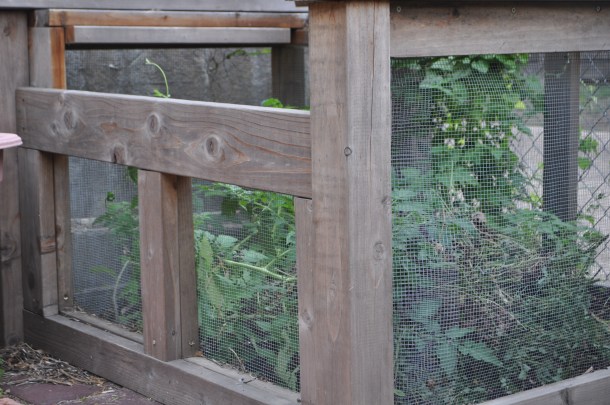
Garden success starts with compost.  When Patti’s husband, Rob, rebuilt their compost bin, he chose to upgrade to Redwood.  They used 1/4 inch fine mesh screen for extra protection against critters.

If you think it looks like tomatoes are growing in their compost bin, you are correct. Sometimes compost piles are less active but warm enough to start germination.

Compost Bin Of Redwood and Small Mesh Screening

Compost Bin Of Redwood and Fine Mesh Screening

Starla and I asked Rob to be in our video, he demurred saying “No, Patti’s the garden girl.” So  let’s hear from THE GARDEN GIRL:


Video by Starla

Ann


UN Declares 2016 the Year of the Pulse

    The Food and Agricultural Organization (FAO) of the United Nations and the 68th United Nations’ General Assembly has declared 2016 The Year of the Pulse.   If you are wondering, as I did, why the FAO would be nominating a heartbeat throb, it is because in agricultural terms a pulse is part of the legume family.  The term itself comes from the Latin puls meaning thick soup or potage.  The term “pulse” refers only to the dried seed.  Dried peas, edible beans, chick peas and lentils are the most common forms of pulses.  However plants like green beans which are used fresh, and soybeans and peanuts which have a higher fat content, are not called “pulses.”  Here at the Raincatcher’s Garden we are growing fava beans, which if left to dry before cooking would be considered a ‘pulse.”

Chickpeas Growing in the Edible Landscape at The Raincatcher's Garden

Chickpeas Growing in the Edible Landscape at The Raincatcher’s Garden

Pulses play an important part in not only contributing to a healthy diet for both people and animals but also are a sustainable crop able to be grown with less water and are able to fix nitrogen back into the soil.  They are little super foods with big benefits!  Some of the major benefits of pulses include:

Nutrition:  Pulses are an important part of a balanced diet and have been shown to play an important role in preventing some diseases such as heart disease, cancer, and diabetes.  They are high in fiber and low in fat.  They contain significant amounts of vitamins (Vitamin E) and minerals (iron, potassium, magnesium and zinc.) They also contain twice the amount of protein found in whole grain cereals such as rice, wheat, etc.  As such, the World Food Organization includes bags of pulses in their relief packages.

Pulses, especially dried peas, can also be used as feedstock.  A study in West Africa showed that animals fed cowpea hay, along with rice feed meal, during the dry season gain 95kg, compared to 62kg for animals that did not receive the cowpea fodder.

Sustainability: Like other legumes, pulses are able to fix nitrogen in the soil and have a positive impact on soil quality since they feed the soil microbes which benefits soil health. Pulses have also been shown to promote diversity in soil composition as they contain a greater and different amount of amino-acids than non-legumes. This may help plants thrive and perhaps offer greater protection from disease-causing bacteria and fungus.

Pulses also require very little water compared to other forms of protein such as animal protein. The United Nations estimates the water required to produce a kilogram of beef, pork, and chicken is 43-11 times higher than the water needed to grow pulses.

So…. Next time you are walking down the bulk produce aisle of your neighborhood grocery store, look at all the different varieties of dried legumes/pulses.   You may even want to celebrate The Year of the Pulse with a bowl of 7-Bean soup.

Carolyn

Revised Onion Harvesting at The Raincatcher’s Garden 2016

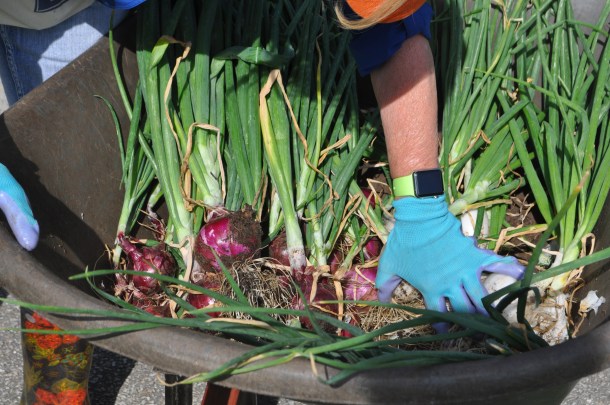
Onions have been harvested at the garden during the last two weeks.

They are now drying in our storage shed.

Fantastic Haul of Onions!

Fantastic Haul of Onions!

Harvest Onions when the tops begin to naturally fall over and turn brown. Dig the onions from the ground up with tops intact and to keep the bulb from being damaged. We used a garden knife or trowel to get them out of the ground carefully.  Onions that have bolted are past their prime and can be left to reseed.

As a reminder, here’s how to braid onions:

and here are notes on storing, eating, and lots of other onion thoughts in these articles: The Lowly Onion and Beginnings

Ann


My Garden Journey

In my first five years as a Dallas County Master Gardener (class of 2011), I have learned and experienced so much from working at our demonstration gardens; however, I had never attempted growing vegetables at home except in pots until this past fall when I saw sunlight streaming in a section of the backyard after a tree had been removed.

So this new adventure began – raised beds were found, plants were purchased and the garden grew – well some of it grew…

Brocolli by StarlaBroccoli and cabbage went in first along with a few herbs, followed by lettuce and arugula in October. I had some success with broccoli, but not so much with the cabbage, lettuce or arugula ( they bolted). Radishes and carrots were planted from seeds. After the first of the year onions were added and then potatoes came and went (I had the wrong soil, so they never sprouted).  There was minimal success with the radishes (not properly thinned), but the carrots – I waited, looking for a glimpse of the carrots(roots)? under the leafy tops — until right before Mother’s day, and then I pulled them. Once again the results were mixed;  I had a range of carrots from 1/4 inch to over 6-7 inches long  and counted 26 of the prettiest multicolored carrots I have ever grown.
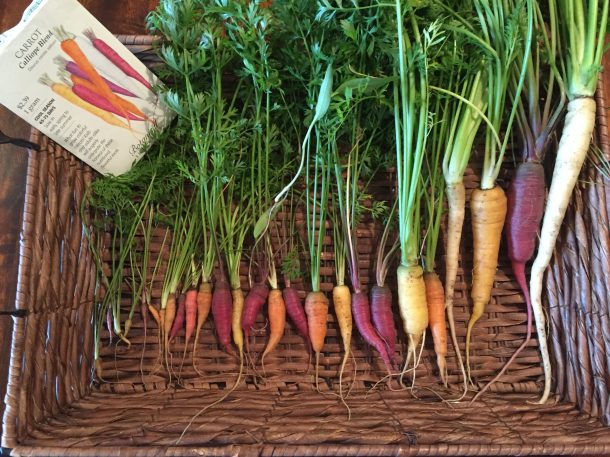
Homegrown Carrots

Homegrown Carrots

This summer I’m trying things that we will eat as a family – tomatoes, peas, green beans , peppers. I have a space for cucumbers with hopes to make pickles like my family put up years ago.  My beds are few in number but just right for my learning curve. You can take this journey. it takes some planning, a little time and patience, but is well worth the effort.

Here are a few of the things I’ve gleaned from my raised beds:

  • Gardening with a group of people brings a broader depth of expertise
  • Information—ask questions, listen and apply–repeat.
  • Realize early on that everything won’t go according to plans. Don’t dwell on failures, but learn from them  — water properly, use the correct soil, compost, mulch, weed…
  • Celebrate success, no matter how small–they are victories!
  • Try new things, take notes (my garden journal currently has one entry, several months back, but there is value in the process)
  • Trial and error is another way of learning
  • Share your story, your experience, and the fruit of your labor —
  • Enjoy the adventure!

Starla


Artichokes, Aphids, and Groceries At Raincatcher’s Garden

Root around our garden this spring and you will find groceries growing like crazy.

Here’s what is planted in some of our beds.

Raised Beds:

Bed 2-Sungold, Purple Cherokee, Sugary Hybrid, Celebrity, Marianna’s Peace Tomatoes and Carmen Sweet Peppers

Bed 3-Red and Green Lettuces and Onions

Bed 8-Potatoes and Clemson Spineless Okra

Bed-9 Artichokes, Gourmet Blend Beets, and  Sugar Snap Peas

Other Beds-variety of vegetables planted by and grown for our visiting school kids

In Ground Veggie Bed-Celebrity Tomatoes, Giant Jalapeño, Habanero Pepper, Ichiban Eggplant, and Black Beauty

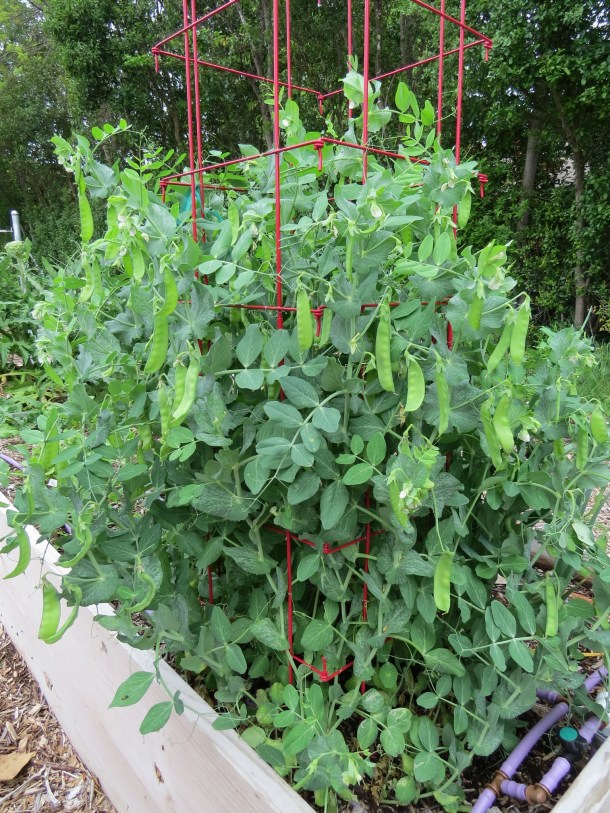
May I recommend the Sugar Snap Peas for munching straight off the vine!

Sugar Snap Peas at The Raincatcher's Garden

Sugar Snap Peas at The Raincatcher’s Garden

Aphids and Ladybugs are also eating their way through our garden. Ladybugs  seem to be winning as explained in this video:

Ann

Video by Starla

Artichokes by Dorothy

Oh, and if you have an answer to Dorothy’s question about stink bugs, please leave your answer in the comments section below.

Tomatoes and North Texas

In selecting varieties of tomatoes for North Texas, the most important criterion to consider is the one in the trade called, “Early Season”. The less time required for maturation the better, because the extreme heat of our summers for tomatoes is like falling off a cliff.

Tomato varieties can also be described as being either determinate or indeterminate. Determinate varieties have the characteristic of reaching a point during their maturation at which most of the bearing of fruit occurs within a short time.  Indeterminate is just the opposite, where bearing occurs on a more gradual and sustained basis.

Indeterminate varieties that perform best here are mostly the smaller sized varieties. These can bear fairly prolifically even in mid-summer.  My own personal preference is for this class of tomatoes.  They are just the right size for popping into the mouth.  A usual day in my life finds me eating them every morning and about half the time that evening.

Tomato" Yellow Pear" an indeterminate variety

Tomato” Yellow Pear” an indeterminate variety

Larger sized tomatoes that perform best are the mid-sized varieties. The most popular 8- 12 oz. tomato for many years has been the determinant variety, Celebrity.  Its sister, Carnival is good also.  A typical year will find this variety bearing typically most heavily from early June to early July.

The largest fruited varieties require too long to mature, where anything past 65 days is marginal. The large fruited varieties also are susceptible to splitting and sun scald.  These do not appreciably affect the taste but certainly do affect the esthetic qualities of the fruit.

Celebrity Tomato Ripening on the Vine

Celebrity Tomato Ripening on the Vine

Perusing the catalog, “Tomato Growers Supply Company”, there are listed 16 varieties of Early Season varieties, many from which to choose.

Over the years, varieties come and go. Some are described as being highly heat resistant, but I would be wary of accepting that description as being accurate.  I would recommend acquiring a tomato catalog along with using my advice in choosing your selection(s).  Celebrity remains the preeminent mid-sized tomato.

Tom Wilten

Pictures by Starla


Perfectly Planted Potatoes Premiers

     Just in time for the Oscars:  Potatoes take center stage on the red carpet in this exclusive short video.  It features our own Jim Dempsey, nominated for Best Instructor, and Starla Willis, nominated for Best Cinematographer. Good luck to both!

And… if you want more information about growing potatoes, check out “One Potato, Two Potato, Hopefully More” and “Fried Green Potatoes.”

Carolyn

Video by Starla


Learn the Square Foot Gardening Concept

Rain or Shine, Come to our Square Foot Gardening Class, Tuesday, February 23 at 11am

at The Raincatcher’s Garden of Midway Hills


Taught by Stephen Hudkins, Texas A&M AgriLife Extension, Dallas County Master Gardener Coordinator.

We will meet in the Vegetable Patch. If raining, go to Fellowship Hall.


Address: 11001 Midway Road, Dallas, Texas, 75229

Public Welcome, Master Gardeners can receive education credit.


Brussels Sprouts

Brussesl sprouts are an acquired taste.  Hardly anyone under 12, puts  them on their plate. But taste buds change and recipes for Brussels sprouts salads, soups, and au gratin direct us to digest this nutritious crop.

Brussels sprouts planted in the fall at The Raincatcher's Garden

Brussels sprouts at The Raincatcher’s Garden

In Texas we plant Brussels sprouts in the fall. Brussels sprouts like cold weather. It’s a long season crop with 90 days to maturity from transplants and 100-110 days from seed.

Would you like to grow better Brussels sprouts?  Dorothy has a gardening tip:

video by Starla

Ann

Education Opportunities at The Raincatcher’s Garden of Midway Hills

Square Foot Gardening  by Stephen Hudkins, Tuesday, February 23rd at 11am in the Vegetable Patch.

Rain Garden Installation by Dr. Jaber and Dr. Woodson, Tuesday, March 1st at 9am, Fellowship Hall.

All welcome, Master Gardeners can receive education credit. Leave a comment if you need more information.