Category Archives: Vegetable Gardening in Dallas

Growing Eggplant in Texas

October 11, 2025

The Raincatcher’s Garden vegetable gardening team has enjoyed growing several varieties of eggplant.

They have found them to be easy to grow as long as they remain vigilant about controlling the flea beetles with diatomaceous earth.

These long purple eggplants are called amazingly enough long purple eggplant.

Aswad eggplant pictured above is an Iraqi heirloom variety known for its mild sweet flavor.

Mark your 2026 calendar to start eggplant by seed February – mid-March. Transplants should be set out in mid-May through June.

While eggplant may not be your favorite vegetable, it’s nice to harvest something new after summer crops have withered in the heat. There are many varieties and ways to cook eggplant. Tonight, at our house we’ll have eggplant apple quesadillas; find the recipe here.

For more growing information: Easy Gardening-Eggplant

Ann Lamb, Dallas County Master Gardener Class of 2005 with Beverly Allen, Dallas County Master Gardener Class of 2018

Revisiting A Fairy Tale

October 9, 2025

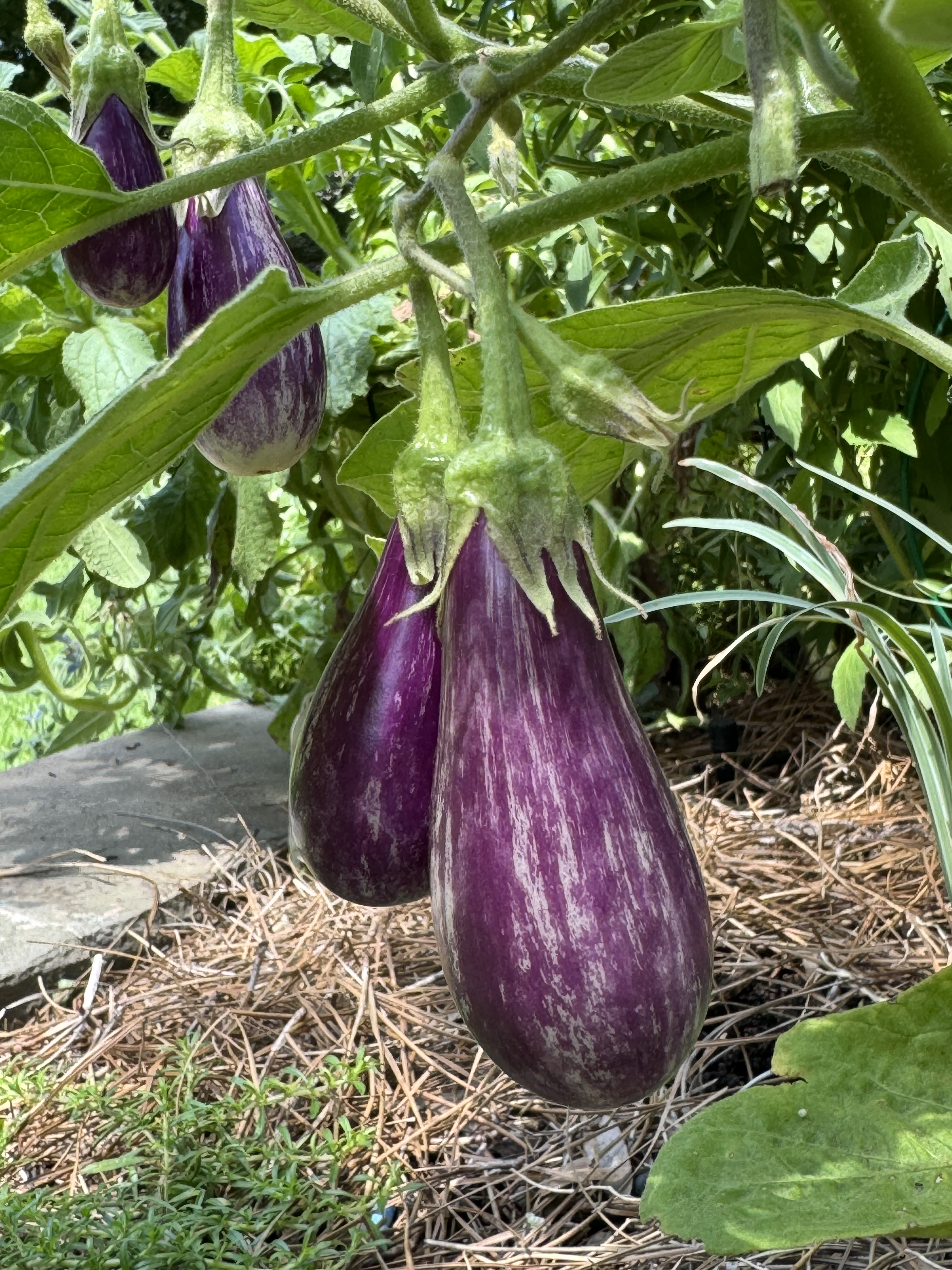
Last summer, 2024, I grew Fairytale Eggplant for the first time. It produced adorable little tear-drop shaped eggplants for over three months. During that time, most of the harvest was used for Apple and Eggplant Quesadillas, a simply delicious treat. 

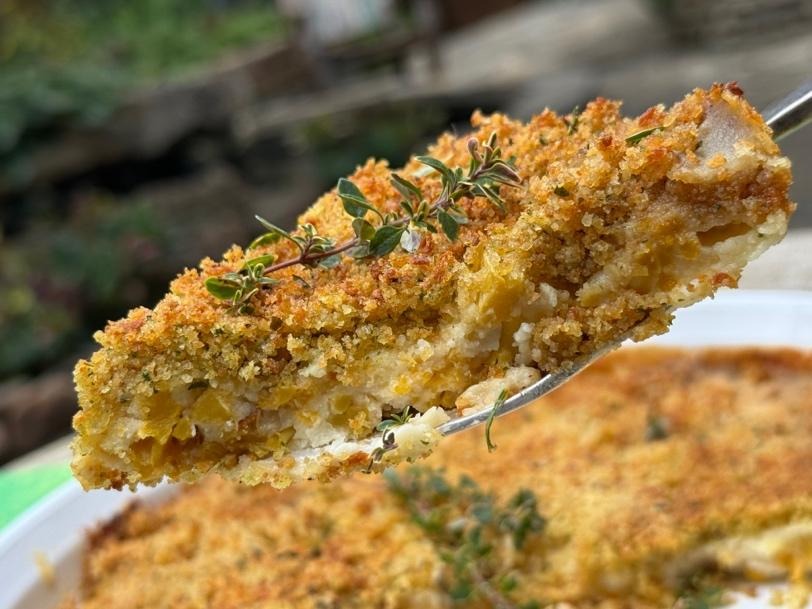
For 2025, a new recipe that we’ve enjoyed over the past few months is “Roasted Fairytale Eggplant Salad with Fresh Tomato”. Inchelium Red organic garlic had cured from my late spring/early summer crop, while fairytale eggplants, English cucumber and mint were growing in my garden and ready to use.

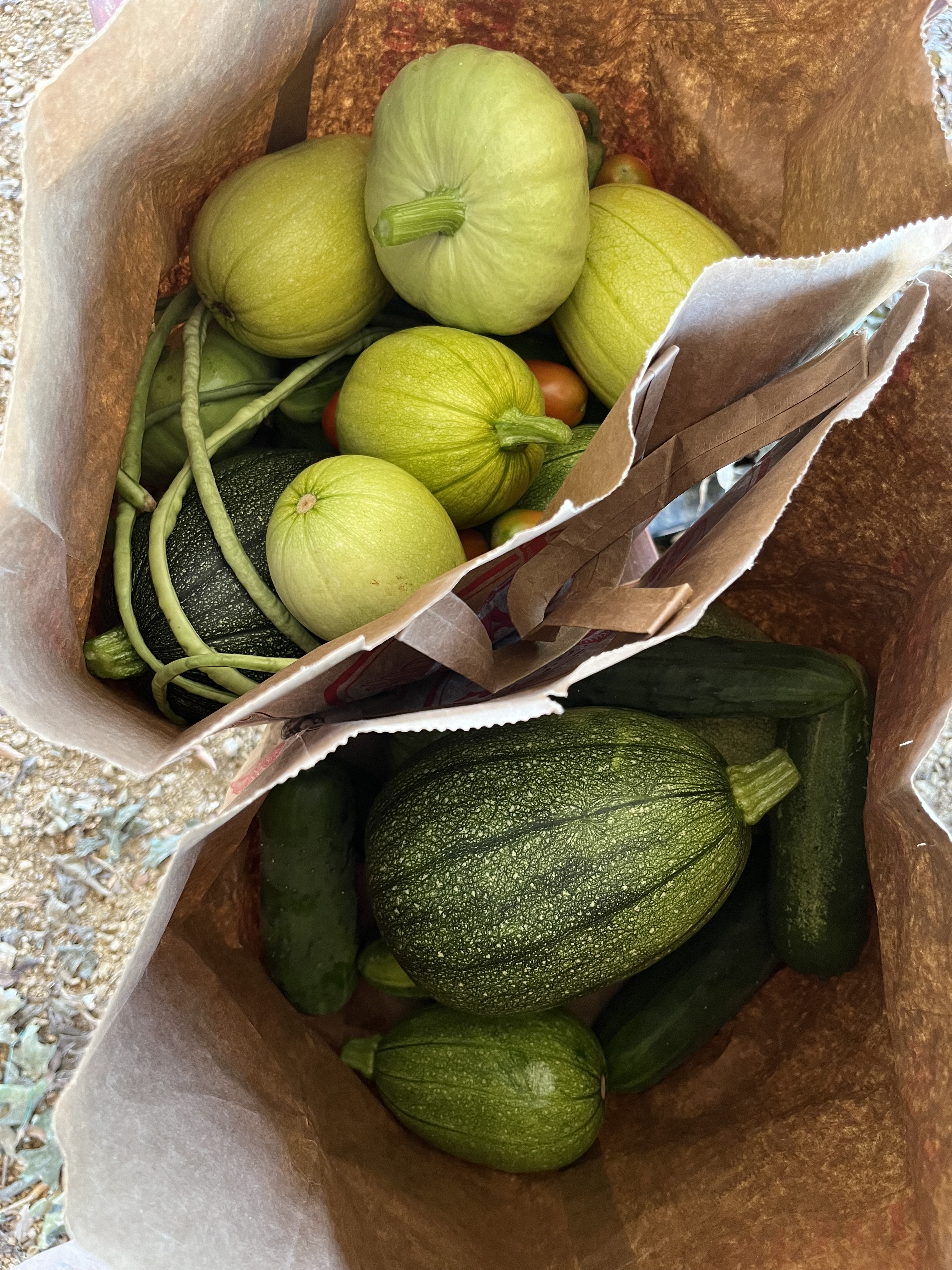
It’s now early October and my two Fairytale Eggplants are producing almost double the amount as last year. Here’s an example of what gets harvested every day.

Linda Alexander, Dallas County Master Gardener Class of 2008
Roasted Fairy Tale Eggplant Salad with Roasted Tomato

Carrots, A Report from the Raincatcher’s Garden

Carrots are not the easiest thing to grow in our part of the world. Our past efforts resulted in lower yields than we had hoped. 

This year we tried something different. We placed burlap over the area we had just planted and sprinkled it once a day to keep it moist until the seeds had germinated. 

We usually water other seeds by hand once a day until they germinate but that didn’t satisfy the carrots. Soaking the burlap daily provides the continuous moisture they need for a good germination rate. 

There was a hard freeze during the germination period.  We left the burlap in place and covered the area with frost cloth.  

We were concerned that the seedlings would stick to the burlap when we removed it but that was not a problem. 

The germination rate was excellent and after a few weeks we had many delicious carrots to share with the NDSM food pantry and visiting preschoolers.  Next year we will confidently devote more space to carrots using this technique. 

Harvesting, photo by Ruth Klein

Prepping for NDSM food pantry, photo by Beverly

Beverly Allen, Dallas County Master Gardener Class of 2018

Greetings from the Raincatcher’s Vegetable Gardens

March 26, 2025

We are enjoying the mild weather and it appears the vegetables are too. Last year was productive both in vegetables donated and new lessons learned.  We came pretty close to doubling our yield from the previous year (from 966 to 1833). 

The tatume squash was the star producer with 727 pounds donated to North Dallas Shared Ministries.  We would have had more but the stink bugs cut the harvest short by a few weeks. 

We left a large volunteer hybrid squash in place as a trap crop for squash vine borers.  An infestation of stink bugs quickly followed the borers on this weakened plant and spread to the tatume despite our best efforts to control them. This led to the early demise of our tatume plants and many long sessions of spraying soapy water to rid the garden of stink bugs. We are grateful to the Master Gardener interns and new volunteers who kept working with us despite this challenging (and frankly, gross, infestation).

The best advice for controlling stink bugs in small gardens is to remove the eggs and nymphs as soon as they can be found.  They can be brushed off into soapy water or vacuumed.  We missed some early opportunities but ultimately were able to get it under control in time for fall vegetables. 

Z

Image of brown marmorated stink bug eggs and nymphs from stopbmsb.org

Beverly Allen, Dallas County Master Gardener class of 2018

ARUGULA 101 NO MAKE THAT ARUGULA 102

November 27, 2024

Winter may be coming on but gardeners never give up—opportunities are out there iif we look.   After all this is an important time to protect against the horrible germs and viruses that WE don’t spread around—-but “the others”  do.

We need healthy food—vitamins and antioxidants to protect against dangers lurking everywhere.

Gardening opportunities—need for healthy food.  Its perfectly clear how these things go together  —grow arugula—in your own yard where you can eat it every day.  It is loaded with the vitamins and minerals and antioxidants we want and need and—it honestly wants to grow here—and this is the time it grows best.  We are talking now about salad arugula or garden arugula.

This is regular arugula, a familiar salad green.

Its Latin name is Eruca Sativa.  This is important to know when you are buying seeds or plants and this is the plant you want to grow—keep it in mind for later.  This is the peppery green most often found in spring mixes available at the store.  Just as the mixes contain lots of different greens you need to plan on mixing your arugula with hopefully—homegrown lettuce for salad.  Pick your plants early and often using the outer leaves—the plant will just keep growing.  

Salad arugula is very heat sensitive and will bolt but don’t worry the unusual and pretty flowers are great in salad and let some go to seed you will have new plants to use..  When it does get hot  the seeds just stay in the ground and come up when conditions suit them you can have arugula for years.  

 Of course winter isn’t the only season for healthy eating.  Once you realize how useful your salad arugula is—you want more you want some in summer too.  

There is a plant for that!  Amazingly it is called Wild or Rustic or Italian Arugula.  However it isn’t arugula really it actually isn’t closely related to salad arugula although the taste is similar.

It’s Latin name is Diplotaxix Tenuifolia it is a brassica but it is a perennial native to the Mediterranean.  It is far more heat tolerant and uses lots less water.  So although it is a very different plant it is a very good thing.  

A little in salad—especially the very young leaves  will be fine.  It’s flavor can be fairly intense so use carefully.  Its wonderful for sandwiches no mustard needed!

For a real treat pick a nice bunch chop and dress lightly with olive oil and vinegar—pile on to a nice cheese pizza just out of the oven—you won’t be sorry.

So two different plants both called arugula and both so welcome in the kitchen garden.

Italian Rustic or Wild Arugula


Both arugula flowers pictured above are beautiful and edible and great for bees and small butterflies, however they are very different. Both plants are called arugula and we are going to acecept that and grow them both!

Susan Thornbury, Dallas County Master Gardener Class of 2008
Cool as a Cucumber

July 25, 2024

Did you know that not all cukes are created equal? To simplify, there are two main types of cucumbers, American and English. Both can be used for pickling and slicing. This year I decided to try the English variety in my raised garden bed. Also, to save space, I used a trellis type support system for growing it vertically. That proved to be a very good decision.

13 inch long English cucumber ready to be harvested from my garden

After about two and a half months in the ground, my little cucumber transplant has covered the trellis and produced over a dozen cucumbers. English cucumbers generally grow thinner and straighter than their American counterparts and can grow in the range of 12 to 24 inches long. So far, I’ve been harvesting them at around 12 to 14 inches in length. 

English cucumbers have a sweeter flavor and delicate skin that is less bitter than that of other cucumbers. Many sources say that English cucumbers tend to have very few seeds but, as you can see from the photo, mine had a generous amount. 

A person peeling cucumber on a cutting board

Description automatically generated
Seeding an English cucumber with a serrated grapefruit spoon

Tips for growing:

*Plant in an area of the garden that receives a minimum 6 hours of sunshine daily. 

*Prepare the soil by tilling well while adding aged compost to a depth of 6 inches.

*On average, cucumbers require: 1 inch of water per week in moderate conditions, twice per day when temperatures exceed 90°F. 

*Add a 4-inch layer of organic mulch around base, but not touching the stem.

One of my favorite cucumber recipes is from a place in the Texas hill country where my husband and I, for over 35 years, always enjoyed having lunch. It was an absolutely charming restaurant in Fredericksburg known as ‘The Peach Tree Tea Room’. The Pedregon family opened their new venture in the fall of 1984. It brought in diners from all over the United States and internationally, as well. Sadly, it closed a few years ago leaving a void in the Fredericksburg culinary scene. Thankfully, over the years, I purchased all three of their wonderful cookbooks. The recipe I’m sharing is from their first cookbook, published in 1990. It is the recipe for ‘Chilled Creamy Cucumber Soup’. 

Making the recipe over the weekend brought back cherished memories from those early days in Fredericksburg. It was especially rewarding to use three of the ingredients called for in the recipe from my garden; English cucumbers, parsley and garlic that was curing in my pantry. 

A bowl of food on a plate

Description automatically generated
Chilled Creamy Cucumber Soup Garnished with Freshly Chopped Parsley and Tomatoes

Hope you will be inspired to take a cool and refreshing break with ‘Chilled Creamy Cucumber Soup’. In the meantime, chill out with these tasty, sliced cucumber appetizers.

Cucumber slices with flowers and a small glass vase of herbs on a wood surface

Description automatically generated
English cucumber slices topped with Herbed Cream Cheese, Salad Burnet and Borage Blossoms

And, just in case you were curious about the title…’Cool as a Cucumber’. I did a quick online search and learned something new. First, the inside of cucumbers are approximately 20 degrees cooler than the outside air. And the phrase ‘cool as a cucumber’ first appeared in a poem by the English author John Gay in 1732. It expresses the narrator’s angst regarding a woman with unreturned love! Today, that phrase is used to describe someone who tends to remain calm, assured and composed in any situation.

Linda Alexander, Dallas County Master Gardener Class of 2008
Chilled Creamy Cucumber Soup

Cucumber Slices Topped With Herbed Cream Cheese

Who Doesn’t Love a Good Fairy Tale?

July 2, 2024

 Does the familiar phrase ‘once upon a time’ bring back memories of  your early childhood? Maybe it was when you heard the classic story of Little Red Riding Hood for the first time or were mesmerized when you saw Disney’s version of Snow White and the Seven Dwarfs. Throughout the years, fairy tales have given us wondrous characters in magical settings and left an indelible impression on young children throughout the world. But the fairy tale that has recently impressed me most is of a uniquely different variety. It is one that produces magically, ornamental plants for your garden. In this case, it is the adorable petite eggplant known as ‘Fairy Tale’. 

Fairy Tale Eggplant

As you can see from the photo, it is a lovely mini eggplant, only 4 inches long, with stunning streaks of lavender and white. The plant itself grows to only 24” but produces tender-sweet fruits that are as beautiful as they are delicious. This variety can be grown in ground but, with its compact, dwarf size, is a just as suitable for container growing.

When it was time to harvest and enjoy, a quesadilla recipe was the perfect choice. Honey crisp apples gave it a sweet, tart taste while the smaller slices of savory fairy tale eggplant fit nicely on the tortilla. A handful of roughly chopped spinach along with some creamy Monterrey Jack cheese completed the combination of amazing flavors. Freshly made tortillas from Central Market held everything together while the quesadillas were baking in the oven.

Food on a plate

Description automatically generated

A very unique feature of ‘Fairy Tale’ is the recognition it received in 2005 as an AAS* vegetable award winner. It was the first eggplant to win an AAS award since 1939. There is still time to grow ‘Fairy Tale’ in your garden so why not give it a try? 

For transplants:

Pick a sunny site with rich, organic, well-draining soil. Eggplants require at least 6+ hours of direct sunlight per day. (Some sources advise not planting it in a plot where you grew tomatoes, peppers, potatoes or other eggplants the year before). Set transplants about 3 feet apart.

Mulch after planting. 

Provide adequate water to produce the best-tasting eggplants. Fairy Tale eggplant enjoys deep, consistent watering throughout the growing season. Check often to be sure that Fairy Tale is receiving about 1-2 inches of water per week.

Harvest when fruits reach 2-4 inches in length for sweet, bitter-free enjoyment. Snip fruit with clean shears at their individual stems or in clusters. The skin should appear glossy (left side of photo), as dull skin can indicate overripe fruit (right side of photo). Harvest regularly to encourage new fruit production.

Eggplants growing on a plant

Description automatically generated

*All-America Selections winners are tested at trial grounds across North America. Each winner has superior qualities that distinguish it from similar varieties. ‘Fairy Tale’ was granted the prestigious AAS award by a nationwide panel of experts.

Linda Alexander,Dallas County Master Gardener Class of 2008
Apple Eggplant Quesadillas

Calabacita – SVB Resistant and Productive

July 1, 2024

Congratulations to the Raincatcher’s Garden Veggie Team, who has harvested and donated 634 pounds of squash so far this year. It’s quite an accomplishment when you consider the ubiquity of the destructive squash vine borer (SVB) in the area.

The team’s challenge was to find a squash variety that resists SVB. Over the past three years, gardeners have tried Zucchino Rampicante (Cucurbita moschata), Baby and Waltham Butternut (Cucurbita moschata) and Calabacita (Cucurbita pepo).  All overcame SVB damage, but the Calabacita production was much higher.

Calabacita is delicious, especially when harvested at tennis ball to softball size. It can also be eaten as a soccer ball size pumpkin and stores well at the larger size. It takes a little more effort to prepare the larger size, so the gardeners included cooking instructions with donations.

One difficulty, but a good problem to have, is finding the many fruits of this prolific plant before they reach a large size.

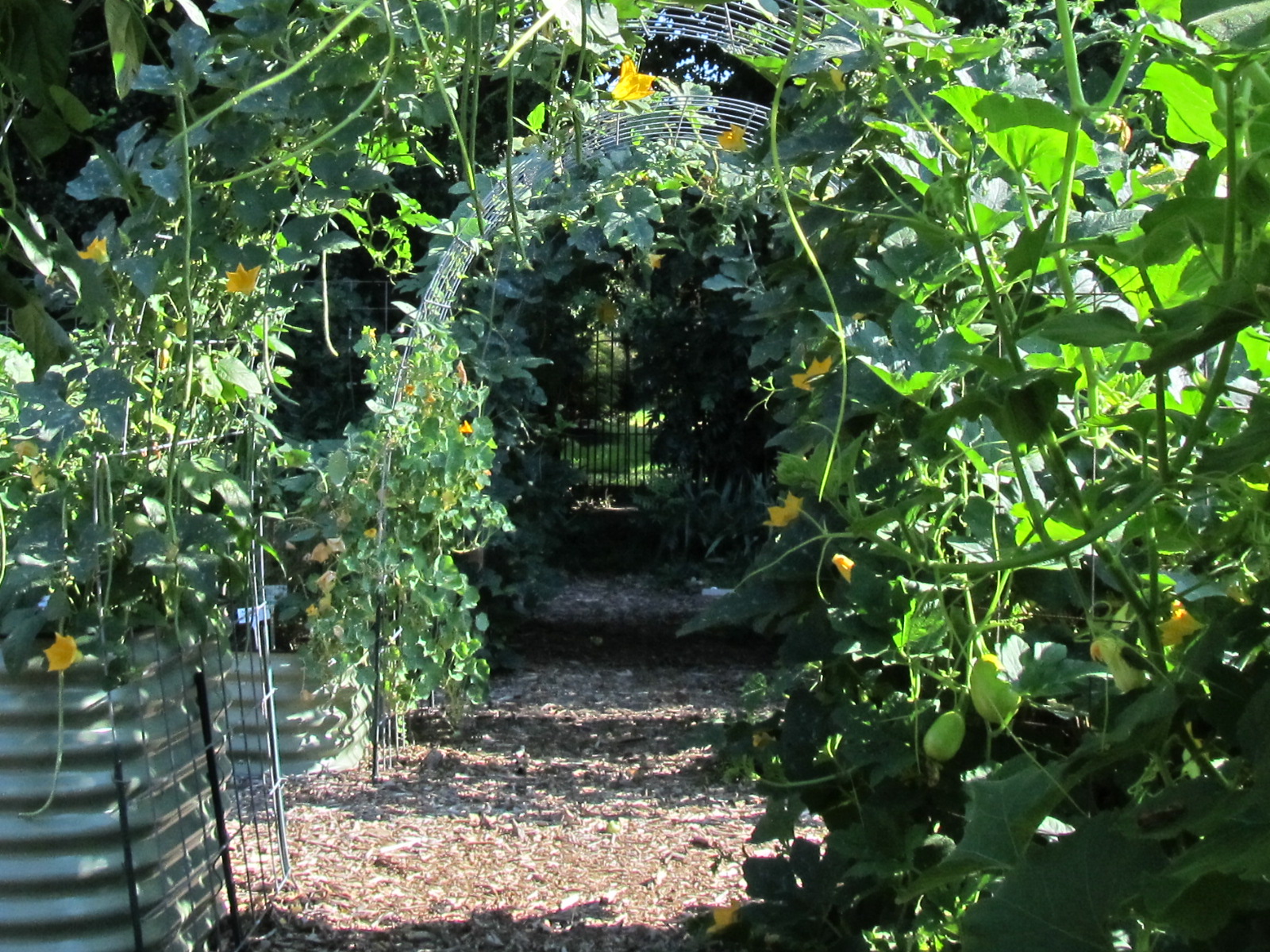
Another issue is the vines grow over 10 feet long and quickly sprawl throughout the garden. At Raincatcher’s they grew over large trellises and into the raised beds and grape arbor on the opposite side.

However, the trade off of space for productivity worked out well for the garden this year.

Well done Veggie Team, whose total production for 2024 has now surpassed 1200 pounds, providing fresh, nutritious food for the patrons of North Dallas Shared Ministries.

Cyntihia Jones and Beverly Allen, Dallas County Master Gardeners

The Veggie Team works hard every Monday morning (and many Thursday mornings during harvest), weather permitting, so please feel free to stop by with any questions you may have about growing vegetables in Dallas or just to look around and be inspired. Our garden is located on the grounds of Midway Hills Christain Church at 11001 Midway Road, Dallas, TX, 75229.

The Full Monty

January 6, 2024

This past fall, I decided to try several different varieties of broccoli in my garden. A few are still growing and I’m hoping they reach the harvesting stage very soon. But, as you can see from the photo, this particular variety produced a beautiful head of broccoli just a few days ago. There are five or six smaller side shoots, but none will be as large as the original. 

A sign on a leaf

Description automatically generated

One definition of “monty” describes it as the whole thing; everything that is wanted or needed. 

The recipe I selected for ‘monty’ is from our family cookbook. We refer to it as Bethy’s Crunchy Broccoli Salad. It is delicious any time of year but bringing it in straight from the garden on a chilly winter morning was the best ever! It certainly met, and exceeded, our expectations.

*Johnny’s Seeds currently has packets of Broccoli, Monty seeds in stock. 

Linda Alexander, Dallas County Master Gardener Class of 2008
If you plant it, they might come…and nibble!

November 10, 2023

My history with wildlife eating my flowers is a long one. I once watched a wild
turkey peck away at my johnny jump ups. Here in Dallas County, we are much
more likely to encounter bunnies. Those little bundles of fluff that look so cute on
a neighbor’s lawn may find your new pansies and their friends to be very
attractive. Unfortunately, they may not limit themselves to enjoying only with
their eyes and might proceed to dine on your new plants.


How to keep plants from being nibbled by rabbits is a challenge faced in most
gardens sooner or later. A quick tour of the internet reveals many techniques
that are reported to be successful for some gardeners but finding actual studies is
another matter entirely.


Regardless of the source of the data, there are two primary techniques for saving
your plants and they are like the ways we protect our skin from mosquitoes. We
either exclude or we repel the pest. Shooing them away just isn’t effective. Like
mosquitoes, most rabbits will return for a meal.


Fencing can be one of the most successful options. The addition of a chicken wire
or hardware cloth fence 2-3 feet tall and buried 6 inches underground can keep a
section of your garden off the menu. Wire cages can be constructed or purchased to protect your kales or chards. Planting in large, tall pots can keep your plant safer on your porch or patio.

Repellants can be purchased or made at home, and work via odor or taste. All will
require repeated applications, especially after rain. Odors that rabbits avoid are
associated with predators or spoiled, pungent foods. Blood meal is a commonly
used odor deterrent and has the advantage of containing nitrogen. One reported
downside is that it may attract other predators, leading to the trusty family dog to
roll over your pansies. On the plus side, the presence of a dog may scare away
rabbits.


Most rabbits dislike the taste of hot peppers, and capsaicin is included in many
commercial products. Please read and follow the directions, as some products are
not designed for or safe to use with edible plants. If you decide to surf the web for
a home-grown repellant, do not use moth balls in your yard. This dangerous
advice continues to haunt the internet. Regulated by the EPA, it is illegal, toxic,
and counterproductive to use mothballs as deterrent for mammals in your
garden. Using garlic spray or a sprinkle of red pepper might just work for you. It all
depends on the rabbit and just how hungry it might be.


Whether we are dealing with wildlife that nibbles us or our gardens, what works
for one person may not be appropriate for another. One deterrent I read about
mentioned encouraging the presence of predators. I doubt the addition of a
coyote here would be acceptable. I have found that my new fence seems to keep
all the bunnies in the front yard… or is it the feral cat that now enjoys the safety
of the back garden? Just like mosquitos, wildlife will find a way around our plans.

Mary Freede, Dallas County Master Gardener Class of 2005

Take a look at how Raincatcher’s deters critters-Comic Relief From Our Cantaloupe Patch