Category Archives: Uncategorized

From the Heart

Valentine’s Day this year is on a Monday and we are staying home for a warm, cozy dinner by the fire. Our menu isn’t going to be fancy. Instead, we’ve chosen to flavor it with a touch of nostalgia. To start our meal, the salad course is a revisit of an iconic 60’s dish known as “Southern Wilted Lettuce Salad with Hot Bacon Dressing”. Wilted lettuce is also known as “killed lettuce” or “kilt lettuce” because the greens soften under the hot, tangy dressing.   It was my late father-in-law’s favorite salad. Grandmother prepared it for him at least a few times a month.


Wilted Lettuce Salad

Wilted lettuce salad likely came from Eastern Europe with versions of it appearing in Poland and other countries. After the dish traveled to America with immigrants, Southerners began putting their spin on this wonderfully delectable salad. And, in true southern style, it was enjoyed with freshly baked cornbread or cornbread muffins. 

Outdoor spring seed starting season for lettuce is typically sometime between February 1st and March 15th so now is a good time to consider your options. A sturdy, spring lettuce such as romaine, spinach or red leaf works well for this salad. Look for other varieties that will keep some of their “crunch” when tossed with the hot bacon dressing.

Botanical Interests features a Chef’s Gourmet Spicy Mix with over six different texture-filled greens to excite your taste buds. Guerney’s offers a Premium Lettuce Seed Blend with a colorful combination of various textures and shapes. Have fun planning your spring salad garden.

Southern Wilted Lettuce with Hot Bacon Dressing

Linda Alexander, Dallas County Master Gardener Class of 2008

What Happened to Taking It Easy in Your Winter Garden?

Don’t believe it when garden writers say winter is a time to relax.  Here in the north garden vegetable area we are speeding up to get everything done in time for spring.

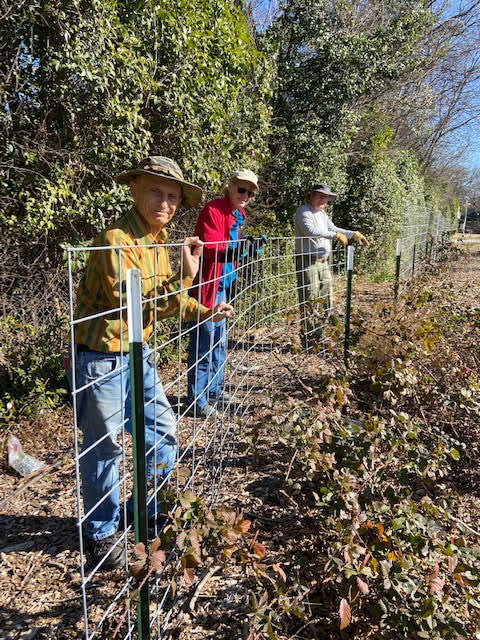
The cooler temperatures make it great time to take on hardscaping projects. We made an 80 foot long blackberry trellis from cattle panels and T-posts. The cattle panels are inexpensive, sturdy, and versatile but their 16 foot length requires some planning for how to transport them.

The vertically trained blackberry canes will get more sun and the berries will be much easier (and less hazardous) to harvest. Fortunately we pruned the second year floricanes after they fruited last summer making the task of training the remaining canes much easier.

Blackberry picking will be so much easier in May!

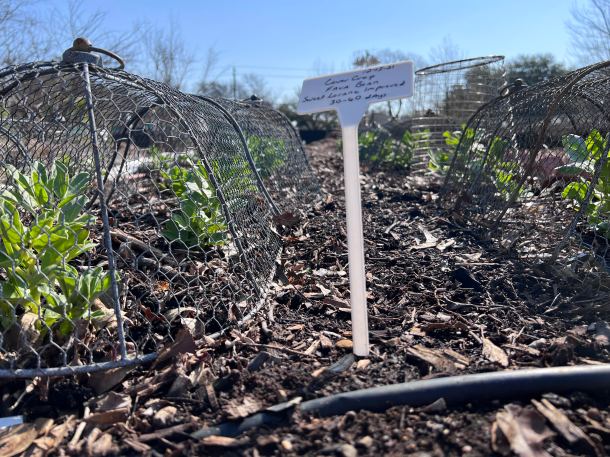
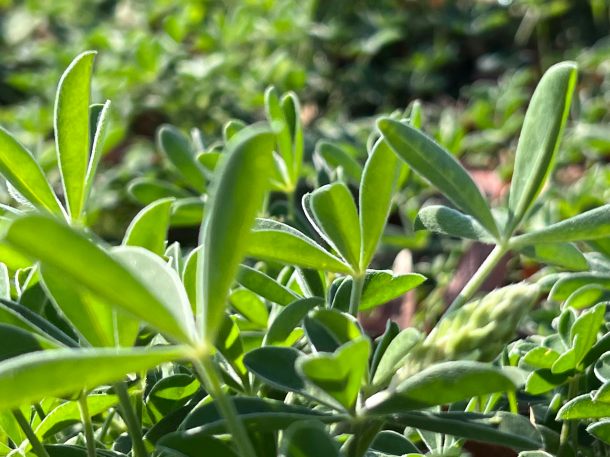
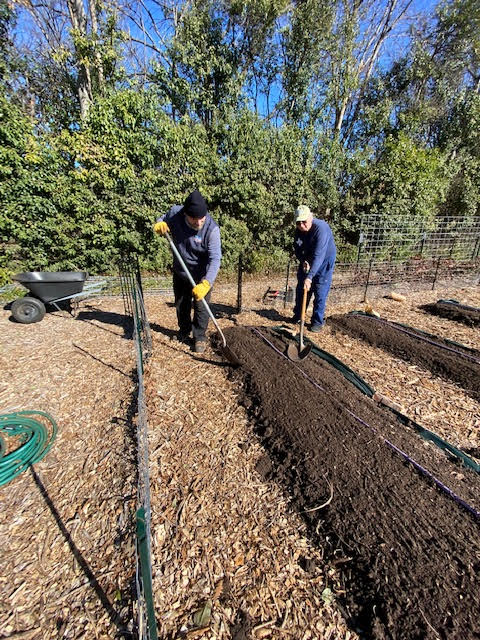
The vegetable team has been hard at work sheet mulching to create four new in ground beds.  We are also amending the soil in the Donation Garden and former watermelon patch with mycorrhizal fungi, dried molasses, and compost to enhance nutrient uptake. We have planted fava beans in the central in ground bed to fix nitrogen for the next crop.

Amending the soil in the Donation Garden.
Gerry Infantino and Len Nadalo .

January is the time to plant short day and intermediate day onion slips in Dallas. The day length refers to the amount of sunlight needed for the onions to bulb. We have planted the sunniest side of the Donation Garden with two short day varieties, the TAMU developed Texas Super Sweet Onion which is on the Texas Superstar list; and a disease resistant hybrid called Southern Belle Red Onion.

Gerry Planting Onions

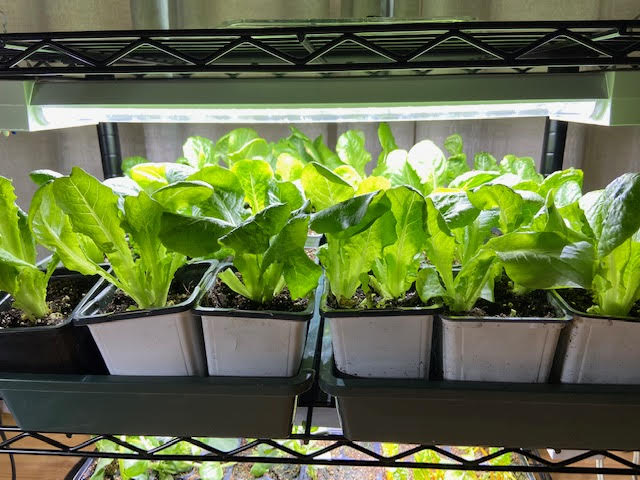
It is also a very busy time for seed starting.  Buttercrunch lettuce started indoors on December 23 was ready to plant but the unusually warm December weather turned into a wave of freezes after New Year’s Day.  We ended up harvesting the outer leaves in a “cut and come again” fashion and adding them to a food bank donation of salad greens and the last of the fall tomatoes. The lettuce seedlings can still be transplanted outdoors and will tolerate light frost (28 to 33 degrees Fahrenheit).

Buttercrunch Lettuce

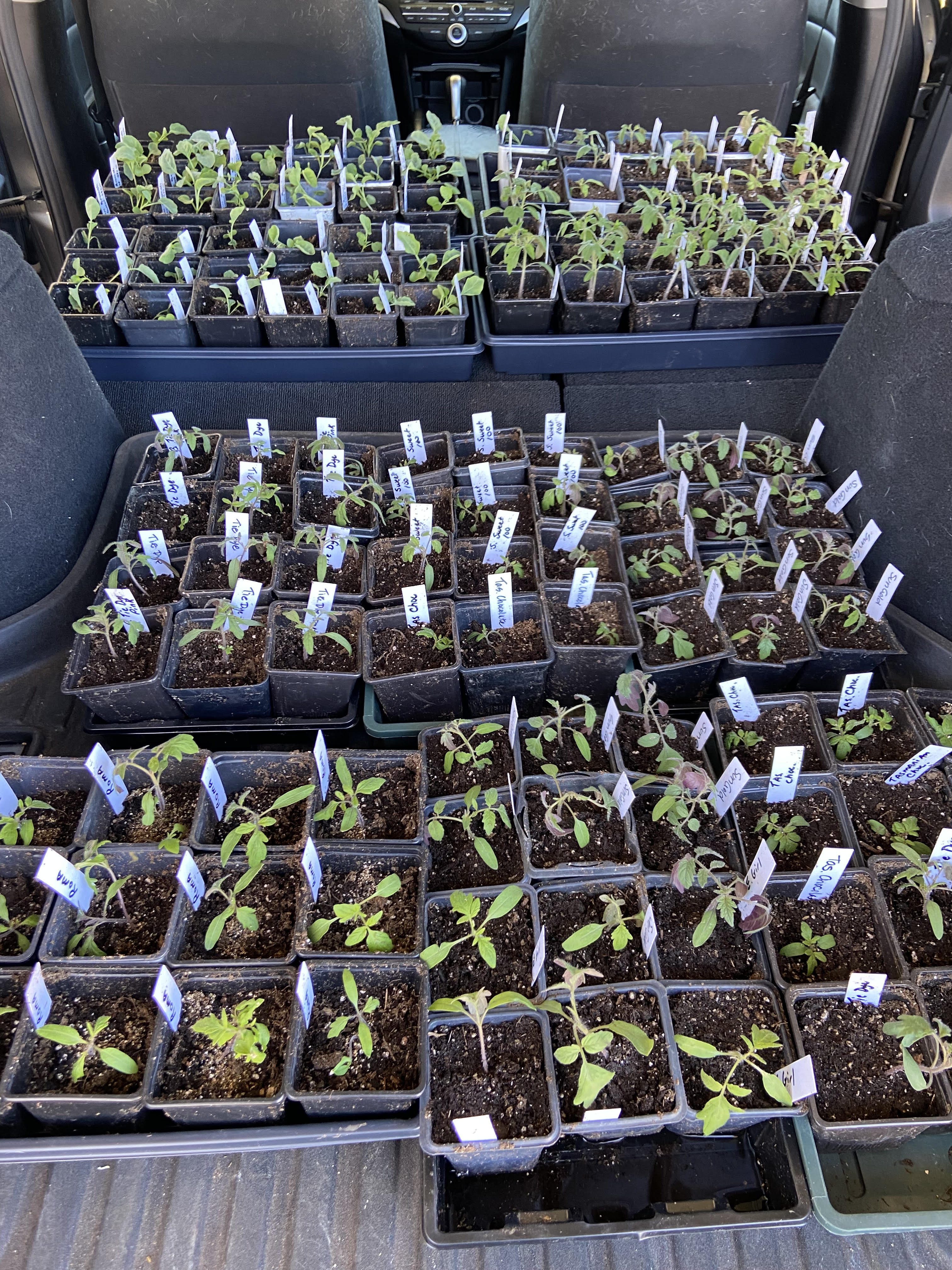
We are cutting it a little bit close but can still start our tomato seeds before the end of January.  This year we are sticking mainly with small and medium size tomatoes. Why? There is less time for things to go wrong before they mature!  Our varieties will include Super Sweet 100, Sweetie, Sun Gold, Early Girl, Roma, and Berkeley Tie Dye Pink, which was submitted as a favorite by area gardeners to The Dallas Garden School.

The Atlantis F1 Hybrid Mini Broccoli produced very well but we lost several plants during the worst of the early January freezes. Because it requires only a few weeks to mature we will able to have a second crop along with another fast maturing mini broccoli called Sweet Stem F1.

We tried several varieties of peppers last year and were pleased with how productive and easy to grow they were.  Also, our preschool visitors were delighted when they were each allowed to pick one.  This year we will be growing Jimmy Nardello, Gypsy, North Star, Marconi Rossi, Tajin, and Aji Dulce peppers. They can be started indoors by seed now and throughout February.

Radishes require only about a month to mature so we have a habit of planting the seeds anywhere we have a bit of extra space during the cooler months. Spinach takes 40 – 60 days but can be planted outdoors now through early March. It has been another easy to grow crop.

Garden writers, take note, winter is a time to get a lot done that will make spring and summer more productive.

Beverly Allen, Dallas County Master Gardener Class of 2018

Holidays and The Big Three

Dallas Garden Buzz readers, save this for next year’s ideas or refresh your arrangements now from your garden. We wish you a Merry Christmas and thank you, Linda!

A picture containing indoor, flower, plant, table

Description automatically generated
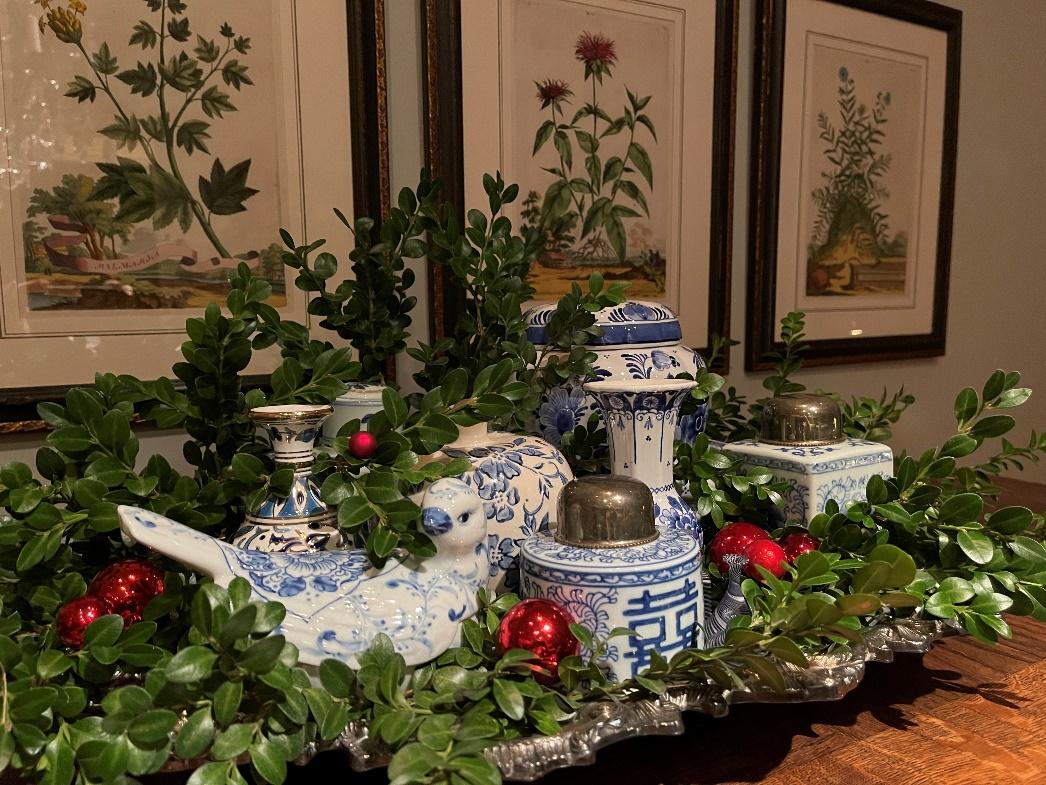
A collection of Chinoiserie and Delftware gets a botanical touch with sprigs of boxwood and red baubles

You may be thinking of a Bowl Game or the ever popular football playoffs occurring this month. As with many spouses, mine included, sports seem to dominate the evening and weekend television options. My time has been spent unpacking boxes and deciding how to repurpose over 50 years of collected Christmas treasures. But this year I’m going to approach it differently and with a more natural touch. I’ve made the decision to go green for Christmas 2021. 

For me, there is no better way to breathe the spirit of Christmas into my home than decorating with greenery from the garden. Boxwood, holly and magnolia are ‘the big three’ growing abundantly in our yard. Most of them are over 40 years old and have plenty of foliage to share.

Let’s discover a few simple ways to allow freshly gathered greenery to invigorate our senses and fill our homes with the fragrance of nature. May the warmth of the holiday season bring you joy and peace this year.

Peppermint candy canes add sparkle to a boxwood wreath greeting guests at the front door
Our favorite Christmas appetizer is this Cheddar Cheese Ring filled with Strawberry Preserves. Sitting it inside a boxwood filled twig wreath brings nature to the table.
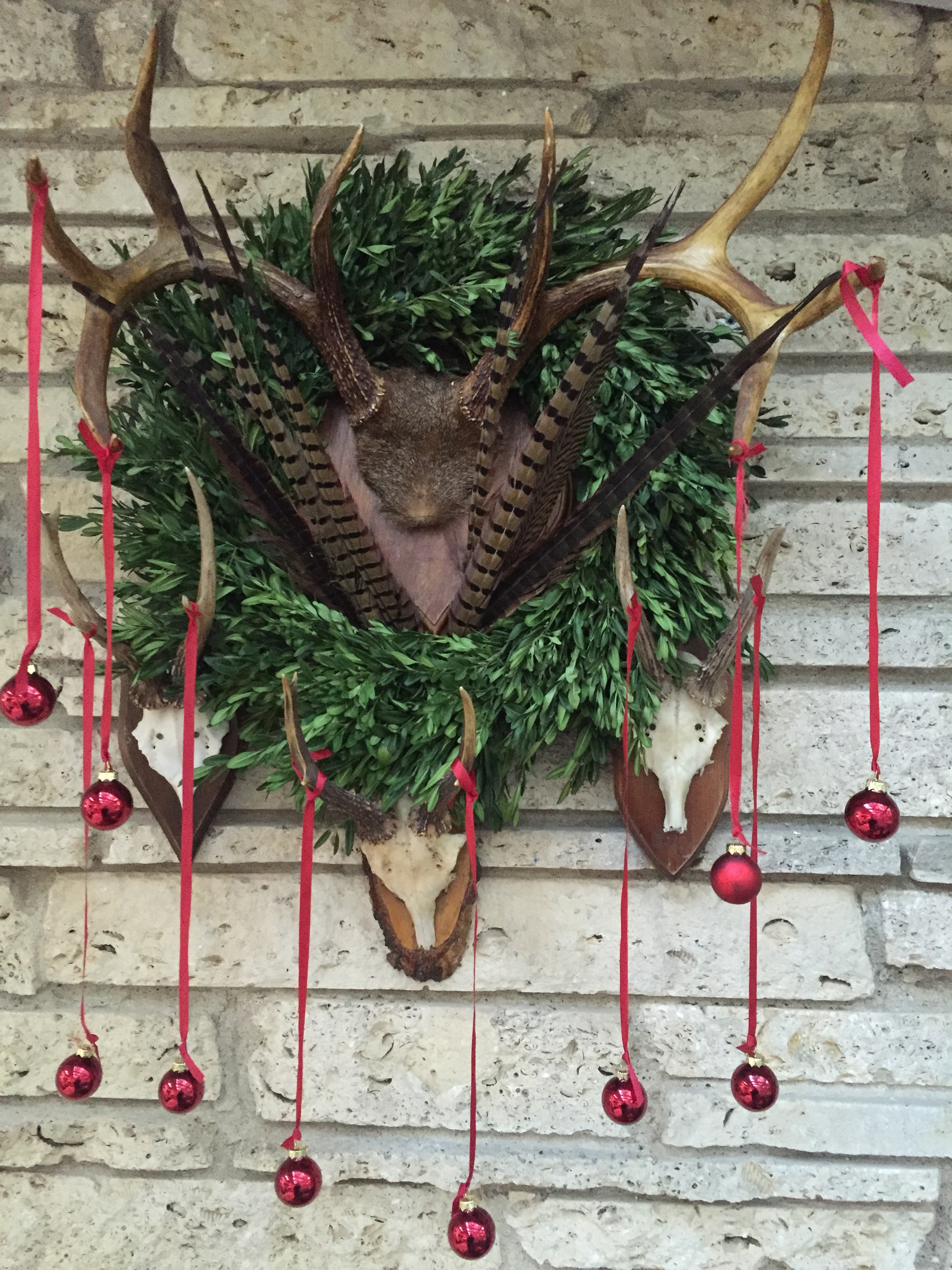
A boxwood wreath encircling one of the antler mounts is the perfect backdrop for ten shiny red balls.

With this extravagant combination of “The Big Three” (Boxwood, Holly and Magnolia) it feels as if the spirit of Christmas has been breathed into our home. Hopefully you will be inspired to celebrate old traditions and make new ones in the warmth of your home, also. Wishing each of you a joyful holiday season filled with family, friends and all those you love and cherish. Blessings from the Alexander Family.

Linda Alexander, Dallas County Master Gardener Class of 2008

Cold Weather Tips, Poinsettia care, and how to get your Amaryllis to bloom next year

Poinsettias are so pretty at Christmas. Click here for an article to help you care for them. It was written in 2005 but it is still pertinent. After reading it, I realized my poinsettias would rather not be on my front porch. They are now indoors getting indirect, natural light.

For information about recycling your amaryllis bulbs after Christmas, read here.

Merry Christmas to all our readers. We plan to have at least one more article this year and loads more gardening advice in 2022.

Ann Lamb, Dallas County Master Gardener Class of 2005

Happy Thanksgiving 2021

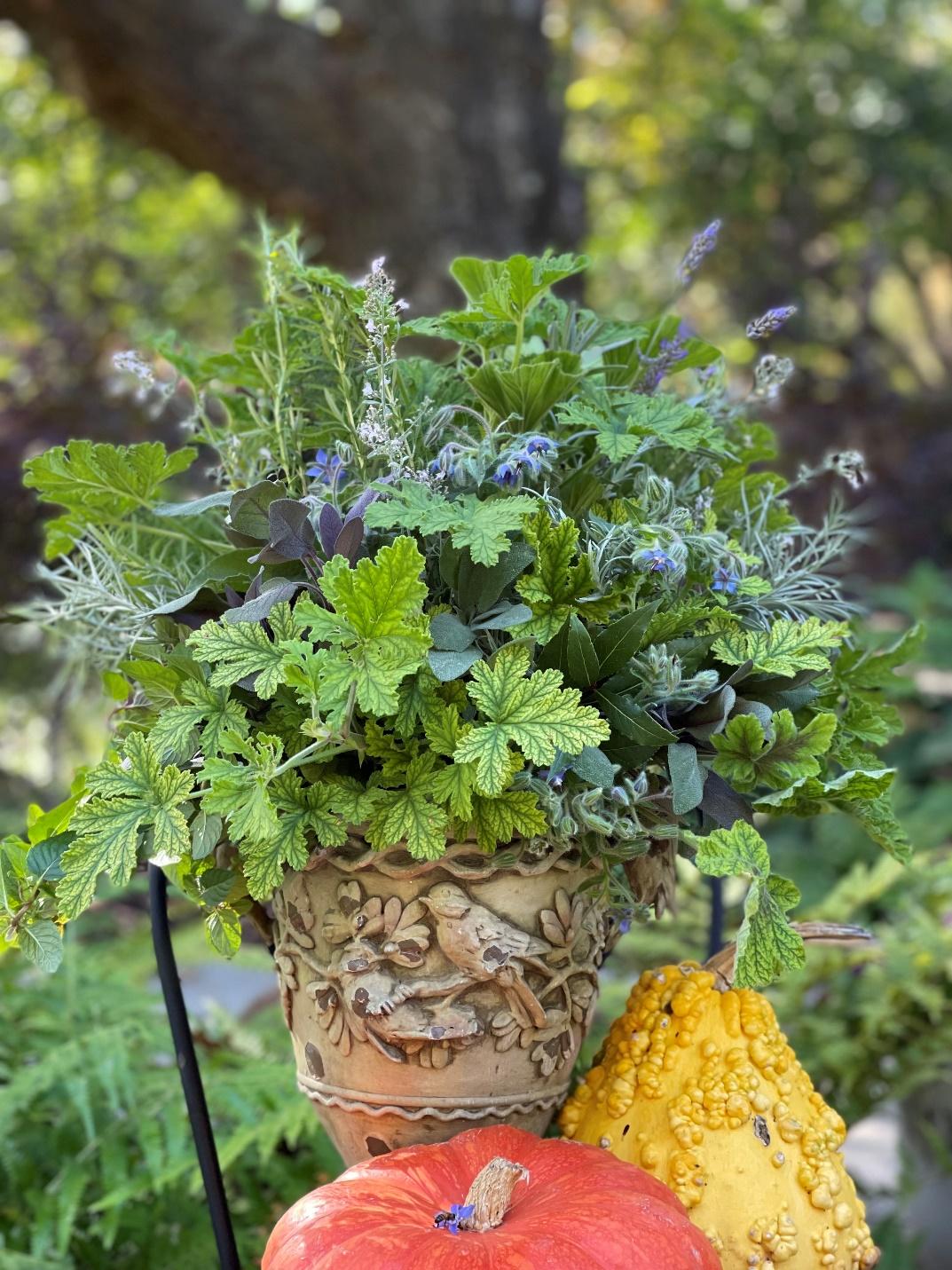
From our Herb Garden to you…

  Thanksgiving Blessings!

A picture containing tree, outdoor, fungus, plant

Description automatically generated

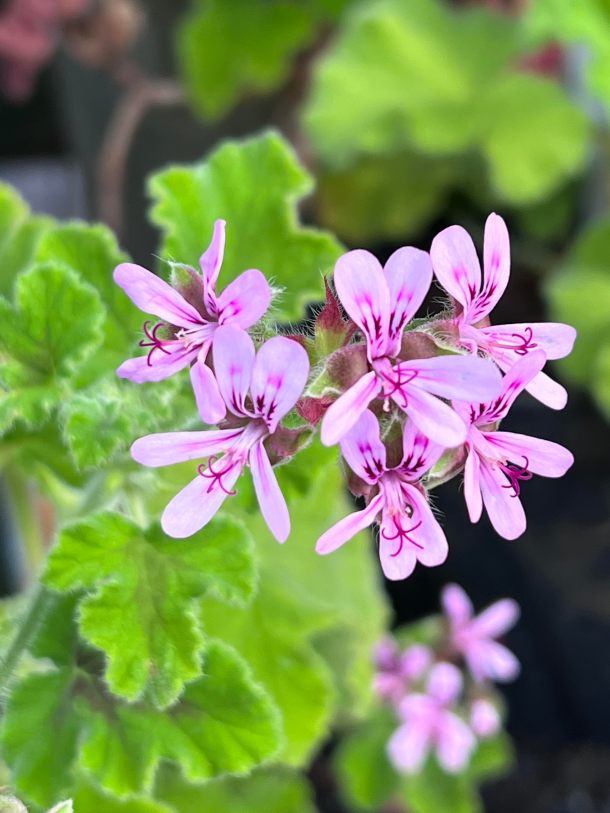
Featured Herbs: Bay Laurel, Blue Borage, Curry, Fennel, Mint, Purple Sage, Rosemary, Chocolate, Lavender, Old-Fashioned Rose and Peach Scented Pelargoniums, White-leaved Savory


With appreciation from The Raincatcher’s Team!

Saying our Seasonal Farewell to Roselle Hibiscus


Join Linda Alexander and Beverly Allen for a “Pop Up” Presentation 

Friday, November 5th, 1:00pm

Shade Pavilion, Raincatcher’s Garden of Midway Hills

11001 Midway Road 

Limited to 30 * Please RSVP

Master Gardeners Earn 1 Hour CEU

Sit back, relax and enjoy a refreshing cup of Roselle Hibiscus tea along with a taste of lightly sauteed hibiscus leaves, cookies and jam.

The season for growing Roselle Hibiscus is ending. Let’s bid farewell to a garden favorite with a closer look at this amazing plant. In this class you will learn some of the following:

*Why everyone should be growing Roselle Hibiscus

*When and where to plant

*Growing characteristics

*Using the plant from leaves to flowers and seeds

Class concludes with a tour of our Roselle Hibiscus plants where you will be given an opportunity to harvest some seed pods for next year’s crop.

Sign up today here. Class RSVP open until noon on Thursday, November 4th.

Raincatcher’s Welcomes The Pierian Club of Dallas

After waiting for over a year and a half to resume monthly meetings, The Pierian Club of Dallas chose Raincatcher’s Garden of Midway Hills for their first event. The much anticipated gathering was filled with hugs, laughter and smiles of happiness on the faces of those who attended. We were thrilled to welcome them to learn about our approach to gardening in North Texas and to enjoy a garden-themed lunch prepared by our “Friends of the Garden” volunteer culinary team. 

The story of The Pierian Club is very fascinating. It began in 1888 and has continued to evolve for over 133 years. The purpose of the club is to increase knowledge. Their motto states, “A little learning is a dangerous thing; drink deep or taste not the Pierian Spring. Their shallow draughts intoxicate the brain, and drinking largely sobers us again.” In Greek Mythology, it was believed that drinking from the Pierian Spring would bring you knowledge and inspiration.

With a focus on seasonally fresh herbs and vegetables from our edible gardens, we treated them to a flavor-filled menu that stirred the senses. A brief explanation of how the menu was developed includes comments about several carefully chosen items. 

The Pierian Study Club

Wednesday, September 15, 2021

A couple of vases hold yellow flowers

Description automatically generated with low confidence

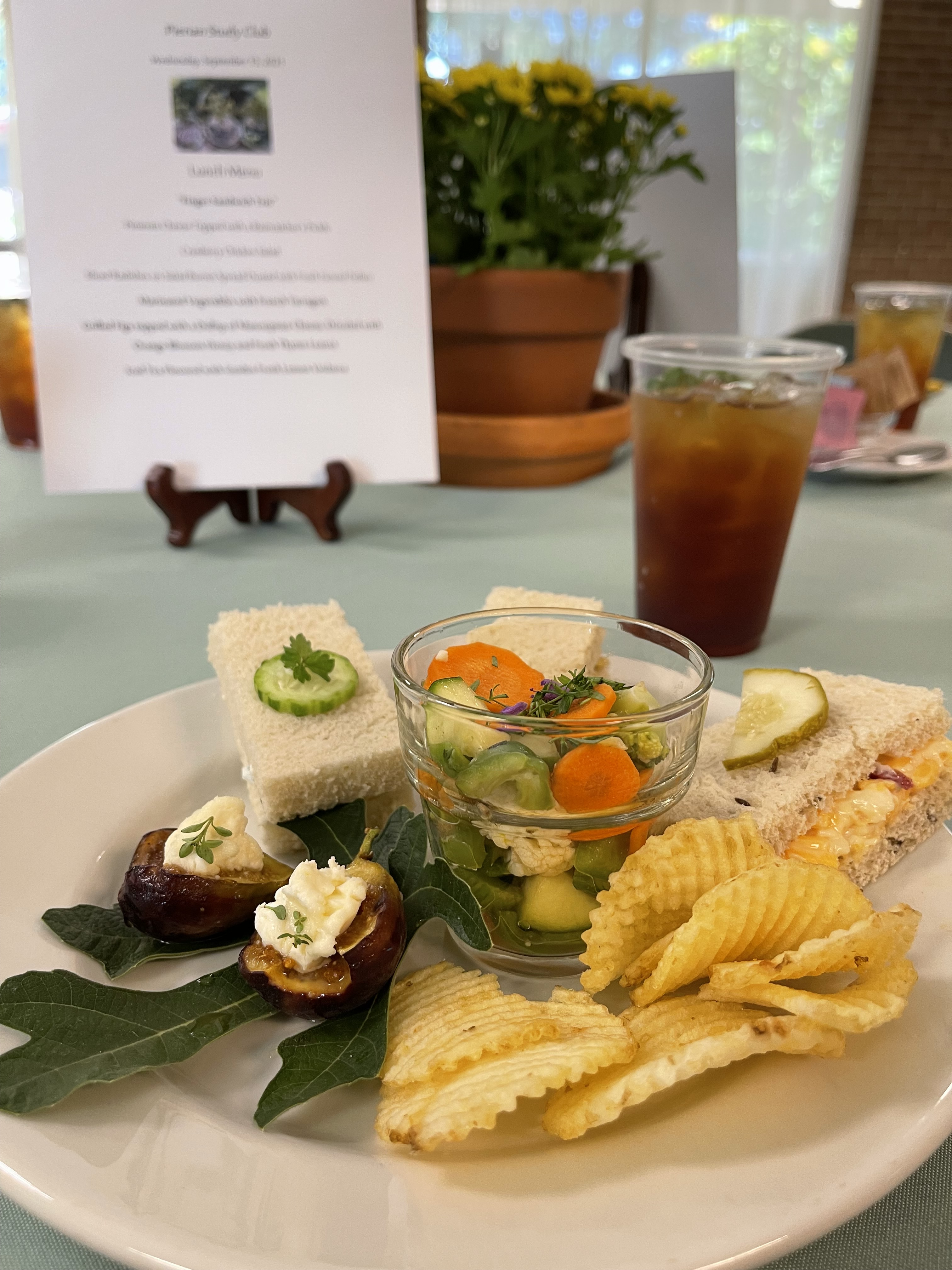
Lunch Menu

“Finger Sandwich Trio” 

Pimento Cheese topped with a Raincatcher’s Pickle

Cranberry Curry Chicken Salad with Orange Blossom Honey

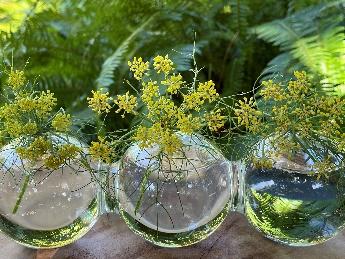
Sliced Radishes on Salad Burnet Spread Dusted with Fresh Fennel Pollen

Marinated Vegetables with French Tarragon and Anise Hyssop Blossoms

Grilled Figs topped with a Dollop of Mascarpone Cheese, Drizzled with Orange Blossom Honey and Fresh Thyme 

Iced Tea Flavored with Garden Fresh Lemon Verbena

Our finger sandwich trio included the following:

1. A tribute to Martha Stewart’s favorite sandwich…buttered white bread topped with thinly sliced radishes sprinkled with salt. Taking inspiration from herbs growing in our garden, we substituted a spread made with whipped cream cheese, freshly snipped salad burnet leaves and onion chives. Radishes were added next, sprinkled with sea salt and then lightly dusted with delicate fennel fronds. Each sandwich was topped with a thinly sliced Armenian cucumber brought in from the garden.

2. Pimento Cheese. This recipe is a favorite from a recently closed restaurant in Fredericksburg, Texas…The Peach Tree Tea Room. While the original recipe calls for jalapeno juice, we omitted it, as requested, for this event. Each sandwich was topped with a pickle made by one of our volunteers. Pickles were made from the variety, ‘Homemade Pickles,’ currently growing in our garden. 

3. Cranberry Curry Chicken Salad with Orange Blossom Honey. We love using this special honey from Savannah Bee and available locally at Central Market. It adds just the right amount of sweetness to the earthy flavor of curry.

Marinated Vegetables were embellished with fresh-picked French tarragon from our edible landscape. Served in individual clear glass flowerpots, they made a colorful addition to the menu with pretty purple anise hyssop blossoms scattered over the top.

Dessert was on the lighter side. Fig leaves from the garden cradled two figs halves that were lightly grilled and topped with a dollop of mascarpone cheese and a drizzle of Orange Blossom Honey. Tiny lemon-flavored thyme leaves added that fresh from the garden effect that rounded out the meal.

Following lunch, a short program introducing the Raincatcher’s Garden of Midway Hills was presented by Dallas County Master Gardener, Lisa Centala. Master Gardener volunteers then joined Lisa and our guests for a delightful tour of the demonstration gardens. With their newly acquired horticultural knowledge, members of the study group left inspired and feeling as if they had been refreshed by drinking from the Pierian Spring. 

Linda Alexander, Dallas County Master Gardener Class of 2008
Fall Peas, Please

As each new season approaches gardeners are on the receiving end of a barrage of enticing offers and promises of easy-to-grow lush plantings for our gardens.  The results are not usually as promised.  However, this article from a seed company has some useful information about growing peas.  It includes descriptions of three types of peas; snow, shelling, and snap.  It also has a helpful explanation of how to use the days to maturity and average first freeze dates to calculate ideal dates for planting. 

In the Edible Landscape we are interested in comparing seeds sown in the fall with spring peas.

Happy gardening. 

Beverly Allen, Dallas County Master Gardener Class of 2018

Photo courtesy of John Scheepers Kitchen Garden Seed

Texas Black Diamond Watermelons at Raincatchers’ Garden

Some people argue that watermelons are a fruit, others a vegetable, and still others that it is both!

The argument for both is that the watermelon is a fruit (the seed bearing ovary of a plant), and a vegetable (an edible plant).  Watermelon has a place with the Cucurbitaceae family, which includes cucumbers, gourds, pumpkins and different things that are traditionally known as vegetables.  Its logical name being Citrullus lanatus.  Regardless of its classification it has been a welcome addition to our Raincatchers’ garden this year.


Watermelon Patch at The Raincatcher’s Garden

Our vegetable team took over an in-ground planting bed and planted watermelon seeds earlier this spring, but they didn’t just plant any old watermelon, no they chose what has been called the “king” of the garden, Texas Black Diamond watermelons!  Texas Black Diamond watermelons are an heirloom, open-pollinated, oblong variety of watermelon, which grows on vigorous vines and produces a black-green rind. Its bright red flesh is noted for its juiciness and sweet taste, best eaten ice cold after sitting in tubs of ice for several hours!

Growing up in Oklahoma we called this variety, “Rush Springs” watermelons, since they were mostly grown around that small south central town – but they are the same variety as Texas Black Diamonds.  Rush Springs’ citizens, population about 1,300, call their town the “Watermelon Capital of the World”.  The town’s largest event, in mid August, is the annual Rush Springs Watermelon Festival, which attracts more than 20,000 people each year, who consume about 50,000 pounds of locally grown watermelons.

When my family and I lived in San Antonio it was always a big event when the Texas Black Diamond watermelons were brought into town, up from the “valley” or from Luling, TX.  Even some of the radio stations would get involved by broadcasting the locations of the make shift farmer’s markets, where the watermelon farmers would sell their prized produce off the back of their farm trucks.

One of my fondest memories involving watermelons, was taking a very long drive from Oklahoma City to Carlsbad, NM to tour the unbelievable caverns, when I was about 8 or 9 years old.  On our return leg we stopped overnight in Midland, TX for a visit with relatives.  A tremendous panhandle thunderstorm roared through the town taking down the electricity – not a problem for our gaggle of 14 kids, we still enjoyed the ice cold Texas Black Diamond watermelons and had a fun filled evening participating in a spontaneous seed-spitting contest followed by a rowdy game of tiddlywinks, using the seeds as the game pieces!  Oh what fun, but oh what a mess to clean-up in the light of the coming day!

The Texas Black Diamond Watermelons do take up a lot of valuable land and the farmers have been switching to different varieties that consume less land and produce more prodigiously.  The demand for Texas Black Diamonds is still quite strong and those that are grown hardly ever make it up into Dallas area anymore, unfortunately.

When to start growing watermelon?

Most gardeners choose to plant their seeds early in the spring so they can enjoy their ripe fruits during the hottest summer months, as watermelon needs about 90 – 120 days to fully grow, from start to finish.

Where do you plant watermelons?

Plant your watermelon seeds outside when there’s no more danger of frost. Watermelons must be planted in soil that is warm a few inches (centimeters) below the surface. You can place mulch on the soil to keep it warm.

Seeds may be planted in hills or in rows. Space watermelon plants 6 feet apart in hills. Thin to the best three plants per hill.  If planting in rows, watermelon seeds or seedlings should be seven to 10 feet apart.

How tall do watermelon plants grow?

Generally, watermelon plants will grow to a height of approximately 24 inches, and sprawl approximately 3 to 20 feet wide. The vine produces coarse, medium-green leaves, while the fruit can weigh anywhere from 10 to 50 pounds with solid dark green skin.

  Young Watermelon

When Is a Black Diamond Watermelon ready?

Calculate the age of the plant, starting with the day of planting. Black Diamond watermelons take 90 to 120 days to reach maturity, so if the plant is younger than that, the fruit is probably not ripe. 

Feel the skin of the watermelon. When Black Diamond watermelons are ripe, the skin is somewhat rough.  I generally also use the “thump” method, if you get a somewhat hollow sound it generally means the watermelon is ready to be picked.

Even if you only have space for one or two Texas Black Diamond Watermelon plants, you will enjoy the results of your labor and maybe make your own memories.

Jon Maxwell, Dallas County Master Gardener Class of 2015

Pictures and additional input by Beverly Allen, Dallas County Master Gardener Class of 2018

.

A Summertime “Pop Up” Pepper Class

August 2, 2021

A pile of vegetables

Description automatically generated with low confidence

It was a sizzling hot morning with no breeze other than the gentle air provided by fans turning overhead in the shade pavilion. Our pepper class and tasting event started at 10:00am but even by then, the temperatures were already in the low 90’s. We knew it was going to be a hot one! Thankfully, those who came were seriously interested in learning more about peppers.

Highlights from the Class, Pepper Tasting and Lunch

*Peppers are in the Solanaceae family of nightshade plants as are tomatoes, Irish potatoes and eggplants. There are over 50,000 varieties of peppers. The two broad categories we discussed during the class were sweet peppers and hot peppers. 

*Peppers originated in the Mesoamerica territory which includes Central Mexico down across Central America and as far as northern Costa Rica.  In the ancient Aztec and Mayan cultures of Mexico chili peppers were prized for their fiery flavor and spicy kick. These native tribes had fully domesticated chili peppers as far back as 5,000-6,000 BC. The word “chili” can be credited to Nahuatl, the Aztec language from which many modern terms are derived.

*Christopher Columbus was one of the first Europeans to encounter the chile pepper. When eating the fruit he felt the same “burn” or “heat” as from black pepper, so he called it “pepper.” This the reason today that chile peppers are called peppers.

*Is it a fruit or a vegetable? Depends on who you are talking to. 

Botanists see it as a fruit. A botanist would use the botanical classification which is based on the plant’s physiological characteristics like the structure, function and organization of the plant. Botanically speaking, a ‘fruit’ is the seed-bearing product that grows from the ovary of a flowering plant. A nutritionist or chef would use the culinary classification system. The culinary explanation says that a ‘vegetable’ usually has a tougher texture, tastes blander and often requires cooking. A general consensus finds that peppers are both a fruit and a vegetable! 

*Thick Walled/Thin Walled 

Peppers are a flavorful addition to a wide variety of recipes. In general, thin walled peppers work well fresh in salads and sandwiches. They may also be sauteed or grilled. For example, shishito peppers may simply be tossed into a pan with olive oil and sauteed until they blister. 

Thick walled peppers are excellent for stir frying, stuffing or roasting. For easy oven roasted bell peppers, cut them into strips and place on a sheet pan with olive oil, salt and pepper. Roast at 450˚F about 25 minutes or until tender.

*Understanding the Scoville Scale 

Bell peppers have zero Scoville Heat Units (SHU), jalapenos have around 5,000 and habaneros have in the neighborhood of 300,000. What does that mean? The Scoville Heat scale measures the concentration of capsaicin, the chemical compound that makes peppers hot. Wilbur Scoville, a pharmacist, invented the scale in 1912. Originally it measured the dilution needed to make the heat in an extract of a pepper undetectable to a panel of 5 people. A SHU measure of 300,000 indicates that the extract would have to be diluted 300,000 fold before the capsaicin was undetectable. 

Now High Performance Liquid Chromatography (HPLC) gives us a direct measurement of capsaicin that is more accurate than sensory methods and is reported in American Spice Trade Association (ASTA) pungency units. One ASTA pungency unit is equivalent to 15 SHU’s. The Scoville scale remains out of tradition so ASTA pungency units are multiplied by 15 to convert them to SHU’s. 

*Recommended AgriLife Varieties 

Sweet Peppers: Bell Tower, Big Bertha, California Wonder, Gypsy, Jupiter and Yolo Wonder

Hot Peppers: Hidalgo Serrano, Hungarian Wax, Jalapeno, Long Red Cayenne and TAM Mild Jalapeno

*Hottest Pepper in the World  

With a rating of 2,200,000 SHU’s, Carolina Reaper holds the record since 2017 for the world’s hottest pepper. (FYI…We aren’t growing it anywhere in the Raincatcher’s Garden).

*Our Favorite 2021 Selection Growing at Raincatcher’s 

2021 Grower’s Choice: Jimmy Nardello

We just adore this curvy little pepper with waxy skin and a sweet flavor. Jimmy Nardellos’ parents immigrated to the United States from Southern Italy in 1887 and brought their beloved pepper seeds with them to their new hometown of Naugatuck, Connecticut. Before his death in 1983 Jimmy donated the seeds to a seed preservation organization. Since then, this delicious chili pepper plant is known as the Jimmy Nardello pepper worldwide.

*Growing Peppers 

Pepper plants like warm weather. Plant in heavier, well drained soil. Direct sow seeds or move transplants outside late April to mid-May. Give them at least 6 hours of sunlight each day.

Water plants enough to keep them from wilting. Harvest peppers as they mature as this will make the yield greater. Store in the vegetable crisper of the refrigerator for up to 3 weeks. Do not wash before storing. Peppers can be frozen.

For more information on growing peppers go to: https://agrilifeextension.tamu.edu/library/gardening/peppers/

A Delightful Pepper Themed Lunch Menu

Griddled Quesadillas with Mexican Three Cheese Blend, Baby Spinach and Sauteed Peppers-

We layered the tortillas with Mexican Three Cheese Blend, Baby Spinach and Sautéed Peppers. Neil Bolich cooked them on a griddle over heat onsite. We topped them with a dollop of  Jalapeno Pepper Jelly from our Raincatcher’s Jam and Jelly Team and a Hot Chili Pepper.

Mexican Fruit Cups Drizzled with a Squeeze of Fresh Lime and Sprinkled with Tajin

Jalapeno Shortbread Cookies Dipped in Ghirardelli Chocolate

Linda Alexander, Dallas County Master Gardener Class of 2008

Beverly Allen, Dallas County Master Gardener Class of 2018

The Edible Landscape and North Vegetable Garden theme for 2022 is still four months away from being revealed. Here is the August clue.  This very important person is known for calling agriculture “the crown of all the other sciences” as it required knowledge in many other sciences like botany and chemistry. Have you guessed it yet? If not, check back in September for yet another insightful clue