
Beverly Allen, Dallas County Master Gardener Class of 2018
Beverly Allen, Dallas County Master Gardener Class of 2018
Beginning this month, dallasgardenbuzz.com will introduce a new idea which allows the natural world to speak to us as seasons change and our gardens evolve. Once each month, we hope to share with our readers the joy of using seasonal gifts from the garden in floral displays, arrangements and more.
Look for fresh and innovative ways of gathering unusual combinations of flowers, herbs, branches and other natural ingredients to display in your home. Let creations from your garden bring happiness to a friend, neighbor or family member. Embrace a mindset of filling your life with beautiful gifts from the garden every month of the year.
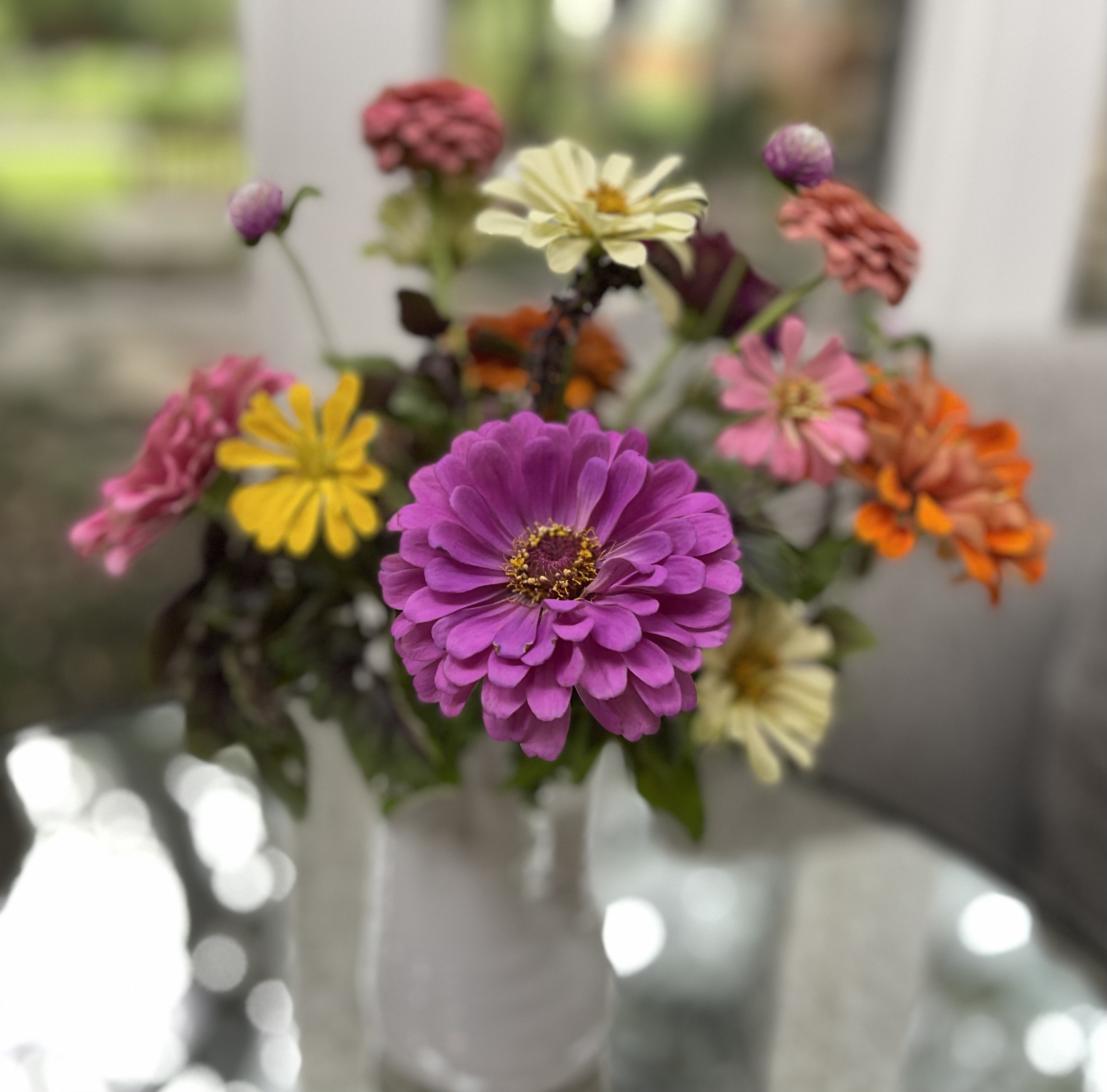
To start, we’ll begin with a quintessential summer flower – zinnias! Offering one of the most colorful palates found in the garden, zinnias bold and bright blooms range from white to orange, pink, yellow, purple and red. We’ve chosen to combine our blooms with another plant that is thriving in the Dallas heat – basil.

With dozens of varieties to consider, two types currently growing in the garden were the perfect complement to our monthly arrangement. Basil ‘Wild Magic’ is a robust grower with purple/violet flowers and dark green leaves with purple margins. For leaves with an even deeper purple presence, ‘Red Rubin’ also adds an aromatic touch to arrangements.
If a compact, tight arrangement seems a little too crowded, consider going in a different direction. Give each zinnia space to breath while making its own individual statement. A flower show judge might suggest that a more open design reflects the natural habit of flowers growing in the garden. In this type of arrangement, there’s plenty of room for “a butterfly to move from bloom to bloom”.
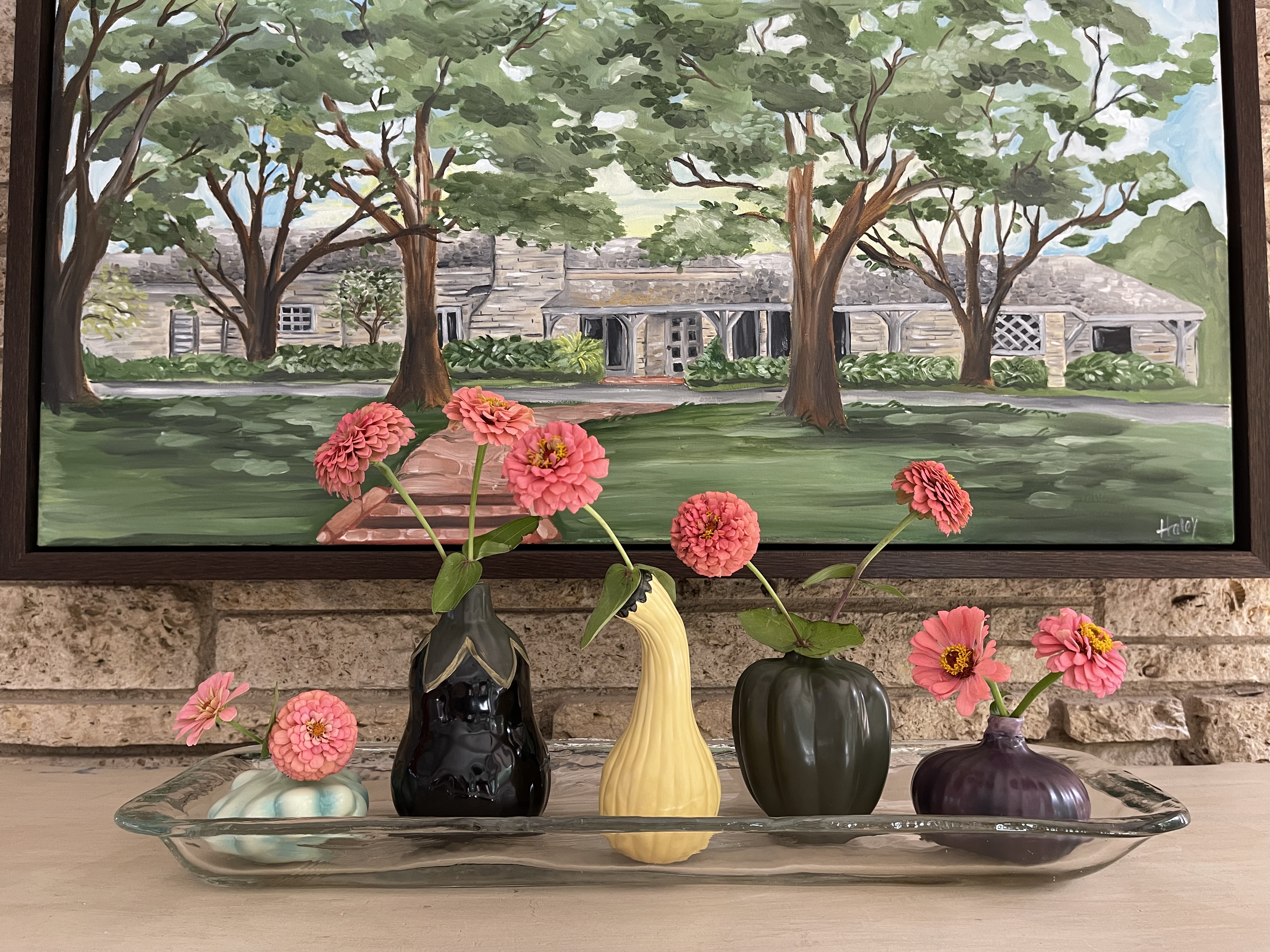
And finally, for a moment of simplicity, use individual blooms as illustrated in this arrangement. A collection of vintage ceramic vegetable vases sitting under an oil painting of our house needs only a delicate touch to enhance its beauty. The soft tones of puffy little salmon zinnias are the right choice!
Our promise to you is that all of our displays will feature botanical material growing in the home garden. In other words, these are not flower shop creations. We want you to be inspired and encouraged to appreciate the simple elegance of using gifts from your garden to bring a touch of beauty and charm to everyday life.
Linda Alexander, Dallas County Master Gardener Class of 2008
During the months of July and August, our venture into the world of bees will explore what is
often described as an engineering marvel…The Honeycomb. To better understand the
importance of the honeycomb, we’ll answer several basic questions:
Until then, here’s a little something to whet your appetite for honeycomb.
Last year a New York based ice cream company opened a shop in Texas. Van Leeuwan Ice Cream entered the Dallas market with shops located on McKinney Ave and at the Lover’s Lane/Inwood intersection. It can also be found at places like Central Market, Tom Thumb and Walmart. Just a few weeks ago, while shopping for ice cream at Central Market, this is what caught my eye.
Yes indeed, an authentic and absolutely delicious Van Leeuwan Honeycomb ice cream. My husband and I consumed it that night. On a return trip to purchase more, Central Market was sold out. But the good news is that Van Leeuwan’s store front shop on Lover’s Lane keeps a consistent supply of all their brands.
Visit dallasgardenbuzz.com in July and August for some wonderful honeycomb recipes along with fun ideas for using it this summer.
Linda Alexander, Dallas County Master Gardener Class of 2008
June 3, 2023

If African Blue Basil could speak it might first suggest introducing you to the “parentals”. In this case, that would be a good idea. The African parent is a perennial shrub from forests of Kenya, Tanzania and Uganda.
In 1983, African Blue basil was first seen by a nurseryman named Peter Borchard, owner of Companion Plants in Athens, Ohio. He noticed it growing in the path between beds of the two presumed parents, East African basil and ‘Dark Opal’. Borchard dug the hybrid out and brought it into the greenhouse hoping to save seed. No seed formed leaving Borchard with the task of growing more plants from cuttings. Shortly thereafter, African Blue Basil (Ocimum gratissimum) entered the market.
African Blue basil is now identified as a hybrid plant in the Lamiaceae family made
by crossing East African camphor basil and a varietal of purple sweet basil called
‘Dark Opal Basil’. Its strong camphor scent was inherited from the East African
basil used to breed the plant. Though some people may find the camphor odor
and taste too strong to use in the kitchen, others embrace its culinary uses.
While doing morning chores in the garden, the dark purple leaves of African basil
tempt me to experience their crisp, semi-chewy and woodsy flavor with notes of
menthol, musk and cloves. With a refreshing and earthy taste filling my mouth,it’s time to move out of the way and give the honeybees time to forage for nectar.

Before planting in the garden, familiarize yourself with its specific characteristics.
African Blue basil is a rare, aromatic, perennial shrub that can grow up to five feet
tall in some gardens. Plants produce abundant flowers that are pink with a dark
purple base, making it attractive to bees and beneficial wasps. African blue is one
of the few basils that is sterile, meaning it will not produce seeds. Fortunately,
this unique trait allows the plant to stay in bloom for a longer season. As with
other basils, African Blue does best in well-draining soil amended with compost.
Plants thrive in full sun and will form rounded mounds.
Suggestions for cooking with African Blue basil offer a wide range of possibilities.
While best suited as a fresh flavoring or garnish, the leaves may also be used in
pesto’s, chimichurri sauce, salad dressing and dips or sprinkled over soups, tossed
into salads or layered over bruschetta. Also, try it mixed into pasta, spread over
sandwiches, used as a pizza topping or for elevating desserts.
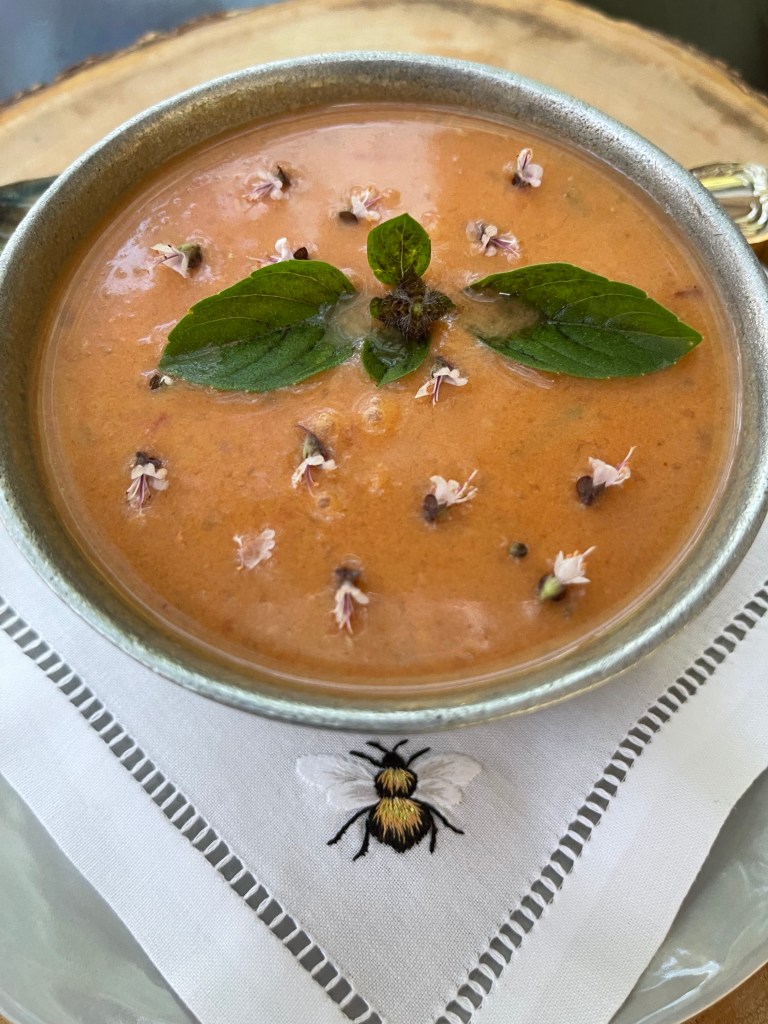
Along with the leaves, African Blue basil flowers are edible and can be used as a garnish in soups, salads and grain bowls.
They can also be incorporated into
cocktails, floated on sparkling beverages or stirred into teas. African Blue basil
pairs well with parsley, cardamom, ginger ale, champagne, green beans,
tomatoes, potatoes, lentils, rice, and feta cheese. For best quality and flavor, use the leaves and flowers shortly after harvesting.
Linda Alexander, Dallas County Master Gardener Class of 2008
May 18, 2023
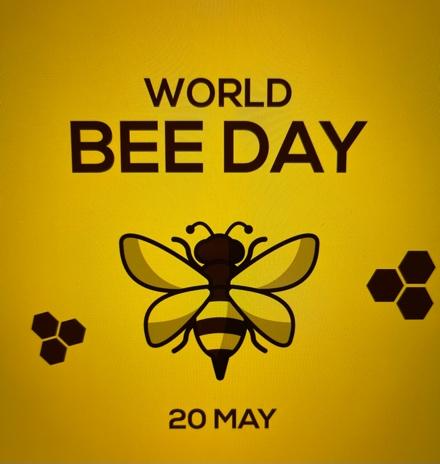
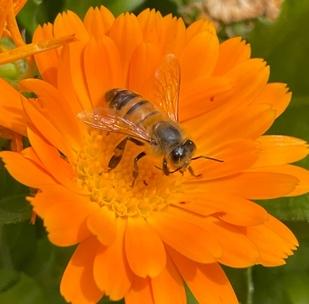
Saturday, May 20th bee lovers from all over the globe will gather in Rome, Italy to celebrate bees and their importance. It also serves as a chance to raise awareness of the ongoing increasing threat against them from human activity.
The theme this year is “Bee engaged in pollinator-friendly agricultural production”. One of the featured speakers during the Friday, May 19th pre-event is well-known Texas professional beekeeper, Erika Thompson of Texas Beeworks. She will be speaking on behalf of bees and beekeepers at the United Nations in Rome. The title of her presentation is Saving Bees and Pollinators.
For more information and to register for the webcast, google World Bee Day 2023.
Linda Alexander, Dallas County Master Gardener Class of 2008
To celebrate World Bee Day, we will post another monthly bee article tomorrow.
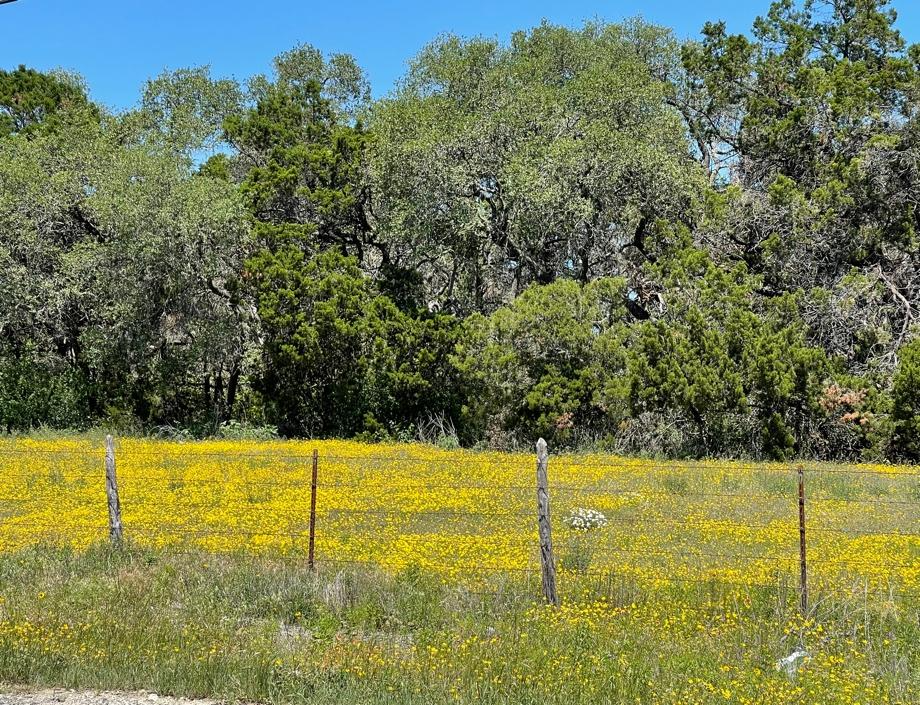
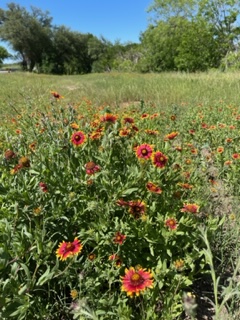
National Wildflower Week takes place each year the first week of May. This weeklong tradition was started in 1987 by The Lady Bird Johnson Wildflower Center to celebrate the beauty and importance of native wildflowers across the United States. If you haven’t taken a “road trip” through the Texas Hill Country this spring, there’s still time to enjoy the profusion of wildflower blooms on the highways, byways and Farm to Market roads of Texas.
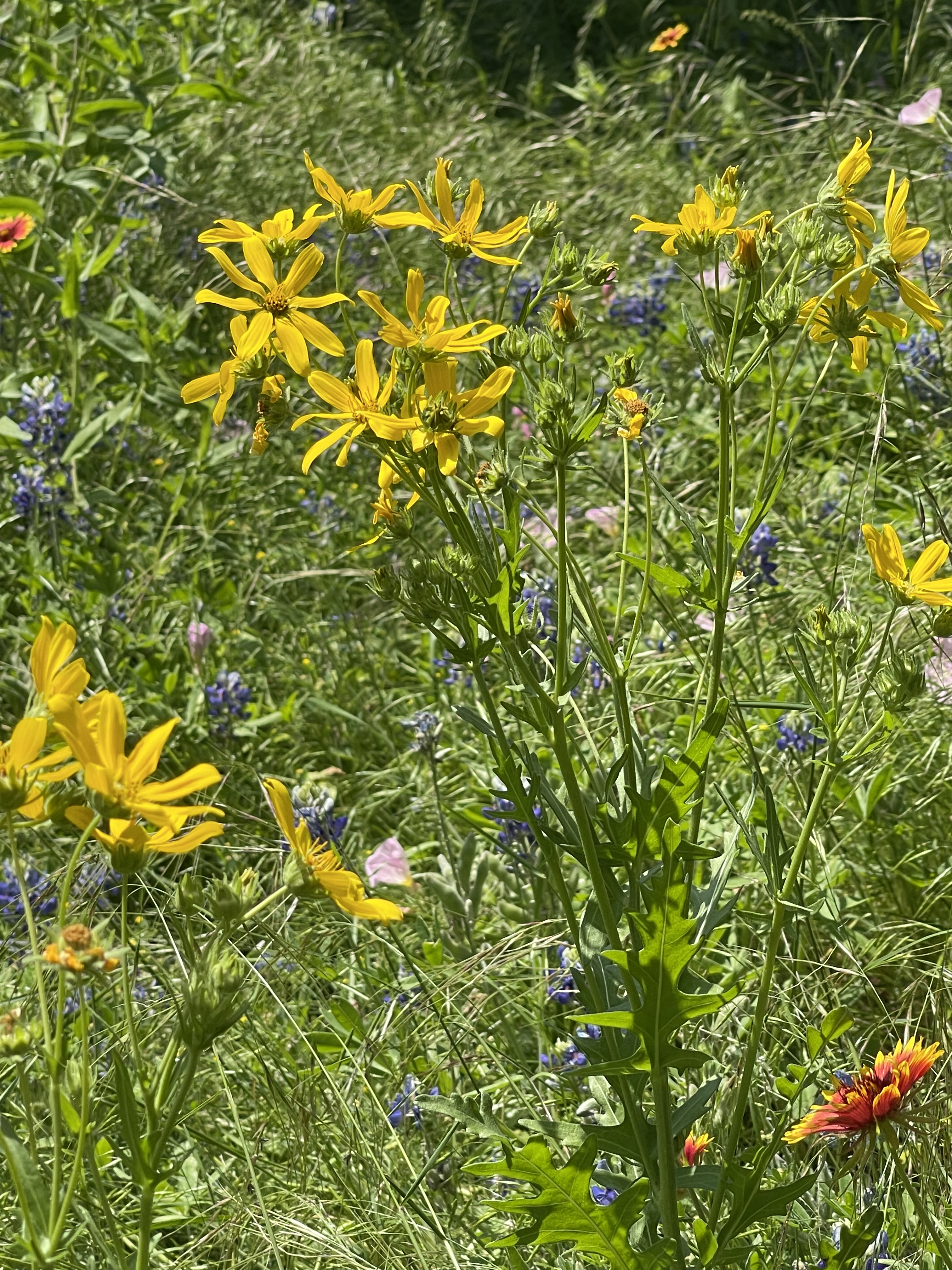
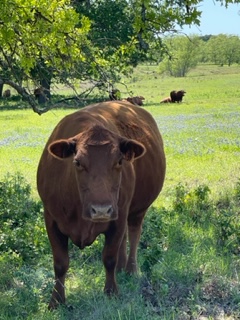
Our journey started with a smart decision to head back to Dallas from Austin last weekend by avoiding 135 and choosing, instead, to travel leisurely up 281. From Marble Falls to Hico, the panoramic views of fields blanketed by wildflowers was spectacular. Roadside stops were frequent, as patches of colorful Texas natives caught our eye.
Cattle grazing in and among pastures of bluebonnets didn’t seem to mind the closeness of our visit. Barbed wire fences stretching through the fields of yellow gave testimony to the hill country vistas so typical of our great state. Even the iconic windmills served to remind us to simply slow down and take in the sights and sounds of country life.
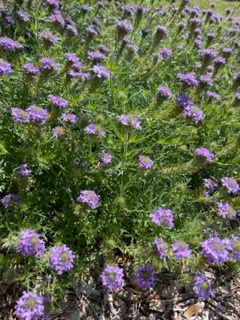
Sometime next week we hope to travel down another favorite route, highway 16 from Goldthwaite to the Willow City Loop. It’s a trip we’ve made countless times with each one somehow surpassing our expectations. A necessary stop at Cooper’s Barbeque in Llano will satisfy our hunger for the remainder of the drive. Here’s hoping you enjoy a few images of the scenic Texas hill country.

Linda Alexander, Dallas County Master Gardener Class of 2008
The wildflowers at Raincatcher’s were beautiful this year. We hope you made a “local” road trip to see them on Midway Road.
Here’s a little more information to promote seeds of thought:
Raincatcher’s Garden Annual Plant Sale
Thursday, May 4th 2023
10 AM – 3 PM
Midway Hills Christian Church
11001 Midway Road
Dallas, Texas 75229
We will have annuals, perennials, herbs, peppers, succulents, shrubs, trees, groundcover, bulbs, houseplants, decorative pots, yard art, compost and so much more!!
All proceeds from this sale go to Dallas County Master Gardener Projects.
CASH, CHECK, CREDIT CARD ACCEPTED

Mealy Blue Sage (Salvia farinacea) is a low maintenance, perennial plant that is native to Texas and Mexico and is heat and drought tolerant. It is a 2 – 3 foot sprawling plant that forms a mound as wide as the plant is tall. Its upright growth and showy flowers make it ideal for the back of a perennial garden. The leaves have a grayish cast which makes a good contrast to the green foliage of other plants.
Mealy Blue Sage has numerous flowers on a terminal spike and it requires at least 6 hours of sun for optimal growth and flower production. The stunning purple-blue flower spike brightens the landscape and attracts pollinators to the garden. Once the flowers are spent, it produces a small, papery capsule that some birds enjoy as food. The plant will reseed itself after established and the seedlings can be easily transplanted to other areas of the garden. This plant will grow thicker and will flower better in the fall if cut back in mid-summer
This is yet another fabulous perennial plant that we will have available at our plant sale at Raincatcher’s Garden at Midway Hill Christian Church (11001 Midway Road, Dallas Texas 75229) on Thursday May 4th from 10 AM – 3 PM. Hope to see you there!!!
Jackie James, Dallas County Master Gardener 1993

Four-Nerve Daisy (Tetraneuris Scaposa) is a Texas native perennial plant that blooms almost year round. It is evergreen with gray green foliage and bright yellow flowers that bloom on long leafless stems. The plant itself is 6 – 12 inches tall (including the flower stem) with a 1 foot spread. It is heat and drought tolerant and pest and disease free. It also attracts butterflies and bees!

I have been growing this plant for about 10 years now and it has become my favorite plant. I have paired it with grape hyacinth and have found this to be a great combination because they both bloom in early spring. It’s a great border plant or rock garden plant and does well in full sun. It does not tolerate over watering which is a good thing in my book!!!
This plant has a long taproot and does not transplant well. It spreads from seeds and does well if dug when the seedlings are small. I have been digging these tiny seedlings and will have some available at our plant sale at Raincatcher’s Garden on May 4th.
Raincatcher’s Annual Plant Sale
May 4th, 10 AM – 3 PM
We will have annuals, perennials, herbs, peppers, succulents, shrubs, trees, groundcover, bulbs, houseplants, decorative pots, yard art, and more.
Location: The courtyard at 11001 Midway Road, Dallas, Texas 75229
Jackie James, Dallas County Master Gardener Class of 1998

Like a bee going from flower to flower for different types of nectar, I am flying all over gathering information from many sources about tomatoes. Last year I learned of a grower, Bobby’s Best. You can find him on instagram-Bobby’sbeststarts.com
Recently he was kind enough to share his compelling explanation of the advantages of using organic fertilizers. Remember if you feed your soil, it will feed you!
https://share.icloud.com/photos/0b3k9rnty84MkkqNSpA8g65Rw
Ann Lamb, Dallas County Master Gardener Class of 2005
Download the video after opening the link. If any of our dear Dallas Garden Buzz readers have trouble viewing the link, please let me know.



 DALLAS GARDEN BUZZ