Reading the title, you may be reminiscing about a recent wedding or one that is scheduled for this spring. Imagine a stunning display of cascading branches covered in double-white flowers welcoming you to the wedding venue in glorious style. Your senses delight in the romance of the moment.
While it may sound like a blissful and lovely setting for the bride and groom, this calls for a different type of celebration. It is mid-March in Dallas (Zone 8) and this beautiful bride is ready to make her appearance. Please meet…
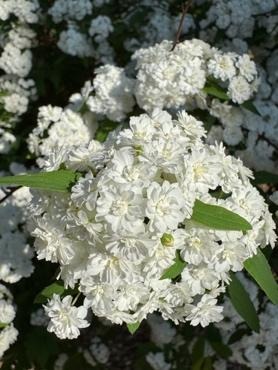
Spirea ‘Bridal Wreath’
Spirarea x vanhouttei ‘Bridal Wreath’
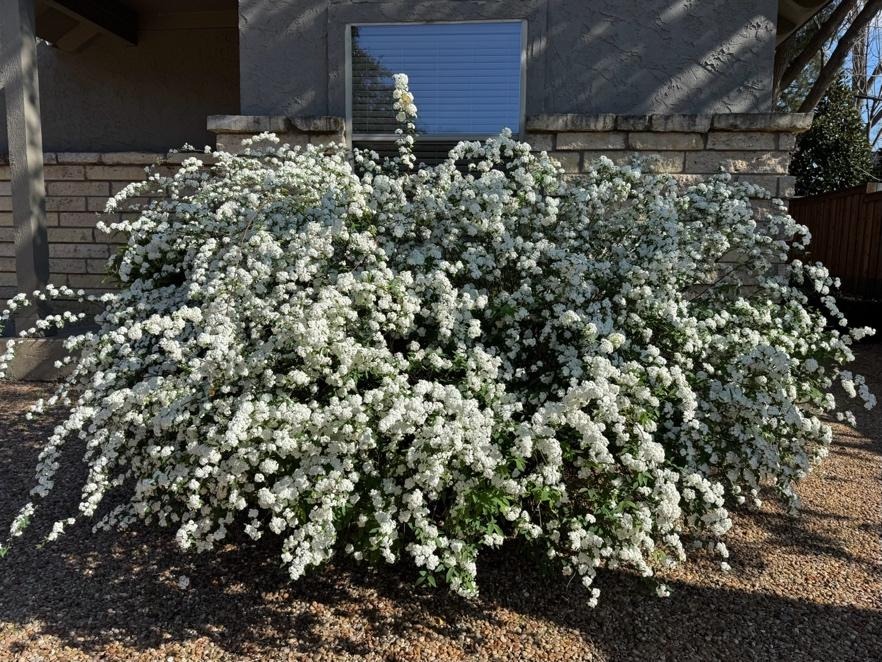
This is our Spirea ‘Bridal Wreath’ bush gracing us with her beauty, and growing in our gravel driveway, for the 20th consecutive year. However, the abundance of white blooms is the most brilliant we’ve ever experienced. With a generous spread of 5’ tall x 10’ across, she certainly makes a spectacular presence.
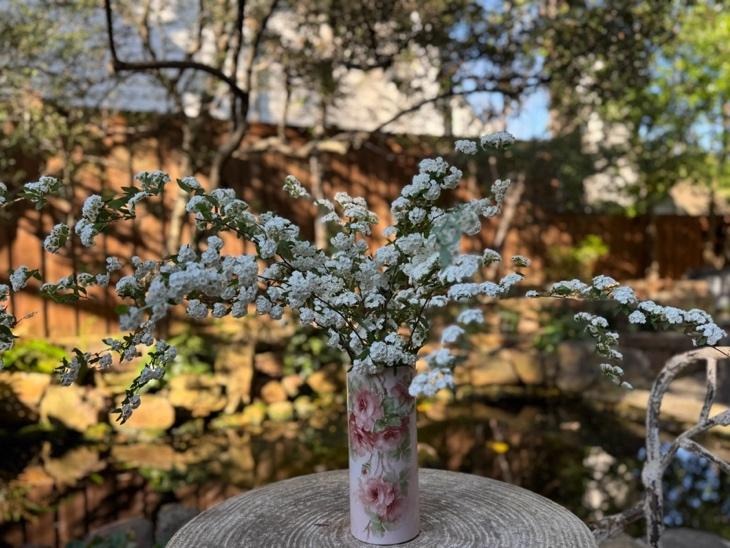
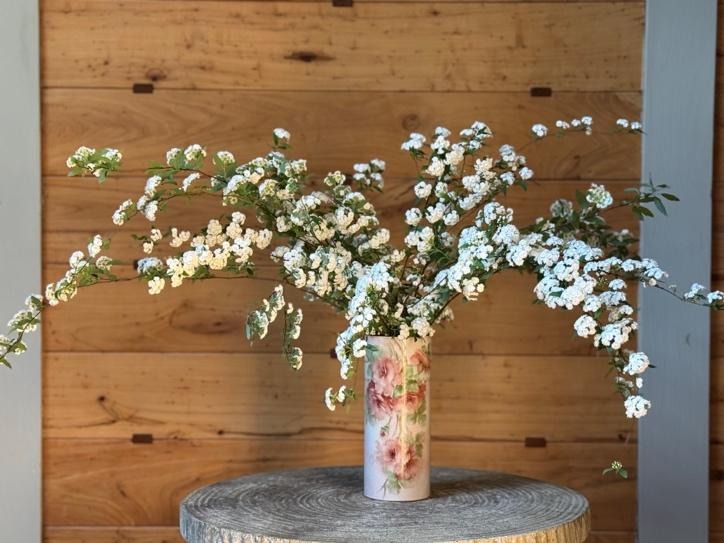
A lovely China vase hand painted by my late grandmother was the perfect whisper of nostalgia for displaying the arching branches of ‘Bridal Wreath’ Spirea. It was a wedding gift from 1970.
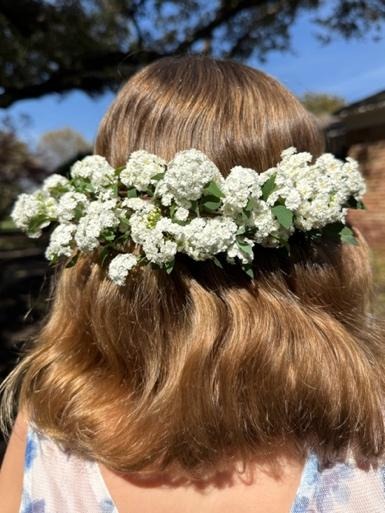
This “melt-your-heart” moment for me was sharing the story of ‘Bridal Wreath’ with my 10-year old granddaughter, Sadie. Without hesitation she asked if we could please make a wreath for her to wear to the Daddy/Daughter Dinner and Dance that night. It felt as if this experience had magically happened “for such a time as this”. A treasured memory was created as together we imagined Sadie wearing a ‘Bridal Wreath’ to her own wedding someday!
Growing spirea is a somewhat effortless endeavor that you can read about here. FYI…Our spirea only receives mid-morning to late afternoon filtered sun and still gives us a show-stopping three week “sold out” performance!
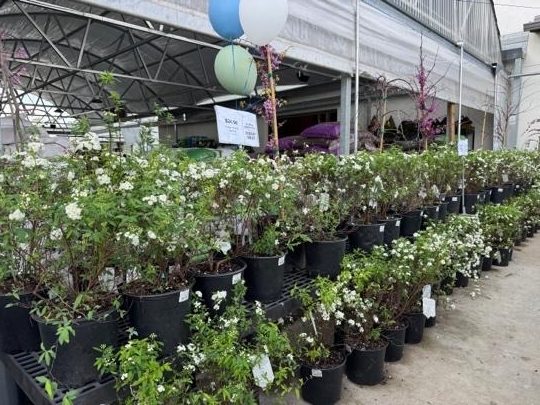
One of our local garden centers is offering spirea, as of today, for a very reasonable price. Don’t miss the opportunity to let ‘Bridal Wreath’ fill your yard with an electrifying touch of spring color!
Linda Alexander, Dallas County Master Gardener Class of 2008
This time of year is a busy one. Its a time of new growth and new plans for the future.
For gardeners it often involves visions of “THE BEST GARDEN EVER’.
That tends to be a wonderful few minutes. The beauty and well yes the envy of all who see it may play a part too. One can see the modest acceptance of complements and all quite clearly.
But then comes the realization that ‘THE BEST GARDEN EVER’ Will be a lot of work and the work has to start now.
So obviously the to do list must be started. It can be simple but sadly can get complicated with systems of checks columns headings –must buy a new notebook of course–it can get out of control.
Now there is a lot of good in the list It helps to have a plan and a list of tasks and even a system of checks can be ok .
But remember it’s not helpful when it becomes a goal in itself and checking things off becomes the focus of the day.
Time for a rethink
First note–your old notebook is ok–really and you most likely do not need to draw lines and decide on what color ink would work best.
Next think small and simple. –if the task is Weed the garden–that is way too much and too vague to help weed one bed or even half of one is doable and useful
Plant a tree in the middle of the garden–well maybe this needs breaking down into what to do today–maybe decide on exactly what tree would work in your space.
But more important by far is realizing that your list is for results in the future. Now of course you can’t ignore them. Weeds will ruin the garden if you don’t get them out.
There will never be a tree in the garden if it isn’t planted
However we must not ignore the present. The tasks are endless and yes they must be done but don’t let them keep you from enjoying your garden now.
Gardeners just tend to be people who take the work hard now for results later as an absolute rule. As we just said we have to do this –yes we must and its alot of time consuming work.
But also we are not promised anything but the present–this very day and hour! We must remember this and think about it and practice what it teaches us.
So yes have a list move those sticks out of your garden. Pull those weeds and plant something wonderful.
But take time to see the pale green of the new foliage as it emerges. Look and take pictures of the early flowers–its ok to notice how lovely weed flowers are–right before you pull them up!! Listen to bird song and the buzzing of the bees.
This is absolutely as important as the planting and pulling–PUT IT ON THE TO DO LIST —AT THE VERY TOP!!!
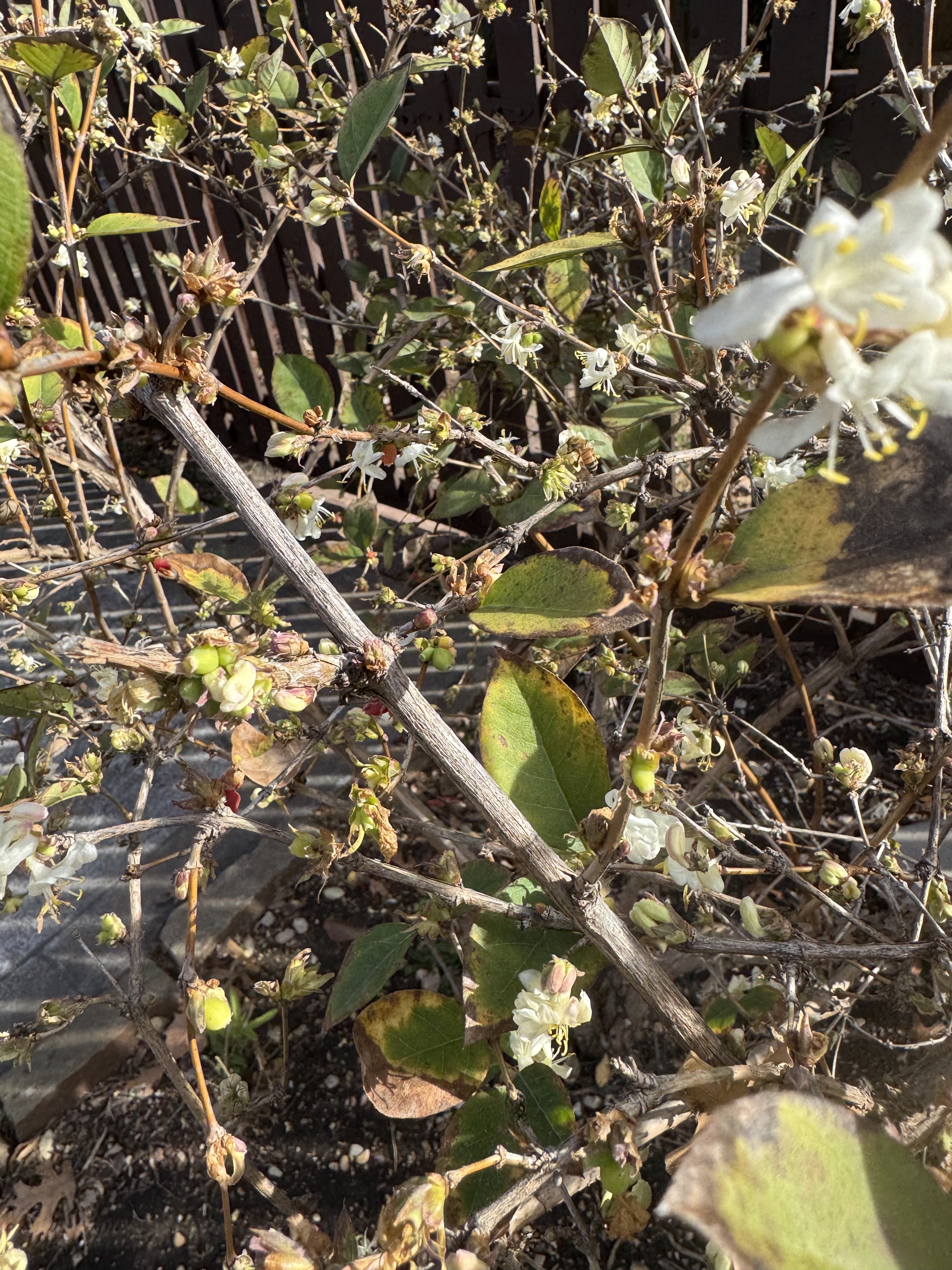
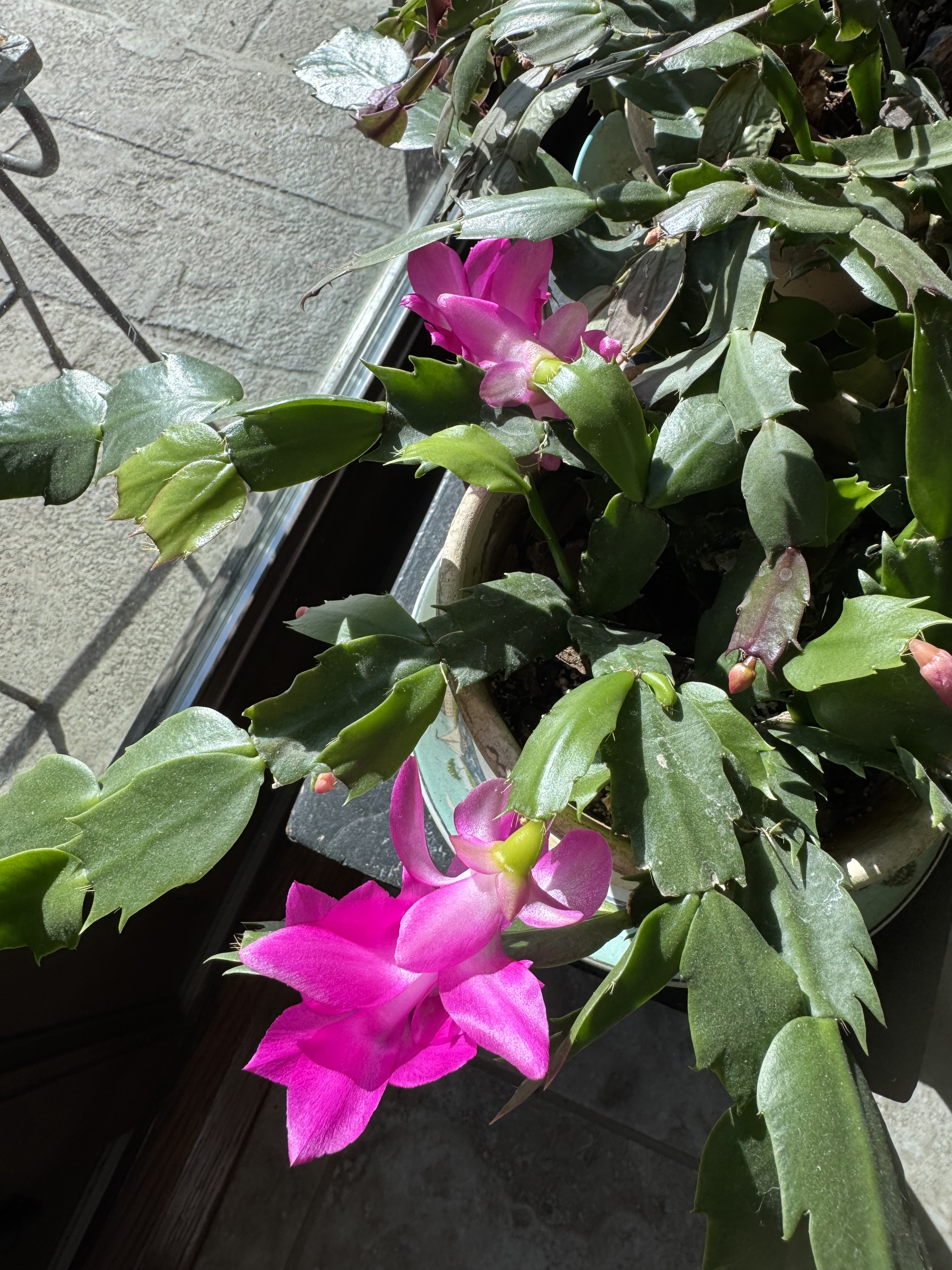
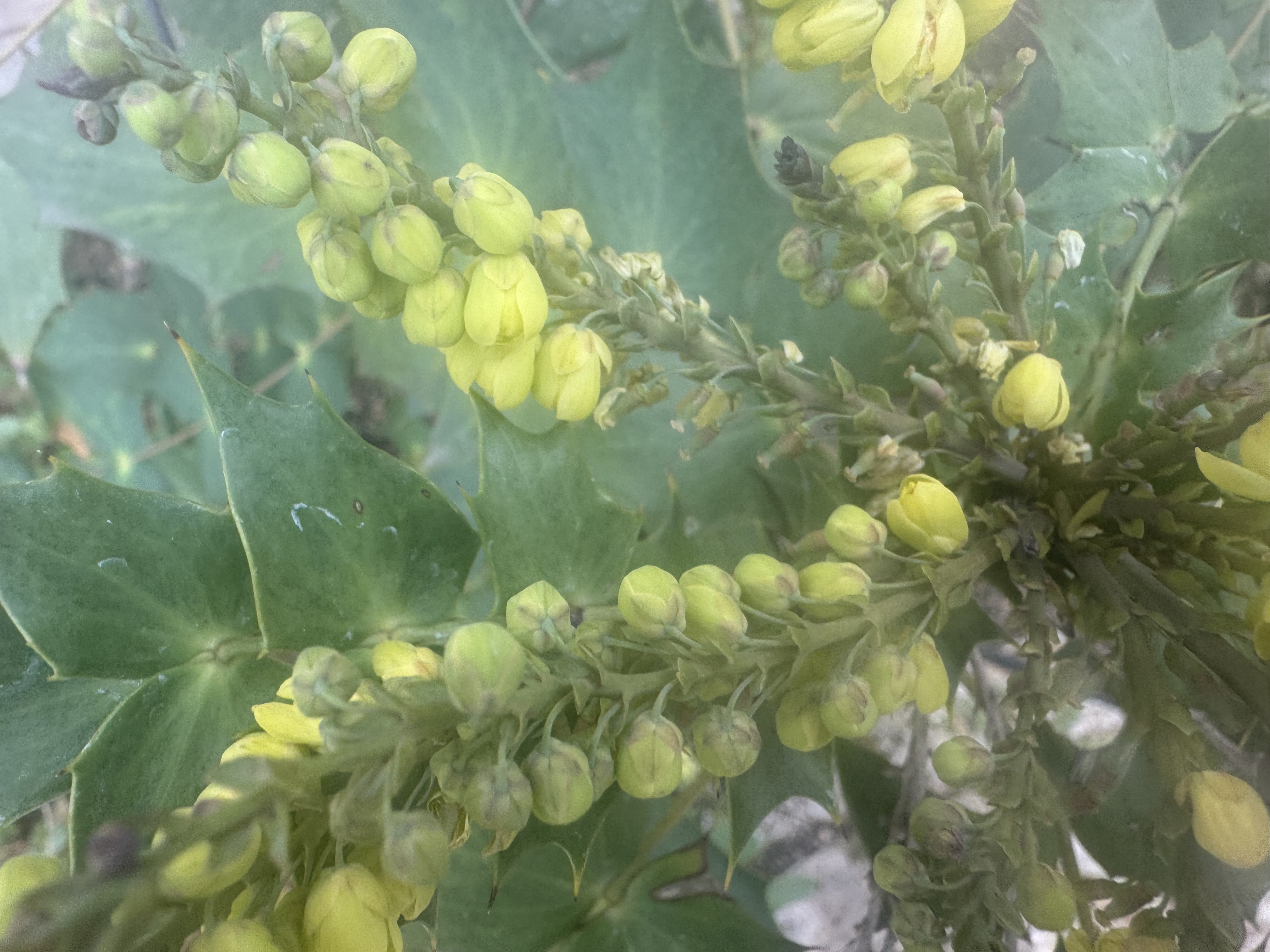
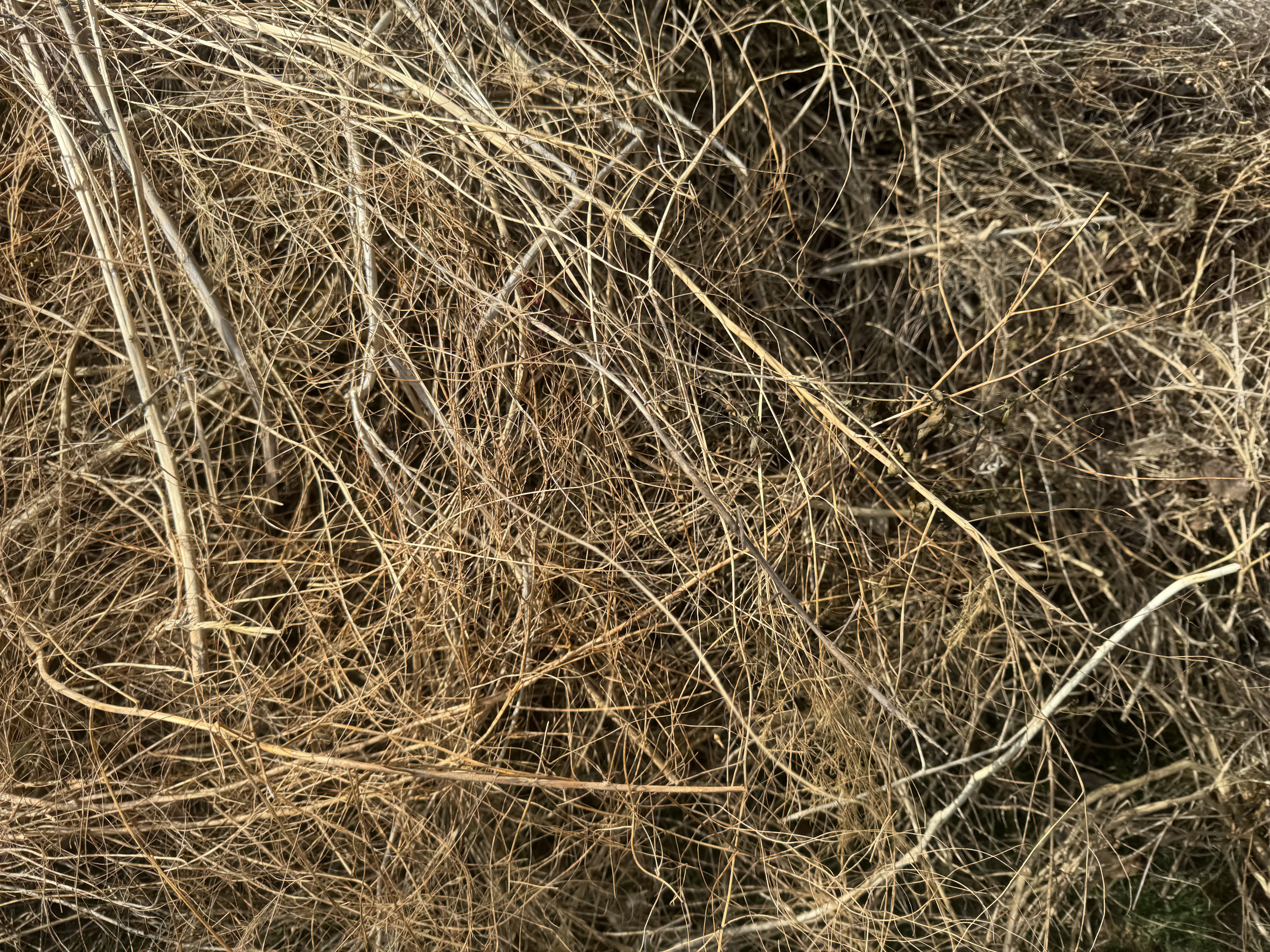
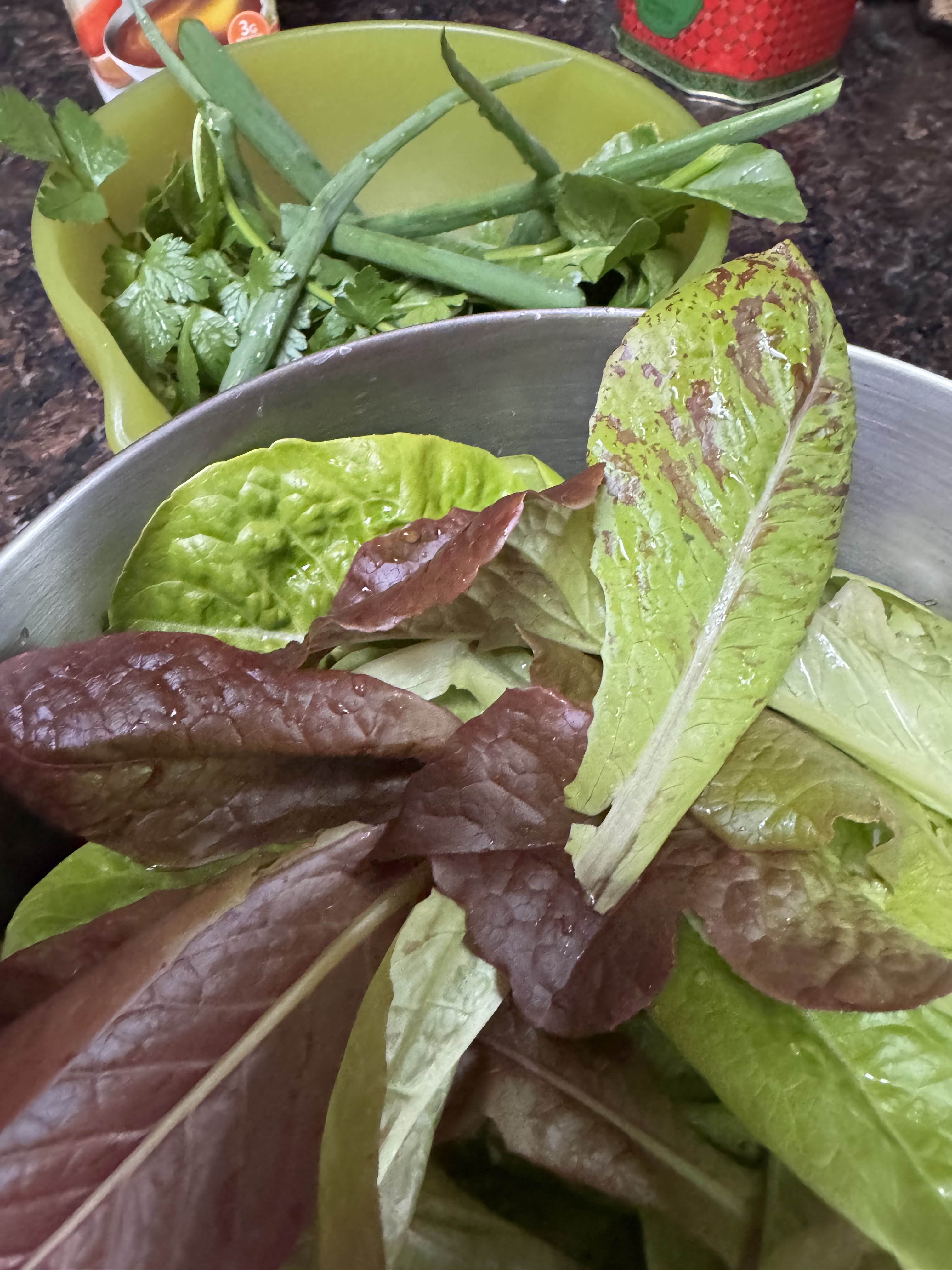
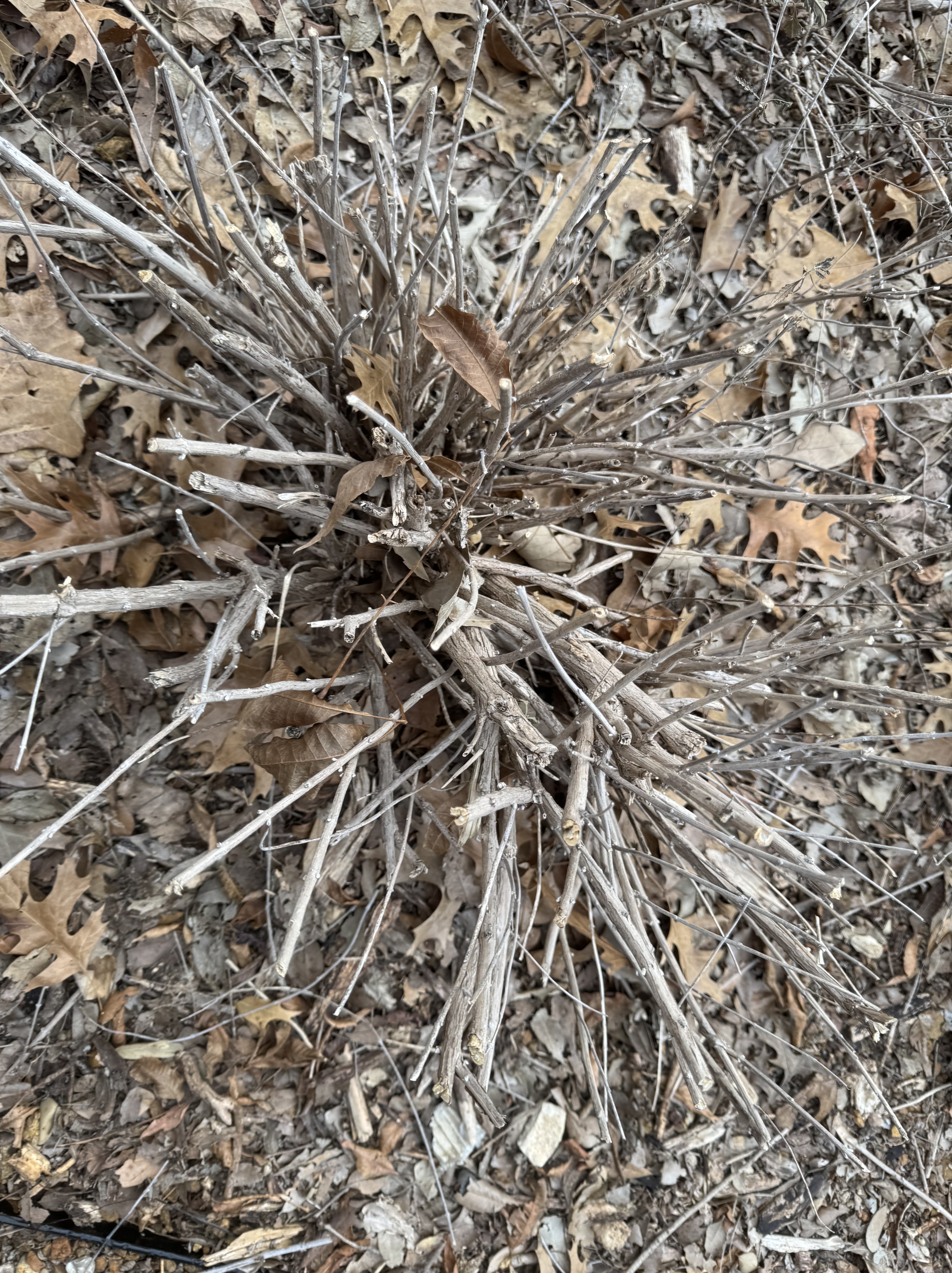
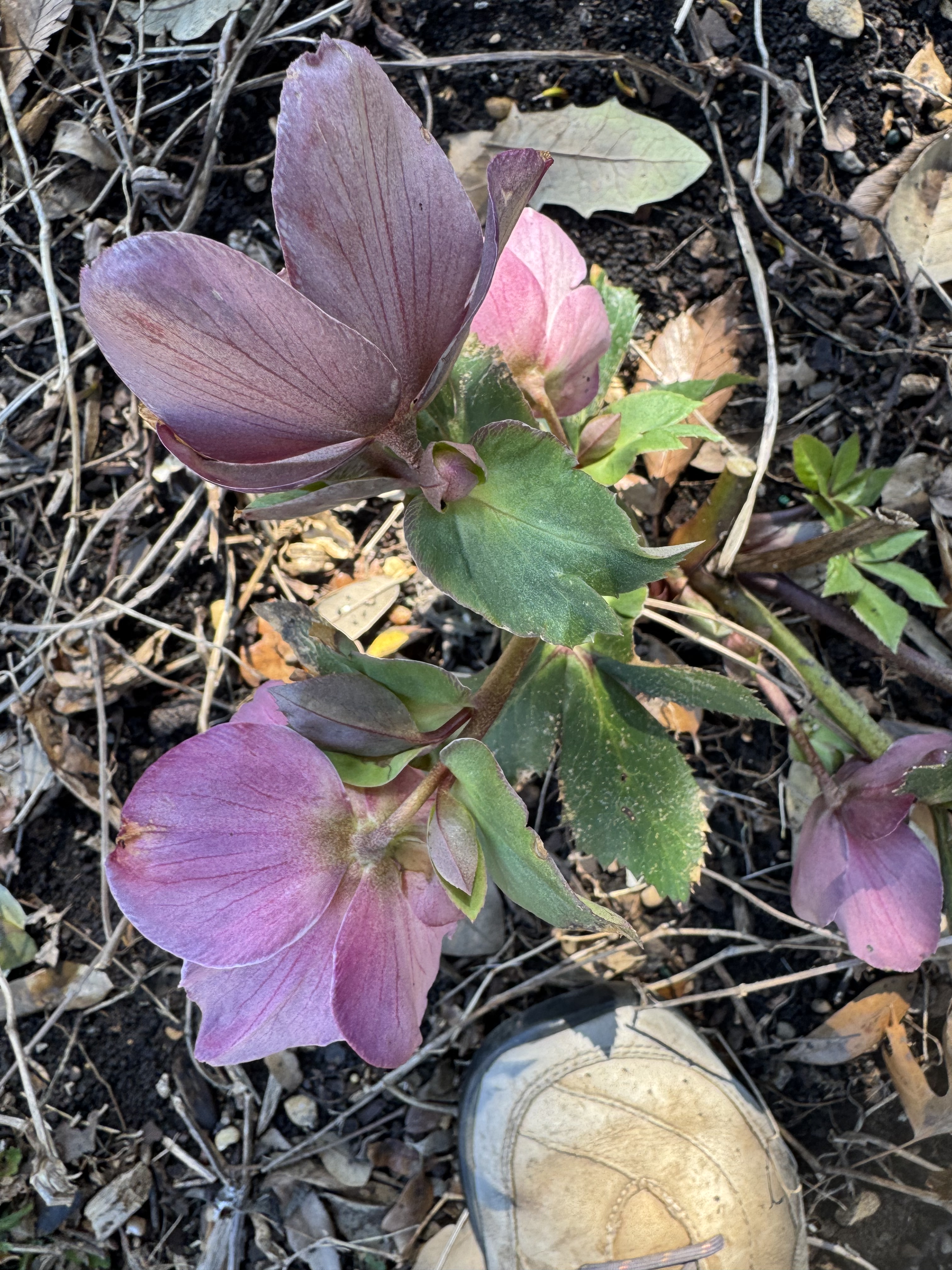
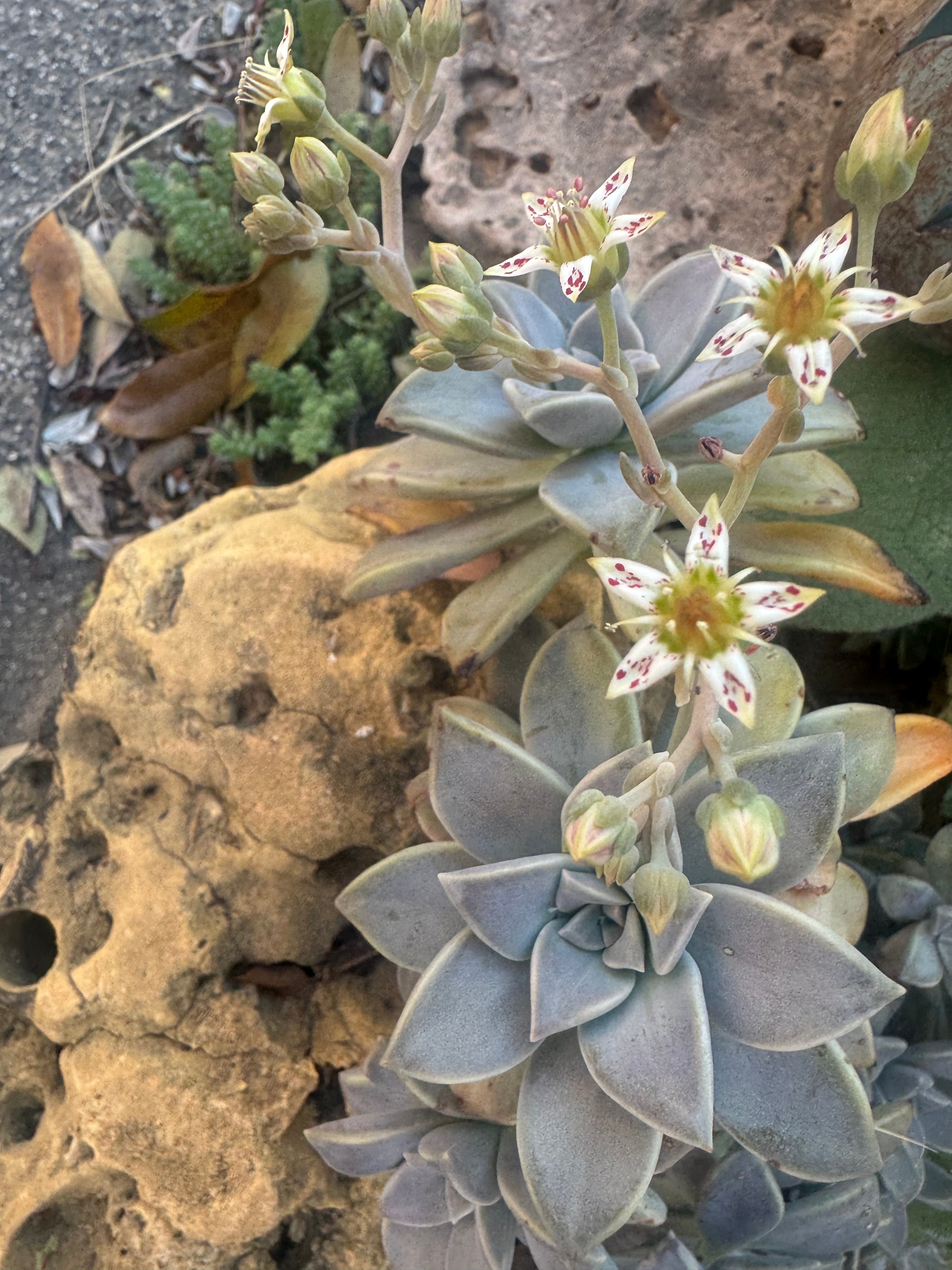
The new fresh growth is so beautifulWinter Honeysuckle, loved by the bees.Enjoy your house plants, remember Chrsitmas is not just one dayMahonia-so pretty nowHow much dead foliage can there be?Don’t forget to enjoy the vegetables from your gardenNow ready for a fresh start.You did it! All that damaged foliage was hiding the blooms.A tiny bloom on a succulent, but worth a close look
Susan Thornbury, Dallas County Master Gardener Class of 2008
It happens every season. Our gardens give us a show-stopping presentation and then, poof, it’s over! So, what’s a good way to prepare for the transition? My advice, let the garden inspire you.
How about an artful arrangement of garden gifts for a dinner party buffet centerpiece?
A simple white ceramic pitcher was the perfect vessel for displaying the following “end of season” blossoms and greenery. Once completed, it had become a tapestry of seasonal beauty.
Cilantro in its “bolting” stage, curly and flat-leaf parsley, radish leaves, beet leaves, cornflower (bachelor’s buttons) and lots of blooming oregano stems for “filler”. A sprinkling of German Chamomile lightened the look. Guests were mesmerized by the natural beauty that a “fresh from the garden” look offered. Some couldn’t resist sampling a few sprigs!
A few days following our buffet dinner, the delightful arrangement was carried outside to be composted. As one master gardener remarked, “this is liquid gold for the compost bin!” I agree!
Linda Alexander, Dallas County Master Gardener Class of 2008
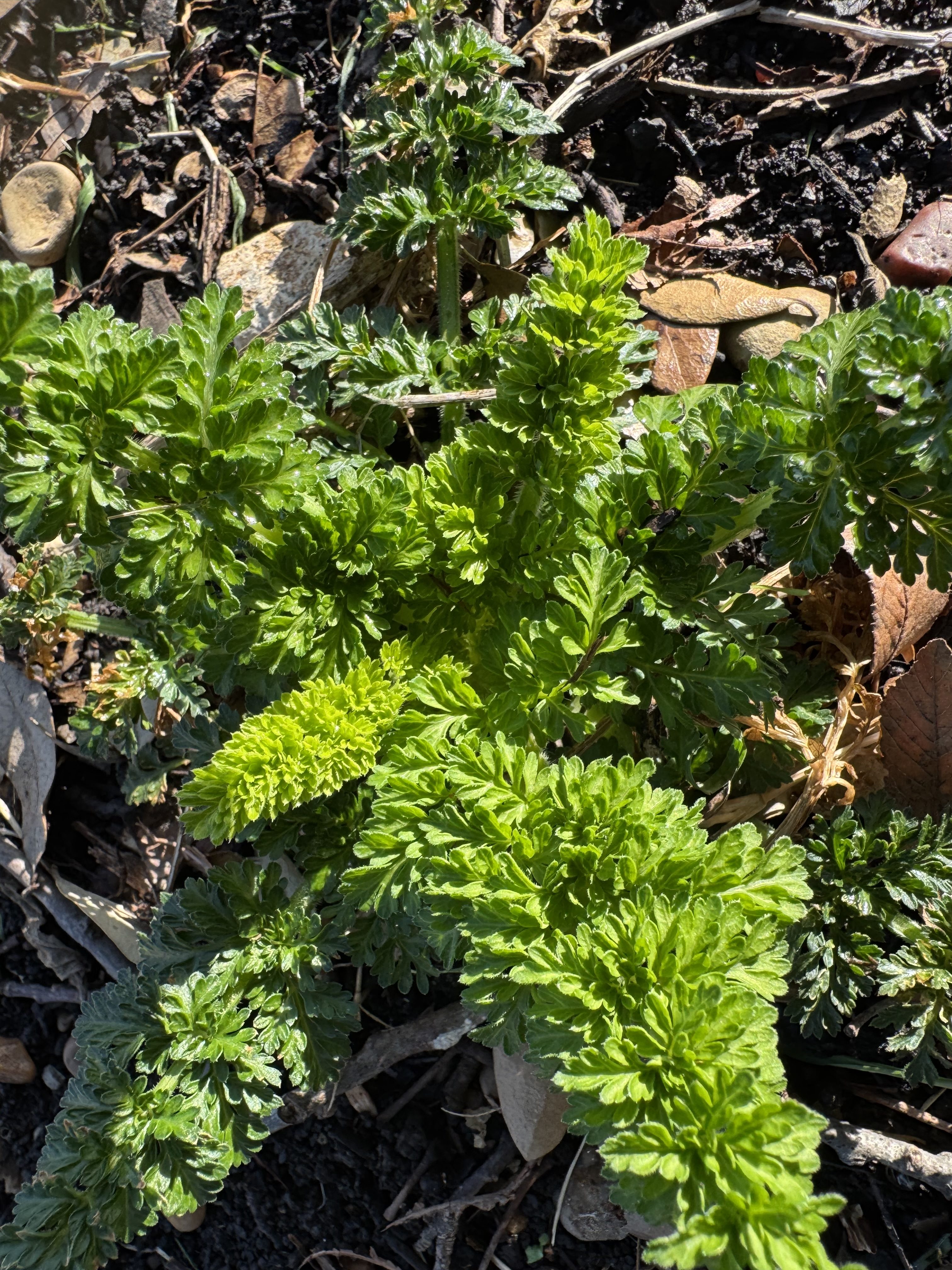
What a great plant larkspur is. Coming up from the seeds of last springs plants–living all winter as little fluffy greenery and suddenly growing tall and blooming before most other flowers.
Winter can be a challenge but finding the tiny larkspur seedlings and thinking of whats to come lifts the spirits. What a bonus that they honestly do not need a great deal of help from the gardener to grow and thrive.
As with most self seeding plants they come up where they wish to and may require some editing. If they are too crowded they won’t be their best so don’t hesitate to thin out the smaller ones. This will allow the remaining plants to grow tall. This adds structure to the spring garden. The color honestly goes with everything. Pink poppies–nigella–combined with the blues and purples of the larkspur–its a picture waiting to be painted–at least admired by you and anyone lucky enough to pass by.
Watch carefully larkspur is a magnet for native bumblebees. As we know bumblebees have been struggling. Seeing so many enjoying the larkspur makes growing them worthwhile in itself.
But wait–there is more!! When you grow larkspur you are growing a plant that has been grown by gardeners for hundreds of years. The Victorians were very fond of them–they were popular gift flowers.
In medieval times they were grown in monastery gardens. These gardens had to be useful not just beautiful.
Now–lets pause–important information will follow: all parts of larkspur are toxic. Do not consider internal use. But its great to know that people tried their best to help and use what they saw around them. Potions were made to treat a variety of problems including depression and anxiety. The seeds were used to make a solution to kill lice. That had to be a welcome relief as lice were a horribly common problem. In fact this use continued for a long time –soldiers used it during the revolutionary war..
The flowers can be used to make a dye and were used by the monks to make a blue ink.
So think of all those before you as you work in your garden–and remember you are a link in this long chain. Remember yes–but as always–there is more.You obviously must let the plants finish their blooming and go to seed–yes this can be a bit untidy but its essential. Lots of seeds will fall and they will lie in wait until next winter when the cycle starts again. But don’t let them all fall–gather some seeds.
Share some seeds with friends and neighbors–answer their questions about how to grow larkspur.
So the chain that links the plant and the gardener to the distant past will extend into the future–and you are and will be a link in that chain.
Larkspur and Poppies far better togetherLarkspur comes in white, this one has tinges of lavender look closelyThis one might be more lavender than whiteBe tolerant. A few larkspur in a vegetable bed is hardly a problem-in fact it is healthyNotice the variation in color, this one is very dark purple.This one is a bit lighter and blooms close to a tall verbena.Amazingly intricate flowersThe foliage is lovely itself- so delicate!A bumblebee, look close-they love larkspur.
Susan Thornbury, Dallas County Master Gardener Class of 2008
Location: The Raincatcher’s Garden at Midway Hills Christian Church,11001 Midway Road, Dallas, Texas 75229
Thursday, May 1st, 2025
10 AM – 3 PM
Great selection of annuals, perennials, herbs and veggies, succulents and sedums, tropicals and house plants, shrubs and trees, groundcovers, bulbs and irises grown by the intrepid Raincatchers volunteers.
All proceeds go to Dallas County Master Gardener projects.
Music in shops–usually just more noise to be ignored—but then, just every now and again a line from a song provides a useful and welcome bit of advice. A helpful insight for the volunteer gardener.
It can happen that for this volunteer a sneaking feeling that all is not well–a creeping feeling of discontent appears and can grow and affect every hour in the garden. A feeling that the task is too big just too much. And the reward–where is it??? Why aren’t there more volunteers? Does anyone see what I am doing–much less care or appreciate it??
Sadly once this happens –if nothing changes–the next step can be a vanished volunteer.
What needs to change?
The basic situation isn’t going to change. Garden work can be hard and it can be repetitive. Weeds come back without fail. Treasured flowers and veg can seemingly fail for no apparent reason. Add in garden tours to be led, fundraisers, plant sales,and extra work days- all need volunteers and they seem to come around way too often.
So what to do. Everyone has heard it but now its time to believe it. The situation is the same–the response to it that’s different-it can change–a lot–and for the better.
Take a step back and think clearly don’t just react. Remember respond don’t react.
Maybe part of it is listening to a lot of talk of self care. One thing often mentioned is just saying no to requests for help. And of course no one can say yes to everything.
We must take time for ourselves and our own homes and gardens.
But don’t lose sight of the personal benefits of helping either. There are friendships and connections–yes we may have to work on them but its valuable work.
We all want our communities to be better–greener–safer for plants wildlife –and ourselves.
Plant sales and garden tours–well those aren’t just things to get through–they can make a difference. If just a few people learn about plants that will grow and provide help for the bees and butterflies–isn’t that valuable.. If people learn that insects are the foundation of life on earth and they can help protect them, that is your time well spent. If you help a child develop a love for living things not a fear–well what could be better–that is the highest form of self care.
Starla’s niece with cicadaLinda teaching the butterfly life cycleIntroduction to an insectStarla’s son long ago with butterfly
Can you save the earth? No you cannot–but can you make your part of the world a little better? Yes, you can and you make yourself a little better with the time and effort.
We can’t wait for all the others who should be there helping.. Those others that should be appreciating us more. Give them time!! But for now–
We ARE THE PEOPLE WE’VE BEEN WAITING FOR
Many hands make light workVolunteers planting a treeOn their knees, hard at workEnthusaiastic Raincatcher’s volunteers
Susan Thornbury, Dallas County Master Gardener Class of 2008
Join us at the garden, 11001 Midway Road, Dallas, Texas 75229 on the grounds of Midway Hills Christain Church. Our work days are Monday mornings and Tuesday mornings. This is a Dallas County Master Gardener approved project.
A recent springtime visit to The Natural Gardener with my son who lives in Austin was delightful. We had gone to purchase seasonal color for his front beds but lingered for over an hour just to soak in the experience. Themed gardens filled with fragrant blossoms, the intoxicating scent of countless herbal treasures along with an earthy aroma of perfectly finished compost bins kept us there longer than we intended to stay.
Located on a meandering section of Old Bee Cave Road, The Natural Gardener is considered a world-class gardening destination. The Dromgoole family has owned and operated the establishment, in its current location, since 1993. They are well respected for their pioneering work in organic gardening and sustainable living.
You might find that visiting during the week is a more relaxing time to leisurely stroll through over eight acres of this rustic Hill Country beauty. Bring a picnic lunch to enjoy on a comfortable bench alongside the Kitchen Garden or while resting in the old red swing.
Be prepared to take pictures at every turn. Don’t miss the whimsical expressions of the goats while perched on their elevated wooden table or the chickens scratching around in the ground. Plan to spend some time in the Butterfly Garden where honeybees, butterflies and hummingbirds can be found visiting flowers displaying an array of beautiful colors.
Linda Alexander, Dallas County Master Gardener Class of 2008
The upcoming DCMGA Garden Tour on May 18 will feature eight beautiful gardens, including the garden of Suzy Renz, as one of the stops on this year’s tour.
Once upon a time, a very conventional house in northeast Dallas had an acre of lawn and very little more than a couple of live oak trees, some unremarkable foundation shrubs, and a tired looking wooden deck in the back to make up what passed for a “yard.” Then along came Suzy Renz, on a house-hunt, who instantly saw the potential for garden greatness at this unique site, and the rest, as they say, has been five-going-on-six years of creating everything you can see at this exceptional property located on Park Branch creek.
Among Dallas Master Gardeners, Suzy is known for her singular originality and creativity in garden and home design as well as her very “green” thumbs. She is known in particular for her “Farmhouse Eclectic” style, influenced by many trips to the Round Top Antiques Fair, where one-of-a-kind objects abound and can become the stars of design vignettes when carted back home. So, unsurprisingly her yard stands out in her neighborhood as a glorious testament to both her distinctive plantswomanship and its marriage to inventive garden design.
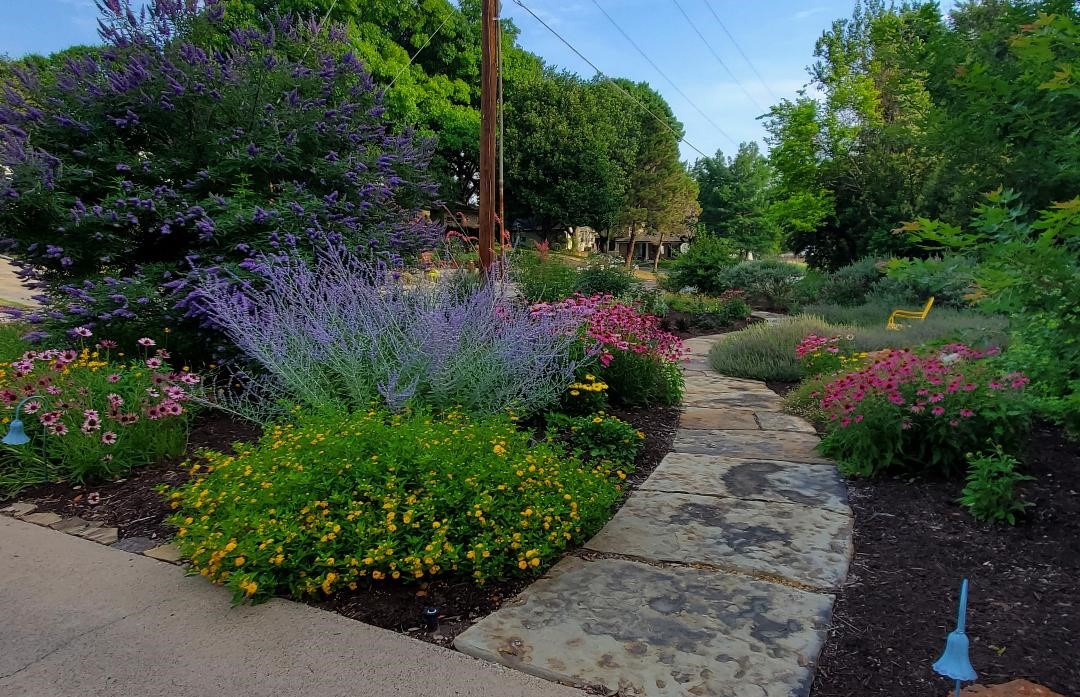
At the front of the property the “North Forty” garden, which extends along the street from the driveway to the corner of the block in an ever-narrowing strip, is a fine collection of native and adapted plants that thrive in the full sun exposure. Suzy’s prowess
at choosing the “right plant for the right place” is on full view here, as these sun-hardy specimens—the purple of Coneflowers, the blue of Russian Sage, the azure of Vitex, the yellow of Lantana, the red of Texas Yucca, and so many more—appear completely at home together in this garden space. Large slabs of Oklahoma flagstone form a lazy river pathway that invites strolling and exploring this excellent collection of well chosen plants.
When entering Suzy’s back yard through the custom-made “GARDEN” gate sign, one immediately has the sense of having arrived in a wonderland of personal horticultural and artistic expression, for this is an intensely personal space. The first steps into this special place always evoke a gasp of surprise, because this garden and indeed this house are all about the appreciation of a hidden fifteen-foot deep ravine and the creek that carved it, which are essentially invisible from the street level. A split rail fence of native cedar defines the edge of the wild from the tended garden within and demarcates the fringe of the native woods beyond. The first view of this completely unexpected terrain demands a long pause for wonderment.
Meanwhile, discovery of Suzy’s creative design talents begins with a survey of the top terrace adjoining the back of the house, which she and husband Rob extensively remodeled. Any old galvanized bucket or unusual flower pot can, in Suzy’s hands, become a container for spotlighting annual plantings of various colorful flowers. A whimsical found-object sculpture by local artist Janice Sommerville stands as a sentinel at the back door, part of Suzy’s collection of several pieces by this artist. Other mostly unidentifiable but interesting mechanical objects randomly punctuate the scene here and there. Still other smile-provoking figures, such as the trio of little concrete fisherboys and a welded iron cat whose spine is an old industrial spring, hang out around the swimming pool and exemplify the un-fussiness of this garden.
From the patio just outside the back door a series of switchback steps lead dramatically down the back yard slope to a firepit surrounded by Adirondack chairs in a rainbow of happy colors. Arriving at this convivial destination one has the feeling of having descended into an immersion in green, as the lush foliage of this remarkable site envelops the seating area and indeed the entire back yard.
A blue glass bottle tree nestles among a grove of Abelia ‘Canyon Creek’ on the lower terrace level along with smaller blue bottle “bush.” The Abelias along with a dense planting of Junipers on the middle level function as screens of green to conceal the concrete landscape blocks that form retaining walls. These walls serve primarily to hold the house and garden in their proper places, but they also create dramatic changes of elevation as the back yard drops precipitously towards the creekbed below.
While this garden shows evidence of constant attention and hard work on the horticulture, it also manages to look effortless because of the abundance of fanciful, unpretentious decorative elements. Little wonder, then, that Suzy says what she loves most about her garden is the opportunity for exercising the unlimited “process of creating.” Fortunate is she who has found her Happy Place.
Alan Rister, Dallas County Master Gardener Class of 2005
This is the unlikely story of a woman whose garden was created unintentionally and who, in the process, became a gardener accidentally.
Prior to entering the Dallas County Master Gardener program in 2005 following her retirement, Janet D. Smith confesses that she was completely ignorant of any and all knowledge concerning gardening. Her attempts at home horticulture had consisted of purchasing hanging baskets of seasonal color annuals at big-box stores and “inundating them with Miracle Grow.”
Janet’s back yard had long suffered from a lack of adequately engineered drainage, which caused flooding of her garage every time there was a big rain. She therefore sought out professional help to remediate the situation, and landscape architect Carol Feldman undertook the project, which involved the removal of a large amount of soil from the yard. The drainage problem was solved, but now there was the question of what to do with the excavated soil, for which Janet did not want to incur costs for removal from her property. The solution was to use the soil for the formation of a berm in her front yard.
The unexpectedly large volume of the new berm presented an opportunity for the creation of a garden, and thus, with a planting plan prepared by the landscape architect, Janet began a life-changing voyage of discovery through everything she could learn about gardens and the pollinator insects and birds that play such important roles in sustaining them.
Previously unaware that there exist many plants that come back from their roots every year to flourish and flower (perennials), Janet was delighted to discover that she could be freed from having to replant her new garden from scratch (with annuals) year after year. And the planting plan that had been provided to her did indeed feature mostly perennials, among them many species of plants that are native to our region. From that point, it is fair to say that this neophyte gardener dived zealously into the enterprise of gardening and has never looked back.
It has been a long and great transformation from Janet’s complete lack of gardening knowledge to becoming one of the Master Gardeners’ most respected authorities on best gardening practices and one of our most in-demand public speakers. As she became more experienced as a gardener, she has pursued further education. She completed both the Master Naturalist and Native Plant Society of Texas (NPSOT) programs, and over the years she has become as active in those organizations as she has remained in the Master Gardeners. She has also continued to educate herself by studying topics that interested her most, especially all about pollinators, including local butterflies, bees, and hummingbirds.
Janet has been profoundly influenced by the principles of Douglas Tallamy, especially as elucidated in his seminal work Bringing Nature Home: How You Can Sustain Wildlife with Native Plants (2009). This work is a holistic treatment of the interplay of all members of the earth’s biome and how they create its ecology. For Janet, this speaks precisely to the fascinating role of pollinators in the environment, which draws her continuously to study and teach about them through her speaking and writing.
Her evident passion about good horticulture and her enthusiasm for sharing her knowledge with the public has led her to becoming a well-known speaker in the Master Gardeners Speakers Bureau. Since she began her public speaking in 2006, she has given hundreds and hundreds of presentations to garden clubs, community organizations, school groups, and others, not to mention her continual involvement with Dallas County Master Gardeners, North Texas Master Naturalists, and NPSOT programs and projects. She has become so renowned for her particular love and knowledge of butterflies that all she now lacks is a coronation to be known as the “Queen of Butterflies” in Dallas County.
Today, Janet’s beautiful berm garden stands out as an exemplary showcase of smart gardening: the “right plants” (varieties chosen for their optimal adaptation to local climate and soil types) in the “right places” (growing environments best suited for plants’ needs for sun exposure, moisture, drainage, and soil fertility). The notably modest size of the garden and its conversion to an all-perennial palette of plants (with the exception of larkspurs, which self seed) make it inherently easier and more realistic to maintain.
Standing in her colorful garden, Janet says that what she most enjoys about it is observing “the complexity of nature and how it provides us the life we have.” She muses that “this berm changed the direction of my life.” Thus, this pile of dirt has provided Janet with inspiration and purpose. Come to Peavy Road to see where it all began under the hand of a true Master gardener.
Alan Rister, Dallas County Master Gardener Class of 2005
According to the calendar, the first day of spring was Friday, March 20, 2024. Dallas natives know that early signs of spring started appearing in late February. One of the happiest moments for me was when two new additions to my garden in 2023 announced their comeback from winter’s cold. They are now showing signs of an exciting springtime welcome.
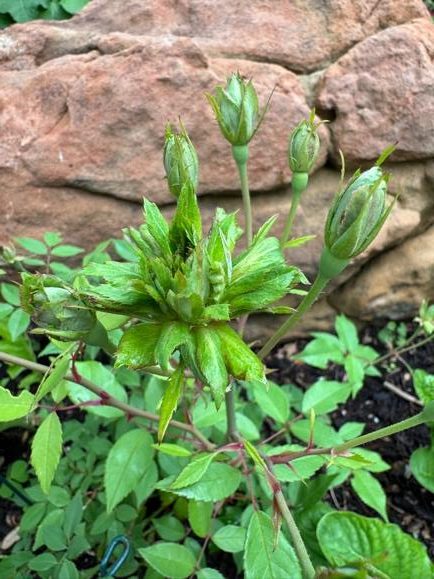
*Veggie Green Rose (Planted April 2023) – It has easily doubled in size, producing new buds over the past two months.
*Green Gage Plum (Planted September 2023) – It was thrilling to see both trees filled with delicate white blossoms during the last few days of February, continuing into March. Fresh, new green leaves started appearing in late March and early April. It’s now May and all is well.
*Black Sage (Planted September 2023) Sadly, this one did not survive those few days/nights of below freezing temperatures. But I’m not giving up on growing black sage in my garden. This time I’m trying a different strategy. Last month I ordered four new 4” plants from the same grower in California. Each one was planted in a different location of the garden with varying degrees of sun to shade. I’m encouraged today that all four plants have almost doubled in size. Hopefully, by this coming fall they will all be well established and ready for our unpredictable winter weather.
(Black Sage planted in early April 2024 is thriving)
A recent Savannah Bee email featured their Black Sage Honey and the amazing story of how it thrives in the lower mountain slopes and upper desert regions of the Sierra Nevada mountains. It is a fascinating look at what it takes to produce this uniquely flavored honey. Thankfully, I still have a few jars left from my last order!
Linda Alexander, Dallas County Master Gardener Class of 2008








 DALLAS GARDEN BUZZ