Category Archives: Perennials

It Keeps on Blooming

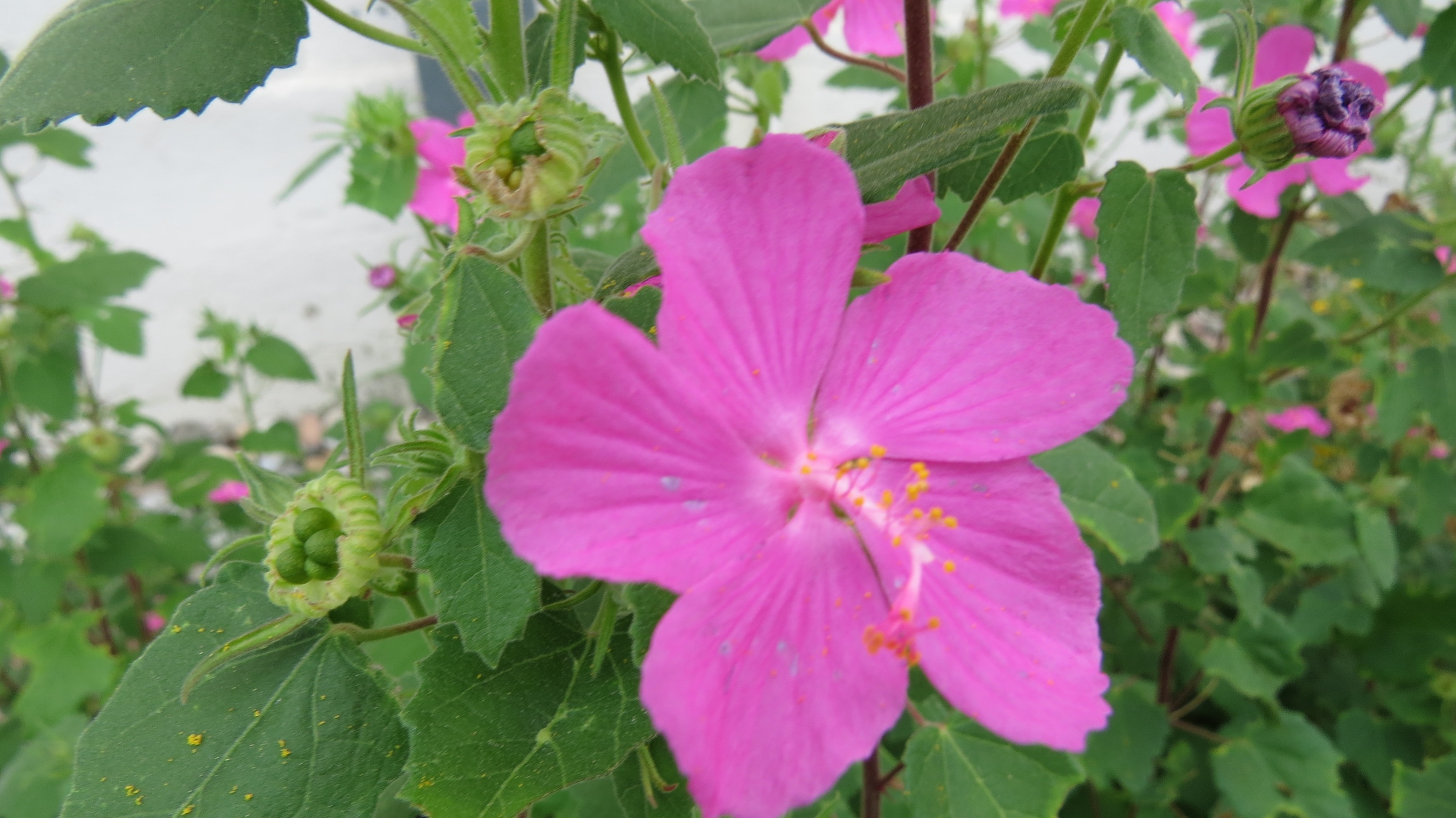
rock rose in bloom


Do you want a Texas native plant that, like the Energizer Bunny, just keeps on going/or in this case, blooming throughout our over 100 degree weather?  If so, then consider planting our Texas native Pavonia (Pavonia lasiopetala).  Like many of our native plants it also goes by many different common names: Wright’s Pavonia, Rock Rose, Rose pavonia, and Rose mallow.

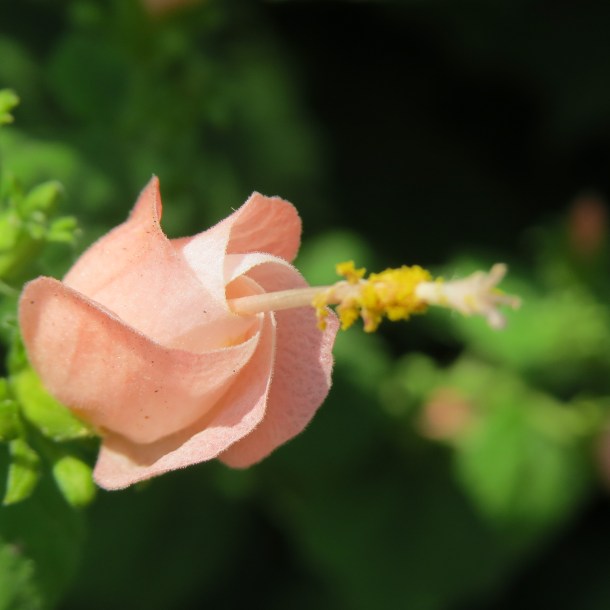
rock rose close up Of course, these last few names give one a clue as to the most eye catching part of the plant: its beautiful, showy, rose colored flowers that are roughly 1½ inches wide with a bright yellow center formed by the pistil and stamens.  These flowers appear from April to November on a small shrub that has velvety, scalloped leaves and that grows only four feet tall (usually smaller, if sheared back to encourage more blooms).

Native to the Edwards Plateau through the Rio Grande Plains, Pavonia prefers dry, rocky woods and slopes, and open woodlands.  Though it will grow larger and bloom more profusely in full sun, it can even take partial shade.  Unlike many members of the Mallow family, it prefers to be dry, growing on well-drained limestone soils or even our clay soils.  It requires very little water, once established, and is a great plant for a WaterWise landscape.

Perhaps the only downside to Pavonia is that though it is considered a perennial, it is a short-lived perennial, tending to decline after three or four years.  However, it readily self-seeds and younger plants will come up to replace the older one.  Pavonia can also be propagated, according to the Lady Bird Johnson Wildflower Center, from softwood tip cuttings.  “These cuttings should be taken in the spring before the plant starts to bloom.  Cuttings with big buds or blooms are at a disadvantage.  The cuttings root and grow fast in hot weather.  Cut a stem three to six inches long, just below the node.  Remove all but the top leaves and place in vermiculite.”

If you haven’t already decided that Pavonia is the plant for you, another one of its very favorable attributes is that it is a hummingbird and nectar-loving butterfly and moth attractant.  So if you are looking for a tough little native plant that is not only beautiful but feeds the hummingbirds and butterflies, consider planting a Pavonia/Rock Rose.  You won’t be disappointed.


Carolyn

Pictures by Starla


Separating the Seeds from the Chaff

It is a common mistake made by those gardeners who wish to save their own seeds.  Just what part of a seed pod is actually the seed and what is the chaff, that part of a seed head that can be separated and thrown away.  Sounds easy to tell?  It is, if you are saving squash, tomato, sunflower and other easily distinguishable seeds.  However, if you have ever gone to a seed exchange, perhaps you have excitedly brought home a small zip lock bag full of handpicked, thin, sharp, dark brown “seeds” from the Purple Coneflower (Echinacea purpurea).  After carefully planting and watering these “seeds” in your garden, you find that not even one grows.   Unfortunately at this point you have now joined the ranks of many gardeners in confusing the seeds from the chaff.

Coneflower, a native perennial, is one of the prettiest and easiest plants to grow in both full sun and even partial shade.  Though they prefer good, fertile soil, being a native plant, they will adapt to less hospitable areas and are hardy in USDA Zones 3-9.  Long-lived and drought tolerant once established, they are impervious to most insects and diseases.  A butterfly nectar plant, their seed filled cones are a favorite of song birds such as Goldfinches.

Purple Coneflower in Bloom

Hybrid Coneflowers now come in a wide variety of colors including pink, white, yellow, and orange.  Unfortunately for the seed saver, these hybrid varieties may not always reproduce true to their parent plant.  However the native Purple Coneflower is an easy plant from which to save seed, once you know the secret of distinguishing the seed from the chaff.

image

To save the seed, wait until late summer or fall when the coneflowers begin to fade and the seed heads develop.  At this point, begin to keep an eye on the plant, so the seeds can be harvested at the right time: after the seeds have matured, but before they drop off or the birds eat them.

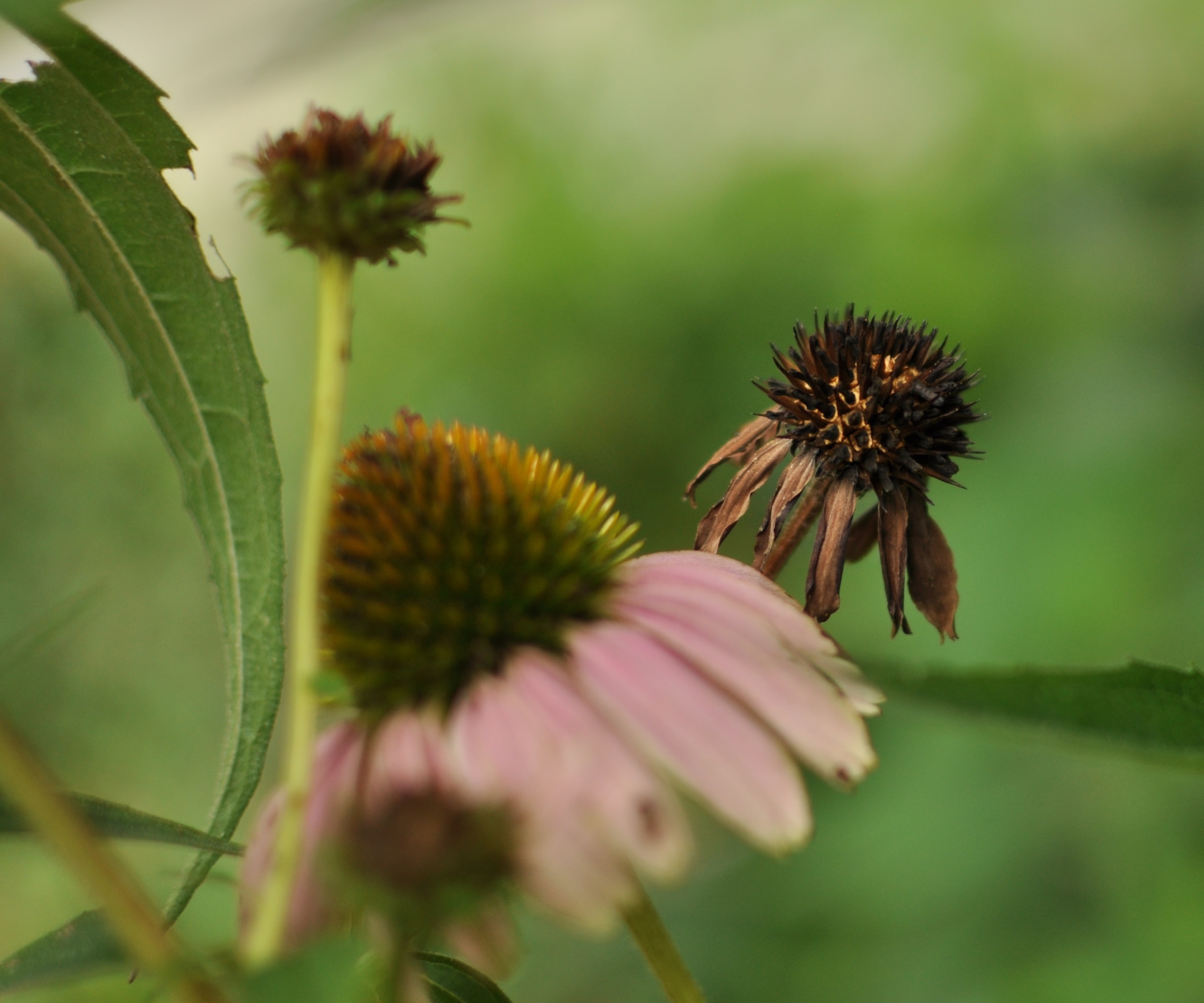
imageUsually the seed pod will turn from dark brown to black and the stem will begin to wilt.  At this point, if you inspect the seed pod, you can easily see small, light brown, bullet shaped seeds nestled in the spiky, woody seed pod.

To save the seed, one of the easiest methods is to cut the seed pod off, leaving a little stem, tie a paper bag around the stems and dry upside down, letting the seeds fall off themselves.  Another method is to manually separate the seeds from the spiky pod by crushing the pod.  Be sure and wear gloves when doing this as the needle-sharp dried spikes can be painful.  After the pod has been crushed, it is easy to pick out the plump, hard seeds.  They can be stored in a cool, dry place in a paper envelope or in an airtight container in the refrigerator.  The addition of a silica gel pack, found at craft stores, to the container will help keep the seeds dry.

So next time you are at a seed exchange and see a packet of sharp, brown, skinny spikes labeled Purple Coneflower seeds, remember that, just as in life, it is necessary to distinguish “the wheat from the chaff,”  Do not take that which is unnecessary but look instead for those light brown, plump seeds.  They are the ones to save.

Carolyn

Pictures by Ann

More about seed saving?  Click here.

What Would We Do Without Turk’s Cap?

All gardeners have those tough spots where nothing seems to want to grow.  Dry shade? Morning shade followed by hot west sun? Neglected, hard to water spots? It’s enough to bring on a tension headache.

The bright apple green leaves and red furled blooms of Turk’s cap Malvaviscus arboreus var. drummondii are often just the right solution.  I love easy to grow plants, but this Texas native is almost beyond belief.  Shade, sun, or a little of both? Moist or just on rainfall alone?  Clay, loam, sand, or limestone soils (with good drainage)?  Insect damage? Very minimal. All North Texas gardeners have to do is cut the stems back to the ground after a hard freeze in the fall.

The blooms on Turk’s cap are so unusual.  The vermillion red flowers are twisted into a loose tube of overlapping petals, with a red stamen protruding from the center.  The flowers are said to resemble a Turkish turban, thus the name, Turk’s cap.  Butterflies and hummingbirds are drawn to the blooms.  The marble-sized fruit is edible and is enjoyed by a number of birds and animals.

Red Turk's Cap, Dallas Garden Buzz

At the Demonstration Garden, we have enjoyed a Turk’s cap with pink blooms for many years.  I hope it is the Greg Grant introduction, named after the first woman horticulture student at Texas A&M, Pam Puryear.  Her namesake has been designated a Texas Superstar by the AgriLife Extension Service.

Pink Turk's Cap

Pink Turk’s Cap

The variety name for Turk’s cap, Malvaviscus arboreus var. drummondii,  honors another groundbreaking botanist in Texas.  Thomas Drummond was a Scottish naturalist, born in Scotland about 1790.  In 1830, he came to America to collect plant specimens from the western and southern United States.  He arrived in Velasco, Texas, in March 1833, and collected 750 species of plants and 150 specimens of birds in the almost two years he worked in central Texas.

Although Turk’s cap will adapt to full sun (and I do have several blooming like crazy in west sun), I really think it should be ideally planted in morning sun, afternoon shade.  I have found that if Turk’s cap is in deep shade, the blooms are limited.  Although Turk’s cap is drought tolerant, the plant will wilt noticeably in full sun.  It loves heat, and is a dependable August bloomer.  The bloom season runs from May to November.

For a low maintenance light to medium-shade garden, mix Turk’s cap with southern wood fern and caladiums.

Elizabeth

Pictures by Starla and Ann

For more perennial information see our post on Gardening With Perennials.

GARDENING WITH PERENNIALS

In Texas, our 52-week growing season has a double-edged sword: Yes, we can grow flowers in the garden all year round (well, the vote is still out on August).  But if your plant choices are flats and flats of annuals—changed out by the season–you’ll either throw out your back or overdraw your checking account.  Or both.

Seldom in life can one say: unequivocally here’s the answer.  With a vision of Oprah guiding my thoughts:  Here Is The Answer: Practically Perfect Perennials.  They bloom, come in every size, shape, and color of the color wheel, and make a return visit to your garden next season.  Ideally, mix annuals (one season show) with perennials (several week bloom) for long lasting color.

Gardeners’ hearty embrace of the charms of perennials has only come about in the last decade or so.  I remember a Fort Worth nurseryman telling our class on perennials that he couldn’t give them away in the 1980s.  Traffic stopping masses of white periwinkles were as ubiquitous as padded shoulders and Dynasty.

As purchasing habits have moved from annuals to perennials, the look of gardens has also changed.  Carefully chosen groupings of perennials tickle the senses with different bloom shapes, colors, and leaves in comparison with the banality of one type of annual.

Enough already.  I’m converted.  I see the light.  I want to add perennials to my garden beds.  How do I start?

Soil Prep: You can’t escape it in North Texas.  Lots of compost, 3 inches of expanded shale, tilled in.  Run a drip system or soaker hose up and down your beds.  Plant, remembering the eventual height and width of the plant (tall goes in the back).  Mulch like your plant’s life depends on it, at least 2-3 inches.

What do I choose?  I start with color.  For example, for a house with brown brick you might consider going with warm, bright colors.  Hot yellows, warm oranges, and flaming pinks pop against the neutral brown.  Pick a unifying color; I almost always choose blue or purple.  It goes with everything.

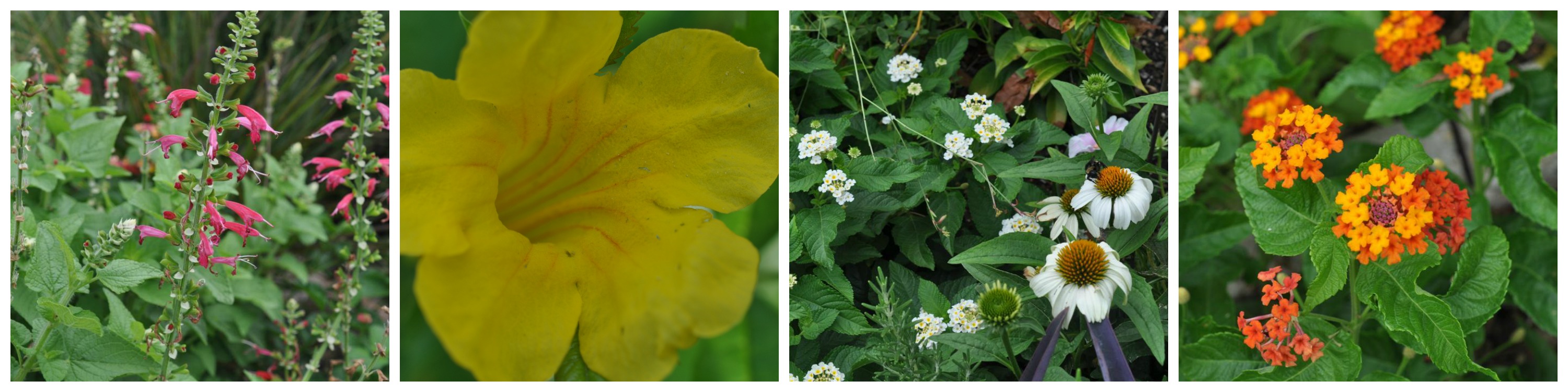
Now life gets interesting.  I use a yellow legal pad and some good gardening books.  Make of list of plants you can’t live without.  Like daylilies? Bee balm? Search for background perennials with high, mid-level, and low front of the bed plants.  Think about bloom season to narrow your plant choices.  Early spring? Early summer? Fall? To narrow your selections and make your garden more interesting, look at plants by bloom type.  The four flower types are spike (salvia), tubular (petunia), ray (daisy), and umbel (lantana).  You want to include each type of bloom.

Spike, Tubular, Ray, Umbel Flower Types, Dallas Garden Buzz

Spike, Tubular, Ray, Umbel Bloom Type

Also consider leaf shape and size.  The huge leaf of a Mexican sunflower contrasts well with feathery yarrow or long and narrow salvia.

Cannas, Dallas Garden BuzzOne of the selling points for cannas is their huge leaf, some varieties come now in shades of purple.  For purple heart, the leaf is the big draw of the plant; the flower is small and insignificant.

Stumped or overwhelmed?  Don’t do it on your own.  Go to the outstanding arboretums and botanical gardens in the area for ideas.  Stroll the aisles of good nurseries and talk with the knowledgeable employees.  Call the Dallas County Master Gardener Help Desk at 214/ 904-3053 for assistance.  Oh, and have fun!

Elizabeth

Pictures by Ann

For more soil prep garden advice review:  One Way To Prepare A New Garden Bed.

MAKING A LIST: SPRING PLANT SALES

 I am not one of those people—and you know who you are—who are very organized.  Ask anybody. The spring trip to the local plant sale usually goes like this:  “Plants for the vacant spots in the front flower bed? Ok, this year,” I muse to myself,  “we’re using ______ colors, and I don’t have one of _______, yet. “ 

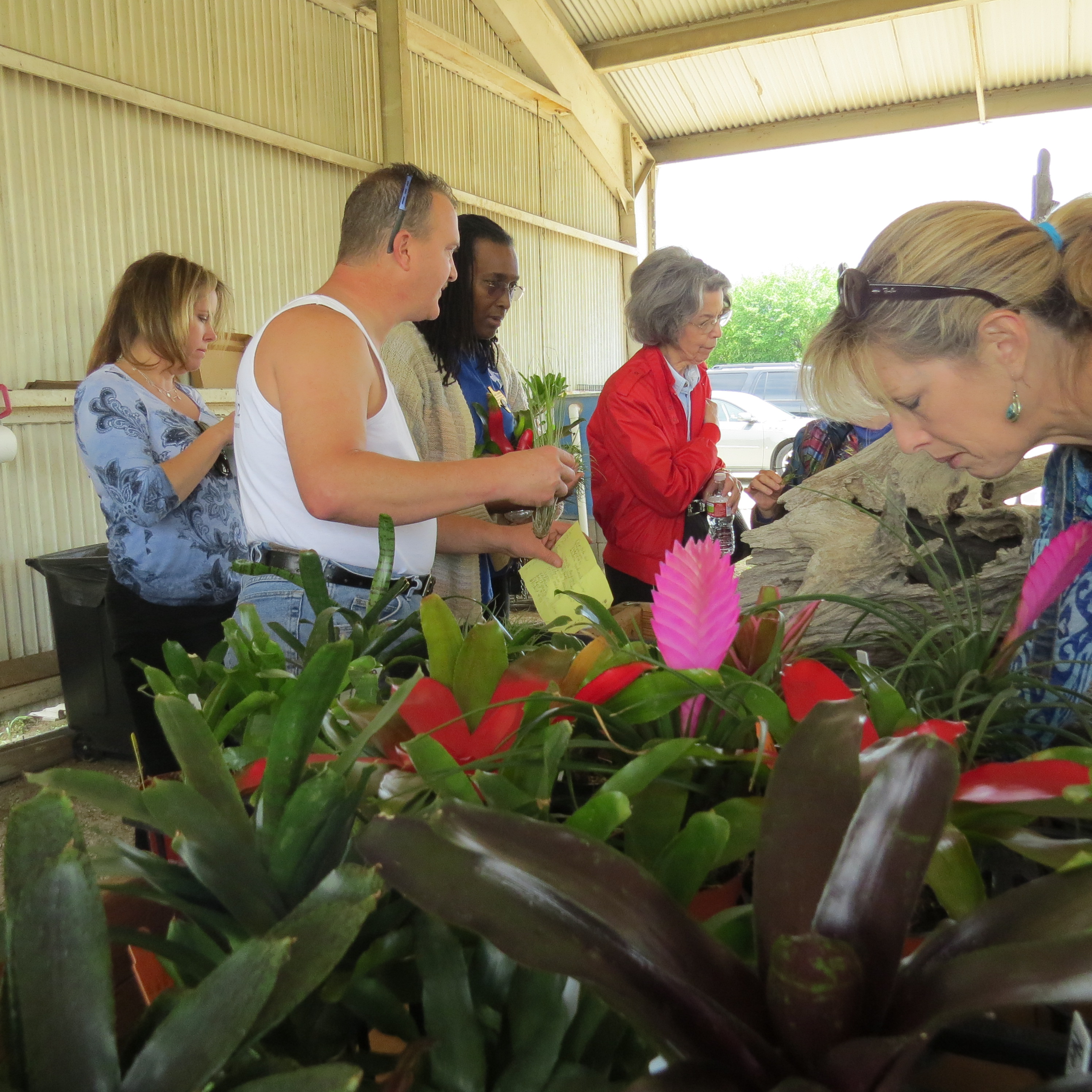
Plant Sale Shopping in Dallas

Not this spring. This year, I’m going to have a PLAN. The real deal: down to the ¼- inch, drawn on the drafting board with the compass and scale ruler kind of inspiration.  And from the plan, I’ll have a plant list.  Clutching the plan tightly, I’ll march into the spring plant sales that lure gardeners much like the waft of ribs from the barbecue joint seduce ‘cue lovers.  No impulse purchases for me.  I’ll have something I’ve never had before: a shopping list. Not on the list? Not in the checkout line. 

I did get the plan drawn up.  It took several weeks of looking at the favorite plant books, doodling around on the computer, and checking on mature sizes of plants.

Each plant had a circle drawn to scale representing its place and size in the grand scheme.  I finally had the shopping list. 

Things began to unravel within minutes at my first plant sale of the season.  Blame the perfect spring day. Chalk it up to cash burning a hole in my pocket. Proceeds go to four charities? Oh Lord, help me now. 

 Needless to say, I emerged from the check out line with two unplanned Eryngium ‘Blue Glitter’ that promise a cool purple thistle-looking bloom. Cardinal Flower Lobelia cardinalis wasn’t on the list either.  But how else was I going to have “dense spikes of brilliant red blooms that are a hummingbird magnet?”  Just put “hummingbird” and “magnet” in close proximity and I am a goner. I bought three. 

Chiding myself, I shopped at the Texas Discovery Garden plant sale the following week.  Russian sage, black-eyed Susan, asters, and Mexican sunflower went on the cart.  Each of those was on the Shopping List. 

But then I fell for Miss Huff lantana.  The “BEST of the lantanas” says the plant description.  I bought two.  I overlooked that it grows 3-6 feet high. The Best of the Lantanas needs to be moved to the side yard. 

It was getting easier to tally what purchases were not on the Shopping List: Bridal Wreath vine, “Peter’s Purple” monarda, Louisiana iris, Mountain sage…… 

Husband Mike’s only request was for something to shade the brick wall of the house from the hot west sun.  I snagged dwarf pomegranate ‘Nana’ at a sale in Collin County.  Perfect plant: 3-6 feet tall, orange blooms and fruit from spring to fall, gorgeous color next to the brown brick.  The next day as I popped it out of the pot, I noticed a slight discrepancy: the tag said ‘Wonderful’ which grows into to a small tree. 

Oh bother. Is it 3-6 foot ‘Nana’ as the plant list specified? Or have I planted a really, really big ‘Wonderful’ pomegranate? Time will tell.  

Elizabeth

Iris Blooms In Our Dallas Garden

Too bad I didn’t get to attend last week’s Dallas County Master Gardener meeting.

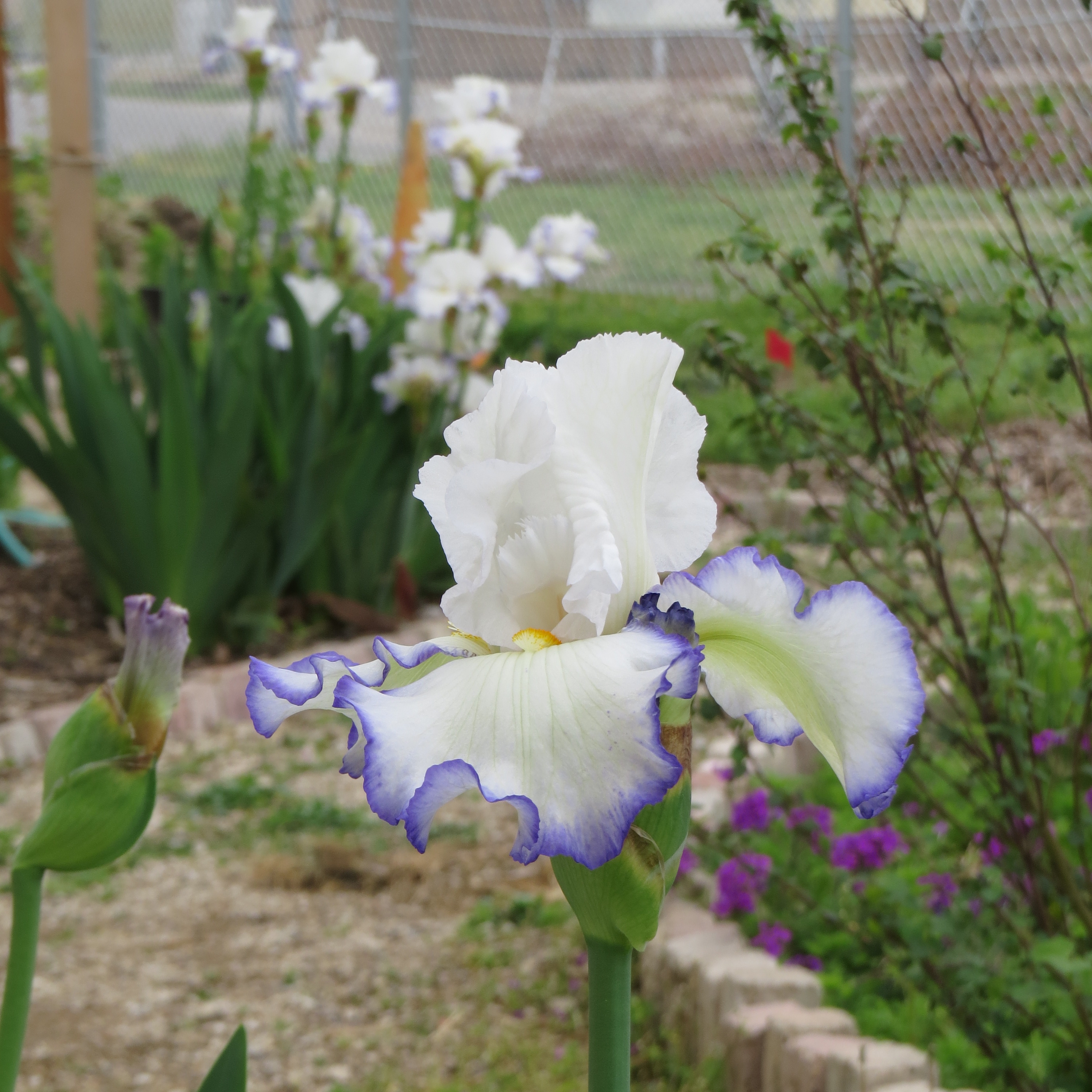
I would have learned all about Iris from the speaker, Bonnie Nichols, and could have given you alot of information about them.  One thing I know for sure: it was worth it to divide our iris last August.  Look at them now!  This is a variety called Queen’s Circle.                       .

Iris Growing At The Demonstration Garden on Joe Field Road, Dallas, Texas

Queen’s Circle is a  Tall Bearded Iris, ruffled, with standards that are pure white and falls that are white with purple along the edges with a yellow beard.

Iris, Larkspur, and Verbena

We have 8 more Iris varieties about to bloom in another garden called our Rose Trellis Garden. We borrowed the classic pink, blue, and grey color scheme . Our Iris, Larkspur,  and the early blooming, can’t live without;  Salvia, ‘May Night’  provide the blue.

Ann

Pictures by Starla

Plant Your WildLife Habitat

The flowers that are blooming in our WildLife Habitat right now were selected with a purpose.  We wanted to provide food for all kinds of creatures and yes, they are flying in to feast on our plants and eat our berries.   Monarch, Gulf Fritillary, and Giant Swallowtail butterflies have been identified. Skippers, bees, dragonflies, and birds are in residence.

Consider these Suggestions from landscapers around the USA of  The National Wildlife Federation for Your Backyard Habitat:

In every landscape I design and with the volunteer consultations that I do there is one plant that I always suggest: Asclepias (milkweed). I try to use native varieties, and A. incarnata (swamp), A. speciosa (showy) and A. verticillata (whorled) milkweeds are my gold medal winners—the wildlife garden equivalents to Shaun White. I like them not just for their importance in habitats—they are host plants for the monarch butterfly—but because of their educational value for children. My kids love to go out into our flower garden and check to see if there are any new monarch eggs, larvae or chrysalides, and they love watching the butterflies fly in to feed on the nectar.”—Mat Paulson of Moorhead, Minnesota.

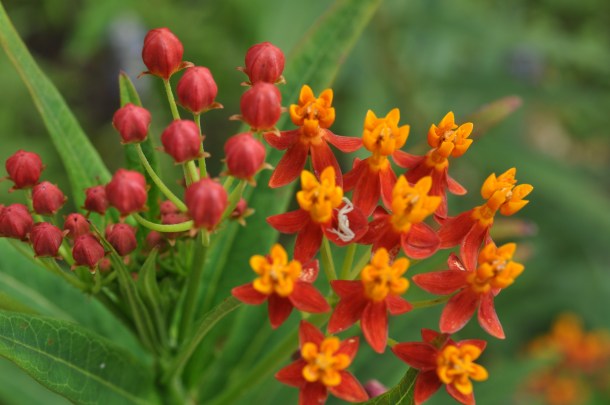
 At the Earth-Kind® Water Wise Demonstration Garden we have planted Asclepias currassavica, tropical milkweed. (Love the super star reference made to Shaun White-Olympic snowboarding Gold medalist.)

Tropical ButterFly Weed In The Wildlife Habitat

 “The purple flowers of aromatic aster (Aster oblongifolius) provide color in the late summer and fall and attract swarms of pollinators. The plant’s short, shrublike appearance makes it a good candidate for more formal landscaping applications. The silvery checkerspot butterfly, pearl crescent butterfly, and asteroid moth utilize this plant as a host. Tolerance to poor soil conditions has allowed me to add it to my own suburban residential lot. This aster is naturally found in the eastern and north-central United States.”—Perry Eckhardt of St. Charles, Missouri

Aster Growing At The Demonstration Garden Wildlife Habitat

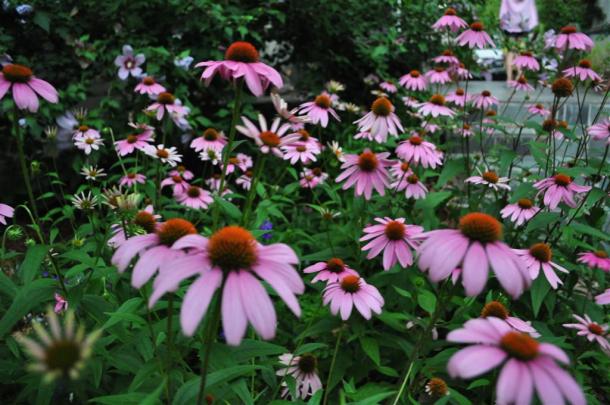
“Purple coneflower (Echinachea purpurea) is a great nectar plant in any butterfly garden and is used by many other insects as well. I think it’s like candy to them. Purple coneflower is also a favorite of American goldfinches and sparrows, who love the seeds. Plant big clumps for the best effect.”—

Purple Coneflower In A Dallas Garden

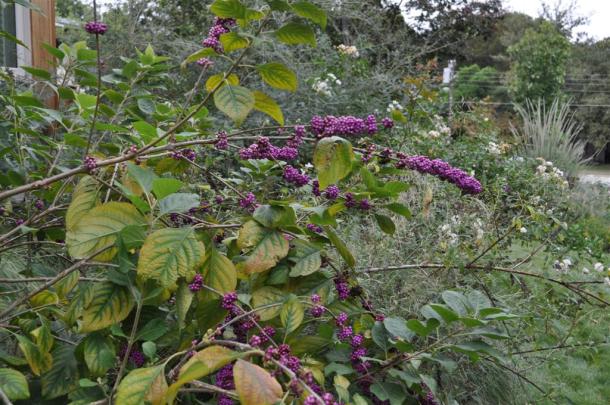
“One of my favorite native beauties, which is also a hit with the birds, is the American beautyberry. This large shrub makes a wonderful understory plant, perfect for shady areas in your yard or along riparian areas in need of restoration. This beautyberry takes care of itself in the maintenance department, requiring little effort on the part of the caretaker. The open branching structure, brilliant green leaves, and fuchsia-colored berries of this plant make it a lovely addition to any habitat garden. The birds will thank you by devouring the tasty berries, and the butterflies will come calling to taste the sweet nectar of the dainty whitish pink flowers.”—Alice Nance of Austin, Texas

Butterfly Weed, Aster, Coneflower, and Beauty Berry are a benefit to our Demonstration Garden and we thought you might like to include them in yours!

Ann

Texas Style Fall Color

Fall Gardens in Dallas trump summer gardens!   Remember this instead of  falling into discouragement in our 100° plus days with hardly a drop of rain. The Dallas County Master Gardeners who garden at the Demonstration Garden on Joe Field Road all agree we  love our version of fall color!

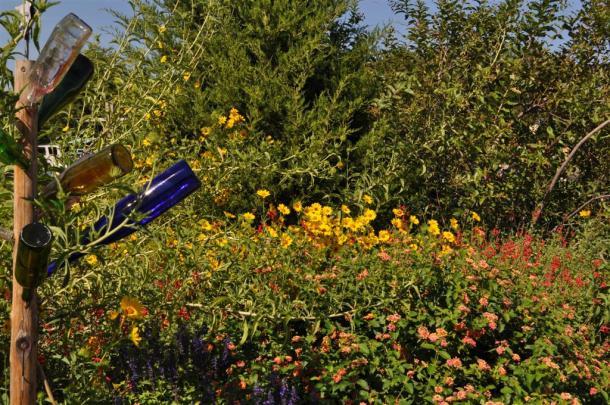
Bottle Tree Framing a view of Maximillian Sunflower, Desert Sage, Lantana, and Salvia Blue Spires

This area of the garden is relatively carefree after amending the soil, careful plant selection, and mulch, mulch, mulch!

Rosy Creek Abelia, Salvia Blue Spires, Muhly Grass, Papyrus On The Right In Our Pond

We do have an agonizing  bind weed issue that keeps us humble, but we will save that part of the story for another time. 

 Enjoy the mellow quality of Autumn in Texas. Temperatures are less and color is more!

Ann

Fall At The Demonstration Garden

This fall we have been busy preparing new garden areas.  Aadil Khambati built this arbor as part of his Eagle Scout project.  Our Master Gardeners are planting ornamental grasses to rim the walk circling The Color Wheel. We love working in the cooler fall weather and our plants  thank us for giving them a better start before summer’s high temperatures hit!

New Arbor Leading Into The Raincatcher's Garden, Susan, Jan, Abbe, Hans

As you walk through the new arbor, you will see The Color Wheel  blooming  riotously. This was planted in late spring to give gardener’s ideas for color contrasts and harmonies in their own gardens.  Don’t we all wish for the “eye of an artist” in our gardens?  Start here at our garden and learn the principles of the color wheel.

The Blues Of The Color Wheel, Salvia leucantha, Salvia farinacea, Purple Heart Next Door

Examine the reds of our color wheel. Are you pulled towards exciting, warm colors?  Lisa has planted several red Salvias, Lantana, and even Mexican Poinsettia with splashes of an orangey red on green leaves. 

Dallas Red Lantana, Salvia, Canna, Rosemary In The Background

At the Earth-Kind® WaterWise Demonstration Garden on Joe Field Road we are making the most of Fall Gardening in Texas!

Fall-What’s Not To Love?

What’s my favorite season? Easy peasy. FALL. Jacket wearing, college football cheering, leaf rustling, turkey roasting, Halloween mini-Snickers sneaking—Fall!

This lovely autumnal season is so much more than pulling up summer-scorched annuals and popping in mums for a few weeks.  At a time when northern gardeners are closing up shop for the winter, Texas gardeners have realized that the fall months may very well be the best time of the year to plant.

Think about it.  A Sweet Innocent Perennial you might plant in the spring is just being lined up for the furnace blast of summer from late May through August.  It’s hard to even survive—much less thrive–in temperatures in the 100s, no rainfall, and nighttime lows that hover in the 80s.  But if you’re a savvy gardener and plant that same Sweet Innocent in the fall, you’ve tucked it in when the future holds cooling temperatures and more frequent rain.  Voila.  Plant Success.

Most plants will put on a fall flush of growth and bloom in fall weather conditions.  Roses can be spectacular in the fall, often with blooms more vibrant than spring or summer.  Trim roses back now, fertilize, and give a deep soaking to promote bloom.

Raised Bed with carrots, radish seeds and trowel

If you’re planting a fall school garden with kids, it’s time to get busy.  If you want a warm season garden, plant bush beans and pinto beans by seed until September 15.  Be sure to baby your seeds; they need to be kept moist until they sprout and are established. 

Dallas County Master Gardeners Busy With Fall Gardening

Fall is Prime Time for cool season crops, those vegetables that love a nip in the air in November and December.  Plant beets, spinach, lettuce, and carrots by seed now through October 15.  Kids love transplants; they’re veggies in miniature.  Plant broccoli, Brussels sprouts, cabbage, and cauliflower transplants now through late-November.  Mustard greens, Swiss chard, spinach, parsley, leeks and kale transplants can be tucked in the garden from September 15 through the winter.  (Harvest your warmer season crops in late October, then plant cole transplants for a continued harvest.)

Spring flowering bulbs can be a fun thing to plant with kids.  Purchase your bulbs now when nurseries start stocking bulbs, but wait on planting them until soil temperatures cool significantly, for us in mid- to late-November.  Daffodils are probably your best bet with kids.  They are dependable, don’t require pre-chilling (like tulips), and some will naturalize.  The Southern Bulb Co. in Golden, Texas  is known for propagating old varieties of bulbs, often found in deserted homesteads. 

The best reason to garden in the fall is to enjoy it.  Your garden is filled with new blooms and growth.  Pests have taken a vacation with the cool temperatures.  So nibble a bit of early Halloween candy and enjoy the season.

Elizabeth