Tag Archives: WaterWise gardening

MAKING A LIST: SPRING PLANT SALES

 I am not one of those people—and you know who you are—who are very organized.  Ask anybody. The spring trip to the local plant sale usually goes like this:  “Plants for the vacant spots in the front flower bed? Ok, this year,” I muse to myself,  “we’re using ______ colors, and I don’t have one of _______, yet. “ 
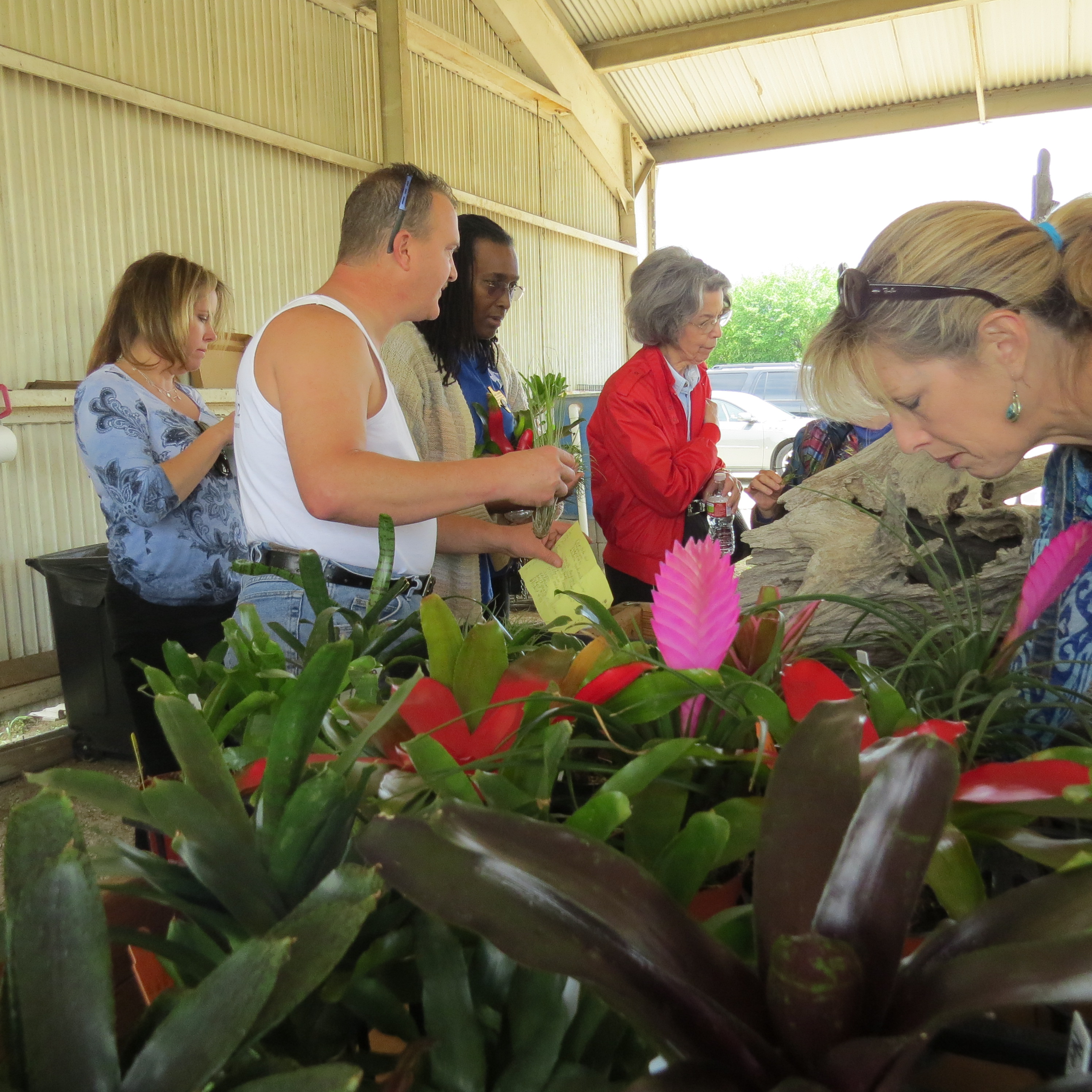
Plant Sale Shopping in Dallas

Not this spring. This year, I’m going to have a PLAN. The real deal: down to the ¼- inch, drawn on the drafting board with the compass and scale ruler kind of inspiration.  And from the plan, I’ll have a plant list.  Clutching the plan tightly, I’ll march into the spring plant sales that lure gardeners much like the waft of ribs from the barbecue joint seduce ‘cue lovers.  No impulse purchases for me.  I’ll have something I’ve never had before: a shopping list. Not on the list? Not in the checkout line. 

I did get the plan drawn up.  It took several weeks of looking at the favorite plant books, doodling around on the computer, and checking on mature sizes of plants.

Each plant had a circle drawn to scale representing its place and size in the grand scheme.  I finally had the shopping list. 

Things began to unravel within minutes at my first plant sale of the season.  Blame the perfect spring day. Chalk it up to cash burning a hole in my pocket. Proceeds go to four charities? Oh Lord, help me now. 

 Needless to say, I emerged from the check out line with two unplanned Eryngium ‘Blue Glitter’ that promise a cool purple thistle-looking bloom. Cardinal Flower Lobelia cardinalis wasn’t on the list either.  But how else was I going to have “dense spikes of brilliant red blooms that are a hummingbird magnet?”  Just put “hummingbird” and “magnet” in close proximity and I am a goner. I bought three. 

Chiding myself, I shopped at the Texas Discovery Garden plant sale the following week.  Russian sage, black-eyed Susan, asters, and Mexican sunflower went on the cart.  Each of those was on the Shopping List. 

But then I fell for Miss Huff lantana.  The “BEST of the lantanas” says the plant description.  I bought two.  I overlooked that it grows 3-6 feet high. The Best of the Lantanas needs to be moved to the side yard. 

It was getting easier to tally what purchases were not on the Shopping List: Bridal Wreath vine, “Peter’s Purple” monarda, Louisiana iris, Mountain sage…… 

Husband Mike’s only request was for something to shade the brick wall of the house from the hot west sun.  I snagged dwarf pomegranate ‘Nana’ at a sale in Collin County.  Perfect plant: 3-6 feet tall, orange blooms and fruit from spring to fall, gorgeous color next to the brown brick.  The next day as I popped it out of the pot, I noticed a slight discrepancy: the tag said ‘Wonderful’ which grows into to a small tree. 

Oh bother. Is it 3-6 foot ‘Nana’ as the plant list specified? Or have I planted a really, really big ‘Wonderful’ pomegranate? Time will tell.  

Elizabeth
Compost

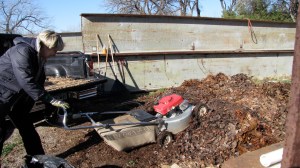
Cindy With Mulching MowerCompost is recycled organic material.  Grass clippings, leaves and plant refuse, things  that used to be thrown into the landfill, are converted with the help of microbes, molds and insects into food for our garden.

WHAT DO YOU NEED TO MAKE COMPOST?

(4 components + tools)

 NITROGEN – GREEN – Grass clippings, Fruit & Vegetable Scraps, Coffee Grounds

CARBON – BROWN – Dried leaves, dried plants, shredded paper, wood chips (also known as mulch)

MOISTURE – BLUE – Water, leftover juices from drinks, pickle juice, jams, jelly, any liquid containing sugar

 OXYGEN – WHITE – Air/circulation

HOW DOES IT BECOME COMPOST?

Mix the above 4 ingredients and let nature take over.    All around us are small animals called MICROBES.  Like any animal, they like to eat.  Feed them and they multiply.  Their food is the materials we mixed together (green, brown) with the water.  The air/oxygen allows them to live. 

HOW SHOULD A COMPOST PILE LOOK?

Compost bins/piles can be as simple as a pile on the ground or as elaborate and a hand or machine cranked barrel.  MASS is more important in composting than its container. The deeper and wider the pile, the faster it will compost.  Good dimensions are 3’ deep and 3-4’ in diameter.  Piles can be square, rectangular, or round. 

Round Compost Bin The outside edge (as much as 12” can dry out fairly quickly so I prefer the round style—acts like an insulator.  The interior stays moist and heats up with microbial activity.  When the pile is turned, the dry outer material is stirred into the moist interior and helps to aerate the pile. Depending on your available space, it is nice to have more than one container so you can move the compost when turning it.  Three containers allow you to have compost at different stages of maturation; new, in-process, finished. 

WHAT IS COMPOST GOOD FOR?

1)             Feeding plants and soil animals (worms, insects, microbes)

2)            Rebuilding the soil by improving its friability  and fertility

3)            Improving the ability of the soil to absorb moisture, avoiding excess runoff and erosion

4)            Keeping organic materials out of our landfills

What we had to get from outside sources when we first began our garden, we are now able to produce in our COMPOST area.  Not only do we feed our many garden areas, but are also able to furnish our fellow gardeners with food for their gardens.

Cindy

Fall At The Demonstration Garden

This fall we have been busy preparing new garden areas.  Aadil Khambati built this arbor as part of his Eagle Scout project.  Our Master Gardeners are planting ornamental grasses to rim the walk circling The Color Wheel. We love working in the cooler fall weather and our plants  thank us for giving them a better start before summer’s high temperatures hit!

New Arbor Leading Into The Raincatcher's Garden, Susan, Jan, Abbe, Hans

As you walk through the new arbor, you will see The Color Wheel  blooming  riotously. This was planted in late spring to give gardener’s ideas for color contrasts and harmonies in their own gardens.  Don’t we all wish for the “eye of an artist” in our gardens?  Start here at our garden and learn the principles of the color wheel.

The Blues Of The Color Wheel, Salvia leucantha, Salvia farinacea, Purple Heart Next Door

Examine the reds of our color wheel. Are you pulled towards exciting, warm colors?  Lisa has planted several red Salvias, Lantana, and even Mexican Poinsettia with splashes of an orangey red on green leaves. 

Dallas Red Lantana, Salvia, Canna, Rosemary In The Background

At the Earth-Kind® WaterWise Demonstration Garden on Joe Field Road we are making the most of Fall Gardening in Texas!

Keyhole Gardening

Keyhole gardening is considered an “African survival strategy” in a land of scarce resources and unforgiving climate.  According to reports from the BBC, 3 keyhole gardens can feed an African family of 10 for an entire year. 

A humanitarian aid organization in southern Africa developed this particular sustainable gardening method.  The design originates in permaculture which is a branch of ecological design & engineering that develops sustainable human settlements & self-maintained agricultural systems modeled from natural ecosystems. 

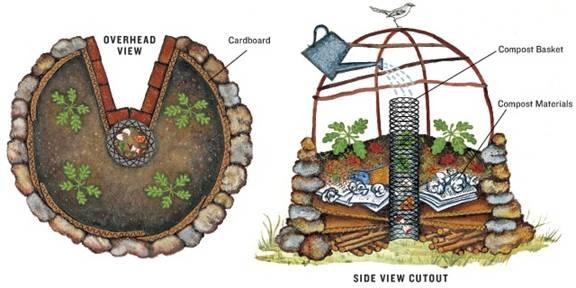
          A keyhole garden is the “ultimate raised-bed planter.” It consists of a circular shape w/ a 6 foot diameter & stands about waist-high.  A notched-in section like a pie-shaped wedge allows access to the plants.  It can be constructed from local recycled materials & incorporates a central composting basket into which food scraps/organic wastes are placed.  The garden is also watered through this basket.  It uses far less water than conventional gardens & recycles as it grows.  From a birds-eye view this garden reminds one of a keyhole.  

Keyhole Garden Bird's Eye View and Side View

 Keyhole gardening is an adaptable concept & almost any kind of raised bed of about a 6 foot diameter can be converted.  The basic idea is functionality & efficiency: producing the most nutritious organic produce in the least amount of space using minimal water.  Cattle water troughs, tractor & truck tires, old bathtubs, & boats are repurposed examples.

     This concept has been replicated by landscape architect Dr. Deb Tolman in partnership w/ ranchers Jim & Mary Lou Starnater.  Their property, located on the edge of the Hill Country in the  community of Clifton, Texas is similar to southern Africa, “scorching heat, thin layers of topsoil, & elusive rainfall that can make for a brutal summer.”

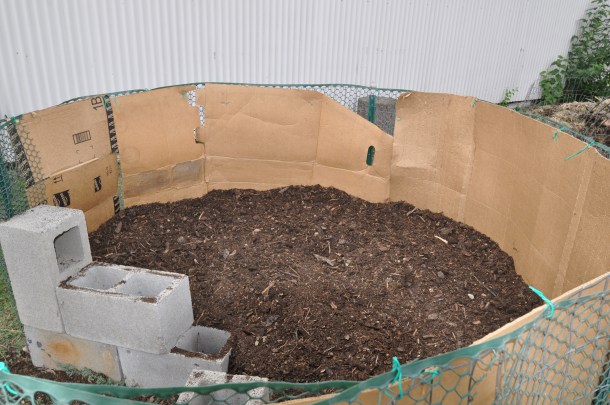
The Beginnings Of Our Keyhole Garden

     We constructed our version in the Composting area using reclaimed materials & a bit of ingenuity.  Kevin used heavy cord & a large screwdriver to scribe a 6 ft. diameter circle on the ground as our reference point.  He and  Roger set 4 ft. metal stakes to hold fence wire into the basic circular shape w/ an inset wedge to provide access (keyhole) to the garden.  Into the center went the temporary vent/self-watering stack (later we’ll construct an inner basket measuring 1 ft. diameter & 4 ft. in height).  

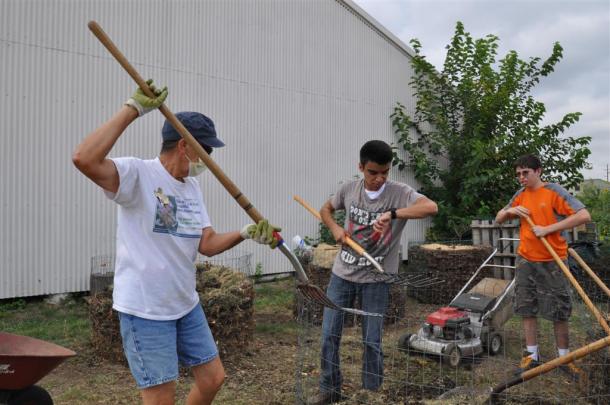
Harvesting Compost For The Keyhole Garden

  The students from Independence Life Preparatory School  lined the interior and base of the keyhole garden structure w/ cardboard & set up alternating layers, 3 in. deep, bottom to top, of brown & green compostable matter.  The inner stack will also be filled w/ alternating layers (kitchen scraps & other herbaceous matter) of green & brown.

Annette With Students from Independent Life Prepatory School

 Unlock your own Keyhole Garden

Follow these guidelines to get started: 

1. Measure a 6-ft. diameter circle to define the inside wall of your garden.

2. Notch the circle (like cutting a wedge of pie) so you can access the basket at the center.

3. Construct the exterior walls about 3 ft. high using rocks, metal, timbers or any material that can support the weight of wet soil.

4. Use wire mesh to create a tube about 1 ft. in diameter & about 4 ft. high. Stand the tube in the center of the circle.

5. Line the outer walls with cardboard & fill the garden area (but not the wire mesh tube in the center), with layers of compostable materials, wetting down as you go. Fill the last few inches with compost. The soil should slope from a high point at the top of the center basket downward to the edges of the garden.

6. Fill the center basket with alternating layers of compostable material, along with layers of kitchen scraps & herbaceous weeds that provide the plants with moisture & nutrients.

7. Water the center basket & the garden only when the plants will not survive without it. This forces the plants’ roots down toward the center basket.

8. Feed the garden by adding more kitchen scraps, lawn clippings, etc. to the center basket.

9. Consider arching framework of thin wires over the garden. During the hottest months, the wires can support a shade cloth, & in winter, plastic sheeting creates an instant greenhouse.

10. Enjoy the fruits & vegetables of your labor!

Sources: Texas Co-op Power, Feb. 2012, pp14-15 “Keyhole Gardening: Unlocking the secrets of drought-hardy gardens” by G. Elaine Acker; http://www.urbanoasisproject.org/; www.sendacow.org.uk (Send a Cow Charity, Africa).

Watch this inspirational video,  Keyhole Gardening in Africa.

Annette

August Blooms In Dallas

The Earth-Kind® WaterWise Demonstration Garden is blooming even through August.

Fourteen out of twenty days in August have been over 100°.  To maximize our water usage, we have set up drip irrigation in all our beds and we water this garden and others  with rainwater harvested from our large shed with 5,000 square feet of metal roofing.  Usually we don’t get enough rain for our drip system in the latter part of summer and have to revert to city water, but last week we had about 4 inches of rain at the garden!  What didn’t go into our two 2500 gallon cisterns swished into our rain garden for more capture. 

Most of these pictures were taken from our newly planted Color Wheel garden.  Link back to the * July Bloom report so that you also know what was blooming in August in the rest of our gardens. Combine these plant lists to keep your garden flourishing through the summer.

Read the list of blooms clockwise from the  large, top left picture.

Flowers Blooming in August Dallas Gardens

1. Pink Gomphrena and Cuphea 2. Gomphrena Fireworks, Gomphrena globosa ‘Fireworks’ 3. Periwinkle-Cora Vinca blackberry, Catharanthus roseus 4. Hot Pink Moss Rose Portulaca olerancea ‘Samba Hot Pink’  5. Jewels of Opar, Talinum paniculatum 6. Moss Rose, Portulaca olerancea 7. Trailing Lantana, Lantana montevidensis 8. Yellow Zinnia

Flowers Blooming In Dallas August Gardens

1. White Lantana and white coneflower 2. Orange Zinnia 3. Mexican Petunia-Lavendar, Ruellia brittonia 4. Lafter, Buck Rose 5. Mexican Bush Sage, Salvia leucantha 6. Orange Lantana, Lantana horrida (camara) 7. Bell Flower,  Campanula rotundifolia  8. Gregg’s Mist Flower, Eupatorium greggii

Flowers For Dallas Summer Gardens

1. Salvia coccineas with  Cora Vinca 2. Pink gomphrena, Gomphreana globosa 3.                       4. Red Gomphrena, Gomphrena aageana ‘Strawberry Fields’ 5. Summer Poinsettia or Mexican Fire Plant, Euphorbia cyathophora 7. Sunflower, Helianthus annus

Flowers Blooming In August In Dallas

1. Mexican Honeysuckle, Justica spicigera 2. Pearlie Mae, Buck Rose 3. Onion Chives 4. Maggie 5. Althea, Hibiscus syriacus ‘Helene’ 6. Esperanza or Yellow Bells, Tecoma stans 7. Canna-dwarf-Tropical Series 8. Quietness, Buck Rose

*Refer to the July Blooms report . Only  Phlox #11,Autumn Sage #16, and Salvia guaranatica#21 are taking a break and not blooming in August.  All the rest on the July list are giving us that last bit of summer pleasure.

Ann

July Blooms

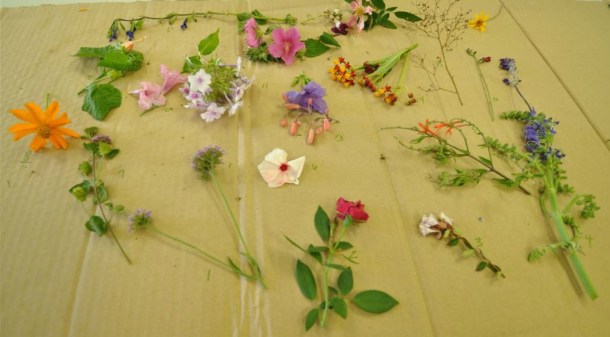
Cut Flower Exhibit of Dallas July Blooms

The Earth-Kind® WaterWise Demonstration Garden is pleased to  jump in on the July Garden Bloggers Bloom Day. Garden Blogs all across America participate monthly, giving us a record of what’s blooming all through the year to study when planning our Dallas-Ft. Worth gardens. 

In 2011, we suffered through record breaking heat, but in 2012 our gardens are blooming again despite our normal highs of 103 degrees and only pop-up showers.  With Dallas heat and clay, we use careful soil preparation.  We add compost and expanded shale, water with drip irrigation, and mulch heavily. (For a more detailed information, read the Texas A&M AgriLife link.)

Our garden is filled with carefully chosen perennials that thrive in Dallas-Fort Worth.  Zexmenia, Knock-out roses, Mexican Petunias, several Sages, bloom all through the summer in our crushing heat and humidity.

Most of the plants can be found easily in Dallas garden stores.  Fall is the best time for planting to give plants a good start through our mild fall and winter seasons although sometimes a  wide variety of perennials is not available until early spring. Print  this  list and keep checking with your favorite nursery.

1. Stick Verbena, Verbena bonariensis

2. Knock- Out Rose, Rosa ‘Radrazz’ sp.

3.  Abelia, /Abelia x grandiflora ‘Francis Mason’

4. Transylvania Sage, Salvia transsilvanica

5. Hummingbird Bush, Anisacanthus quadrifidus var. wrightii

6. Periwinkle-Cora Vinca Series, Catharanthus roseus

7.  Trailing Lantana, Lantana montevidensis

8. Orange Cosmos, Cosmos sulphureus

9. Pink Turk’s Cap, Malvaviscus arboreus var. drummonii ‘Pam’s Pink Puryear

10. Mexican Petunia-Pink, Ruellia britonia

11. Phlox, Phlox paniculata ‘John Fanick’

12. Mexican Petunia-Lavendar, Ruellia brittonia

13. Red Yucca, Hesperaloe parviflora

14. Tropical Milkweed,  Asclepias curassavica

15. Jewels of  Opar, Talinum paniculatum

16. Autumn Sage , Salvia gregii ‘Navajo Rose’

17. Mealy Cup Sage, Salvia farinacea ‘Victoria’

17. Zexmenia, Wedelia texana

18. Butterfly Rose, Rosa chinensis ‘Mutablis’

19. Desert Willow, Chilopsis linearis

20. Rock Rose, Pavonia lasiopetala

21. Black and Blue Salvia, Salvia guaranitica ‘Sapphire Blue’

Ann

A Summer’s Day

Take a close up view of these easy flowering plants for a sunny, summer garden.  Our Entry Garden is full of drought tolerant plants that fulfill the goal of being part of the non picky plant’s brigade.  Hooray for the plants that do it all for you and request so little water in return!  

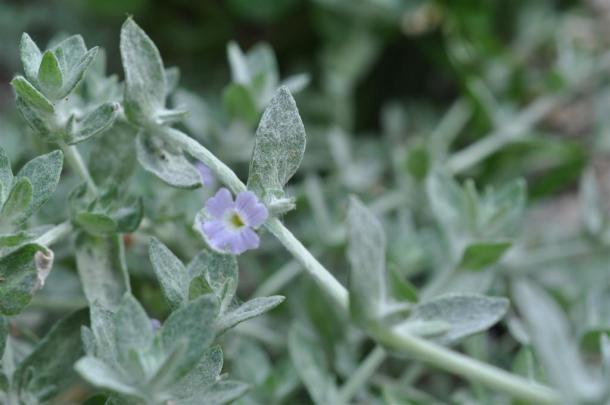
Woolly Stemodia– a dependable, ground hugging stalwart. 

 Wooly Stemodia with a little blue bloom


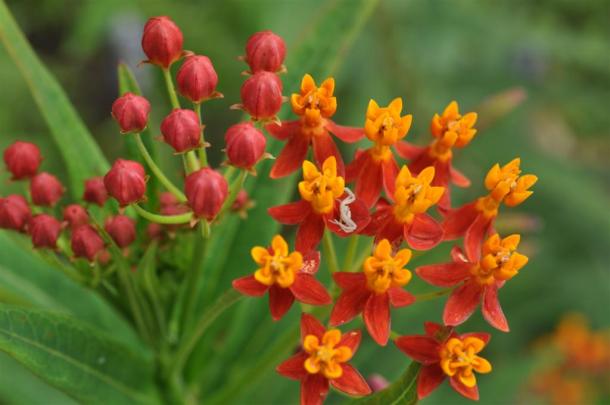
Butterfly Weed– a nectar source for butterflies.

Butterfly Weed


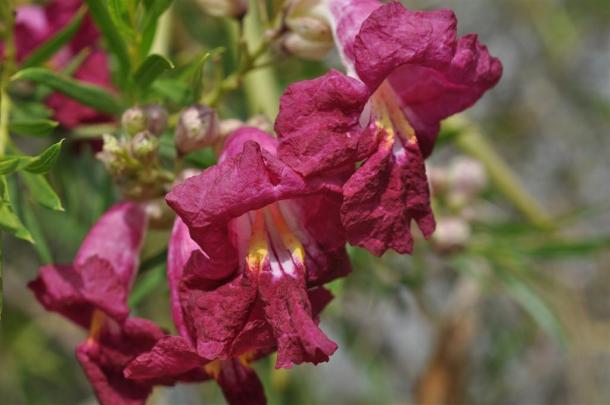
Desert Willow-seductive, trumpet-shaped  blooms for hummingbirds.

Desert Willow magenta blooms


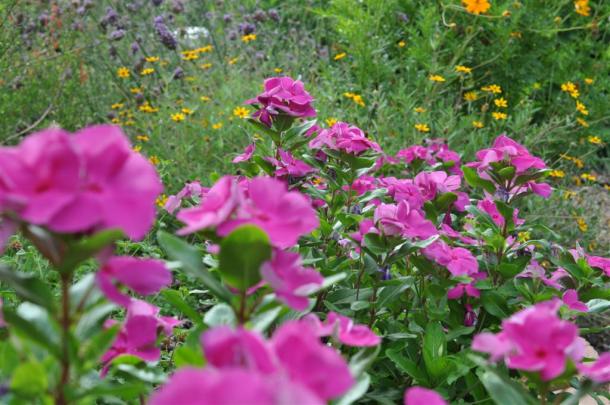
 Periwinkles-the Cora variety is disease resistant,  loves the heat  and has a more uniform habit  than other periwinkles. It looks great all season and into fall. Many colors to try!

Periwinkles in front of stick verbena, zexmenia, and cosmos


Abeilia-foliage with a punch, this is the Frances Mason variety. The leaves turn from several  colors of yellow to a coppery color in the fall.

Abielia foliage with white bloom

 Ann

A Summer Day in The Garden

Salvia, Maximillian Sunflower, Black Eyed Susan,a branch of Yaupon Holly, Mexican Feather Grass

Salvia, Sunflowers, Mexican Feather Grass

Avoiding Picky Plants

WHY PICKY PLANTS ARE LIKE MY CAT

My refrigerator is filled with open cans of cat food, one spoonful taken out, each encased neatly in a sandwich bag.  Offerings to a sick—now well—cat.  Each refused.

Black and White Cat

Adopted kittens should come with a warning label: once you offer the smelly, canned stuff, they’ll starve themselves before eating dry kibble.  Charlie was perfectly chipper, although on the skinny side, before her yearly checkup and shots.  Then, two days later, the dish with dry kibble was untouched. 

A flurry of vet visits, calls, pokes, and blood tests, always with a flashing credit card, ensued.  She still wouldn’t touch the dry kibble, but thought she might be able to bring herself to tuck into the $2.50 a can vet variety of Good Stuff.

She started again to eat and over a matter of days felt Much Better. 

Then this morning with reasons known only to cats, the $2.50 Good Stuff didn’t look appetizing anymore.  Only the cat food from the pet store would do–which we were out of.

But this is it.  My final trip to the Pet Store for canned cat food.  You black-and-white-adorable-shorthaired-domestic-tuxedo cat have got to again embrace Kibble. Food in a bowl, dump it in in the morning and have at it.

Which brings me to Picky Plants.  I simply must stop this swooning at the plant nursery.  Take me home, whispers a maidenhair fern.  All I require is perfect soil and constant moisture.

Some very organized people have—and actually keep notes in—a garden journal.  Mine would be filled with Did I Really Fall for That Again? plants.

Since working at the Earth-Kind®/WaterWise Demonstration Garden, my plant choices have gotten more savvy.

Need a splash of blue in my landscape? Look to Henry Duelberg or Indigo Spires Sage found in the Wildlife Habitat Garden. 

Salvia Blue Spires Blooming at the Demonstration Garden

Or lovely roses that bloom profusely and rarely get blackspot? Belinda’s Dream, Maggie, Perle d’Or, or La Marne fill the Rose Trellis Garden.

Earth Kind Rose Maggie Blooming in a Dallas Garden

Or a fun little fern that will love the dry shade under my huge red oak?

Wavy cloak fern is thriving in the Shade Garden.

The Demonstration Garden is a wonderful source of plant ideas. It’s filled with more than 70 trees, shrubs, perennials, annuals, and roses perfect for low-water yards in North Central Texas.  Come visit us!

Elizabeth

Our New Blog

 Looking Down the Path to our Garden


Hello,  and welcome to the new blog for the Earth Kind® WaterWise Demonstration Garden on Joe Field Road. We have changed our name, but not our mission.  You may have known us formerly as the Bloomin’ Blog on Joe Field Road, we can now be found as dallasgardenbuzz.com.  You can help us by subscribing to our blog and passing our name along to others.

Though we are changing our web address to dallasgardenbuzz.com, you will find the same gardening advice and love of gardening. Our physical address has not changed. The  Earth Kind® Water Wise Demonstration Garden is located at 2311 Joe Field Road, Dallas, Texas 75229 in the heart of the Northwest industrial  area of Dallas near Royal Lane and Stemmons Freeway.

Drop in on a Tuesday morning or contact us for an appointment.  Even better, bring a group for a field trip to our gardens.  We would love for you to see our gardens.