What a great plant larkspur is. Coming up from the seeds of last springs plants–living all winter as little fluffy greenery and suddenly growing tall and blooming before most other flowers.
Winter can be a challenge but finding the tiny larkspur seedlings and thinking of whats to come lifts the spirits. What a bonus that they honestly do not need a great deal of help from the gardener to grow and thrive.
As with most self seeding plants they come up where they wish to and may require some editing. If they are too crowded they won’t be their best so don’t hesitate to thin out the smaller ones. This will allow the remaining plants to grow tall. This adds structure to the spring garden. The color honestly goes with everything. Pink poppies–nigella–combined with the blues and purples of the larkspur–its a picture waiting to be painted–at least admired by you and anyone lucky enough to pass by.
Watch carefully larkspur is a magnet for native bumblebees. As we know bumblebees have been struggling. Seeing so many enjoying the larkspur makes growing them worthwhile in itself.
But wait–there is more!! When you grow larkspur you are growing a plant that has been grown by gardeners for hundreds of years. The Victorians were very fond of them–they were popular gift flowers.
In medieval times they were grown in monastery gardens. These gardens had to be useful not just beautiful.
Now–lets pause–important information will follow: all parts of larkspur are toxic. Do not consider internal use. But its great to know that people tried their best to help and use what they saw around them. Potions were made to treat a variety of problems including depression and anxiety. The seeds were used to make a solution to kill lice. That had to be a welcome relief as lice were a horribly common problem. In fact this use continued for a long time –soldiers used it during the revolutionary war..
The flowers can be used to make a dye and were used by the monks to make a blue ink.
So think of all those before you as you work in your garden–and remember you are a link in this long chain. Remember yes–but as always–there is more.You obviously must let the plants finish their blooming and go to seed–yes this can be a bit untidy but its essential. Lots of seeds will fall and they will lie in wait until next winter when the cycle starts again. But don’t let them all fall–gather some seeds.
Share some seeds with friends and neighbors–answer their questions about how to grow larkspur.
So the chain that links the plant and the gardener to the distant past will extend into the future–and you are and will be a link in that chain.
Larkspur and Poppies far better togetherLarkspur comes in white, this one has tinges of lavender look closelyThis one might be more lavender than whiteBe tolerant. A few larkspur in a vegetable bed is hardly a problem-in fact it is healthyNotice the variation in color, this one is very dark purple.This one is a bit lighter and blooms close to a tall verbena.Amazingly intricate flowersThe foliage is lovely itself- so delicate!A bumblebee, look close-they love larkspur.
Susan Thornbury, Dallas County Master Gardener Class of 2008
Music in shops–usually just more noise to be ignored—but then, just every now and again a line from a song provides a useful and welcome bit of advice. A helpful insight for the volunteer gardener.
It can happen that for this volunteer a sneaking feeling that all is not well–a creeping feeling of discontent appears and can grow and affect every hour in the garden. A feeling that the task is too big just too much. And the reward–where is it??? Why aren’t there more volunteers? Does anyone see what I am doing–much less care or appreciate it??
Sadly once this happens –if nothing changes–the next step can be a vanished volunteer.
What needs to change?
The basic situation isn’t going to change. Garden work can be hard and it can be repetitive. Weeds come back without fail. Treasured flowers and veg can seemingly fail for no apparent reason. Add in garden tours to be led, fundraisers, plant sales,and extra work days- all need volunteers and they seem to come around way too often.
So what to do. Everyone has heard it but now its time to believe it. The situation is the same–the response to it that’s different-it can change–a lot–and for the better.
Take a step back and think clearly don’t just react. Remember respond don’t react.
Maybe part of it is listening to a lot of talk of self care. One thing often mentioned is just saying no to requests for help. And of course no one can say yes to everything.
We must take time for ourselves and our own homes and gardens.
But don’t lose sight of the personal benefits of helping either. There are friendships and connections–yes we may have to work on them but its valuable work.
We all want our communities to be better–greener–safer for plants wildlife –and ourselves.
Plant sales and garden tours–well those aren’t just things to get through–they can make a difference. If just a few people learn about plants that will grow and provide help for the bees and butterflies–isn’t that valuable.. If people learn that insects are the foundation of life on earth and they can help protect them, that is your time well spent. If you help a child develop a love for living things not a fear–well what could be better–that is the highest form of self care.
Starla’s niece with cicadaLinda teaching the butterfly life cycleIntroduction to an insectStarla’s son long ago with butterfly
Can you save the earth? No you cannot–but can you make your part of the world a little better? Yes, you can and you make yourself a little better with the time and effort.
We can’t wait for all the others who should be there helping.. Those others that should be appreciating us more. Give them time!! But for now–
We ARE THE PEOPLE WE’VE BEEN WAITING FOR
Many hands make light workVolunteers planting a treeOn their knees, hard at workEnthusaiastic Raincatcher’s volunteers
Susan Thornbury, Dallas County Master Gardener Class of 2008
Join us at the garden, 11001 Midway Road, Dallas, Texas 75229 on the grounds of Midway Hills Christain Church. Our work days are Monday mornings and Tuesday mornings. This is a Dallas County Master Gardener approved project.
Just a little over 18 years ago, my husband and I moved into our home on Shadywood Lane. Charles Dilbeck built the Monterey Ranch style one story house for the Runyan family in 1948. The 77 year old property was, and still is, filled with a wonderful assortment of mature trees, shrubs, perennials and evergreens.
Fourteen large magnolias, seven majestic red oaks, four stately live oaks, two towering cedar elms, a half dozen American elms, pecans, yaupons, dogwoods, Texas mountain laurel, cherry laurels, hackberries and redbuds were planted long before we arrived. But one magnificent red oak tree in the backyard was our favorite. Standing at over 40 feet tall along with a canopy spreading out over 40 feet in diameter, it provided an abundant covering of shade for our backyard. Under its protective branches were lovely Japanese maples, three Chindo viburnums and a large bed of endless summer hydrangeas. And then, the story changed.
Rushing outside to try and understand what had just happened, I was stunned to see the damage. Over one third of the canopy was gone. We would need a professional tree company to remove the limb and evaluate the overall condition of the tree. The tree was treated for insect damage, and we moved forward.
And then another chapter with our majestic red oak unfolded just a few months ago. On September 2nd, labor day, very early in the morning, an even larger limb snapped and crashed to the ground. Thankfully, no one was outside when it fell across the driveway and onto the guest house. Our youngest son was kind enough to rush over and cut the limb into smaller pieces so that we could get our vehicles out of the garage. Completing the task of cutting the limb into more manageable pieces for bulky trash pickup took two guys almost three hours.
With only half of the original canopy remaining, we decided to bring in an arborist to assess the condition of the tree. At over 80 years old, a difficult decision was unanimously reached to have the beautiful old red oak taken down completely. Alex, the arborist, carefully explained that there were simply too many issues involving the overall health of the tree to treat it. The most important consideration was related to safety. The tree was leaning too far in one direction and would totally destroy our small guest house if it fell over or, even worse, hurt a family member or anyone else who happened to be in the backyard.
Our affection for the old tree had grown immensely over the years. We loved the amount of shade it provided when the grandkids came over to play games in the backyard. Summer picnics and dinner around the firepit wouldn’t have been possible without its lush canopy shielding us from the scorching sun as it moved across the sky. In a fleeting moment the microclimate transitioned from lush, dappled shade to full sun.
As the arborist recommended, we would need to select a different variety of tree and move the placement approximately 6-8 feet away from where the majestic, old, red oak stood. The next step was to visit to a local tree farm. Fortunately, our family had lived next to the Fannin’s of Fannin Tree Farm over 35 years ago so after a quick call, we scheduled an appointment to visit their retail facility on Highway 121. A decision had already been made to replace the oak with a cedar elm. Touring their inventory of wonderful trees gave us many options. Here is the cedar elm we selected. My husband is 6’ 4” which gives a better perspective on the size of the tree.
With some hesitancy, we scheduled the removal of our old red oak for Monday, September 21st. It was a two-day event which included several nail-biting moments of suspense. Starting with the remaining canopy, branches were very strategically roped and secured before any cutting began. Watching the four men maneuver their way around the tree was truly amazing. With each ‘tug’ of the rope, they carefully orchestrated the exact spot where the falling limb would land. Nothing on the ground was damaged due to the safety measures that were kept in place.
Once completed, stump grinding was next on the agenda. It took over four hours to slowly and carefully remove the remainder of the tree. And then, it was completely gone. I stood silent for a moment and tried to imagine it still standing there, beautiful and thriving for over 80+ years. Whispering a soft prayer of thankfulness for the joy we had received over the years, my eyes opened to an empty landscape filled with new possibilities. Now It was time to move forward with a renewed hope about our next adventure.
Installation of the 18’ tall cedar elm was an incredible experience. The challenge of bringing it down our rather tight and winding back driveway took a measured amount of skill. The crew sent to do our installation amazed me with their ability to lift and place the tree at just the right angle in the pre-dug hole. A few tweaks of the chain positioned it for maximum beauty.
We are adjusting to the new tree a little better than expected. But there are times when I find myself reminiscing about the beautiful canopy of the old red oak that we benefited from and enjoyed immensely for over 18 years. Treasured memories of that majestic tree are still in my heart and will remain there for a lifetime. But, thankfully now, Joyce Kilmer’s lovely tree poem has spoken to me once again!
If the key to life is simply living it.. The key to understanding may be simply realizing that wisdom is all around even in unlikely places. Our job is to realize wisdom when we find it—and then apply it .
For an example let’s think about these simple lines:
YOU GOT TO KNOW WHEN TO HOLD EM
YOU GOT TO KNOW WHEN TO FOLD EM
YOU GOT TO KNOW WHEN TO WALK AWAY
YOU GOT TO KNOW WHEN TO RUN
Few words but the ideas are wise and useful. No where more so than in the garden at this time of the year. We start with the first of course. And actually this idea was most important a little earlier in the year.
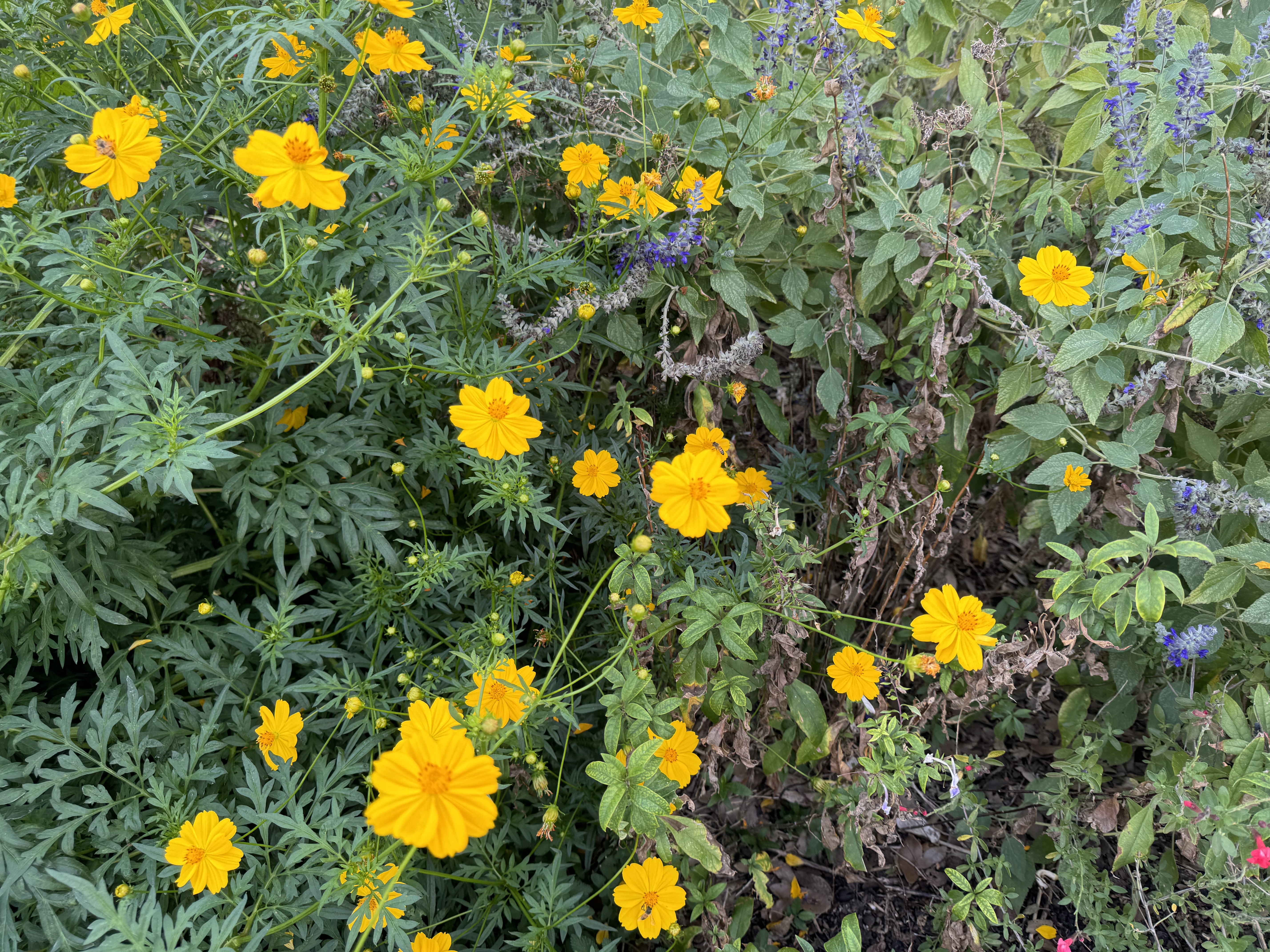
How was it so useful? well the yellow cosmos are a great example. All summer they grew and grew. No flowers at all. Some falling over due to the weight of stems and leaves. A passerby was heard to say ” I don’t know about those green leafy things they sure are big” Were they a terrible mistake? Are they ever going to bloom? Are they going to all fall over? Temptation grew to pull them all out. And then all at once they bust into huge numbers of lovely cheerful flowers. Butterflies and bees are just loving them. They even look great as cut flowers.
Yes!!! holding was the best choice for sure.
The big green leafy things that were bare all summer are blooming at last and they are amazing. Cosmos!
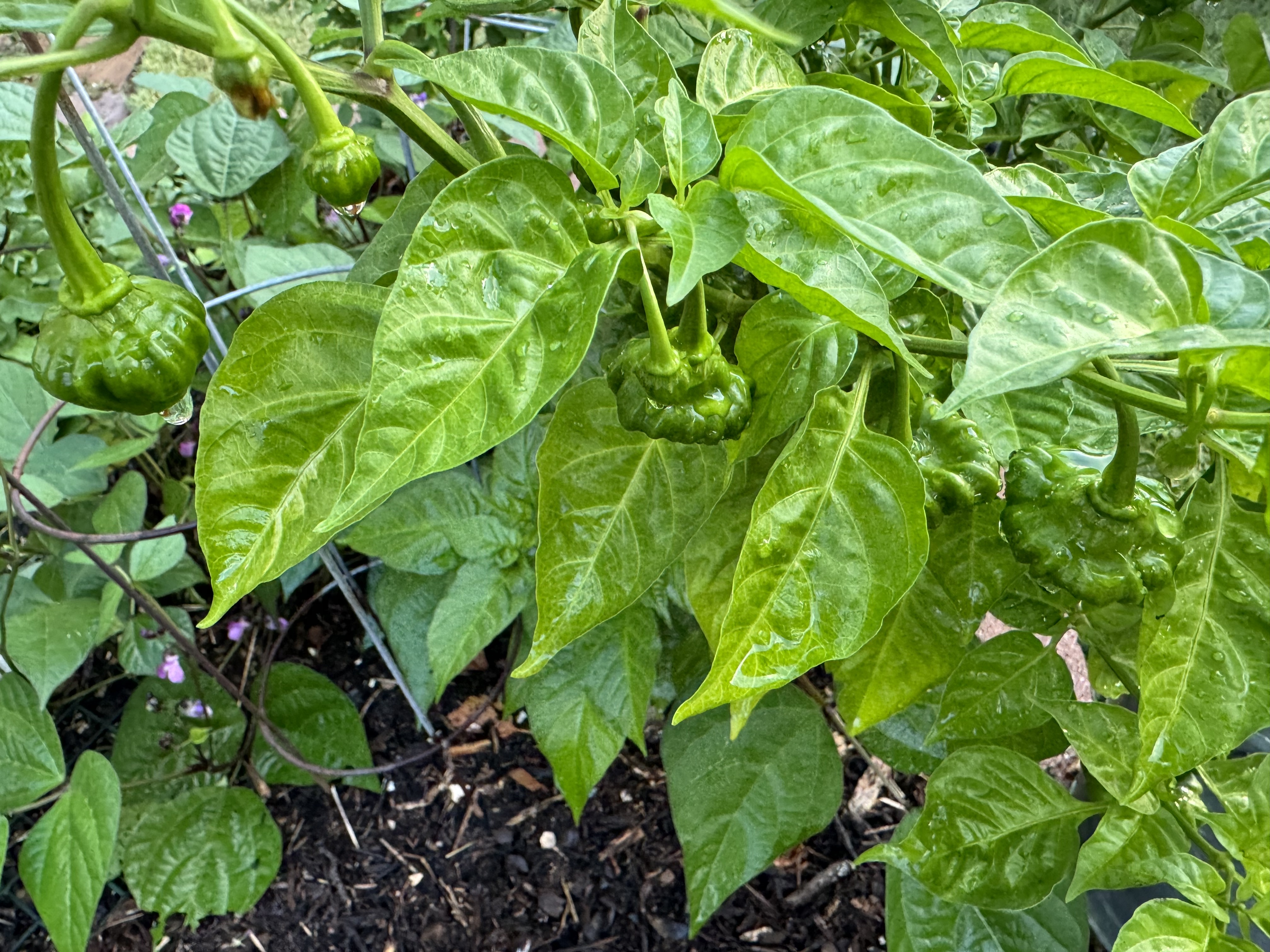
Aji dulce peppers –no peppers for months. All they were doing was taking up space and causing thoughts of “what on earth went wrong?” They were biding their time. Summer just didn’t suit. Just a small improvement in the weather–and blooms followed by lots and lots of little peppers. It was a temptation to give up–but it would have been a shame.
The Peppers finally realizing they have a job to do.
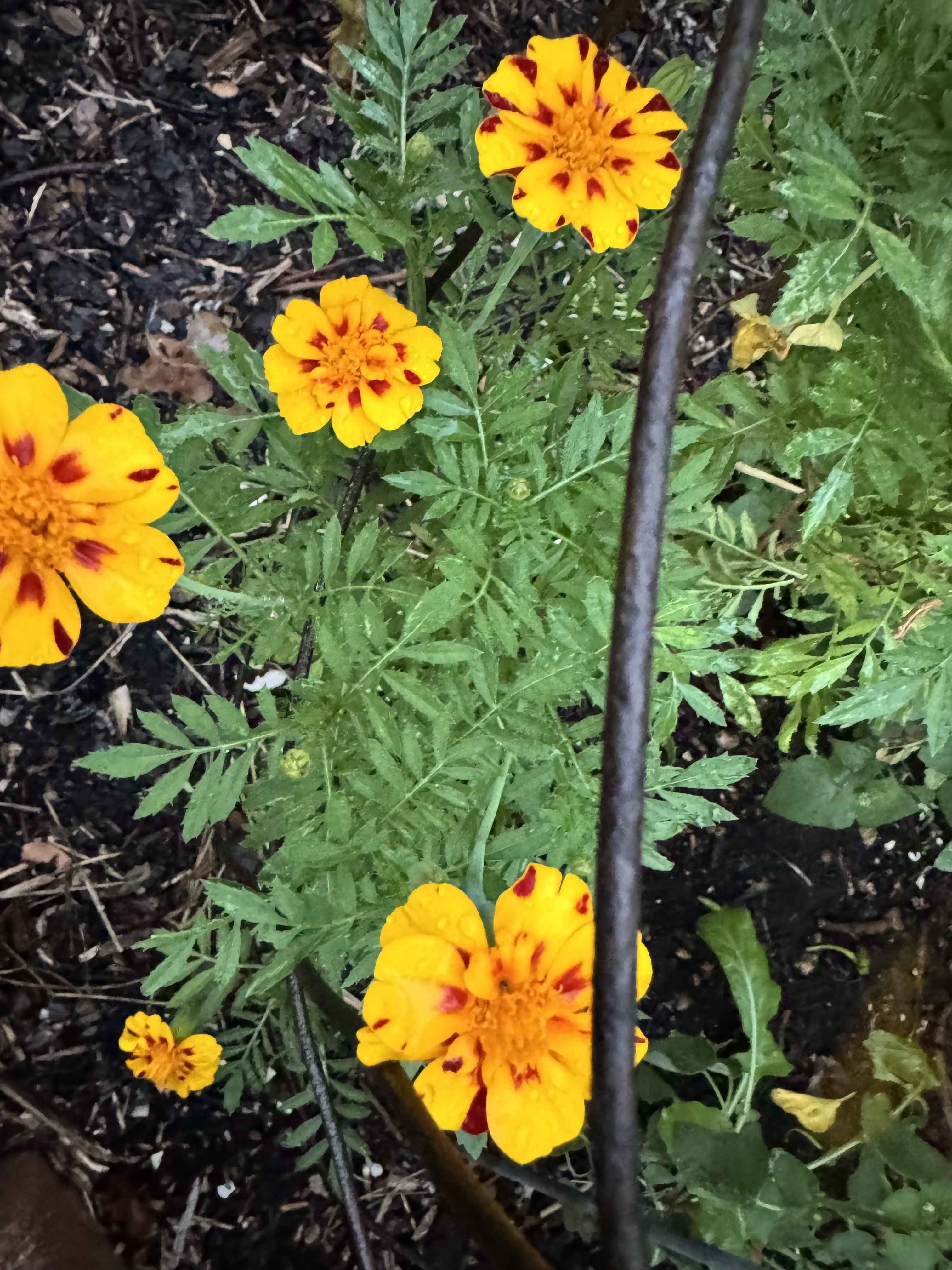
Marigolds–they also seemed to find the past few months not to their liking–the remaining tomatoes are happy maybe because the marigolds are happy.
The Marigolds were to keep the tomatoes company all summer. They are doing it now.
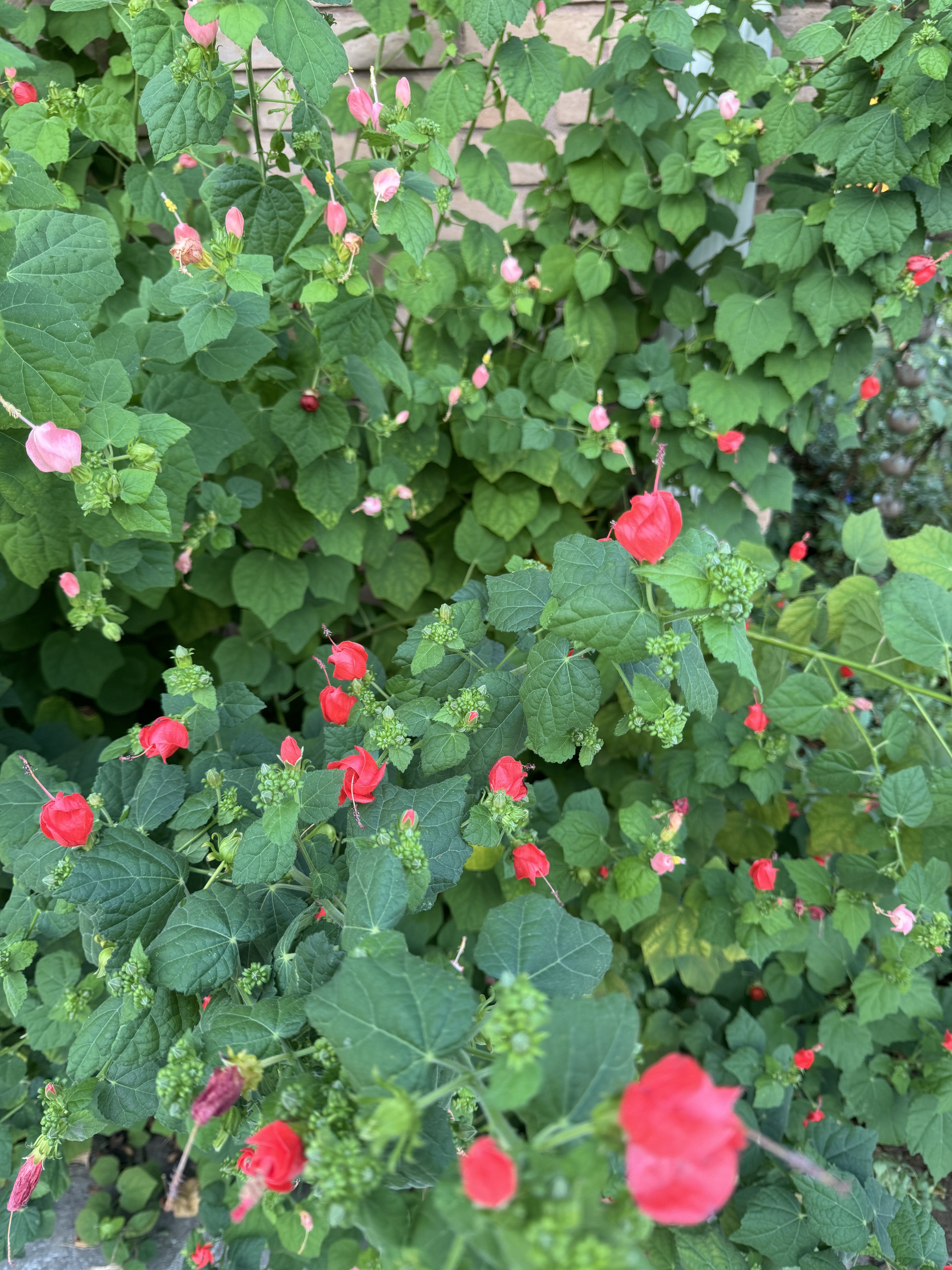
Turk’s cap–honestly it seemed to be asking to be cut to the ground–very few blooms and yet requiring constant pruning to keep it withing reasonable bounds–but–again a reward for avoiding extreme measures–countless flowers–and happy creatures.
Turk’s cap-all summer, some flowers but now covered in flowers.
Of course the facts are–that all doesn’t go as hoped.
The most obvious are annuals that have tried really hard but have now reached the end of the line. It is hard to do this when they aren’t quite done but face it–sad straggliy plants just distract from everything around them. Let them go its ok.
It’s time for an old friend to go. Sad but true.
Same with vegetable plants. These plants work hard some can make it on into fall. But some just can’t. It is really best to get rid of them they can attract pests and diseases that are just doing what they do to eliminate the weak–but best to beat them to it.
This tomato in my garden just isn’t going to recover.
The really hard part of the fold ’em is facing that some of your efforts really were in vain. For some reason plants die. Sure try to figure out why. Was it lack of water–a common issue. Maybe over crowding? But sometimes its unknown. Pull them out anyway no use spending resources–including your time and energy on plants that just are not making it.
Perennial doesn’t mean live forever!
Those first two are pretty clear–but what about KNOW WHEN TO WALK AWAY?
Actually its an important one. This is the time of the year when plants have pretty well done what they are going to do. It can be so valuable to step back and away and look at the big picture. Could you do anything different ? Is it just that much too much? Or not quite enough? Walk away and take a good look and make some mental notes for next year.
Is it maybe just a little too much? Take a step back and look.
Can’t forget YOU GOT TO KNOW WHEN TO RUN. No it won’t be a big problem don’t worry. But do keep in mind that wasps and yellow jackets are very active at this time of the year. Of course they are part of nature and normally not an issue–but do look around they like to build nests in protected places–who doesn’t of course–but sadly when its right above the back door for example you may have to do what you would rather not. But be careful at times their temper can be kindly said to be “Uncertain” And i hope you don’t have to run–but—-.
YOU GOT TO KNOW WHEN TO HOLD EM
YOU GOT TO KNOW WHEN TO FOLD EM
YOU GOT TO KNOW WHEN TO WALK AWAAY
YOU GOT TO KNOW WHEN TO RUN.
Susan Thronbury, Dallas County Master Gardener Class of 2008
Everyone’s garden needs a leading lady. Have you considered Summer Phlox as yours? This tough, heat tolerant perennial makes a 3″ tall show stopping clump that lasts from early summer through fall. Texans make sure to select the Victoria Phlox shown above or the John Fanick cultivar. They have both been named to the Texas Superstar Program which means they will perform well in your garden and after all they probably grew at your grandmother’s homestead.
Phlox paniculata ‘Victoria’ at my house with boxwood and white Turk’s CapNeighbor’s PhloxPhlox along a garden path at Linda’sClose up, note the many tubular flowers forming a panicleRaincatcher’s Phlox ‘John Fanick’
The UN officially recognizes May 20th as World Bee Day. In their opening statement, we are reminded that “Nearly 90% of the world’s wild flowering plant species depend, entirely, or at least in part, on animal pollination, along with more than 75% of the world’s food crops and 35% of global agricultural land. Not only do pollinators contribute directly to food security, but they are key to conserving biodiversity.”
Here are some of their suggestions for ways that we can do more to help make pollinators a priority:
*planting a diverse set of native plants, which flower at different times of the year
*buying raw honey from local farmers
*buying products from sustainable agricultural practices
*avoiding pesticides, fungicides or herbicides in our gardens
*protecting wild bee colonies when possible
*sponsoring a hive
*making a bee water fountain by leaving a water bowl outside
In celebration of our local honeybees, please enjoy these recently captured photos of the bees busy at work gathering nectar and pollen for the hive!
Linda Alexander, Dallas County Master Gardener Class of 2008
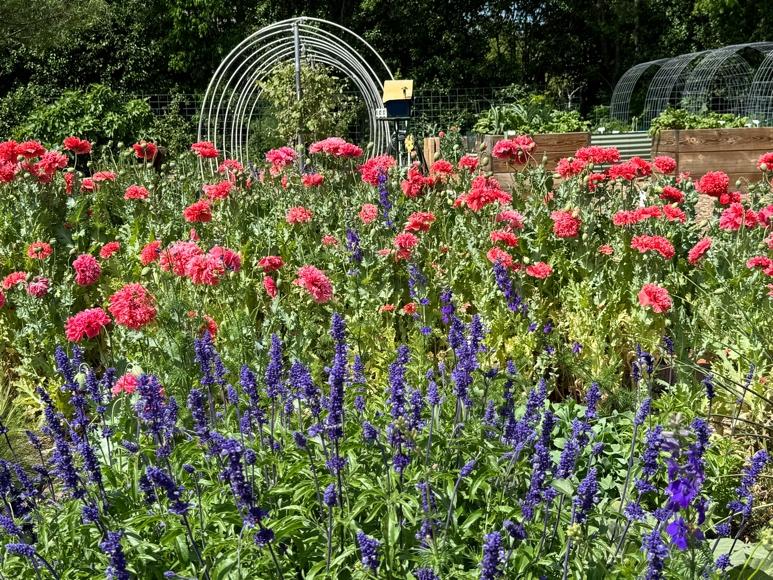
If you’ve been to Raincatcher’s Garden of Midway Hills anytime during the past two weeks, a seasonal spectacle may have caught your eye. Everywhere you look, from the Edible Landscape/Courtyard area extending out to the north garden, pathways are filled with the sight of spring blooming pink poppies.
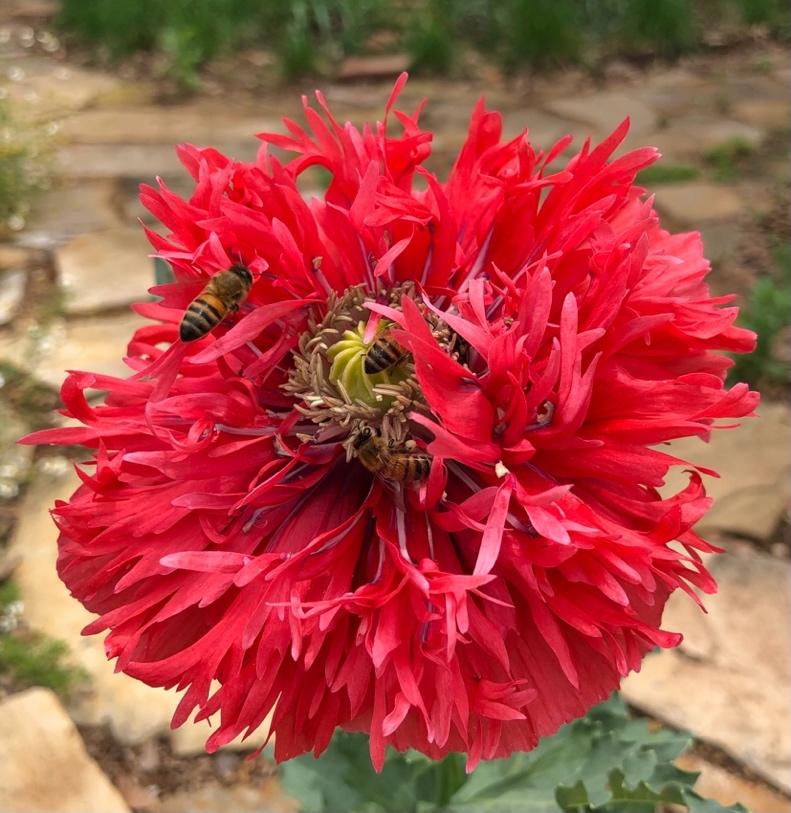
Move in a little closer and listen carefully for a soft humming sound. As you might have guessed, honeybees are busy at work foraging for pollen from the abundance of poppies that share these garden spaces with our herbs, vegetables and wildflowers.
Are you wondering…why are honeybees so attracted to poppies? As the late Robbin Thorp, native pollinator specialist for UC Davis in California so succinctly stated…” they’re not there for the nectar – they’re there for the pollen”.
Poppies should be considered as a quintessential plant for pollen production. And honeybees are one of the chief pollinating agents. A deeper dive into the world of poppies gives us some interesting information regarding pollen.
It is true that honeybees are attracted to poppies for pollen only. The reason why is that the inflorescences of all poppy species lack nectaries, thus no sugary nectar available to pollinators. Flowers, however, are packed with pollen-bearing anthers. Because pollen is the honeybee’s main source of protein, collecting it is a necessary task. Once collected, it is used for brood development and to feed the young larvae. And, fortunately for the bees, scientists have found that poppy pollen is remarkable clean, containing few fungi or mycotoxins.
Come visit our garden and take time to stroll the garden paths filled with poppies. Expect to be mesmerized by an eye-catching explosion of frills. Early morning and late afternoon seem to be the optimum time to experience the honeybees in action. Don’t be surprised to see as many as four or five honeybees foraging frenetically within a single flower.
(Raincatcher’s Garden of Midway Hills…Our “field of poppies!)
Linda Alexander, Dallas County Master Gardener Class of 2008
This is the time of the year when everyone wants something to change and improve advertisements that didn’t attract a bit of concern a while ago now seem tempting–the newest skin treatments that absolutely promise “younger brighter fresher” The poor child in the picture seems still a bit concerned but yet now doing better–well she should be concerned of course she is probably past Fourteen and knows its all downhill from here. Now if you want to buy thats fine after all it won’t hurt–although the price might be a real surprise and the bottle is so small and then there are two more things you absolutely must have if you really want “results” But we will go no further with this.
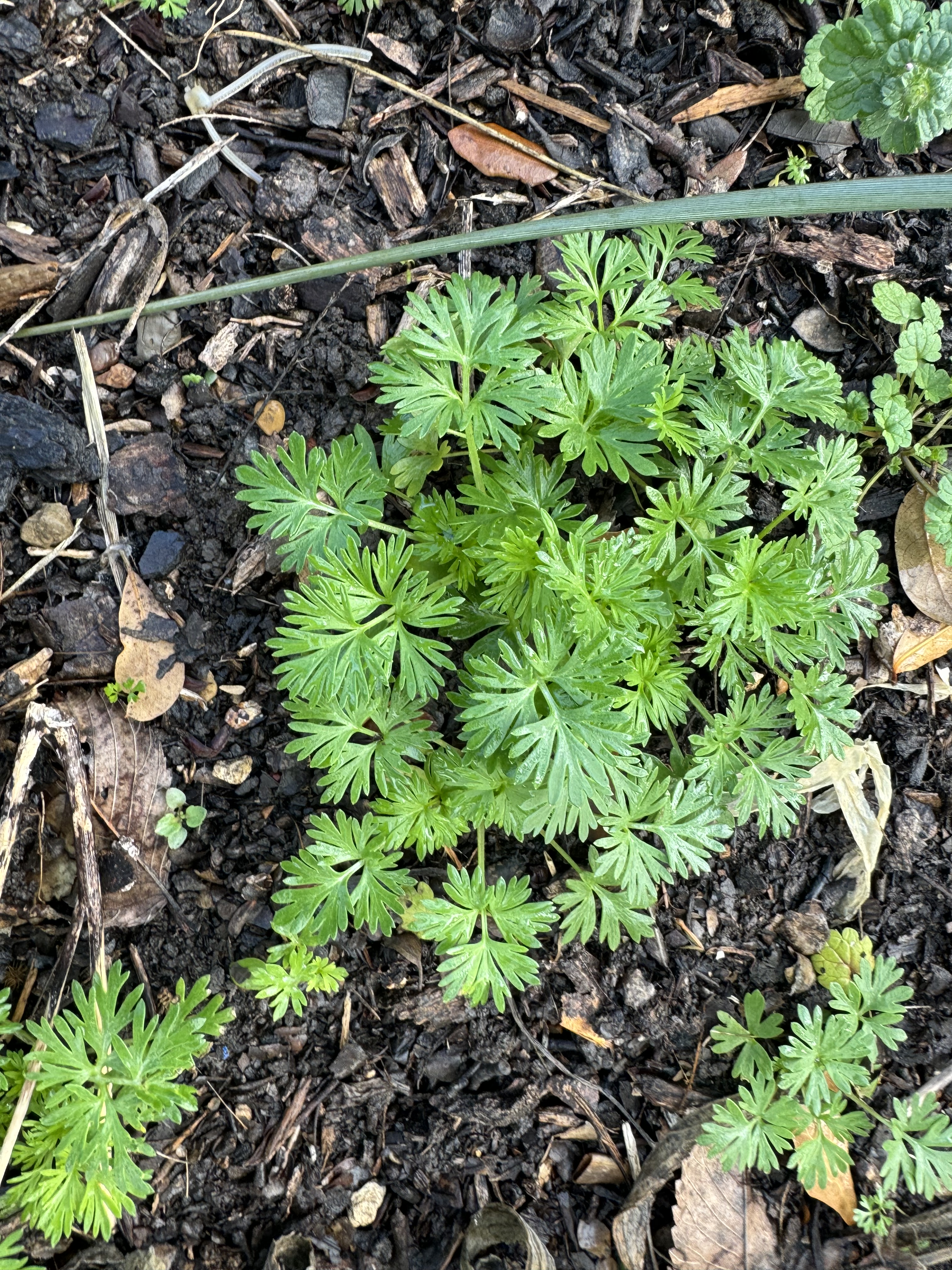
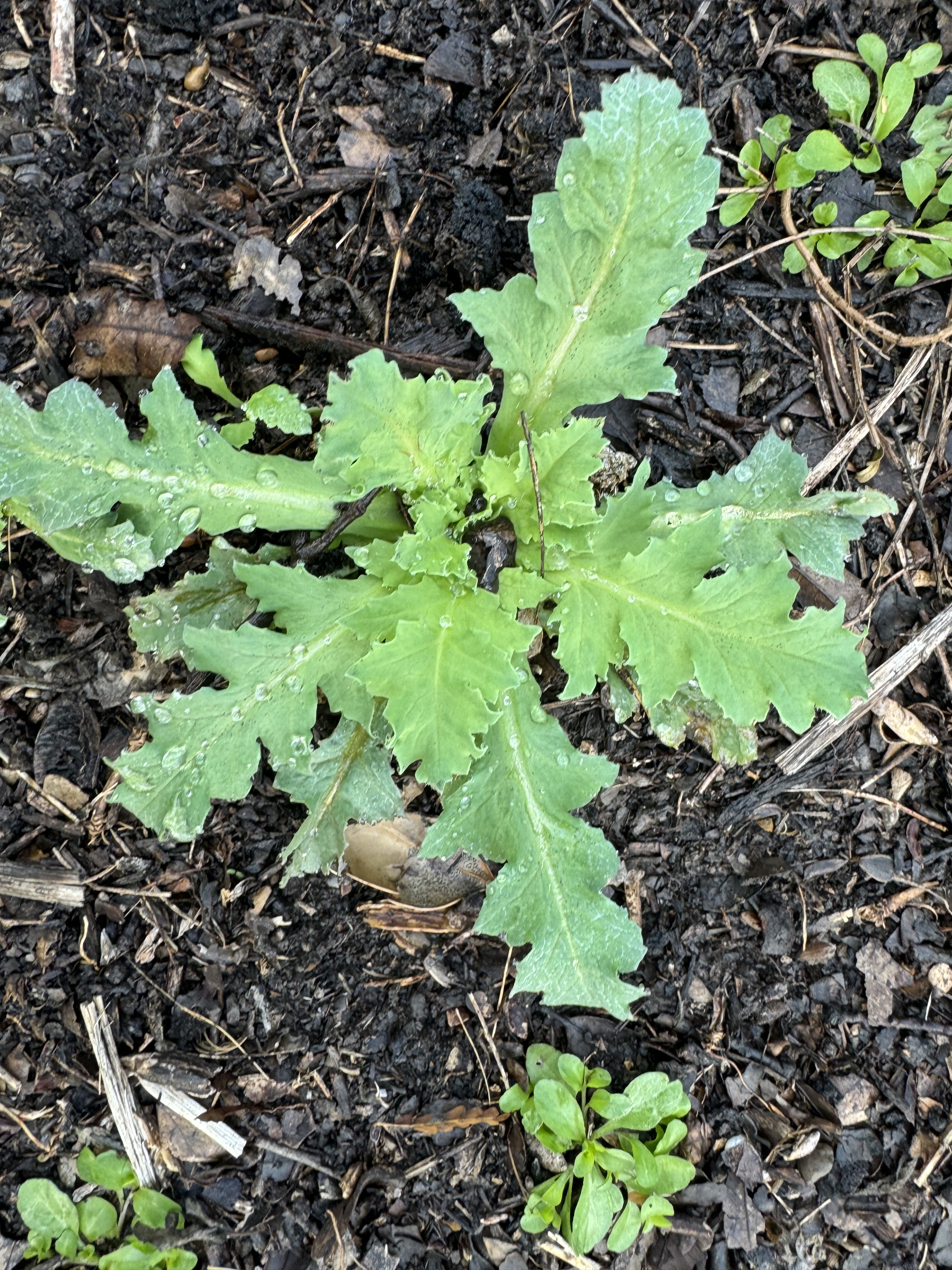
Baby Larkspur with maybe a weed-don’t worry about the weed.Baby poppy-same warning!Winter Honeysuckle does not give up.
No because YOUNG honestly is a state of mind more than anything and at this time of the year–well we may have to work at realizing that–and most importantly acting on our knowledge.
WE can’t let the season get us down. Its absolutely true that the leaves lying about have totally lost their charm –and how on earth did there get to be so many sticks and stalks everywhere. We have to look at things closely–after we clean up a bit of course. But take your time don’t be hasty, baby plants can be deceiving. The last thing you want to do is accidentally “weed” your precious spring flowers when in doubt don’t pull it up. Better to leave and weed than loose a poppy! Let your imagination take you to the blooms that will be here soon and you will be surprised at how much happier you will feel. Anticipating good things to come–well that is a receipt for real joy.
This is nothing but pure potential and hope!
Try to see bare patches as “Potential” not “Problems”. All the fresh seeds are here–stop and look . For some people this can be as much temptation as the five hundred dollar skin serum so do be careful. READ the labels and remember that if it says avoid heat you must avoid buying no matter how chilly and misty the day is right now. But maybe choose something new to try and go home and plant it–nothing worse than buying seeds and forgetting them–that doesn’t lead to happiness. But the choosing and preparing and planting–that can make a big difference for anyone. Feelings of accomplishment and planning for the future and feeling hopeful–well that makes anyone feel younger and fresher and its a feeling that lasts! Just the work in the fresh air helps so much even if you have to wrap up and use plastic shoes.
If it gets really cold take the time to protect your plants you will be glad you did–its work but it pays off and that makes us feel powerful. Just a little cover saved this lettuce.
If there are plants in the house don’t just pass them by they aren’t sofa cushions they really will respond to attention. water them and clean their leaves look for changes and growth–if you are fortunate even flowers–its the natural time for orchids to send up flower spikes–look carefully. Just noticing will brighten the whole day and who knows what tomorrow might bring .That is the key.
When we think about it–isn’t YOUNG really anticipating the future–the good exciting things to come? That feeling may get a little harder to come by sometimes but if we really notice our plants and gardens and care for them that feeling just seems to catch us and carry us forward–and that is FOREVER YOUNG.
Susan Thornbury, Dallas County Master Gardener Class of 2008
“Imagine a world, in which all children grow up with a deep understanding of the life all around them. Where obesity is reduced through nature play. Where anti-depressants and pharmaceuticals are prescribed less and nature prescribed more. Where every school has a natural play space. Where children learn of the joy of being in nature, before they experience its loss. Where they can lie on the grass on a hillside for hours and watch clouds become the faces of the future. Where every child and every adult has a human right to the connection to the natural world and shares the responsbility for caring for it.”
Compost is recycled organic material. Grass clippings, leaves and plant refuse, things that used to be thrown into the landfill, are converted with the help of microbes, molds and insects into food for our garden.
WHAT DO YOU NEED TO MAKE COMPOST?
(4 components + tools)
NITROGEN – GREEN – Grass clippings, Fruit & Vegetable Scraps, Coffee Grounds
CARBON – BROWN – Dried leaves, dried plants, shredded paper, wood chips (also known as mulch)
MOISTURE – BLUE – Water, leftover juices from drinks, pickle juice, jams, jelly, any liquid containing sugar
OXYGEN – WHITE – Air/circulation
HOW DOES IT BECOME COMPOST?
Mix the above 4 ingredients and let nature take over. All around us are small animals called MICROBES. Like any animal, they like to eat. Feed them and they multiply. Their food is the materials we mixed together (green, brown) with the water. The air/oxygen allows them to live.
HOW SHOULD A COMPOST PILE LOOK?
Compost bins/piles can be as simple as a pile on the ground or as elaborate and a hand or machine cranked barrel. MASS is more important in composting than its container. The deeper and wider the pile, the faster it will compost. Good dimensions are 3’ deep and 3-4’ in diameter. Piles can be square, rectangular, or round.
The outside edge (as much as 12” can dry out fairly quickly so I prefer the round style—acts like an insulator. The interior stays moist and heats up with microbial activity. When the pile is turned, the dry outer material is stirred into the moist interior and helps to aerate the pile. Depending on your available space, it is nice to have more than one container so you can move the compost when turning it. Three containers allow you to have compost at different stages of maturation; new, in-process, finished.
WHAT IS COMPOST GOOD FOR?
1) Feeding plants and soil animals (worms, insects, microbes)
2) Rebuilding the soil by improving its friability and fertility
3) Improving the ability of the soil to absorb moisture, avoiding excess runoff and erosion
4) Keeping organic materials out of our landfills
What we had to get from outside sources when we first began our garden, we are now able to produce in our COMPOST area. Not only do we feed our many garden areas, but are also able to furnish our fellow gardeners with food for their gardens.









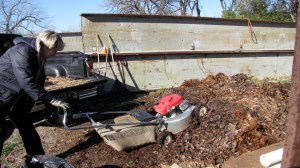 Compost is recycled organic material. Grass clippings, leaves and plant refuse, things that used to be thrown into the landfill, are converted with the help of microbes, molds and insects into food for our garden.
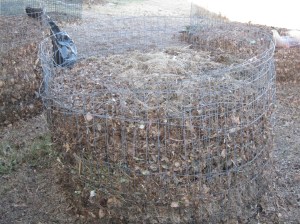 The outside edge (as much as 12” can dry out fairly quickly so I prefer the round style—acts like an insulator. The interior stays moist and heats up with microbial activity. When the pile is turned, the dry outer material is stirred into the moist interior and helps to aerate the pile. Depending on your available space, it is nice to have more than one container so you can move the compost when turning it. Three containers allow you to have compost at different stages of maturation; new, in-process, finished.


 DALLAS GARDEN BUZZ