Tag Archives: Dallas County Master Gardener

Fig Fest Class and Luncheon

Celeste Fig Tree at Raincathcer’s

Fig Fest, Celebrating a Seasonal Delicacy

With their sweet taste and luscious texture, figs can be used in a variety of culinary dishes. From growing to harvest, we’ll give you the information needed to become a fig expert. Join us; class will be indoors and luncheon reservations are still being taken.

Instructor: Jeff Raska, Dallas County Horticulture Program Assistant, Texas A&M AgriLife Extension Service

Tuesday, August 7th – 10:00am*

Hosted by Raincatcher’s Garden of Midway Hills located at 11001 Midway Road

Master Gardeners earn one-hour education credit; class is free.

Immediately following Jeff’s presentation, you are invited to join us for lunch. Lunch is by reservation only.

$15 per person

Seating is limited to 48 guests and is by paid reservation only: http://www.eventbrite.com/e/fig-fest-tickets-48093118813

Menu

Figgy Focaccia and Grilled Figs with Thyme Honey

Fig, Arugula and Walnut Salad with Fresh Citrus Vinaigrette

Rosemary Flank Steak with Fig Salsa

Lemony Rice Pudding with Figs and Saba

Fig and Strawberry Tart topped with Fresh Fig Ice Cream

Fig Flavored Tea and Water


*All Members of the Public Invited

Class and Lunch are indoors at Midway Hills Christian Church and lunch reservation deadline has been extended to Friday, August 3rd.

We ‘Heard it Through the Grapevine’

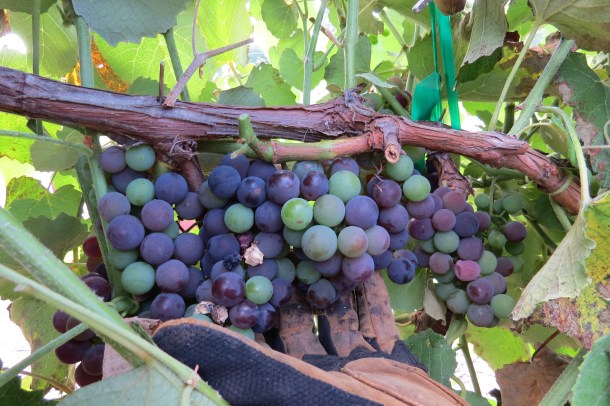
Champanel grapes growing at The Raincatcher’s Garden

He may not have been Marvin Gaye, but our own Jeff Raska, Dallas County Horticulture Program Assistant, Texas A&M AgriLife Extension Service, had us humming along during his presentation on growing grapes.  A bit of Texas history got us started.

Grape cuttings were first brought to Texas by Franciscan Monks to establish a vineyard in the 1660’s, predating California by almost a century.  The first vineyard in Texas was established near present day El Paso and stayed a viable producer until the early 20th century.

And it was a Texan, viticulturist Thomas Volney Munson, who literally saved the European wine industry when he grafted native American grape rootstocks (resistant to the phylloxera-aphid) to standard European grape scions that brought the industry back from the brink of collapse.

Grapes fall into two categories:

Citis vinifera – a European type grape typically used for wine, table and jams that has a high Brix unit ratio and a thin skin.  Recommended varieties for Texas include Champanel, Lomanto, Herbemont and Lake Emerald.

Muscadinia (Vitis) rotundifolia – a grape that is native to the Americas and thrives in more acidic soils. They are naturally resistant to many diseases and their genetic material saved the vinifera species. Recommended varieties include Carlos, Nesbitt, Tara and Triumph.

To grow grapes, take note:

  • Grape vines need well drained soil and a full day of sun.
  • Vineyards should be planted on high ground to help survive late spring frosts.
  • Good fruit production requires consistent pruning.

For more information Jeff recommends, “Growing Grapes in Texas” by Jim Kamas.

We also learned that grape leaves are rich in vitamins and minerals and low in calories. The U.S. Dept. of Health and Human Services lists grape leaves as a healthy choice for your shopping list. https://health.gov/dietaryguidelines/dga2005/healthieryou/html/shopping_list.html

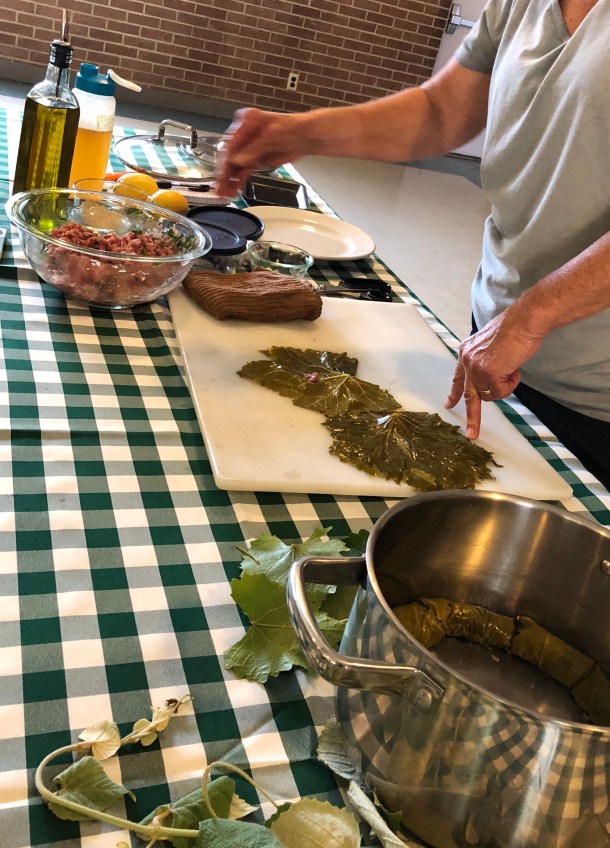
Immediately following Jeff’s talk we had the privilege of hearing another special presenter; Toney Davrados. With her rich Greek heritage, culinary skills as a trained chef, and love of gardening and growing her own ingredients, we were mesmerized by her demonstration the art of making dolmas.

Toney’s dolma demonstration

Some helpful tips shared by Toney;

Good dolmas need good leaves. Here’s what to look for; leaves with a smooth underside (hairy or fuzzy leaves are tough and not well-suited for dolmas). You can also purchase grape leaves bottled in brine at a gourmet or international grocery store.

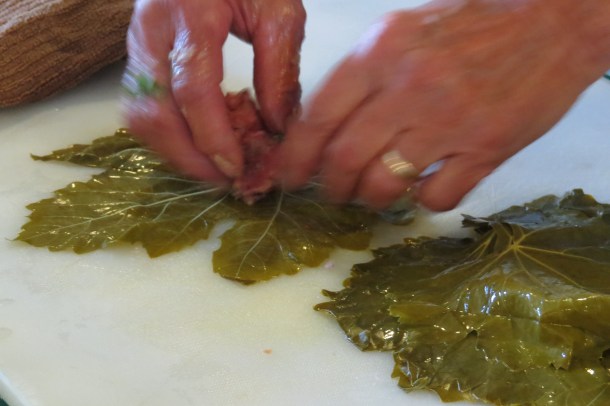
Larger leaves are better – about 4 to 5 inches across. This size makes for easier folding.

Toney folding grapes leaves for dolmas.

Prepare leaves one of two ways:

Immediate use; boil 2 cups water with a heaping tablespoon salt. Toss in leaves for about 2 minutes. (Do no more than 3 or 4 at a time). Leaves are ready as soon as the color changes from bright green to olive green. Remove promptly. Leaves are now ready to use.

Future use: wash leaves, dry thoroughly, cut stems off and stack. Put stacks in zip-lock baggies, press out air and freeze. Wait one month for leaves to ‘cure’ before using.

Hope you enjoy the recipes as much as we enjoyed a delightful lunch experience. A heartfelt thanks to our presenters for sharing your wisdom and expertise. Recipes below.

The grand finale:
Frosted Grapes,
Toney’s Dolmas
(filled with ground sirloin, rice, parsley and special seasonings),
Watermelon and Radish Salad
Yogurt and Berries Dessert Parfait

Click here for Toney’s Dolmas Recipe

Watermelon Radish Salad

Ingredients

6 cups watermelon, cut into bite-sized chunks

2 cups thinly sliced and halved radishes

2 tablespoons finely chopped ginger

¼ cup chopped basil

¼ cup chopped mint

¼ teaspoon salt

4 tablespoons fresh lime juice (approximately 2 limes)

Directions

Combine ingredients in a large bowl. Mix well, serve chilled.

Yield: Makes 6 servings

Frosted Grapes

If you’re a grape grower, try this quick and easy summertime refresher as an appetizer or as a light finish to the evening meal.

Ingredients

4 ounces cream cheese, softened

½ cup sugar

4 ounces sour cream

2 pounds seedless grapes, red, green or a mixture

Brown sugar (start with about 2 heaping tablespoons)

Chopped nuts (start with about 1 ½ cups)

Directions

Mix cream cheese, sugar and sour cream together until smooth. Toss grapes in mixture until “frosted”. Combine brown sugar and nuts. Roll grapes in mixture until coated. Chill until ready to serve.

Yield: Serves 6 to 8

Peach and Berry Parfaits

For breakfast or dessert.

Ingredients

12 ounces Greek yogurt

2 cups granola*

1 pint fresh blueberries

4 peaches, peeled and chopped into small pieces

Texas Clover Honey, to taste

Directions

Layer in parfait cups in the following order;

Yogurt, drizzle of honey, granola, peaches, berries. Repeat, as desired.

*For a dessert option, use Fresh Peach Pound Cake (crumbled).

Toney Davrados sells her products:  dolmas, Greek yogurt, spanakopitas and more on Saturday mornings, April through October at the St. Michael’s Farmers Market, 8100 Douglas Avenue. Arrive early as the products sell out quickly.
Lisa Centala and Linda Alexander
Pictures by Starla Willis


What’s happening at Raincatcher’s?

Lazy days of summer? Not this group! Having just finished our Grazing in the Garden event, next up are two more marvelous learn and eat opportunities. Careful now, the food tickets sell quickly. Lecture is free and no reservations required.  Details below.

Goodness, Gracious, Grape Balls of Fire!

Raincatcher’s Garden of Midway Hills

Tuesday, July 24th-10am 

10:00am – 11:30am, Under the Shade Pavilion, North Garden

11001 Midway Road, Dallas

Jeff Raska, Dallas County Horticulture Program Assistant, Texas A&M AgriLife Extension Service

Growing grapes in Texas is easy to do. Learn the basic steps, and you’ll be ready to start your own grape orchard.

(Master Gardeners earn one-hour education credit)

Following Jeff’s short presentation join us for a special treat.

Toney Davrados, of Yiayia’s will demonstrate the art of making dolmas. Dolmas are thought of as a culinary legacy from the Ottoman Empire. You’ll be transported back to the 1700’s with the savory, flavorful taste of these delightful delicacies.

$10 per person, Limited seating

https://www.eventbrite.com/e/goodness-gracious-grape-balls-of-fire-tickets-48106230029

(Paid reservations required by Friday, July20th)

Menu

Dolmas

(Filled with sirloin, onion, rice, parsley and Toney’s special seasonings)

Watermelon and Radish Salad

Peach and Blueberry Parfaits featuring Yiayia’s Homemade Greek Yogurt

Mint-Infused Iced Tea


Fig Fest, Celebrating a Seasonal Delicacy

Instructor: Jeff Raska, Dallas County Horticulture Program Assistant, Texas A&M AgriLife Extension Service.

With their sweet taste and luscious texture, figs can be used in a variety of culinary dishes. From growing to harvest, we’ll give you the information needed to become a fig expert. Join us!

Tuesday, August 7th – 10:00am*

Hosted by Raincatcher’s Garden of Midway Hills * 11001 Midway Road

(Master Gardeners earn one-hour education credit)

Immediately following Jeff’s presentation, you are invited to join us for lunch.

$15 per person

Seating is limited to 48 guests and is by paid reservation only: http://www.eventbrite.com/e/fig-fest-tickets-48093118813

Reservation deadline-August 3rd

Menu

Figgy Focaccia and Grilled Figs with Thyme Honey

Fig, Arugula and Walnut Salad with Fresh Citrus Vinaigrette

Rosemary Flank Steak with Fig Salsa

Lemony Rice Pudding with Figs and Saba

Fig and Strawberry Tart topped with Fresh Fig Ice Cream

Fig Flavored Tea and Water

*Public Invited to both events!

Questions? Call the help desk- 214 904 3053 or drop us a line in the comment section.


Summertime!

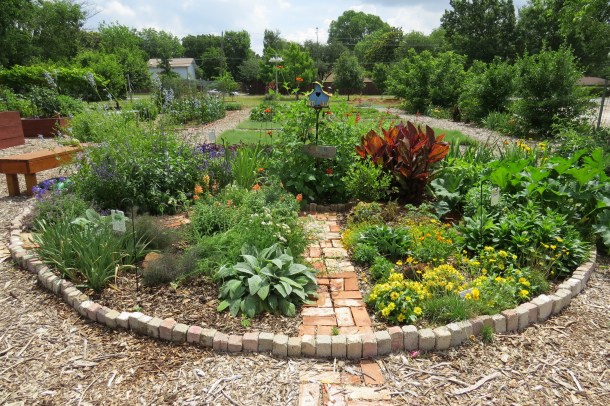
Color wheel at The Raincatcher’s Garden

Bog sage

Annette, Gail, Kathy and others have turned the color wheel into a spectacular sight. If you haven’t taken time to enjoy the wonder of the north garden, take a walk through it and check out the color wheel (love the bog sage in the blues!), the tomatoes in our tomato trial, and the beautiful flowers in the pollinator garden.

Did you know we harvested 17 pounds of red potatoes and  35 pounds of potatoes June 5th?

Our orchard looks wonderful this year with Champanel grapes in abundance and thriving fruit trees, and those daylilies in the mixed border are blooming like crazy.

Champanel grapes,one of our peaches and harvested potatoes!

Lisa Centala

Pictures by Starla Willis

Wonders of the Garden

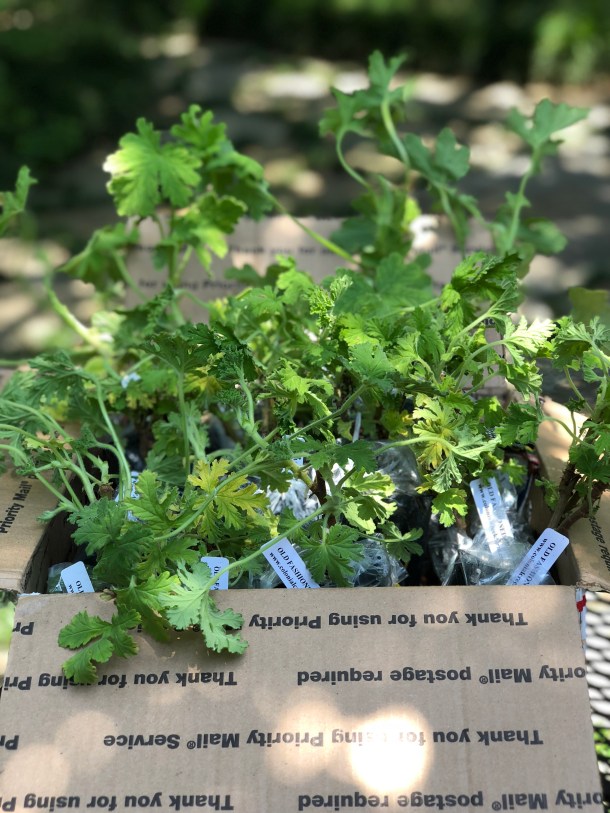
Is it true that sometimes good things come in small packages? In this case, yes, except for me it was a box. Waiting on my doorstep was the package clearly marked ‘Please protect from freeze and extreme heat’. With the thermometer quickly climbing to the 100+ mark, heat was the main concern of this precious piece of cargo. Why all the fuss?

In March of this year our Raincatcher’s edible landscape team had just started to install the first green material for our newly redesigned garden. Converting the church’s abandoned children’s playground into a place of tranquility and sensual delight was a challenging task.

It had already been determined that one specific area, a 12’ square to be exact, would be anchored by a stately bay laurel. Surrounding it in grand Victorian style, would be those aromatic jewels of the garden, the fragrantly pleasurable scented geraniums.

Numerous trips to our local garden centers yielded a disappointingly small number, 4 chocolate scented and 8 nutmeg. Call, after call resulted in the same answer; “No”, we don’t have any old-fashioned rose scented geraniums this year. Finally, after one month of searching, the answer we had hoped for came from an internet supplier. “Yes”, we only have 8 left and this is the last of the crop. “I’ll take them”, was my immediate answer!

Carefully opening the box and sifting through layers of slightly dampened newspapers, my eye caught the tip of a jagged little leaf peaking through. And then, there they were in all their Victorian glory, 8 beautiful…happy and ready to be planted in our garden…’Old-Fashioned Rose’ Scented Geraniums. After a moment of delicately crushing and bruising the leaves, my head was filled with their heavenly scent. Yes, of course, it was worth the wait. And, we promise next month to share photos of their progress along with a few recipes using the leaves in some of our favorite baked goodies.  

Scented geraniums to be planted in the edible landscape at The Raincatcher’s Garden.

Note: If you happen to notice more than 8 plants, SURPRISE, I couldn’t resist the temptation when the lady from Georgia taking my order said that she also had 4 peach scented geraniums available. Rubbing their fuzzy little leaves in between my fingers, I caught the gentle scent of a fresh Texas peach. For me, it was a moment of pure summer bliss.

After a night at my house, our precious cargo will go to its new home; the Raincatcher’s Garden of Midway Hills. Please visit us at 11001 Midway Road. We’re in the garden every Tuesday from 9:00 – 12:00noon tending to our babies.

Linda Alexander

Two events coming up at Raincatcher’s:

Peach Fever-June 26

Edible Landscaping Lecture and nibbles from the edible  garden-June 28

April Box Lunches

Hungering for the what was in the box lunches at the April Master Gardener meeting?

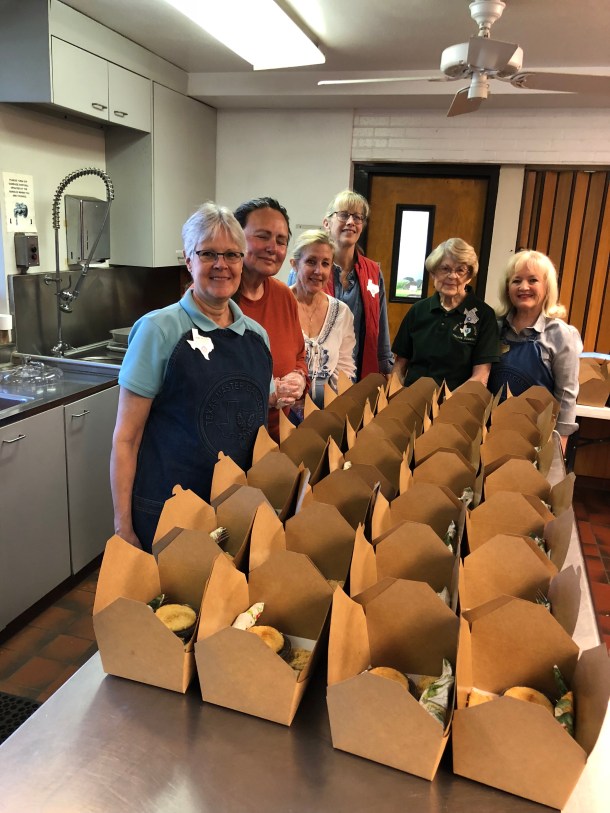
April Box Lunches Prepared by Master Gardeners

Here’s our menu:

Three finger sandwiches made with jalapeno pimento cheese, salad burnet spread  and almond chicken salad,* marinated vegetables and *snicker doodle cookies and *apricot bars.


Marinated Vegetables

Trio of garnished finger sandwiches!

Almond Chicken Salad

6 cups cooked chicken breast, cut into ½ inch cubes

2 cups celery, thinly sliced, about ¼ inch

1 cup red onions, finely chopped

3 green onions, finely chopped

4 garlic cloves, minced

1 cup mayonnaise (good quality prepared)

¾ cup sour cream

Mexican Mint Marigold, garden view!

1 tablespoon fresh Mexican Mint Marigold, finely chopped

2 teaspoons salt

1 teaspoon pepper, freshly ground

¾ cup golden raisins

1½ cups sliced almonds, toasted

Place all ingredients in a mixing bowl. Toss lightly until combined. Refrigerate until ready to serve.


Yield: Makes 12 cups

Linda Alexander

*Marinated vegetables, Grandmother’s favorite snicker doodle cookies, and apricot bar recipes are available by asking Linda or leaving a comment and she will contact you.


Recipes From The Glorious Greens Lecture and Lunch

Our new edible garden, where it all began. More classes to be coming from this garden to you. Subscribe to Dallas Garden Buzz for more info.

Creamy Cauliflower Soup with Greens

Ingredients

1 tablespoon extra-virgin oil, plus more for drizzling

1 medium onion, chopped (about 1 cup)

4 cloves garlic, chopped

Sea salt

1 medium head cauliflower (about 3 pounds), florets and stems cut into 1-inch pieces (8 to 9 cups)

4 ½ cups filtered water

¼ cup chopped fresh dill, plus more for garnish

5 large kale or collard leaves, or a combination, tough ends removed and leaves roughly chopped

Freshly ground black pepper

Directions

Heat oil in a large pot over medium heat; cook onion, covered, until soft, 4 to 5 minutes. Add garlic and a pinch of salt, and cook for 3 minutes more.  Add cauliflower, and pour in filtered water until it reaches just below the top of the cauliflower

Bring to a boil over high heat. Add 2 tablespoons dill. Reduce heat to low, and simmer until cauliflower is just tender, about 10 minutes. Stir in greens, and simmer for 3 minutes.

Let sit for 5 minutes to cool slightly. Stir in remaining 2 tablespoons dill.  Puree soup in batches in a blender until very smooth, adding more water (about ½ cup) if it’s too thick. Return to pot and reheat. Season with salt and pepper. Garnish with dill, black pepper, a drizzle of oil, and pinch of sea salt.

Yield: Makes 8 cups

Evelyn and Susan, pesto making!

Spicy Mustard Green Pesto

Ingredients

3 cups fresh mustard greens, stem removed, washed and rough chopped

2 teaspoons fresh chopped garlic

1 teaspoon fresh lemon juice

3 tablespoons pine nuts, toasted 7-8 minutes at 350˚F

⅛ cup shredded Parmesan cheese

3 tablespoons olive oil

2 teaspoons Kosher salt

1 teaspoon ground pepper (white or black)

Directions

Blanch greens in lightly salted boiling hot water for 15 seconds. Drain thoroughly.

Place all ingredients in a food processor and blend thoroughly to combine. Adjust seasoning as necessary. Refrigerate at 40˚F if not used immediately.

Yield: Makes 2 cups

Dedicated to our greens, note the green nail polish!

The Ultimate Classic Collards

3 (1-lb.) packages fresh collard greens or use fresh from your garden

12 smoked bacon slices, chopped

2 medium-size yellow onions, chopped

3 garlic cloves, minced

3 cups reduced-sodium chicken broth

¼ cup apple cider vinegar

2 Tablespoons honey

1 (12- to 16-ounce) smoked ham hock

Kosher salt

Freshly ground black pepper

Remove and chop collard stems. Chop collard leaves. Cook bacon in a large Dutch oven over medium heat, stirring occasionally, 12 to 15 minutes or until almost crisp.  Add onion, and sauté 8 minutes or until onion is tender. Add garlic, and sauté 1 minute.

Stir in chick broth and next 2 ingredients; add ham hock. Increase heat to high and bring to a boil. Add collards in batches. Reduce heat to medium-low; cover and cook 2 hours or until desired tenderness.

Remove meat from ham hock; chop meat, and discard bone. Stir chopped meat into collards. Season with salt and freshly ground pepper.

Yield: Makes 6 to 8 servings

Ready to plate! Thanks Evelyn, Patty, Abbe, Sarah, Ann, Linda, and other Master Gardeners!

Spring Quiche with Leeks and French Sorrel

For the Crust:

1 ¼ cups all-purpose flour

¼ teaspoon salt

8 tablespoons (1 stick) unsalted butter, chilled and cut into cubes

3-5 tablespoons ice water

1 tablespoon apple cider vinegar

For the Filling:

1 large egg white

2 tablespoons extra virgin olive oil

1 large leek (white and light green parts only), cleaned and sliced into ½-inch pieces (should yield about ½ cup)

3 large eggs

¼ cup grated Parmesan cheese

½ cup 2% milk

½ cup half and half

¼ cup part-skim ricotta

1 teaspoon Kosher salt

½ teaspoon freshly ground black pepper

2 tablespoons chopped dill (fresh or dried)

1 tablespoon chopped rosemary (fresh or dried)

2 cups fresh French sorrel, washed and dried well

Make the Dough:

In a food processor, pulse together the flour and salt a few times to combine. Add the cubes of butter and pulse continuously until the mixtures starts to look like tiny pebbles. With the food processor running, drizzle in the apple cider vinegar, followed by the ice water, stopping when the mixture just begins to come together. Working quickly, form the dough into a flat disk, wrap it in plastic and refrigerate for 1 hour or up to 2 days.

Prepare the Crust:

Preheat the oven to 375˚F. On a large floured surface, roll the dough into an approximately 12-inch circle. Gently press into a 9-inch tart or pie pan, trimming any overhang. Line the dough with aluminum foil and dried beans (or pie weights) and bake for 20 minutes.

Remove the pan from the oven and take out the foil and beans. Brush the crust with the egg white and prick the bottom with a knife or a fork to allow air to release and prevent bubbling. Place back in oven and bake for an additional 5 minutes

Make the Filling:

In a medium-sized pan over medium heat, heat the olive oil and add the leeks. Stir until they are coated in oil, then turn down the heat to medium-low and cover the pan. Cook the leeks until golden brown and caramelized, about 20-25 minutes. Check their progress after 15 minutes to ensure you don’t burn them (depending on what kind of pan you’re using; the cook time can vary slightly).

Meanwhile, whisk together the eggs, Parmesan cheese, milk, half and half, ricotta, salt pepper, dill and rosemary.

When the leeks are done cooling, lay them out on top of the pre-baked crust. Place the pan on top of a cookie sheet for easy transport. Pour the filling on top of the leeks and place the quiche in the oven. Bake for 30 minutes, or until the top of the quiche has puffed and is set in the middle and just slightly golden.

Allow the quiche to cool slightly, about 12 minutes. If you put the sorrel on while the quiche is piping hot, the delicate greens will brown. Sprinkle the sorrel on top, slice and serve. Quiche is best served room temperature the day it is made although it will keep just fine covered in the refrigerator for up to 2 days (the sorrel is just going to get a bit wilty).

Yield: One 9-inch Quiche (Serves 6 as an entrée or 8 smaller slices)
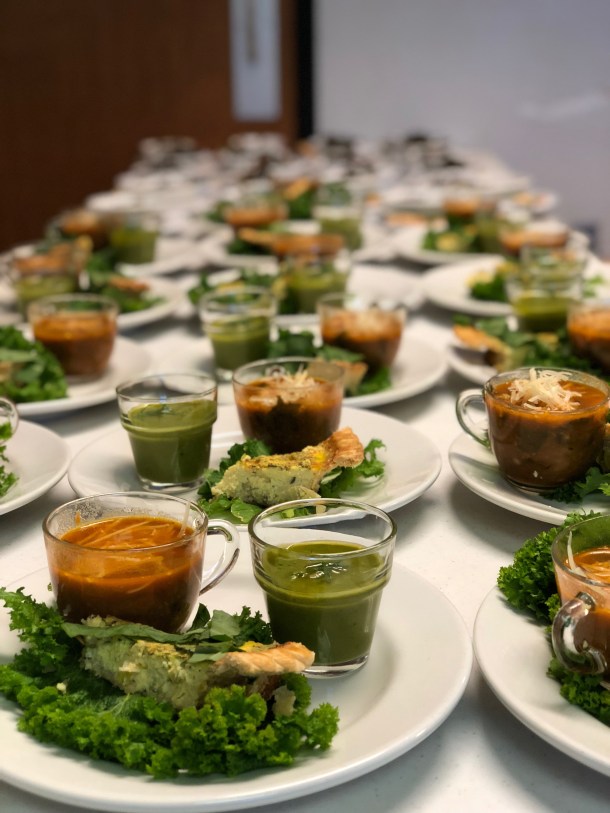
Glorious greens ready to eat. Plates garnished with mustard greens, of course! Both soups delish!

Minestrone Soup

Ingredients:

⅔ cup small pasta, cooked according to package directions, drained and set aside

3 tablespoons olive oil, divided

1 ½ pounds ground beef

1 large onion, chopped

3 large carrots, peeled and cut into ¼ inch rounds

3 large celery stalks, cut into ¼ inch slices

2 garlic cloves, pressed

1 pound fresh Swiss chard, center vein removed, chopped

1 large turnip, peeled and cut into small cubes

1 large baking potato, peeled and cut into small cubes

1 (28-ounce) can crushed tomatoes

2 (16-ounce) cans beef broth

2 (15-ounce) cans cannellini beans

1 (32-ounce) box good beef stock

1-inch piece of Parmesan cheese

½ cup grated Parmesan cheese

3 tablespoons fresh parsley, chopped

Salt and pepper

Directions:

Preheat 1 tablespoon oil in a large pan over medium heat.  Add ground beef and cook, breaking it up, until it is no longer pink.  Season with salt and pepper.  Set aside.

In a large stock pot, add 2 tablespoons olive oil. Add onions, salt and pepper to taste and cook over medium heat until translucent, about 4 minutes.

Add carrots and celery to the pot.  Cook for 10 minutes.  Add garlic and cook for 1 minute more.

Add Swiss chard, turnip and potato to the pan.  Cook for 4 minutes or until the chard begins to wilt.

Add the crushed tomatoes and the 2 cans of beef broth to the pot and simmer for 15 minutes or until the chard breaks down.

Meanwhile, combine half of the drained cannellini beans with ½ cup of beef stock in a blender.  Blend until smooth.

Add the blended cannellini beans, remaining drained beans, remaining beef stock, the 1-inch piece of Parmesan, reserved ground beef, cooked pasta and the handful of Parmesan cheese to the pot.  Stir to mix and simmer for 25 minutes.  Stir occasionally.  Vegetables should be fork tender.

Season with salt and pepper, to taste.  Add fresh parsley and serve.

Yield: 8-10 servings

Linda Alexander

Our thanks to Jeff Raska for the garden education.

Save the date for our next education/lunch event-Peach Fever.

Date: Tuesday, June 26th, reservation information to follow
New Class Series on Vegetable Gardening to Begin at The Raincatcher’s Garden 2018

We are excited to announce the first in a series of four classes  to be taught at our garden during 2018. Our first class featuring mustard greens, swiss chard, broccoli, collard greens and other spring harvested crops will be taught using our new Edible Garden. Sign up for the lunch following the class.

 Garden Greens Class

What’s in our Spring Picnic Basket?

Everyone welcome, bring a friend!

 Planting, growing, harvesting and enjoying healthy, colorful green vegetables from your garden will  be the class topic.

Tuesday, April 17th, 10:00am at Raincatcher’s Garden of Midway Hills

11001 Midway Road, Dallas, Texas

Led by, Jeff Raska, Dallas County Horticulture Program Assistant, Texas A&M AgriLife Extension Service

This class qualifies for one-hour education credit for Master Gardeners.

Join us for a reservation only garden lunch sampler following Jeff’s presentation.

Menu

Creamy Cauliflower Soup with Greens

Spicy Mustard Greens Pesto on Baguette Slices

Minestrone Soup with Swiss Chard

Spring Quiche with Leeks and Sorrel

The Ultimate Classic Collard Greens

Chocolate Crème de Menthe Brownies

Your lunch reservation is a $15 check made payable to DCMGA

Mail to: Lisa Centala, 5525 Northmoor Dr. Dallas 75230

Reservations close on Saturday, April 14th

Class and Lunch open to the public.

Rose Rosette Disease Research Update

We are Thankful

For Friends that have become Family

Dallas County Master Gardeners from The Raincatcher's Garden at the Craft Fair

Dallas County Master Gardeners from The Raincatcher’s Garden at the Craft Fair

For a place to garden and share

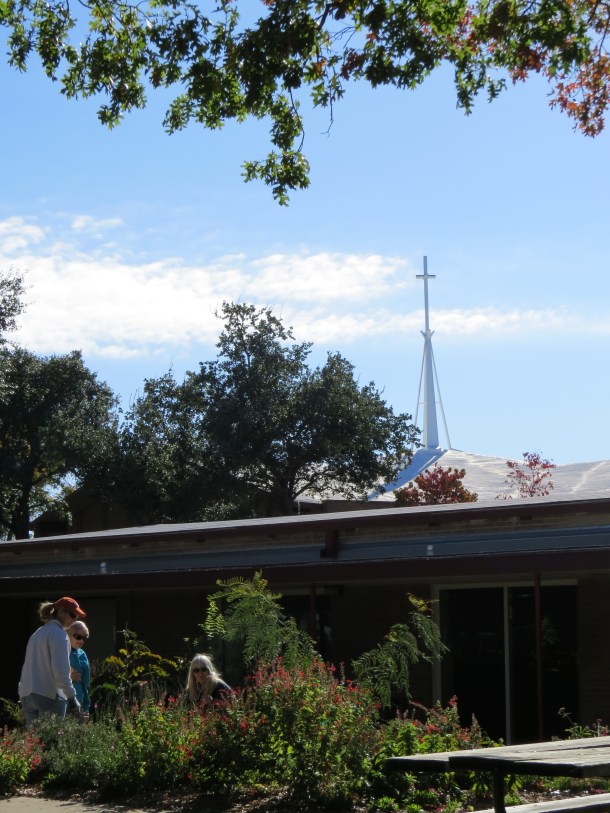
Midway Hills Christian Church-The Site of our New Raincatcher's Garden

Midway Hills Christian Church-The Site of our New Raincatcher’s Garden

For a time to sow and a time to reap

Chow Chow, Mustard Greens and Turnips

Chow Chow, Mustard Greens and Turnips

Harvest Blessings to You !

Everything by Starla!