Tag Archives: Dallas County Master Gardener Association

Veggie Greenrose

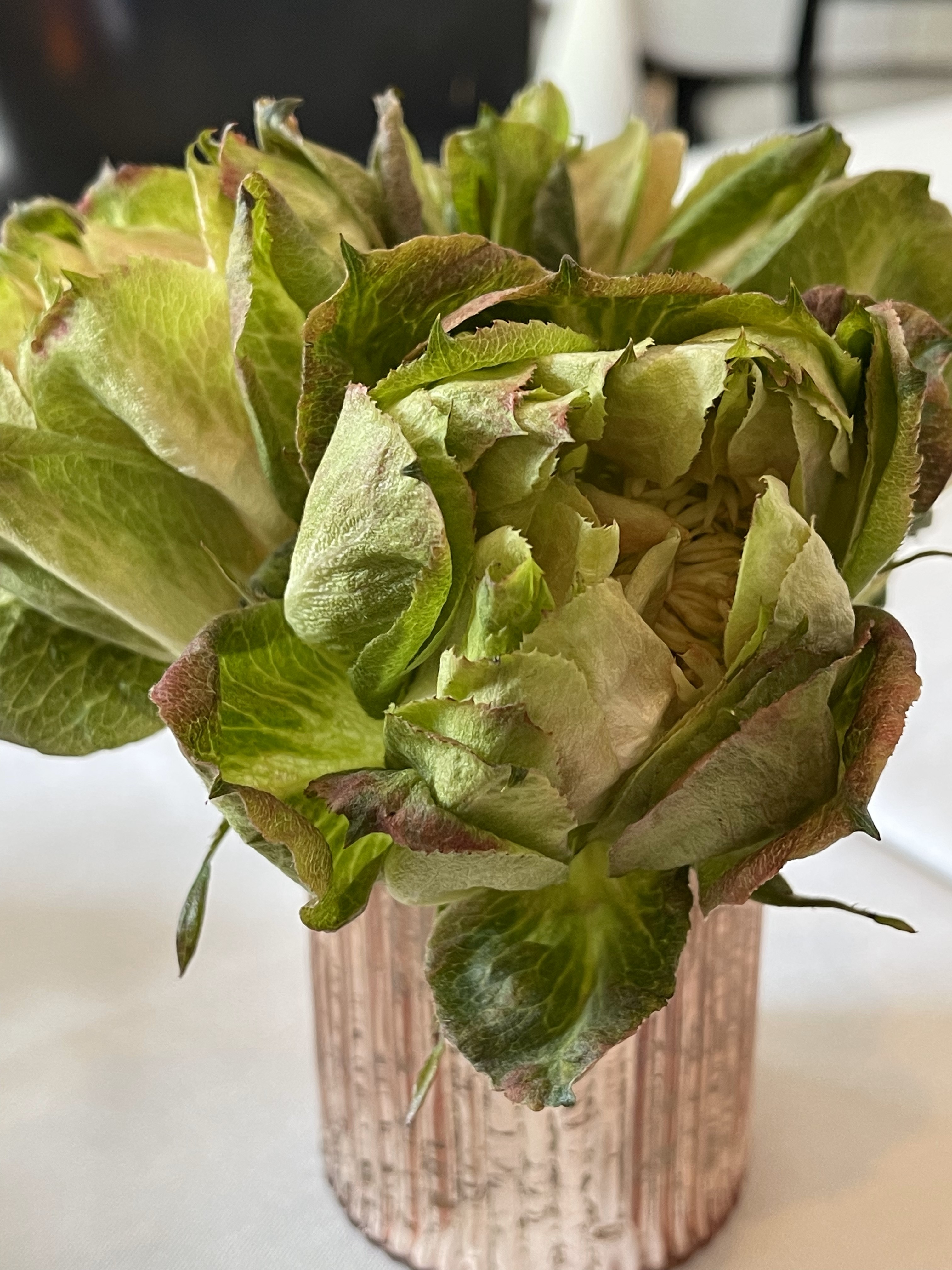
Green Rose in a Vase

On a typical Sunday morning following church, my husband and I can be found enjoying brunch at our favorite local bistro. A few weeks ago, was no exception. Parigi is owned by a dear friend of ours who, in “oh so chic” Parisian style, never fails to greet guests with a petite tabletop centerpiece of fresh flowers.

Taking a seat at our usual window table, we were mesmerized by the small but stunning floral display in front of us. Our server smiled as we inquired about the apple-green petals with bronze tips resembling a rose but tightly connected in a lettuce-type formation. Her answer was and short and simple… “I only know that it is called ‘Veggie Greenrose’.”

Brunch was delightful and relaxing but once in the car, a google search took me to a source that provided the best explanation. Here is an abbreviated version of what I learned. 

Our admiration was for a unique rose known as Green Rose, thought to be a descendant of Old Bush, a two-hundred-year-old form of Rosa chinensis viridiflora. China roses are extremely hardy and well suited to Zone 8. One grower observed that many winters, in Zone 8, the Green Rose never loses its leaves but remains a vibrant green with a tinge of red. 

While the buds on Green Rose bloom like any other rose, when open, there are never any petals. Interestingly, the rose bloom is made up of sepals on top of sepals followed by more sepals. Characteristic of its design, the sepals usually come together to form the “holder” of the flower. This holder is called a calyx, but the Green Rose never makes a true flower. Without a flower, there is no seed and no next generation of the plant. 

Thankfully, gardeners throughout the years who held Green Rose in high esteem, chose to take cuttings that were graciously shared with family and friends. Today, this rose exists due to the kindness and love of these special admirers. 

However, locating a source for Green Rose can be challenging. Once again, thanks to the internet, Mountain Valley Growers in Squaw Valley, California had them in stock. I ordered three small plants. Joyfully, my order arrived two weeks ago.

Following their instructions, Green Rose spent a few days acclimating to our climate. After a carefully selected location, it is now growing in my garden. And my dear friend and fellow master gardener, Ann Lamb, agreed to grow one of the plants in her garden. We plan to compare their growth over the next few months and eventually start taking cuttings to share with family and friends.

Ann and Linda with our beginner Green Roses

It is enchanting to consider a diminutive and wonderful rose that first appeared as early as 1743 in the area that later was named China. Even more intriguing is the fact that, at one time, it was forbidden for anyone outside of the Forbidden City to grow this rose. It was the sole property of the emperors!

Emperors aside, Ann and I have no walls or thoughts forbidding anyone to grow a beautiful rose that should have a place of honor in any rose garden! Let us know if you would be interested in having a cutting someday.

Linda Alexander, Dallas County Master Gardener Class of 2008

We have several rosarians amongst our Master Gardener crowd. Has anyone grown the Green Rose? If you have, send us a picture.

Four Nerve Daisy

Four-Nerve Daisy (Tetraneuris Scaposa) is a Texas native perennial plant that blooms almost year round.  It is evergreen with gray green foliage and bright yellow flowers that bloom on long leafless stems.  The plant itself is 6 – 12 inches tall (including the flower stem) with a 1 foot spread.  It is heat and drought tolerant and pest and disease free.  It also attracts butterflies and bees!


I have been growing this plant for about 10 years now and it has become my favorite plant.  I have paired it with grape hyacinth and have found this to be a great combination because they both bloom in early spring.  It’s a great border plant or rock garden plant and does well in full sun.  It does not tolerate over watering which is a good thing in my book!!!
This plant has a long taproot and does not transplant well.  It spreads from seeds and does well if dug when the seedlings are small.  I have been digging these tiny seedlings and will have some available at our plant sale at Raincatcher’s Garden on May 4th.

Raincatcher’s Annual Plant Sale

May 4th, 10 AM – 3 PM

We will have annuals, perennials, herbs, peppers, succulents, shrubs, trees, groundcover, bulbs, houseplants, decorative pots, yard art, and more.

Location: The courtyard at 11001 Midway Road, Dallas, Texas 75229

Jackie James, Dallas County Master Gardener Class of 1998

Friends of the Garden

Many of you have seen these color change artists in your own gardens but do you really know what they are and how they help to limit plant pests?

The green anole, Anolis carolinensis, is a small to medium-sized lizard, with a slender body and a long tail.  Its head is elongated and has numerous ridges between its eyes and nostrils, and smaller ones on the top of its head.  Its toes have adhesive pads to facilitate climbing.  The males are 15% larger than the females, and the male dewlap (throat fan) is three times the size of the female’s and ranges in color from bright orange to a light pink, whereas the females dewlap is lighter in color.  The extension of the dewlap from the throat is used for communications.  Males can also form a dorsal ridge behind the head when displaying or when under stress.

The green anole’s body coloration can vary from dark brown to bright green and can be changed like many other kinds of lizards, but anoles are closely related to iguanas and are not true chameleons.  The anole changes it color depending on mood, level of stress, activity level and as a social signal, (for example, displaying dominance).  Although often claimed, evidence does not support that they do it in response to the color of their background.

Ever seen one with either no tail or a very short one? An interesting fact is that the anole, like many lizards, has an autotomic tail, which will wiggle when broken off to distract a predator and allow the anole to escape.

This species is native to North America, where it is found mainly in the subtropical parts of the continent.

An anole’s diet consists primarily of small insects such as crickets, grasshoppers, flies, moths, cockroaches, small beetles, and other arthropods, including spiders, as well as occasionally feeding on various mollusks, (think snails and slugs), grains and seeds.

Jon Maxwell, Dallas County Master Gardener

Tomato and Pepper Transplants for Sale at Raincatcher’s Garden

March 11, 2023

You may not be thinking about tomatoes tonight but I am. March 15th is the frost free date for the Dallas area which means it is not likely we will have a frost after that date. However, next week we may have a few low temperature nights so you may want to wait to plant. Regardless of the date you choose to plant, you are going to want to come to our garden on Tuesday to purchase tomato and pepper plants; lovingly started and tended by Raincatcher’s volunteers. See details below. Ann

It’s time to plant!!!

TOMATOES and PEPPERS, TOMATOES and PEPPERS, TOMATOES and PEPPERS

The MG volunteers of Raincatchers at Midway Hills have grown several varieties of tomatoes and peppers from seed and will have them for sale.

Tuesday, March 14th, 10:00 am – 12:00 noon

Courtyard Garden

Midway Hills Christian Church

11001 Midway Rd. Dallas 75229

$2.00 per 4” pot

Cash or Check only, please

Sarah Sanders, Dallas County Master Gardener Class of 2006

Jackie James, Dallas County Master Gardener Class of 1998

Don’t be confused-we have our big plant sale coming up May 4th and will talk it up over the next few weeks.

“Drops of Honey” …February Feature

Who can resist a heavenly chocolate experience on Valentine’s Day? Sweeten it up with Honey! Recipe below.

Understanding the Anatomy of a Honeybee

On October 19, 1909, the U.S. Department of Agriculture, Bureau of Entomology received a manuscript from Mr. R. E. Snodgrass, an agent and expert of the Bureau. It was entitled “The Anatomy of the Honeybee.” This exhaustive 150-page document was described as “embodying the results of detailed studies made by Mr. Snodgrass and should prove of value as bringing to the beekeeper reliable information concerning an insect of such great importance, and also as furnishing a sound basis in devising new and improved practical manipulations.” The brilliant work of Mr. Snodgrass is considered a valuable piece of work which has now been quoted and used continuously for over 100 years. 

In 1956, the work of Robert Snodgrass was published into book form. With over 350 pages, it is a classic work that is acclaimed as much for the author’s remarkably detailed line drawings of the various body parts and organs of his subject as his authoritative knowledge of entomology. Over the years,  it was suggested that his book should be in the library of every student of the honeybee and bee behavior. 

For the sake of brevity, and in the words of Mr. Snodgrass, here is a summary of the primary functions of the honeybee:

“It possesses mouth organs for taking up raw food, an alimentary canal to digest it, salivary glands to furnish a digestive liquid, a contractile heart to keep the blood in circulation, a respiratory system to furnish fresh oxygen and carry off waste gases, excretory organs for eliminating waste substances from the blood, a nervous system to regulate and control all the other parts, and, finally, organs to produce the reproductive elements from which new individuals are formed to take the places of those that die.”

And, just to think, this is the masterfully created tiny machine that gives us honey!

Now, let’s take a closer look at how this happens.

“Drops of Honey” …FebruaryClipart - New HeartFeature

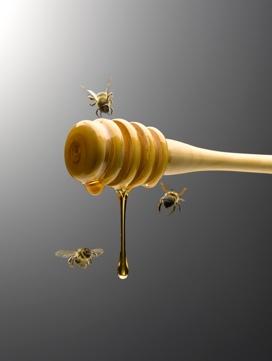
Honey dripping from spatula with honeybees around

What is honey and how is it made?

Scientifically speaking, honey is a complex carbohydrate composed of approximately 80 percent monosaccharides, or simple sugars, mostly fructose (levulose) and glucose (dextrose) in varying ratios depending on the nectar source. The remaining content, approximately 16-18 percent, is water. Fructose is slightly sweeter than glucose and, when it occurs in larger quantities than the glucose, can lead to rapid crystallization of the honey, 

Over twenty-five other disaccharides have been identified in honey along with oligosaccharides, including erlose, theanderose and panos. These are not naturally present in nectar but are formed during the honey ripening process.

One of the most important attributes of any honey is its water content. The average water content of most good-quality honeys is 17-18 percent. This happens because bees make it that way.

Yeast is also present in all honeys as a result of being in the environment in general. Proteins make up about twenty-five percent of honey composition with at least 19 different ones present. The proteins are mainly enzymes added by the bees during the ripening process. Invertase, the most significant enzyme is what sets honey apart from other sweeteners. 

Honey contains a few amino acids. The most important, of which, is proline. Some proline is derived from the plant source, and some added by the bees. Proline is the measure of honeys ripeness and is an important standard for judging quality and flavor profile. 

Gluconic acid is the most prominent acid found in honey. It adds flavor enhancing properties.

Honey contains a wide variety of minerals including potassium and trace elements. Worth noting, darker honeys are stronger in flavor due to their higher mineral content. Important also, is that these elements make it possible to identify different types of varietal honey. 

Finally, honey also contains over six hundred volatile organic compounds (VOC) or plant-based essential oils. Many originate from the plant and some are added by the bee. 

*Volatile organic compounds evaporate from honey when the honey is heated, therefore, heating honey compromises its delicate flavors.

In summary, let’s close with a few simple answers to the question, ‘what is honey’. 

*Honey is the essence of flowers. 

*Honey is a thick, golden liquid produced by industrious bees. 

*Honey is the result of a colony of bees working together to collect flower nectar and transform it into a high-energy source for the hive. 

*Honey is an organic, natural sugar alternative with no additives.

The A, Bee Cs of Honey Making

Honey production is a carefully orchestrated series of chemical processes including digestion, regurgitation, enzyme activity and evaporation. It is exclusively the creation of the female worker bees. Nectar, a sugary liquid, is extracted from flowers using a bee’s long tube-like tongue called a proboscis then stored in its stomach or “crop”. While sloshing around in the crop, the nectar mixes with the enzyme invertase which begins the transformation of its chemical composition and pH, making it more suitable for long-term storage. 

When a honeybee returns to the hive, it passes the nectar to another bee by regurgitating the liquid into the other bee’s mouth. This regurgitation process is repeated until the partially digested nectar is finally deposited into a honeycomb. 

Once in the comb, nectar is still a viscous liquid – nothing like the honey you use at home. To get all that extra water out of their honey, bees set to work fanning the honeycomb with their wings to speed up the process of evaporation. 

When most of the water has evaporated from the honeycomb, the bee seals the comb with a secretion of liquid from its abdomen, which eventually hardens into beeswax. Away from air and water, honey can be stored indefinitely, providing bees with the perfect food source for cold winter months.

Linda Alexander, Dallas County Master Gardener Class of 2008

Honey Chocolate Cake with Chocolate-Honey Icing and/or Honey Whipped Cream

Natural Inspiration

In the “paint” world, each new year begins with the big reveal. For 2023, Pantone has taken inspiration from the natural world with the announcement of Viva Magenta as their color of the year. Described by the company as a powerful and vibrant shade of red deeply rooted in nature, it promises to be “bold and fearless” while adding a joyful and optimistic tone to your interior.

Pantone’s glamorous appeal is convincing; “Viva Magenta descends from the red family and is inspired by the red of cochineal. The cochineal beetle is an insect that produces carmine dye, one of the most precious, strongest, and brightest natural dyes the world has known”.  They add, “it was chosen to reflect our pull toward natural colors.”

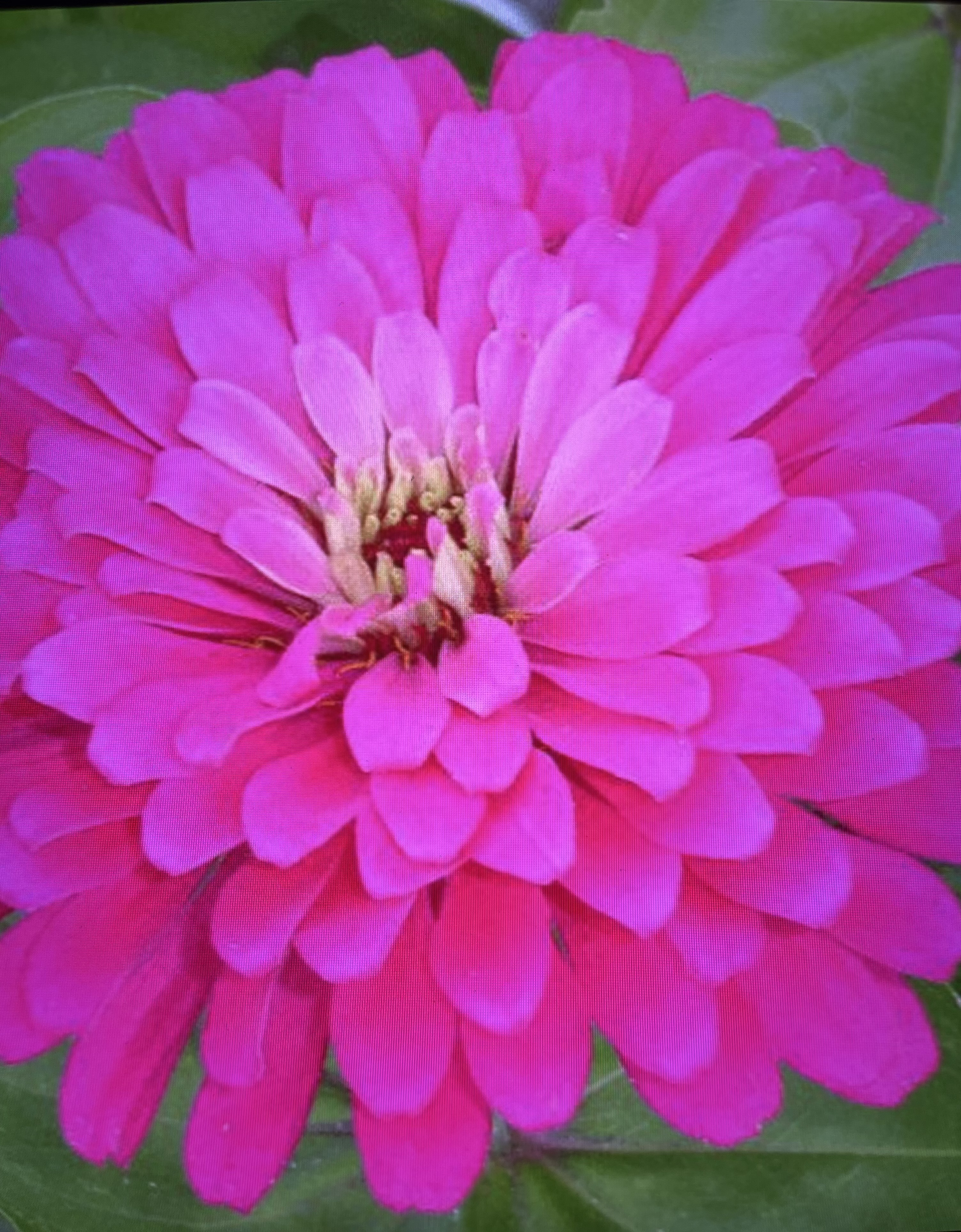
Seems the botanical industry has taken notice with promotional ads now featuring a stunning array of floral options for your landscape. Not surprisingly, it would be difficult to find a flower that more dramatically captures the true essence of “magenta” than the zinnia.

As you can see from this stunning photograph, I was, indeed, “drawn in” and quick to imagine the perfect sunny location for it in my summer garden. It’s from The Gardener’s Workshop in Newport News, Virginia.

The name and description they’ve given this zinnia is impressive; ‘Uproar Rose’. It is being held as the next knock-out zinnia by cut flower growers everywhere.

My seeds have been ordered and will be planted directly into the garden after our last danger of frost. I’ll follow their very professional harvesting tips:

*Harvest the blooms when fully mature.

*Make the first harvest cut above the bottom two side shoots as this establishes a branching habit for the season.

*Make future cuts at the base of the stem.

Linda Alexander, Dallas County Master Gardener class of 2008

Broccoli Romanesco

November 21, 2022

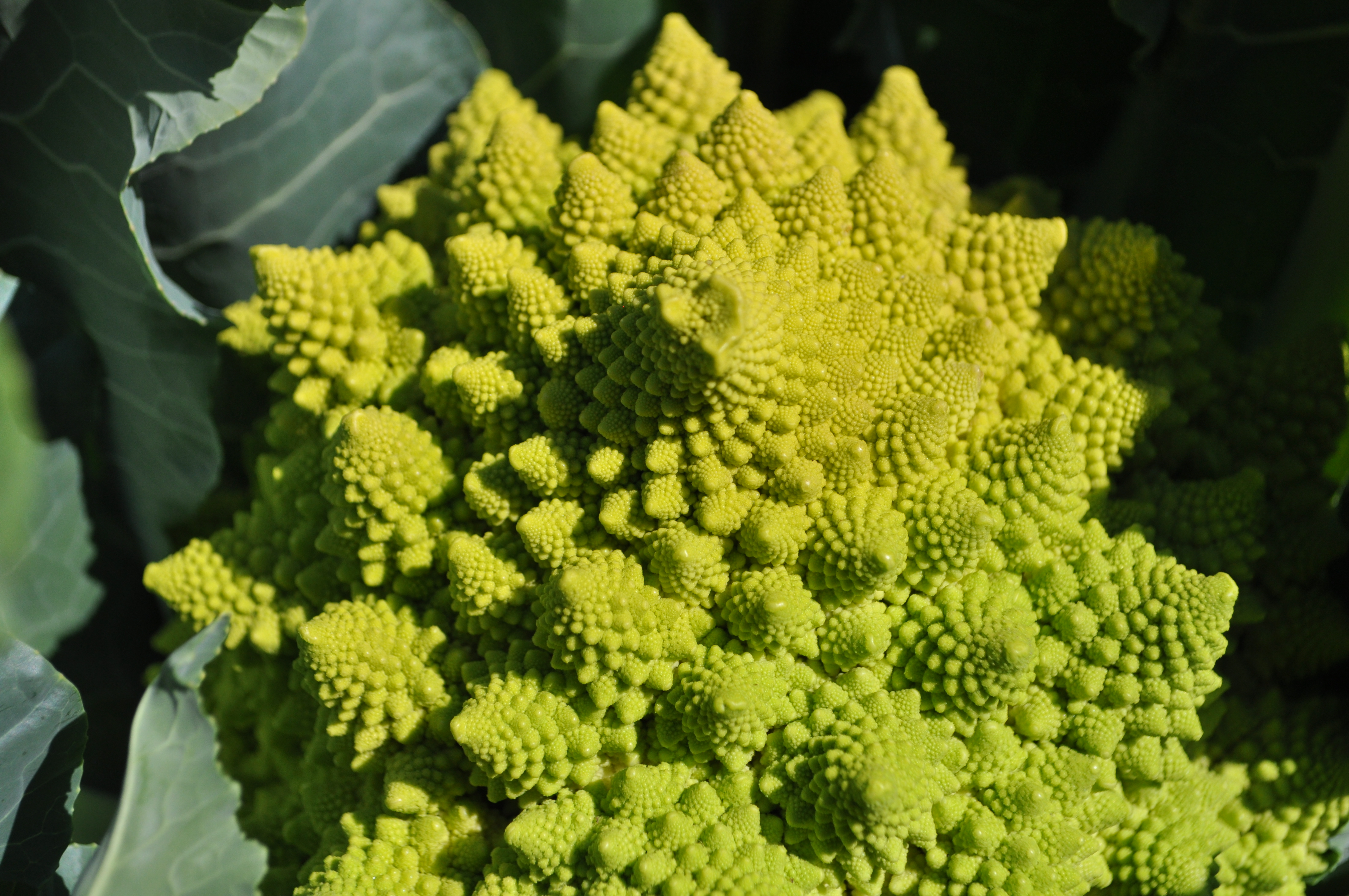
Grow your own garden art! Romanesco is a cole crop with characteristics of broccoli and cauliflower. It is widely grown in Italy and gaining popularity in Texas. Thanks to Romanesco, vegetable gardening is not just rewarding and nutritious it is also beautiful.

Romanesco produces thick stalks and wide, rough leaves. Leave a large space to grow this vegetable. The central head grows very large and eventually the plant can span 2 feet in diameter.

Me-Ann Lamb holding a Brocolli Romanesco from my garden in 2016

Sow seeds in a fertile location from February 1 to March 5 for a spring crop or August 20 to September 20 for a fall crop. Fall crops are ofter more sucessful as this plant thrives in cool weather. Sow seeds tinly and cover with 1/2 inch of fine soil. Keep evenly moist. Seedlings will emerge in 10-21 days. Thin to about 16 inches apart when seedlings are 1-2 inches high. Transplants are also available and much easier to grow. These plants will reach maturity in 75-100 days. To harvest, pick the enitre head before it begins to seperate.

Romanesco is a true photo opportunity. Take a close-up shot and it looks like and apple-green mountain range. The scientific name for this unusual ordering of rows is a “fractal.” Fractals can be thought of as never-ending patterns-nothing wrong with bringing math into the kitchen.

Susan Thornbury, Dallas County Master Gardener Class of 2008

Photo by Starla Willis, Dallas County Master Gardener Class of 2008

The Raincatcher’s Garden Fall 2022

November 18, 2022

A note from Jackie:

I thought I would follow up the beautiful fall photos Starla submitted to the blog with these photos of our garden that I recently received from our friend, Diane Washam.

Check out this bee visiting our Mexican Honeysuckle Plant. This plant blooms from late spring to fall.
I have never seen garlic chive seeds look so beautiful!
This lizard looks quite comfortable on the spotted manfreda plant.
Mexican Mint Marigold looking pretty after the rain.
Lambs Quarter is in the same plant family as spinach, chard and beets.
This is the Fidalgo Roxa pepper. We planted it on the courtyard as an ornamental plant. The beautiful, colorful peppers look like candy! However, don’t let the candy like appearance fool you as this pepper is extremely hot.
It was a good year for peppers! This is one of the many pepper plants that we planted in the edible garden, the donation garden and the courtyard garden. Many of these wonderful peppers were donated to the food bank, many of them were used to make our jalapeno jellies and a few were just there as ornamental plants to add interest to our gardens.

Jackie James, Dallas County Master Gardener Class of 1993

Photos by Diane Washam

Before the First Frost

This is look at The Raincathcher’s Garden before the first frost. Temperatures may drop this weekend and then around mid to late November you can expect our first frost. Take a good look now through these pictures from Starla. She snapped many pictures and kept saying “the garden looks amazing.” Starla saw butterflies, a Texas spiny lizard and laybugs enjoying our fall garden.

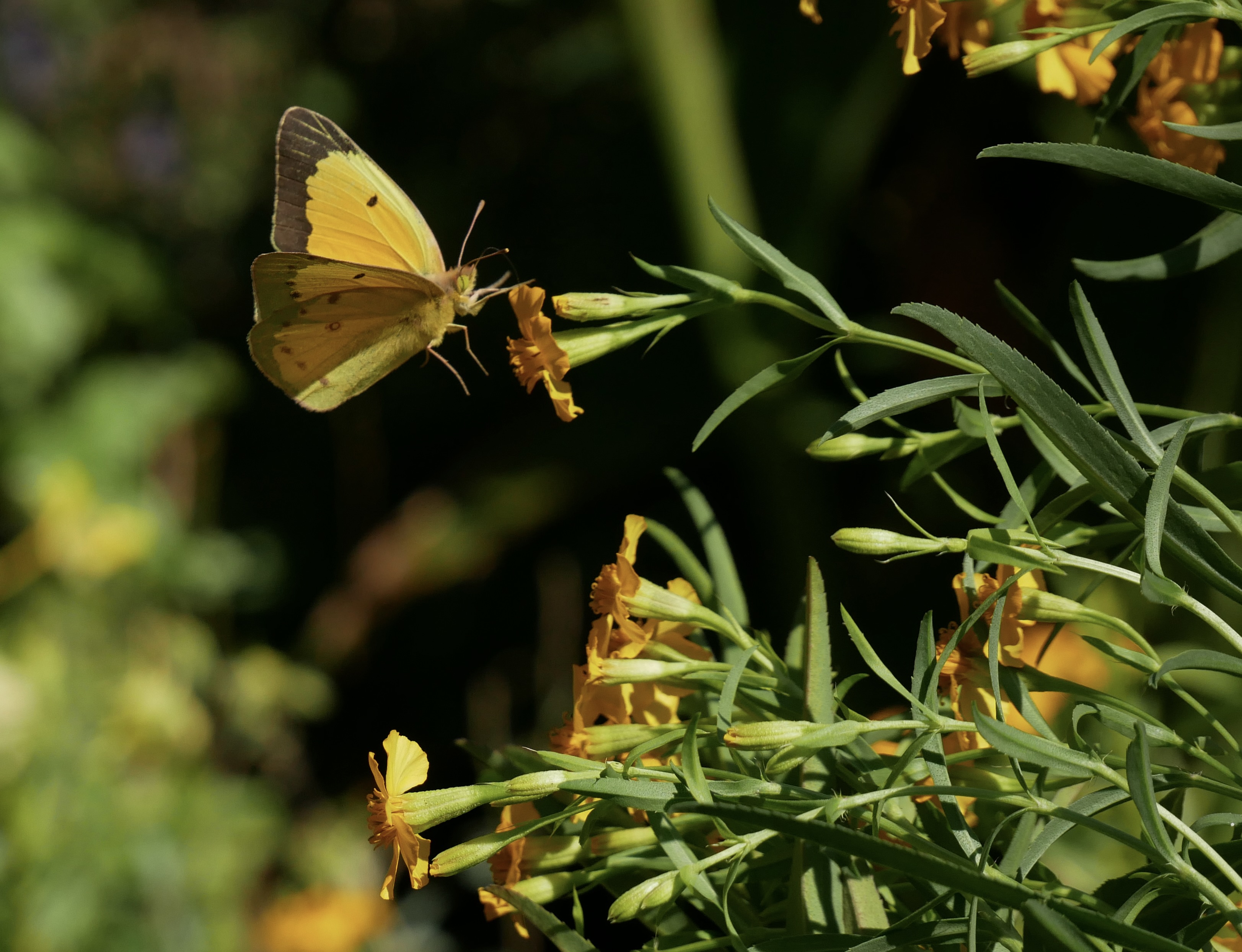
Lots of pollinators like this Orange Sulphur on Mexican Mint Marigold

A Gulf Fritillary on Red Salvia
A Queen poised for her next flight
And a Morning glory blossom hosting a honey bee

Ann Lamb, Dallas County Master Gardener Class of 2005

All photos by Starla Willis, Dallas County Master Gardener Class of 2008


Today is the pick-up day for The Raincatcher’s Pansy and Plant Sale 2022. Thank you all for your orders! We’ve had a very successful sale and can’t wait to see you today for pickup.

If you haven’t already made arrangements for delivery (larger orders only) or late pickup, please plan to come by the garden on Wednesday afternoon between 1pm and 4pm to pick up your order. There will be volunteers on hand to help you load them from the north parking lot at the shade pavilion.

Raincatcher’s is located on the campus of Midway Hills Christian Church at 11001 Midway Road, Dallas, TX.

Searching for a Borer Resistant Squash

October 11, 2022

I have to say that the squash vine borers (SVBs) were getting me down.  After spending the summer of 2021 removing borers from the squash plants and still not seeing much of a harvest, I swore off growing squash, almost. 

The SVB larva grows inside the squash vine (often killing the plant) and then makes a cocoon that overwinters in the soil. The adult moth emerges from the cocoon in spring and lays eggs on the undersides of the squash leaves. The eggs hatch and the larvae begin destroying your plants again. 

One solution is not to have any squash handy for the adults to lay their eggs on (thus the almost swearing off). You can also interrupt this cycle by finding and removing the eggs. That is a real challenge unless you have a small number of plants and time to check every single leaf every day.

We started off the spring season with some lovely Italian cucumbers that were producing well but suddenly began to droop just like the squash had the previous summer.  It turns out that if they don’t find any squash, the borers may settle for your favorite cucumber.  It almost seems spiteful. 

I was persuaded by a team member to try growing butternut squash in late summer. Cucurbita moschata has a reputation for borer resistance.  Throwing caution to the wind, we decided to try zucchino rampicante and calabacita as well.

Despite my skepticism, we have a raised bed full of butternut squash maturing now with no sign of SVBs.

Cucurbita moschata, Butternut squash

The zucchino rampicante is in the same family and has a hard stem that I assumed the borers would not be able to breach. However, we found a few larvae in the stems and removed them. The plant now has huge beautiful leaves and vines that run about 12 feet.  It is producing two foot long fruits that weigh a pound or so. 

The calabacita (Cucurbita pepo), also known as tatume or Mexican zucchini, has a tough, thin vine and has shown few signs of distress from SVBs.  It is taking up a lot of garden space but makes up for it by being very productive. The fruit may be eaten like a thin skinned summer squash or allowed to grow into a soccer ball sized pumpkin.

Going forward I will swear off swearing off. 

Beverly Allen, Dallas County Master Gardener Class of 2018