Reading the title, you may be reminiscing about a recent wedding or one that is scheduled for this spring. Imagine a stunning display of cascading branches covered in double-white flowers welcoming you to the wedding venue in glorious style. Your senses delight in the romance of the moment.
While it may sound like a blissful and lovely setting for the bride and groom, this calls for a different type of celebration. It is mid-March in Dallas (Zone 8) and this beautiful bride is ready to make her appearance. Please meet…
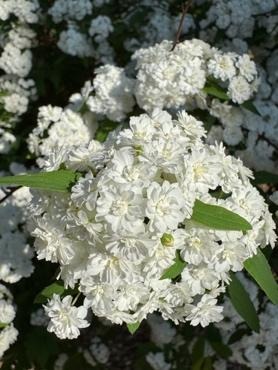
Spirea ‘Bridal Wreath’
Spirarea x vanhouttei ‘Bridal Wreath’
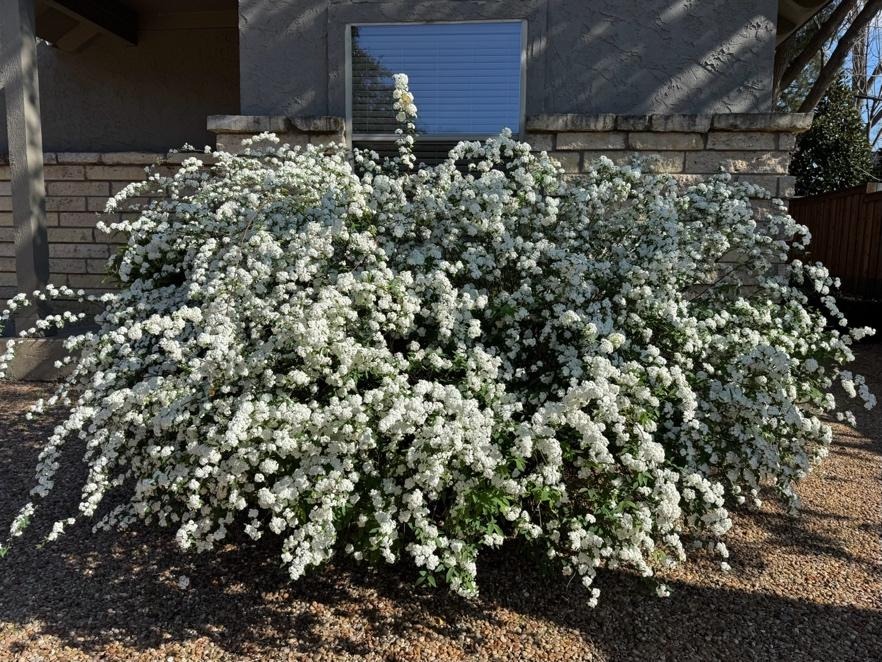
This is our Spirea ‘Bridal Wreath’ bush gracing us with her beauty, and growing in our gravel driveway, for the 20th consecutive year. However, the abundance of white blooms is the most brilliant we’ve ever experienced. With a generous spread of 5’ tall x 10’ across, she certainly makes a spectacular presence.
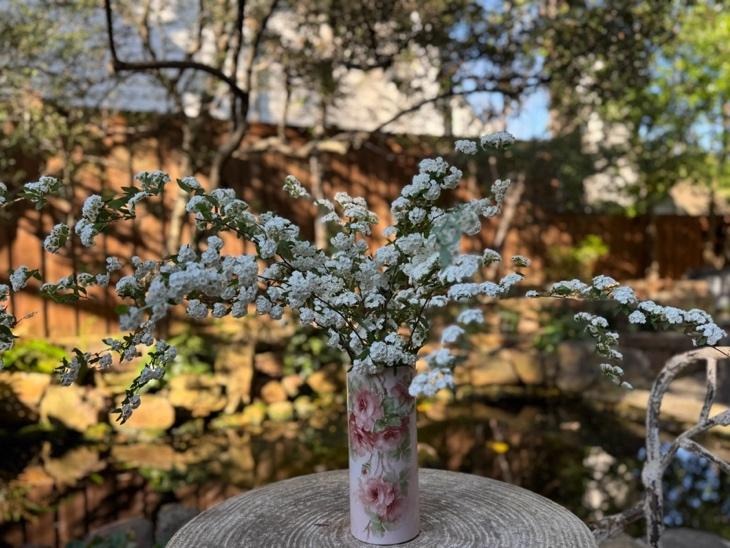
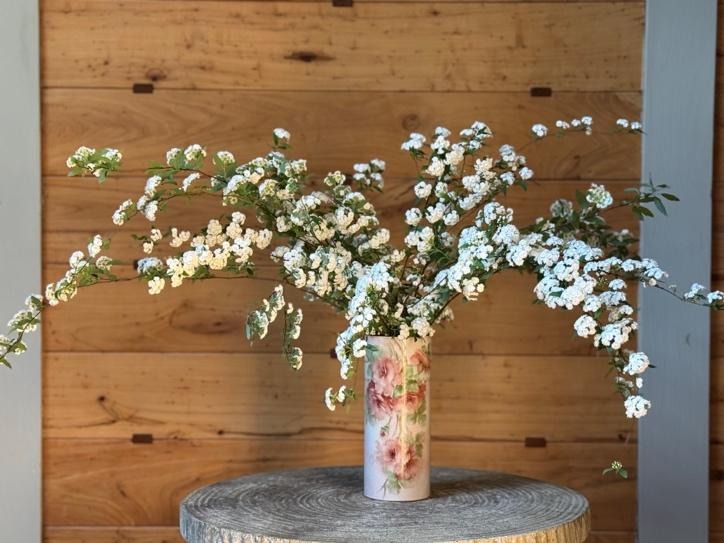
A lovely China vase hand painted by my late grandmother was the perfect whisper of nostalgia for displaying the arching branches of ‘Bridal Wreath’ Spirea. It was a wedding gift from 1970.
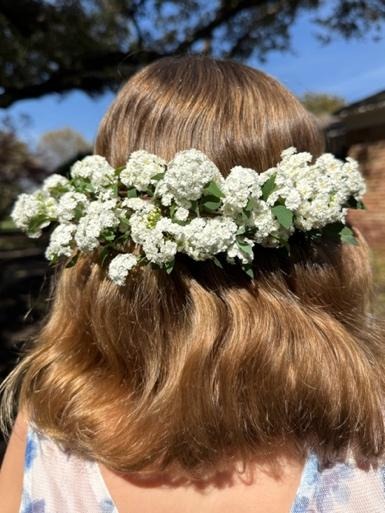
This “melt-your-heart” moment for me was sharing the story of ‘Bridal Wreath’ with my 10-year old granddaughter, Sadie. Without hesitation she asked if we could please make a wreath for her to wear to the Daddy/Daughter Dinner and Dance that night. It felt as if this experience had magically happened “for such a time as this”. A treasured memory was created as together we imagined Sadie wearing a ‘Bridal Wreath’ to her own wedding someday!
Growing spirea is a somewhat effortless endeavor that you can read about here. FYI…Our spirea only receives mid-morning to late afternoon filtered sun and still gives us a show-stopping three week “sold out” performance!
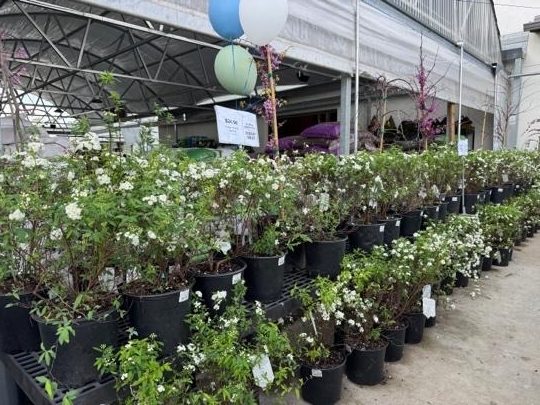
One of our local garden centers is offering spirea, as of today, for a very reasonable price. Don’t miss the opportunity to let ‘Bridal Wreath’ fill your yard with an electrifying touch of spring color!
Linda Alexander, Dallas County Master Gardener Class of 2008
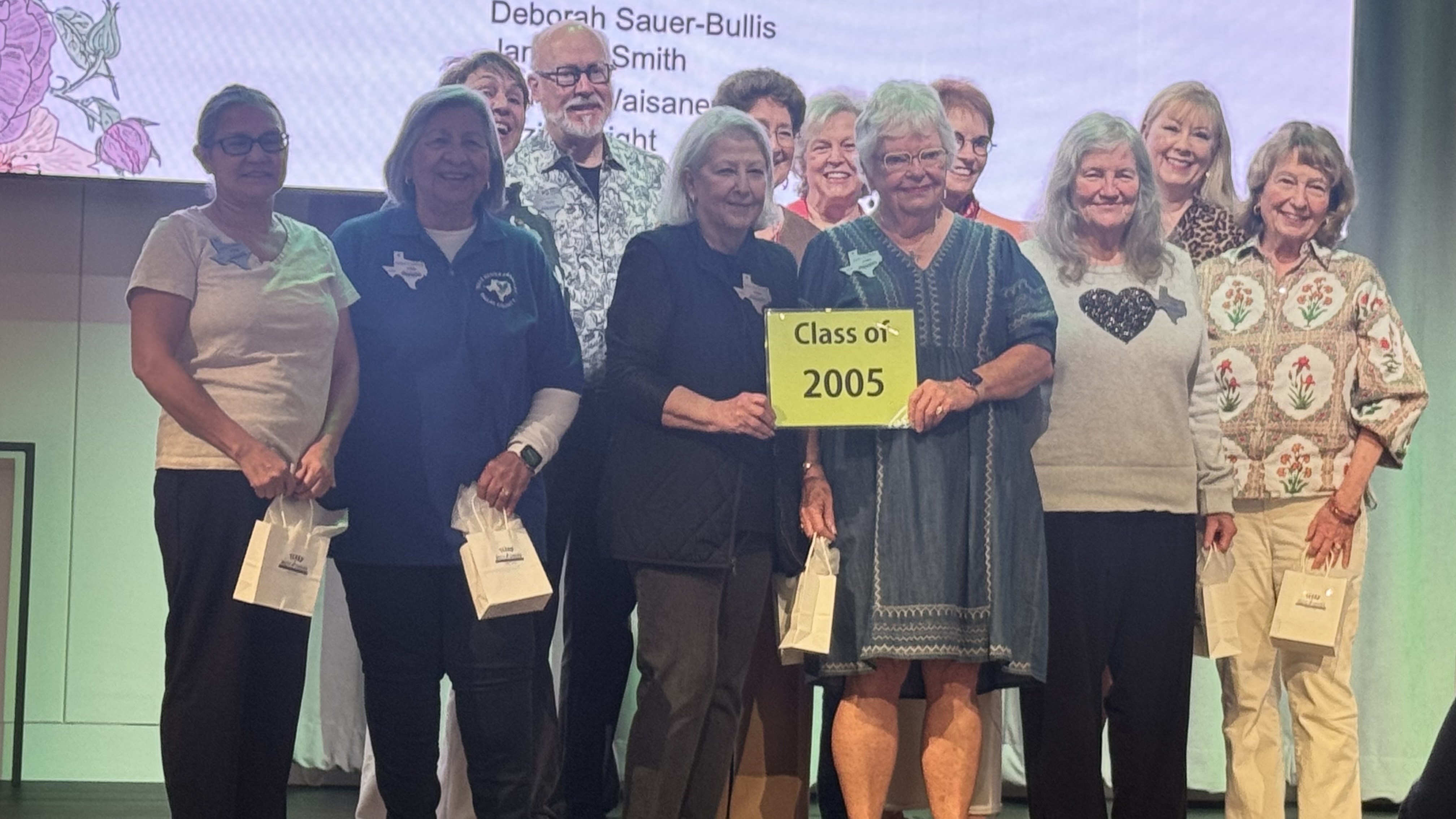
The Awards meeting for Dallas County Master Gardeners this year reminded me of how blessed I am to be a part of this organization and especially Raincatcher’s Garden of Midway Hills. The board in charge of this event, created an opportunity to celebrate the amazing things that Master Gardeners have done over many years. The variety of projects, the people served, and the information shared is truly something of which to be proud.
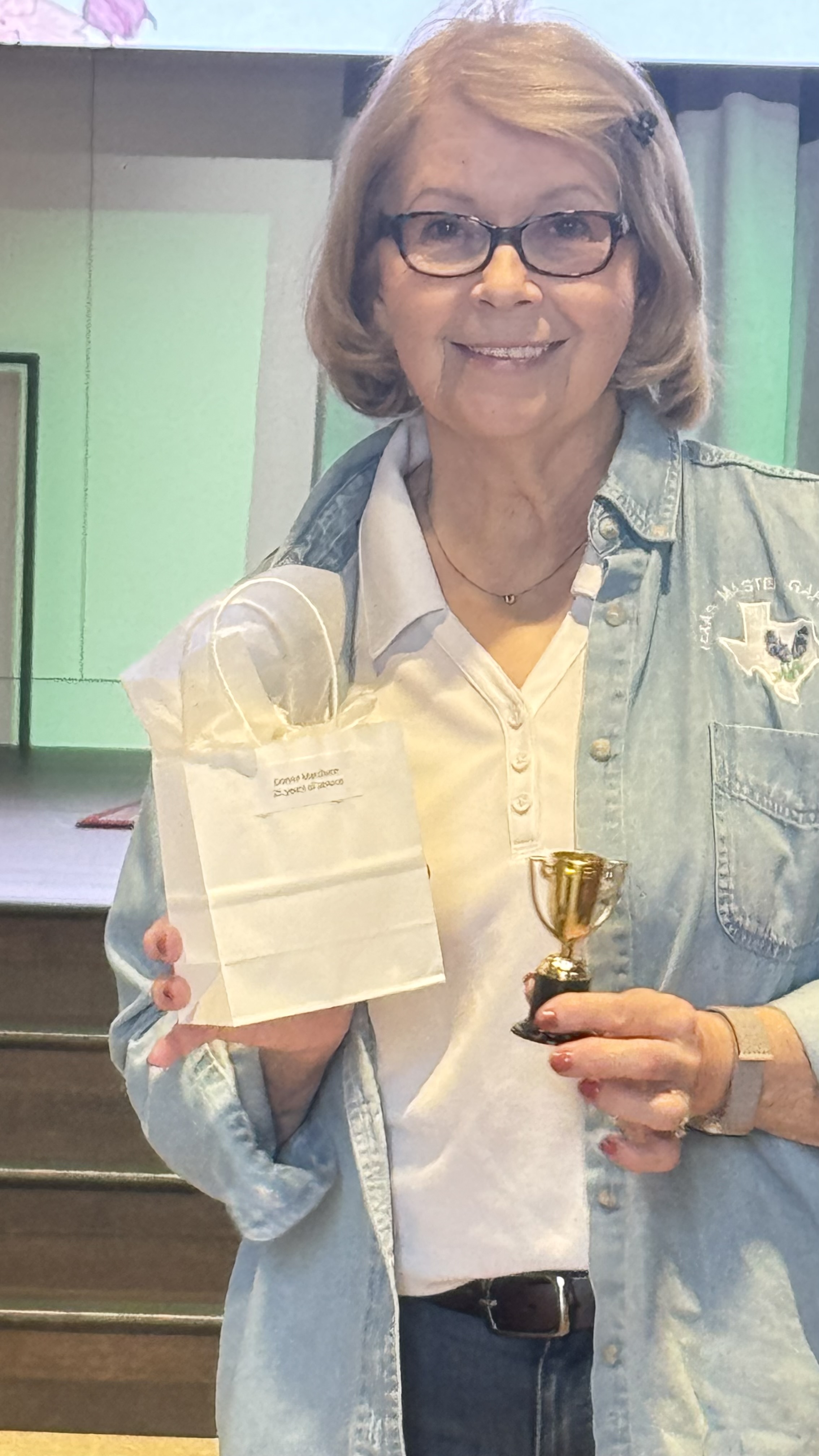
So many of our volunteers were honored for their service and commitment to Dallas County Master Gardeners. Thank you for your enduring hard work and consistency.
Mary Kay Estep was a delightful MC, Cynthia presented a lifetime achievement award, and then a roll call of familiar names filled the screens, many who have graced Raincatcher’s since 2014, and even some before that at Joe Field Road. Many master gardeners have spent time helping at Raincatcher’s during Special Events, meetings, and supporting the fundraising efforts. Thank you for your support and volunteering efforts. It has been a group effort that has allowed us to obtain goals that were beyond our expectations.
We have Class Captains, those who have stayed strong for over 25 years, several who consistently have over 100 hours every year, and those who have amassed an incredible number of hours during their time as Master Gardeners. We have past presidents, board members, project leaders, and those who show up week after week to garden at our project. The vegetable group meets Monday mornings others meet on Tuesday morning to work in a variety of areas – rain garden, pollinator garden, compost area, edible landscape, color wheel, and the courtyard. There are many choices depending on your interests and abilities.
This meeting, unlike the educational content that we are grateful to hear monthly, was filled with reflection, pride, and a sense of family of Master gardeners. Raincatcher’s has a very special place in the heart of many, and I am honored to be a part of this family.
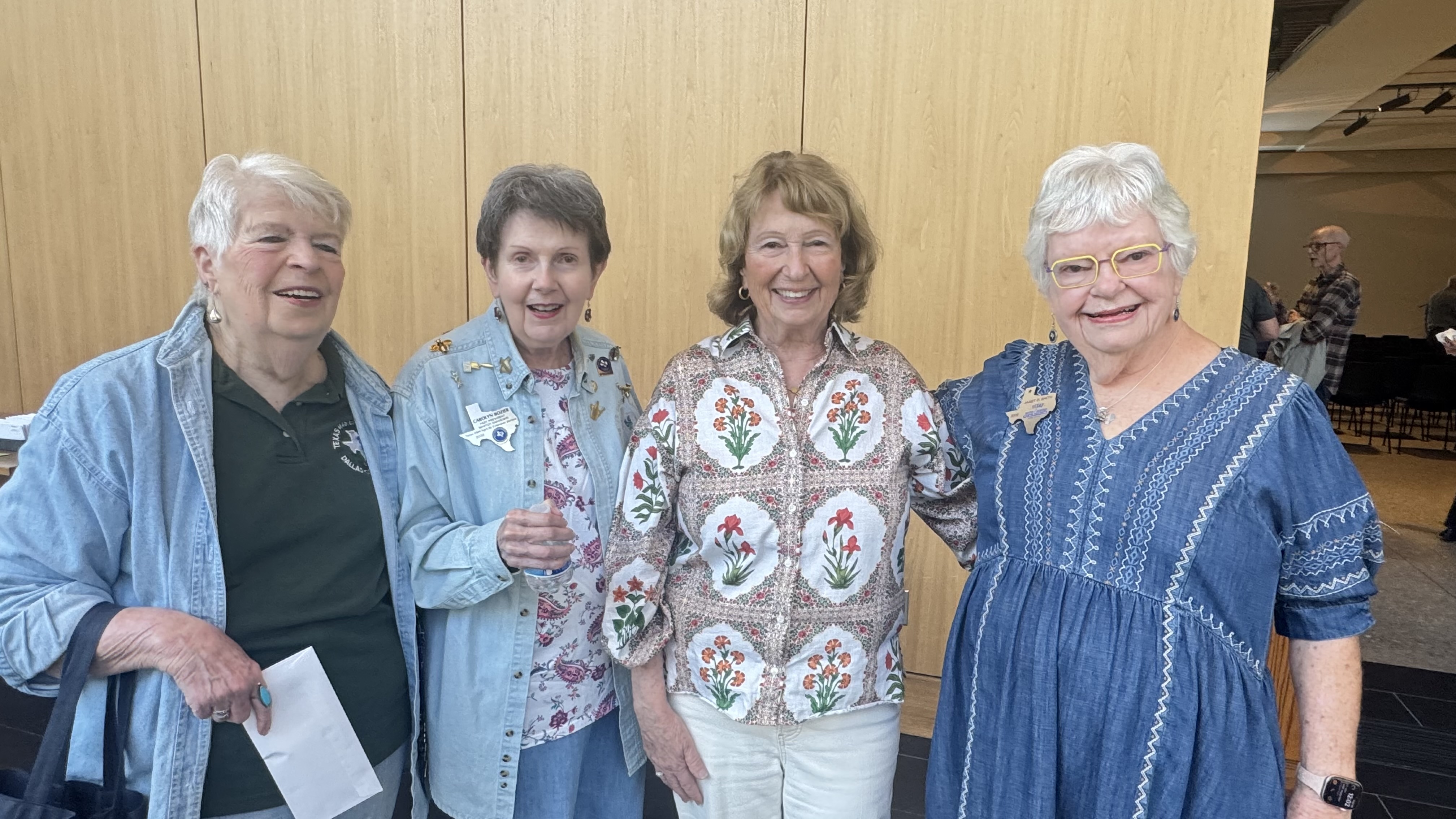
Here are some pictures from the Ceremony – not a complete list, but a representation of the family that Raincatcher’s has become. And for new master gardeners, or those that haven’t found a place to belong, we would love for you to be a part of this community.
Are you experiencing a touch of March Madness around your house? Having played basketball in high school and college, my husband follows it with such a high level of intensity that I sometimes have to “leave the room”. Considering the frustration from a gardening perspective, I’m beginning to see some similarities.
Let’s review the facts:
*The tournament features 68 NCAA Division 1 Men’s Basketball teams in an intense, single-elimination format culminating in a championship game that determines the national champion.
*It is a cultural phenomenon known for unpredictable upsets.
*It is one of the most anticipated events on the sports calendar, showcasing the amazing talents of collegiate athletes.
If you are wondering how that relates to gardening, smile first, then consider a gardener’s approach to spring planting:
*Beginning in early March, garden centers tempt us with an ocean of plants in every color, size, shape and texture imaginable. I’m sure the number far exceeds 68 participants.
*As seasoned gardeners, we understand the criteria for planting in Zone 8, and yet, we sometimes select material that either outperforms or overwhelming disappoints based on our very emotional decisions.
*Springtime for gardeners is our moment of anticipation. We’ve spent the cold, winter months studying seed packets, diligently reading instructions and carefully evaluating the possibilities. Why, because we hope to select the best performers in each “bracket”!
And so now, we have finally arrived at the most anticipated event on a gardener’s calendar; spring planting! Yes, some of our selections will have to be eliminated but, ultimately, the champions will reward us with their impressive performance. Wanna make a bet on that?
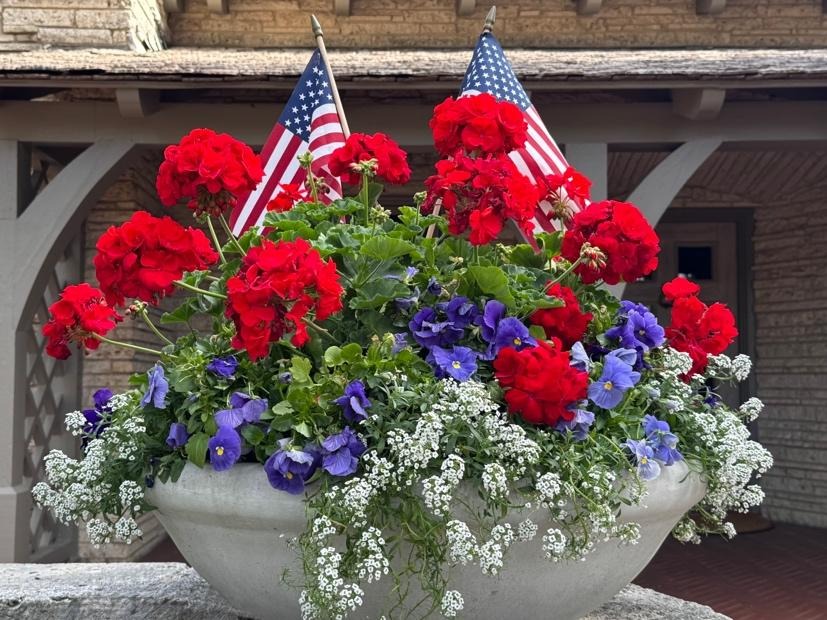
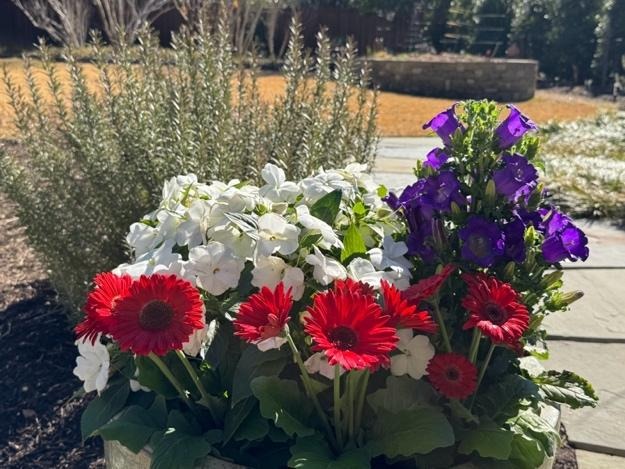
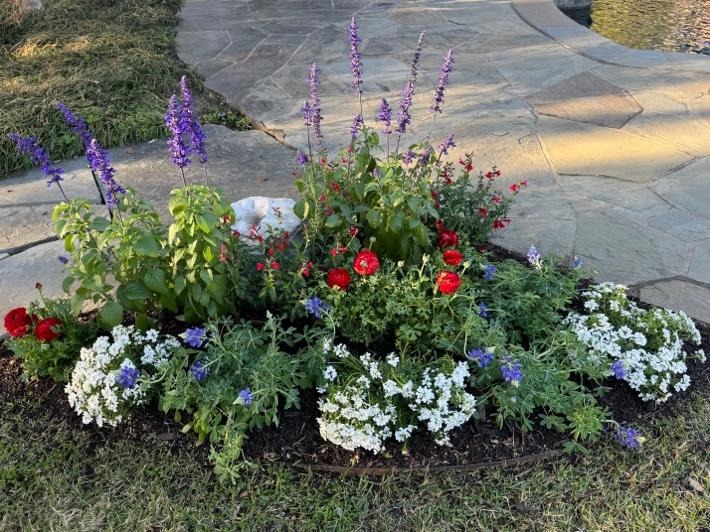
As we leave winter behind and begin the transition into spring, here are two red, white and blue flowerpot creations to welcome in some “March Gladness”!
Red: Ranunculus, Salvia ‘Radio Red’ White: Candytuft Blue: Mystic Blue Salvia and a salute to our state flower, Texas bluebonnets!
Throughout the next five months, look for fun ideas using some of the flowers listed below to create your own version of a patriotic garden display. (We would also like to include some of your own red, white and blue flower displays. Please send pictures no later than June 15th for the July 4th Grand Finale!)
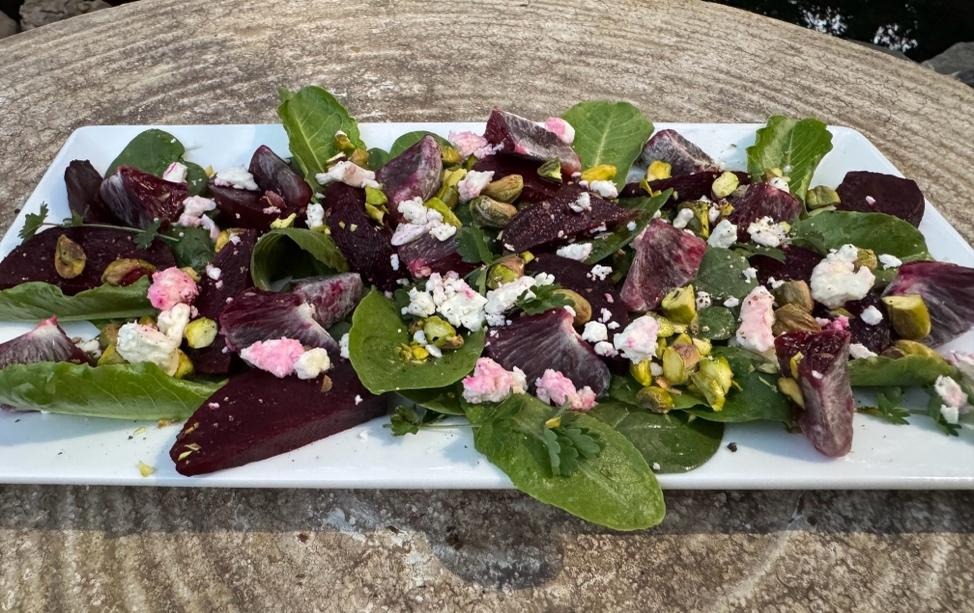
Our recipe for the month is a garden-inspired celebration of late winter to early spring selections. It’s easy to assemble and can be personalized according to your preferences. Substitutes might include grapefruit, navel oranges or mango as a fruit option. Walnuts, pecans or pumpkin seeds instead of pistachios. Goat cheese crumbles could replace the feta and, maybe, why not toss in some blueberries for a touch of blue!
Recently, our local temperatures dropped into the mid-twenties overnight but a few of my herbs didn’t seem to notice. (FYI…This article was originally written on January 18th. As of Sunday, January 25th, our temperatures dropped down into the teens. It was a good time to make both recipes again). With a desire for something fresh from the winter garden, our evening meal would soon include a generous amount of chopped thyme and oregano to satisfy the craving. It was the perfect time to cozy up by the fireplace and indulge!
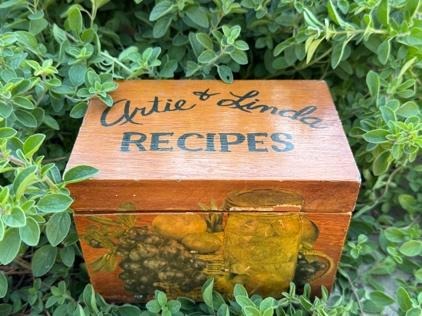
Just a few weeks before Christmas I stumbled across two vintage recipes from our very early years of marriage. In 1970, for a very practical wedding gift, my best friends mother had personalized a small, wooden box that would eventually contain treasured recipes from family and friends. Decoupaged with old magazine cut-outs and hand-painted “notations”, I experienced a heart-warming moment of pure bliss flipping through the tattered and worn recipe cards used throughout our 55+ years of marriage.
The original recipes didn’t call for freshly snipped herbs from the garden but that was going to change. After years of traveling down a long culinary path of failures and successes, I felt confident about adding a complimentary herbal component to each one. In her 2009 book “What Can I Do with My Herbs?”, author Judy Barrett offers the following:
“Because of the diversity and mysterious nature of herbs, many people are a little bit afraid of them. And, for some bizarre reason, we are more afraid of fresh herbs than we are of those little jars of dried stuff at the grocery store. But we need not be afraid. Herbs are our friends!”
Her book has helped me considerably over the years to power through my fears and be more intentional about growing herbs that can be used throughout the seasons. And so, here are two of those timeless, old recipes updated and transformed by the simple addition of freshly gathered herbs from my winter garden. ENJOY!
FYI…the standard recommended ratio for substituting fresh herbs for dried is:
Standard Herbs (Basil, Marjoram, Oregano and Thyme)
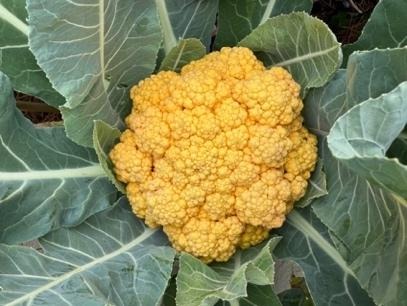
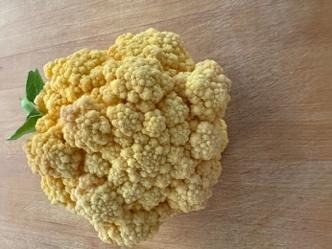
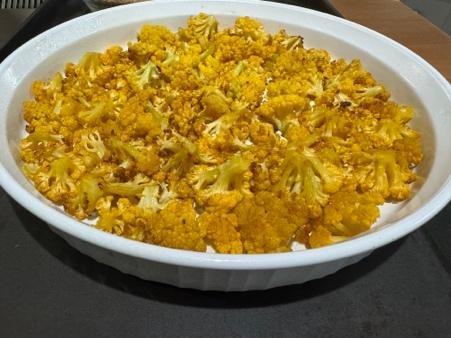
Here’s something that we hope will make you smile-a yellow cauliflower, named for its resemblance to the yellow-orange color of cheddar cheese. Developed for its appealing color, this cauliflower contains high levels of beta-carotene and is richer in Vitamin A than white varieties. From a flavor perspective, it offers a slightly sweeter, nuttier taste and retains its vibrant color even after cooking.
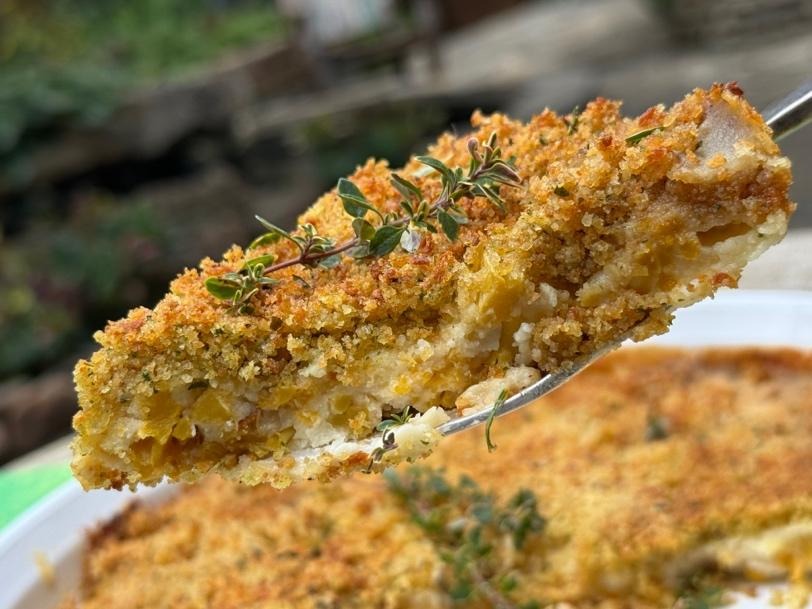
If you’re ready to elevate the taste of cauliflower and enjoy it as simple side or an elegant main dish, here’s a recipe that will deliver a palate pleasing experience.
Winter is officially here! The winter solstice has come, leaves have finally turned and fallen, and the Frost Weed has frosted. Never mind that we are alternating between sweaters and shorts. It is winter in the garden. Many older gardening books speak of closing down or putting a garden to bed for this season, but like children waiting to see the New Year arrive at midnight, our landscapes are not truly snoozing.
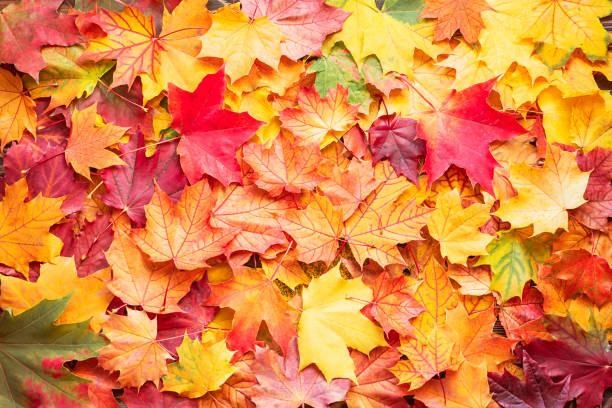
Our deciduous trees stopped producing chlorophyll. This let us see and enjoy their yellow carotene colors that were previously hidden, instead of just greens. The gorgeous reds and pinks seen across Dallas this year remind us that our autumn was dry, sunny, and certainly stayed above freezing, the conditions needed for the productions of anthocyanins. The mix of colors this year was constantly changing and quite stunning.
But now these trees are bare (my sister refers to them as stick trees) and this slimmed down profile helps to protect them and their branches from wind, snow, and ice. But those lovely leaves still have so much to offer, in one form or another across just about every landscape.
One use involves shredding leaves. This allows us to add that temperature modulating 3–6-inch layer of mulch around our trees and shrubs, or 2-3 for our flowers. That blanket is really appreciated by any newly planted perennials as they settle into their new homes. Extra shreds are perfect for composting. Whole leaves between rows in the vegetable garden keep our feet dry and relatively mud free, while they discourage pesky weeds.
But consider the advantages of doing nothing at all in much of your flower beds and lawns, leaving even a small section of your landscape undisturbed, with plant stems untrimmed and fallen leaves where they fall this winter. Those stems and leaf litter house the insects that will populate, pollinate, and protect our plants next spring. Leaf blowers, rakes, snippers, shredders, and compost heat destroy the habitat our beneficials need this season.
Not all our garden friends headed further south with the monarchs and hummingbirds. They have deployed many clever techniques to survive until spring and summer. Some insects are sheltering in stems, others have headed underground, and some have taken the ‘get small’ approach by wintering as eggs. Cleaver swallowtail butterflies produced their own antifreeze, turning sugars to glycol as an added layer of protection for chrysalis wintering in their cocoons. Despite appearances, life has not deserted our landscapes.
And in our pollinator gardens most especially, we want those insects to survive, to continue to play their garden roles. A fascinating study of the effects of removing autumn leaves can be found here: https://www.sciencedirect.com/science/article/pii/S0048969725004565. To support our diminishing populations of butterflies, bees, beneficial of all kinds, please consider how you can support them as they winter in our yards and gardens. While I don’t want to offer my house as a winter vacation getaway for arthropods and arachnids, I do want them year-round in my landscape outside.
Mary Freede, Dallas County Master Gardener Class of 2005
Here’s a hint – with its strong lemony scent and flavor, you’ll find many uses for it in the kitchen. You may have already guessed just by looking at the photo but, yes, the answer is Lemon Verbena (Aloysia triphylla). For over 30 years it has been my very favorite herb. I’ve used it countless times for breads, cakes, cookies, puddings, in savory dishes and beverages. From early spring when it emerges from the ground and sends up those first “shoots”, a fresh sprig goes into my daily glass of green tea. The ritual continues until at least November or whenever our first freeze of the season arrives.
Lemon Verbena Tea Garnished With Freshly Cut Lemon Verbena
Why should lemon verbena be growing in your garden? To start, lemon verbena is considered by some to be the queen of aromatic herbs, myself included. One whiff of its sweet lemony aroma explains why Southern ladies suffering from the “vapors” mopped their brows with a decoction made from its leaves. For this reason, it is sometimes called the Scarlett O’Hara herbs. Growing in our Zone 8 climate, you can expect lemon verbena to easily reach 4 to 5 feet in height when planted in full sun and in good garden soil. Consider placing it toward the back of your garden bed where it will become a nice informal shrub. Also, keep in mind that it tends to ramble off in different directions but can easily be trimmed to the shape you desire. Lemon verbena is a woody perennial that will start losing its slender, elongated leaves in late fall. If heavily mulched, it will survive a moderate winter. However, in the northern part of Texas, it may succumb to temperatures lower than 25° F. Over the years, I’ve lost at least five or more lemon verbena plants during a hard freeze. But once spring arrives, most local garden centers have it in stock. And, thankfully, it is a relatively quick growing plant.
Lemon Verbena Growing Gracefully in My Garden
Recently, I discovered a recipe in one of my 1995 herbal cookbooks that gave me a new appreciation for using lemon verbena with another well-loved herb, Anise Hyssop (Agastache foeniculum). In the summer section of ‘Today’s Herbal Kitchen’ published by the Memphis, Tennessee Herb Society, the recipe that caught my eye was Anise Hyssop Lemon Cake with Lemon Sauce.
Anise Hyssop is a pollinator-friendly plant whose blossoms are filled with honeybees
Reading through the short list of ingredients, I learned that anise hyssop was called for in the cake along with lemon verbena leaves in the sauce. Hooray! With both herbs growing in my summer garden, it was time to start baking.
Freshly snipped anise hyssop flowers ready to be chopped and mixed into the cake batter
Once out of the oven, and allowed to cool, it was time to slowly pour the luscious, warm lemon sauce over the top. I tried to imagine how the minty, licorice flavors of the cake would blend with the citrusy, floral taste of the sauce. Should I wait for my husband to come home from work before tasting? After carefully slicing the cake for the “photo shoot”, I yielded to temptation and willfully gave in to that first bite. It was a divine experience. My taste buds were rejoicing at the thought of this wonderfully harmonious combination. A new discovery is usually very satisfying and, in the case of anise hyssop and lemon verbena, I’ve determined that for as long as herbs are growing in my garden, these two “companions” will be there.
Moonflower in my garden. Smells delighful, blooms at night!
Do you remember the book, All I Ever Really Needed to Know I learned in Kindergarten?
That’s how I feel about the Master Gardener training I recieved in 2005. Although I was raised in a backyard full of horticulture and minored in horticulture at Texas Tech, the Dallas County Master Gardener School and my experiences working in gardens for 20 years with other Master Gardeners have been my grounding influence. Myabe you have been thinking about expanding your understanding of gardening in Texas, if so-see below.
Applications Available NOW for Dallas County Master Gardener School What: Dallas County Master Gardener School When: Every Thursday starting January 8, 2026 through April 23, 2026 8:30 AM- 3:30 PM Where: Dallas County Roads & Bridges Building / District 1 (aka “R&B1”), located at 715 Rowlett Road, Garland, TX 75043
Why do gardeners keep going? Its hot—get up really early start to work to beat the heat—and find the mosquitos got up earlier.
Work hard on weeding feel successful–turn around–and find more weeds.
Wonderful to have so many flowers–until its obvious many flowers mean alot of deadheading.
Sometimes the problems pile up. It can be easy to forget the blessings gardening brings. Of course there is the functional fitness aspect–digging those weeds is actually a good thing. Fresh air and sunshine help the body and the mind.. Just being needed by the garden can be seen as a burden–but really its a blessing to be needed.
But remember another aspect of gardening that brings lasting joy. That is the way our plants and gardens connect us to others.
Some of our connections are to friends and family that we see regularly. Those who share successes –and some failures—and sometimes plants. Others are gone now but the plants they shared long ago ensure that they are not forgotten. Somehow they are not gone at all but with us still as we garden.
This was the first plant I ever had, well, a descendant, of course. I was about 6 years old. My mother and I were visiting one of her friends. She had Ghost plants in a huge iron kettle used by generations before to heat water over a fire and wash clothes. The plants spilling out of the kettle, now used as a flower pot, enchanted me.
So for sure–gardening is hard work somehow conditions never seem “just right” too hot too cold too dry too wet–it all happens. And we have to get out there anyway.
But don’t just work. Pause and take a step back every so often. Think about all the people and all the stories that surround your plants.
Then you will remember why you keep gardening. Remembering will lift you and bring joy to you even in difficult times.
This is Red Dragon. I was given a few stems in a glass of water by a friend and now it’s being shared.This unknown grass is a descendant of a small plant gathered by my mother near Lake Proctor.Raincatcher’s Garden used to be at Joe Field. I took some cutting of this pink turk’s cap before we left. They continue on!I found this rosemary in a trash pile. It isn’at a particularly good plant but it made me happy to find it and see it growing now years later.A neighbor came by and told me she enjoyed the zinnias in my yard and how much they took her back to her Mother’s garden.Growing a tree from seed reminds us that we can do a lot if we try.
Thank you plant sharing friends:
Jim has grown so many seeds for the plant sale. This is Pride of Barbados, one of his specialty plants. Hope it blooms soon but even if it doesn’t, I am reminded of Jim and all his work for the garden.Mark started these cuttings and generously shared. Be sure to notice Althea when you visit The Raincatcher’s Garden. It has been blooming all summer and thank Mark.
Susan Thornbury, Dallas County Master Gardener Class of 2008
Passion vine has been tumbling over my mailbox for years. This summer I experienced the life cycle of the gulf fritillary from egg to caterpillar to chrysalis to butterfly.
This fascinating journey captivated me for weeks. On July 25th, caterpillars were covering the leaves and blooms of the passion vine. They looked menacing with their reddish-brown spiked bodies.
But there was one who was unlike the others – It had spikes, but had a white milky covering, and it was hanging in a definite “J” shape from my recently-bloomed color guard yucca stalk.
Excited, I ran to get my phone for a time lapse video, but the location and time that it would take to capture, encouraged a different approach. Pictures were snapped before running errands. Alas, upon returning the caterpillar had created the chrysalis and was unassumingly hanging on part of the stalk right at eye level. Had the caterpillar not been seen, it would have been difficult to recognize the chrysalis, as it looked like the material of the spent stalk. It was unnoticeable, unless it was seen in progress. Upon closer examination, the caterpillar shape was recognizable, and the lower portion was where wings formed.
Every morning began with observations – here are some of them:
1. Check on the chrysalis – no real change for about a week – information suggested that it would remain 5-8 days before emerging. Search for more.
2. Look for caterpillars– spiky, reddish brown color, they came in all sizes from very small to about 1 -2 inches long. They were in every part of the passion vine — plain sight, under the leaves, on the stems, and even in the flowers, but were voracious eaters.
3. Observe the native passion vine being ravaged by the very hungry caterpillars. -As a host plant, its lush vegetation, quicky changed to a sickly mass of stems, stripped leaves and decimated flowers. Nothing to do but watch, the plant would soon regrow.
4. Watch gulf fritillary butterflies deposit eggs on the leaves, quickly flitting away to find another spot to do it again.
5. Cringe as Wasps swoop in and sting vulnerable caterpillars. It was disheartening to view but realized that this is part of the natural process.
The observations of the chrysalis were routine until Saturday morning, August 2nd; – there was a gulf fritillary butterfly with his legs clinging to the chrysalis from which he had just emerged. Not moving much, just drying his wings and hanging out. After a few minutes it began to slowly fly to another stalk, then paused–It’s hard work coming out! After several minutes, there was more movement, brief flights, and then it disappeared into the flurry of other butterflies. The short-lived journey of this Gulf fritillary began (14-24 days).
During my daily walk around, it was noted that two eggs were deposited on the painted wood of my mailbox. The contrasting pale yellow color made it easy to observe. With a magnifying glass and ruler in hand., I peered closer at the eggs. For over a week the tiny egg remained unchanged, but then the color turned to a reddish-brown, becoming the smallest of caterpillars (3 mm) in search of passion vine to devour. They didn’t have far to travel as the native passion vine encircled the mailbox.
Eggs!Tiny caterpillar that emerged with Starla’s manicured nail for perspective.
Checking on the cats became a morning pattern, and I was not disappointed when stumbling on another gulf fritillary emerging. This one was located on a coneflower stem. The wings were still droopy indicating that it had very recently exited the chrysalis and needed to dry. As I watched, another gulf fritillary came, flitted his wings slowly and covered him as he hung to the chrysalis. This behavior mesmerized me. Was it protecting him while his wings were drying out? After a short while, maybe 10-15 minutes, they were in flight and yet another chrysalis was abandoned.
There’s so much I don’t know about this process but seeing it up close and personal reminded me that the wonder of God’s creation is incredibly complex and so beautiful. With our busy schedules this is a good reminder to take time to enjoy nature that is all around and let that inspire and encourage us.
Starla Willis, Dallas County Master Gardener Class of 2011








 DALLAS GARDEN BUZZ