Growing Blackberries in Dallas

 Blackberry Class in our Blackberry Patch at Demonstration Garden

When Tim gets an idea in his head, you might as well step back and let him go.  A few years back, Tim set his eye on a row of unplanted soil at the Demonstration Garden. Next thing we knew, he was planting blackberries.  Four kinds: three with thorns and one without. (Guess which one won the popularity contest.)
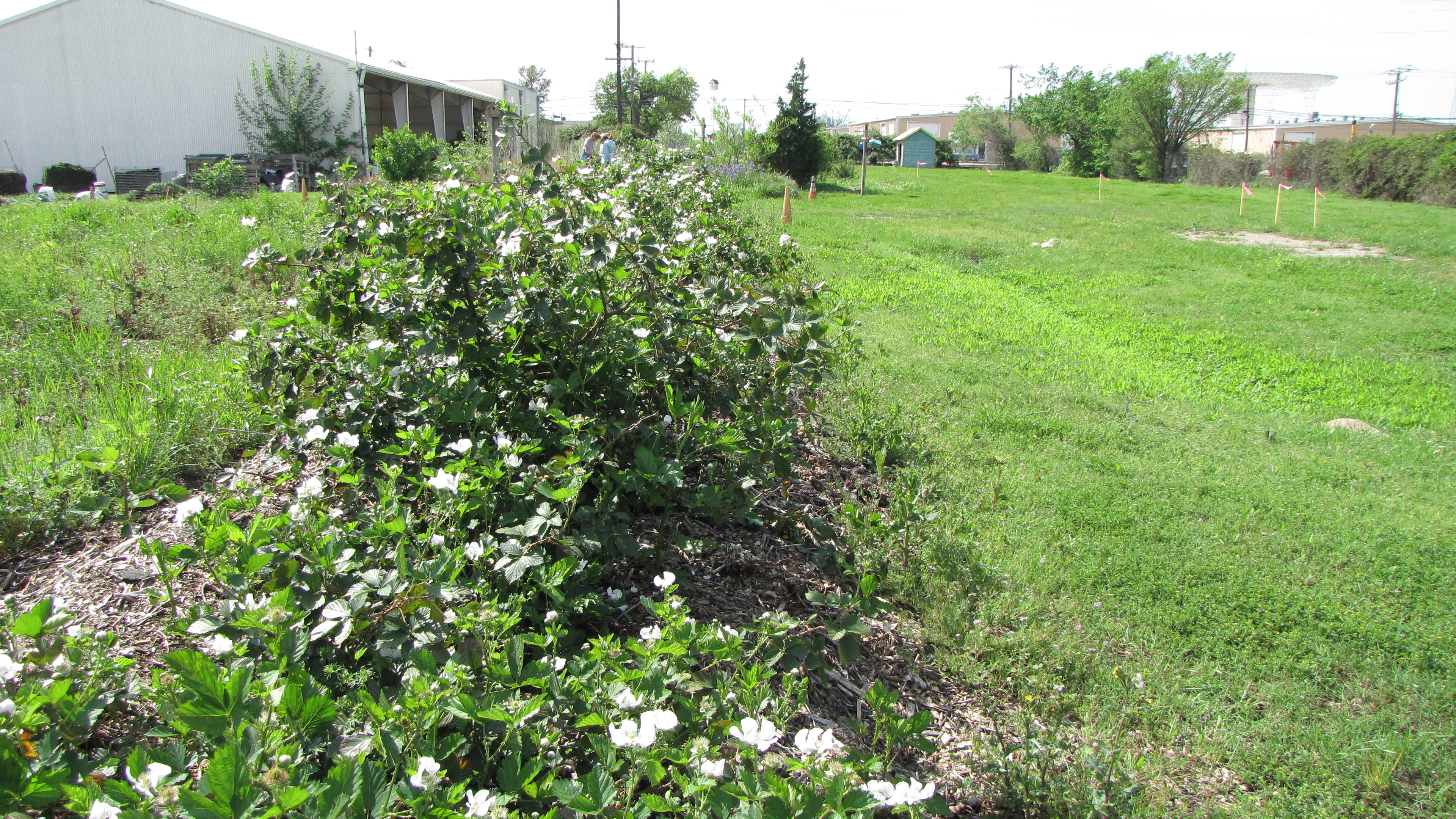
blackberry patch looking south

 Up till now, I lumped blackberries in with blueberries. I have even picked black/blue berries in East Texas’ crushing heat and humidity. (Now I buy them at the farmers market.)  I assumed that blackberries, like blueberries, had to have only acid, sandy soil. 

But listen up here: We can grow blackberries in Dallas! If you amend Dallas’ heavy, alkaline clay with expanded shale, cottonseed, and compost, and plant in raised beds, you will have enough berries for all the pies you can eat.  Blackberries like lots of moisture and full sun; run a drip irrigation line down your row of plants. 

blackberry canes

If you look at a blackberry leaf, it doesn’t resemble the smooth oval leaf of a blueberry.  Turns out blackberries and raspberries are not true berries; they belong to the Rosaceae family and are kissing cousins with roses.  Maybe that explains those worrisome thorns.  The “berry” is actually a collection of many drupelets; each holds a seed surrounded by the luscious berry flesh.

Blackberries can’t decide whether they’re a perennial or a biennial.  The roots aren’t going anywhere (perennial).  But the top canes do a two-year production number before their curtain call (biennial).  The first year, the new canes “primocanes” grow vigorously but don’t have any flowers.  The second year the same canes, now called floricanes (flori=flowers), get busy housekeeping, have flowers and berries and retire.  Tim says to cut back all the blackberry canes that have produced in July –August, leaving the primocanes for next year’s crop.
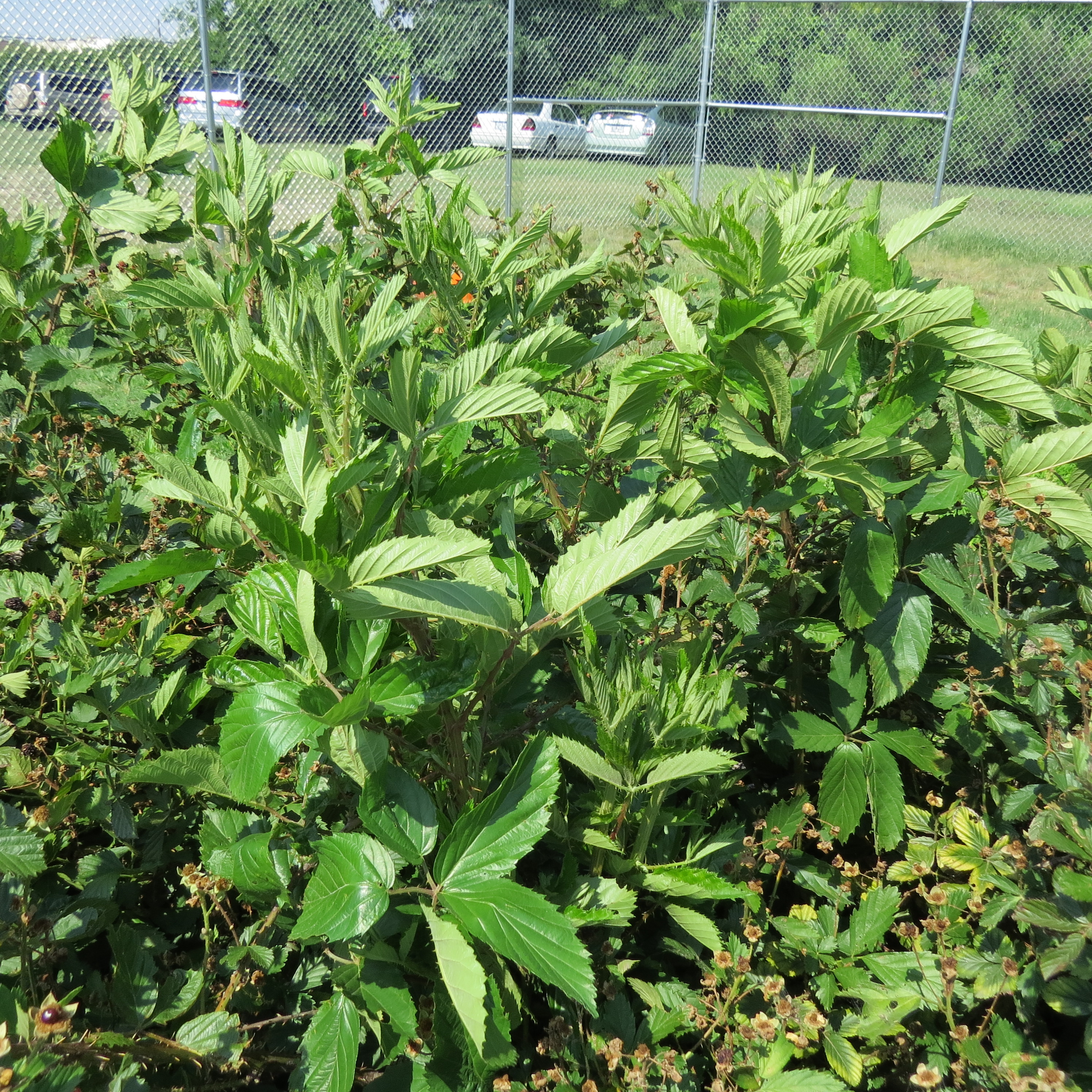
Blackberry Primocanes

Which variety to plant? Tim planted these thorned blackberries:

‘Brazos’ was developed at Texas A&M and introduced in 1959.  Most of the thorned varieties have Brazos in their heritage.  The Texas standard for years, Brazos is a large, erect growing, high yielding blackberry.

‘Rosborough’ was released by Texas A&M in 1977.  It ripens just after ‘Brazos,’ and has firmer, sweeter berries and smaller seed.  ‘Rosborough’ is a large plant, disease resistant, and very popular throughout Texas.

‘Womack’ is the smallest of the TAMU releases, with fruit that is firmer and better quality than ‘Brazos.’  Also released in 1977, it performs best in Central and North Texas.  It is not recommended for southeast or northwest Texas. 

Tim planted one thornless variety, ‘Natchez,’ which in our small trial produced more than the thorned plants.  Released in 2007 from the University of Arkansas, ‘Natchez’ has firm sweet fruit and upright growth.  It ripens early and has good disease tolerance.

Natchez Blackberry

 Plant blackberries in the fall.  Tim suggests purchasing plants from Womack  Nursery in De Leon, Texas.  

Right now, I’m scouting the yard for a sunny spot to fill with blackberries this fall. 

Elizabeth

Pictures by Starla

Buy local blackberries at farmer’s markets and use our recipes being posted yesterday and over the next few days to satisfy your cravings.  Next year maybe you will have your own producing patch!

Spinach Berry Salad with Blackberry Balsamic Vinaigrette

Enjoy this colorful summer salad when blackberries are at their peak.

Salad Ingredients:                                             Spinach Salad with Blackberry Balsalmic Vinaigrette

8 cups baby spinach or mixed greens

4 oz. chevre, crumbled

1 cup walnuts or pecans, toasted

1 pint fresh blackberries

Blackberry Balsamic Vinaigrette Ingredients:

½ cup strained *blackberry juice

¼ cup extra-virgin olive oil

2 Tbsp. balsamic vinegar

½ teaspoon dried thyme

Pinch of salt and pepper

To Make Blackberry Balsamic Vinaigrette:  Whisk together all ingredients until well-blended.  Season with additional salt and pepper if needed.

Tip:  To make the *blackberry juice, just puree blackberries in a food processor or mash with the back of a spoon.  Strain through a fine-mesh sieve.

Toss together spinach, chevre, walnuts, and blackberries.  Drizzle with the blackberry balsamic vinaigrette.

Recipe by Linda, picture by Starla

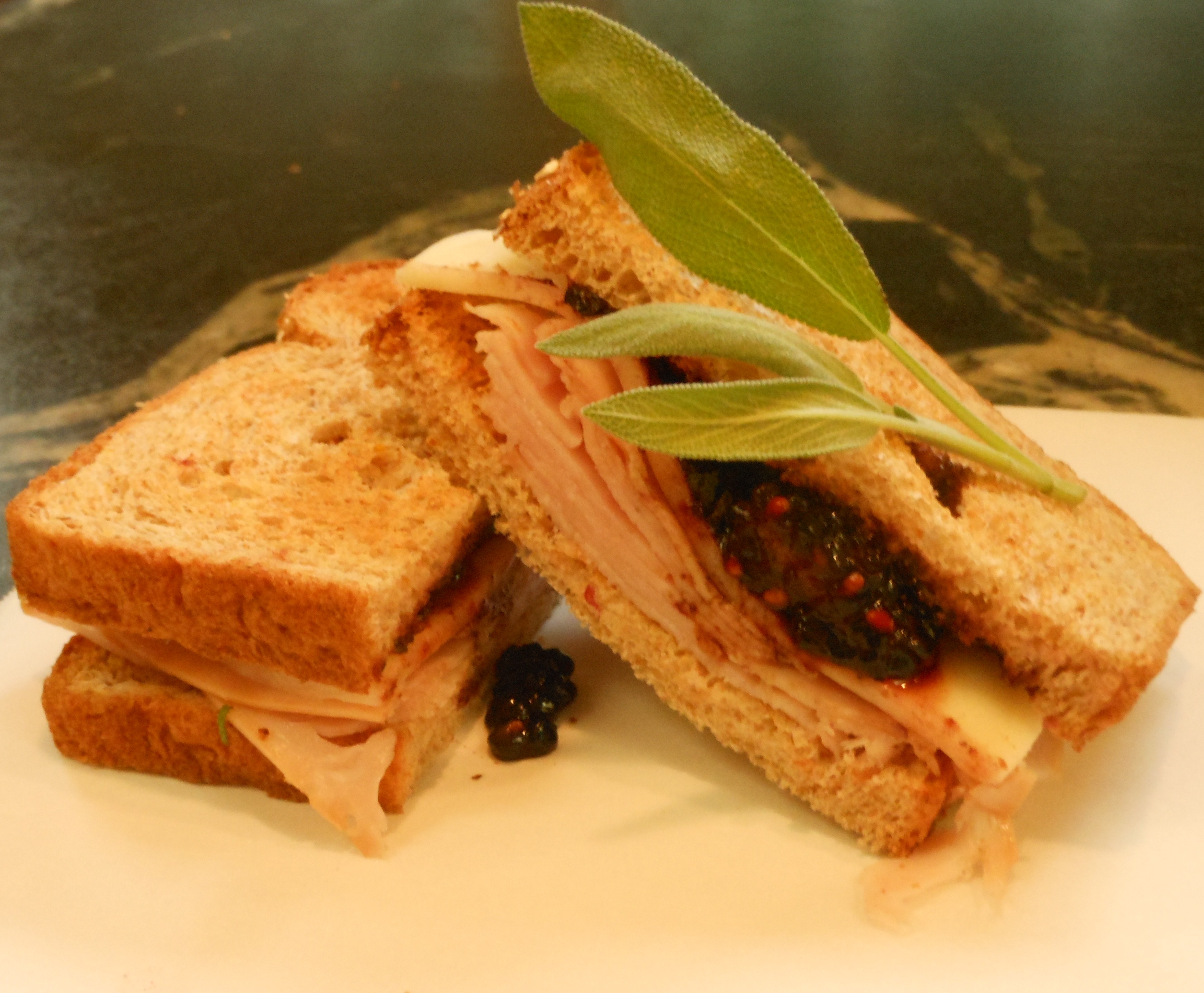
Smoked Turkey, Mozzarella, and Blackberry Sandwiches

Wrap these delightful little sandwiches and pack them for your next picnic! 

Smoked turkey, mozarella and blackberry sandwiches

2 cups fresh blackberries

1/3 cup balsamic vinegar

2 teaspoons sugar

1 teaspoon lemon juice

2 pounds smoked turkey slices

½ pound smoked mozzarella cheese slices

12 white or wheat sandwich bread slices, toasted

3 tablespoons minced fresh sage or 1 dried sage leaf, crushed

*Toss together first 4 ingredients; let stand 30 minutes.

*Layer turkey and cheese on 6 bread slices.  Spoon blackberry mixture over cheese; sprinkle with sage.  Top with remaining bread slices. 

Yield: 6 sandwiches

Recipe and Picture by Linda

Blackberry Class And Lunch In Our Blackberry Patch

Take the mystery out of growing blackberries. 

Come to the Earth- Kind ® WaterWise Demonstration Garden

at 2311 Joe Field Road

to hear Tim Allsup give an outdoor talk about how to grow ‘em and which varieties he likes, and how to prune ‘em! 

Date: Tuesday, June 4th                   Blackberries, Some Ripe                                                                    

Time: 11:00am-Noon

Place: 2311 Joe Field Road

Reservations: glamb@flash.net or sign up by leaving a comment on this blog.

Cost: $5.00 each person to be paid when you arrive for class 

Guests welcome, Master Gardeners will receive one hour education credit.

“Blackberry Lunch” 

Smoked Turkey, Mozzarella, and Blackberry Sandwiches 

Spinach Berry Salad with Blackberry Balsamic Vinaigrette 

Blackberry Lemonade

 Dessert Smorgasbord 

Blackberry Crumb Bars 

Fresh Blackberry Cake 

Blackberry Puffs 

Lemon Blackberry Swirl Pound Cake

Menu by Linda

Picture by Starla

Recipes will be included on our blog next week.


Spring Harvest

  Hooray for vegetable gardening  in Dallas  because it is  an all year feast  thanks to our mild winters. 

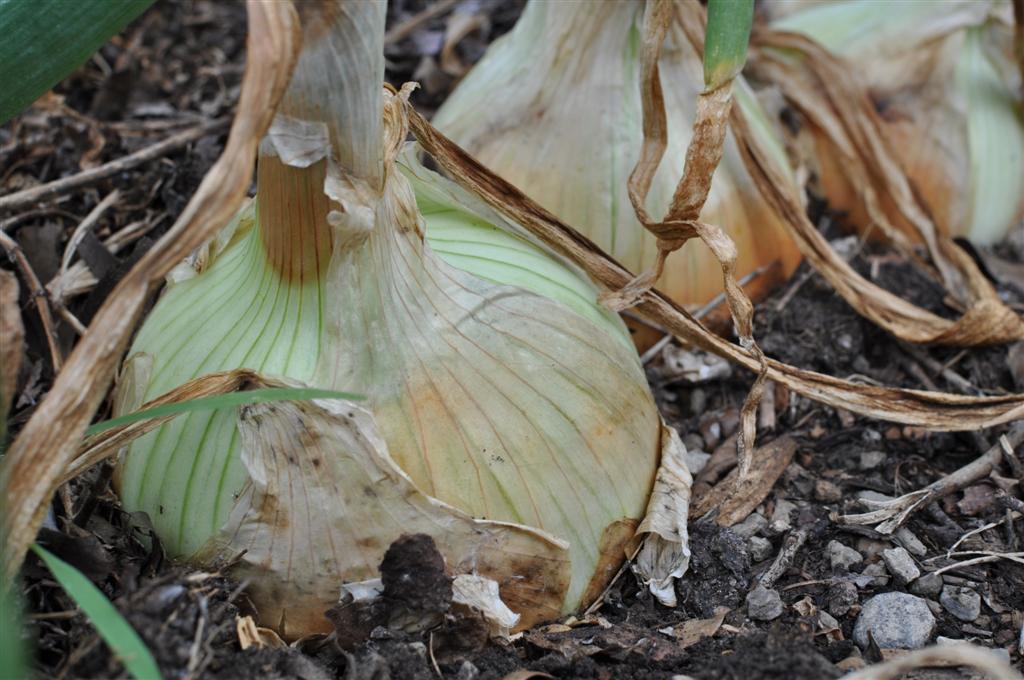
1015 Y Onions

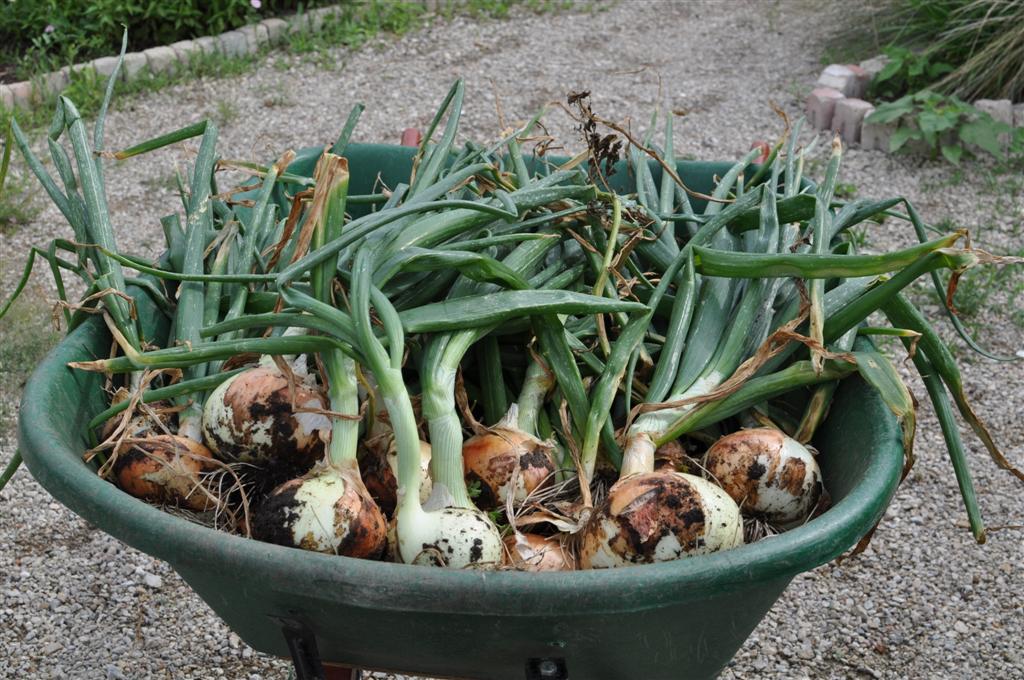
Dig back to the beginning of 2013:  in January  little onion sets, no bigger than a pencil, were planted.  Now  baseball size onions are ready for harvest

Wheelbarrow Of Onions

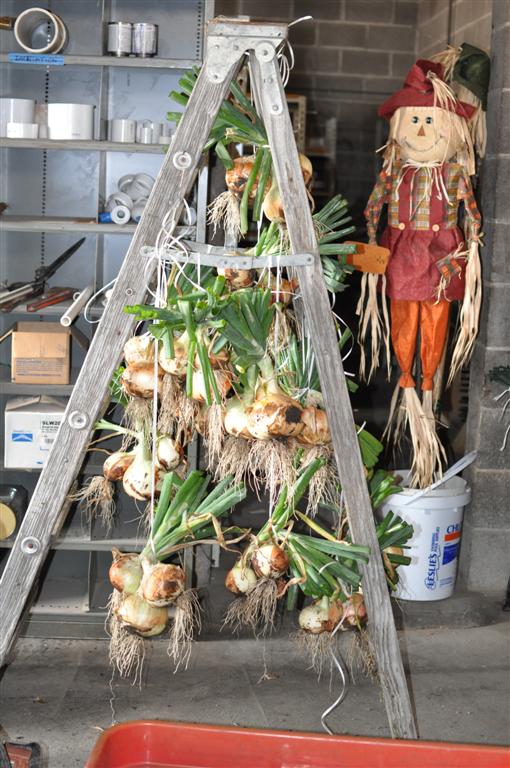
And ready for curing… and new recipes.

1015Y Onions Curing After Spring Harvest

This makes it possible to cook with each season’s bounty of homegrown vegetables all year.

 The Earth-Kind® WaterWise Demonstration Gardeners will be providing more farm to table recipes using our produce. More onion recipes are coming.

Dine with us by subscribing to our blog ! 

Ann

West Dallas Community School Third Graders In The Garden

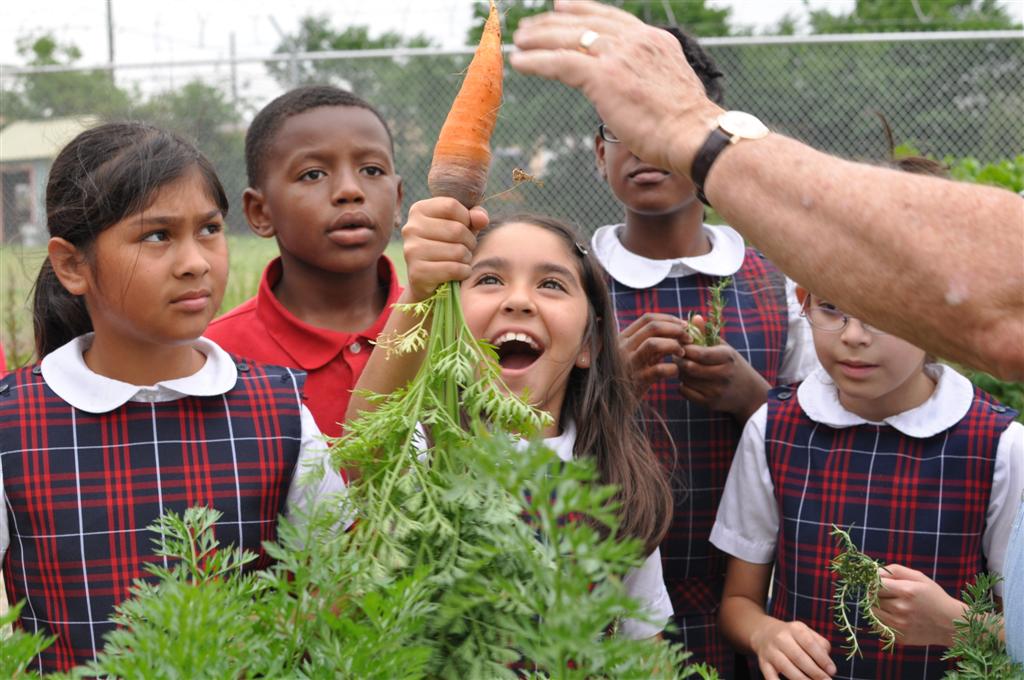
The 28 third graders who came to our garden Tuesday did not need much coaching in appreciating nature.

WDCS Third Graders Harvest A Carrot The loved the carrots and took them back to school for afternoon snacks.. Rosemary was another hit. Last week one of the kids  said he would sleep with Rosemary under his pillow. Maybe  there  will be alot of Rosemary under pillows this week!

WDCS Children PIcking Rosemary

It was a day of garden based education:  learning  the science of compost, how to attract wildlife to the garden, growing vegetables like beans, carrots, lettuce, and swiss chard; and how flowers  regenerate by seed.  Third Graders At The Demonstration Garden From West Dallas Community School

Class dismissed!

Ann

Red Yucca

 When the tall plumes of Red Yucca brighten up the Dallas landscape, it’s time to break out the mojitos: summer can’t be far behind. We’ve had a long, cool, graceful spring filled with the most beautiful roses in years. But today’s crushing heat and humidity signal the end of May, the last days of the school year, and the start of sun tan season.

Red Yucca With Larkspur in Background at The Demonstration Garden

Gardening just doesn’t get any easier than Red Yucca. You mix in expanded shale into your clumps of clay soil (for better drainage), plant the yucca, and watch its red blooms for 30 (THIRTY!) Weeks of the Year. Then you trim off the spent flowers at the end of the season. After yucca is established, you don’t even water it; the plant lives off rainfall. Poor drainage is its only downfall.

No wonder TXDOT plants these in large groups along the highway. Whizzing along at 70 mph, a large swatch of Red Yucca is breathtaking.

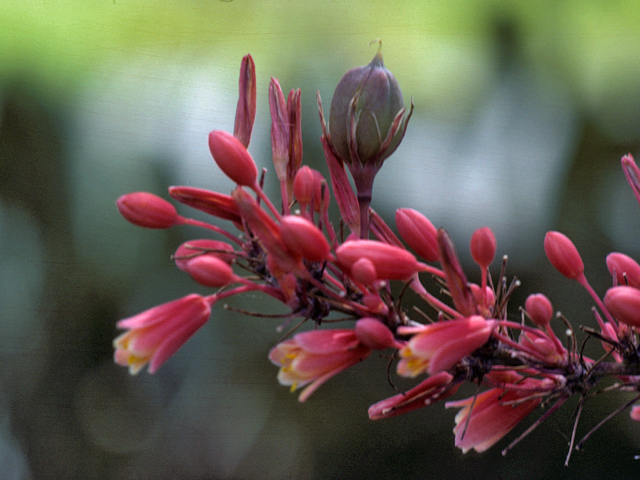
The one-inch bell-shaped flowers cluster up and down the stalks, rising 4 to 6 feet above the ground. Flowers are full of nectar and irresistible to hummingbirds. The most common flower color of Hesperaloe parviflora is the lovely coral outside, with pale yellow on the inside. A solid yellow selection is also available.

Close Up Red Yucca Bloom

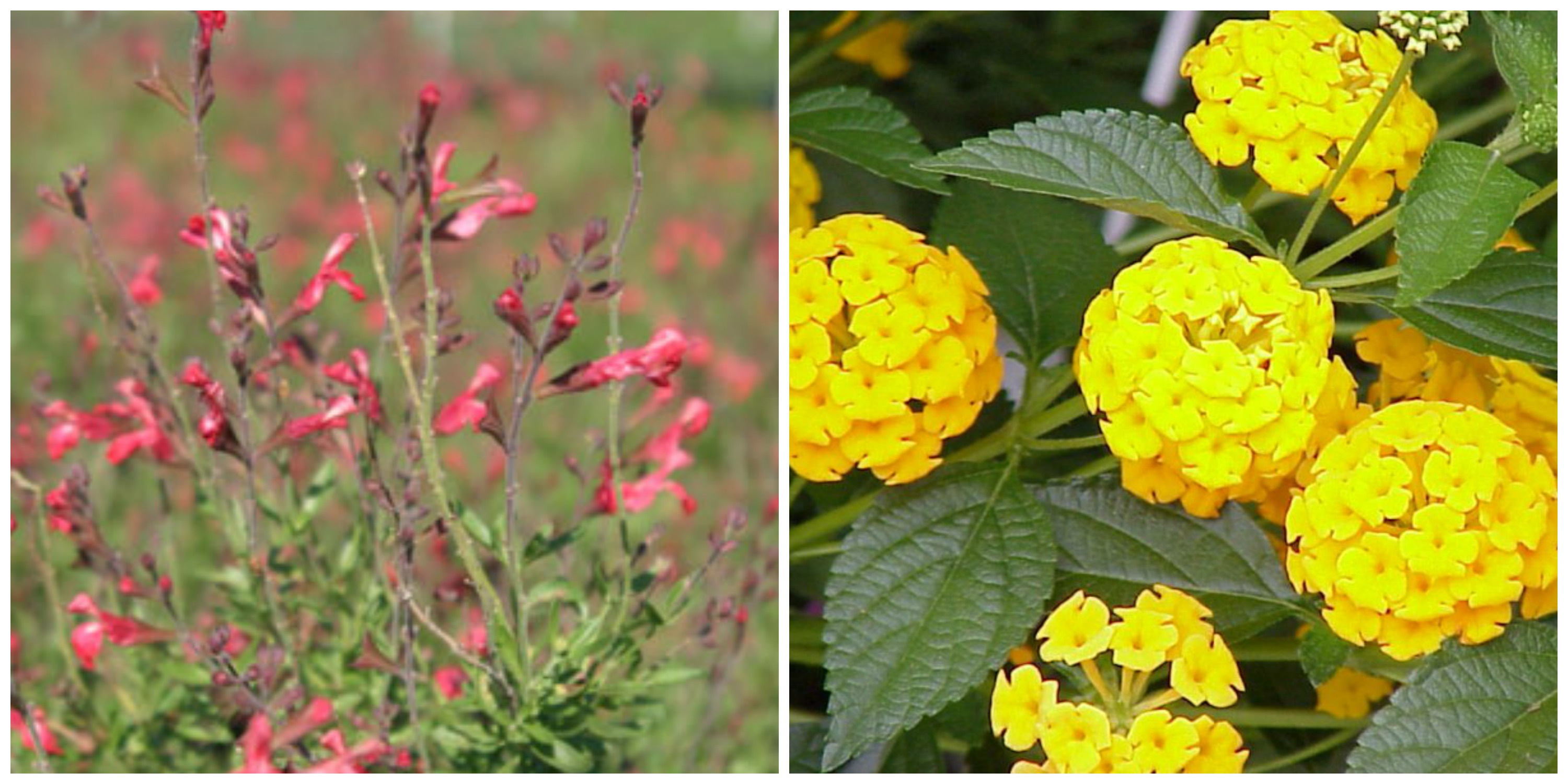
Red Yucca is a great choice to use around swimming pools and patios. Combine it with ‘New Gold’ lantana to pick up the soft yellow insides of the bloom or Coral Autumn Sage to repeat the color of the yucca’s flowers. Add a few grasses and you’re ready for a carefree landscape.

Coral Salvia and Lantana, New Gold

Mix me another mojito and pass the sunscreen.

Elizabeth

Close up photo of Yucca by Harry Cliffe

Spring Field Trips, West Dallas Community School Returns To The Demonstration Garden

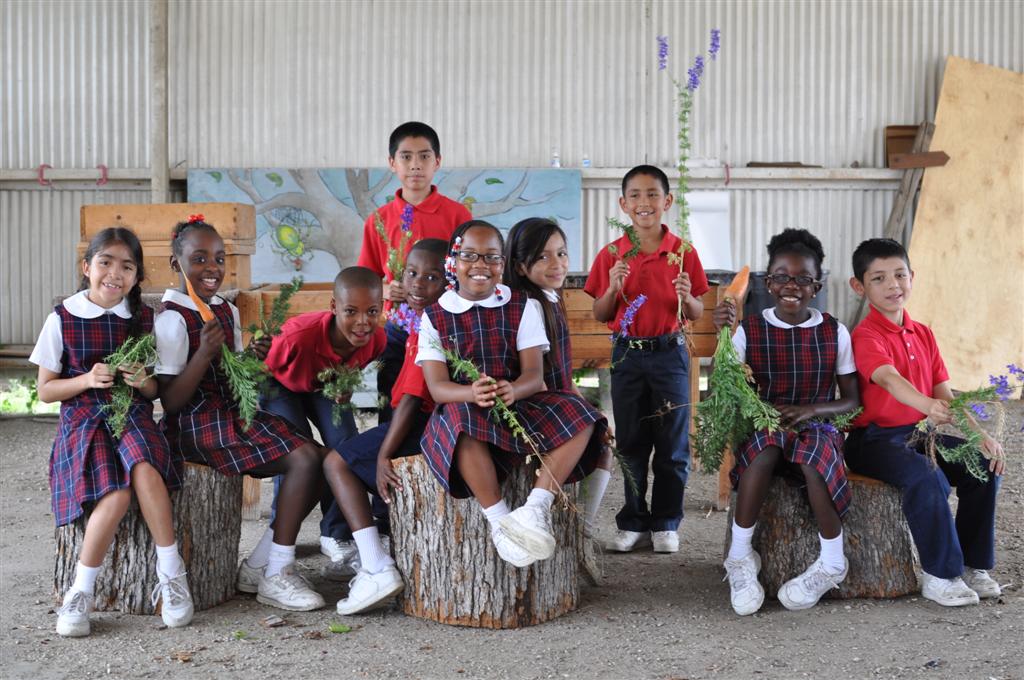
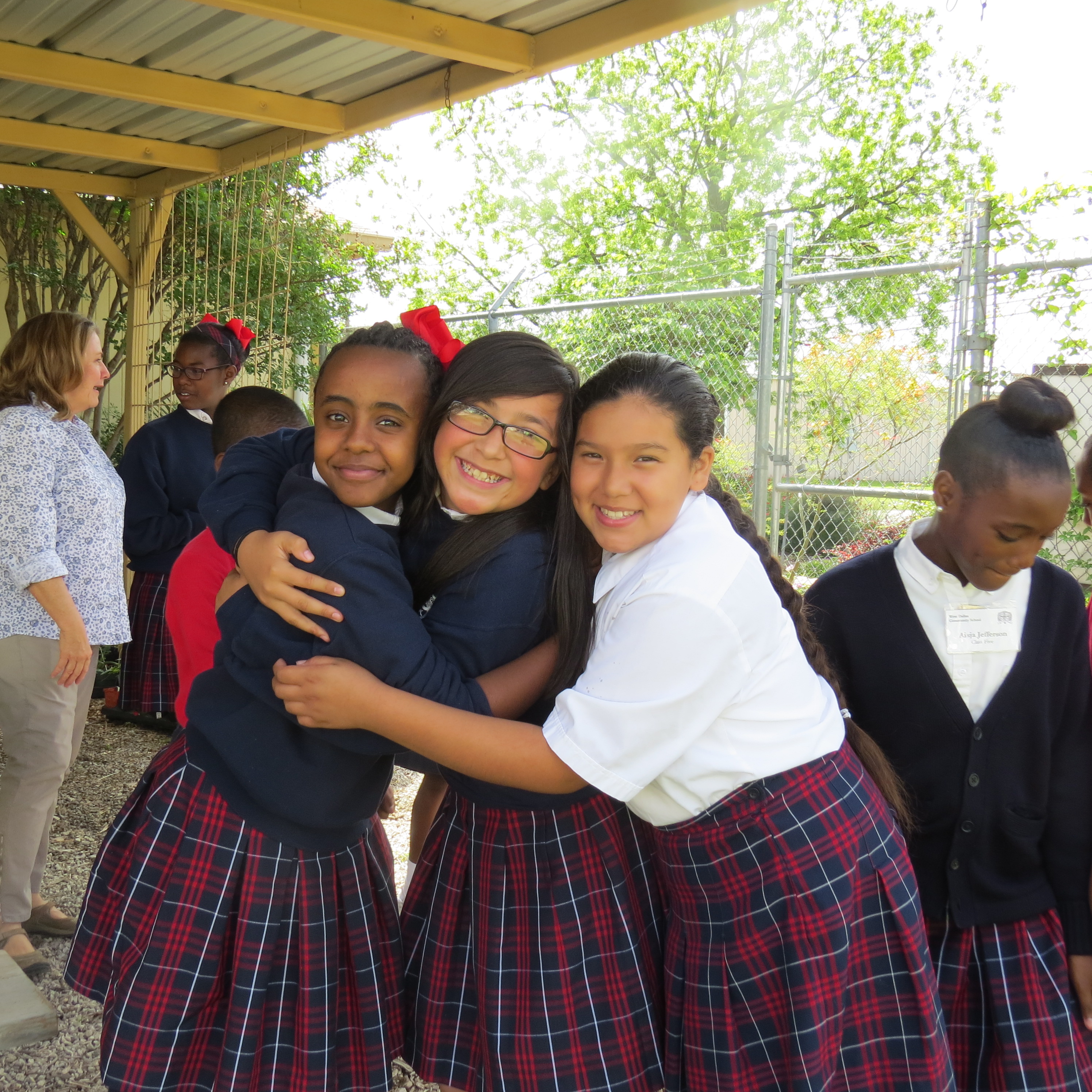
 At The Demonstration Garden we have enjoyed having West Dallas Community School 4th and 5th graders come to our garden.   The students at  have a nature studies class and come to our garden well prepared. 

They experience nature on a daily basis with their very own garden at school and by coming to our garden on field trips.  These students are tasting fava beans for the first time.  Notice the smiles on their faces and carrot and rosemary in the pocket.Fifth Graders From West Dallas Community School and Dallas County Master Gardener, Abbe in background

These boys are looking  carefully for ladybugs on the roses.

West Dallas Community School Boys Visiting The Demonstration Garden

We are happy to have children come to our garden and they are happy!

West Dallas Community School Spring 2013 At The Demonstration Garden

A WIN/WIN SITUATION FOR EVERYONE!

Ann

Pictures by Starla

“Without continuous hands-on experience, it is impossible for children to acquire a deep intuitive understanding of the natural world that is the foundation of sustainable development. ….

A critical aspect of the present-day crisis in education is that children are becoming separated from daily experience of the natural world, especially in larger cities.”

Natural Learning, Creating Environments for Rediscovering Nature’s Way of Teaching, Robin C. Moore and Herb H. Wong

2013,A Beautiful Spring in Dallas

Dallas gardeners have enjoyed a long, lovely spring and I don’t think we have glowed enough about it . If you feel like glowing, make a comment at the bottom of this post.  We will send a package of seeds from our garden to the first 10!

Think back to our post, A Texas Spring?  Week after week, we have enjoyed blooms galore!

We planted these Oxeye Daisies in 2009 and this year they have been a “best of show” type exhibit. 

Oxeye Daisies Blooming at The Demonstration Garden

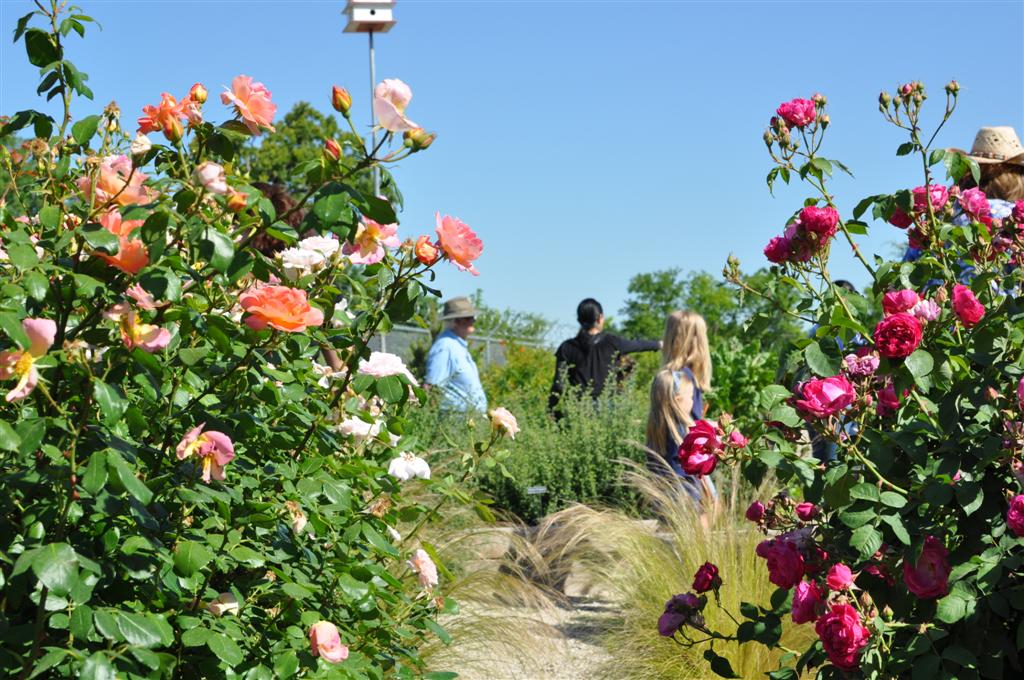
Our Earth-Kind® Roses have bloomed continuously as you can see looking through Lafter and Maggie. 

Earth-Kind Roses, Lafter and Maggie at The Demonstration Garden on Joe Field Road

Our Iris have finished blooming so we must say goodbye to them.

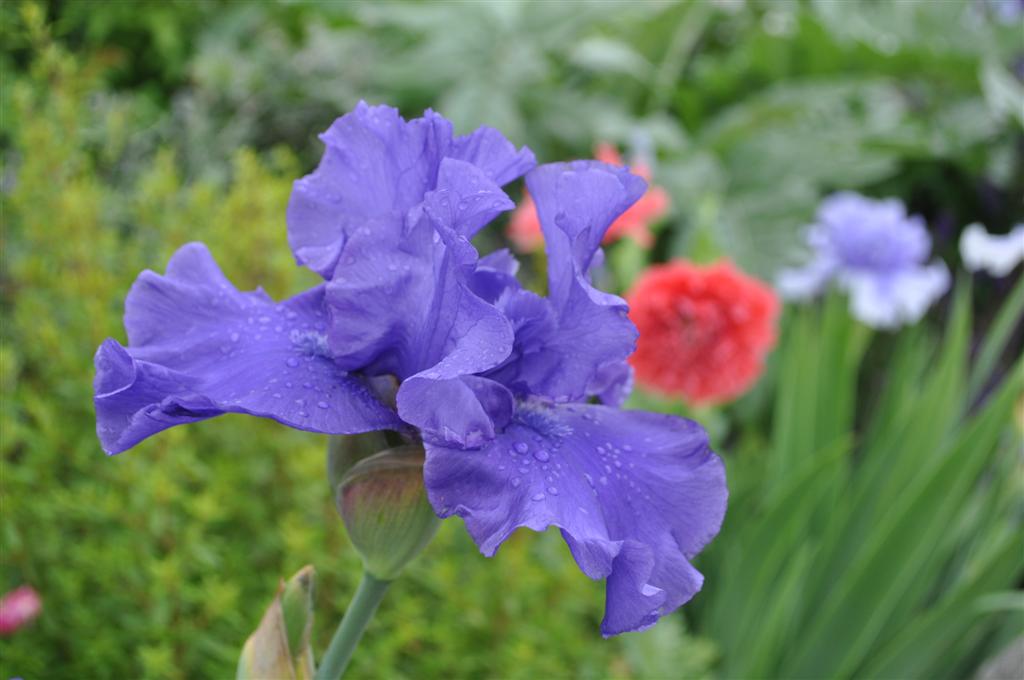
How appropriate this one is called Bye Bye Blue!

Iris with Poppy Blooming in Background

Ann