Gardening on a Shoestring!

Gardening on a Shoestring:

Confessions of a Frugal Gardener

Tuesday, June 6, 2017 at 11:00 am

Location:The Raincatcher’s Garden of Midway Hills

11001 Midway Road, Dallas in the Fellowship Hall

Speaker: Dallas County Master Gardener, Fran Powell.

Education Credit for Master Gardeners. Bring a friend.

This free event is open to the public.


Fran Powell comes from a family of English gardeners. Her mother instilled in her four daughters a love of the mysteries of life in the garden; from planting seeds and watching their growth to enjoying and harvesting the results.

Fran came to the USA in 1969 and to Texas in 1982. After spending seven years in Waco, she moved to the Dallas area in 1989. Two of Fran’s sisters are true English gardeners. Her younger sister has an award-winning vineyard in the southern part of England, while the eldest has a garden open to the public every year, including a meadow, which she leaves wild, many fruit trees and an enviable vegetable garden. Fran has used many of her eldest sister’s frugal methods and plans to share them with us.

What a treat—plan to come and learn from an experienced gardener and enjoy our gardens after class.

The courtyard of The Raincatcher’s Garden

Lisa Centala

Ann Lamb

Picture by Starla Willis


Plan Now to Attend the May Master Gardener Meeting and Plant Sale

Dallas County Master Gardener Association

May Meeting

 10:00am Plant Sale · 11:30am Meeting · Thursday, May 25th

Location: Midway Hills Christian Church Fellowship Hall, 11001 Midway Rd.

(West side of Midway just north of Royal Lane) Dallas 75229

Please use the south and west parking lots at Midway Hills Christian Church. The north lot is used by Dallas Cooperative Preschool parents.

 Plant and Brick Sale

Find summer-hardy plants to continue the gardening season with selections from our annual plant sale.

Honor a loved one with a brick purchase.

Cash, checks or credit cards accepted.


Program: “Fifty Shades of Green” showcasing 50 common

and rare native plants to use in the home landscape


Speaker: Ricky Linex who is a wildlife biologist for the Natural Resources Conservation Service (NRCS). He is also the author of

“Range Plants of North Central Texas, A Land User’s Guide to Their Identification, Value and Management” – a plant identification book for Texas detailing 324 various regional grasses, forbs, and woody plants.  

Book Sale 

The gift shop at Texas Discovery Gardens is the sole retail outlet in Dallas County for sales of this interesting book.  In conjunction with Mr. Linex’s presentation to DCMGA, a representative from the TDG gift shop will be present at our meeting and will sell copies of “Range Plants”.  The retail price of the book is $25.00.  All profits from the gift shop support TDG’s educational programs and mission.

Please join us for the plant sale and the monthly meeting,

which are both open to the public.


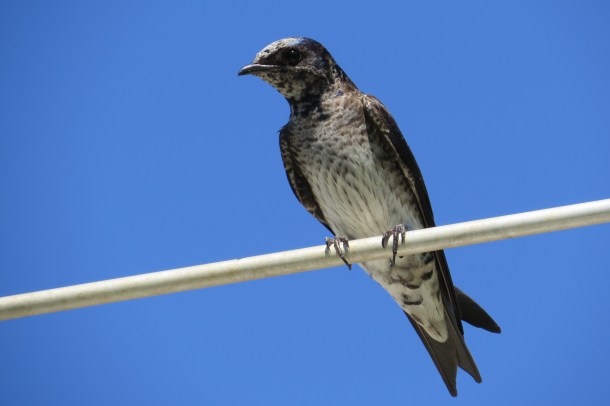
Purple Martins Have Arrived At The Raincatcher’s Garden

Deirdre starts this utube video saying “so these are the gourds where we’d really like to have a Purple Martin Colony.” She then explains the preparation and that we have been waiting two whole years for Purple Martins. No more waiting!

As of the beginning of May 2017, Purple Martins have landed at The Raincatcher’s Garden.

Purple Martin Close Up

Looking for friendly neighbors? Put up a Purple Martin house. It’s comparable to a miniature neighborhood in your backyard and Purple Martins chirp pleasantly and  perform aerial acrobatics to snap up flying insects.  Unfortunately, Mosquitoes only comprise as low as 3% of their diet.

At the end of the breeding season they gather in big flocks and make their way to South America.

Next year, we should see some of the same Purple Martins again!

Purple Martins At Home!

Video and Pictures by Starla Willis

If you are having trouble watching our Purple Martin Utube video, please click here.

Ann Lamb

Butterfly In My Garden

Around April 5, I caught a glimpse of a butterfly in my garden and ran out to get a closer look. I really couldn’t miss it since it had a wingspan of over 5 inches. It fluttered about my garden rue and then took off over the fence. I didn’t see any eggs just then but a week later there were tiny specks that might be larvae! By April 19, there were four “orange dog” caterpillars of the Eastern Giant Swallowtail, Papilio cresphontes. They look like bird droppings to deter predators.

Caterpillar On Rue

I have grown Ruta graveolens since becoming a Dallas County Master Gardener in 2006 and love its blue-green foliage and tiny yellow flowers. Along with various trees it is a host plant of the beautiful Giant Swallowtail larvae. The adults visit my garden every year but these are the first caterpillars I have seen. Photographing the adults is challenging as they are always in motion, fluttering away as they feed.

Then last fall I noticed this mating pair on my Loropetalum bush right at eye level. These are distinctive from the Eastern Black Swallowtail adult in that the and the row of large yellow spots on the dorsal (top) side meet in the middle of the wing rather than near the bottom and the ventral view is mainly yellow.

Eastern Giant Swallowtail Butterflies Mating

As of May 2, the four caterpillars have grown to over 2 inches and should pupate soon. The chrysalis stage is variable but usually takes 10–12 days. I hope to photograph at least one chrysalis and adult as it emerges. With luck they will return to my garden rue to produce another generation in the fall. Bugguide.net states they overwinter as a chrysalis.

Two Caterpillars!

Caterpillar Hosts: Trees and herbs of the citrus family (Rutaceae) including Citrus species, prickly ash (Zanthoxylum americanum), hop tree (Ptelea trifoliata), and Common Rue (Ruta graveolens).

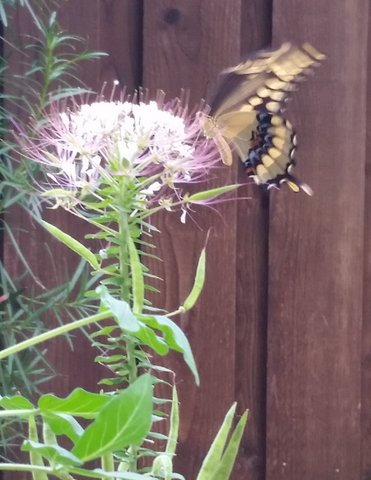
Adult Food: Nectar from lantana, azalea, bougainvilla, bouncing Bet, dame’s rocket, goldenrod, Japanese honeysuckle, and swamp milkweed. Here’s one feeding on clammyweed last summer.


Eastern Giant Swallowtail on Clammy Weed

Grow Common Rue and you might have these interesting and beautiful garden visitors!

Susan Swinson


When Words Fail

    Probably almost all of us have had those situations where mere words alone seem to fail us.   Occasionally it is in the happy times, such as an upcoming marriage or a new home, when there are too many well-wishes that one wants to say.  However it is often in the sad, gut-wrenching times when one feels at loss for words.  At these times for gardeners, the language of symbolic herbs and flowers may be of help.

Tussie-mussies (a.k.a. tussie mussy) are symbolic bouquets of flowers and herbs.  Though often associated with the Victorian era during which the language of flowers and herbs were codified and instructions for making tussie-mussies were found in books such as Godey’s Ladies Book, the actual history of the tussie-mussie goes back much further than Queen Victoria’s era.  In fact, due to the lack of hygiene and sanitation, the use of nosegays to mask odors has been traced to medieval times and can be found in several cultures such as Greece, Turkey, and the Aztecs of Central and South America.  Because the meanings of herbs and flowers were derived from various cultures, some herbs and flowers took on widely divergent meanings, sometimes even opposite meanings.  For example, according to an article in Mother Earth Living, the inclusion of basil in a tussie-mussie meant “best wishes” in Greece, “hatred” in Italy, and “sacred” in India.  However a few herbs and flowers have retained their same meaning throughout the world.  Rosemary is an herb that commonly means “remembrance.”

In compiling a vocabulary of symbolic herbs and flowers, most people start with lists of herbs and flowers and their meanings found in books such as Tussie-Mussies: The Victorian Art of Expressing Yourself in the Language of Flowers by Geraldine A. Laufer and The Illuminated Language of Flowers by Jean Marsh.  Though it helps to have a wide variety of herbs and flowers available, even a very small bouquet of mixed flowers can say “love.”  As opposed to a typical large bouquet, a tussie-mussie is normally just the size of a nosegay.  Tussie-mussies can be presented in a small vase or, if you really want to get fancy and be historically-correct, antique tussie-mussie holders can be found on Ebay. Just be sure to include a card that explains the meaning behind each herb or flower.

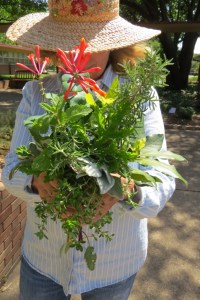
Flowers and herbs gathered for a tussie-mussie

Over the years I have made tussie-mussies for friends who have new jobs, weddings, and babies.  I have also found the language of flowers to be especially appropriate in those sad times, such as a bouquet that was given to a friend who was placed on hospice.  That tussie-mussie  (composed of geranium for friendship, Lamb’s Ear for kindness, thyme for courage, rosemary for remembrance, sage for wisdom, bay for peace, peppermint for warmth of feeling, honeysuckle for gentleness,  oak for strength, and, of course, flowers for love seemed to say it all.

Carolyn Bush

Picture by Starla Willis

Tussie- mussies by some of our school children here.

Have you ever seen a butterfly laying an egg?

Thanks to our own intrepid photographer, Starla, for capturing a rare picture of a butterfly laying an egg.

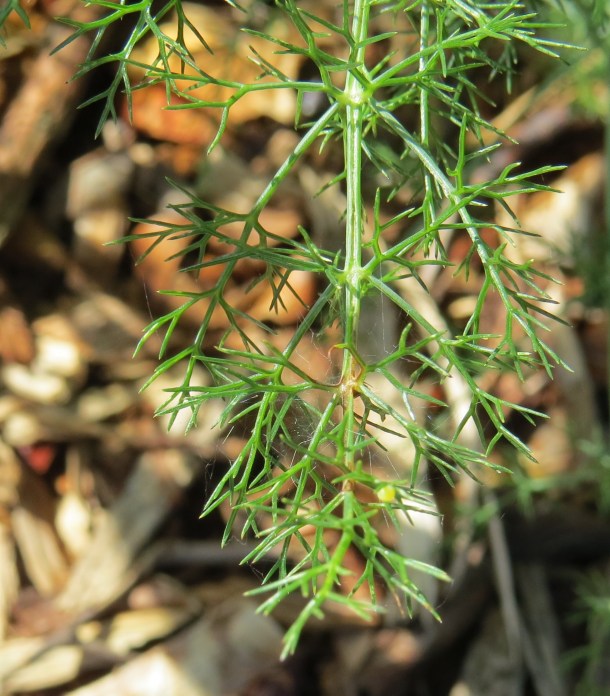
Black swallowtail butterfly laying an egg on fennel

And here’s the egg-

Look for the creamy yellow egg located on the lower right of the picture

*Eggs are laid singly on the host plants—usually on new foliage and occasionally on flowers. Development time is variable depending on temperature and host plant species, but generally the egg stage lasts four to nine days, the larval stage 10–30 days, and the pupal stage nine to 18 days.

Fascinating!

Ann Lamb

Picture by Starla Willis

*http://entnemdept.ufl.edu/creatures/bfly/bfly2/eastern_black_swallowtail.htm

Study up on our butterfly garden by looking at the right hand side of the front page of Dallas Garden Buzz under Raincatcher’s Resources for a list of hummingbird and butterfly plants or type butterfly in our search box for a host of articles on butterflies.


Arugula Has Its Day

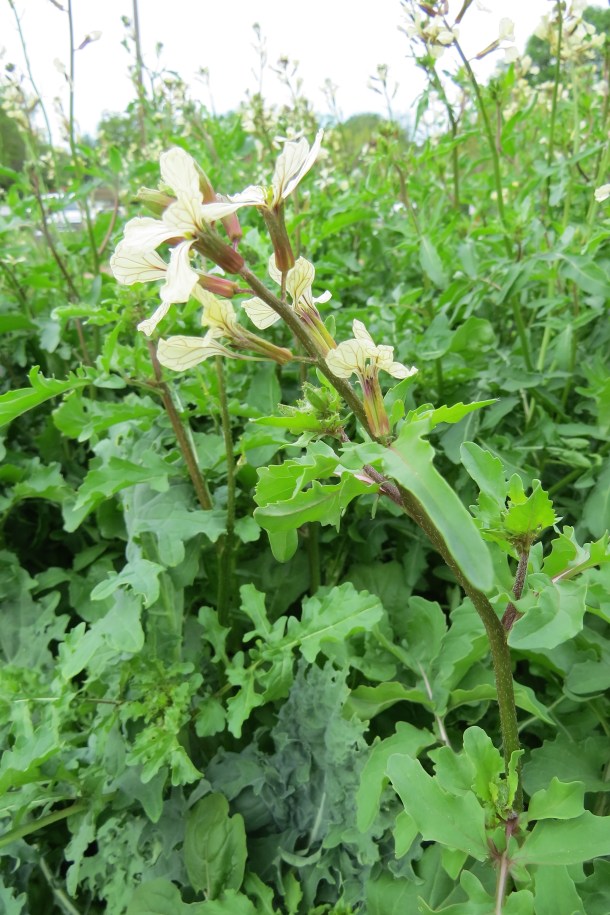
Tuesday at Raincatcher’s we noticed that the arugula was bolting. Lovely little white blossoms crowned the tops of all the arugula plants in our raised bed.  The bees couldn’t have been happier.

However, it also reminded us that the time had come for one final harvest. Carefully we clipped our way through the plants with bees buzzing all around us.  A very generous amount of arugula, at least 6 pots full, was harvested and shared with our volunteers.

Here is a delightful recipe for using fresh, peppery arugula brought in straight from the garden. A nice addition to the salad would be 1 bunch fresh roasted beets.  Be creative, arugula supports a variety of many different ingredients.


Arugula Growing at The Raincatcher’s Garden

Arugula Salad

Ingredients:

¼ cup sliced natural almonds

3 tablespoons olive oil

1 tablespoon minced shallot

1 tablespoon fresh lemon juice

1 ½ tablespoons red-wine vinegar

¼ teaspoon sugar

½ teaspoon salt

3 cups baby arugula (about 3 ounces)

3 or 4 radishes (thinly sliced)

Directions:

  1. Cook almonds in oil in a small skillet over moderate heat, stirring occasionally until pale golden. Cool almonds in oil, (nuts will get darker as they cool). Transfer almonds with a slotted spoon to a small bowl and season with salt.
  2. Stir together shallot, lemon juice, vinegar, sugar, salt and oil from almonds in a large bowl.
  3. Using a mandoline or very sharp knife, thinly slice radishes.
  4. Combine salad ingredients in a large bowl. Drizzle dressing over the top and toss well to coat the leaves.

Yield: 4 servings

Note: Freshly “pulled” radishes were added to the salad, as well.


Linda Alexander

Find out more about arugula here .

And here’s another way to use harvested arugula.

April Gardening, 2017

Making our raised beds even better!

Dallas County Master Gardeners at The Raincatcher’s Garden of Midway Hills

Upcoming Educational Events-Bring your friends and neighbors:

Saturday, April 8th , Spring Lawn Care by Stephen Hudkins and Jeff Raska at the Extension office, 10am until noon. Call the Master Gardener Help Desk for more information-214.904.3053.

Address: 10056 Marsh Ln Ste 101B, Dallas, TX 75229.

Saturday, April 15th, Updating the Home Landscape for Sun and Shade by Brad Sandy at Raincatcher’s, 10 until noon.

Address: 11001 Midway Road, Dallas, Texas, 75229. 

Ann Lamb

Picture by Starla Willis

Spring Is In The Air-Raised Bed Gardening

Good morning, Dallas Garden Buzz readers! If you are a subscriber and receiving emails of Dallas Garden Buzz posts, you can watch our informative videos by clicking on Dallas Garden Buzz at the top of your email. Pictures and videos are better if you go to our actual site rather than staying with the post in your inbox.

For those of you who have not become subscribers, please sign up to follow Dallas Garden Buzz by entering your email in the right hand column at the top of the page. We hope to have two posts a week during spring of 2017.

Recap of Jeff’s advice:

  • Top 12 inches of a raised bed should be a mixture of loamy soil amended with finished compost. We like homemade compost but it can also be purchased at garden centers by the bag or in bulk from companies who make it. Raised bed prepared mix by bag or bulk can also be purchased with compost already included.
  • Bottom portion of your raised bed could be hardwood mulch or even cut logs
  • 1/4 inch galvanized hardware cloth can be placed under the soil to deter unwanted critters from entering the bed by digging under it

What’s growing at The Raincatcher’s Garden of Midway Hills?

Garlic, potatoes, onions, spinach, leeks, radish, and mesculun were planted earlier.

Tomato varieties, Black Krim, Celebrity, Sun Gold, and Green Zebra have been planted. We were able to plant them in late February  because of our early spring weather.

Raincathcer’s will also be planting a Three Sisters vegetable bed, Ambroisa melon, okra (of course!) and peppers.

Ann Lamb

Thank you Jeff Raska, Dallas County Horticulture Program Assistant, Texas A&M AgriLife Extension Service.


Rose Rosette, Now What?

There’s no doubt about it—the rose is the world’s most popular and acclaimed flower. Valentine’s Day is a natural time to think of roses, a symbol of love and beauty.

We are receiving or buying them for loved ones and also thinking about roses grown in our own gardens. Dallas gardeners know to prune their roses around February 14th.

Sadly my pruners will be on the shelf; my roses have fallen prey to the disease for which there is no cure, rose rosette disease (RRD). Instead I will be making  decisions about replanting my roses or planting perennials instead of roses.

Stephen Hudkins, Dallas County Extension Agent, Horticulture, Texas A&M AgriLife Extension Service, encouraged me by reminding me that rose rosette has been around a long time and that other cities under its siege have eventually recovered. He also counseled me to plant a few roses and think of them as one- or two-year plants. Remove them if rose rosette returns.
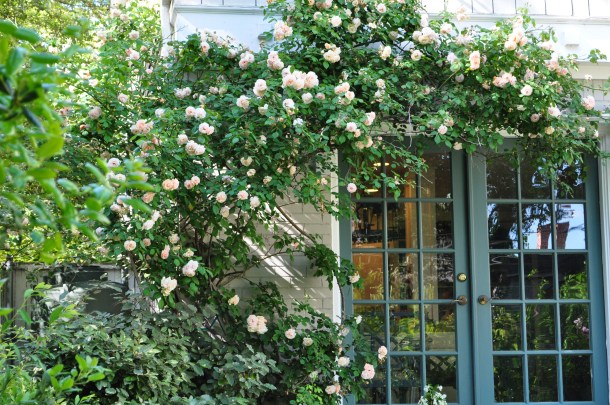
Rose Buff Beauty to be replaced

Rose Buff Beauty to be replaced

We also have counsel from Maddi Shires who has answered several questions regarding Rose Rosette. Maddi is a graduate student, working on her PhD in Plant Pathology and Microbiology with Dr. Kevin Ong, Associate Professor & Extension Plant Pathologist, Dept of Plant Pathology & Microbiology and Director – Texas Plant Disease Diagnostic Laboratory, Texas A&M AgriLife Extension Service. Her research project is Rose Rosette Disease Resistance in Texas. The Raincatcher’s Garden has planted a research plot of 40 roses as part of her study. Here’s what Maddi shared with me:

Howdy Ann,

1) The gardeners that I have talked to are doing one of two things to replace their roses: Many are taking the chance and replanting more roses again. This could be a good idea for those who love roses, and many are willing to buy roses year after year to replace what was lost. There are many varieties that should be avoided, such as the Knock Out® rose family, Julia Child™, and Home Run® family, just to name some of the more prominent roses I’ve seen used in mass plantings in Dallas. The other thing that people are doing, especially those who do not want to have the cost of purchasing roses each year, is that they are moving away from roses and towards other plants.

2) I would never tell someone to not plant roses, however if they do not want to treat roses as a 1-2 year plant, people may not want to go back with them. In Dallas County and the surrounding counties, the disease incidence is high, and until we have identified a tolerant or resistant variety, it is likely that roses will have shorter lifespans when planted back in areas that have already had virus-infected plants.

3) As of right now, we have not identified any tolerant or resistant varieties, so if you enjoy roses and will be able to remove them if they become infected, I would recommend planting them! There is no reason to not enjoy a plant as long as you can remove it and properly dispose of it if it is infected by the virus. There are rose rosette trials going on all over the United States, and results are varied for many rose varieties. I have three varieties that I did not see infection in in the first 6 months of my trials—those were Basye’s Purple, Caldwell Pink, and Chuckles. Chuckles has been reported to have symptoms from a public garden in Dallas, so it may not be a good alternative. Stormy Weather, Carefree Spirit, and Sydonie are some others that have been suggested as tolerant. If you plant roses that are these varieties or others and they become infected, please let me know because we are doing a variety list of infected roses.

4) I have not heard of anything specific that people are planting to replace roses. I would recommend doing research on plants before planting them to see if they have disease problems. For example, many people replace rose gardens with boxwood but boxwood has problems with blight, which requires treatment and can kill the plant.

As always, if you suspect that your rose may have rose rosette disease, please send a sample into the Texas Plant Disease Diagnostic Clinic. Many times there are other plant problems confused for RRD, and plants are taken out that may not need to be. When removing plants, make sure to bag all plant material, dig up the roots, and properly dispose of the plant material.

Thanks,

Maddi Shires


Rose Replacements:

  • Althea (Rose of Sharon). I want to try the smaller variety, Lil’ Kim
  • Quince. There are so many varieties
  • Loropetalum, Chinese Fringe Flower. The color of the leaves replaces the red in your landscape if you lost Knock Out roses
  • Perennial Hibiscus. Try Hibiscus ‘Moy Grande’ for big color
  • Texas Superstar® plants

Ann Lamb

Rose rosette disease trials are in the early stages and nothing conclusive has been determined. If you read conflicting advice or have further questions, please respond back to us. Dallas Garden Buzz will respond.