What Happened to Taking It Easy in Your Winter Garden?

Don’t believe it when garden writers say winter is a time to relax.  Here in the north garden vegetable area we are speeding up to get everything done in time for spring.

The cooler temperatures make it great time to take on hardscaping projects. We made an 80 foot long blackberry trellis from cattle panels and T-posts. The cattle panels are inexpensive, sturdy, and versatile but their 16 foot length requires some planning for how to transport them.

The vertically trained blackberry canes will get more sun and the berries will be much easier (and less hazardous) to harvest. Fortunately we pruned the second year floricanes after they fruited last summer making the task of training the remaining canes much easier.
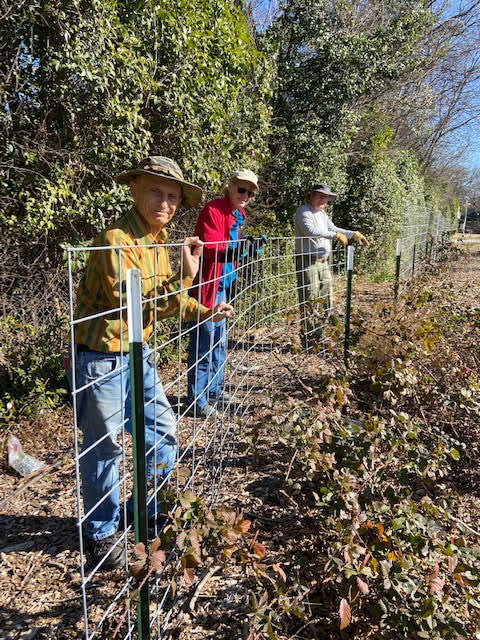
Blackberry picking will be so much easier in May!

The vegetable team has been hard at work sheet mulching to create four new in ground beds.  We are also amending the soil in the Donation Garden and former watermelon patch with mycorrhizal fungi, dried molasses, and compost to enhance nutrient uptake. We have planted fava beans in the central in ground bed to fix nitrogen for the next crop.
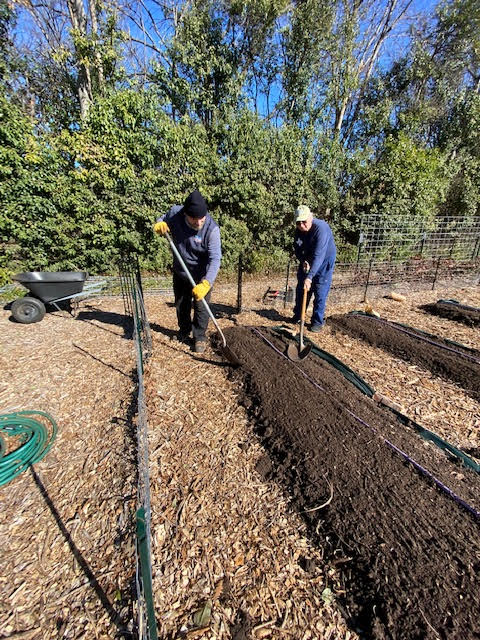
Amending the soil in the Donation Garden.
Gerry Infantino and Len Nadalo .

January is the time to plant short day and intermediate day onion slips in Dallas. The day length refers to the amount of sunlight needed for the onions to bulb. We have planted the sunniest side of the Donation Garden with two short day varieties, the TAMU developed Texas Super Sweet Onion which is on the Texas Superstar list; and a disease resistant hybrid called Southern Belle Red Onion.

Gerry Planting Onions

It is also a very busy time for seed starting.  Buttercrunch lettuce started indoors on December 23 was ready to plant but the unusually warm December weather turned into a wave of freezes after New Year’s Day.  We ended up harvesting the outer leaves in a “cut and come again” fashion and adding them to a food bank donation of salad greens and the last of the fall tomatoes. The lettuce seedlings can still be transplanted outdoors and will tolerate light frost (28 to 33 degrees Fahrenheit).
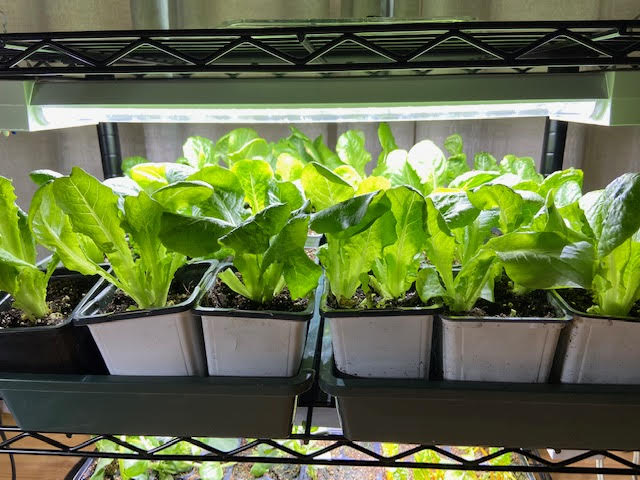
Buttercrunch Lettuce

We are cutting it a little bit close but can still start our tomato seeds before the end of January.  This year we are sticking mainly with small and medium size tomatoes. Why? There is less time for things to go wrong before they mature!  Our varieties will include Super Sweet 100, Sweetie, Sun Gold, Early Girl, Roma, and Berkeley Tie Dye Pink, which was submitted as a favorite by area gardeners to The Dallas Garden School.

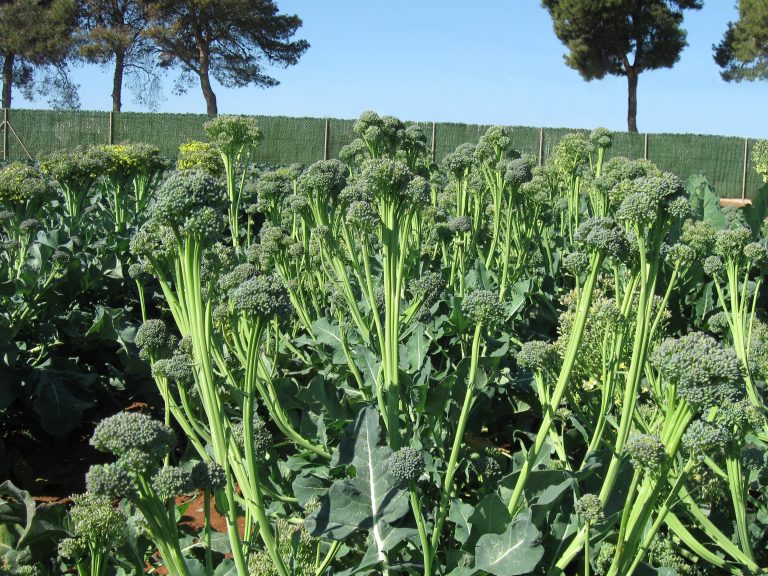
The Atlantis F1 Hybrid Mini Broccoli produced very well but we lost several plants during the worst of the early January freezes. Because it requires only a few weeks to mature we will able to have a second crop along with another fast maturing mini broccoli called Sweet Stem F1.

We tried several varieties of peppers last year and were pleased with how productive and easy to grow they were.  Also, our preschool visitors were delighted when they were each allowed to pick one.  This year we will be growing Jimmy Nardello, Gypsy, North Star, Marconi Rossi, Tajin, and Aji Dulce peppers. They can be started indoors by seed now and throughout February.

Radishes require only about a month to mature so we have a habit of planting the seeds anywhere we have a bit of extra space during the cooler months. Spinach takes 40 – 60 days but can be planted outdoors now through early March. It has been another easy to grow crop.

Garden writers, take note, winter is a time to get a lot done that will make spring and summer more productive.

Beverly Allen, Dallas County Master Gardener Class of 2018
Holidays and The Big Three

Dallas Garden Buzz readers, save this for next year’s ideas or refresh your arrangements now from your garden. We wish you a Merry Christmas and thank you, Linda!

A picture containing indoor, flower, plant, table

Description automatically generated
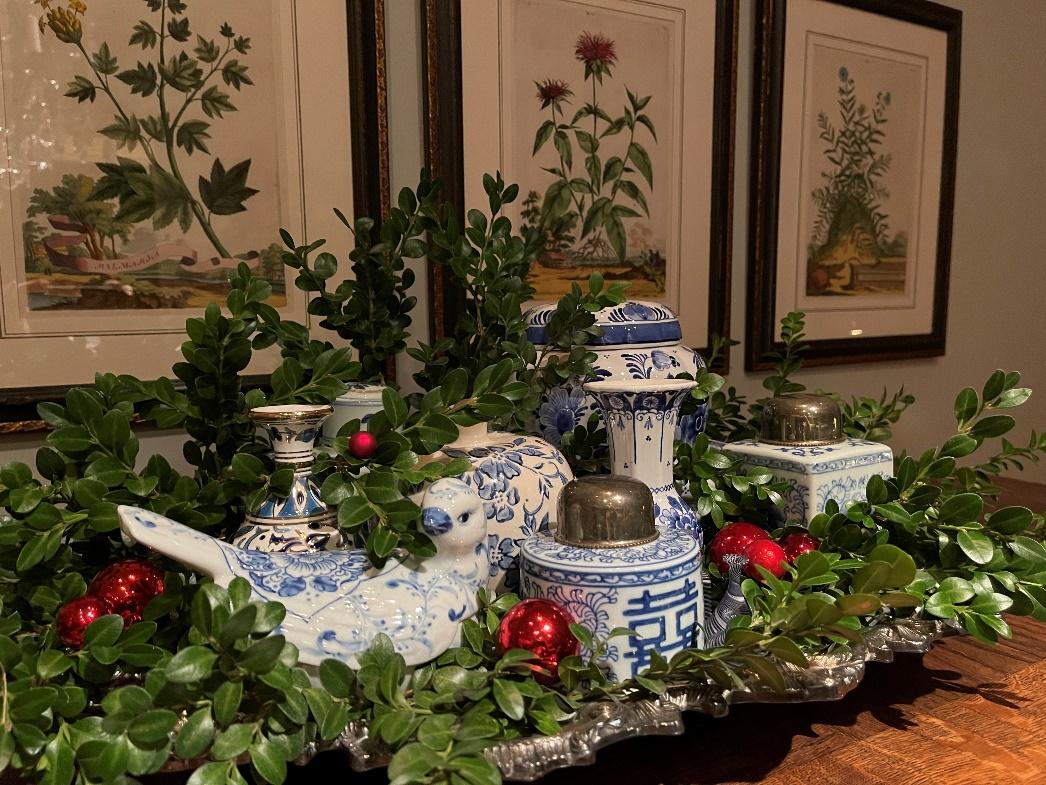
A collection of Chinoiserie and Delftware gets a botanical touch with sprigs of boxwood and red baubles

You may be thinking of a Bowl Game or the ever popular football playoffs occurring this month. As with many spouses, mine included, sports seem to dominate the evening and weekend television options. My time has been spent unpacking boxes and deciding how to repurpose over 50 years of collected Christmas treasures. But this year I’m going to approach it differently and with a more natural touch. I’ve made the decision to go green for Christmas 2021. 

For me, there is no better way to breathe the spirit of Christmas into my home than decorating with greenery from the garden. Boxwood, holly and magnolia are ‘the big three’ growing abundantly in our yard. Most of them are over 40 years old and have plenty of foliage to share.

Let’s discover a few simple ways to allow freshly gathered greenery to invigorate our senses and fill our homes with the fragrance of nature. May the warmth of the holiday season bring you joy and peace this year.

Peppermint candy canes add sparkle to a boxwood wreath greeting guests at the front door
Our favorite Christmas appetizer is this Cheddar Cheese Ring filled with Strawberry Preserves. Sitting it inside a boxwood filled twig wreath brings nature to the table.
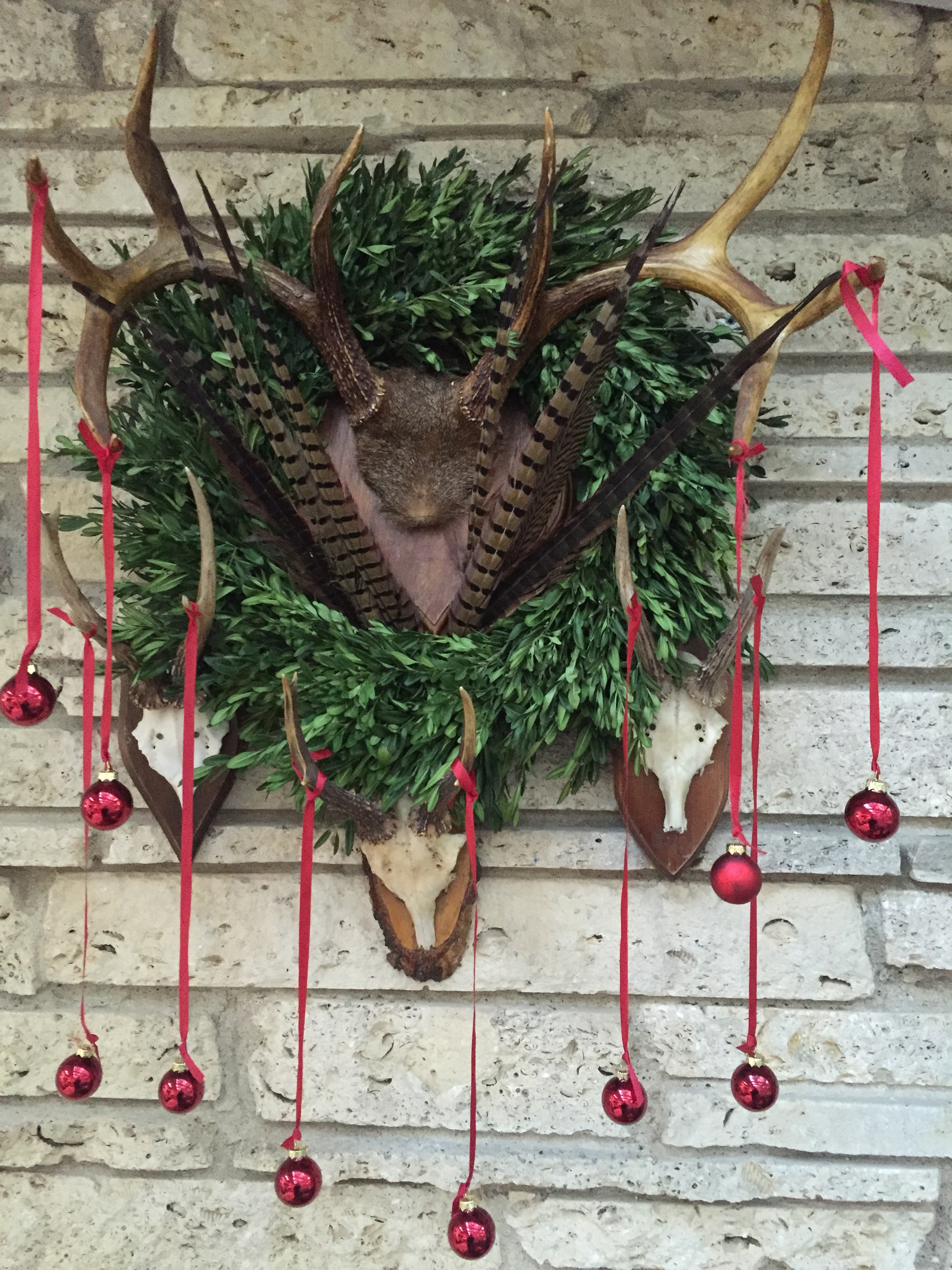
A boxwood wreath encircling one of the antler mounts is the perfect backdrop for ten shiny red balls.

With this extravagant combination of “The Big Three” (Boxwood, Holly and Magnolia) it feels as if the spirit of Christmas has been breathed into our home. Hopefully you will be inspired to celebrate old traditions and make new ones in the warmth of your home, also. Wishing each of you a joyful holiday season filled with family, friends and all those you love and cherish. Blessings from the Alexander Family.

Linda Alexander, Dallas County Master Gardener Class of 2008

Cold Weather Tips, Poinsettia care, and how to get your Amaryllis to bloom next year

Poinsettias are so pretty at Christmas. Click here for an article to help you care for them. It was written in 2005 but it is still pertinent. After reading it, I realized my poinsettias would rather not be on my front porch. They are now indoors getting indirect, natural light.

For information about recycling your amaryllis bulbs after Christmas, read here.

Merry Christmas to all our readers. We plan to have at least one more article this year and loads more gardening advice in 2022.

Ann Lamb, Dallas County Master Gardener Class of 2005

Woody Herbs of the Mediterranean…A New Feature of the Edible Landscape

Woody herbs are all perennials and usually hardy plants with leaves, blossoms and woody stems that contain their essential oils. Their relatively high content of volatile oils gives them an extremely aromatic fragrance. Woody herbs retain more of their flavor and aroma when dried than most green herbs do. In the garden, woody herbs require far less water than green herbs. The most important consideration is that these herbs be planted where they have good drainage.

Our journey into creating a garden bed featuring woody herbs began almost four years ago. We started with a combination of both woody and green herbs. The first few years all watering was done by hand. Then, in October of 2019, a drip system was installed. Sometime around mid-spring of this year, we noticed that our plants weren’t thriving. A soil test revealed that the garden was low in nitrogen but moderate to high in phosphorus, potassium and other minerals. Organic matter was 9.36%.

After doing further research, we read an article advising that two things to avoid when starting a Mediterranean garden were horse manure and wood chips. We had unknowingly used both when building our bed. A decision was made to excavate the existing soil 6-8 inches down and start fresh.

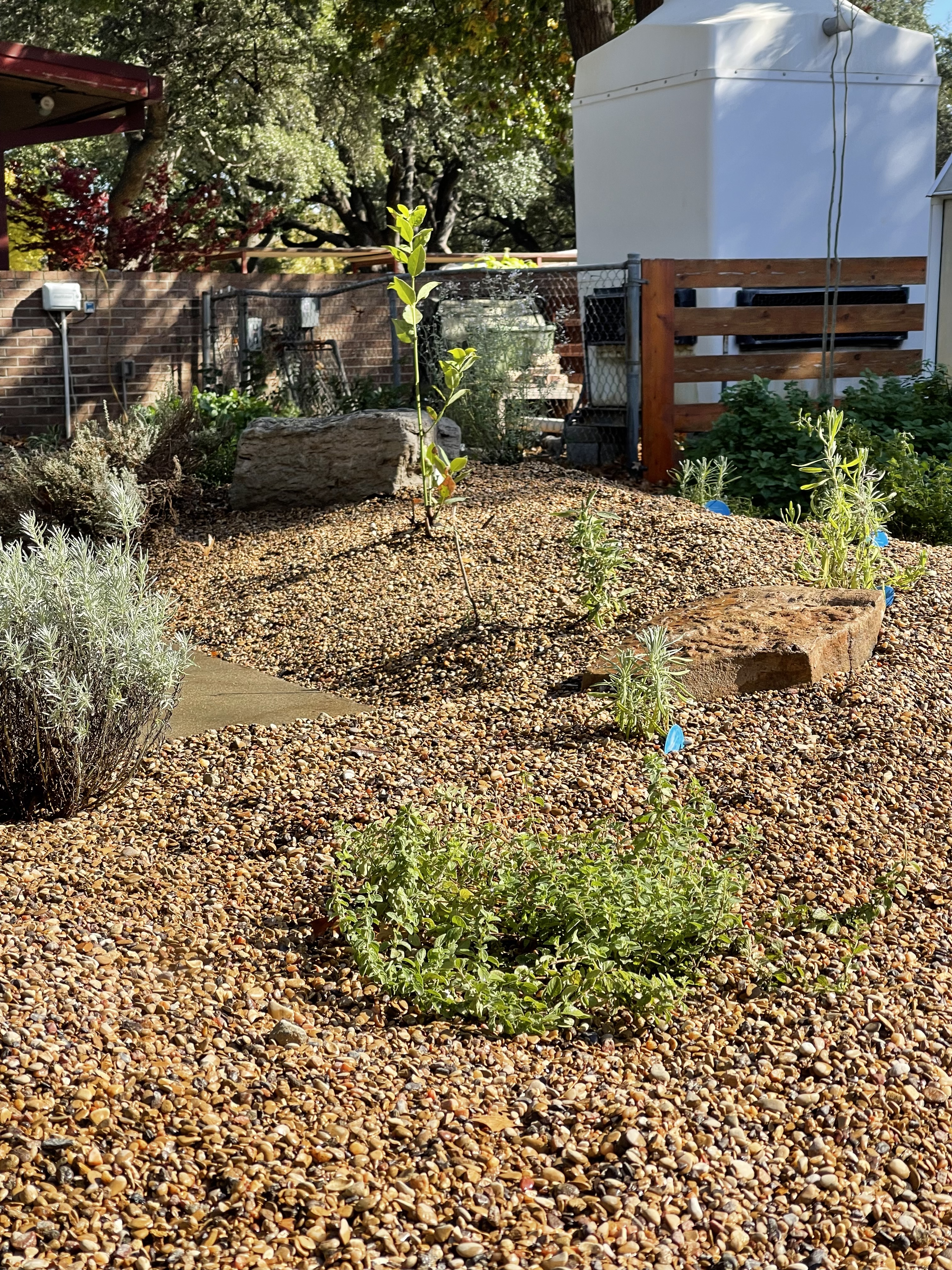
On November 11th, Soil Building Systems delivered 5 cubic yards of a rose mix selected especially for our Mediterranean bed. Volunteers worked carefully while spreading the mix to create a mound shape for optimal drainage requirements. Once established, a protective plastic weed barrier was custom cut to cover the entire bed. Using a box cutter, an “x” was made in the plastic where each herb was planted. The finishing touch was a 3 inch topping of pea gravel to give our bed the look of gardens circling the Mediterranean basin. 

The short list of woody herbs found in most Mediterranean gardens includes:

Bay Laurel (Laurus nobilis)

Lavender (Lavandula species)

Marjoram and Oregano (Origanum marjorana and vulgare)

Rosemary (Rosmarinus officinalis)

Sage (Salvia officinalis)

Thyme (Thymus vulgaris)

Winter Savory (Satureja montana)

In addition to the woody herbs listed above, we added curry plant, myrtle, summer savory and a dwarf fig tree. In the early spring of 2022, our Mediterranean garden will be embellished with a colorful display of other drought-tolerant plants that thrive in the same conditions. Some additions will include Rock Purslane and a pleasing selection of succulents.

We hope that our reimagined Mediterranean landscape with its soft colors, gravel beds and informal, drought-tolerant plantings will hint of a visit to the countrysides of France, Greece or Italy. Perhaps you will be captivated by the intoxicating fragrance and earthy flavors characterized by these essential woody herbs of the Mediterranean region. 

Linda Alexander, Dallas County Master Gardener Class of 2008

Happy Thanksgiving 2021

From our Herb Garden to you…

  Thanksgiving Blessings!

A picture containing tree, outdoor, fungus, plant

Description automatically generated

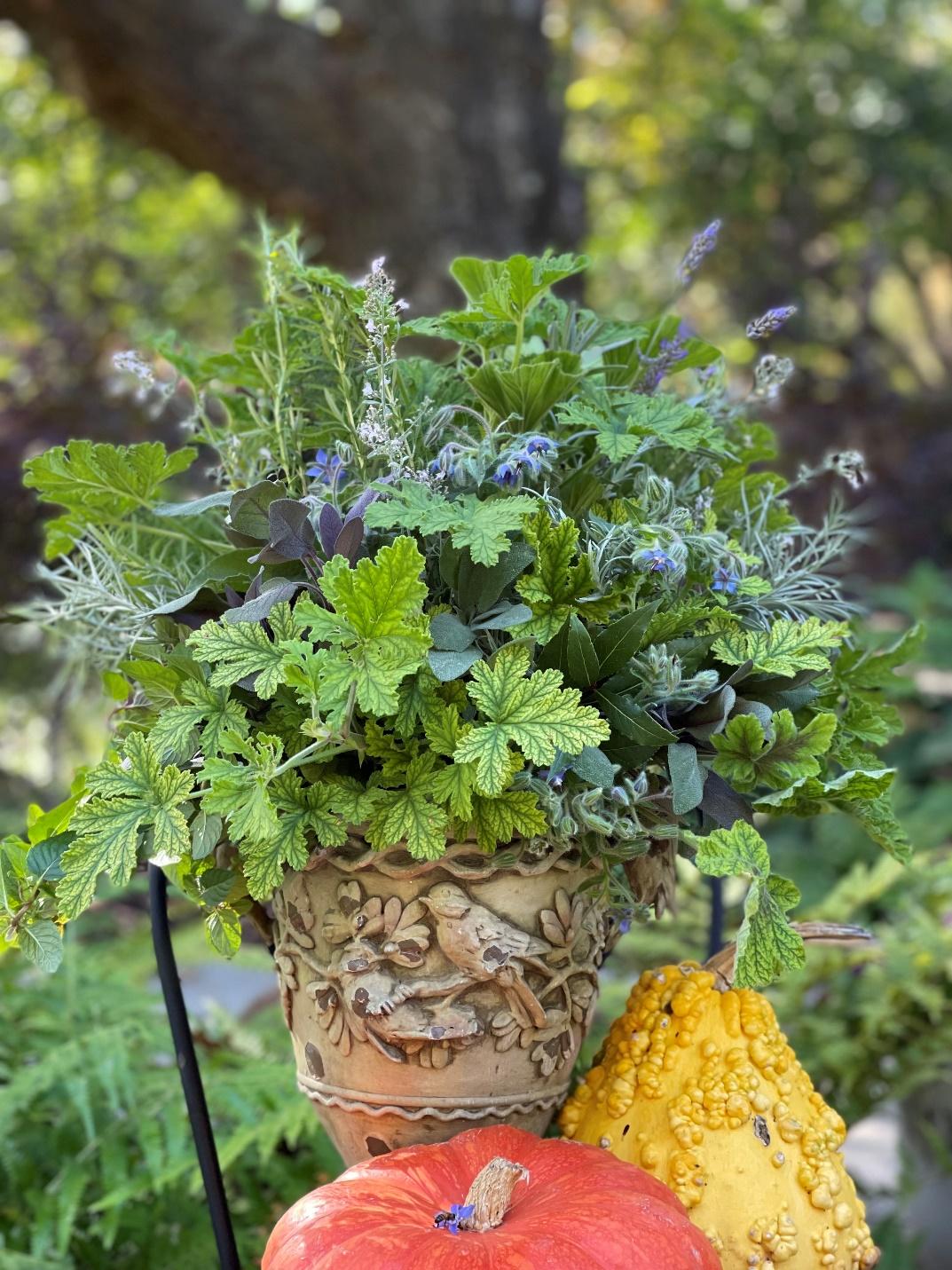
Featured Herbs: Bay Laurel, Blue Borage, Curry, Fennel, Mint, Purple Sage, Rosemary, Chocolate, Lavender, Old-Fashioned Rose and Peach Scented Pelargoniums, White-leaved Savory


With appreciation from The Raincatcher’s Team!

More Vegetable Gardens at Raincatcher’s

The Raincatcher’s team has been busy putting in new gardens. Led by Leonard Nadalo and Beverly Allen a ridge and furrow garden was built in October with the purpose of growing food for the North Dallas Shared Ministries’ food pantry and demonstrating an alternative to raised bed gardening on our clay soil. It is aptly named The Donation Garden. One of our turf beds has also become a new veggie plot and is the home for turnips, beets, spinach and some struggling carrots.

Enjoy a look at seedlings of butter crunch lettuce, Georgia southern collards, Chinese broccoli yod fah, and purple top white glove turnips.

If all this planting is making you crave cruciferous crops, don’t delay. It is a little late to start seeds outdoors but transplants are available at garden centers. Which brings me to an important discovery: mini broccolis (thanks Beverly!) We planted Broccoli Atlantis F1 by seed in our garden.

It is called a mini because it is harvested mainly from side shoots that are smaller than what you buy in your grocery store. When you harvest the center first, side shoots branch out and can be harvested all through the winter. Other mini broccolis, such as Artwork F1, are also available as transplants at local garden centers.

The vegetable team has plans for the future that include increasing the production capacity of The Donation Garden and finding a carrot variety that can get happy in Zone 8a. 

Ann Lamb, Dallas County Master Gardener Class of 2005 with additional information by Beverly Allen, class of 2018

Photo of Broccoli Artwork F1 courtesy of All-America Selections 

Note: We chose Atlantis F1 for it’s shorter days to maturity (33) when compared to standard broccoli (56 or greater).

Serenading the Snapdragons

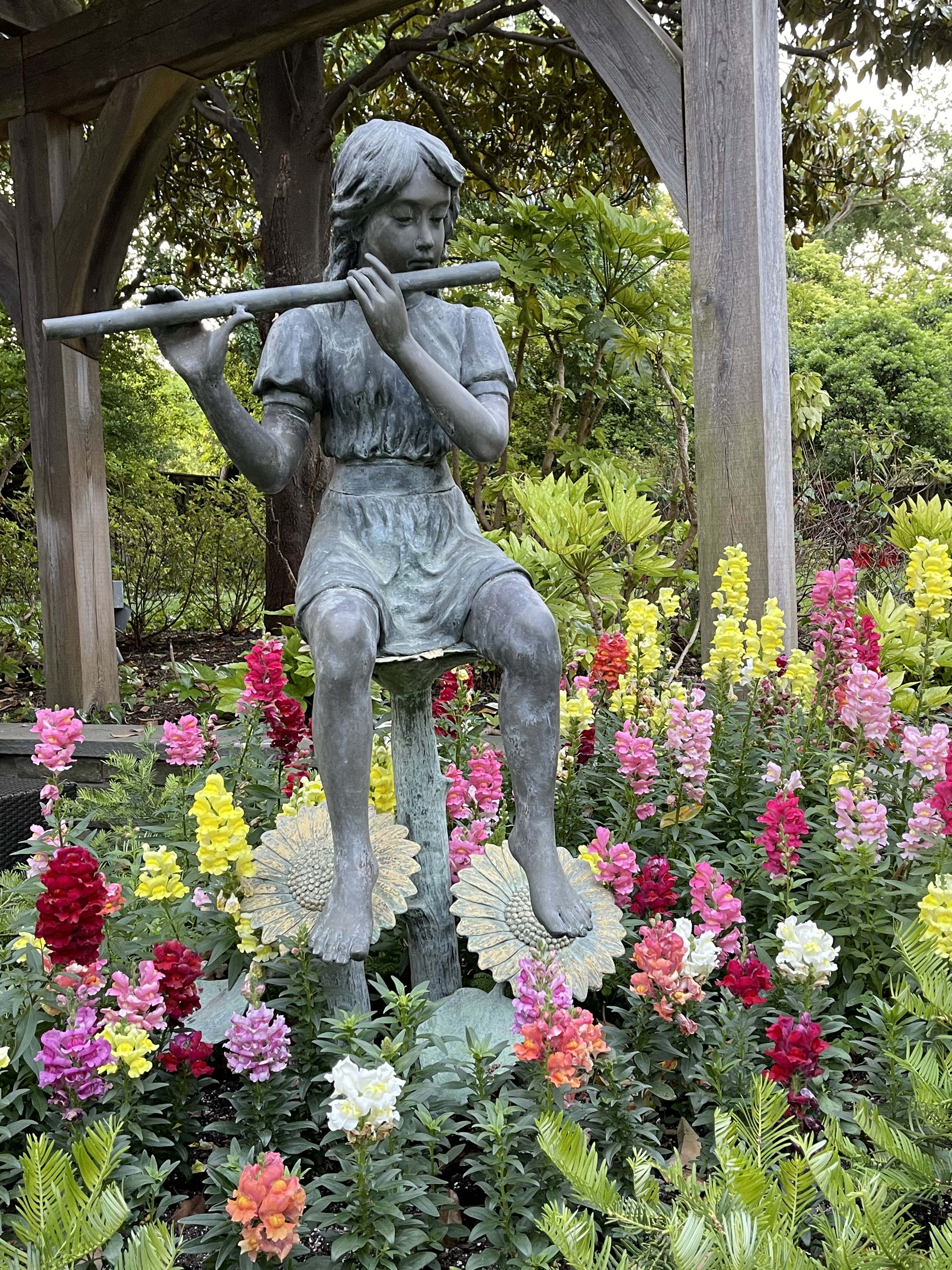
Sunflower girl, as she is affectionately called, stands proudly in our garden as a reminder to pause for a moment of rest and relaxation. The quite, gentle sounds of her music take me back to a time in my life, when I too, enjoyed playing simple melodies on my flute.

She was a gift many years ago from my husband who somehow knew that her presence in the garden would make me smile. We named her “Sunflower Girl” as a tribute to my love of mammoth sunflowers. But the flute she gently caresses in her hands speaks sweetly to me of bygone days.

Seasonal changes in this small area of our garden seem to grace her with an elegance that she wears well.  Fall is especially joyful as the snapdragons surrounding her are bursting with a beautiful display of calming colors. I can’t think of a flower that would be more appropriate for my sweet sunflower girl to be serenading.

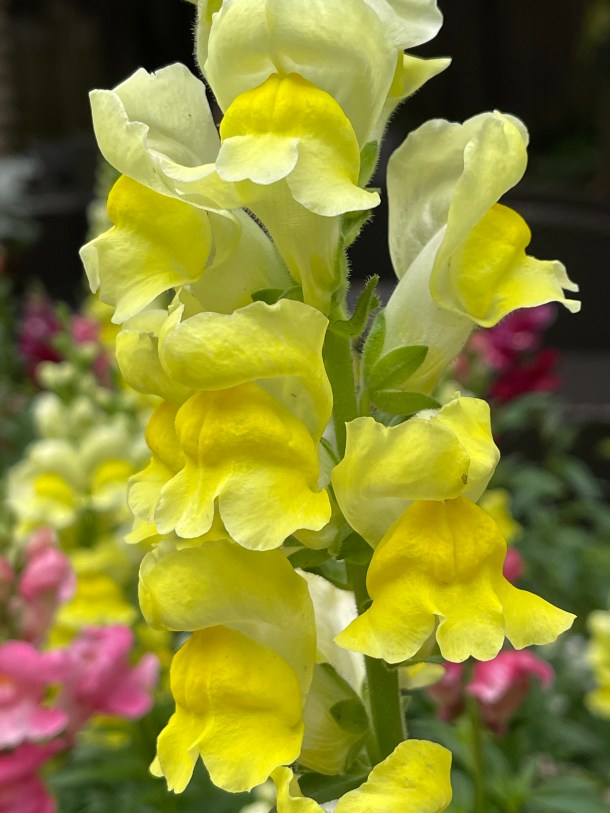
Snapdragons will always have a place in my garden, but it wasn’t until recently that I learned the answer to a perplexing question. Why are they called snapdragons, anyway? Thanks to “the spruce” for this rather comical but accurate answer. ‘The common name derives from the shape of the individual flower heads, which resemble the snout of a dragon, and which even open and close in a snapping motion, as often happens when pollinators open the jaw to reach the pollen’.

Snapdragons should be planted in springtime or fall in a full sun location with well-draining soil. After planting, clip the top stem and any long side shoots to encourage more flowers. When blooms begin to fade during summer’s heat, clip the plant by one-third to one-half and expect more blooms when temperatures begin to cool in fall. Keep evenly moist but let the soil dry out about an inch deep before watering.

The showy blooms of snapdragons are delightful to use in floral arrangements but, for me, that would leave a lonely sunflower girl with no one to serenade. The lyrical melodies she plays for them is a refreshing sound in my garden. Just listen, isn’t that the chirpy opening to Mozart’s Flute Concerto No. 2 in D major filling the air?

Note: Local garden centers currently have a wonderful variety of snapdragons in stock.

Linda Alexander, Dallas County Master Gardener Class of 2008

Snapdragons are long lasting and rabbit resistant. Read more about them here.

Saying our Seasonal Farewell to Roselle Hibiscus


Join Linda Alexander and Beverly Allen for a “Pop Up” Presentation 

Friday, November 5th, 1:00pm

Shade Pavilion, Raincatcher’s Garden of Midway Hills

11001 Midway Road 

Limited to 30 * Please RSVP

Master Gardeners Earn 1 Hour CEU

Sit back, relax and enjoy a refreshing cup of Roselle Hibiscus tea along with a taste of lightly sauteed hibiscus leaves, cookies and jam.

The season for growing Roselle Hibiscus is ending. Let’s bid farewell to a garden favorite with a closer look at this amazing plant. In this class you will learn some of the following:

*Why everyone should be growing Roselle Hibiscus

*When and where to plant

*Growing characteristics

*Using the plant from leaves to flowers and seeds

Class concludes with a tour of our Roselle Hibiscus plants where you will be given an opportunity to harvest some seed pods for next year’s crop.

Sign up today here. Class RSVP open until noon on Thursday, November 4th.

Edible Landscape News for 2022

Over four years ago, plans were approved for a new Dallas County Master Gardener project on the campus of Midway Hills Christian Church. The area once used as a children’s playground would be repurposed as an edible landscape. Our mission was to provide attractive and easy to implement landscape design ideas using only edible plant material. 

As the space has evolved, our volunteer team has grown in our understanding of seasonal expectations and requirements. Through numerous failures we’ve learned how environmental factors such as soil structure, shade, moisture and even pest invasions can teach you how to be a better gardener. Thankfully, we’ve also enjoyed great success while venturing into new avenues with different varieties of plants. It has been fun to celebrate those victories.

Looking ahead, we believe that it is now time to move the edible landscape forward with a slightly different approach. Starting this fall, our edible landscape team will begin the process of integrating non-edibles into our lovely garden spaces. This will give us the ability to demonstrate, more fully, how to creatively use both edibles and non-edibles together in well-planned garden projects. We’re hopeful, that as we introduce an artistic palette of harmonious colors, shapes and textures, others will be inspired to use them also.

We invite you to join us in this journey as we continue to explore exciting new possibilities. Our desire is to provide a place where the natural world gives you a feeling of peace and serenity. As the garden evolves may your spirits be lifted and your soul refreshed.

Linda Alexander and Fern Brown, Co Leaders

Beverly Allen, Research and Seed Selection Coordinator

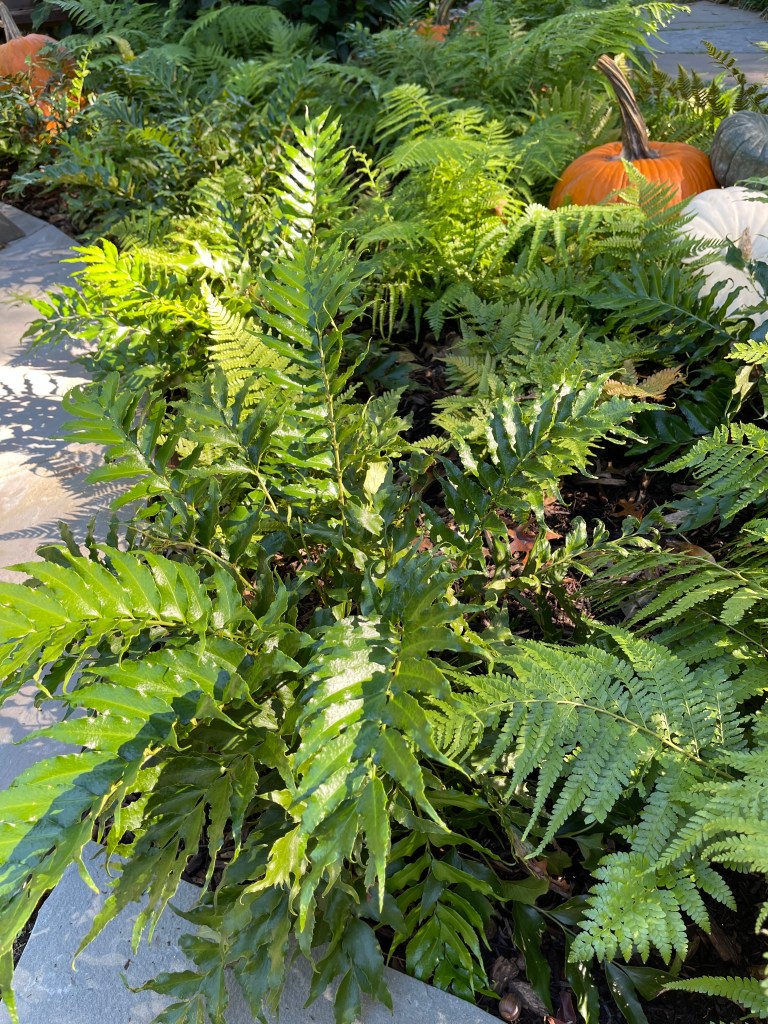
In honor of our new Co Leader, Fern Brown, it seemed very appropriate that the first non-edible introduction to the Edible Landscape Garden would be a lovely assortment of “ferns”. A “tip of the hat” to Fern for donating holly ferns from her yard to get us started.

The Fragrance of Fall

Just a few steps into the garden and the air is suddenly filled with a soothing fragrance that leaves you mystified and, yet, curious to find its aromatic source. Moving closer in, hints of heady anise softened with a gentle touch of sweetness begins to calm your spirits. It only takes a moment to realize that you’ve been drawn into an intriguing area of the garden overflowing with the intoxicating fragrance of Mexican Mint Marigold (Tagetes lucida).

Also known by its other names, Winter Tarragon, Texas Tarragon and yerba anise, this semi hardy perennial makes a spectacular showing in the fall garden. Slender stems rising unbranched from the base comprise the upright clumping shape of each plant. Tiny buds that started forming in late summer find their glory in the sunny days of autumn. Golden yellow clusters of marigold-like flowers dance gently across 3 feet tall stems in a show-stopping performance.


Mexican Mint Marigold in the Edible Landscape at Raincatcher’s Garden

Mexican Mint Marigold originated in the cool mountains of Mexico but has become a superstar addition to many Texas gardens. Grow it from seed sown after danger of frost has passed or divide plants in spring or fall. One simple suggestion is to arch a stem to the ground, cover the center with soil, and the stem will often root at the nodes. For optimum flower production plants should be located in an area that receives full sun to moderate afternoon shade. 

You’ll find Mexican Mint Marigold used as a substitute for the more temperamental herb, French Tarragon. Both the flowers and leaves are edible and used often in teas, salads, poultry and fish dishes. For a heavenly taste explosion use the leaves in an irresistible dessert we discovered a few years ago, Strawberry Sorbet with Texas Tarragon. 

Strawberry Sorbet with Texas Tarragon

Don’t be disappointed when your Mexican Mint Marigold plants take their winter nap. After dying down to the ground for a few months, they will reappear again in Spring just in time to start rehearsing for their next performance.

Linda Alexander, Dallas County Master Gardener Class of 2008