Category Archives: Herbs To Grow In Dallas

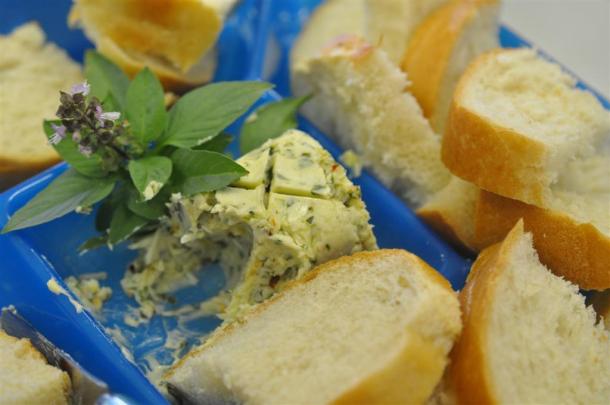
Basil Butter

Basil Butter With Bread                                       2 sticks softened unsalted butter

                                        2 gloves of garlic, peeled

                                        1 cup packed basil leaves

                                        1 TBS. fresh squeezed lemon juice

                                        2 TBS. grated parmesan cheese

                                        ¼ tsp. kosher salt

                                        1 tsp. crushed red pepper (opt.)

Place cleaned basil leaves, parmesan cheese and garlic in a small food processor and process till finely chopped.

Add to butter.  Then add lemon juice, salt and crushed red pepper.  Mix well.  Place in any container you wish and refrigerate.  Butter will last in the refrigerator 2-3 weeks.  Can be frozen for up to 3 months and just slice off chunks as needed.

Paula

Have A Blast With Basil


One of the stars of summer surely is the well-loved herb – basil.  But did you know how many ways this fragrant little plant could be incorporated into cooking, healing and pleasure? 

Tomato Tart Basil Pesto; Corn, Orzo, Basil Salad; Watermelon, Peach, Tomato, Basil In Cup

Starting in May then continuing on until October the possibilities for allowing Basil to grace both table,  home, and garden are endless.  Here are some of our favorites: 

Basil Lunch Medley 

Tomato Tarts with Basil Pesto 

Corn, Orzo, and Basil Salad 

Peach, Watermelon and Tomato Salad With Mint and Basil 

Italian Bread with Basil Butter 

Basil Lime Shortbread 

Citrus Basil Punch

Linda

Dallas Garden Buzz would like to know if you would like some of these recipes!

Basil Tips For Dallas Gardens

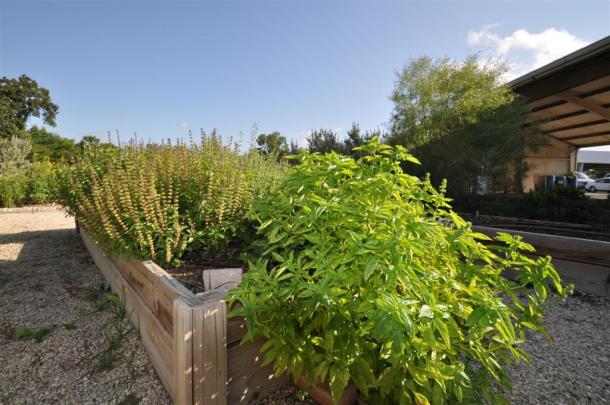
Basil Growing in Raised Beds at the Demonstration Garden

Some of Paula’s growing tips for basil are:

            Wait until May to plant basil whether from seeds or transplants.  Though it is tempting to plant basil in March as soon as the plants are available in nurseries, basil loves hot weather and will often be stunted if planted too early.

            Basils and tomatoes are consider “companion” plants and seem to do well planted near each other.  Of course, everyone knows that a basil, tomato and mozzarella sandwich is a culinary delight.

            In general, basil does not like to be pampered.  However a light application of a synthetic or organic fertilizer can be used to give the plants a boost as the growing season progresses.

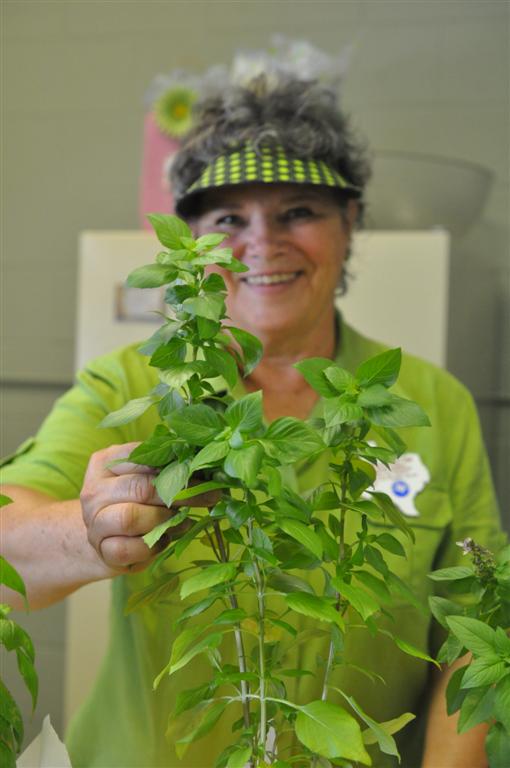
Paula the  Basil Queen Showing Where to Cut Basil for Harvest

            Never prune off more than 1/3 of the plant at a time.  Paula also does not recommend letting the plant go to bloom as this seems to change the flavor of the leaves. 

            It is best to pick basil early in the morning when there is the highest concentration of oils in the leaves.  Paula either keeps the stems in water on her counter top or she washes the leaves, rolls them in paper towels and places them in the refrigerator.  They will keep this way for a few days.  Basil can also be frozen as ice cubes (Paula freezes the leaves in broth.)

            It is best to add basil to recipes at the end of the cooking cycle to preserve more flavor.

     In general, basil is a fairly hardy plant that is not attacked by many insects.  However caterpillars, grasshoppers, slugs and snails, white flies and aphids can be a problem.  Many of these can be controlled by organic means such as the use of Bt, Sluggo, or a strong stream of water.

      Basil is also able to be used as both an aromatherapy and medicinal agent.  It is said to relieve aches and pains.  Essential oil of basil can be added to bath water.  Paula also uses a poultice of basil on ant and bee stings.  She says this helps bring down the swelling.

     Some of Paula’s favorite places to find unusual varieties of basil are:  Round Top’s Herb Festival which takes place the third weekend in March, NorthHaven Gardens, Central Market, Southwest Nursery, and Plants and Planters in Richardson, TX.

Carolyn

All About Basil

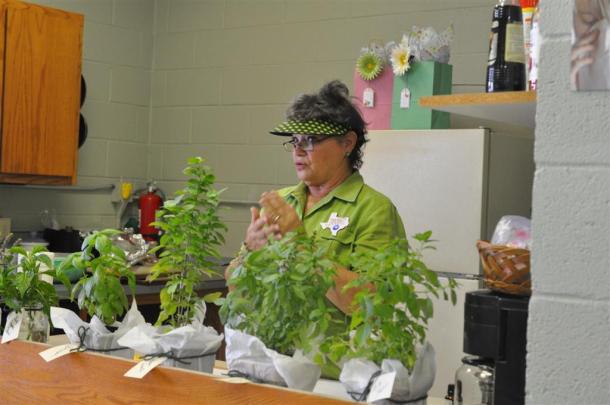
  Paula With 6 Varieties of Basil for Class  

The delightful smell of fresh basil greeted over 30 Dallas County Master Gardners as they feasted on a delicious basil based light lunch (recipes will be forthcoming) and learned all about basil from our own Basil Queen, Paula.   The first topic in her talk was: just how do you pronounce “basil.”  Is it “basil” with a long “a” (bay-sil) or with a short “a” (baa-sil)?  According to Paula, either pronunciation is correct—- and however you pronounce it, fresh basil is delicious.

     Basil has a long and varied history.  It is mentioned in literature pre 206 BCE.  The Greeks and Romans used it as a symbol of hatred.  They said that the gardener had to rant, rave and cuss when planting it.  As the centuries passed, basil became the symbol for love in Italy.  Young women would put a sprig of basil on their clothes to proclaim their chastity.   However, centuries’ later, in a complete symbolic reversal, women would put a pot of basil on their window sill when they were “entertaining” their lovers.  Voodoo priestesses used basil in their rituals as a symbol of love and devotion; while in Victorian times basil symbolized “best wishes” when given to a friend.   In Europe, basil was said to keep evil spirits away and, if a man carried basil in his pocket, it was supposed to bring him wealth.  (Paula tried this with her husband.)

     Low in saturated fat, cholesterol and sodium, basil is high in many nutrients such as riboflavin and Vitamins E and A.  However, Paula warned that it is also high in Vitamin K and should not be consumed by people who are on the blood thinner Coumadin.

     With over 150 varieties of basil, ranging from a shrub to compact varieties, with many different flavors, there is a basil variety for every taste and place in the garden.  Paula has found that though basil likes full sun, it will even grow in part shade.  Though most basils are annuals in Dallas, there is one type, a Bell Pepper basil, that can be grown as a perennial if well mulched in the winter.  
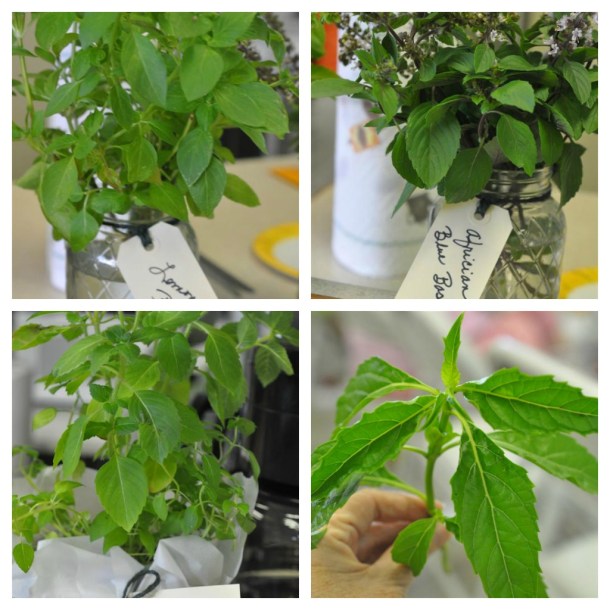
Sweet Basil, Lemon Basil, Holy Basil, Green Pepper Basil

    Some of Paula’s favorite basils are:

            Aussie Sweet Basil:  This is a columnar/upright basil that grows about 24 inches tall and is only 8-10 inches wide.  It does not set seed quite as quickly as some other varieties.

            African Blue Basil:  Primarily a landscape rather than culinary variety, this basil is grown by Paula to attract butterflies and bees.

            Holy Basil:  Used in Hindu and Muslim burial rituals, this clove/spicy basil is best used in potpourris and as a mosquito repellent.  Just rub a few leaves on your skin.

            Sweet Basil:  This type of basil is the favored basil of many people for use in cooking and making pesto.  One of Paula’s favorite varieties of sweet basil is Genovese. 

            Lemon Basil:  Leaves of this basil impart a lemony flavor to dishes.

            Thai Basil:  Used in Asian dishes, this basil imparts a licorice/anise flavor to food and drinks.

            Bell Pepper Basil:  A “Paula find” at the Herb Festival at Round Top, TX, this basil grows as a shrub in Houston.  Leaves of this variety can be substituted for bell pepper in salads.  They can also be infused in vodka and, according to Paula, make a great Bloody Mary.
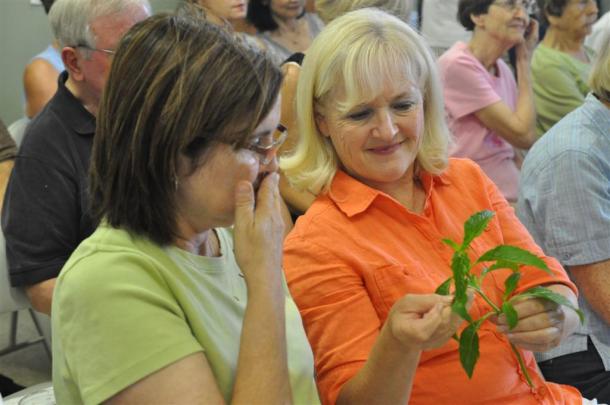
Bell Pepper Basil Sampled by Dallas County Master Gardeners Sheridan and Linda

For basil growing tips and some great basil recipes, keep following Dallas Garden Buzz.

Carolyn
Lemon Verbena Thins

 Lemon Verbena Cookies on a tray with dragonfly decoration

Cookies

1 ½ cups all-purpose flour

½ teaspoon baking soda

½ teaspoon salt

½ cup shortening

¾ cup sugar

1 egg

1 tablespoon lemon juice

2 teaspoons lemon zest

1-2 tablespoons minced fresh lemon verbena

Lemon Glaze (optional)

2 tablespoons lemon juice

1 cup powdered sugar

1 teaspoon butter, softened

l.  Stir together flour, baking soda, and salt.  In a separate bowl, cream shortening and sugar.  Beat in egg and next 3 ingredients.  Stir in dry ingredients thoroughly.

2.  Shape dough into two 6-inch rolls.  Wrap tightly with wax paper.  Freeze overnight.

3.  When ready to bake cookies, slice dough slightly thicker than 1/8-inch.  Place cookies 1 inch apart on an ungreased baking sheet.

4.  Bake at 375 degrees for 8 to 10 minutes or until edges are light golden.  Remove from baking sheet and place on a cooling rack.

5.  To make lemon glaze, combine lemon juice, sugar, and butter.  Frost cookies with glaze.

Yield: about 3 dozen

Steep lemon verbena leaves in hot lemon juice to intensify juice’s flavor. 

Linda

Cucumber Dill Sandwich Rounds

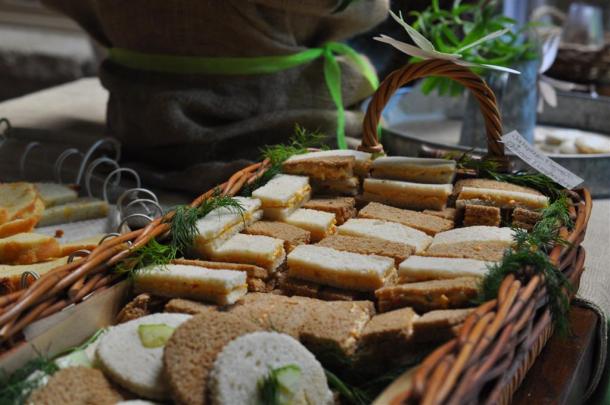
Tray of Cucumber Sandwhichs at Dallas Garden Party1 large cucumber, peeled, seeded and grated
1 (8 oz) pkge cream cheese, softened

1 small shallot, minced

1 T mayonnaise or 1 T milk

¼ tsp dried dill weed

2 loaves Pepperidge Farm very thin white bread

2 T butter or margarine, softened

1 medium cucumber

1 pkge fresh dill, for garnish 

Shred cucumber; pat shredded cucumber between absorbent paper towels to remove excess moisture.  Combine cucumber, cream cheese, minced shallot, mayonnaise, and dill weed.  Mix well. 

Cut crusts off bread. 

Spread one side of each slice of bread with 1 tsp butter, and spread cucumber filling evenly over butter on 1 slice.  Place 2nd piece of bread on top.  When all sandwiches are made, wrap in plastic wrap, placing wax paper between each layer, and chill at least 8 hours.  Before serving, cut into circles with biscuit or cookie cutter or glass.  1 ½ inch cutter makes a good sized round sandwich. 

Score small cucumber with tines of a fork.  Cut 11 (1/4-inch) slices from cucumber, and cut slices into quarters.  Reserve remaining cucumber for other uses.  Insert a cucumber wedge, point side down, in top center of each sandwich.  Add a sprig of dill from your garden for garnish. 

Yield: 30  sandwich rounds

Karan