Jim Dempsey has been starting seeds indoors at Jim and Martha’s house for about 25 years. Martha indulgently clears space, putting away her craft tables, so Jim can have room for this project every year. He grows tomatoes and peppers and several varieties of flowers from seed to get ahead of Mother Nature and have sturdy seedlings ready to transplant into the spring garden before it gets too hot.
And there’s also the issue of variety. Jim says you’ve never seen so many choices. He likes to order tomato seeds from Tomato Growers and flower seeds from Park Seed and Burpee. Along with Celebrity tomatoes, he selects a few heirloom tomatoes, cherry tomatoes and seeds of early varieties( those that mature within 52 days). Last year one of his successful selections, a yellow pear tomato, was so productive; he just got tired of picking them.

Jim with knitting needle for planting seeds, and journal and plant containers
Materials Needed:
Journal: Jim suggests keeping a journal so you have some idea of what works. For instance, He realized he was starting seed too early and has now set his start date as February 1st for seeds for the spring garden.
Containers and seed tray
Seed Starting Mix: Jim uses Miracle-Gro potting soil which contains fertilizer. You can mix your own potting soil with a 50-50 combination of fine sphagnum peat moss and vermiculite and fertilize with fertilizer diluted to 1/2 strength.
Seeds
Plastic wrap or plastic cover
Plant Labels-Always label your pots as you plant the seeds
Grow Light
Heated Seed Mat-Jim did not use a seed mat until 4 years ago when Dorothy, another Master Gardener, gave hers to him. He says it helps his tomato and pepper seeds germinate.
Getting Started:
Fill the cells or pots with moist germinating mix to about an inch below the top. The soil mix should be moist not soggy.
Jim uses one of Martha’s knitting needles to make the holes for the seeds. Follow seed package directions for planting depth. He uses the blunt end of the knitting needle to tamp the seed down. Seed to soil contact is important.
He suggests one seed per cell when using fresh seeds. 3 seeds per cell for older seeds.
Cover the seed tray or flat with saran wrap or a plastic cover. This keeps the soil mix from drying out. Check it every day and add water to the plant tray from the bottom if the soil begins to change color which means it needs water.
Place the seed tray near a bright, sunny window and/or use a grow light.
The grow light should be placed close to the top of the cover or plastic wrap.

Jim’s seed flats with grow lights
It usually takes 7-10 days for the seeds to germinate. Take the plastic wrap off when the seedlings emerge.
Seeds germinate at varying temperatures. Plan to use a seedling heat mat if needed.

Seedling Heat Mat
Transplant seedlings into 4 inch pots when you have your first two sets of true leaves.
Before placing your new seedlings in the garden they must be hardened off. Start by putting the new plants outside for a few hours in the shade. Then let them stay outside overnight and then for a few nights. The night temperature should be in the 50° range.
Thank you, Jim, for giving us your time tested instructions and personal tips for starting seeds indoors. You have inspired me to start tomatoes on my window sill!
In the next few days, Gail Cook who is starting seeds for the edible landscape will share with us.
Ann Lamb
 But it was the blood orange trees that called my name. They were putting on a spectacular show with colorful hues of red and orange. Branches were drooping with the weight of a plentiful crop. It was time for harvesting and I was ready to take on the task. With clippers in hand and a 6’ 4” husband by my side, we harvested our way through every blood orange tree on the property. It was a delightful experience.


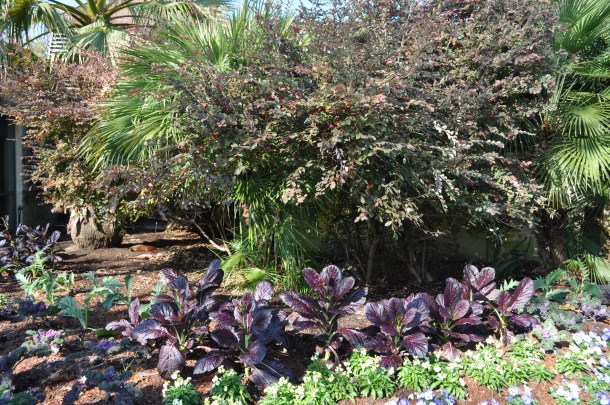
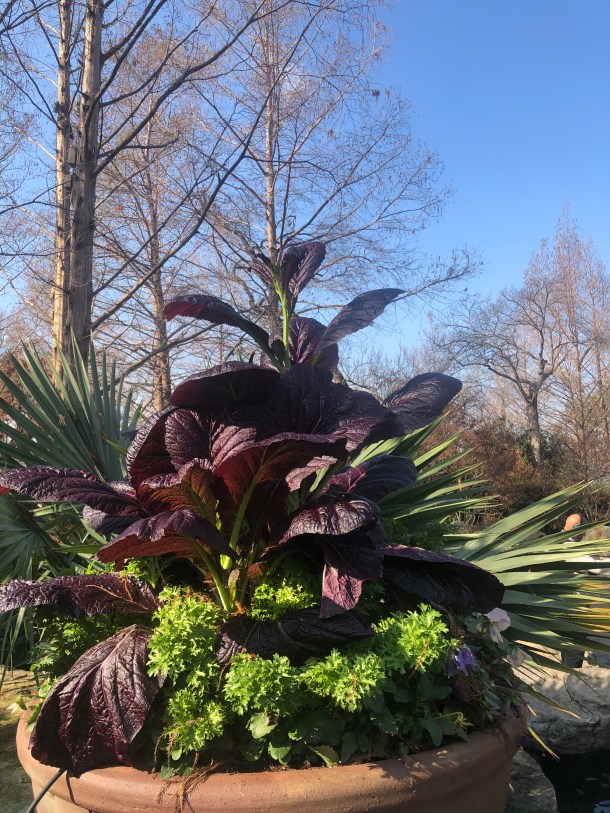 In the Arboretum’s edible garden, a long lane of mustard led your eye to the Dallas skyline. Do you see some of our downtown buildings in the distance?
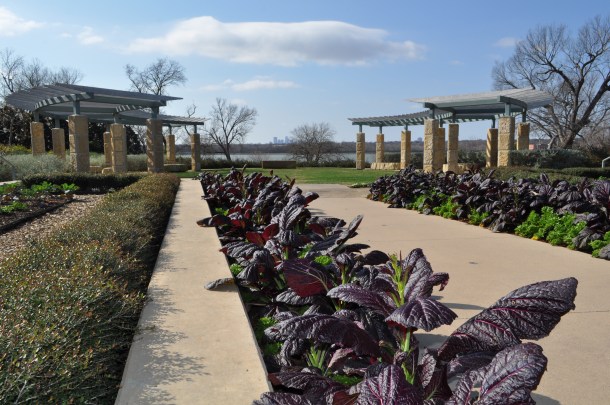 It wouldn’t have been right to taste the leaves while strolling through the Arboretum; but now that I have bought some of these plants for my garden, I can vouch for their spicy taste.


 DALLAS GARDEN BUZZ