Many of you have seen these color change artists in your own gardens but do you really know what they are and how they help to limit plant pests?
The green anole, Anolis carolinensis, is a small to medium-sized lizard, with a slender body and a long tail. Its head is elongated and has numerous ridges between its eyes and nostrils, and smaller ones on the top of its head. Its toes have adhesive pads to facilitate climbing. The males are 15% larger than the females, and the male dewlap (throat fan) is three times the size of the female’s and ranges in color from bright orange to a light pink, whereas the females dewlap is lighter in color. The extension of the dewlap from the throat is used for communications. Males can also form a dorsal ridge behind the head when displaying or when under stress.
The green anole’s body coloration can vary from dark brown to bright green and can be changed like many other kinds of lizards, but anoles are closely related to iguanas and are not true chameleons. The anole changes it color depending on mood, level of stress, activity level and as a social signal, (for example, displaying dominance). Although often claimed, evidence does not support that they do it in response to the color of their background.
Ever seen one with either no tail or a very short one? An interesting fact is that the anole, like many lizards, has an autotomic tail, which will wiggle when broken off to distract a predator and allow the anole to escape.
This species is native to North America, where it is found mainly in the subtropical parts of the continent.
An anole’s diet consists primarily of small insects such as crickets, grasshoppers, flies, moths, cockroaches, small beetles, and other arthropods, including spiders, as well as occasionally feeding on various mollusks, (think snails and slugs), grains and seeds.
Me-Ann at the Ann Norton Sculpture Garden in Florida
Like a bee going from flower to flower for different types of nectar, I am flying all over gathering information from many sources about tomatoes. Last year I learned of a grower, Bobby’s Best. You can find him on instagram-Bobby’sbeststarts.com
Recently he was kind enough to share his compelling explanation of the advantages of using organic fertilizers. Remember if you feed your soil, it will feed you!
You may not be thinking about tomatoes tonight but I am. March 15th is the frost free date for the Dallas area which means it is not likely we will have a frost after that date. However, next week we may have a few low temperature nights so you may want to wait to plant. Regardless of the date you choose to plant, you are going to want to come to our garden on Tuesday to purchase tomato and pepper plants; lovingly started and tended by Raincatcher’s volunteers. See details below. Ann
It’s time to plant!!!
TOMATOES and PEPPERS, TOMATOES and PEPPERS, TOMATOES and PEPPERS
The MG volunteers of Raincatchers at Midway Hills have grown several varieties of tomatoes and peppers from seed and will have them for sale.
Tuesday, March 14th, 10:00 am – 12:00 noon
Courtyard Garden
Midway Hills Christian Church
11001 Midway Rd. Dallas 75229
$2.00 per 4” pot
Cash or Check only, please
Sarah Sanders, Dallas County Master Gardener Class of 2006
Jackie James, Dallas County Master Gardener Class of 1998
Don’t be confused-we have our big plant sale coming up May 4th and will talk it up over the next few weeks.
The new year brings programs that promise the new and improved you. These sensational claims are seen everywhere; the gym, the bus stop and store fronts. They boast incredible results like guaranteed weight loss of 100 lbs. And we can’t forget the facials that will freshen the person you are right now.
It seems that for gardeners fewer promises are offered. While you might not become a whole new gardener, it really is a good time to think about improvements, realistic improvements. And thankfully that can happen without signing a contract you might soon come to regret. Improvement for gardeners can start today!
Where to start? Well of course it’s a personal thing that will be a bit different for each gardener but here a few suggestions.
First It all starts with being there—in the garden. Plan to make your garden time a part of as many days as possible. And make the time count. When you are in the garden really be there.
Remember the old saying: “The best fertilizer for the garden is found in the footsteps of the gardener.”
Use a little time to observe closely. See what is there. Look for insects and other creatures that have a home because of your garden. Amazing! Appreciate what is happening now. Yes, for sure we have to plant and weed and clean but also just enjoy what is. It is so easy to forget this in the need to make the next moment better. The best plans and actions will just follow when we carefully observe.
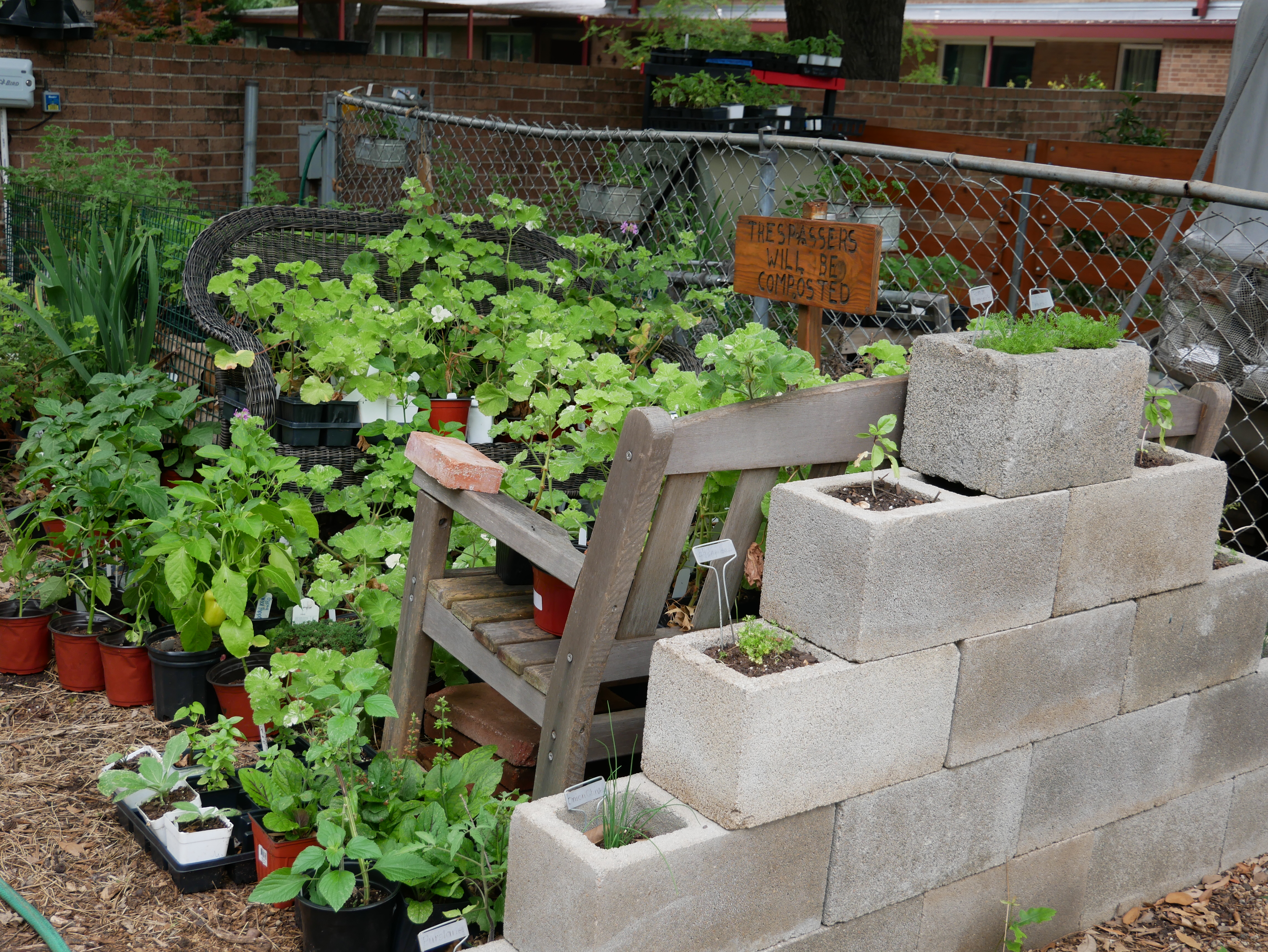
The Raincatcher’s Garden, a garden worth observing!
So lets plan to enjoy the garden more by being in it and carefully observing.
Yet another old saying comes to mind “ Reduce Reuse Recycle.’
Thinking before buying is so important. First think if you can divide current plants and use what you already have.
Try a new propagation technique. Cuttings don’t always work but amazingly they often do. Instructions are just a ‘click away.’ You can often share with a friend, and in return they share back. You not only have a new plant but a happy memory.
Evelyn Womble sharing Hardy Amaryllis–a happy memory for alot of us!
Containers look trendy with small divisions of grasses paired with ground covers. You might even consider a sedum that creeps over the sides.
Naturally we all want to buy just something to support local plant sales Do be sure you have a place for the plant. No doubt you have seen pots filled with very dead plants by the curb waiting for the landfill. Poor things never even got planted. Never do that!
The Raincatcher’s plant sale, full of repurposed pots and pass-along plants is a great sale to support! Don’t forget to put May 4th on your calendar.
Think carefully, as well, before buying products. Obviously no toxic chemicals and remember peat is completely non sustainable. Try coir based product. Speak up at the shop and ask nicely for what you want and explain why. It can make a difference. Let’s try to be more aware, to spend as much time in the garden as we can and try to be responsible with resources.
What is the next step ?
Sharing of course! We know every garden can make a difference in supporting people and creatures—so why don’t more people have one? Well, that is a question we can’t really answer but we can try to inspire and even assist those that do show an interest. Take time to show neighbors around your garden and answer questions. If you “plant the seed” maybe it will grow and they will start a garden and then maybe they will share. And well maybe you yourself will have started something really valuable.
Its all too easy to get discouraged with the situations around us but in practical terms gardeners can make a difference; first for themselves then the little patch of the world we care for and then others.
So, let’s start by making just a few improvements in ourselves and we will make it the best gardening year ever.
Susan Thornbury, Dallas County Master Gardener Class of 2008
Pictures by Starla Willis, Dallas County Master Gardener Class of 2011
In the “paint” world, each new year begins with the big reveal. For 2023, Pantone has taken inspiration from the natural world with the announcement of Viva Magenta as their color of the year. Described by the company as a powerful and vibrant shade of red deeply rooted in nature, it promises to be “bold and fearless” while adding a joyful and optimistic tone to your interior.
Pantone’s glamorous appeal is convincing; “Viva Magenta descends from the red family and is inspired by the red of cochineal. The cochineal beetle is an insect that produces carmine dye, one of the most precious, strongest, and brightest natural dyes the world has known”. They add, “it was chosen to reflect our pull toward natural colors.”
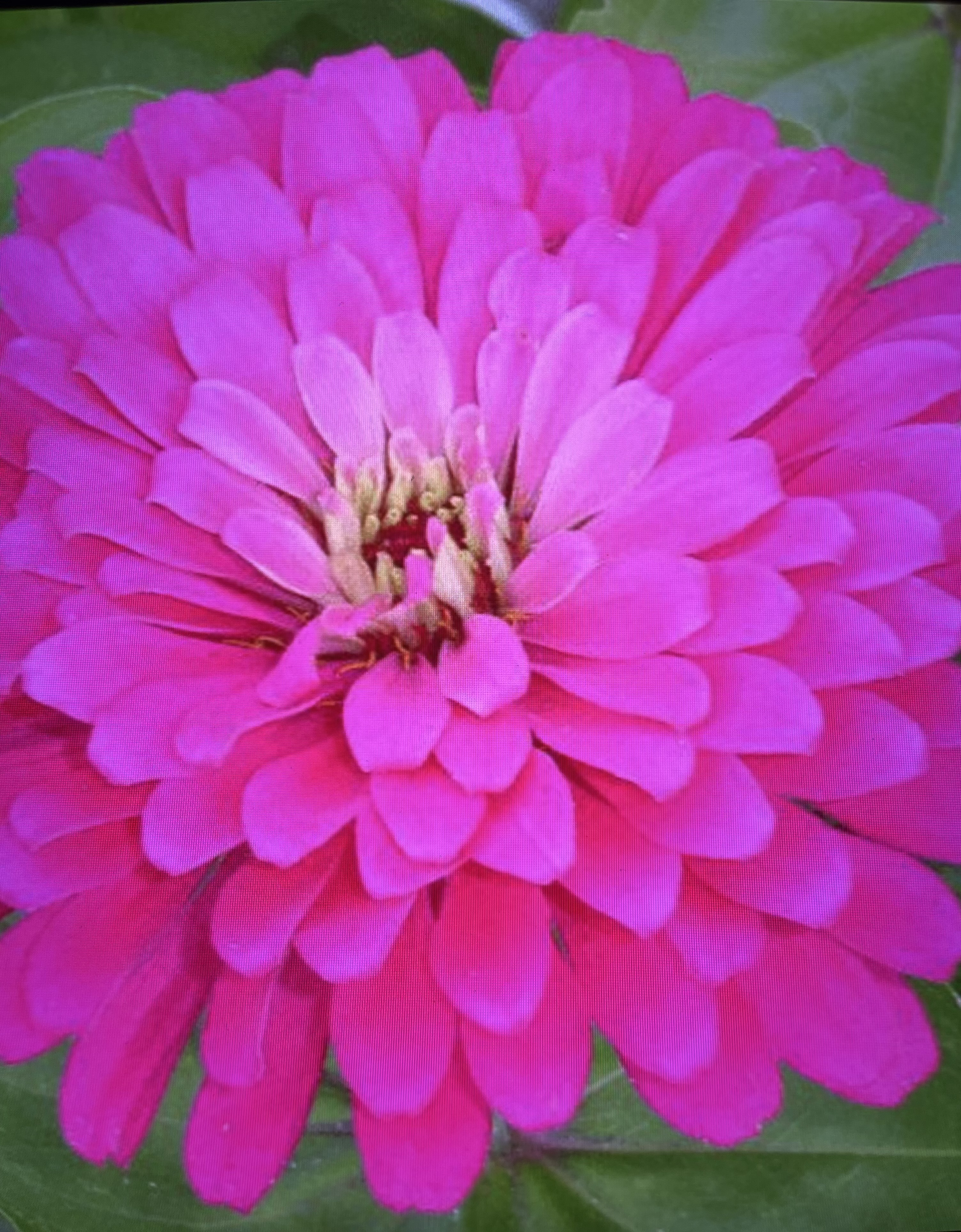
Seems the botanical industry has taken notice with promotional ads now featuring a stunning array of floral options for your landscape. Not surprisingly, it would be difficult to find a flower that more dramatically captures the true essence of “magenta” than the zinnia.
As you can see from this stunning photograph, I was, indeed, “drawn in” and quick to imagine the perfect sunny location for it in my summer garden. It’s from The Gardener’s Workshop in Newport News, Virginia.
The name and description they’ve given this zinnia is impressive; ‘Uproar Rose’. It is being held as the next knock-out zinnia by cut flower growers everywhere.
My seeds have been ordered and will be planted directly into the garden after our last danger of frost. I’ll follow their very professional harvesting tips:
*Harvest the blooms when fully mature.
*Make the first harvest cut above the bottom two side shoots as this establishes a branching habit for the season.
*Make future cuts at the base of the stem.
Linda Alexander, Dallas County Master Gardener class of 2008
I have to say that the squash vine borers (SVBs) were getting me down. After spending the summer of 2021 removing borers from the squash plants and still not seeing much of a harvest, I swore off growing squash, almost.
The SVB larva grows inside the squash vine (often killing the plant) and then makes a cocoon that overwinters in the soil. The adult moth emerges from the cocoon in spring and lays eggs on the undersides of the squash leaves. The eggs hatch and the larvae begin destroying your plants again.
One solution is not to have any squash handy for the adults to lay their eggs on (thus the almost swearing off). You can also interrupt this cycle by finding and removing the eggs. That is a real challenge unless you have a small number of plants and time to check every single leaf every day.
We started off the spring season with some lovely Italian cucumbers that were producing well but suddenly began to droop just like the squash had the previous summer. It turns out that if they don’t find any squash, the borers may settle for your favorite cucumber. It almost seems spiteful.
I was persuaded by a team member to try growing butternut squash in late summer. Cucurbita moschata has a reputation for borer resistance. Throwing caution to the wind, we decided to try zucchino rampicante and calabacita as well.
Despite my skepticism, we have a raised bed full of butternut squash maturing now with no sign of SVBs.
Cucurbita moschata, Butternut squash
The zucchino rampicante is in the same family and has a hard stem that I assumed the borers would not be able to breach. However, we found a few larvae in the stems and removed them. The plant now has huge beautiful leaves and vines that run about 12 feet. It is producing two foot long fruits that weigh a pound or so.
Calabacita and zucchino rampicante Zucchino rampicante
The calabacita (Cucurbita pepo), also known as tatume or Mexican zucchini, has a tough, thin vine and has shown few signs of distress from SVBs. It is taking up a lot of garden space but makes up for it by being very productive. The fruit may be eaten like a thin skinned summer squash or allowed to grow into a soccer ball sized pumpkin.
Going forward I will swear off swearing off.
Beverly Allen, Dallas County Master Gardener Class of 2018
If you’re growing shishito peppers in your summer garden, this recipe should be on the menu. Blackened, blistered and dipped in a creamy Greek yogurt flavored with papalo, it’s a global experience not to be missed.
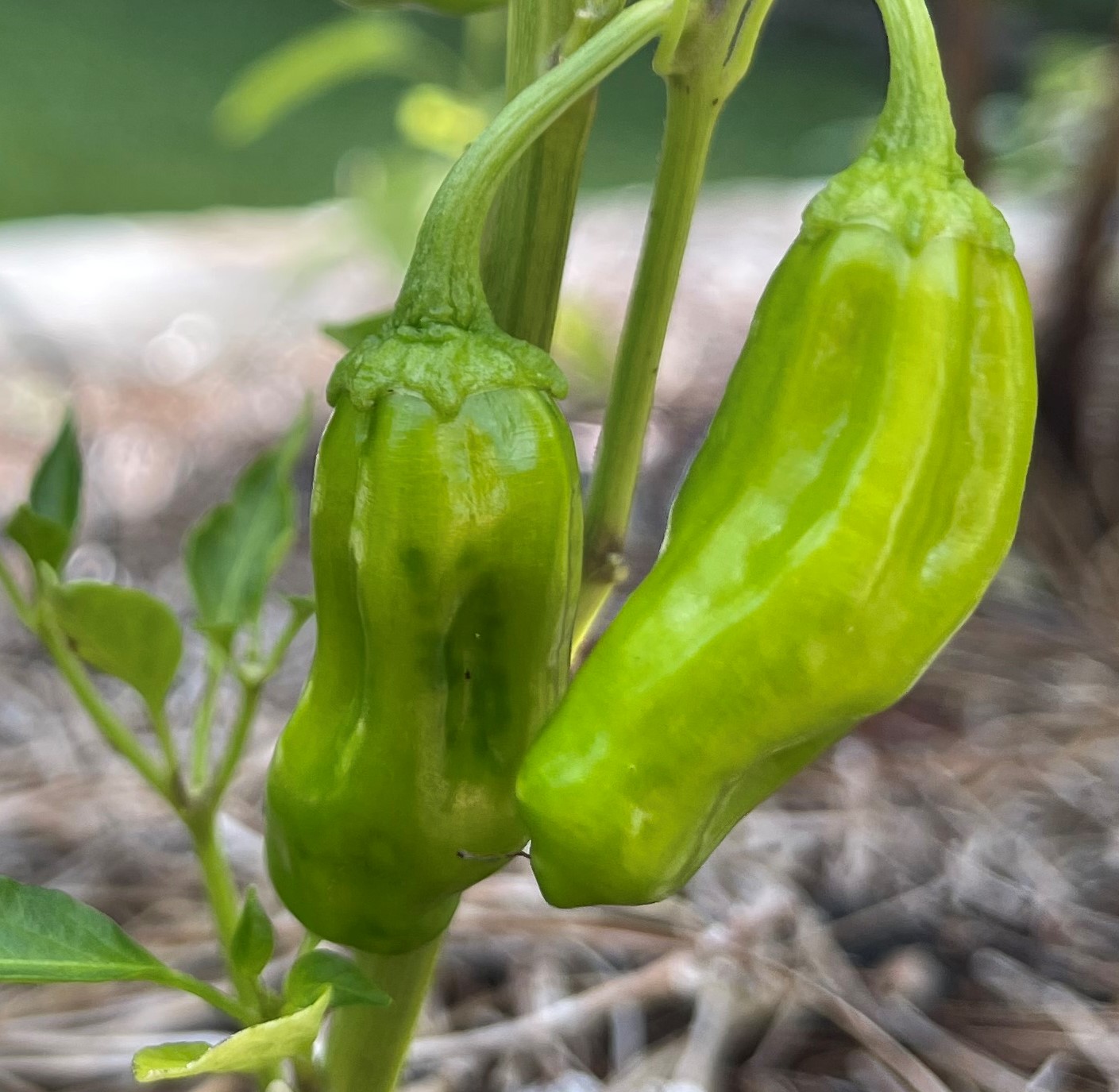
As you may have guessed, shishito peppers originated from Japan. The name “Shishito” is derived from the combination of “shishi,” “lion,” and “togarashi,” which means “chili pepper.” Take a closer and decide for yourself, “does the creased tip of the small and finger-long shape somehow resemble a ferocious lion?”
Grrrrr…ferocious lion or tasty pepper?
After blistering your harvested peppers in a cast-iron pan, sprinkle with fine, gray sea salt from France. The history of this unique salt will inspire you to use it in many other dishes. But take note, due to its robust flavor, use only ⅓ of the amount of salt you would normally use.
(In Guerande, western France, pristine Atlantic, seawater passes through the locks of the salt marshes and rests for six months until the salt is ready to be harvested. In summer, the salt is gathered by hand using wooden tools, as it has been for centuries. The rich clay in the marshes lends a pale gray color to this salt and also adds beneficial trace minerals.)
Next, mix up a little Greek yogurt for dipping. Its rich flavor and thick texture offers a higher concentration of protein and probiotics than traditional yogurt. Stir in some grated garlic, lime juice and zest to give it a little kick. Chop up a few fresh papalo leaves from Mexico if you desire a cilantro-like finish. When cilantro succumbs to our summer heat papalo rises to take its place. Use it in any dish where a substitute for cilantro is needed.
Shishito peppers have an interesting flavor profile and one that calls for a bit of caution. About one in ten peppers contains a fiery punch that dials up the heat factor. Overall, though, you can expect a sweet, typically mild spiciness that registers between 50 and 200 Scoville heat units. Their grassy, citrusy taste touched with a slight hint of smoke makes the shishito pepper’s flavor pretty unique. Not surprisingly, today they can be found as a popular appetizer on many restaurant menus. Are you ready now to take an international trip with shishitos?
Do shishito peppers “pop” when being blistered, charred, etc.? The short answer is “yes”. *Is there a way to prevent the “popping”? Yes, just use your handy cake tester or a toothpick. Poke a hole in each pepper before blistering to prevent popping.
Note: Now is the time to start planting peppers for a fall crop.
One local Italian restaurant features a lovely “Little Gem Lettuce Salad” drizzled with Charred Shishito Vinaigrette. Delizioso!
Linda Alexander, Dallas County Master Gardener Class of 2008
One of the showiest ornamental oreganos, Kent Beauty, a hybrid between Origanum rotundifolium and Origanum scabra, has charmed me with its attractive foliage and flowers. Mine was planted in a 12” terra cotta pot over two years ago but, come fall, I’m transplanting it to a new sunny location in my raised bed. Its intriguing beauty during the heat of summer and into fall will be refreshing.
Gathered from the garden; purple pentas, cinnamon basil, society garlic and Kent Beauty oregano.
Kent Beauty is an impressive oregano, having received the prestigious Award ofGarden Merit of the Royal Horticultural Society. (The AGM is a mark of quality awarded, since 1922, to garden plants by the United Kingdom, Royal Horticultural Society.) A cup symbol on a plant’s label shows it has earned the AGM – the UK’s seal of approval that the plant performs reliably in the garden. It is only awarded to plants that are:
Excellent for use in appropriate conditions
Available
Of good constitution
Essentially stable in form and color
Optimum growing conditions include full sun, dry to medium soil with excellent drainage. It performs well during extreme heat and drought but is intolerant of high humidity. Allow room for it to grow approximately 6 to 9 inches tall and 12 to 18 inches wide. Bees are attracted to the tiny purple, tubular blooms. An easy-to-care for plant that is disease free and has few pests.
Kent Oregano growing in a pot
Kent Beauty is an herbaceous perennial that forms a low trailing mound of silver-veined blue-green aromatic leaves. In early summer it starts producing whorls of pendulous, drooping heads of hop-like flowers in dreamy shades of shrimp pink, cream and pale green. This visual feast for the eyes continues into the cooler autumn months.
Take advantage of its versatility and use in alpine and rock formations, as a border plant, in containers, hanging baskets and for cascading over walls. Snip stems of the draping flowers for a dramatic addition to fresh floral arrangements.
Linda Alexander, Dallas County Master Gardener Class of 2008
It doesn’t take long for plants to become stressed by this summer’s intense heat and lack of rain. It’s probably safe to say the same for most gardeners.
Here are the strategies we are using to keep the vegetables in the north garden healthy in the heat:
Research to find out which plant varieties are best suited for the region
Water twice a day with two short cycles of 30 minutes using drip irrigation
Mulch heavily
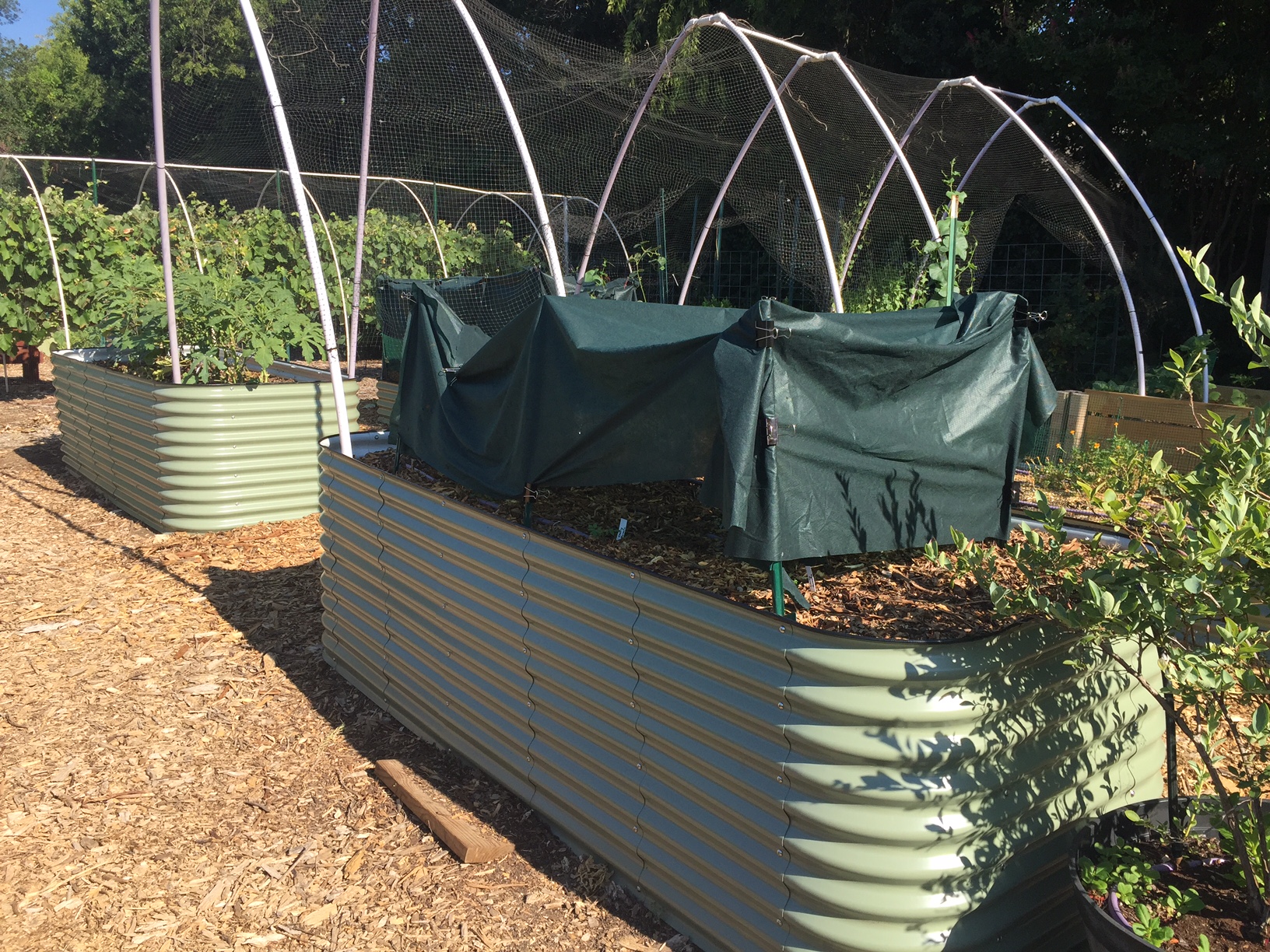
Use shade cloth to protect fall tomato and pepper transplants and plants showing signs of heat stress.
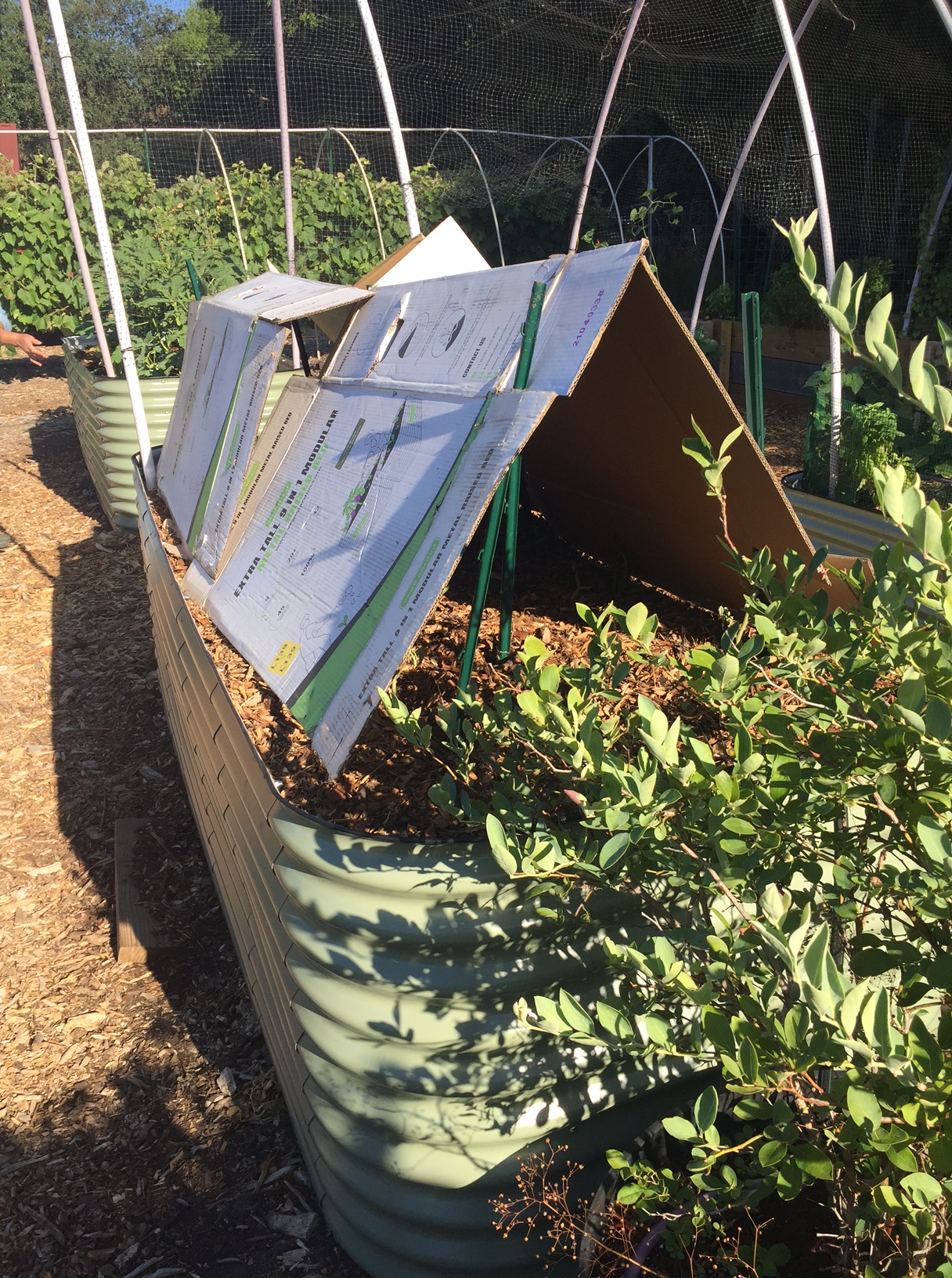
When we realized the fall tomatoes were getting scorched we improvised with cardboard so that we could get ourselves out of the sun that day. Later we used tee posts with binder clips to secure the shade cloth. We removed the shade cloth for about four hours in the morning and replaced it in the afternoon for just a few days before taking it off completely.
We remove plants that no longer look healthy or have slowed down their production. This was true of about half of the cucumbers. They can be restarted by seed outdoors in August.
We are also trying a method called ratooning to improve our late summer and fall production of peppers and okra. Leaving some leaf axils for photosynthesis, we are cutting low performing plants back to eight to ten inches from the ground. The articles below will provide more information about the practice. According to the one from Clemson, ratooned plants will have the benefit of a strong root system and not take as long to produce fruit as a new transplant.
As for our heat stressed vegetable gardeners, a mixture of iced tea and lemonade has become the drink of choice on our Monday workdays. A slice of watermelon or a delicious watermelon salsa helps too.
Beverly Allen, Dallas County Master Gardener Class of 2018, encouraged by Ann Lamb
Pictures by Don Heaberlin, Dallas County Master Gardener Class of 2021