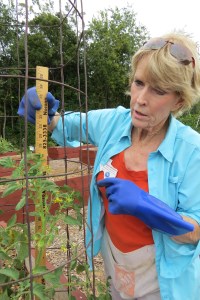
Our new edible garden, where it all began. More classes to be coming from this garden to you. Subscribe to Dallas Garden Buzz for more info.
Creamy Cauliflower Soup with Greens
Ingredients
1 tablespoon extra-virgin oil, plus more for drizzling
1 medium onion, chopped (about 1 cup)
4 cloves garlic, chopped
Sea salt
1 medium head cauliflower (about 3 pounds), florets and stems cut into 1-inch pieces (8 to 9 cups)
4 ½ cups filtered water
¼ cup chopped fresh dill, plus more for garnish
5 large kale or collard leaves, or a combination, tough ends removed and leaves roughly chopped
Freshly ground black pepper
Directions
Heat oil in a large pot over medium heat; cook onion, covered, until soft, 4 to 5 minutes. Add garlic and a pinch of salt, and cook for 3 minutes more. Add cauliflower, and pour in filtered water until it reaches just below the top of the cauliflower
Bring to a boil over high heat. Add 2 tablespoons dill. Reduce heat to low, and simmer until cauliflower is just tender, about 10 minutes. Stir in greens, and simmer for 3 minutes.
Let sit for 5 minutes to cool slightly. Stir in remaining 2 tablespoons dill. Puree soup in batches in a blender until very smooth, adding more water (about ½ cup) if it’s too thick. Return to pot and reheat. Season with salt and pepper. Garnish with dill, black pepper, a drizzle of oil, and pinch of sea salt.
Yield: Makes 8 cups

Evelyn and Susan, pesto making!
Spicy Mustard Green Pesto
Ingredients
3 cups fresh mustard greens, stem removed, washed and rough chopped
2 teaspoons fresh chopped garlic
1 teaspoon fresh lemon juice
3 tablespoons pine nuts, toasted 7-8 minutes at 350˚F
⅛ cup shredded Parmesan cheese
3 tablespoons olive oil
2 teaspoons Kosher salt
1 teaspoon ground pepper (white or black)
Directions
Blanch greens in lightly salted boiling hot water for 15 seconds. Drain thoroughly.
Place all ingredients in a food processor and blend thoroughly to combine. Adjust seasoning as necessary. Refrigerate at 40˚F if not used immediately.
Yield: Makes 2 cups

Dedicated to our greens, note the green nail polish!
The Ultimate Classic Collards
3 (1-lb.) packages fresh collard greens or use fresh from your garden
12 smoked bacon slices, chopped
2 medium-size yellow onions, chopped
3 garlic cloves, minced
3 cups reduced-sodium chicken broth
¼ cup apple cider vinegar
2 Tablespoons honey
1 (12- to 16-ounce) smoked ham hock
Kosher salt
Freshly ground black pepper
Remove and chop collard stems. Chop collard leaves. Cook bacon in a large Dutch oven over medium heat, stirring occasionally, 12 to 15 minutes or until almost crisp. Add onion, and sauté 8 minutes or until onion is tender. Add garlic, and sauté 1 minute.
Stir in chick broth and next 2 ingredients; add ham hock. Increase heat to high and bring to a boil. Add collards in batches. Reduce heat to medium-low; cover and cook 2 hours or until desired tenderness.
Remove meat from ham hock; chop meat, and discard bone. Stir chopped meat into collards. Season with salt and freshly ground pepper.
Yield: Makes 6 to 8 servings

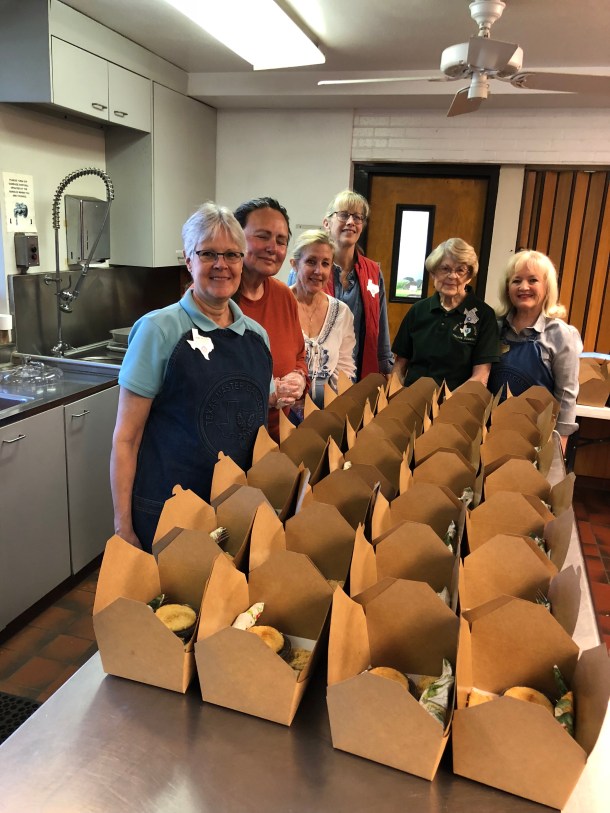
Ready to plate! Thanks Evelyn, Patty, Abbe, Sarah, Ann, Linda, and other Master Gardeners!
Spring Quiche with Leeks and French Sorrel
For the Crust:
1 ¼ cups all-purpose flour
¼ teaspoon salt
8 tablespoons (1 stick) unsalted butter, chilled and cut into cubes
3-5 tablespoons ice water
1 tablespoon apple cider vinegar
For the Filling:
1 large egg white
2 tablespoons extra virgin olive oil
1 large leek (white and light green parts only), cleaned and sliced into ½-inch pieces (should yield about ½ cup)
3 large eggs
¼ cup grated Parmesan cheese
½ cup 2% milk
½ cup half and half
¼ cup part-skim ricotta
1 teaspoon Kosher salt
½ teaspoon freshly ground black pepper
2 tablespoons chopped dill (fresh or dried)
1 tablespoon chopped rosemary (fresh or dried)
2 cups fresh French sorrel, washed and dried well
Make the Dough:
In a food processor, pulse together the flour and salt a few times to combine. Add the cubes of butter and pulse continuously until the mixtures starts to look like tiny pebbles. With the food processor running, drizzle in the apple cider vinegar, followed by the ice water, stopping when the mixture just begins to come together. Working quickly, form the dough into a flat disk, wrap it in plastic and refrigerate for 1 hour or up to 2 days.
Prepare the Crust:
Preheat the oven to 375˚F. On a large floured surface, roll the dough into an approximately 12-inch circle. Gently press into a 9-inch tart or pie pan, trimming any overhang. Line the dough with aluminum foil and dried beans (or pie weights) and bake for 20 minutes.
Remove the pan from the oven and take out the foil and beans. Brush the crust with the egg white and prick the bottom with a knife or a fork to allow air to release and prevent bubbling. Place back in oven and bake for an additional 5 minutes
Make the Filling:
In a medium-sized pan over medium heat, heat the olive oil and add the leeks. Stir until they are coated in oil, then turn down the heat to medium-low and cover the pan. Cook the leeks until golden brown and caramelized, about 20-25 minutes. Check their progress after 15 minutes to ensure you don’t burn them (depending on what kind of pan you’re using; the cook time can vary slightly).
Meanwhile, whisk together the eggs, Parmesan cheese, milk, half and half, ricotta, salt pepper, dill and rosemary.
When the leeks are done cooling, lay them out on top of the pre-baked crust. Place the pan on top of a cookie sheet for easy transport. Pour the filling on top of the leeks and place the quiche in the oven. Bake for 30 minutes, or until the top of the quiche has puffed and is set in the middle and just slightly golden.
Allow the quiche to cool slightly, about 12 minutes. If you put the sorrel on while the quiche is piping hot, the delicate greens will brown. Sprinkle the sorrel on top, slice and serve. Quiche is best served room temperature the day it is made although it will keep just fine covered in the refrigerator for up to 2 days (the sorrel is just going to get a bit wilty).
Yield: One 9-inch Quiche (Serves 6 as an entrée or 8 smaller slices)
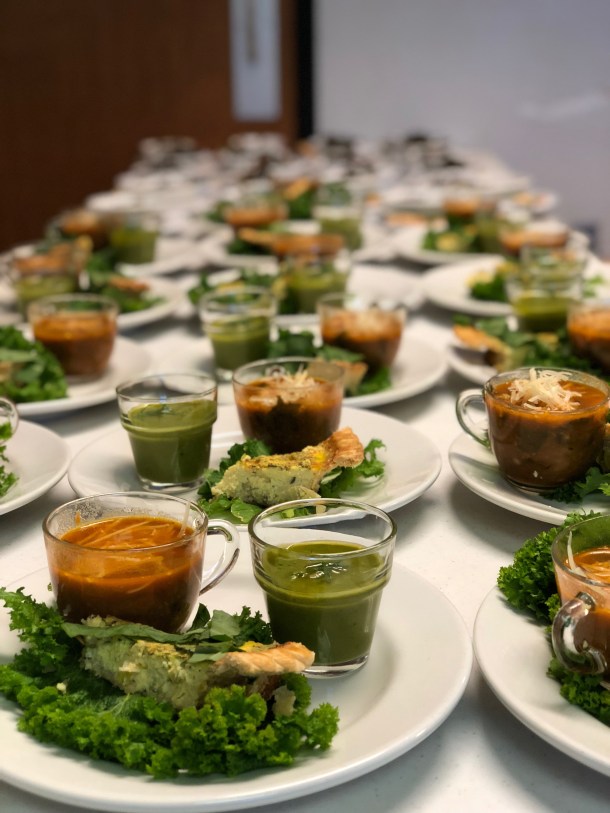
Glorious greens ready to eat. Plates garnished with mustard greens, of course! Both soups delish!
Minestrone Soup
Ingredients:
⅔ cup small pasta, cooked according to package directions, drained and set aside
3 tablespoons olive oil, divided
1 ½ pounds ground beef
1 large onion, chopped
3 large carrots, peeled and cut into ¼ inch rounds
3 large celery stalks, cut into ¼ inch slices
2 garlic cloves, pressed
1 pound fresh Swiss chard, center vein removed, chopped
1 large turnip, peeled and cut into small cubes
1 large baking potato, peeled and cut into small cubes
1 (28-ounce) can crushed tomatoes
2 (16-ounce) cans beef broth
2 (15-ounce) cans cannellini beans
1 (32-ounce) box good beef stock
1-inch piece of Parmesan cheese
½ cup grated Parmesan cheese
3 tablespoons fresh parsley, chopped
Salt and pepper
Directions:
Preheat 1 tablespoon oil in a large pan over medium heat. Add ground beef and cook, breaking it up, until it is no longer pink. Season with salt and pepper. Set aside.
In a large stock pot, add 2 tablespoons olive oil. Add onions, salt and pepper to taste and cook over medium heat until translucent, about 4 minutes.
Add carrots and celery to the pot. Cook for 10 minutes. Add garlic and cook for 1 minute more.
Add Swiss chard, turnip and potato to the pan. Cook for 4 minutes or until the chard begins to wilt.
Add the crushed tomatoes and the 2 cans of beef broth to the pot and simmer for 15 minutes or until the chard breaks down.
Meanwhile, combine half of the drained cannellini beans with ½ cup of beef stock in a blender. Blend until smooth.
Add the blended cannellini beans, remaining drained beans, remaining beef stock, the 1-inch piece of Parmesan, reserved ground beef, cooked pasta and the handful of Parmesan cheese to the pot. Stir to mix and simmer for 25 minutes. Stir occasionally. Vegetables should be fork tender.
Season with salt and pepper, to taste. Add fresh parsley and serve.
Yield: 8-10 servings
Linda Alexander
Our thanks to Jeff Raska for the garden education.
Save the date for our next education/lunch event-Peach Fever.
Date: Tuesday, June 26th, reservation information to follow



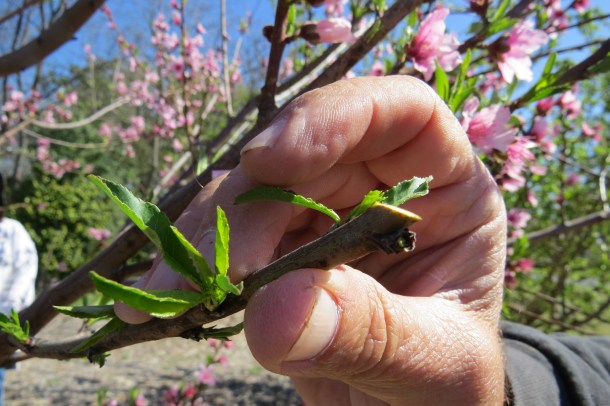


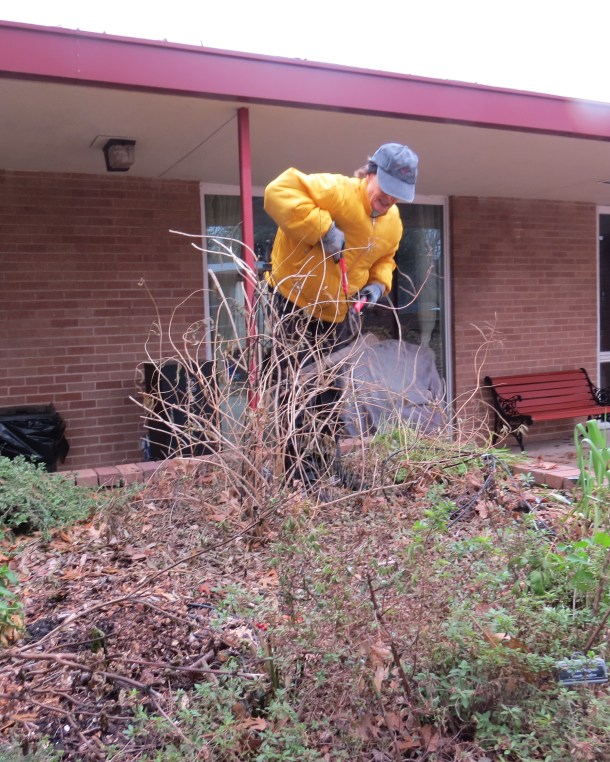 Susan trimming back plants in our herb garden.