May 22, 2026
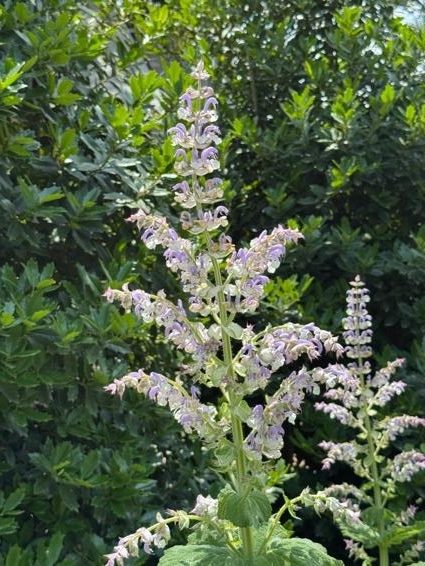
Salvia sclarea
In 2016 Sherwin Williams introduced a soft herbal green paint color to the company’s extensive collection. Designers immediately embraced it for bringing a sense of tranquility to any space. As with many paints, the botanical name was influenced by an intriguing plant found in the natural world. Clary Sage (SW-6178) is a subdued green that “reads” very soft, calm and relaxing. Some experts describe the color as that of fresh sage that you’ve just clipped from your garden. And so, my search began.
In late spring of 2024, I stumbled upon a small clary sage plant at a local garden center. It came home with me that day and immediately was planted in a sunny location towards the back of my herb garden. There were no blooms that year and, as winter approached, it died down to the ground.
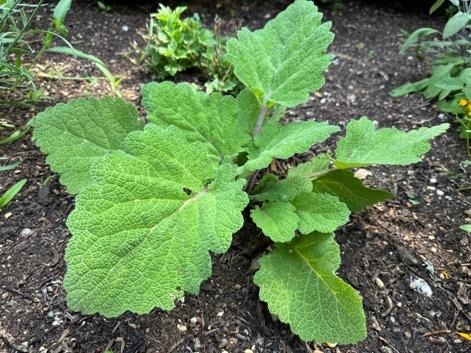
May 19, 2024
And then, in February of 2025, something magical happened. Clary Sage reappeared and the growing began. Each day I witnessed inches of new growth with leaves as large as those of hostas or even elephant ears. My little plant was becoming a super star in the garden.
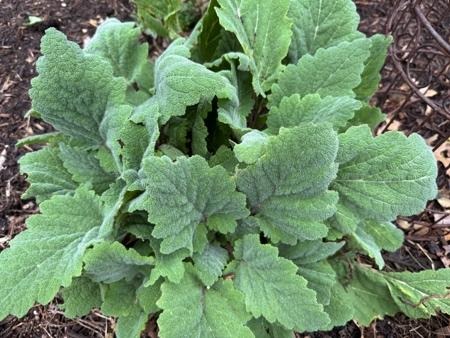
February 2025
By mid-May, my heart was throbbing with excitement as the first blooms appeared. Anoles joined in the fun and the growing exploded!
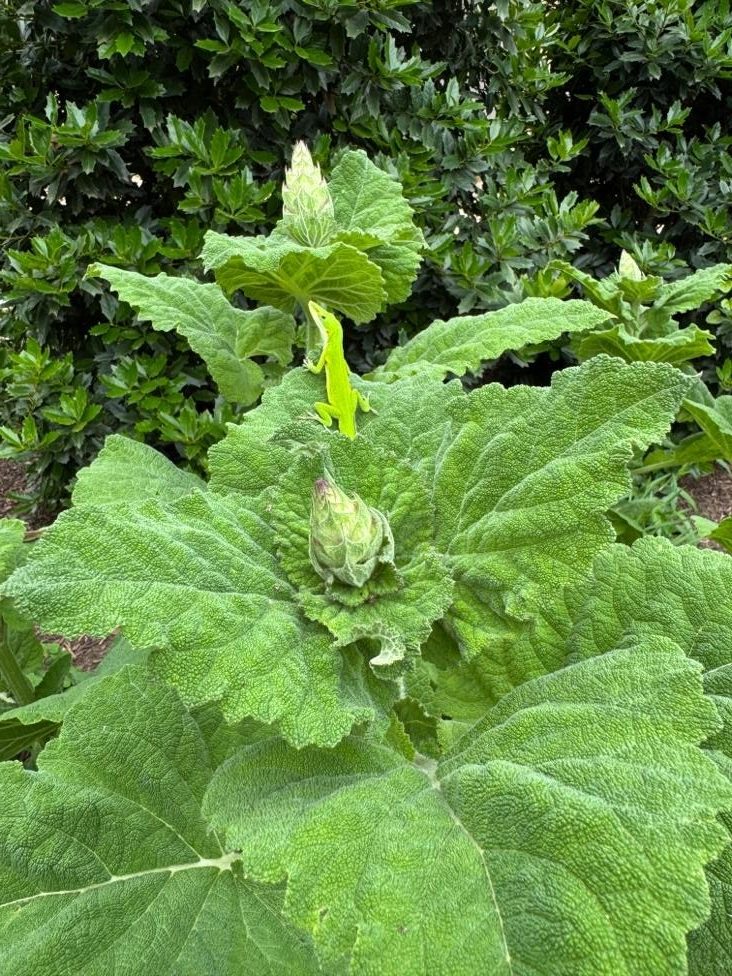
May 2025
Within a few weeks, my lovely little clary sage plant was towering at over four feet in both height and width. But the biggest surprise of all was the sweeping wash of color displayed by an abundance of stunning lilac/blue flower spikes. I was captivated by the aromatic fragrance filling the air.
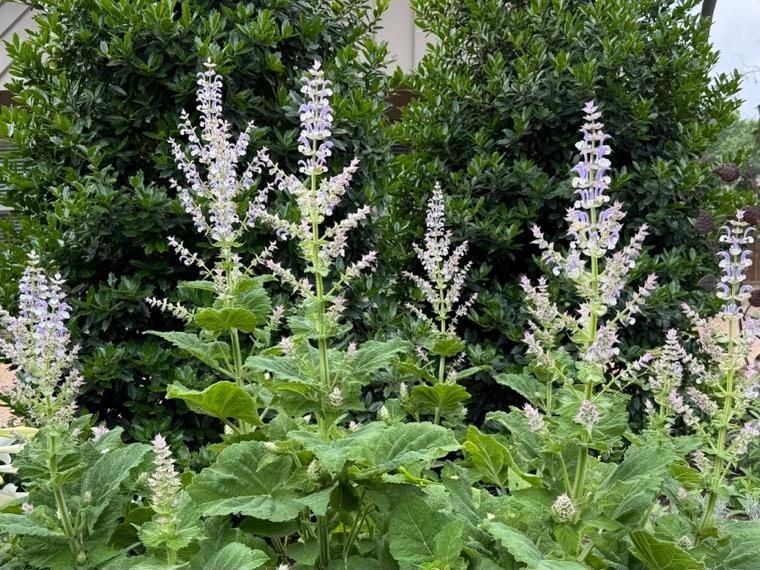
My favorite photo of Clary Sage in full bloom, May 24, 2025
Plant Type: Herbaceous Perennial
Family: Lamiaceae
Genus: Salvia
Species: sclarea
Native Area: Mediterranean, Central Asia (Cultivated in Hungary, France and Russia)
Exposure: Full Sun and Well-Drained Soils
Height: 4-5’
Watering Requirements: Average
Hardiness Zone: 5-9
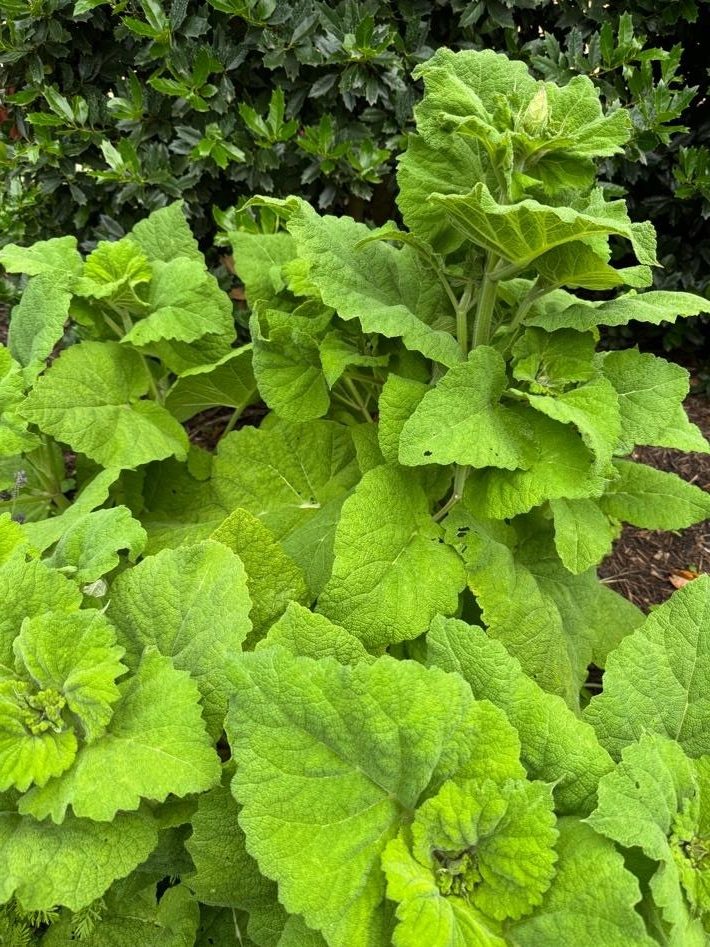
As of May 21, 2026 my clary sage is about 3 feet tall and the first bloom is forming
Clary sage is a short-lived herbaceous perennial or biennial with late springtime nectar-rich, tubular blooms that attract butterflies, honeybees and hummingbirds. In prime growing conditions, flowers continue throughout the summer months.
And if you are as curious about the name as I was, here is a simple and interesting explanation.
The Latin word for clear is clarus, meaning clear eye. During the middle ages doctors and herbalists used the mucilaginous seeds of clary to treat eye inflammations, remove foreign objects and to brighten vision. It was also known as Oculus Christi (eye of Christ).
Salvia sclarea, the plants botanical name comes from the Latin salvere or salvus, meaning “to save”, “heal or “healthy”, referring to the plant’s medicinal properties.
Clary sage has also long been used as an additive to wine and beer. In 16th-century Germany wine merchants infused clary with elder flowers then added the liquid to Rhine wines. This potent beverage came to be known as Muscatel.
Linda Alexander, Dallas County Master Gardener Class of 2008