Tag Archives: Raincatcher’s GardenDallas County Master Gardener Association

Crape Myrtles-Part II

My photographic adventure into the bloom-filled world of crape myrtle’s was joyful. They can be enjoyed, literally, everywhere you look. Hopefully, you will grow in your appreciation of these wonderful southern icons as much as I have over the past three weeks. Take time to admire their beauty while driving around the neighborhoods, parks, shopping centers and roadways of Dallas. May you be blessed with a moment of happiness while viewing my ‘Grand Finale’ of panoramic crape myrtle treasures!

A scenic view of a residential area featuring a stone wall and a blooming crape myrtle tree near a tranquil water body, complemented by lush greenery and a charming house in the background.
Lush greenery and blooming white crape myrtle trees along turtle creek
Pretty In Pink Puts A Smile On Your Face

A Border Of Fiery, Red Crape Myrtle’s – Van Alystene, TX
My Favorite ‘Canopy’ Photo Was Of This Big, Beautiful Lavender Crape Myrtle On The Children’s Playground At A Local Day School
An intriguing combination – from two different environments

Linda Alexander, Dallas County Master Gardener Class of 2008

Crape Myrtles are not native plants, but we take our opinion from the bumper sticker, “Not a native Texan but got here as fast as I could.” Crape Myrtles fit in with Texas water wise goals and some say that crape myrtles are a beneficial nectar and pollen source for honeybees, especially the lavender flowered varieties. The flowers, the fall color, the beautiful bark enhance Texas landscapes and many Texas gardeners, like me, embrace them.

Ann Lamb, Dallas County Master Gardener Class of 2005

Obsession™ Nandina

January 28, 2025

Nandina domestica ‘Seika’ 

Raincatchers’ Garden chose Obession Nandinas to co-exist with established Crepe Myrtles that have a darker leaf and white blooms.  These two plants provide an attractive, easy to maintain small area within our garden, and provide a colorful treat for the eye throughout their growing season.  Our plantings flank our shade pavilion located in the northwest corner of our north garden.

Glowing vibrant red in the spring and summer, Obsession™ Nandina is visually appealing, and it is also easy to grow, even for beginners. An upright, compact, dense grower, Obsession offers richer color than ordinary nandinas and is non-invasive. 

With its vibrant foliage and compact form, Obsession Nandina adds texture and color to any landscape. It thrives in various growing conditions and adapts to full sun and partial shade. Whether you aim to create a colorful border, enhance a foundation planting, or beautify a patio or balcony, Obsession Nandina is up for the task. Best of all, Obsession Nandina is deer-resistant!

Ideal growing conditions for the Obsession Nandina shrub include well-drained soil and regular watering, especially during hot summer months, though you’ll find the water-wise Obsession to have low water needs once established.

This low-maintenance plant also doesn’t require frequent fertilizing, making it an excellent choice for those with busy schedules. If you wish, feed your Obsession Nandina once per year in early spring.

You can selectively prune to shape your nandina shrub prune in late winter or early spring according to your preference, but Obsession Nandina doesn’t require pruning to stay compact. When pruning, remove any dead or damaged branches, as well as any crossing or overcrowded stems.

Bloom/Feature Bright red new growth

Evergreen or Deciduous? Evergreen

Plant Hardiness Hardy to -10°F to 0°F

Key Features Deer Resistant, Disease / Pest Resistance, Water-wise, Winter / Floweing Season

Fall Foliage Color None

Uses Accent, Container, Mass Planting, Slope

Water Needs Medium

Fertilize Yearly in early spring

Pruning None Needed*

Planting Instructions

• Water before planting

• Plant in location that receives partial sun to shade

• Dig hole 2X the width of pot

• Plant 1-2″ above ground soil level, backfill hole with soil

• Water deeply to settle, then add more soil if needed

• Mulch 1-2″ deep around plant, avoiding area closest to stem

*If pruning is desired for shape, remember to cut the offending branches at ground level, not from the crown of the plant.

Information above is from Southern Living Plant Collection.

Jon Maxwell, Dallas County Master Gardener

 January appreciation–it can be hard

January 11, 2025

Here we are in January–its cold and can be dark and gloomy.  So how to  appreciate it?

January is named for the great Roman God Janus.  This God could look to the front and to the back–seeing both the past and the future–thats a lot right?  But really his powers were far greater. Janus was a God of practical importance.  When asked by mere mortals assistance could be given to turn dreams into reality.  Janus had the power to help the followers to see and understand what  actions were needed to recognize an abstract goal  and take the necessary actions to make it real.  

There seem to have been other powers but those seem quite enough for us to think about in this time of the year that can seem a bit bleak.

In fact it seems very possible that Janus was fond of gardening and was able to use the powers to make gardeners happier.

Well it is  hard to say it was all a very long time ago now–but some things don’t change.  We want things to be brighter and more cheerful.  we know we can’t just wait for it to happen–its up to us–we are going to have to be inspired by ancient wisdom but we are the ones who must make it happen.  OK lets turn the idea “make things brighter” into action to make it so.   Remember–no just hoping for a good day–make it a good day!

Let’s decide on what to do:

Go and pick some of the lettuce and arugula in the garden make and enjoy a salad–delicious and healthy too.

Take a walk around the yard–Yes its cold but the hellebores are starting to bloom but you will never know unless you go out and look.  Winter honeysuckle  is covered in lovely white flowers a treat for people and bees but again it requires a good close look those flowers are beautiful but they are small.

Houseplants are right there for enjoyment.  Don’t take them for granted and let them become just part of the furniture.  Of course do the routine care but take the time to really look closely they will appreciate it and you will reap the benefits.  Even the most common of the plants are amazing on close inspection.

Even January can be a wonderful time for gardeners.  Lets learn from Janus and take action to make it so! 

Susan Thornbury, Dallas County Master Gardener Class of 2008

More information on:

Christmas Cactus

Winter Honeysuckle

Hellebores

Sunflower Honey

June 14, 2024

A bee on a yellow flower

Description automatically generated

A recent Savannah Bee email was so inspiring to read that I immediately ordered three jars of what founder Ted Dennard described as “the happiest honey around”. Sourced from the beekeepers of Ukraine and Romania, it truly is “as sweet as a summer day.”

For more information about the women beekeepers who produce and distribute this remarkable sunflower honey, please follow the link to Savannah Bee. Their story is one of determination and perseverance in continuing the art of beekeeping for future generations. 

Also, please revisit a blog article posted by Master Gardener Starla Willis in August of 2022. It features her summer trip to Ukraine where she captured an amazing photo of sunflower fields from her train ride across the country. She has cherished memories of that special experience.

For a quick breakfast treat, spread this yummy, crystallized honey onto a toasted English muffin.

A plate with food on it and a jar of butter

Description automatically generated

Only 5 ingredients from this to this!

*Note: For all products and references to Savannah Bee go to savannahbee.com

Linda Alexander, Dallas County Master Gardner Class of 2008

Candied Sunflower Seed Snack Recipe as pictured above

What is Tupelo Honey?

May 24, 2023

(A $120 bottle of Gold Reserve Tupelo Honey)

“She’s as sweet as Tupelo honey

She’s an angel of the first degree

She’s as sweet as Tupelo honey

Just like honey baby, from the bee”

In 1971 singer-songwriter Van Morrison released his album Tupelo Honey. Shortly thereafter, the album reached number 27 on the Billboard charts. As a result, the name and brand of Tupelo honey reached a national audience. Then in 1996 Tupelo honey once again gained recognition in the media spotlight with the release of the major motion picture Ulee’s Gold starring Peter Fonda. Not only did Fonda win a Golden Globe for his performance in the film, but Tupelo honey also earned the distinction of being known as the Queen of the Honey World.

Tupelo honey is light golden amber with a greenish cast. The first taste is of cinnamon with a tinge of anise. That gives way to a whisper of jasmine and something citrusy like tangerine rind. 

Tupelo honey is unique for its unusually high fructose to glucose ratio. Because of this ratio, raw Tupelo honey is very slow to, and rarely ever crystallizes. The higher fructose to glucose ratio also makes Tupelo honey one of the sweeter honey options.

Considered by many to be the most expensive honey in America, it seems strangely odd that the best Tupelo honey producing region in the world is the Florida panhandle along the Appalachicola, Chipola and Choctahatichie River systems of creeks and backwaters. It comes from the nectar of the White Ogeechee Tupelo trees. The Tupelo tree, also known as the swamp gum tree, is abundant in only a few places in the country including Northwestern Florida, Southern Georgia and Louisiana. Beekeepers load their beehives on barges and float them in the swamp for the 3-week blooming period, being careful to avoid the alligators lurking in those waters. The little flowers are very delicate and can be easily destroyed by high winds or severe rain. This is why the demand for Tupelo honey will always exceed the supply! 

Linda Alexander, Dallas County Master Gardener Class of 2008

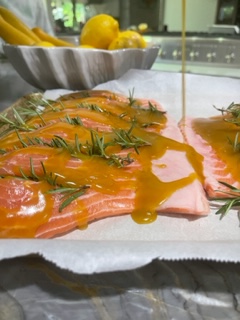
Try this Tupelo Honey Recipe:

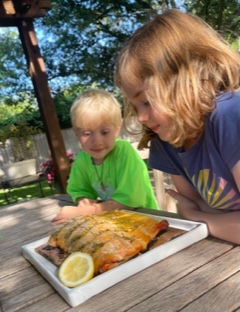
Tupelo Honey Grilled Salmon

Glorious Gardening in The North Field

December 2, 2022

Joy in the garden and what to expect in your fall and winter gardens:

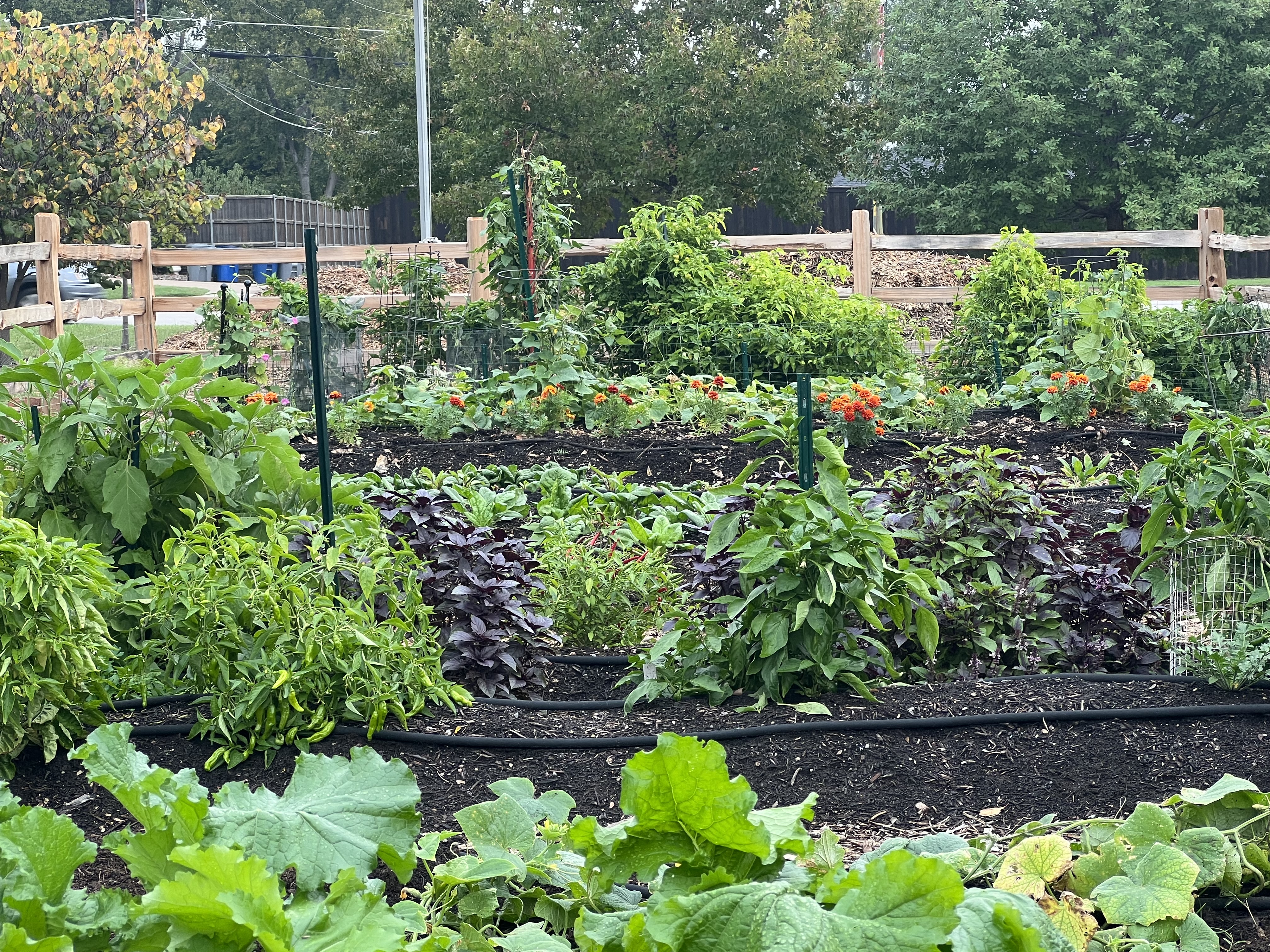
Our gardeners who work in the gardens pictured are called the “vegetable team.” Beverly writes-I have been thinking about the gratitude the vegetable team has for the harvests we have donated. (over 675 pounds donated) When we are trying a variety that is new to us, we taste it-often as a part of lunch before we go home from our workday. I’m grateful for that fellowship.  I’m also grateful for the gardeners who start seeds for us at their homes. 

The loofah and Zucchino Rampicante (Baker Creek Heirloom Seeds) escaped the raised beds and trellises after the worst of the summer heat was over. The loofah seeds were saved from a prior year and direct sowed. 
Aji Dulce peppers are mild and productive. They become very sweet when allowed to turn red. Our seeds were a gift and we save them from year to year.  They are becoming easier to find at some of the specialty seed outlets.

We planted small varieties of carrots such as “Little Finger” from Botanical Interests and kept the soil consistently moist until they germinated.  

Even though garden centers have turned their inventory to Christmas trees, you can still find lettuce, Swiss chard, spinach, kale, and herb transplants. Also, keep direct sowing radishes.  You may get a wonderful winter crop of vitamin packed vegetables. 

Ann Lamb and Beverly Allen, 2 Dallas County Master Gardeners

Pictures by Starla Willis, Dallas County Master Gardener-2008

Spotted Manfreda Plant

May 12, 2021

Spotted Manfreda Plant

Several weeks ago during a recent work day at the garden, we noticed a flower stalk coming up from the middle of a couple of our spotted manfreda plants on the courtyard of Raincatcher’s Garden.  This particular succulent plant, also know as Texas Tuberose or Manfreda maculosa is short (grows 12 – 15 inches tall) with silvery green leaves and is covered with purple spots. It is native to southern Texas and northern Mexico and does best in full sun.  It is considered a tender perennial but is often an evergreen plant in mild winters.  It completely died back this past winter and not only came back this spring but quickly produced a flower stalk.  

Manfreda in Bloom

The plant eventually grows into a thick clump of shoots connected at the roots and is often referred to as a ground cover plant.  The best part about the growth habit of this plant is that it is begging to be shared.  In fact, I got my plant many years ago from a couple who were on the city of Dallas Water Wise Garden tour.  As soon as I asked the home owner about the plant, she quickly retrieved a trowel and dug up an offshoot for me.  I have lost count of how many of these plants I have given to gardening friends as well as planting several in the courtyard at Midway Hills Christian Church.

The Alien Looking Flower of the Manfreda

I did a bit of research about the flower and I found that the relatively tall inflorescent carries mildly fragrant tubular flowers.  The flowers lack colorful petals, but have especially long pistils and stamens.  One website described the flower as “alien looking.”   

This is a plant to consider growing in your garden or in a container.  And if you’re lucky, it will gift you with a large, alien looking flower!

Jackie James Dallas County Master Gardener Class of 1993

We will have a couple of varieties of manfreda plants available at our plant sale on May 13th and 14th.   Hope to see you there.

Jackie James, Dallas County Master Gardener Class of 1993

Flower Photos by garden friend, Diane Washam 


PLANT SALE LOCATION: 11001 MIDWAY ROAD, DALLAS, TEXAS 75229

MAY 13TH AND 14TH