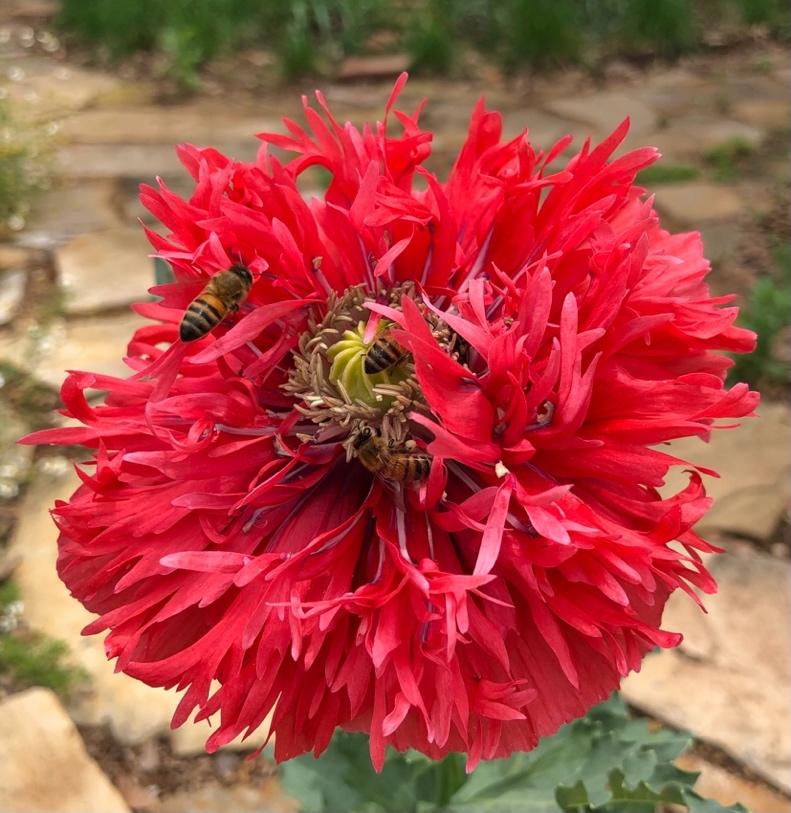
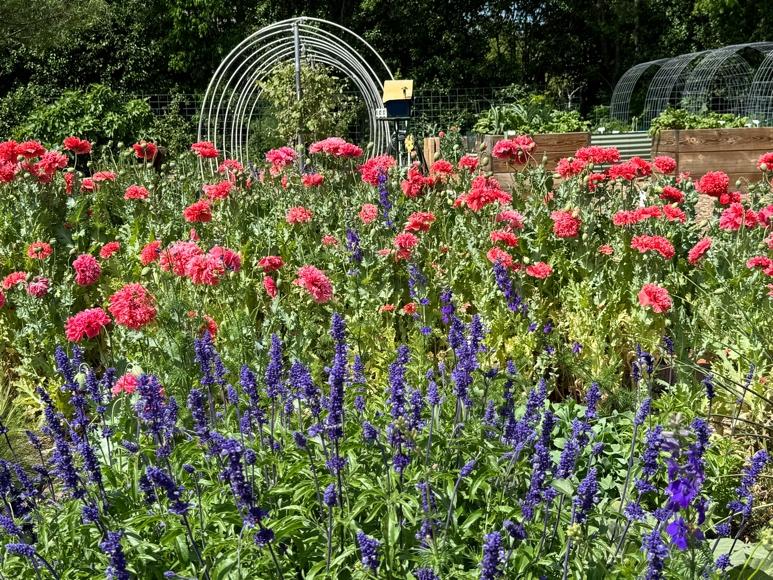
If you’ve been to Raincatcher’s Garden of Midway Hills anytime during the past two weeks, a seasonal spectacle may have caught your eye. Everywhere you look, from the Edible Landscape/Courtyard area extending out to the north garden, pathways are filled with the sight of spring blooming pink poppies.
Move in a little closer and listen carefully for a soft humming sound. As you might have guessed, honeybees are busy at work foraging for pollen from the abundance of poppies that share these garden spaces with our herbs, vegetables and wildflowers.
Are you wondering…why are honeybees so attracted to poppies? As the late Robbin Thorp, native pollinator specialist for UC Davis in California so succinctly stated…” they’re not there for the nectar – they’re there for the pollen”.
Poppies should be considered as a quintessential plant for pollen production. And honeybees are one of the chief pollinating agents. A deeper dive into the world of poppies gives us some interesting information regarding pollen.
It is true that honeybees are attracted to poppies for pollen only. The reason why is that the inflorescences of all poppy species lack nectaries, thus no sugary nectar available to pollinators. Flowers, however, are packed with pollen-bearing anthers. Because pollen is the honeybee’s main source of protein, collecting it is a necessary task. Once collected, it is used for brood development and to feed the young larvae. And, fortunately for the bees, scientists have found that poppy pollen is remarkable clean, containing few fungi or mycotoxins.
Come visit our garden and take time to stroll the garden paths filled with poppies. Expect to be mesmerized by an eye-catching explosion of frills. Early morning and late afternoon seem to be the optimum time to experience the honeybees in action. Don’t be surprised to see as many as four or five honeybees foraging frenetically within a single flower.
(Raincatcher’s Garden of Midway Hills…Our “field of poppies!)
Linda Alexander, Dallas County Master Gardener Class of 2008
The kiosk in the north garden at Raincatcher’s Garden has been somewhat ignored over the years. We felt it would be a good opportunity to give people visiting the garden some useful information about events happening at the garden, as well as plant details. It was time that the kiosk served some purpose!!! The first poster that was added to the kiosk was information about our blog, Dallas Garden Buzz. Hopefully, visitors to the garden will use the QR code and find a wealth of plant information, beautiful garden photos and great recipes. Another flyer was added to announce our annual plant sale coming up on Tuesday, May 7, 2024
One of our main missions as Master Gardeners is to be a resource for gardening knowledge to the community. We will be using the kiosk to do this by posting a monthly plant information sheet featuring one of the plants in the garden. Not only will visitors be able to read the plant information but they will also be able to stroll through the garden trying to locate the plant on the flyer.
Below is the first “Plant of the Month” information sheet that is currently posted in the kiosk. Hopefully, this will be the first of many!!!
Chinese Ground Orchard
The Chinese Ground Orchid is a perennial bulb in the orchid family that grows to a height of 1 – 1½ foot with a 1 foot spread. It is a shade plant that does well in morning sun and afternoon shade but it will also grow in full shade. The blooms last for about 6 weeks and the foliage looks like a palm tree seedling when not in bloom. This tropical plant does well as a ground cover or growing under a tree and is a good choice for a container in colder climates. The Chinese Ground Orchid spreads by rhizomes and is easily propagated by divisions. This beautiful plant is blooming in the courtyard now.
Jackie James, Dallas County Master Gardener Class of 1993
Starla and I will be speaking at the Dallas Arboretum during Dallas Blooms at 11am on Friday, March 1st. We will be coordinating with the Dallas Blooms theme-A picture’s worth a thousand words, showing pictures of our recent trip to America’s Garden Capitol and giving photography tips.
Click here for information about our talk as part of the series: Learn to Grow Horticultural Presentations. Many other classes will be available by other Dallas County Master Gardeners. Check the calendar!
No charge except your admission to the Arboretum.
The DCMGA Japanese Maple Sale Begins March 6
Once again, we are offering a large selection of Japanese Maples from Metro Maples for purchase with all proceeds going to DCMGA. If you were disappointed because you missed out buying one of these lovely trees in the October sale, be sure to get online early to make your selections. The SignUpGenius for ordering and purchasing maples will go live March 6 at 8 AM. At that time, you can order and pay for your selection(s). One-gallon trees are $35.00 (including tax) Two-gallon trees are $46.00 (including tax) The SignUpGenius will close at 5 PM on March 13, or earlier if all trees are sold. Our inventory of trees sold out within hours last October. Please bring your confirmation to the pickup on Saturday, March 23 between 10 AM and 1 PM at Raincatcher’s Garden.
SAVE THE DATE: Raincatcher’s Garden Annual Plant Sale
Midway Hills Christian Church
11001 Midway Road
Dallas, Texas 75229
Tuesday, May 7th 2024
10 AM – 3 PM
We will have annuals, perennials, herbs, peppers, succulents, shrubs, trees, groundcover, bulbs, houseplants, decorative pots, yard art, etc.
All proceeds from this sale go to Dallas County Master Gardener Projects.
Ann Lamb, Dallas County Master Gardener Class of 2005
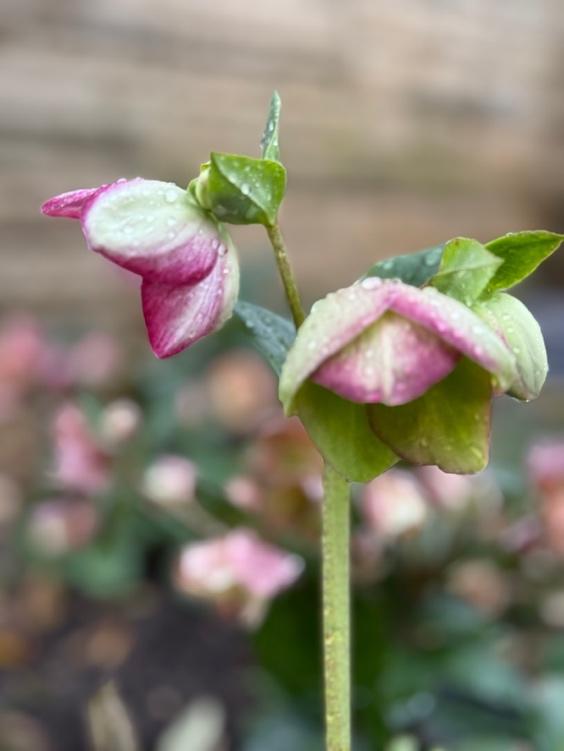
In our Zone 8 climate they are not only survivors of winter’s chill but soon after a January freeze, Hellebores lift their lovely heads and shower us with an abundance of February color. Starting now and continuing into late March and early April, refresh your home by selectively snipping and arranging their decorative blossoms.
If you aren’t already growing Hellebores in your garden, now is a really good time to give them a try. Many of our local garden centers currently have a wide selection of varieties with colors ranging from ivory and pale green to pink and dark burgundy. You might find comfort in knowing that the symbolic meaning of hellebores includes peace, serenity and tranquility.
My hellebores were planted three years ago and were used to make each of the featured arrangements. However, this was my first time to use hellebores as a cut flower, but it won’t be my last. It has been impressive to see how well their strong and sturdy stems hold up when anchored in a “frog-type” holder.
Here are my top three reasons for growing hellebores:
During the dreary backdrop of winter, hellebores bring joy to your garden with a rainbow of beautiful colors.
As a cut flower, hellebores hold up well and can be arranged in unique and beautiful ways.
As you can see from the photos, hellebores provide honeybees with a much-needed nectar source when options are extremely limited.
Linda Alexander, Dallas County Master Gardener class of 2008
Helleborus, ‘Glenda’s Gloss’ will be planted along the wavy wall in memory of Raincatcher’s volunteer and dear friend, Glenda Nix. She was loved and is missed.
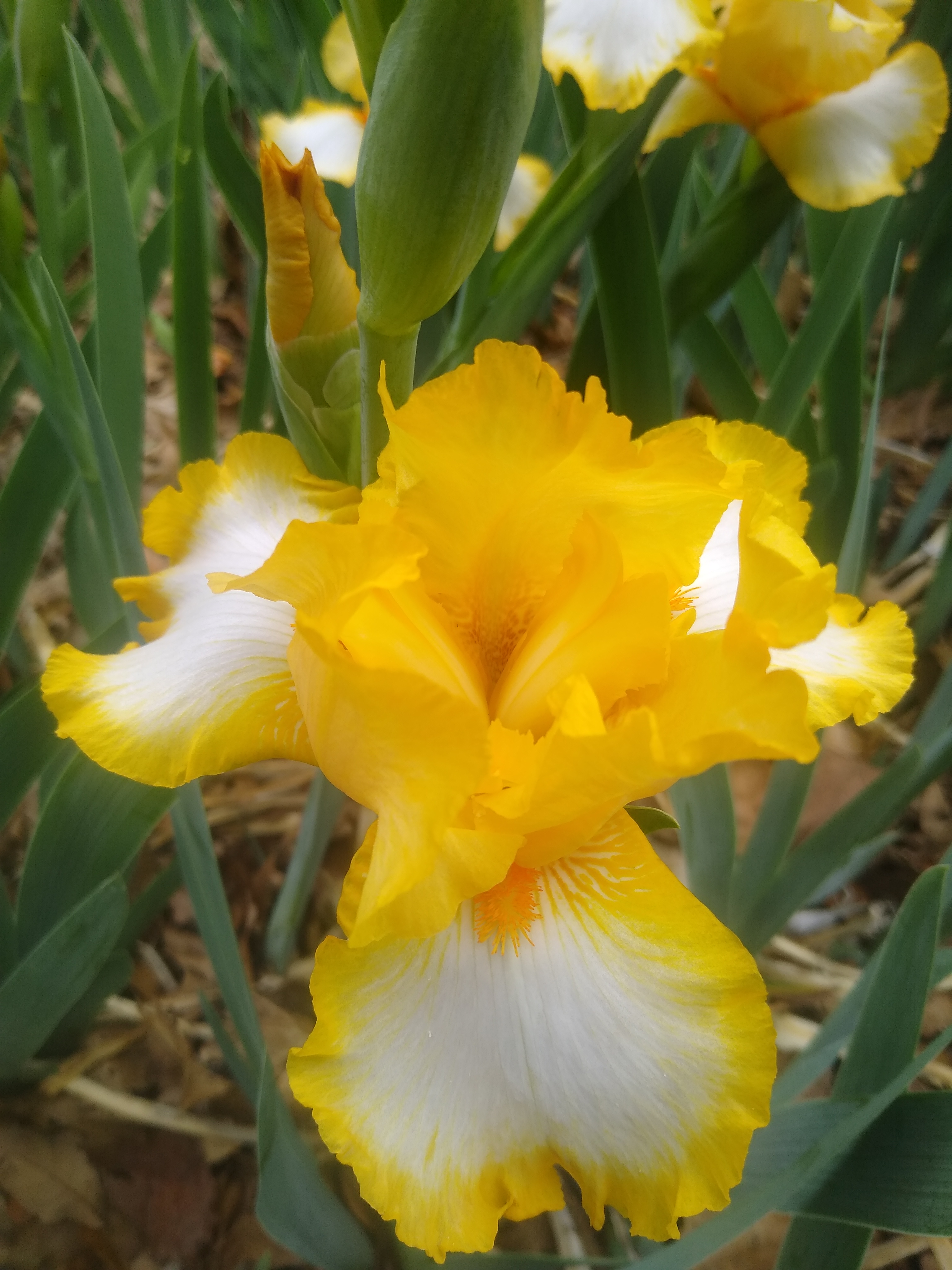
Who doesn’t love a beautiful iris plant? It’s one of the first plants to bloom in the spring and it is rugged, reliable and very easy to grow. The iris is named for Iris, the Greek goddess of the rainbows and personal messenger for the Gods. It is a long lived perennial that needs a minimum amount of care.
There are almost 250 species of iris and they come in a multitude of colors. With many different types and colors available, there is a perfect iris for every garden. The most popular iris is the bearded iris. Other popular varieties include Siberian and Japanese irises, Louisiana irises (which are native to North America), and Dutch hybrids. Bearded iris get their name from the “beard” that runs down the center of the cascading petal.
The rhizomes need sun and air to keep them dry. If they are covered with soil or mulch there is a chance the plant will rot. Some say to plant the bearded iris rhizomes “with their face in the sun” leaving the upper part of the rhizome exposed. Iris plants need at least 6 hours but preferably 8 hours of direct sun. The best time to plant iris is early fall. This will give the plant enough time to settle into the ground and start rooting before the first frost. They should be planted 12–18 inches apart. If you have different types of iris cultivars, plant each type together in groups of 3 to 7 plants for a greater color impact.
After iris plants have finished blooming, cut the flower’s stem down to the base but do not trim the leaves. The plant’s foliage carries on with photosynthesis in order to generate energy for next year’s growth and flowers. It is best to divide iris plants in the fall.
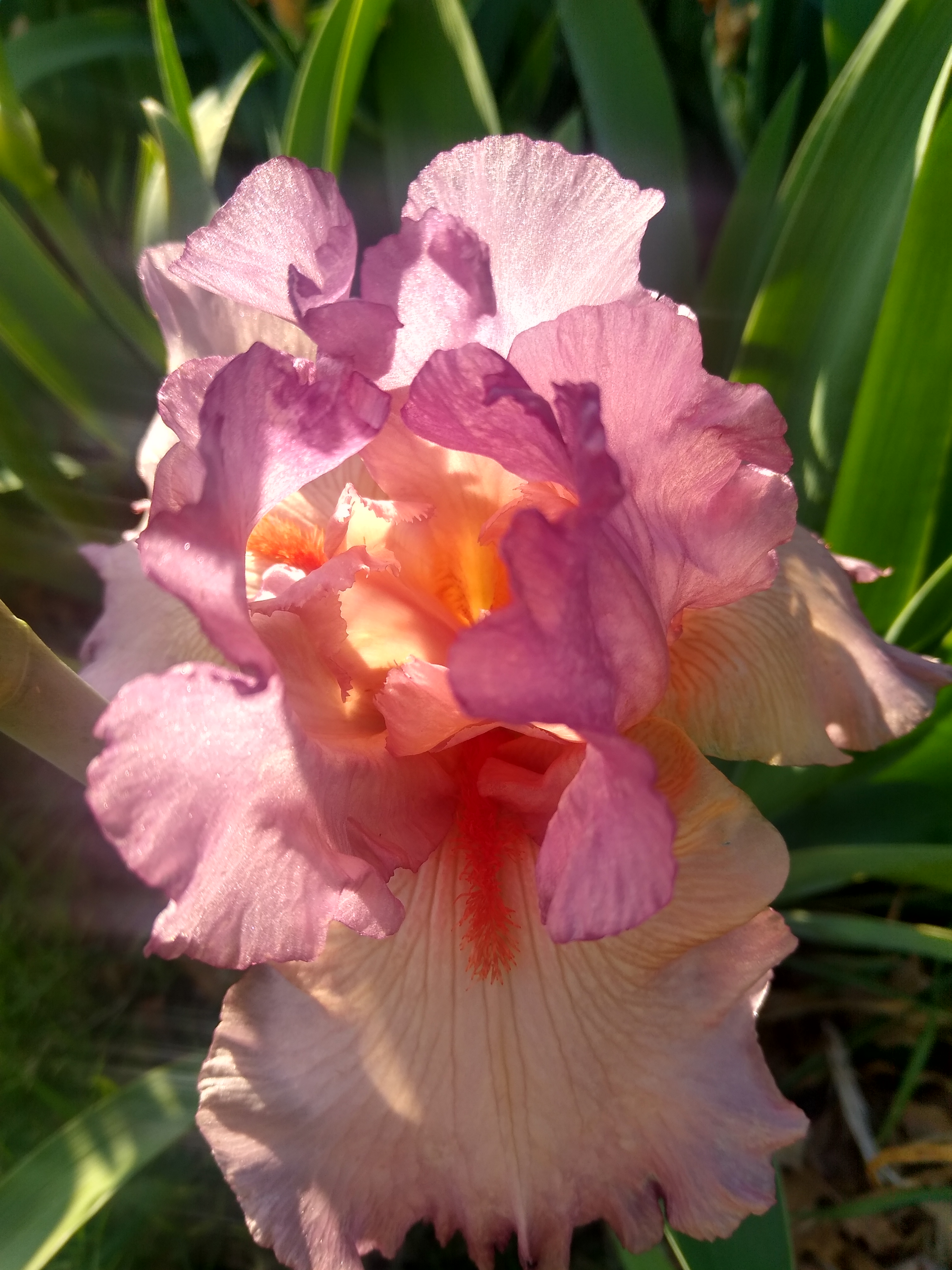
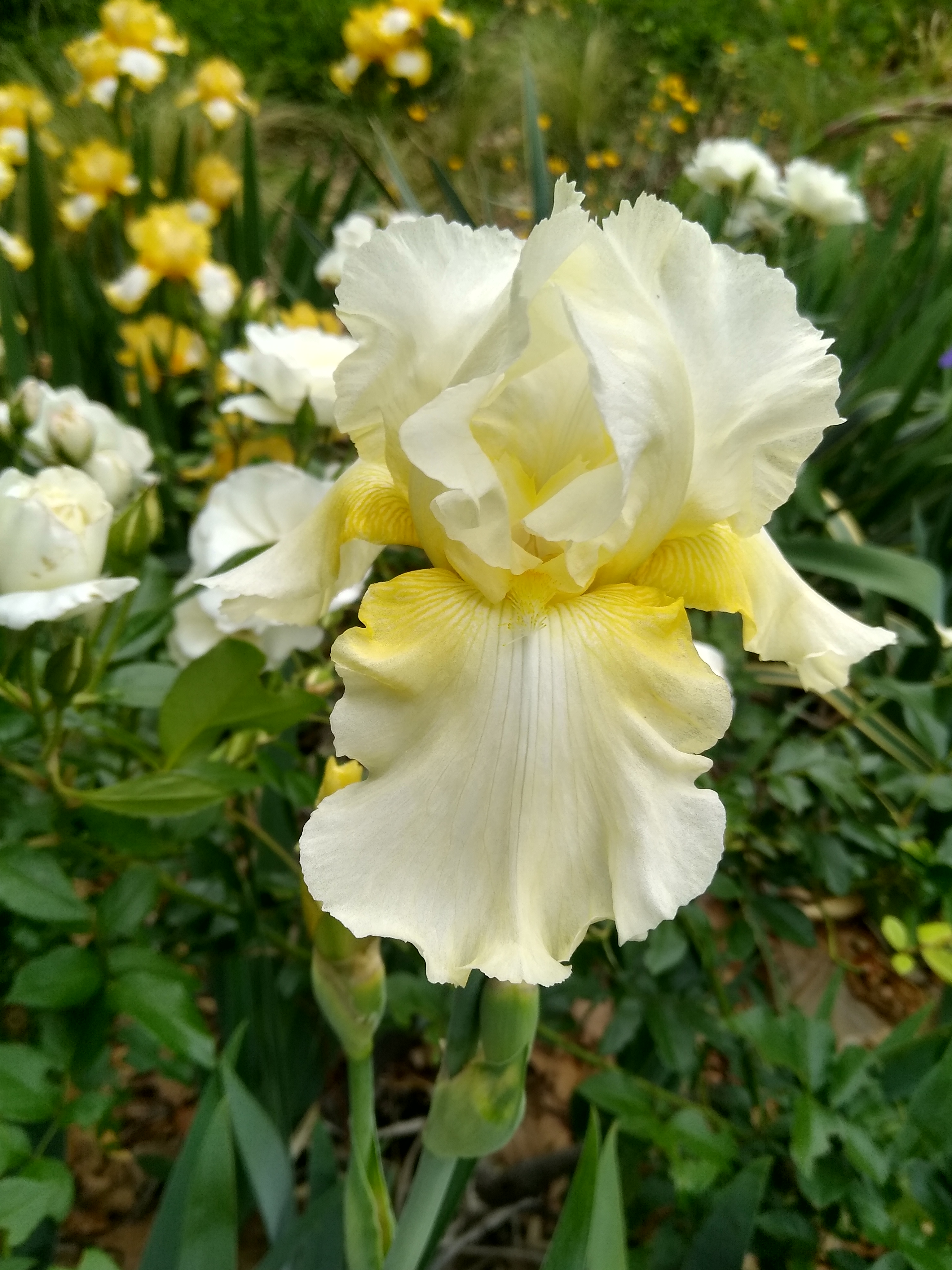
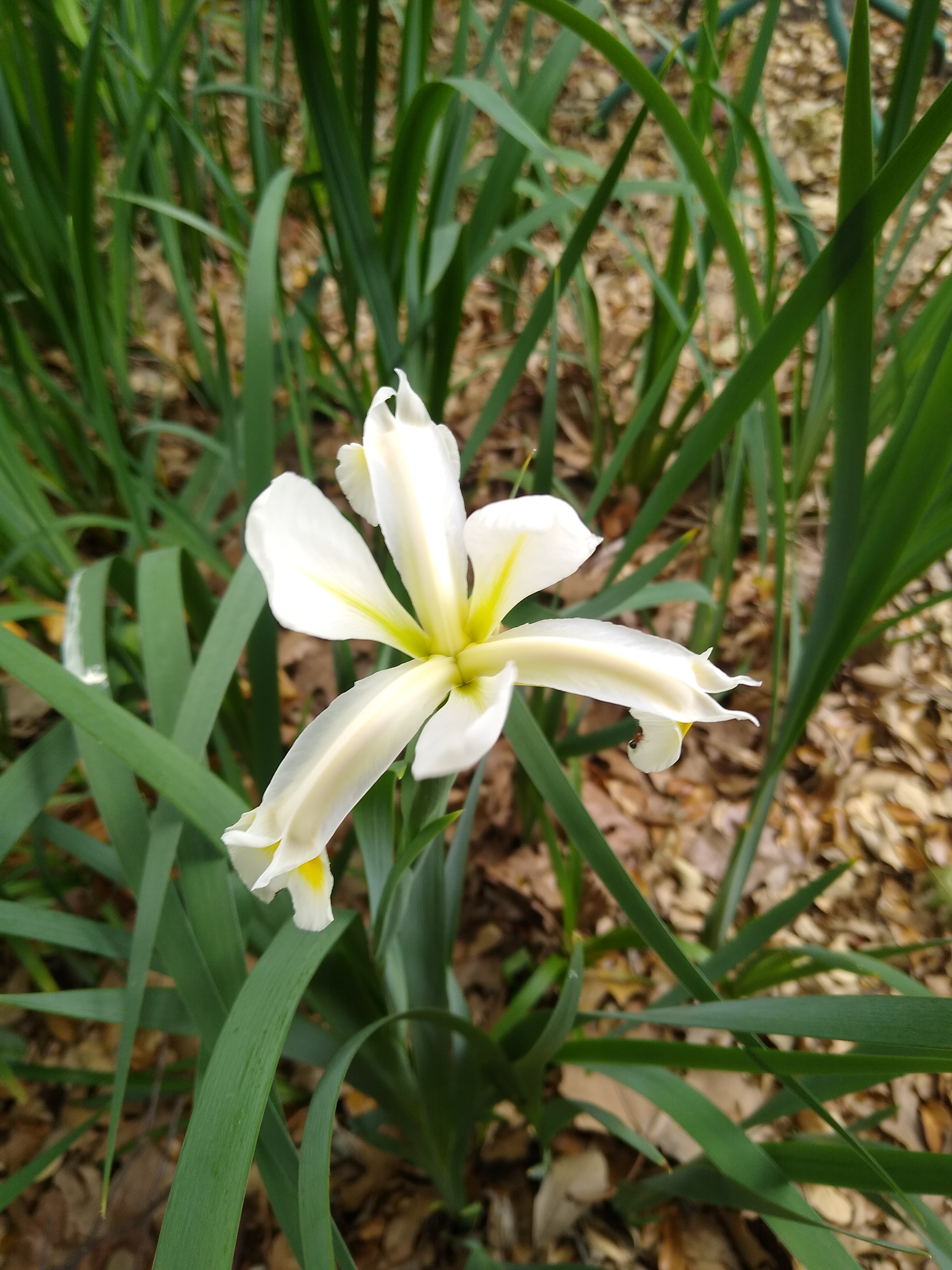
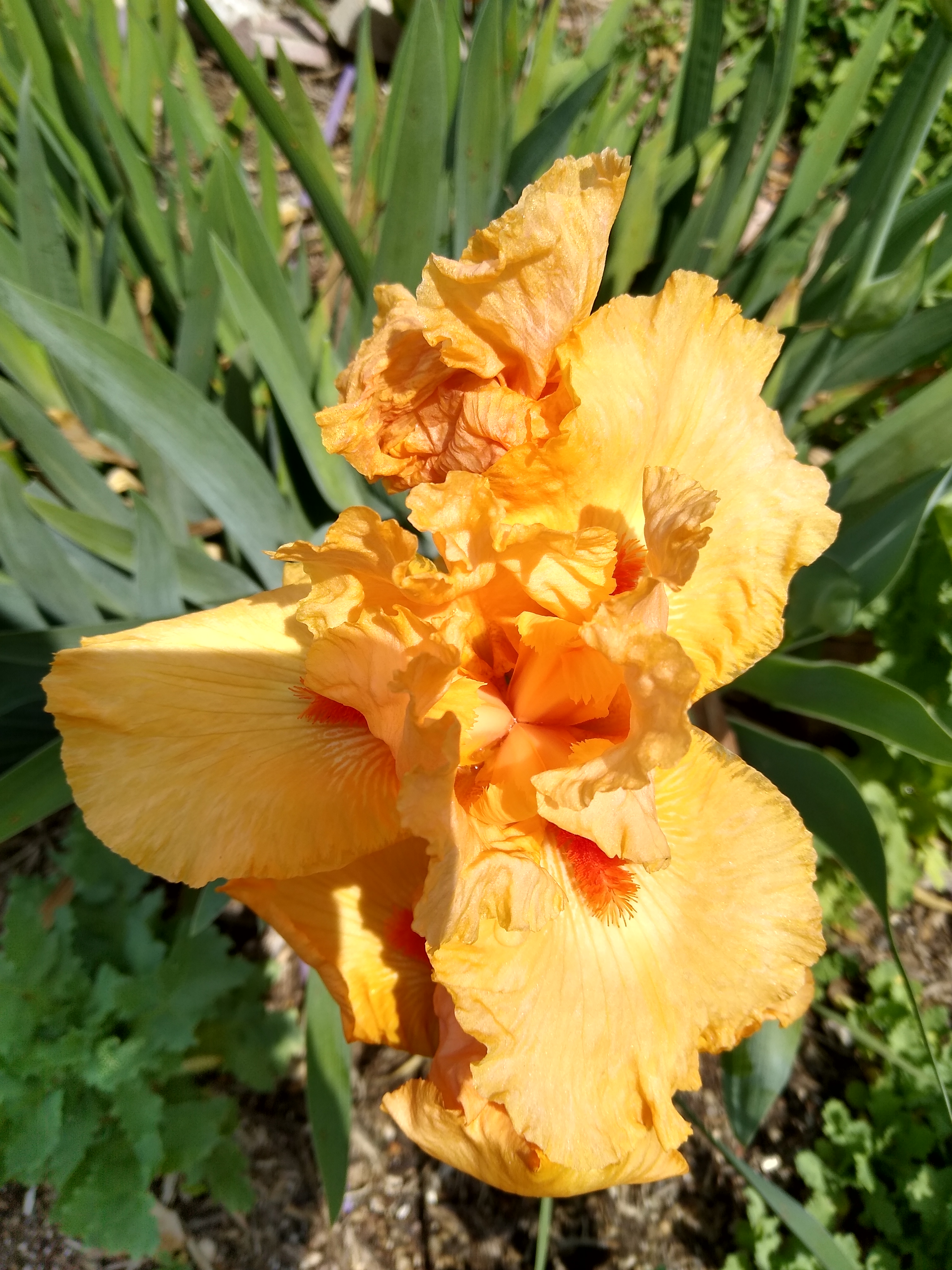
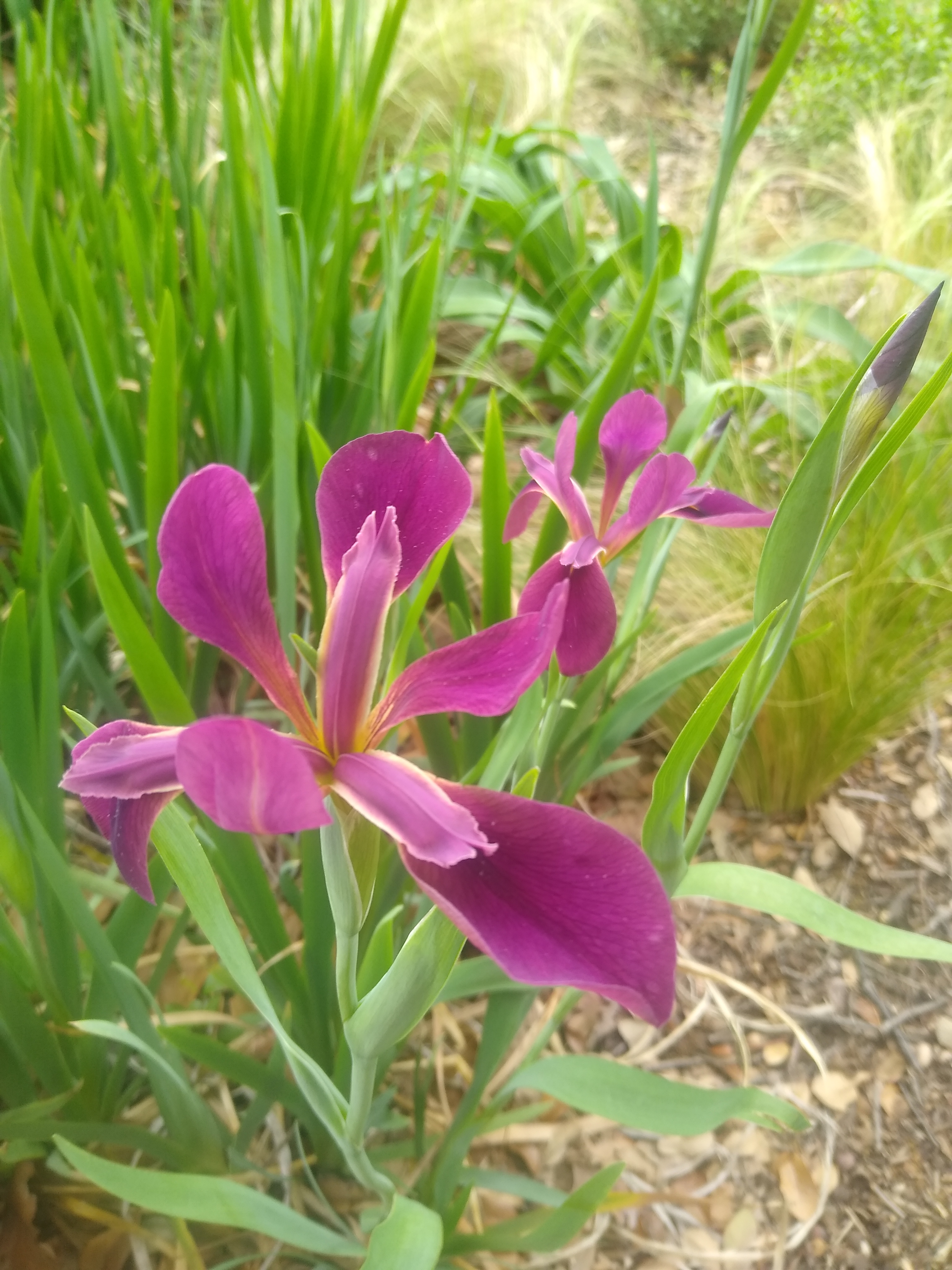
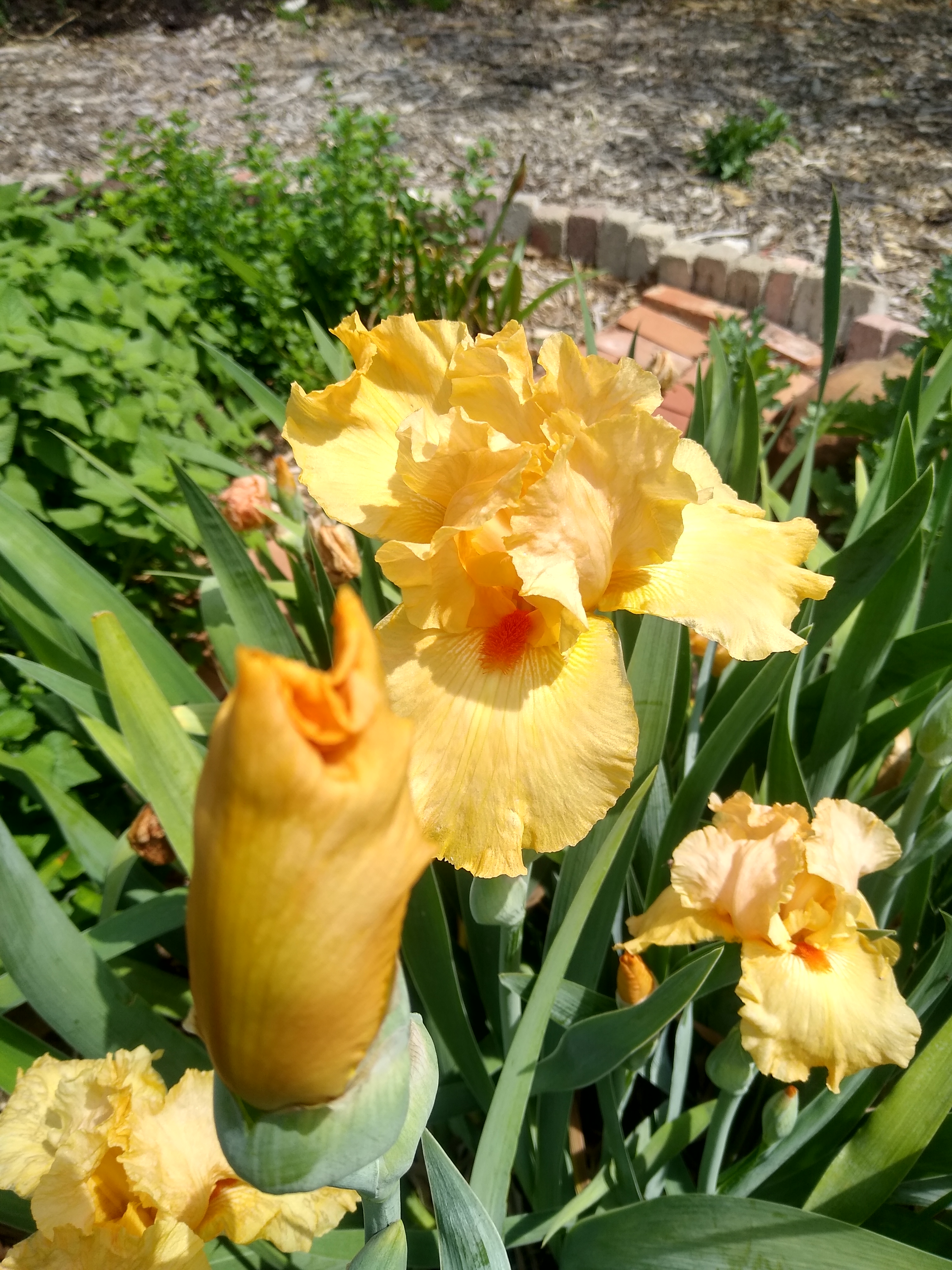
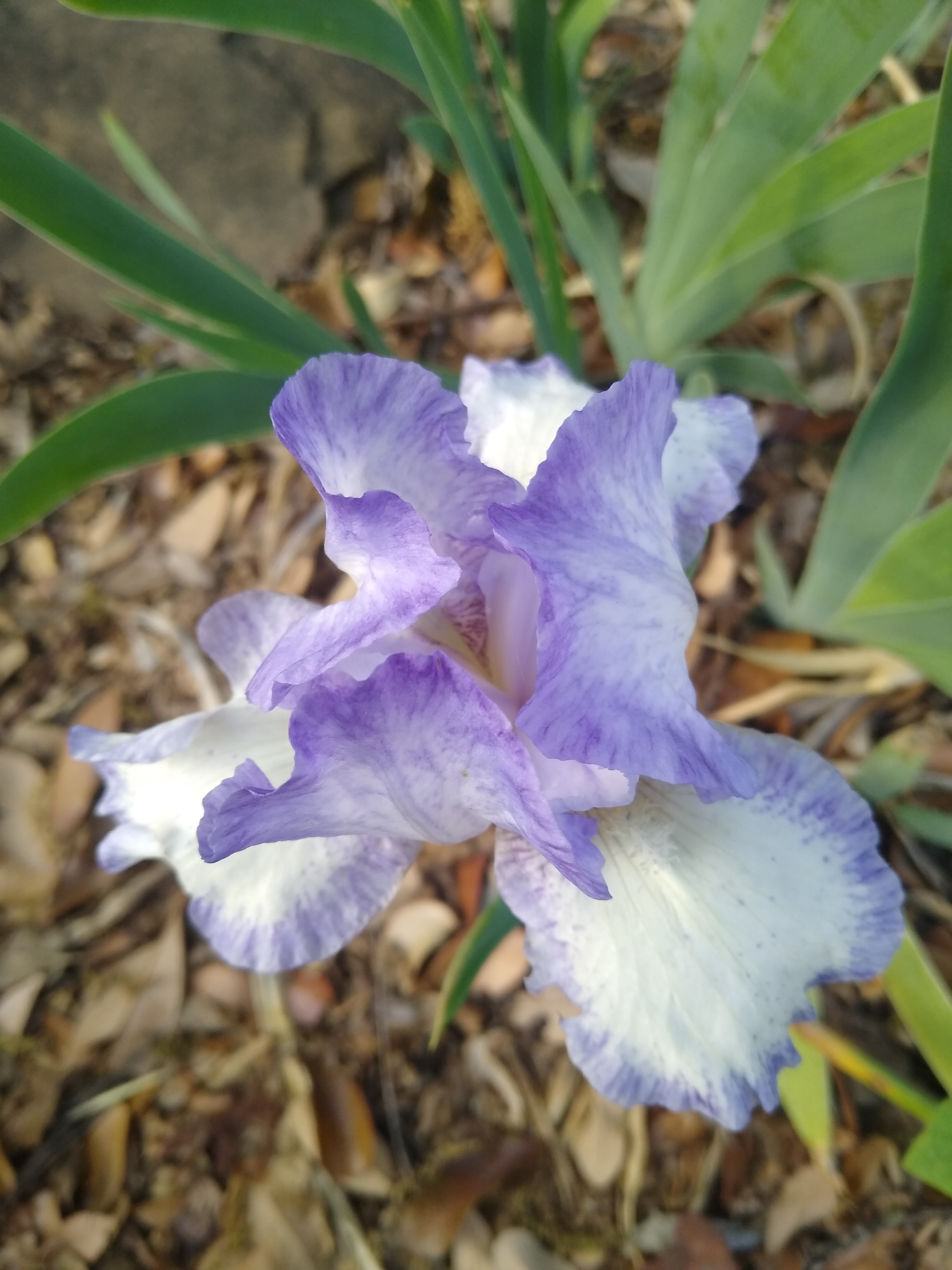
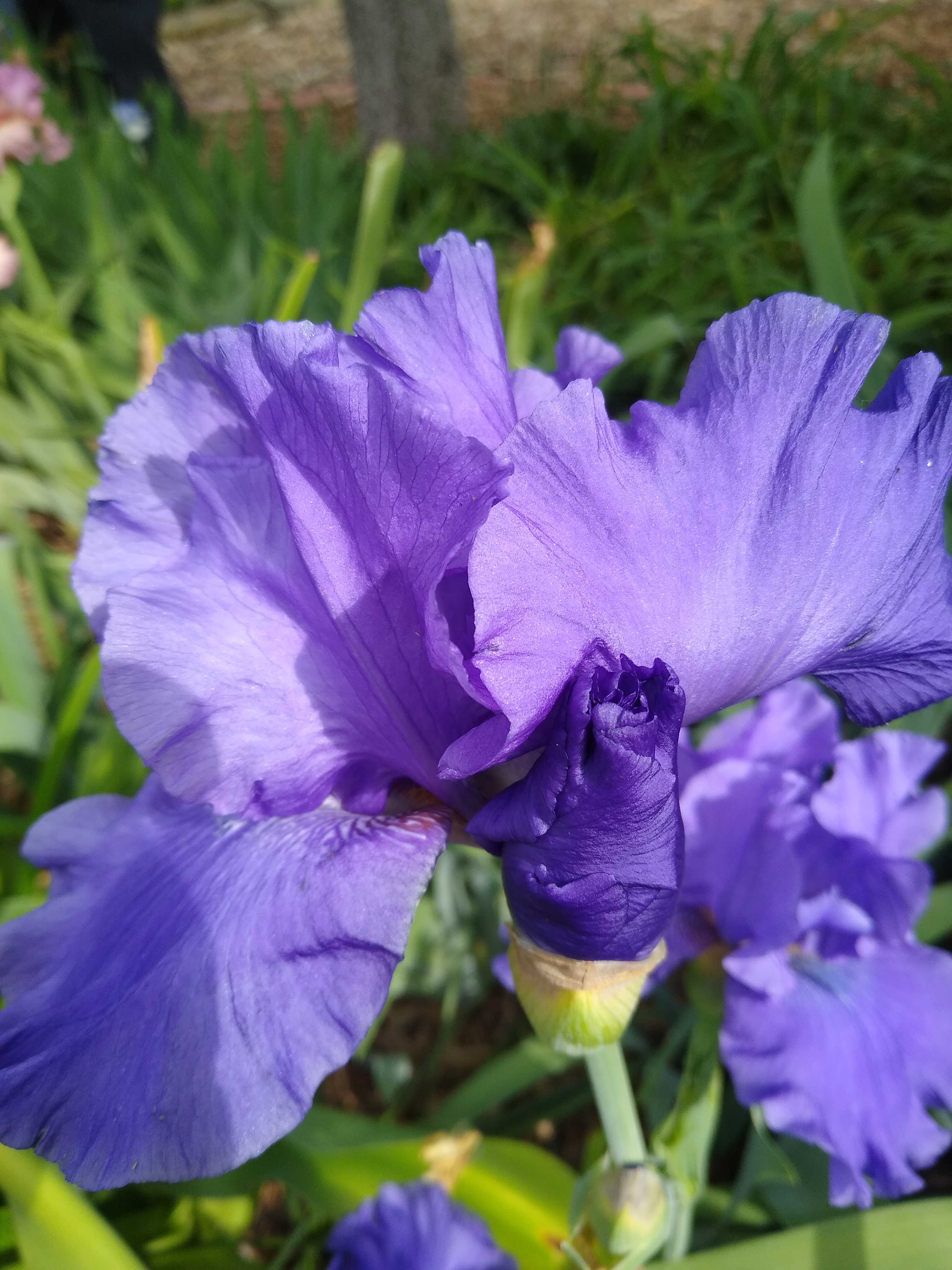
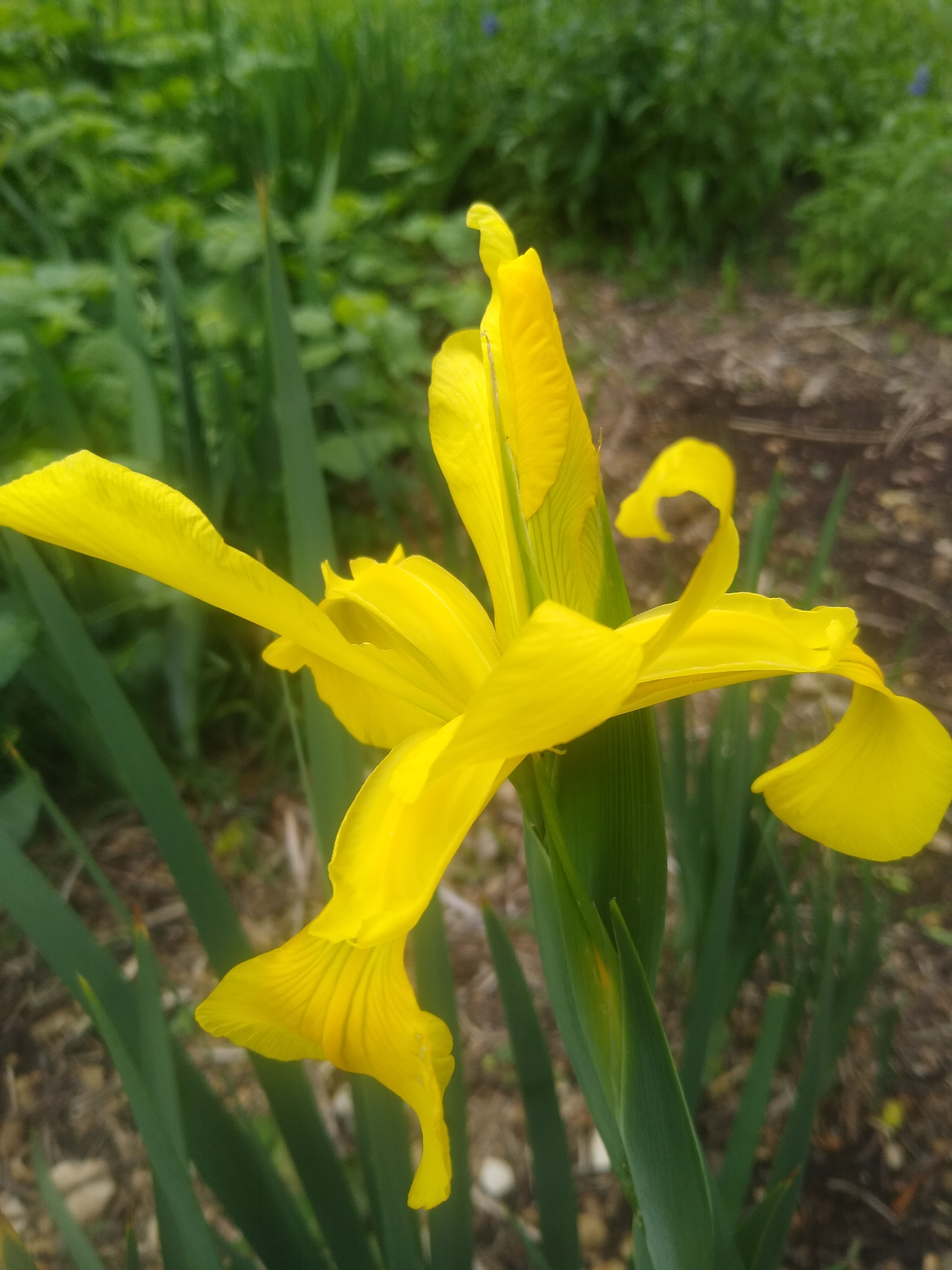
We are lucky at Raincatcher’s Garden to have the most beautiful collection of iris so I hope you enjoy the photos taken at the garden.
Or better yet, visit the garden in the near future and see these beauties in person! If you have iris in your garden, share them with friends and neighbors and help spread the joy of iris!
As composters for the Raincatcher’s Garden of Midway Hills, we are continuously looking for ingredients to make compost.
During the spring through fall, we find green grass, leaves, coffee grounds, kitchen scraps, etc. to add to our compost piles.
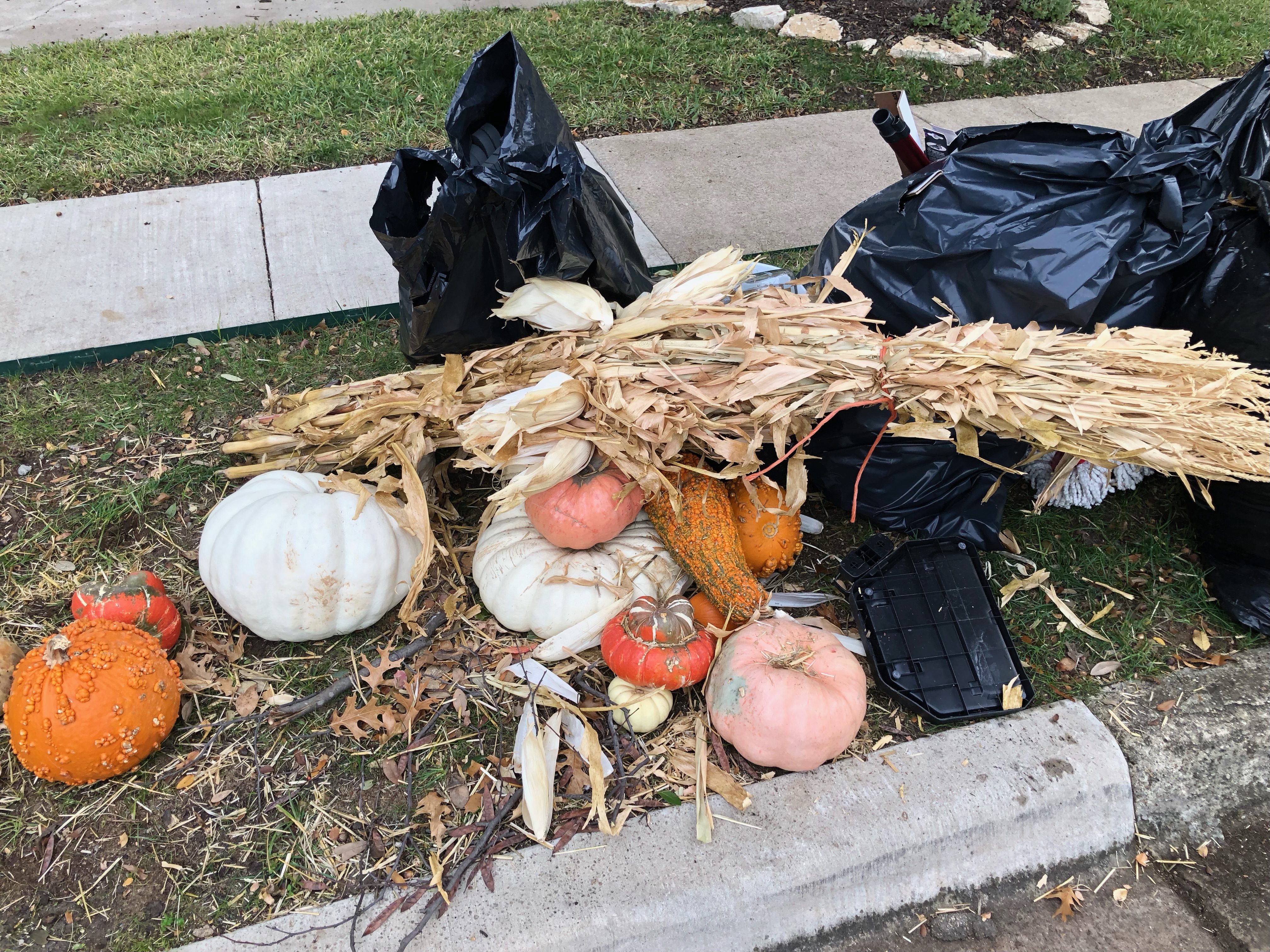
In November we are blessed with the remains of Halloween and Thanksgiving decorations—PUMPKINS! During bulk pick-up weeks we scrounge the neighborhoods looking for the elusive pumpkins and gourds. Rather than allowing them to rot in the dump, we chop them up and add them as the GREEN (nitrogen source)ingredient of compost. The BROWN (carbon source)ingredient of the recipe is, of course, are the dried leaves that are falling everywhere. The BLUE ingredient is water. The CLEAR ingredient is air. The last is TIME.
Result—BLACK GOLD—also known as compost.
This year we “harvested by the side of the road” six pickup loads of pumpkins, gourds, bags & bags of leaves, some grass, and even a bale of hay.
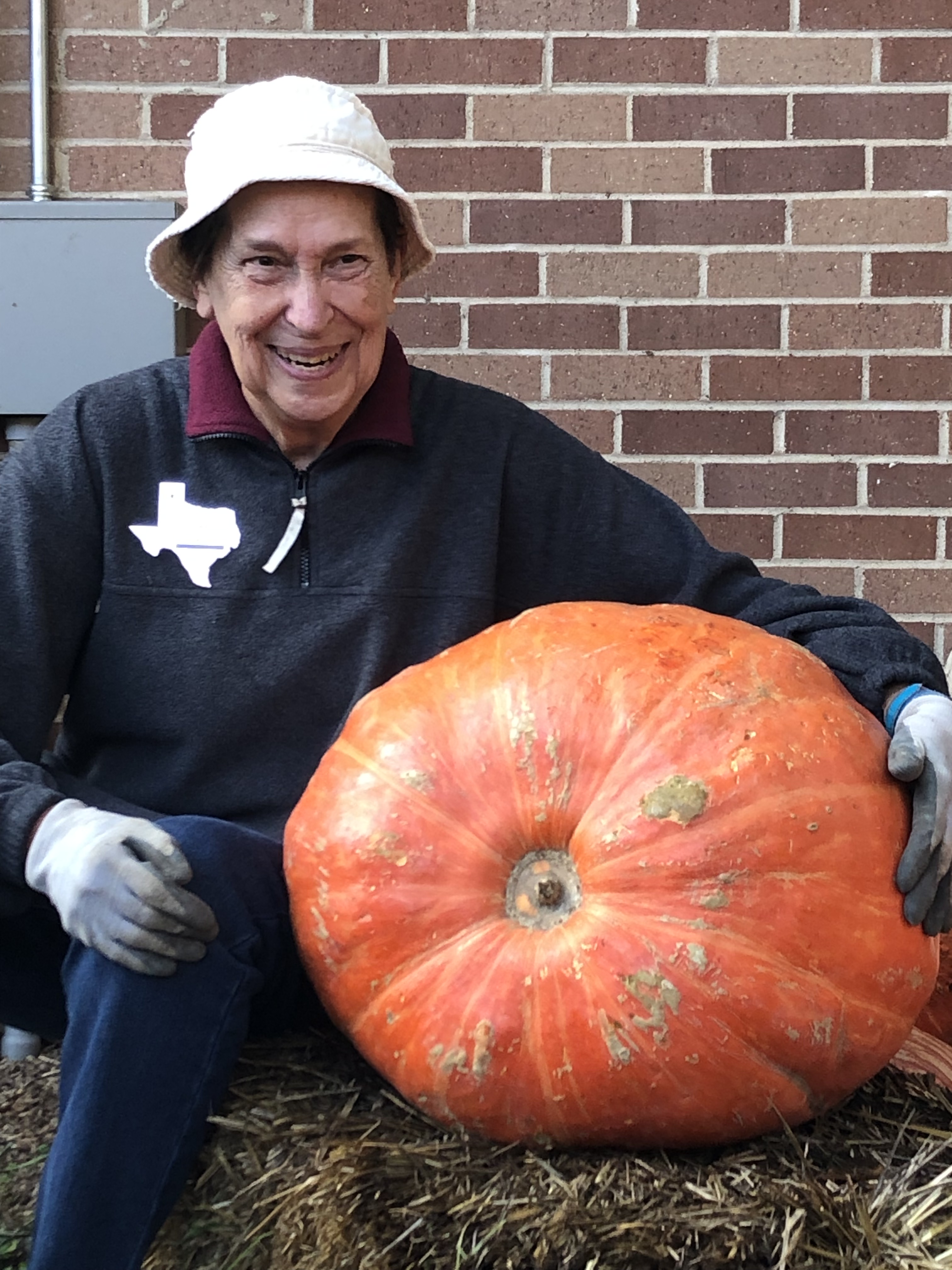
And, at our last stop—THE GREAT PUMPKIN!
Cindy and the great pumpkin!
As winter progresses, we will chop, grind with the mower, mix in water, turn piles as they heat up and cool down (temperatures up as high as 160°). As we turn the piles, the chunks begin to change shape and color. The unseen microbes and fungi consume and break down everything making pieces smaller and smaller, and of course,darker—hence , BLACK GOLD. This process takes time—sometimes as long as 2-4 months, depending on how energetic the humans are in turning the piles.
When we add compost to our heavy clay soil, we lighten it, allowing the plants to absorb the nutrients in the compost, allowing better drainage, thus producing more healthy plants and feeding everything.
Cindy Bicking, Dallas County Master Gardener Class of 2006
The chill of winter, though not officially here according to the calendar, has arrived. Trees are now displaying their bare branches as each day swirling, gusty winds bring colorful autumn leaves to the ground. From the stately red oaks and maples to the stunning brilliance of Chinese Pistache, yard crews are struggling to keep up with the piles and piles of leaves covering grassy lawns and flower beds.
What remains is winter’s gift to our yards and woodlands…the mighty evergreens. My Christmas decorating theme was simplified significantly this year as I took time to pause and contemplate this marvel of nature. Suddenly, I was caught completely by surprise upon discovering a towering tree growing along the back side of our neighbor’s fence. After 17 ½ years of driving past their property to enter our back gate, a large evergreen tree bursting with clusters of small blue berries caught my eye. I had never even noticed this tree until two weeks ago. Unsure of its name, a quick plant search on my iPhone gave me the correct answer. It was a JUNIPER.
From that moment of discovery, I was smitten with the dreamy blue color of berries drooping from needle-like leaves with a delicate and aromatic pine scent. Thoughts of decorating my home with the greenery of winter were filling my head. And then a beloved old Christmas carol seemed to speak the words I needed to hear. My decorating theme for Christmas 2023 would be…” Let Heaven and Nature Sing”.
My sweet neighbor was so accommodating by giving me permission to ‘harvest’ as much as I wanted from her Juniper tree. That was the beginning of a foraging-type mission for evergreen material in our yard and along the alley ways and streets behind us. My goal was to respectfully select, then carefully cut, branches that would complement my decorating theme.
The joy of using freshly cut evergreen branches for Christmas decor is their aromatic gift and profound color. Our home not only has the feel of a nature-inspired Christmas, but the air is filled with a calming heavenly scent, as well.
Please enjoy a sampling of nature’s gifts in this short video featuring the evergreens used to adorn our home as we proudly proclaim…” Joy to the World!”
*Evergreens, and herbs, used from our yard (and a kind neighbor) are: Magnolia, Boxwood, Burford, Foster, Nellie R. Stevens, Savannah and Yaupon Hollies, Junipers, Cedar Trees, Japanese Plum Yew, Lavender, Rosemary, Thyme, Winter Savory and traditional English Ivy.
Linda Alexander, Dallas County Master Gardener Class of 2008
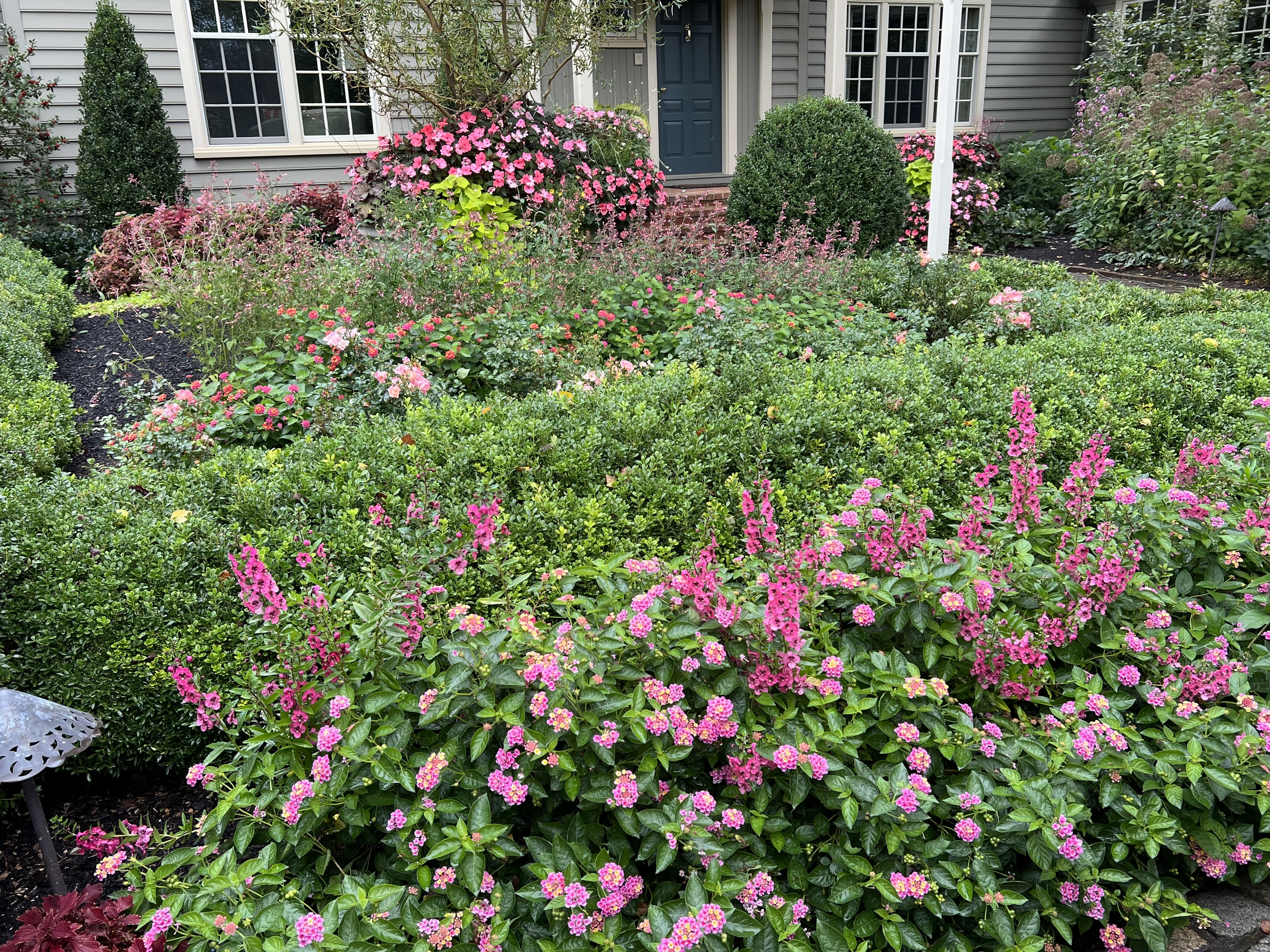
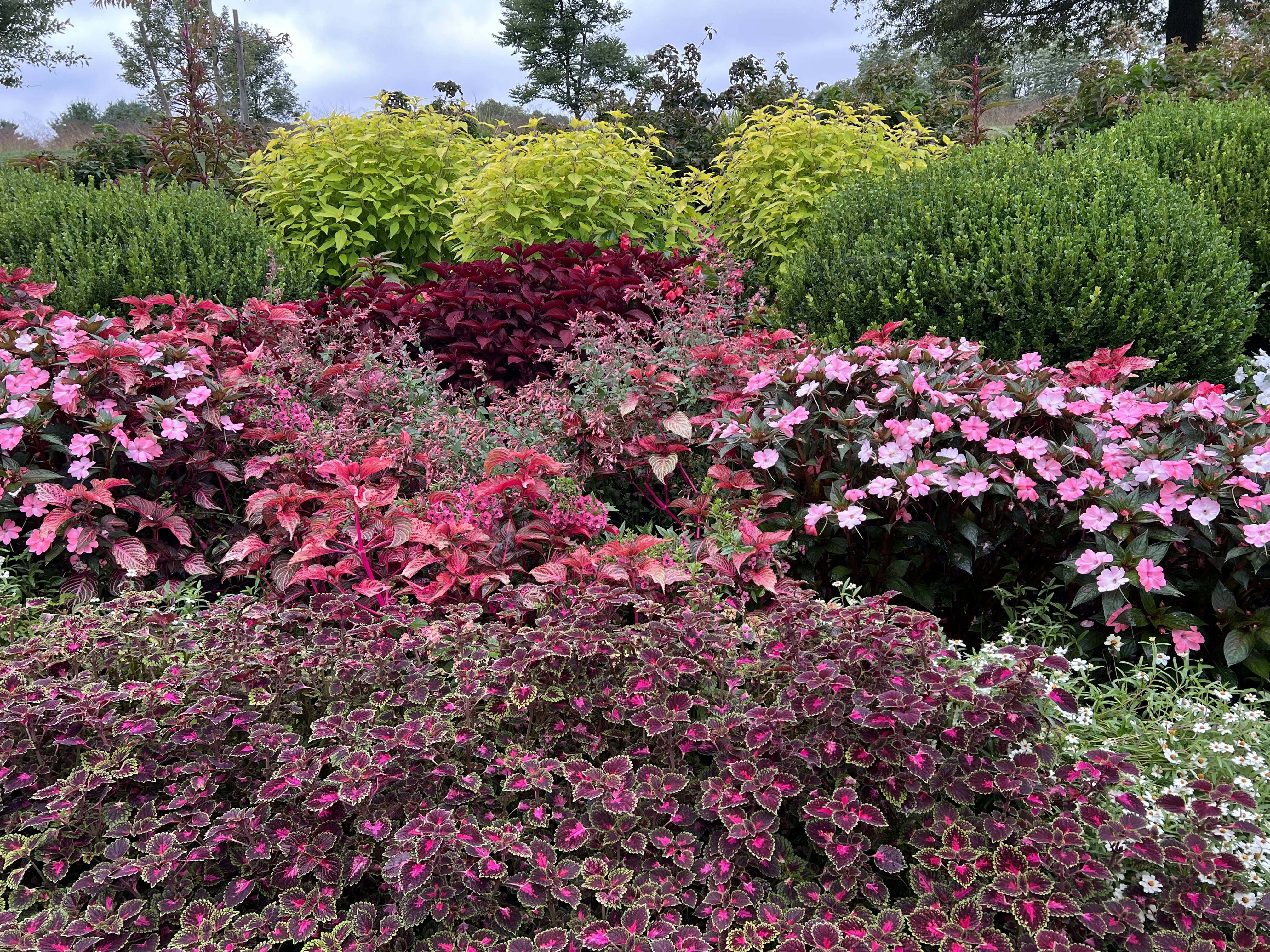
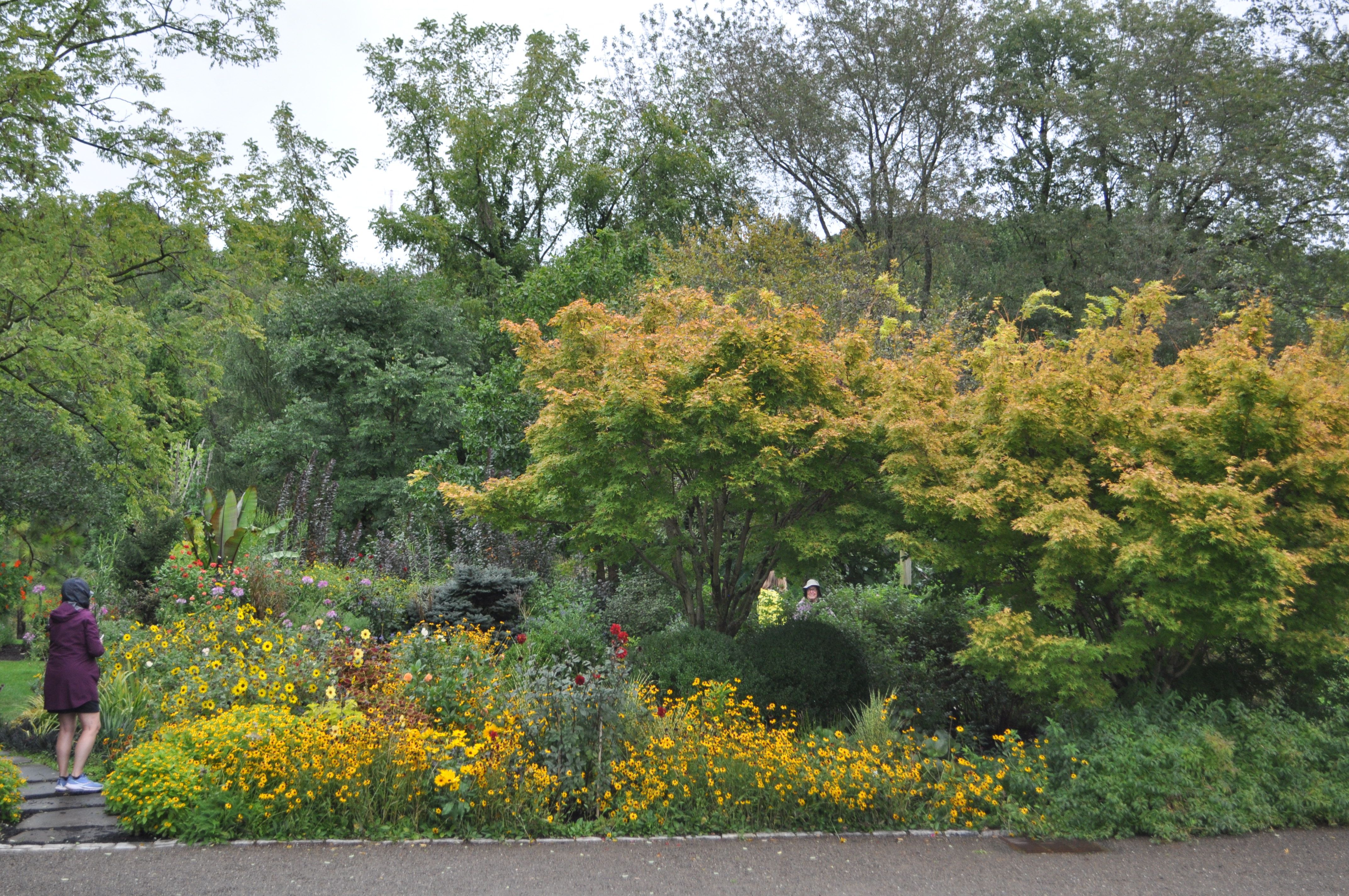
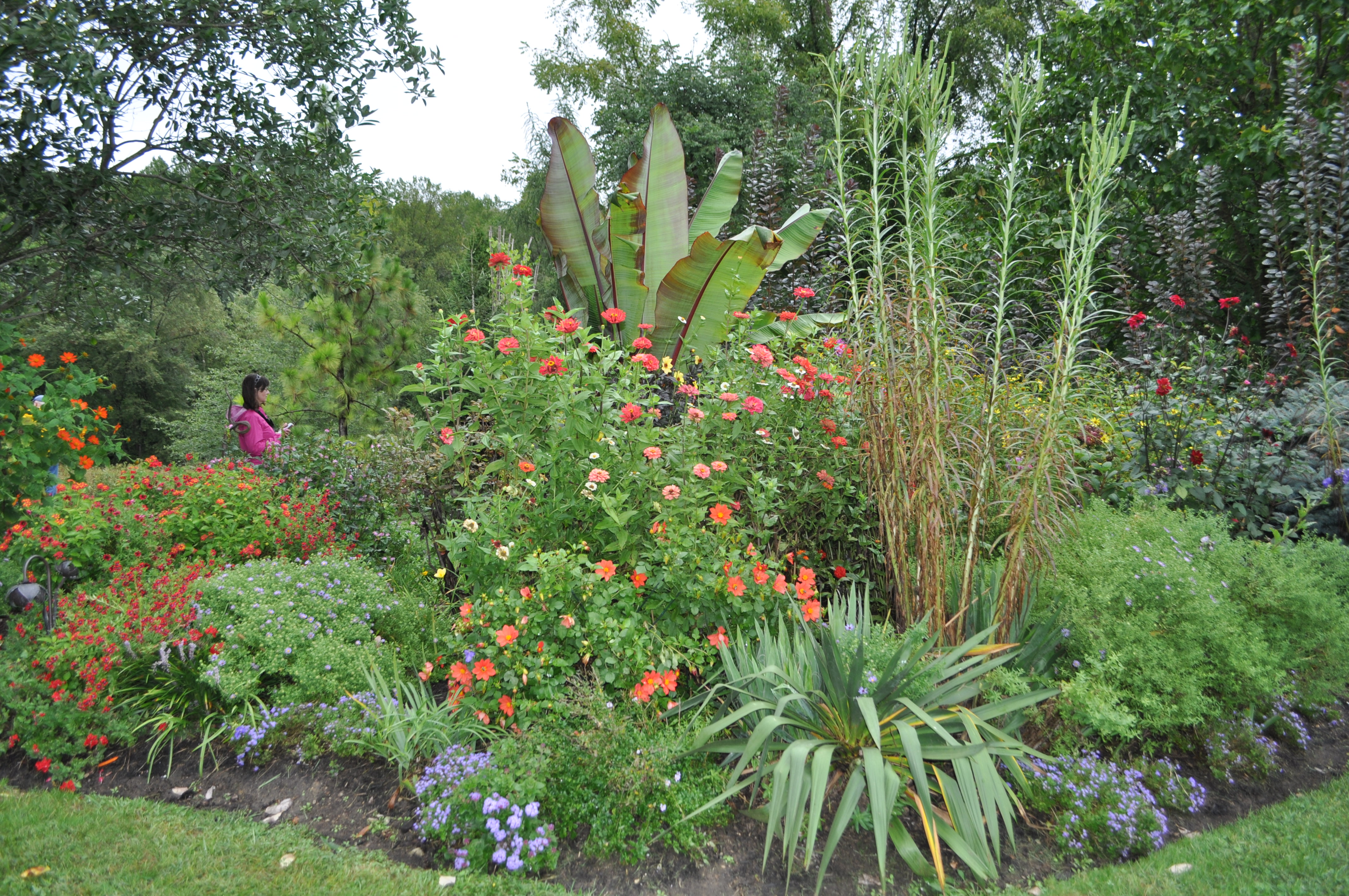
Plow back with me in time to The Garden Blogger’s Fling in September, a few months ago. Owl Creek Farm in West Chester, Pennsylvania was a favorite. There were no ancient walls, limestone paths or turrets as backdrops but the design elements leaned towards English garden theory. Stepping into this garden, fed my plant lusting eyes but also my heart. I hope you will enjoy a look at Owl Creek Farm.
Lush plantings such as these pink borders in the two photos above with several kinds of Coleus, Impatiens, Angelonia, and Lantana. Texans could borrow this scheme.Color Themed Gardens, yellow reigns here!Plant Diversity-yuccas, orange zinnia and dahlia with a banana as an exclamation.Perfectly Planned Borders, love the textural contrast-coneflower, anemones, a grass I can’t name, allium seed heads in the front, weeping redbud, Cercis canadensis anchoring the back.
Trellis– such as these three, an essential English garden element
Exuberant Pots, Phormium, Coleus, a bit of Lantana, Cuphea at it’s feet and blue salvia
Ann Lamb, Dallas County Master Gardener, Class of 2005
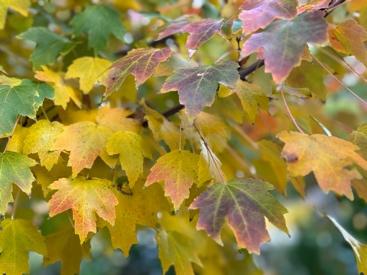
October ushered us into the colorful changes of fall. And then, November arrived with waves of crimson, yellow and orange. Mary Ann Evans, known by her pen name, George Eliot, gave us these endearing words from a letter written to Miss Lewis, October 1, 1841…
“Delicious autumn! My very soul is wedded to it, and if I were a bird I would fly about the earth seeking the successive autumns.”
How eloquently her words capture the essence of autumn in this beautiful quote. Hopefully, you have taken notice of trees bursting with color, fall foliage ablaze with seasonal splendor and tables graced with a harvest of plenty. As the gathering of family and friends begins, let’s celebrate the abundance of blessings found in the natural world.
Japanese Maples: For the past few years, the Dallas County Master Gardener Association has hosted a fundraiser featuring countless varieties of Japanese maples. Trees are usually “sold out” within hours. This speaks to the popularity of Japanese maples found in landscapes throughout Dallas County and beyond. Everyone seems to have a favorite but for many homeowners, the options typically include several types.
When we purchased our seventy-five-year-old house in 2006, previous owners (six total) had planted Japanese maples in various locations on the property. One maple, in particular, struggled to survive the below freezing temperatures of 2021, 2022 and 2023. As you can see from the photo, we chose to give it time to recover. After consulting with several arborists, the stately 30+ year-old tree is continuing to fight its way back. Still requiring some special attention, our tree is determined to overcome the odds. Its canopy provides wonderful afternoon shade in an area where we gather by the pool during the heat of the day.
Over the years we’ve added several dwarf Japanese maples and our new favorite variety, coral bark. It is a beautiful small tree with red-coral bark on its young branches with color that intensifies in the winter.
You’ll find them growing somewhere in most yards, especially on older properties. Overlooked, undervalued, neglected and dismissed, why have they lost favor in the landscaping world? It’s time to revisit a plant with so much to offer but rarely considered for its dramatic effect. More commonly known as heavenly bamboo or sacred bamboo, we know it as Nandina Domestica.
Nandina is native to China, cultivated significantly in Japan, then intentionally introduced to the United States as an ornamental in 1804 for its year-round interest and beauty. As a native Texan who spent my K-College years in southeastern Oklahoma, l am very familiar with nandina. It was growing in yards throughout my small hometown of Durant. However, from what I remember, nandina shrubs were typically used as background plants and located where they didn’t offer much more than a lame effort for “filling in”.
Over the years it has proven to be a very reliable asset for homeowners. Especially desirable for its dependability in extreme temperatures and striking seasonal foliage, it ranks high on the performance scale. Landscapers seem to be taking a fresh, new approach to using it in more creative and eye-catching ways, even with modern architecture. Hopefully this trend will continue with nandina giving us the “heavenly” mention it deserves!
Follow these recommendations when considering nandina for your landscape:
*Nandina is still considered invasive in some areas so choose wisely.
*Two sterile cultivars that might be a better option are ‘Firepower’ and ‘Blush Pink’.
*Nandina should not be sheared as it destroys the natural beauty of the plant. When nandina becomes too large, irregular in shape or leggy, carefully prune using the one-third rule.
*Nandina thrives in USDA zones 6 to 9 and grows best in full sun or partial shade. Choose from the numerous cultivars available in most garden centers. ‘Firepower’, Gulfstream’, ‘Obsession’ and ‘Sienna Sunrise’ are strong recommendations.
We’ve just added three new ‘Obsession’ nandinas to a south facing area in our backyard. They are already starting to show those brilliant shades of red in their leaves.
November’s ever-changing tapestry is filled with botanical color. Take a few moments to experience some especially magnificent images of autumn’s brilliance. It may not be Vermont but our local landscapes really know how to take center stage!
Linda Alexander, Dallas County Master Gardener Class of 2008
After what seemed like the summer that would not die, the trees begin to show color, we get rain and an early frost… it is time to plant pansies, violas and their friends for color that will carry us into spring.
Members of Violaceae family, pansies and violas can be traced back to their wild relatives in 4th Century Europe. These sweet flowers have long been associated with love and thoughtfulness. As plant cousins, all pansies are violas but not all violas are pansies. In general (and perhaps easier to remember) pansies tend to have larger but fewer blooms, while violas have more but smaller blooms.
Appearing quite delicate, they are surprisingly sturdy and are extensively used as bedding plants across Dallas County. Because they do not like intense heat, we plant them when cooler weather finally sets in, knowing they will fade away when our weather once again heats up. Autumn planting is designed to allow pansy and viola roots to develop before the weather turns especially cold.
Plant these cousins in rich well drained soil in a sunny spot, for best blooming. Place plants 6-10 inches apart in beds or add them to pots with drainage holes. That spot under your deciduous tree might be perfectly bright this winter, or perhaps you have pots with annuals that are ready for something new.
Grown for instant color, pansies were fed heavily in the greenhouse, so don’t starve them when you get them home. If you haven’t already added organic matter to your beds, plan to add a good well-balanced fertilizer, with light monthly feedings for both beds and pots. You may find a time release product works better for you.
Mulch after planting, leaving a gap around the plant stem. That few inches of mulch will help keep moisture and temperatures moderated. Water your new transplants in well and plan to keep them moist but not soggy. Let the soil dry out only slightly between waterings.
All varieties can handle light frost. Some varieties will reportedly survive single digit temps IF they have have a chance to develop a good root system and are planted in an ideal microclimate, but you will have to wait for new flowers to grow from the center.
That crucial time needed for pansies to get rooted in can be just too short here in Dallas. This year was no exception! Rather than risking the loss of their lovely color, water your plants well when temperatures are expected to drop to 20 or below. Move containers to protected areas if possible and cover your pansies with frost cloth. Sheets and blankets can work but avoid plastic.
Pansies and violas aren’t our only options for winter gardening. It is no accident that this year our pansy sale includes alyssum, kale, mustard, and bright lights chard. They all play nicely together and have similar needs.
Ornamental kale is a frilly leaved member of the Brassica family that have been developed for their looks, rather than for their flavor. Looking like extremely large rose blossoms, they need cooler weather to fully develop their color variations. If we encounter a dry spell they will need water and plan on adding a good, high nitrogen fertilizer in December.
Swiss chard has been called beets without roots and was one of the first vegetables to be sold as an ornamental. Bright Lights is the 1998 All American selection that can add gold, red, yellow and orange stalks and veins to containers and borders…and it is edible! This could be just the “thriller” your containers want this winter.
Red Giant Mustard is another lovely and edible plant that brings maroon leaves with bright green ribs and what is called a “zesty” bite. These leaves will play nicely with kales and pansies.
Last but certainly not consider alyssum in shades of white and purple. The Crystal Clear white and purple alyssum are historically a cool season annual here, fading when our heat returns. The newer White Stream is a 2013 Texas Superstar plant bred to survive into summer and does not tolerate freezing. Both varieties form sweet smelling mats and can fill in between other plants or stand on their own in a pot.
Surely you have a spot for one or more of these in your winter garden? And if you purchased some of these plants from our sale, our hearfelt thanks will surely boost your winter garden to beauty.
Mary Freede, Dallas County Master Gardener Class of 2005
PIck up is Wednesday, November 8th from 10-2 under the shade pavilion on the North side of the garden.













 DALLAS GARDEN BUZZ