One of the most fascinating aspects of being a gardener is learning about the history of certain plants that are growing in the garden. Our DemonstrationGarden has many plants that have long and interesting pasts. From the Garden’s “vegetable lambs” (a.k.a. cotton) to the fascinating stories behind many of the herbs, the Garden provides a mini-history lesson to the school children who visit.
Around 10,000 BC three grass species are thought to have crossed, giving rise to the plant we now call “wheat.” Archeologists have found evidence of wheat in pits and caves used by humans as far back as 8000 BC. By 6700 BC Stone Age man was using stone tools to grind the wheat into flour. In fact, it is postulated that the “domestication” of wheat and other cereal crops might have been responsible for turning ancient nomadic hunter-gatherer communities into agrarian, stationary societies. By 5000 years ago many civilizations grew wheat as a major crop. The Egyptians were the first to make loaves of bread rise, possibly as a result of using beer, rather than water, as the liquid while making their bread. Wheat bread was so important in Egyptian culture that in the tombs their dead were provided with miniature granaries to provide food for the afterlife. An Egyptian museum even displays a loaf of bread found in one of the tombs. This gives a whole new meaning to the words “stale bread.”
For the past three to four years, the Demonstration Garden has grown a crop of wheat. There are two different types of wheat: fall wheat and spring wheat. For years, the Garden’s wheat seeds (the name of the variety is unknown) were planted in a long raised bed in the spring. However, few wheat stalks made it to maturity. So, after talking to Fred Burrell, who was the County Extension agent at the time, in 2012 the seeds were broadcasted in the fall about 1”-2” apart and about 1”-2” deep in the raised bed. Judging from the plants,
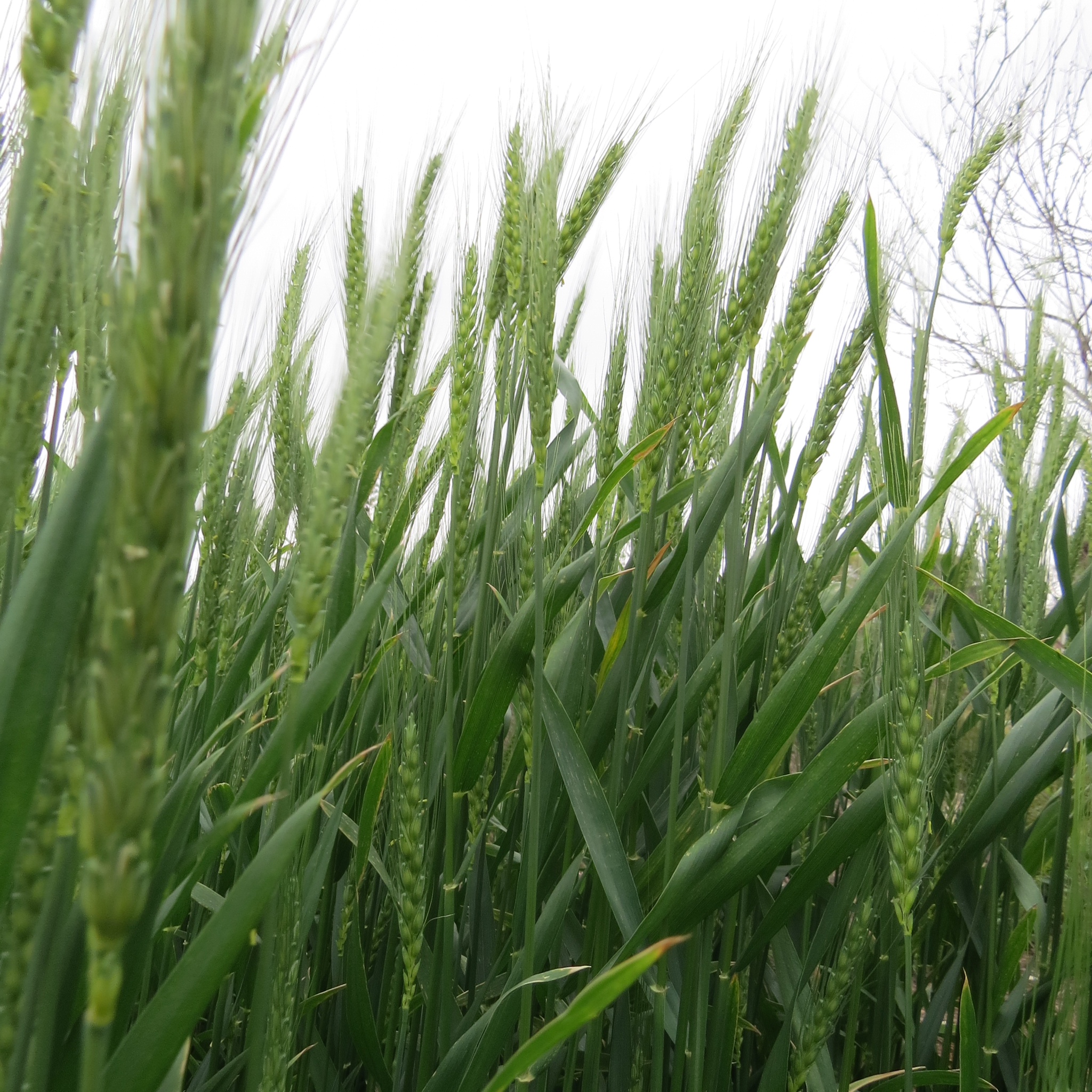
it looks as if a good crop of mature wheat will be obtained this year. By late summer the stalks will turn golden and be harvested.
Until now, the Garden’s wheat crop has been used primarily for educational purposes to show school children an actual wheat plant. In the past, the few wheat stalks that made it to maturity were cut and used for decoration. However, at some point, it is hoped that enough wheat can be grown to actually produce a loaf of bread (or maybe a mini-muffin, since it takes about 10 square feet of planted wheat to make one small loaf of bread).
If you would like to find out more information on growing your own wheat to make bread, there are several articles on the internet describing the process. Mother Earth News has a detailed article on how to go about planting, reaping, threshing, winnowing, and turning the wheat into flour. Growing your own wheat to make bread isn’t as easy as buying a loaf at the store, but it certainly makes one appreciate what our ancestors and even some people today still do to obtain wheat flour. So, as you are eating your morning toast, think about the history of wheat as an important food crop. And, if you have ever grown your own wheat for bread, we would love to hear from you.
Carolyn
Picture by Starla
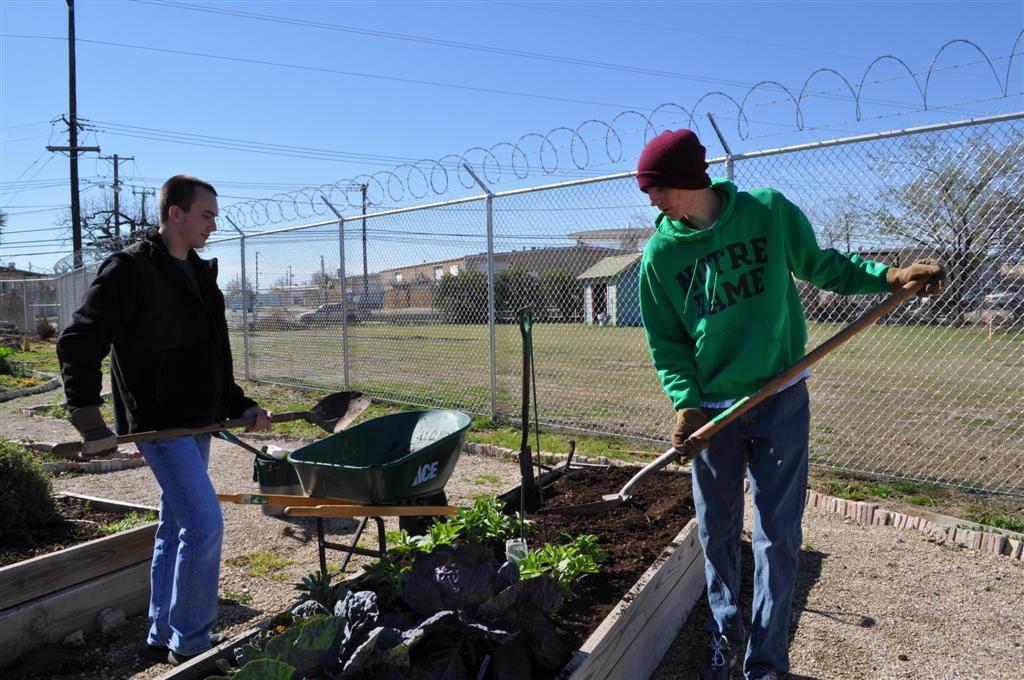

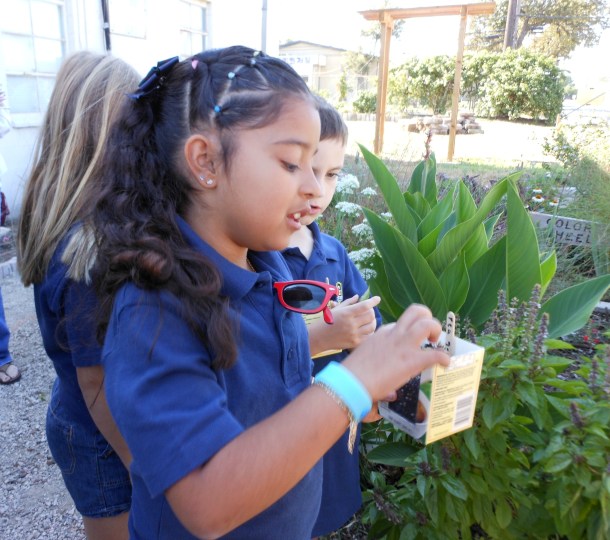
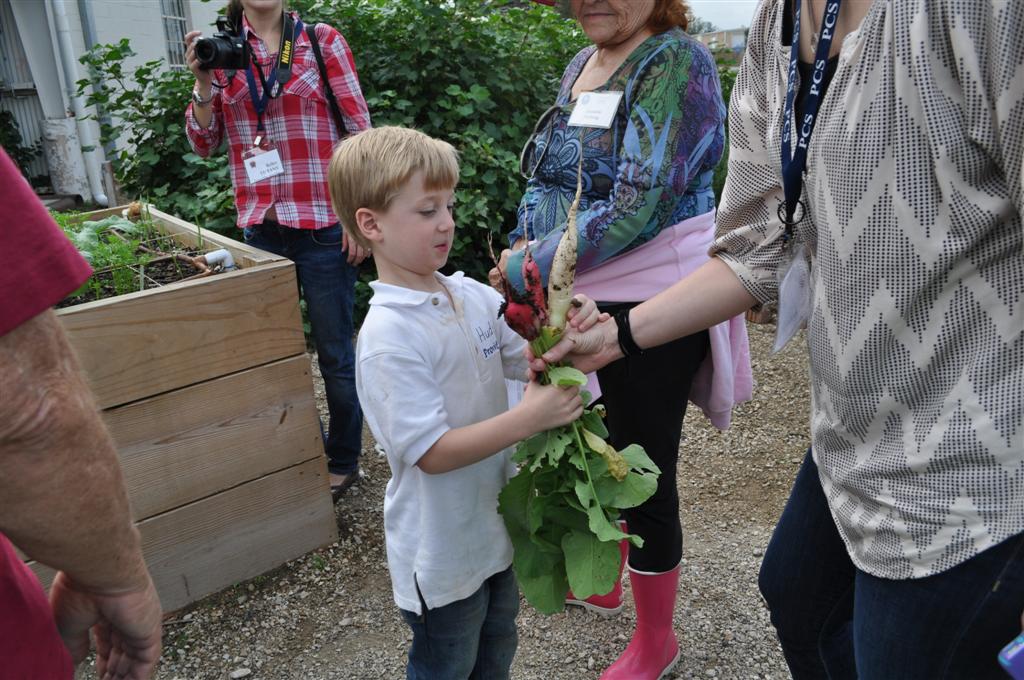
 Fifth grade students from West Dallas learn about root crops from Jim and Abbe. Did you know that the turnip or white turnip is a member of the parsley family, Brassica rapa var. rapa? It is a root vegetable known for its bulbous tap root which is high in vitamin C and grown as a food crop for both humans and livestock. Turnips are easy and quick to grow (35-70 days) and can be eaten raw (roots) or cooked (roots and leaves). Turnips like well-tilled soil and constant water. Both of these conditions are provided in our raised organic beds via our home-made compost and drip irrigation system.
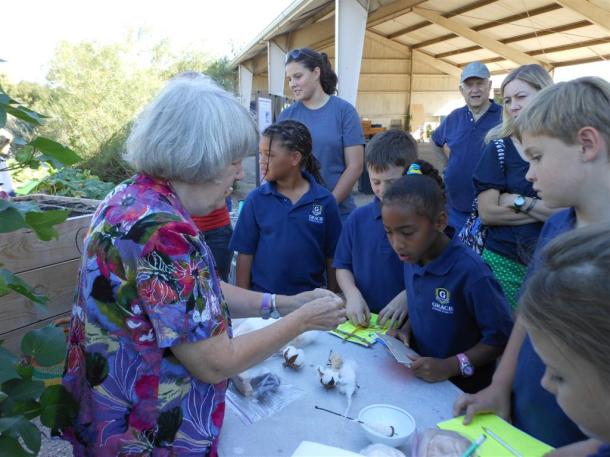
 Carolyn demonstrates the technique of hand-spinning cotton thread to the fifth grade students . Did you know that cotton is the most important non-food crop in the world? Cotton has been spun, woven & dyed since prehistoric times. Today, industrial uses for cotton are just as important as the cloth that originally was woven. These products vary widely from cloth-based such as diapers, bandages, and paper to cosmetics, soap and oils; dynamite and plastics; and that sidewalk scourge, chewing gum (cellulose). There are 39 different species of the genus Gossypium, 4 of which were commercially grown since all cotton was domesticated in antiquity. The variety G. hirsutum became known as “upland cotton” and comprises 90% of the world’s cotton crop.
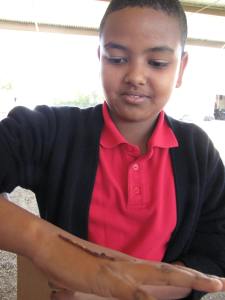 A 5th grade student from West Dallas Community School gets up close & personal with a “red wiggler” worm. During our Vermi-composting lesson, he & his classmates learned that this little ‘Eisenia fetida’ is one of approximately 2700 different kinds of worms of a large variety of species. Did you know that “red wigglers” (aka brown-nose or red worms) work best in container/bin composting. That’s because they are non-burrowing and move horizontally through the soil.
 Journaling is an integral component of the educational program offered by the Demonstration Garden. Our Nature Journals, made from recycled materials are constructed by our student visitors and personalized to reflect their connections with the garden. A 5th grader from West Dallas Community School proudly proclaims, “Nature is My Life.” Her journal became her memory book of observations, descriptions, illustrationsand connections; a special way of carrying a piece of the garden home with her.
 Meet Opal, named for Judy’s Aunt Opal.






 DALLAS GARDEN BUZZ