Tag Archives: growing tomatoes

Green Tomato Chow-Chow

February 1, 2025

WHEN LIFE GIVES YOU LEMONS,

YOU MAKE LEMONADE.

BUT, WHAT IF YOU GET

GREEN TOMATOES?

YOU MAKE CHOW-CHOW!

The first week of January was warm—high temperature in the 60’s, maybe even higher. But, this is Texas.   Give it a little time and the weather will change.

Weather reports started warning of incoming weather –COLD TO VERY COLD.

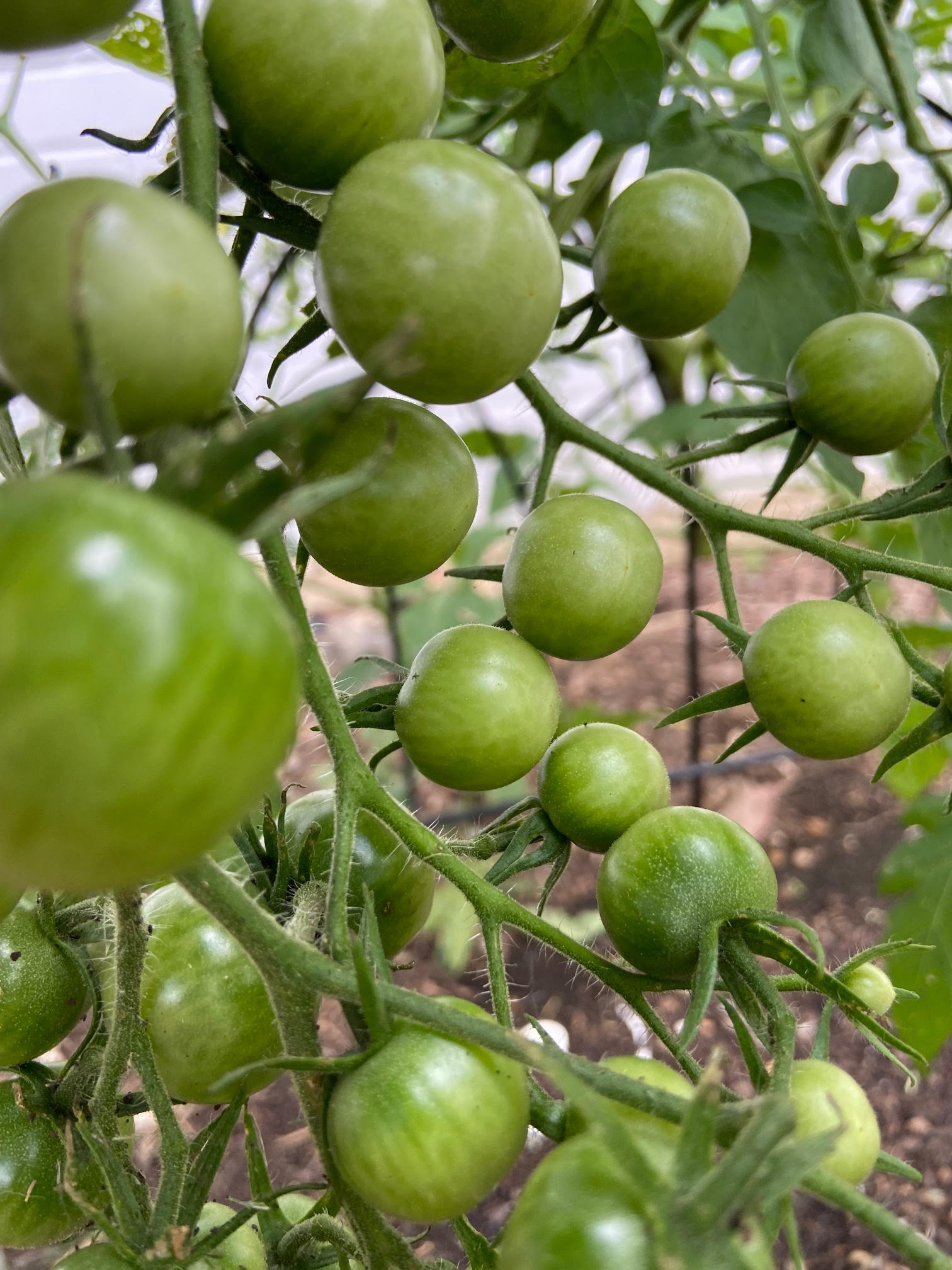
And, our tomatoes are still blooming and setting fruit, but not ripening.  What should we do? In the past, we’ve harvested the green tomatoes and put them in a cool dark place (under the bed was one suggestion) or we could just let them freeze and use them in the compost bin. 

We had five plants.  I remembered one year  Dorothy Shockley, a fellow Master Gardener at Raincatcher’s RED Garden had inviterd us to her home to take care of that year’s abundant crop of green tomatoes.  She had a recipe for B&B CHOW CHOW (also know n as Cool Point Relish in Louisiana).  It was the same pickled green tomatoes I had eaten with my fried catfish years ago, but never knew how to make it.  Dorothy shared her recipe and I dug it out of my files.

When Roger & I started picking, we didn’t know if we would have enough green tomatoes to make a batch.  Not to worry—we had 10 pounds of varying sizes, some beginning to blush, but most were green rocks. 

Cindy and green tomatoes!

We went to the store to purchase the rest of the ingredients: onions, jalapenos, white vinegar, more sugar, canning lids.  I already had jars and rings in the pantry.

After a couple of false starts at preparation (I’m not as young as I used to be) we got our batch of chow-chow jarred and ready to refrigerate .We even saved the excess picking solution per Dorothy’s recommendation to use with cucumbers and other salad ingredients.

Personally I like this solution better than lemonade.

Bon Appetite!

Cindy Bicking, Dallas County Master Gardener Class of 2006

  “The Compost Queen of Raincatcher’s RED”

B and B Chow-Chow Recipe

Tomatoes, I Owe You an Apology

Tomatoes, I owe you an apology.  All is forgiven.  We had some rain and a mild beginning to the summer. You behaved reasonably under those circumstances and gave us an abundance of delicious fruit.  I’m sorry for all the negative things I’ve said about you.  I have called you names. I have described you as difficult. I have suggested to beginning gardeners that they avoid you and try peppers instead. 

Our biggest problem with you this year was that certain bushy tailed scoundrels found you irresistible even when you were green. That was not your fault.  Never fear, we are planning our squirrel defense strategies for next year.  

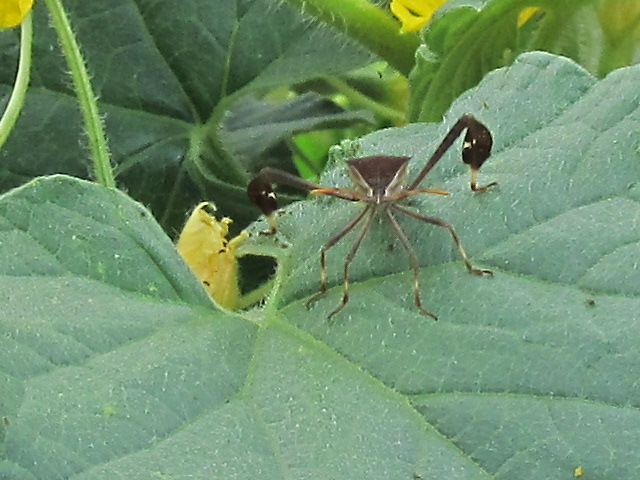
Now our high temperatures are in the triple digits and you have developed blight and begun providing food and shelter to stink bugs.  You held out as long as could be expected and for this I thank you. 

Diane, our photographer friend, snapped this picture of a stink bug. Notice its fierce mustachioed look. It has already begun assaulting our tomatoes.

Tomatoes, despite the pain of previous seasons, I am grateful for what I have learned from you-mostly patience.

Beverly Allen, Dallas County Master Gardener, Class of 2018

Tomatoes are the Jerkiest Plants

Tomatoes Will Break Your Heart

Squirrel photo by Don Heaberlin and stink bug photo by Diane Washam

Tomato Time!

June 20, 2023

It’s tomato time at Raincatcher’s garden of Midway Hills.  Over 84 pounds were donated and the plants are loaded down with more fruit to harvest this week. It looks to be a very good harvest and we wanted to share the story of our 2023 tomatoes. 

Thirty tomato plants, determinate and indeterminate varieties, were started from seeds in January 2023 and put into the ground and in raised beds in early April.  This was later than is recommended but the nighttime temperatures were too low in March. It is often difficult in Dallas to get the necessary time for a good crop to mature in between the last frost and the onset of temperatures above 92 degrees.

Prior to planting we amended the beds with compost and MicroLife Multi-purpose fertilizer.  After two weeks, Tomato-tone fertilizer was applied and that schedule has continued. The lower leaves are trimmed up off the ground to help prevent fungal disease.  

Our team decided that with our hot weather it would be best not to prune the suckers (new growth in the areas between the main stem and branches). Instead we allowed them to stay in place and protect the developing fruit from sunscald.  There are many different opinions about this practice but it might be that those advocating for drastic removal of suckers live in areas with less extreme weather.  

Harvest before they are ripe, but after color appears. Squirrels keep a keen eye on the ripening tomatoes and early on they ate on the larger varieties before we could take them off the vine.  To combat that, tomatoes are harvested at the first sign of color change and ripened indoors. When ripe, fruit is then weighed and donated to the North Dallas Shared Ministries Food Pantry.

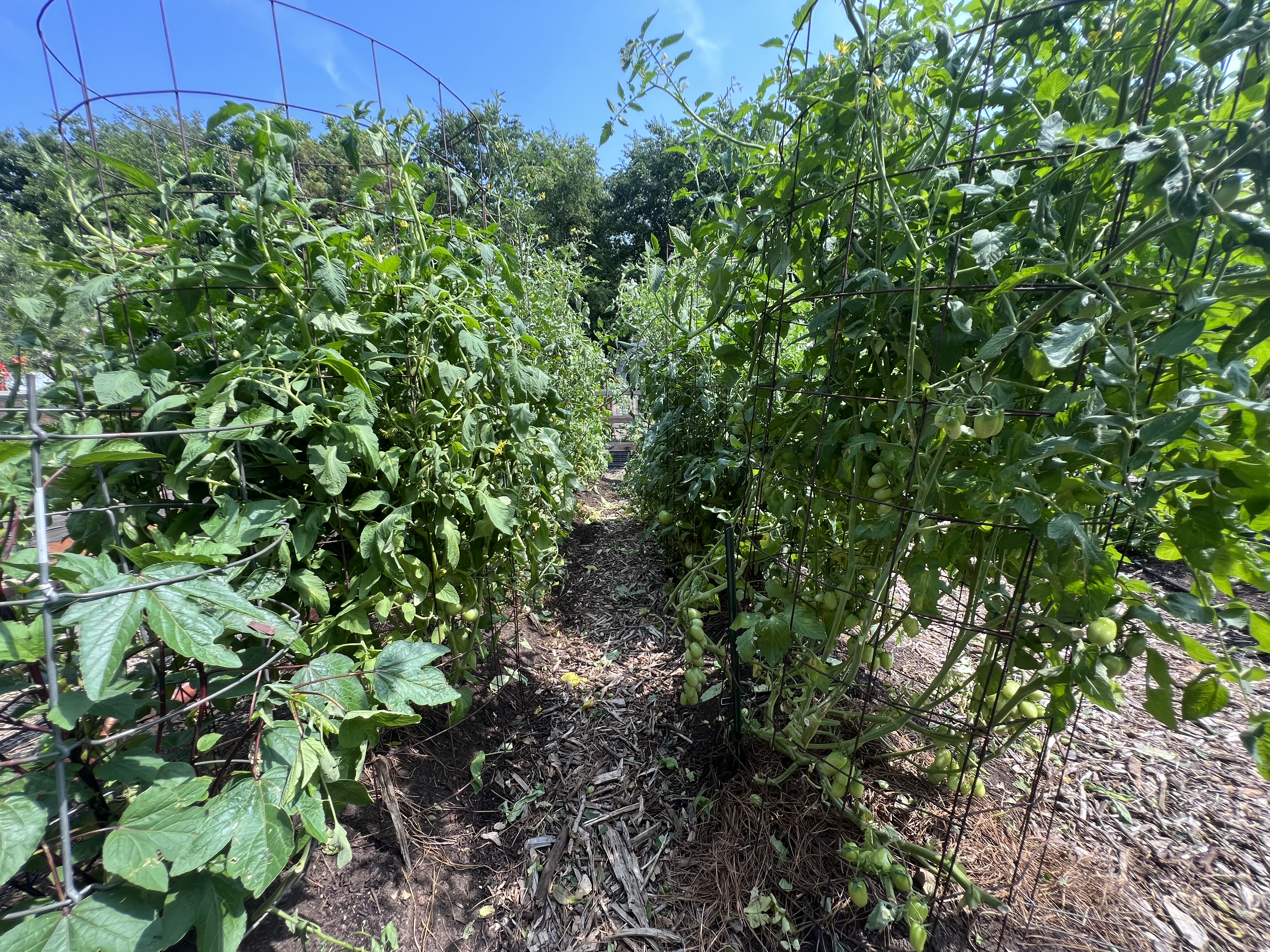
The indeterminate varieties, such as Celebrity, Cherokee Carbon, Early Girl, Juliet, and Sweet 100, are towering over 6 feet in the air in a fenced garden area and in tall, raised beds with supports. 

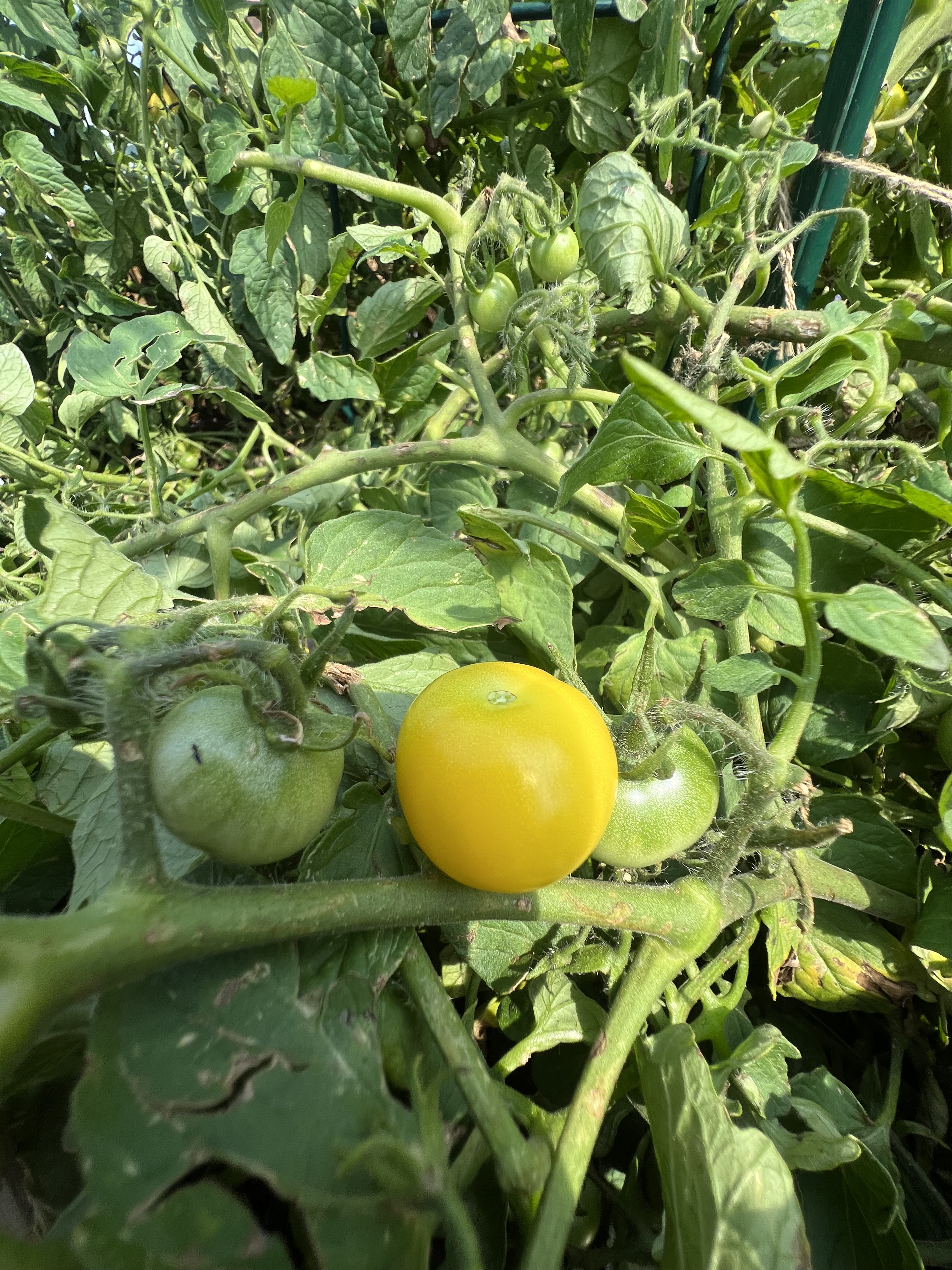
The determinate varieties are producing abundantly as well in raised beds.  The variety, Patio Choice Yellow (AAS), has impressed our team with its prolific crop, disease resistance, and sweetness. 


Patio Choice Yellow, one of our new favorites

While we are enjoying this season of abundance, we are aware that the blooms here in North Texas will soon slow to a crawl, due to the lack of cooler weather in the early morning.   In general nighttime temperatures over 75 degrees will cause the plants to stop setting fruit.  We are quickly approaching that season.  

There are two ideas of thought about what to do –

  1. Cut the tomatoes back severely so when it gets cooler they will begin producing again, or  

2. Pull up the plants when the blooms stop coming and prepare to start new tomato plants  in July for a fall harvest before the first frost.  Smaller varieties with shorter days to maturity are recommended for fall due to the risk of an early frost.

Our dedicated and determined gardeners frequent Raincatcher’s most days, but our scheduled work times are Monday and Tuesday mornings.  


Please leave a comment below if you have a favorite tomato variety for our area or tomato wisdom to share.

Starla Willis with input from Beverly Allen, Dallas County Master Gardeners

Tomato Talk

Me-Ann at the Ann Norton Sculpture Garden in Florida

Like a bee going from flower to flower for different types of nectar, I am flying all over gathering information from many sources about tomatoes. Last year I learned of a grower, Bobby’s Best. You can find him on instagram-Bobby’sbeststarts.com

Recently he was kind enough to share his compelling explanation of the advantages of using organic fertilizers. Remember if you feed your soil, it will feed you!

https://share.icloud.com/photos/0b3k9rnty84MkkqNSpA8g65Rw

Ann Lamb, Dallas County Master Gardener Class of 2005

Download the video after opening the link. If any of our dear Dallas Garden Buzz readers have trouble viewing the link, please let me know.

The Garden In January As We Wait for Spring

January 26, 2023

A quote from Southern Bulbs has captured my thoughts:

“Spring starts the day after Christmas.”

Working with our veggie team at Raincatcher’s last Monday, January 16th, spring was definitely in the air and now we have had over an inch of rain to further encourage our spring longings.

We sat at tables under our education pavilion planting tomato seeds with dreams of epic tomatoes. For a list of tomato varities we are seeding, see below.

Elephant garlic planted in November, to be harvested in June, was examined.

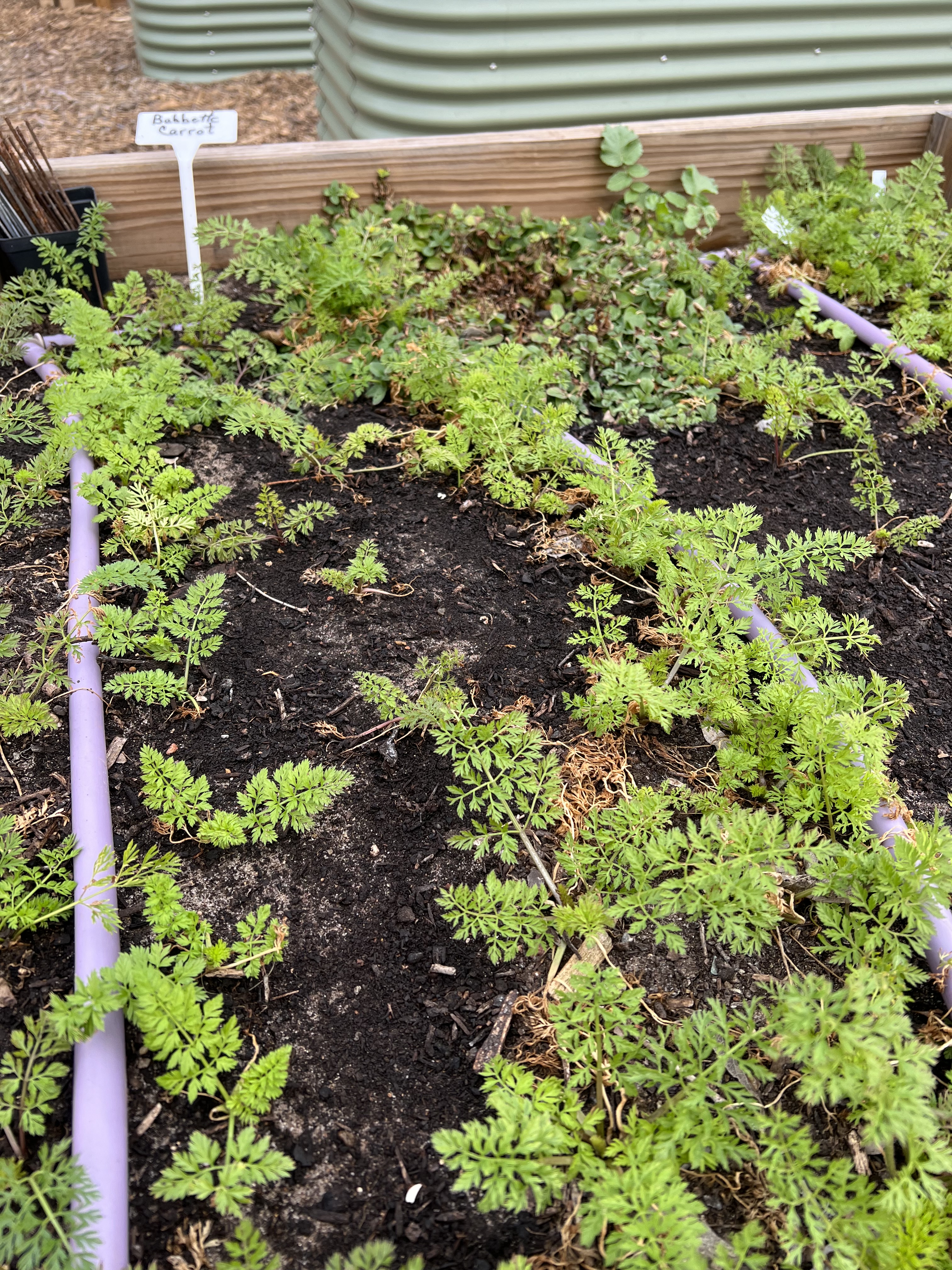
We considered the carrots that took a hit during the December low temperatures but have rebounded.

Last year the Raincatcher’s Garden delivered 700 pounds of fresh vegetables and fruit to North Dallas Shared Ministries Food Pantry. The goal for 2023 is 1,000 pounds of harvest. With the dedication of this band of Master Gardeners and expert leadership, I am sure they will succeed.

Ann Lamb, Dallas County Master Gardener Class of 2005


Tomato varieties and place purchased are as below. 

Johnny’s Selected Seeds – Hybrid Cherry BHN-968, Early Girl, Five Star Grape, Tasmanian Chocolate and Juliet.

John Scheepers Kitchen Garden Seeds – Cherry Falls.

Botanical Interests – Patio Choice Yellow. 

Tomato Growers Supply Company – Red Robin and Wild Cherry. 

Tomatoes Will Break Your Heart

I will listen to anything anyone has to say about about growing tomatoes. I have a tomato app on my phone. I’ve taken meticulous notes at many a tomato class. And what I have learned through experience is that tomatoes will break your heart in a new way every year. So select your varieties carefully- heirlooms for flavor, hybrids for disease resistance – and don’t even try the gigantic beefsteak ones you remember from your youth. Too much will go wrong before they are ready. Okay, try a big flavorful heirloom but hedge your bet with Sun Golds and Early Girls.

This year in the north garden we are going to try the Florida weave trellising technique to get the vines off the ground and improve the air circulation. The tomatoes in the how-to diagrams look very well behaved. I’m anticipating an amorphous blob of vines unless we prune daily, which will become a test of faith by the middle of April.

My best tip for obtaining delicious tomatoes for your BLTs is to make friends with someone’s uncle who has been growing tomatoes for a hundred years. Then one day your friend will say her uncle died and you will say you are so sorry to hear that while thinking, “I hope it wasn’t the one who grew tomatoes.”

Beverly Allen, Dallas County Master Gardener Class of 2018


You will manage to get some tomatoes at least this far. If your tomatoes tend to vanish in the night, harvest at the first hint of pink and ripen indoors.

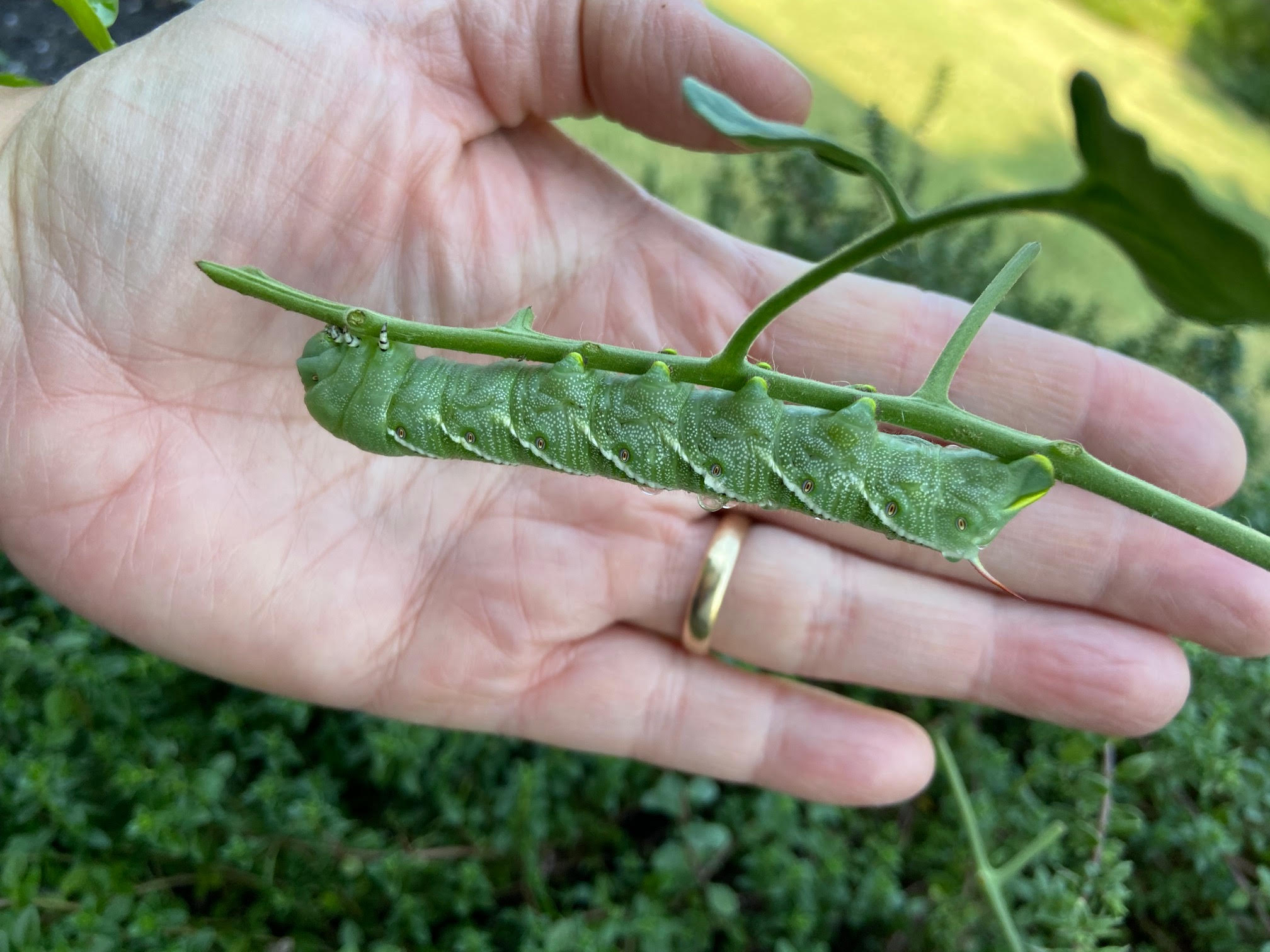
Hornworms are not uncommon and will defoliate your tomatoes. If you let them live they will develop into beautiful sphinx moths. Thank you, tomatoes, for this dilemma.

Hugelkulturs and Tomatoes

This is a 4 minute video, taken in April, full of info about the origins and natural habits of tomatoes and the composition of a hugelkultur. Hugelkultur, pronounced Hoo-gul-culture, means hill culture or hill mound. Jeff Raska teaches us from our edible garden:

June update on tomatoes: It’s’s all in how you look at it.
We put leggy plants in late for our season, the hugelkultur soil is still very new (and we’re discovering that the angle of the hill is a bit steep in places). Add to that strong winds breaking the branches in some cases, and squirrels running around, breaking branches, digging, and harvesting the green fruit, and you don’t have a picture-perfect, ready for the cover of a glossy magazine hugelkultur.

Having said that, there are a couple of plants that seem to be thriving…

From The Edible Garden Team

Lisa Centala