Tag Archives: Dallas County Master Gardeners

Poppies In My Garden And Bees

Like the title of the book All I Really Need To Know I Learned In Kindergarten, I could say all the plants I really need  to know came from  Master Gardeners. For example, these beautiful poppies.


They self seed all over my garden and at Raincatcher’s.

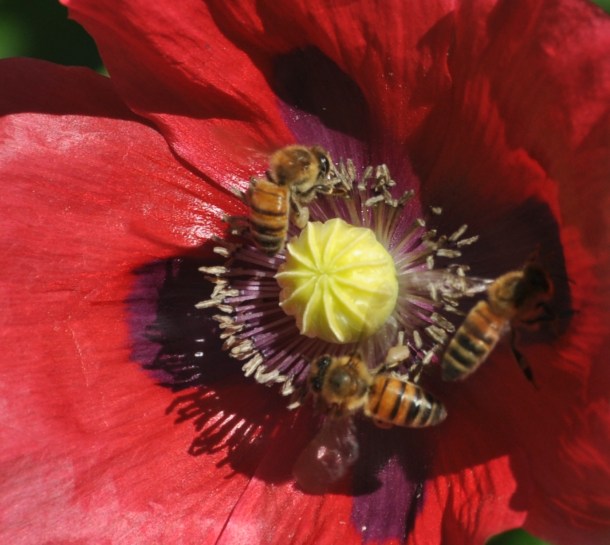
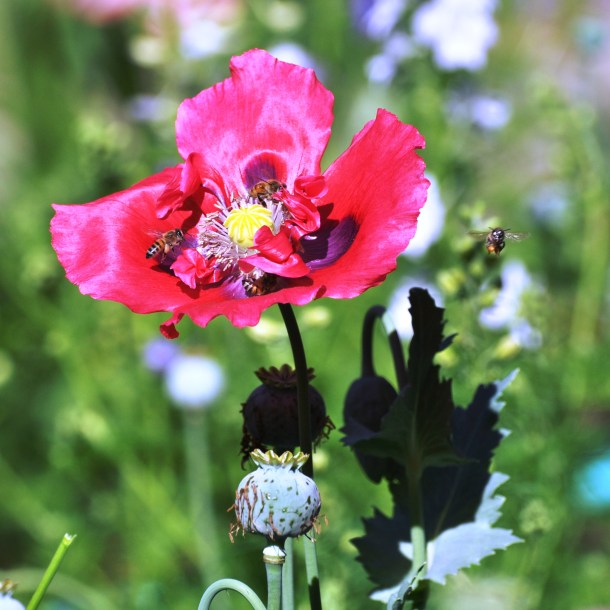
A close up tells the story: bees also love poppies!

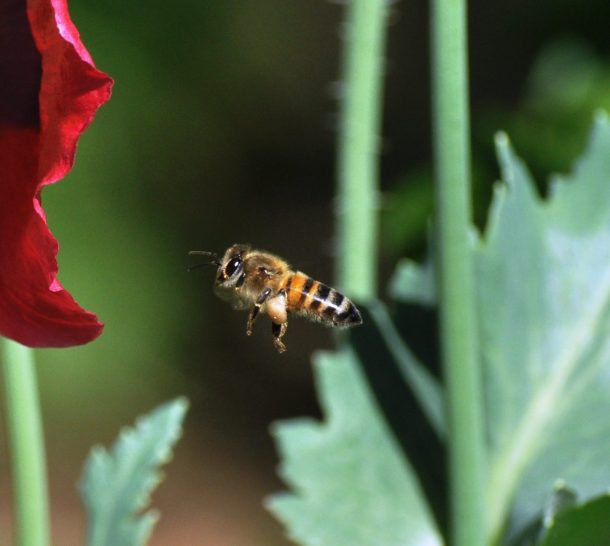
This loaded honey bee is happy about the choice of flowers in my garden, which is something to consider! Note, bees prefer these single petal blooms rather than double.

Load up on information about poppies. Remember to sow seeds in the fall.

Poppies

Poppy and Larkspur Planting

Ann Lamb

Wildflowers at the Farm!

First of all, I need to confess this is not my farm and these are not my pictures or Starla’s.

Patti Brewer from the Master Gardener class of 2012 took these pictures and runs the family farm pictured below with her husband and family.

Patti, where is this crazy beautiful place?

The farm is in Lone Camp, Palo Pinto county, Texas.   Palo Pinto county is the beginning of the northern hill country.  I am not sure of our farm’s exact date of purchase but my mom who was born there would be 100 years old this year. Land was purchased at different times and some of it was owned by my great grandparents. Some of the land was partitioned to their sons and daughters including my grandfather.

Your farm is meaningful to your family but also important in terms of habitat. Who shares your farm?

Wild life on this farm include turkey, dove, deer, aoudad-or Barbary sheep, coyotes, cotton tail rabbits, roadrunners, hawks, buzzards and skunks. Of course, we have rattlesnakes and copperheads.We occasionally see horned toad lizards and have a decades old hill of red ants that stretches as wide as my outstretched arms reach. Red ants are  #1 on the diet for horned toads. We have Texas spiny lizards too. Birds we see are hummers, house wrens,  cardinals, blue jays,tufted titmouses, chickadees, meadowlarks, whippoorwills,  and owls. We have once or twice seen painted buntings. In the area are habitats of golden cheeked warblers, an endangered bird.

We have 5 tanks on the ranch and seasonal creeks and a rocky canyon area where the aoudads hang out.

 Patti,  Could you tell us about the barn?
The barn used to hold livestock feed bags.  A hand cranked dried corn shucker driven by gears was in barn until it was stolen. Field corn was grown by my grandfather for supplements for cattle and chickens. It was fun to crank that old thing. The corn shuck was ejected when the kernels all popped off!

What about the wildflowers. We are drinking them in!!! Just gorgeous!

These pictures are from March/April 2017, when we had a trifecta of blooms at one time.

Bluebonnets, pink phlox, orange Indian paintbrush and crossvine on the fence.
This year we only had phlox and bluebonnets at the same time, but amazingly thick stands of bluebonnets.

Bluebonnets, we can’t get enough!

 More about the wildflowers:  we do not mow any bluebonnets until seeds are thrown out. The first mowing of the bluebonnets occurs usually right before July 4th. Mowing continues through about late August if  needed. Texas heat burns everything up by August.  Harvested bluebonnet seeds are given to friends. If you have never been in a field of bluebonnets that are throwing off their dried seeds, then you are missing something to behold.  What you hear sounds just like popping popcorn on the stove.  The first time I heard this I thought a rattlesnake was very close to me in the knee high bluebonnets!

Indian Paintbrush blazing!

The Indian paintbrushes are mostly in pastures that we don’t mow. Unfortunately, our cows  eat the Indian paintbrush that grow in their pastures.  About May or June every year we have another field that sprouts  Indian blankets and then that field is not mowed until the seeds are dried on the plants.  We  have an abundance of antelope horn milkweed and some butterfly weed and I have planted frost weed for years.
 We  see a tremendous variety of butterflies including Monarchs.  Bumble bees and honey bees are busy at our farm. Sitting outside on a summer evening listening to the hum of the honeybees is one of my favorite things to do.

Patti Brewer

Wildflowers at Raincatcher’s
 

Raincatcher’s Plant Sale, April 26, 2018

Our annual plant sale will be held in conjunction with the April 26, 2018 meeting of the Dallas
County Master Gardener Association. Before the meeting: 10:00 – 11:30 After the meeting:
1:00 – 2:00


Come shop the great variety of plants we have to offer!! We have divided our perennials,
potted volunteers, started seeds, taken cuttings, dug bulbs..

We have herbs, succulents,
bulbs, houseplants, Louisiana iris, annuals, perennials, natives and adapted plants as well as
ornamental plant markers and other garden items.


Don’t forget our tomato and pepper plants, ready to go home with you!


Cash or Check preferred….Credit Cards accepted

11001 Midway Road, Dallas, Texas

2018 Summer Garden Plans

Raincatcher’s Garden Plots Spring 2018

Several weeks ago I was the fly on the wall listening to the greats of our garden map out future garden beds.

As you know from our last post, our 3  trial beds will have Celebrity tomatoes. One bed will be fertilized with chemical fertilizer, one with organic and one will receive compost.  Tomatoes will be weighed and plants measured to determine which method of fertilization is best.

Jim has started Black Krim and Purple Cherokee Tomatoes by seed.

We will also grow San Marzano tomatoes at Linda’s suggestion. These are the only tomatoes we will grow without a cage. Linda had great success letting her San Marzano sprawl across her garden bed rather than being contained in a cage. Linda says the thick cover of the plant kept the squirrels away. Really, Linda? I am going to give that a try.

Pepper plants will be in #3.  Poblano, Serranos, Hot Boss Big Man and Sweet Gypsy are on our list. Sue savored the Sweet Gypsy peppers.  And yes, Hot Big Boss Man is the name of a hybrid pepper, a cross between an ancho and  poblano.  More info here.

Cucumbers and Eggplant to be planted later in bed #5 and notice long beans will also have a home there.

Contender and Goldmine beans will be planted April 1st.

Okra will be planted  in 6 when the onions and garlic are pulled.

Blackeyed peas will grow on a trellis all summer says Dorothy.

We are out of room! What about pumpkins you say? Jim suggested planting them around the fig tree in the field.

If you need a vegetable planting guide, here are two we have relied on:

North Texas Planting Guide by TAMU

NHG Planting Guide

Be sure to tap our new Master Gardener website for a wealth of information.

Ann Lamb

Plot Plan by Dorothy Shockley

We Are Serious About Homegrown Tomatoes!

Every year at Raincatcher’s Garden we have had a bumper crop of tomatoes.  Not so last year. Not enough water and too much fertilizer caused the problem. Well, we are not going to duplicate that this year.

Jeff Raska, our horticulture program assistant, has put the “R” back in our Research, Education, and Demo title. We are embarking on tomato trials with the goal of higher and better tomato production. Jeff reminds us that his tomato plants at his home produce 40 pounds of tomatoes per plant. Ok, Jeff! Game on!

Fertilization Comparison Study 2018

Week 1-March 20, 2018

Celebrity Tomatoes

Protocol:

  • Prepare three raised beds and plant two tomato plants in each. Fertilize each bed with a different fertilizer (compost, organic, chemical) following label directions.
  • Each fertilizer is slow release and requires re-application every eight weeks.
  • Each Tuesday, measure the plant heights and weigh and record any tomatoes that are harvested.

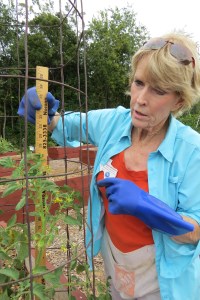
    Syann dutifully measuring tomato plants last year. She has agreed to help with our 2018 study.


Bed #9- Compost

Week 1 – 1 Tbsp Epsom salts, 1 cup Miracle-Gro Compost (1-0-0)

Week 2 – Plant tomatoes

Week 8 – 1 cup  Miracle-Gro Compost (1-0-0)

Week 16 – 1 cup Miracle-Gro Compost (1-0-0)

Bed #1- Organic Fertilizer

Week 1 – 1 Tbsp Epsom salts, 1 Tbsp  Blood Meal (12-0-0), 2 Tbsp Dr Earth (4-6-3)

Week 2 – Plant tomatoes

Week 8 – 1 Tbsp Bone Meal (6-9-0), 2 Tbsp Dr Earth (4-6-3)

Week 16 – 1 Tbsp Bone Meal (6-9-0), 2 Tbsp Dr Earth (4-6-3)

Bed  #2- Chemical Fertilizer

Week 1 – 1 Tbsp Epsom salts, 1 Tbsp Vigoro, Tomato & Vegetable (12-10-5)

Week 2 – Plant tomatoes

Week 8 – 1 Tbsp Vigoro,Bold Flowers (15-30-15)

Week 16 – 1 Tbsp Vigoro, Bold Flowers (15-30-15)


Celebrity tomatoes characteristics: All-American Winner Selection, 7 oz, determinate, harvest 70 days. Tom Wilten calls Celebrity the preeminent mid-sized tomato.


Fertlization Comparison study write up by Jim Dempsey.

Picture by Starla Willis

Ann Lamb

Read up on tomatoes by using our search box. We have recipes, growing tips, and advice to produce tons of tomatoes.


A Winter’s Wonder, Lonicera fragrantissima

Just when you need it the most, Lonicera fragrantissima, also known as Winter Honeysuckle bursts on the scene with its powerful scent and dainty little creamy flowers.

The blooms provide pollen and nectar to bees who are foraging on a winter’s day.
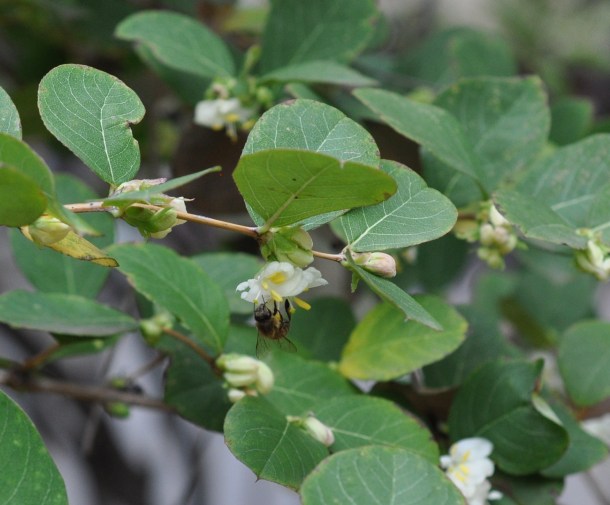
When you plan your garden, get used to including other’s needs, especially our pollinators.  Winter can be a bleak time for overwintering butterflies and bees.
Dr. William Welch suggests planting Winter Honeysuckle by a gate so when you brush by it you can enjoy the scent.  It can be grown in partial shade or full sun.  For a look at it in full sun, click here.

If you arrive early at the next *Texas Discovery Garden sale,  you might be able to take home your own small start of this fast growing fragrant bush.

Ann Lamb

*Texas Discovery Garden Sale-April 6-8, 2018

More info about Lonicera fragrantissima right here on Dallas Garden Buzz!


Those @#$%&! Butterflies

Though curses aren’t usually the words usually associated with seeing beautiful butterflies soaring around your garden, if you are a home vegetable gardener or part of a community garden that donates produce to food pantries, there is one butterfly that you may dislike.

Large Cabbage White Butterfly on Cabbage

No, it is not the butterflies whose larval host plants are dill, parsley and fennel.  Many people who have butterfly gardens purposely grow extras of these plants as host plants for the butterfly larva. By following the rule “one for me, and one for the birds and butterflies.” you can have your share and the butterflies/caterpillars can have theirs.   However for vegetable gardeners, the sight of pretty white butterflies flitting around members of the brassica family (ex- kale, cabbage, mustard, turnips, etc) can mean only one thing:  an invasion of hungry larva caterpillars that will soon damage their crops.

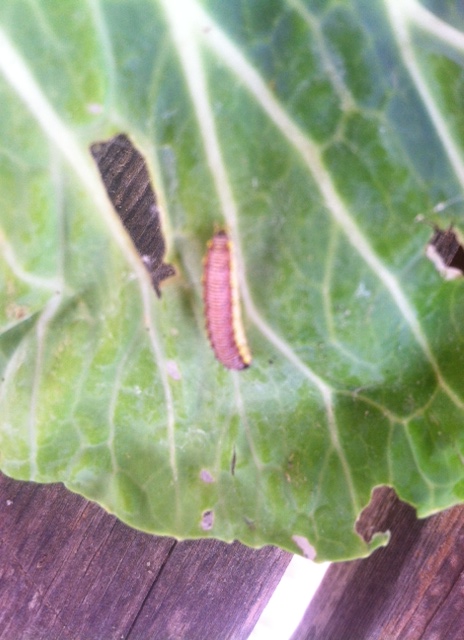
Large Cabbage White Butterfly Larvae, note larvae color is green not pink as this photo shows

Cabbage white butterflies, also known by butterfly-lovers as “summer snowflakes,” are found in two sizes, the Small Cabbage White Butterfly (Pieris rapae) and the Large Cabbage White Butterfly (Pieris brassicae.)  The small cabbage white butterfly, though still considered an agricultural pest, is not as voracious a feeder as the Large Cabbage White Butterfly and will be the focus of this article.

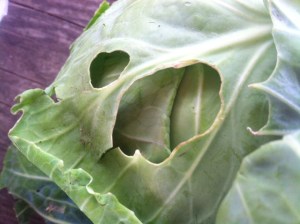
The Small Cabbage White Butterfly is found throughout Europe, Asia and North Africa.  It was accidentally introduced to Quebec around 1860 and spread rapidly throughout North America.  By 1898 it had spread to Hawaii and by 1929 to New Zealand.  Often, one of the first butterflies to appear in the spring, it lays eggs on the underside of a leaf.  The eggs are laid singly and are yellow making them difficult to spot.  The eggs hatch after about five to fourteen days and then the damage to members of the mustard family begins.  Using their powerful mandibles, the larva munch holes in the leaves.  Sometimes they will even eat into the heart of a cabbage, leaving a shell in its place.  The larva then pupate, to start the whole cycle again.

Cabbage Damage Due to White Butterfly Larvae

Thankfully there are safe biological and barrier controls for this pest butterfly.  In the mid 19th century the Australian government introduced parasitic wasps to control the damage produced by both species of butterflies.  However this approach is only suitable for large commercial growers.  There are other insects however that can help.  These include ladybird beetles, lacewings, and some species of insect-eating birds.  A physical control might include covering the plants with mosquito netting or other barriers.  Be sure to secure all the edges.

Perhaps the easiest organic method of control is to use Bt (Bacillus thuringiensis), a naturally occurring bacteria that kills a caterpillar but leaves beneficial insects unharmed.  When the caterpillar eats a treated leaf, it will get an upset stomach, stop eating, and die within four days.  Just be sure not to apply it in wet weather as the spray will wash off.

By using Bt or other methods of control, you should be able to “have your cabbage and eat it too.”

Carolyn Bush


Trimming Vitex

Hopefully, you have taken a moment to watch Evelyn  explain what our Vitex tree needed. Click here for the video if you missed it.

Vitex tree in need of a trim.
Here’s the before picture.

The dormant season is the recommended time for pruning, but sometimes your work force, needs, and timing come together in other seasons.  Evelyn  and Susan, experienced gardeners, took our large, unruly bush and gave it a comely shape.

Here’s the result:

Vitex tree after pruning

Read more about Vitex trees here and in Dallas you can see these trees growing outside the Nasher Museum in downtown Dallas and at the Dallas Arboretum.

Ann Lamb

Picture and video by Starla Willis

Pruning by Susan Swinson and Evelyn Womble


Tagging Monarchs at Raincatcher’s

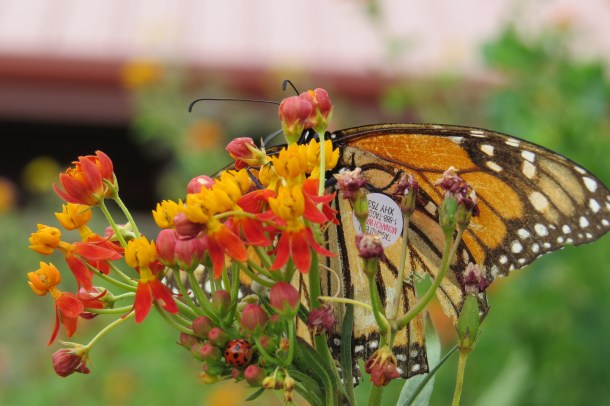
Monarch Butterfly Sipping Milkweed, Note the Tag

With a woosh of her net, Master Naturalist, Ellen Guiling, has captured another Monarch butterfly to be tagged and then sent on its migratory journey.

As per the Monarch Watch website: tagging information helps answer questions about the geographic origins of monarchs, the timing and pace of the migration, mortality during migration, the effects of wind and weather, and changes in geographic distribution of monarchs. Each year the information is collected and can be viewed at www.monarchwatch.org.

You may remember Starla found a tagged Monarch from Kansas who visited our garden in 2015.

We have many butterflies visiting The Raincatcher’s Garden and the reason goes back to the careful planning and planting of host and nectar plants for many different types of butterflies. Review the butterfly plant list in our Raincatcher’s Resources on the right of our front page and enjoy the delights of your own butterfly garden.

Ann Lamb

Pictures and video by Starla Willis


Chinese Long Beans—Green Beans for Summer—Even Here

Have you ever read or been told that green beans will produce all summer?  This is advice that must be met with a kind smile.  Bless their hearts, it’s totally untrue.   Obviously cannot be blamed for this mistake, they are just not from around here.  Anyone who gardens in North Texas knows green beans will not make it in summer’s heat.

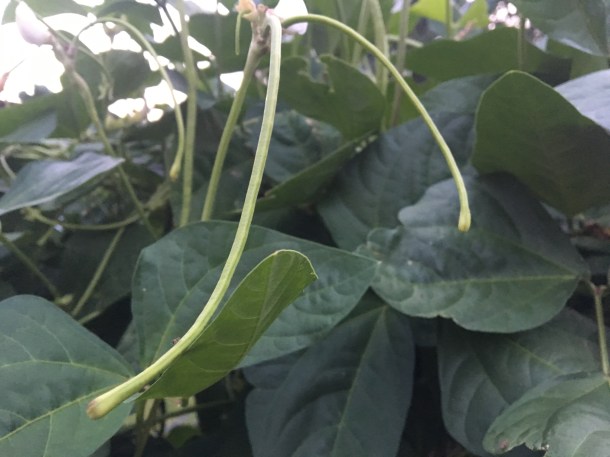
Does that mean no more fresh beans? No, not if you plant Chinese long beans.  This delicious vegetable goes by many names: snake bean, yard long bean even asparagus bean.  A red variety called red noodle is also available.  Properly they are called Vigna Unguiculata.  As its “real name” makes clear, they are actually related to cowpeas or blackeyed peas and not ordinary garden green beans.  The important point is they grow in the heat of summer, in fact they require heat to do well.  Which wouldn’t matter if they didn’t taste good, but they do with flavor much like green beans and a touch of blacked pea.

Are you convinced? Plant the seeds as directed on the package.  It is essential to provide a sturdy support as these are vines not bushes.  Large tomato cages work well. The vines would probably like something ten feet tall to grown on but vines don’t always get what they want.  Compromise is key between you and the vines.  Give the vines plenty of room so  they can grow up and over supports but keep them within bounds so you can  pick the beans. Remember the vines will try to grab any innocent plant that gets in their way; be alert.

Trellised Vines of the Chinese Long Bean

Garden soil with compost is ideal.  Apply organic fertilizer when planting. As with any rapidly growing plant, regular watering is essential.

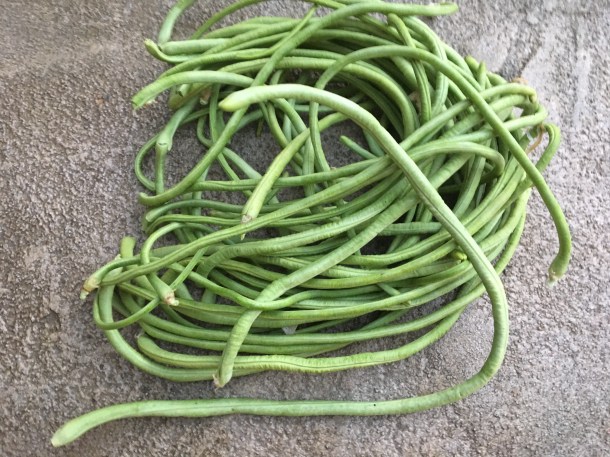
Once the production starts, check the vines every day. The beans grow amazingly fast and will need regular picking, pick them about twelve inches long  while they are still firm and dark green.

Chinese Long Beans, Ready to Eat!

When they are picked like this they are even good raw in salad. They are delicious prepared in many ways: simmered as green beans would be or fried as they are in many traditional Chinese recipes.

Try them and you will see for yourself!!

Susan Thornbury