Tag Archives: Calendula

Bee Balm vs. Lemon Bee Balm vs. Lemon Balm

 Oh, I so enjoy the colors and flowers that bloom during the early summer and one that I’m enjoying of late is bee balm.  Its magenta flowers atop a tall stalk are a feast for pollinators. In the wildflower area of Raincatchers, a purple rocket-like plant is putting on a show – Bee balm?   It looks nothing like the other, but I recall it being bee balm too. Can it be?  And then there’s Lemon Balm with its bushy habit and ability to travel readily.  Looks like it’s time to clear up this mystery— 

Upon further investigation, these similar names create a climate for confusion Bee balm, Lemon Balm, and Lemon Bee Balm -the looks of the plants are distinctively different but all are related to the mint family.   

eBee balm, also called Wild bergamot, has several varieties – some perennial and others annual. Monarda is a genus of flowering, plants from the mint family. Lamiaceae didyma or fistulosa (zones 4-9) are perennials.   Its cheery pink flowers are located near the Edible landscape greenhouse and stands 24-48 inches tall, and can spread 24 -36 inches.  It blooms late spring into summer in full to part sun in well prepared beds with good drainage. Bee balm has magenta, pink, purple, red or white flowers that are 2-3-inch across with slender tubes looking flowers on a tall stalk. 

Bee Balm

If your garden needs a smaller specimen, pinch the stalks in early spring, or purchase a shorter variety. Deadheading and cutting makes way for more flower production.  Cut the stalks close to the ground in late fall and they will return in the spring. Powdery mildew might make an appearance if it’s a wet spring, but it won’t harm the plant.  

II was purchased at the DCMG Plant Sale at Fair Park and then a dear friend gifted some she started from seeds (Northaven Gardens).  It spreads some, but not difficult to control.  The bees, Butterflies and hummingbirds are delighted.  Mark and Cynthia Jones captured this picture of a moth (white lined sphinx moth I think) feasting on  the variety Peter’s Purple. 

Lemon BEE Balm (Monarda citriodora) is a herbaceous annual of the mint family, native to Central, southern America and Mexico and is commonly found in pastures and prairies.  It will thrive in full sun, and in poor, rocky, or sandy soils. Can you see where this gets confusing?  It Blooms in late Spring early summer about the same time as the Bee balm is blooming.   This was found in our wildflower area at the garden along with blanket flower, long after the bluebonnets, Indian paint brush, and Engelmann daisies have said their adieus (goodbyes) To confuse even more, Lemon Bee balm is also known as purple horsemint or lemon mint.  It has lemon scented spiky clusters of varying shades of lavender.  You can find this in seed packets and often in wildflower mixes.  

Lemon Bee Balm

Lastly there is Lemon Balm, another member of the mint family, (Melissa officinalis). Native to Europe, It can be found in many places, but most recently has been thinned from the Hügelkultur in the Edible landscape.  It grows in a clump, with wrinkled  leaves that have a scent of Lemon. The flower is an insignificant spiky pale-yellow cluster.  This herb is said to produce calming effects.   It seeds and spreads readily and can get 3 feet by 2 feet.   It consistently returns in the garden. It can be obtained in the herb section of  garden centers or possibly a garden friend would gift you a start.  
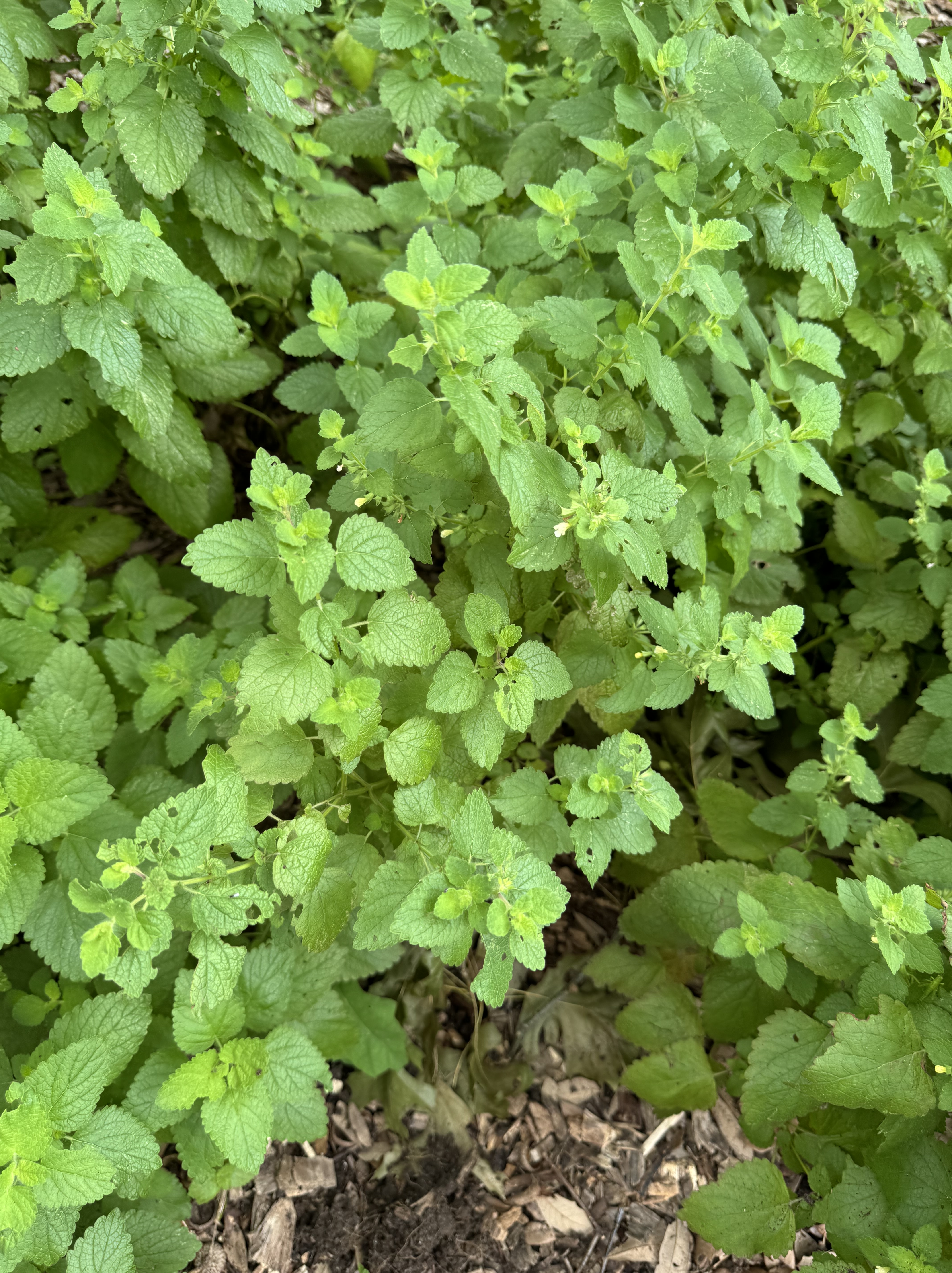
Lemon Balm

Now that that mystery is put to rest,  figure out a way to use one or all of  these beauties in your landscape.   

Starla Willis, Dallas County Master Gardener Class of 2011

Video of sphinx moth, courtesy of Mark and Cynthia Jones, Dallas County Master Gardeners Class of 2013

Edible Spring Blossoms…Our Top Ten

May 11, 2021

Want to bring some unexpected tastes to your palate? A recent walk around our edible landscape gave us the answer. Yes, we are growing kale for the foliage, chervil for its delicate, lacy leaves and chives to top baked potatoes and egg dishes but many other beautiful spring blossoms offer special gifts not to be missed.

Salads become more vibrant and enticing, soup receives a touch of elegance and lightly steamed or sauteed vegetables sparkle when flower blossoms garnish the dish. We’ve selected ten of our favorite spring blossoms to whet your appetite. Some are familiar, others may surprise you with their distinctive and very pleasant tastes. Enjoy your springtime visit to our garden to catch a glimpse of these lovely blossoms before they fade away.

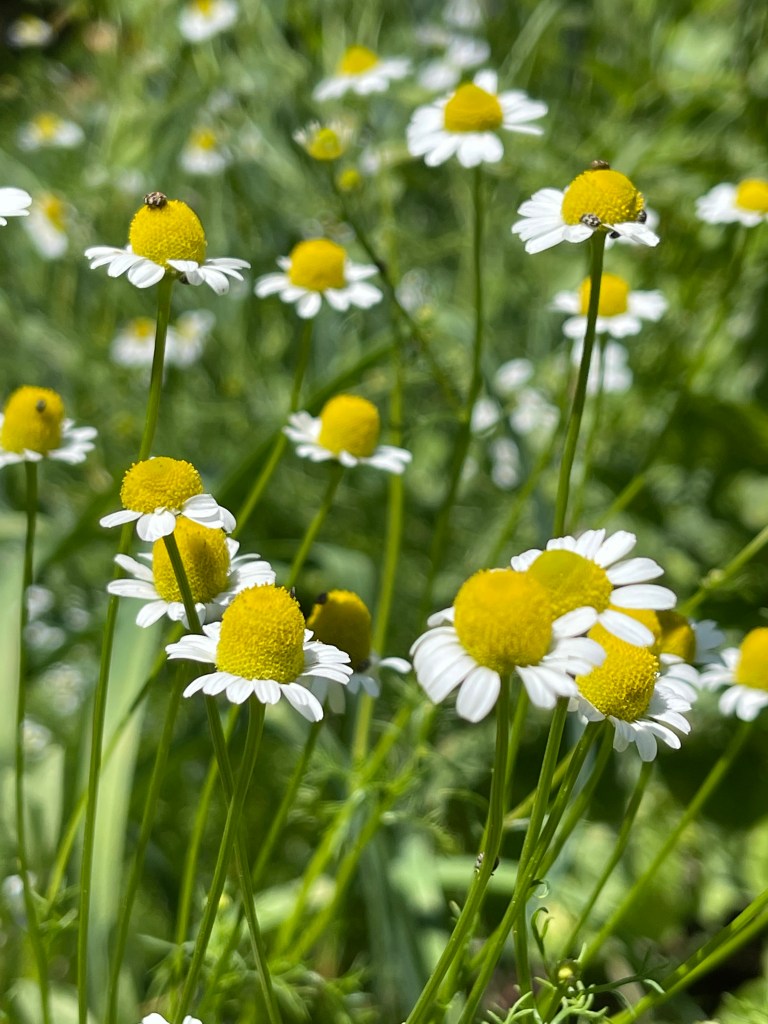
#10…German Chamomile (Chamaeomelum nobile; Matricaria recutita)

Dainty, apple scented, daisy-like spring blossoms become the perfect ingredient for brewing a cup of German chamomile tea. To make the tea, place 1 tablespoon fresh (or 1 teaspoon dried) flowers in a cup. Pour 1 cup boiling water over the top and steep for 5 minutes. Strain out the petals before drinking or using in a recipe. Let the soothing taste calm and comfort you on a crisp spring morning. Petals can also be used in salads. 

#9…Scented Geraniums (Pelargoniums spp.)

At Raincatcher’s we’ve fallen head over heels with scented pelargoniums (geraniums). Their fragrance is so captivating that we’re constantly searching for new varieties. This spring, we’re growing some of the following: chocolate peppermint, lavender, lemon fizz, rose, peach and pink champagne. From smooth-as-velvet rounded leaves to deeply lobed, the foliage of scented pelargoniums makes a lovely statement in the garden. Use scented geranium leaves to lend a nice fragrant addition to cookies, cakes, butter, drinks, and many other types of foods. Garnish the beverage of your choice with a tiny blossom. For a sweet finish, give it a gentle swish in the liquid before consuming.

#8…Chervil (Anthriscus cerefolium)

After the deep freeze of February, chervil gave us a spirit-lifting surprise. Our tender little plants growing in the Hügelkultur stayed nestled in the ground just long enough to survive the bitter cold. Over the past few weeks, we’ve been drawn to tiny white anise-flavored blossoms covering the plants. Harvest chervil blossoms and leaves as close to preparation time as possible. Partner it with eggs, salmon, cream soups, and many classic sauces. Use the blossoms to garnish watercress for a simply divine salad.

#7…Begonias (Begoniaceae – Semperflorens Cultorum Group)

We are growing the wax leaf variety in our Statuary/Cottage Garden. The fleshy leaves and flowers are edible both cooked and raw. In Japan, India and Indonesia they have been cooked up as potherbs. The Chinese use them to make a sauce for meat. Children in northern Mexico and China eat them as a snack. Tuberous begonias are also edible. The flowers have a delicious, light, lemon taste and a crisp texture.  We hope to add some in the shady parts of our garden. 

#6…Rat’s Tail Radish (Raphanis sativus var. caudatus)

Edible podded radish plants look very similar to traditional radish plants except that the flowers are allowed to go to seed and form seed pods. Rat’s Tail radish is grown for its edible pods. The pods are green and pencil-thin with a smooth, somewhat lumpy appearance. Flowers can range from white to pink and purple and can be added to salads. Pods can be eaten raw or cooked, sliced and added to salads or crudité platters. Because Rat’s Tail radish plants are heavy producers, it’s fun to use both flowers and pods in different dishes.

#5…Kale, Red Russian (Brassica napus)

Kale is typically grown as a leafy green crop. But have you tasted the blossoms? Surprisingly, they are very tender and delicious. And, with the extreme cold in February, it brought out their sweetness even more. If fully opened, use them in salads. If they are still in the bud stage, try adding them to stir fry dishes. Or, after a light sauté, add them to soup or pasta. Other members of the brassica family also produce these tender flowering tops known as raabs. Raab is a tangible, edible sign that the kale (or broccoli or whatever you have) “overwintered” and survived into spring. 

#4…Calendula (Calendula officinalis)

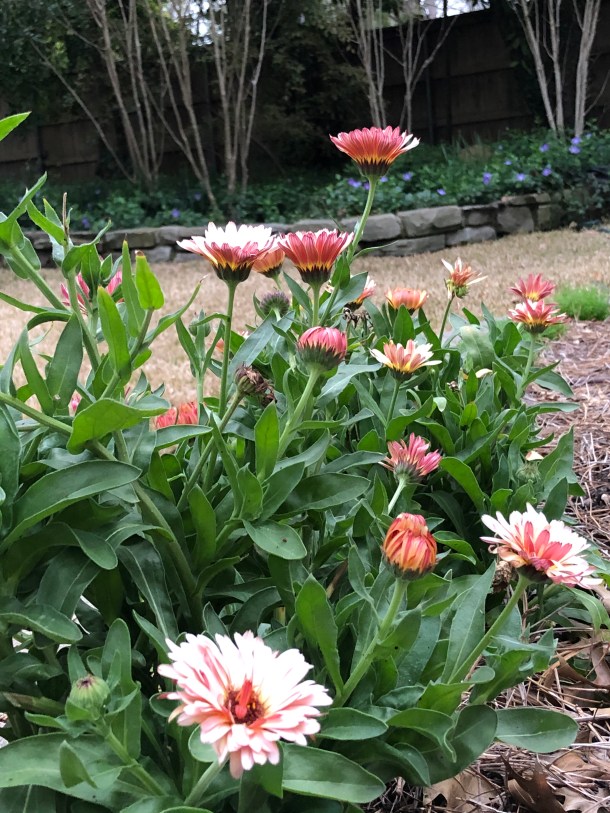
With nicknames like pot marigold and poor man’s saffron, you might have missed the opportunity to grow calendula. At Raincatcher’s, we’re thrilled to have it growing alongside the greenhouse beds and in our sensory garden. Springtime is the best time to enjoy calendula flowers in the landscape and, especially, for culinary purposes. Calendula flowers have a spicy, peppery taste that give a nice flavor to cornbread, quiche, ravioli and sweets.

#3…Wasabi Arugula (Diplotaxis erucoides)

If you’re ready for tasting notes of horseradish and peppery aromatics, give wasabi arugula a try. It has deep green spoon-shaped leaves with slightly toothed edges and stems that are delicately crisp. Once it bolts, let the edible flowers attract pollinators or enjoy their tender, tangy bite in salads and as a garnish for your favorite bowl of soup. 

#2…Borage (Borage officinalis)

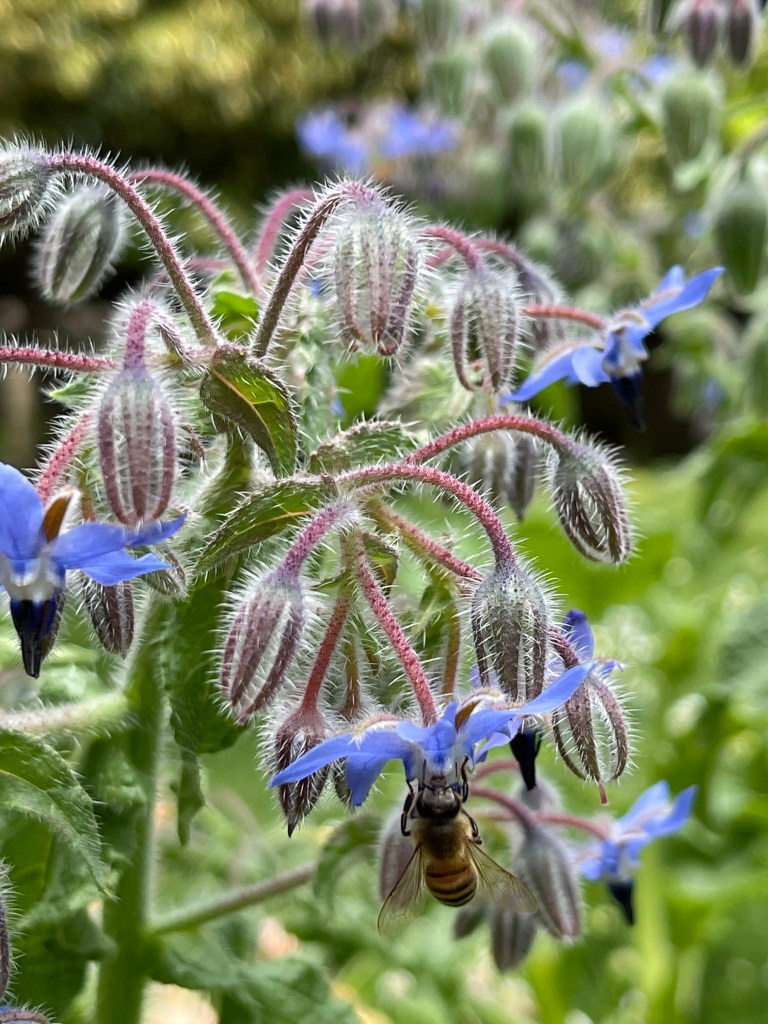
In our crescent bed, you’ll find both white and blue borage in full bloom. Bees are buzzing and can’t stay away from the striking star-shaped blossoms. Borage is an extremely old plant, originating from an area around Aleppo, a Syrian city that dates back to the eleventh century B.C. After spreading to Europe, Pliny the Elder wrote, “it maketh a man merry and joyful.” His comment, along with others, may refer more to the wine it was drunk in than the herb itself. Fresh borage flowers can be used in salads, dips and cold soups as a garnish.

#1…Nasturtiums (Tropaeolum majus)

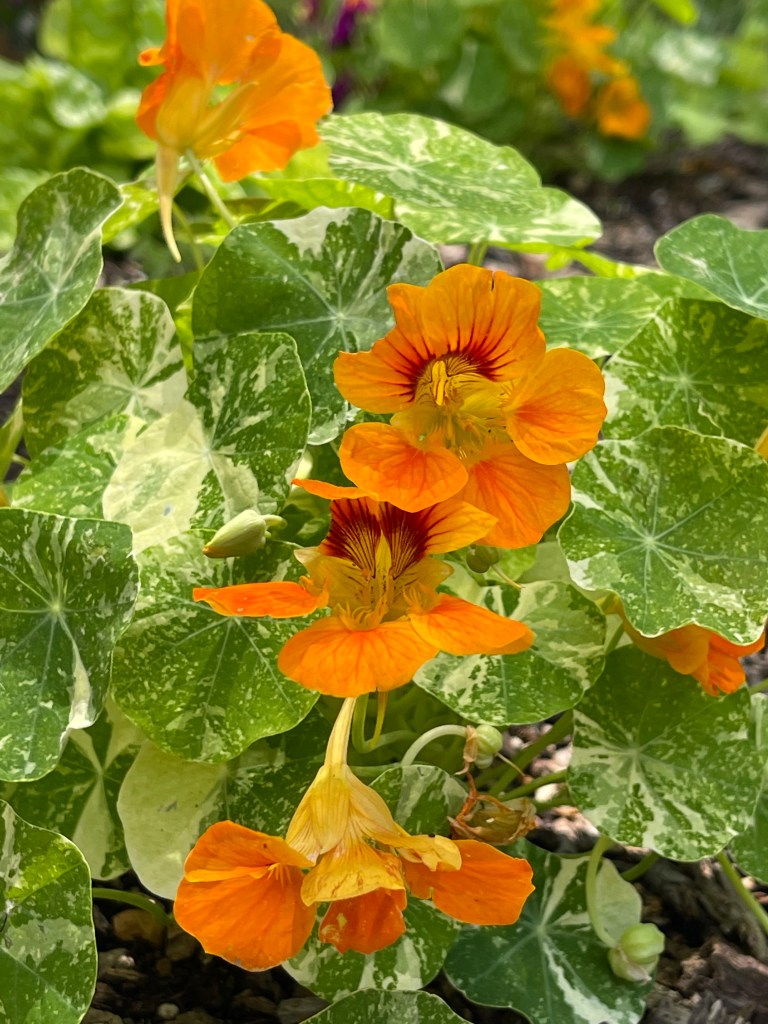
Not surprisingly, nasturtiums are the number one pick in our edible landscape. There are almost a dozen varieties of nasturtium on the market but this year we chose ‘Variegated Alaska Mix’ for our Statuary/Cottage Garden bed. Their unique variegated foliage delivers a colorful display of gold, orange, salmon and mahogany flowers on compact plants reaching about one foot in height. A big attraction for growing nasturtiums is that the flowers, leaves and seed pods are all edible. Their tangy flavor is mustard like with an added perfume and sweetness. (For a special treat, go to our link for Nasturtium Risotto. This incredible recipe includes all parts of the nasturtium plant.)


(FYI…Come back in a few months for our next seasonal look at a Baker’s Dozen favorite edible summer flowers.)

Linda Alexander, Dallas County Master Gardener Class of 2008

Nasturtium Risotto

Nasturtium Pesto

Nasturtium Bouillon

Don’t forget our plant sale May 13th and 14th.

Calendulas in My Garden

Above: Calendula in Linda’s garden

There’s a new herbal flower growing in my garden that makes my heart happy. Calendula, sometimes known as pot marigold, signifies sacred affections, joy, grief and remembrance. With such a wide range of emotions, there are countless reasons to include it in your garden landscape design. 

 With hues from golden to apricot, deep yellow and bright orange, calendula flowers are eye-catching in any setting. An early morning walk in the garden will tempt you to take a handful of clippings for a lovely bouquet or gather up the flowers for some edible delicacies. 

Growing calendulas is quite simple. Plant seeds in good garden soil, keeping the ground moist until the plants appear. If planted in late summer or early fall, there’s a good chance that they will produce flowers from spring into summer. Some years it might flower almost year-round.

My calendula plants were put in the ground in mid fall, started blooming in February and are continuing to produce new buds weekly. The flowers are harvested often to use in cut arrangements and for ingredients in butter, cookies, cornbread, quiche and a scrumptious calendula cake. They can also be sprinkled on soups, pasta, rice dishes and salads. The Raincatcher’s volunteers recently sampled calendula quiche. The recipe is given below.

Above: Petals to be eaten!

In the vegetable or herb garden, calendulas encourage pollinators and other beneficial insects. If you’re looking for a plant that flourishes in cooler weather, blooms often and is easy to maintain, give this versatile herb a sunny location in your garden. 


Calendula Quiche

Above: Calendula Quiche surrounded by Calendula Flowers at Raincatcher’s Garden

Ingredients

3 cups loosely packed fresh spinach

1 tablespoon extra-virgin olive oil

4 eggs

1 cup heavy cream

¼ cup (6 ounces) soft goat cheese, crumbled

½ cup calendula petals (from about 20 flowers)

½ teaspoon salt

Directions

Preheat oven to 375˚F. Liberally butter a 9-inch pie pan. 

In a skillet over medium heat, cook spinach in olive oil until the leaves are fully wilted, about 3 minutes. Drain. 

Whisk eggs and cream together. Add goat cheese, calendula petals and salt and whisk again. 

Arrange spinach in the bottom of the prepared pie plate and pour egg mixture over the top. Bake for about 25 minutes, or until the custard is set in the center and the top is golden brown.

*Option: If you prefer, follow directions for the ingredients but pour into a prebaked pie crust.

Yield: One 9-inch Quiche

As in true Texas style, we suggest a few drops of Tabasco sauce on each slice for extra zing.

Linda Alexander

Photos by Linda and Starla Willis

Click here to learn how to pronounce Calendula correctly.