Yellow-Bellied Racers


Our progeny is not sociable.  Ana tapped on the glass of his cage, and the very young, very little, very spotted Yellow-Bellied Racer tried to bite her.

Juvenile Yellow Bellied Racer

Juvenile Yellow Bellied Racer

Ana, Judy and I were checking out Horticulture Director Roger Sanderson’s herpetarium at the Texas Discovery Gardens at Fair Park.  It’s the new home of our garden’s snake.  Correction: Ana and I were looking attentively at the slithering residents.  Judy was watching from a very respectful distance.

Anyway, there he was, the sole hatchling of 9, some say 10, snake eggs Hans discovered in June at the bottom of the garden’s compost pile.  Hans was excited. Other Gardeners shrieked like 14-year-olds at a rock concert.

Snake Eggs Found at our Garden

Snake Eggs Found at our Garden

If he makes it back to 2311 Joe Field Rd., the racer has long lost cousins to look up at the garden.  Mama Racer chose Cindy’s compost piles for her nest last summer, too.  Luckily we haven’t seen hide nor hair of her or the kids.

At the moment, our guy is about as round as your little finger, maybe 10 inches long, and covered with brown spots and blotches, much like a newbie whitetail deer.  By his third birthday, he’ll trade the spots for a solid blue-grey back and a yellow belly, thus the moniker.  Frogs, lizards, small snakes, rodents, birds, and insects are on the menu.  Racers aren’t constrictors or poisonous, but are very fast on their feet belly.  Don’t know that I’d want to get up close and personal.  When captured, Racers struggle violently and bite.  If all else fails, nasty stuff is expelled through their vents.

Nope, Racers can wind their quick way through the creek and brush without me.

Elizabeth

More about long lost cousins click here.

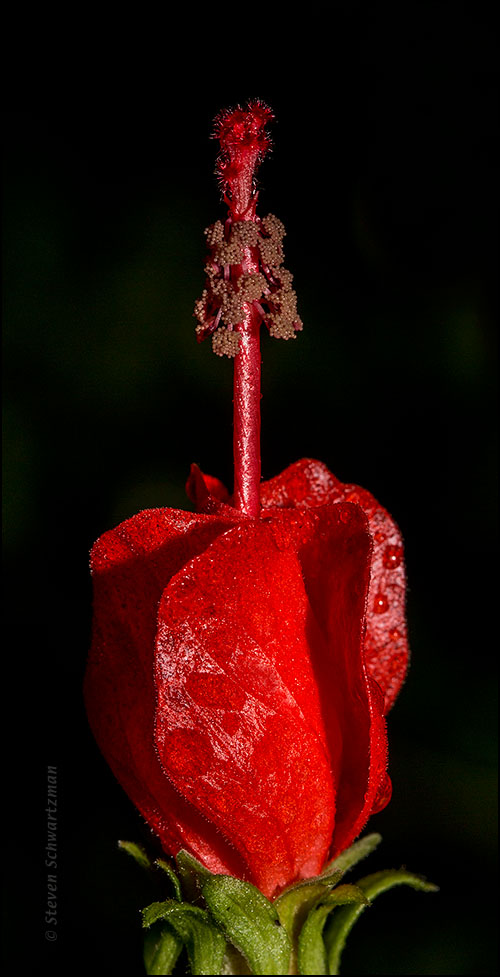
Turk’s cap flower

Portraits of Wildflowers

Turk's Cap Flower 7938

Here’s a flower of Malvaviscus arboreus, known as Turk’s cap and Texas mallow, that I photographed in Great Hills Park on July 18th. The plant was in a heavily shaded place in the woods—its familiar habitat—so I had to use flash. Don’t the clumps of pollen remind you of caviar?

——–

UPDATE: If you check out yesterday’s post showing a feather, at the end of it you’ll see I’ve added suggestions about the identity of the bird that shed the feather.

© 2014 Steven Schwartzman

View original post

What I Like About August

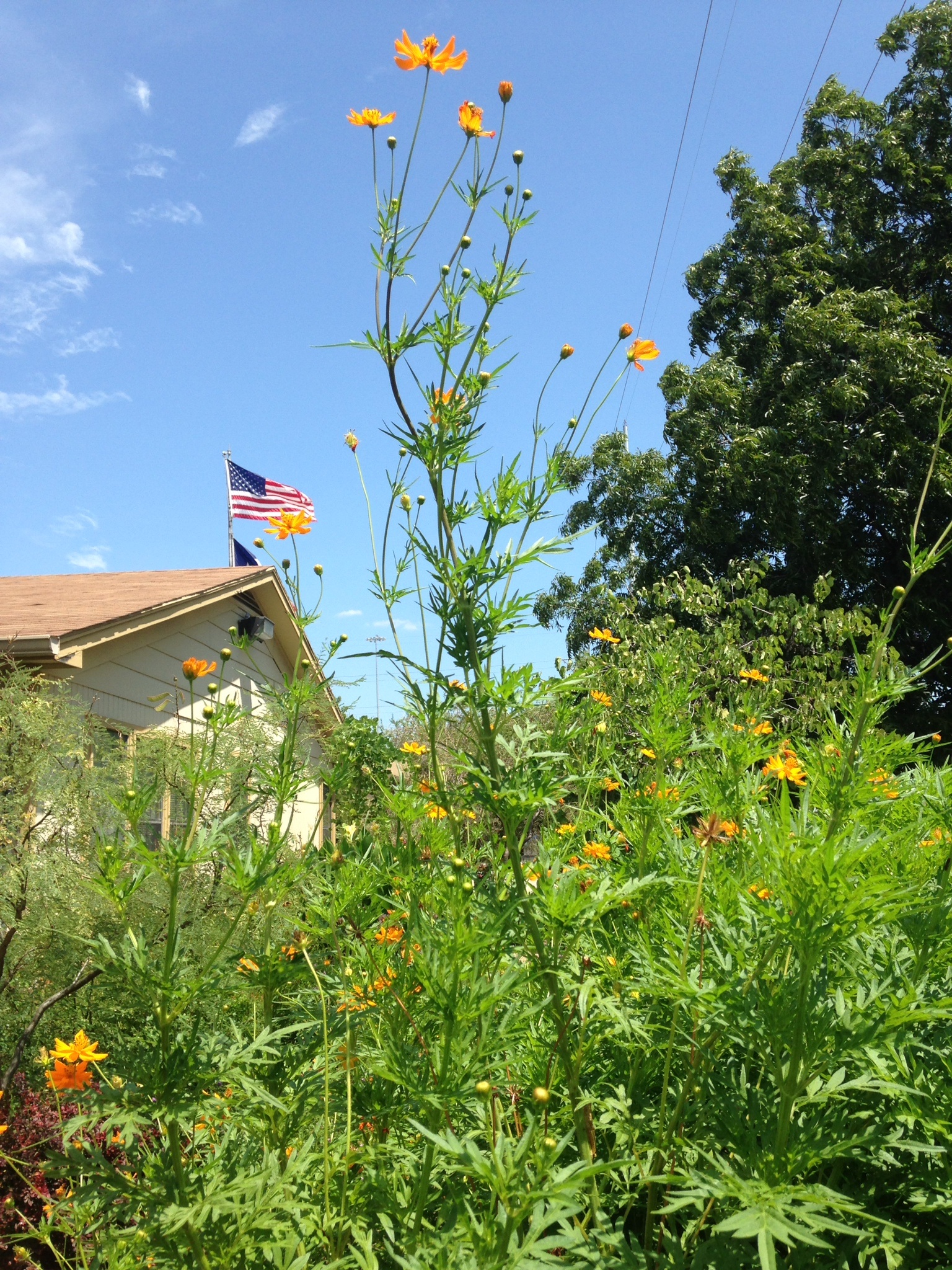
Walking through our hot, August garden last week, here are some of the things I saw and loved:

Cosmos Growing High  into the Sky

Cosmos Growing High into the Sky

Garlic Chives in Bloom

Garlic Chives in Bloom

And from my garden at home:

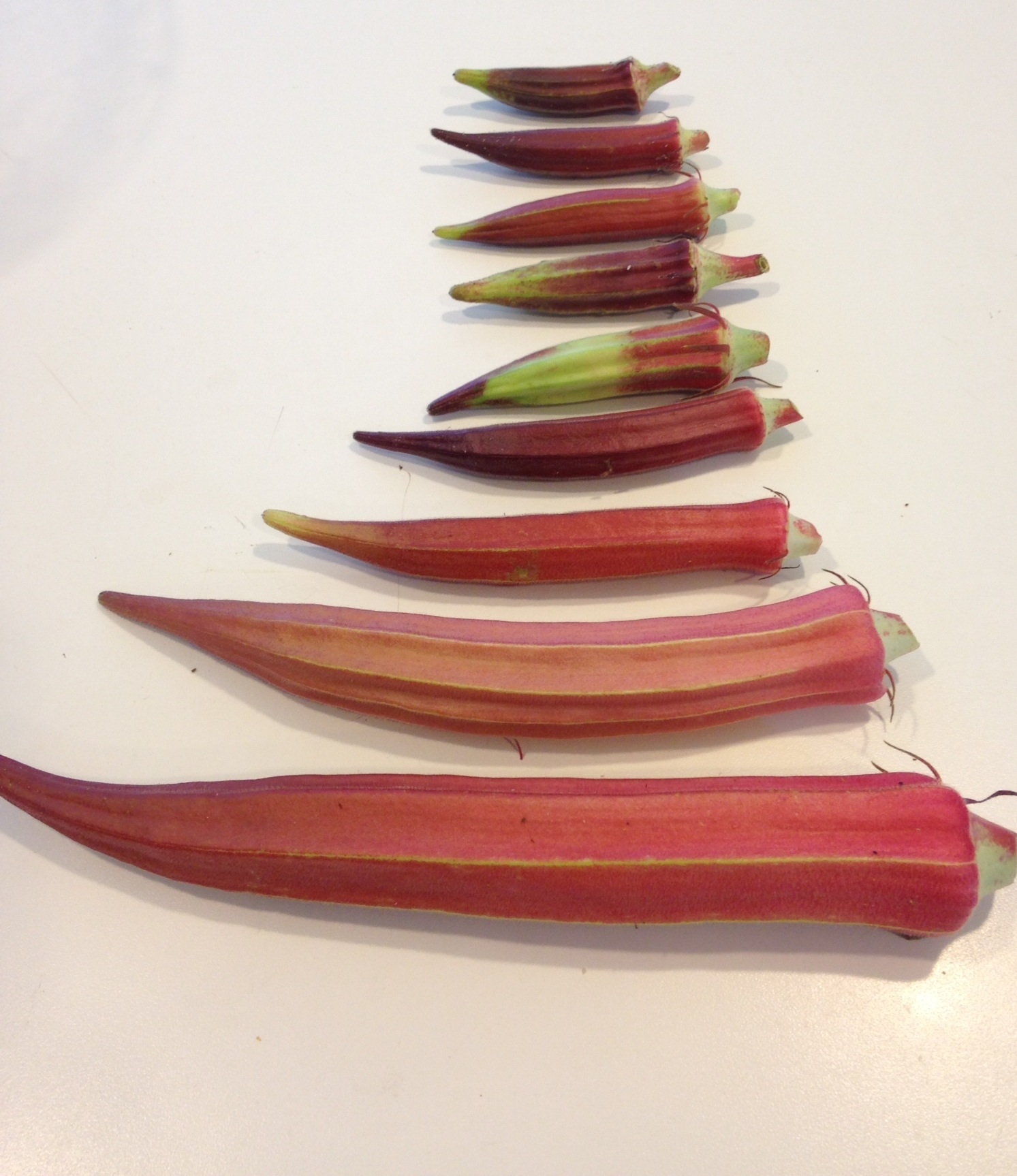
Orderly Okra

Orderly Okra

The tag that came with this plant reads:

Okra, Jing Orange

60 days. sun. drought tolerant. Lovely pods area deep reddish orange and quite colorful. This Asian variety produces lots of flavorful 6″pods. Unique. Pick pods when young and tender. (I recommend picking at  1.5-2″)

For an okra recipe you will love, click here.

For more about what’s blooming in August, click here.

Ann

It Keeps on Blooming

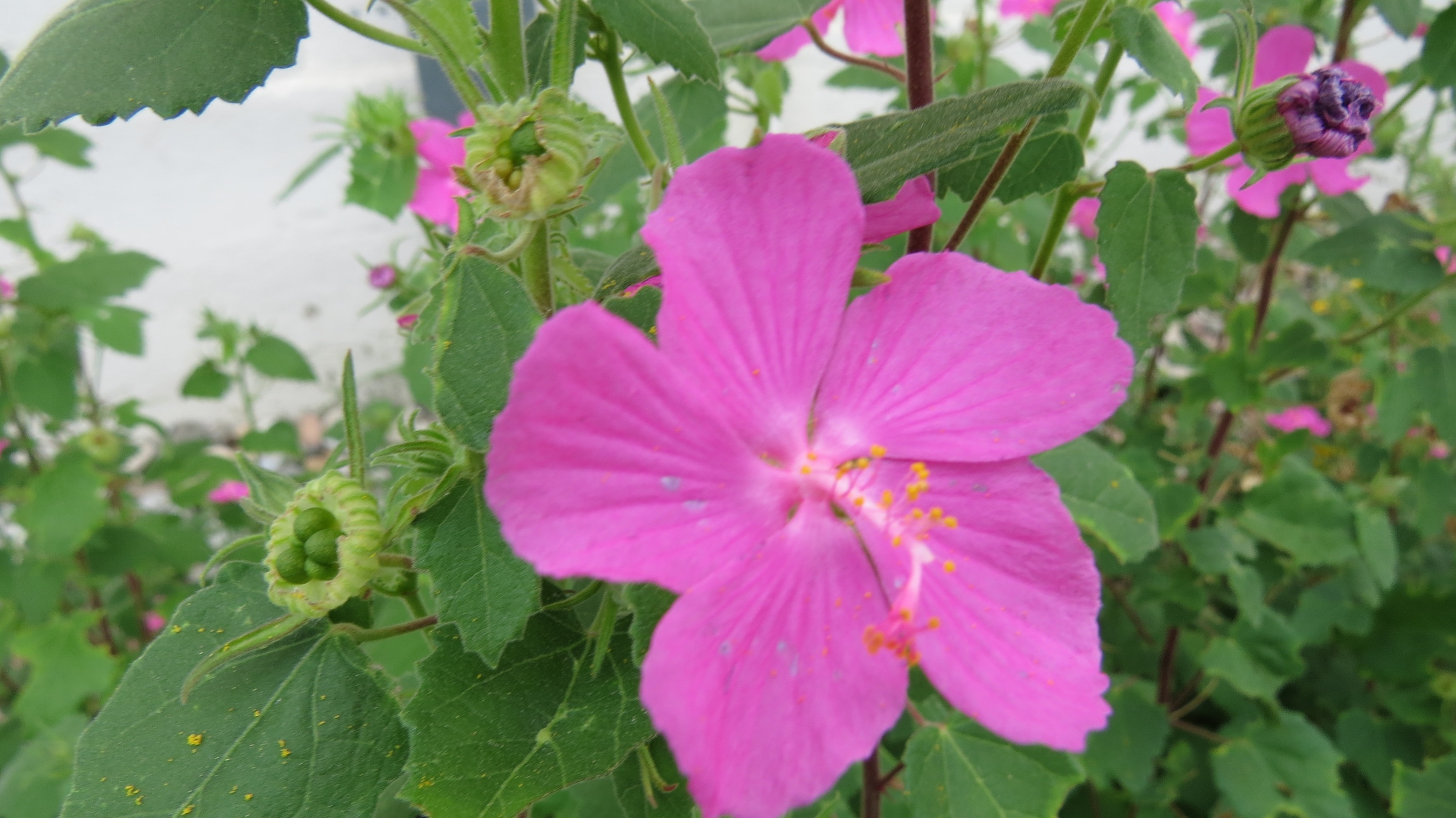
rock rose in bloom


Do you want a Texas native plant that, like the Energizer Bunny, just keeps on going/or in this case, blooming throughout our over 100 degree weather?  If so, then consider planting our Texas native Pavonia (Pavonia lasiopetala).  Like many of our native plants it also goes by many different common names: Wright’s Pavonia, Rock Rose, Rose pavonia, and Rose mallow.

rock rose close up Of course, these last few names give one a clue as to the most eye catching part of the plant: its beautiful, showy, rose colored flowers that are roughly 1½ inches wide with a bright yellow center formed by the pistil and stamens.  These flowers appear from April to November on a small shrub that has velvety, scalloped leaves and that grows only four feet tall (usually smaller, if sheared back to encourage more blooms).

Native to the Edwards Plateau through the Rio Grande Plains, Pavonia prefers dry, rocky woods and slopes, and open woodlands.  Though it will grow larger and bloom more profusely in full sun, it can even take partial shade.  Unlike many members of the Mallow family, it prefers to be dry, growing on well-drained limestone soils or even our clay soils.  It requires very little water, once established, and is a great plant for a WaterWise landscape.

Perhaps the only downside to Pavonia is that though it is considered a perennial, it is a short-lived perennial, tending to decline after three or four years.  However, it readily self-seeds and younger plants will come up to replace the older one.  Pavonia can also be propagated, according to the Lady Bird Johnson Wildflower Center, from softwood tip cuttings.  “These cuttings should be taken in the spring before the plant starts to bloom.  Cuttings with big buds or blooms are at a disadvantage.  The cuttings root and grow fast in hot weather.  Cut a stem three to six inches long, just below the node.  Remove all but the top leaves and place in vermiculite.”

If you haven’t already decided that Pavonia is the plant for you, another one of its very favorable attributes is that it is a hummingbird and nectar-loving butterfly and moth attractant.  So if you are looking for a tough little native plant that is not only beautiful but feeds the hummingbirds and butterflies, consider planting a Pavonia/Rock Rose.  You won’t be disappointed.


Carolyn

Pictures by Starla


Squash Recipes Following our SQUASH ME Event

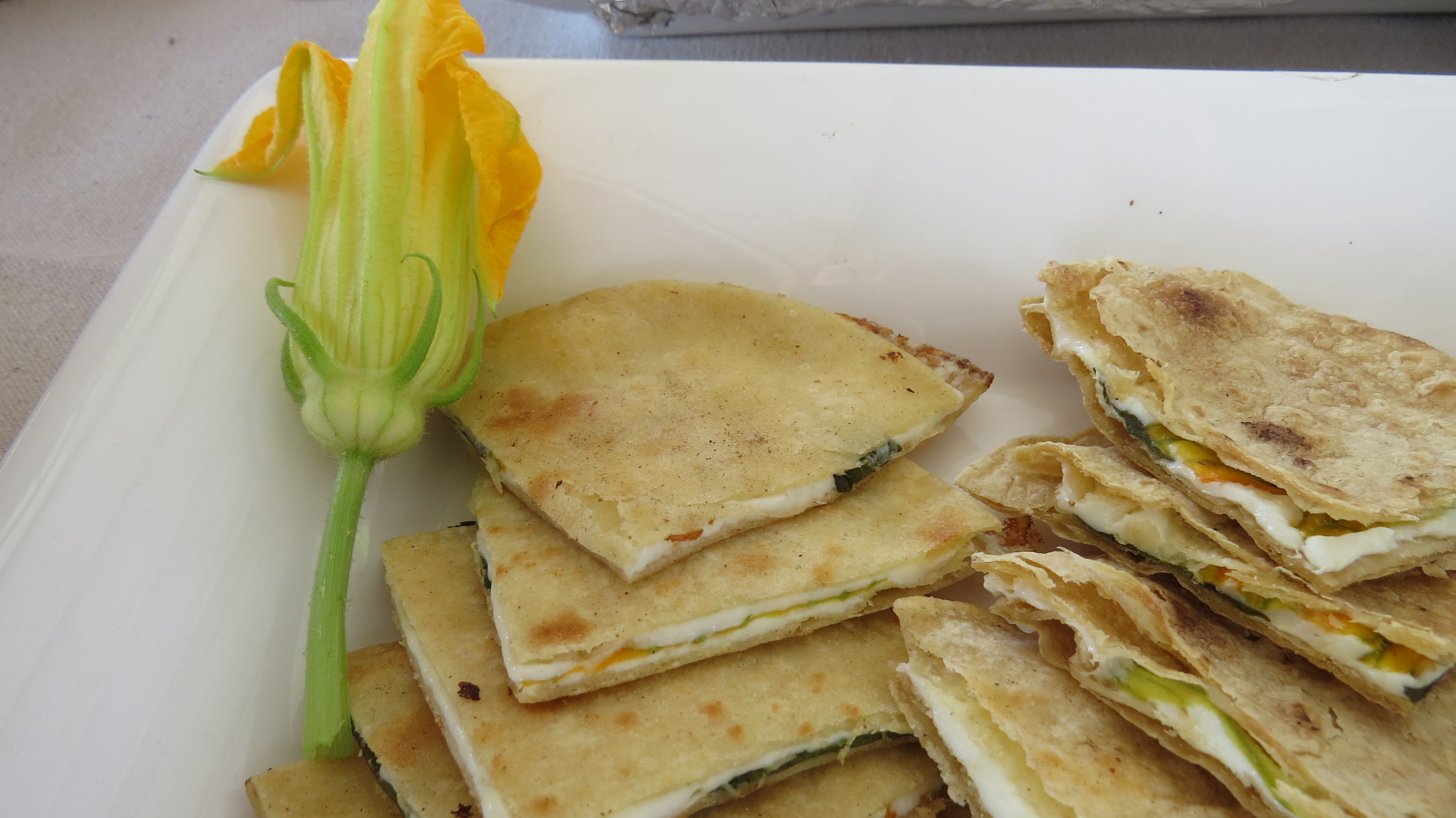
Squash blossom quesidilla

Squash Blossom Quesadillas

Ingredients:

Flores de Calabaza (squash blossoms)

Oaxaca cheese, shredded

Corn tortillas

Anaheim chiles, roasted, peeled, stemmed, and cut into ½-inch strips (optional)

Basil leaves (optional)

Butter

Directions

Prepare Flor de Calabaza Squash Blossoms:

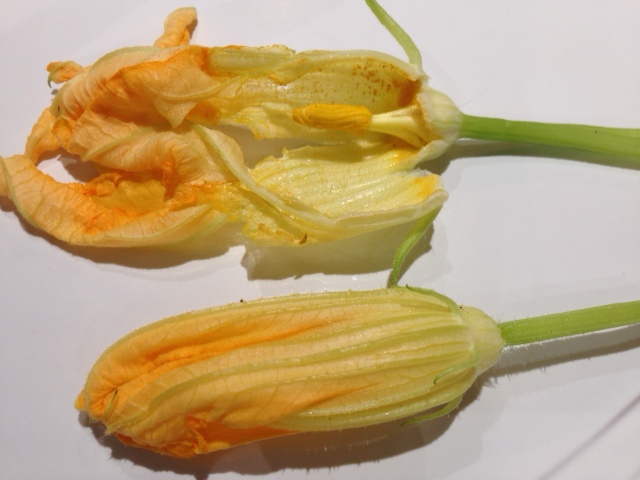
Remove the woody stems.  Pluck out the stamen/pistil from the inside of the squash

blossom (careful there might be bugs or bees inside).

Trim off the sepals (the small, wavy leaves that grow from the base of the blossoms).

Discard stems, stamen, and sepals.  Gently rinse blossoms in cold water and place them on a paper towel to drain.  At this point you may cut the base from the flower, open and lay it flat.

Squash blossom male with stamen

Make Quesadillas: 

Place a dry griddle or cast-iron griddle over medium-high heat.  Melt 1 tablespoon of butter on the griddle.  Place a tortilla on the griddle and sprinkle with cheese.  Add 2 to 3 squash blossoms, and roasted chile, if using, on slightly warmed tortilla.   Or, place three or four basil leaves on top of the squash blossoms. Cover with tortilla.  Cook until light golden, about 2 to 3 minutes or until cheese melts.  Flip over and cook until golden brown.

Serve warm and, if desired, with salsa.
Above: Stuffed Squash Blossoms Ready to Fry

Above: Stuffed Squash Blossoms Ready to Fry

Fried Stuffed Zucchini Blossoms


Ingredients:

Batter

1 cup all-purpose flour

¼ teaspoon salt

1 ¼ cups club soda, as needed

16 zucchini or squash blossoms

½ cup ricotta

4 teaspoons finely chopped fresh basil

1 garlic clove, crushed through a press

Salt and freshly ground black pepper

Vegetable oil, for deep-frying

Directions:

  1. To make the batter, using a fork, stir the flour and salt in a bowl to combine.  Gradually whisk in the club soda to make a batter-there should be a few lumps of flour.  Let stand 10 minutes to thicken slightly.
  2. Using a small knife, cut a slit down the side of each zucchini blossom, and remove the pistil from inside each blossom. (If a blossom tears, don’t worry).  Mix the ricotta, basil, and garlic in a small bowl and season with salt and pepper to taste.  Using a small spoon (a demitasse spoon works well), insert a heaping spoonful of the ricotta mixture inside each blossom through the slit.(Rather than cutting a slit in the side, try a simpler approach; carefully open the blossom, remove the stamen with tweezers then “pipe” in ricotta filling – about two teaspoons.  Gently twist to close and fry according to instructions).

Be sure that the cheese filling is completely enclosed by the blossom.  Transfer the blossoms to a platter.

  1. Place a wire cake rack on a rimmed baking sheet.  Pour enough oil into a large skillet to come halfway up the sides.  Heat over high heat until the oil reaches 360 degrees F on a deep-frying thermometer.  One at a time, holding the blossom by the stem, dip the blossom into the batter and remove, letting excess batter drip back into the bowl.  There should be only a light coating of batter.  Place in the oil and fry, turning once, until golden brown, about 2 minutes.  Fry the blossoms in batches to avoid crowding them in the skillet.  Using a wire skimmer, transfer the blossoms to the cake rack to drain.  Serve hot.

Yield:  Makes 16 blossoms
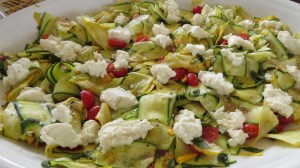
Squash ribbons


Shaved-Squash Salad with Tomatoes, Zucchini Blossoms,Ricotta and Thyme Oil

Baby zucchini and small yellow squash sliced on a mandoline add to the lovely,delicate nature of this colorful salad


Ingredients:

1 generous handful fresh thyme springs (about ¾ ounces)

½ cup extra-virgin olive oil

½ teaspoon finely grated lemon zest, plus 2 teaspoons fresh lemon juice

2 baby zucchini (3 ounces total), thinly shaved on a mandolin

4 small yellow crookneck squash (3 ounces total), thinly shaved on a mandoline

4 ounces mixed teardrop or cherry small tomatoes, cut in half crosswise (1 cup)

6 zucchini blossoms, halved or quartered if large

¼ cup fresh basil leaves, torn if large, plus more for sprinkling (optional)

Pinch of red-pepper flakes

¼ teaspoon coarse salt

Coarsely ground pepper

3 ounces fresh ricotta (1/3 cup)

Directions:

  1. Place thyme on a cutting board, and bruise with the dull edge of a knife.  Place thyme and oil in a small saucepan.  Cover and heat until small bubbles appear.  Turn off heat, and steep thyme, covered 20 minutes.  Discard sprigs, leaving loose thyme leaves in oil.  Whisk together lemon zest and juice and 2 tablespoons thyme oil (reserve remaining oil for another use; it can be refrigerated up to 2 weeks).
  2. Combine half the dressing with the zucchini, squash, tomatoes, zucchini blossoms, basil, red-pepper flakes, and salt.  Season with pepper, and toss.  Divide the salad between 2 plates, and dot with half the ricotta.  Top with remaining salad and remaining ricotta.  Drizzle with remaining dressing, and sprinkle with basil.

Yield:  Serves 2

Note: Squash blossoms can be replaced with a leafy green such as spinach.

squash salad

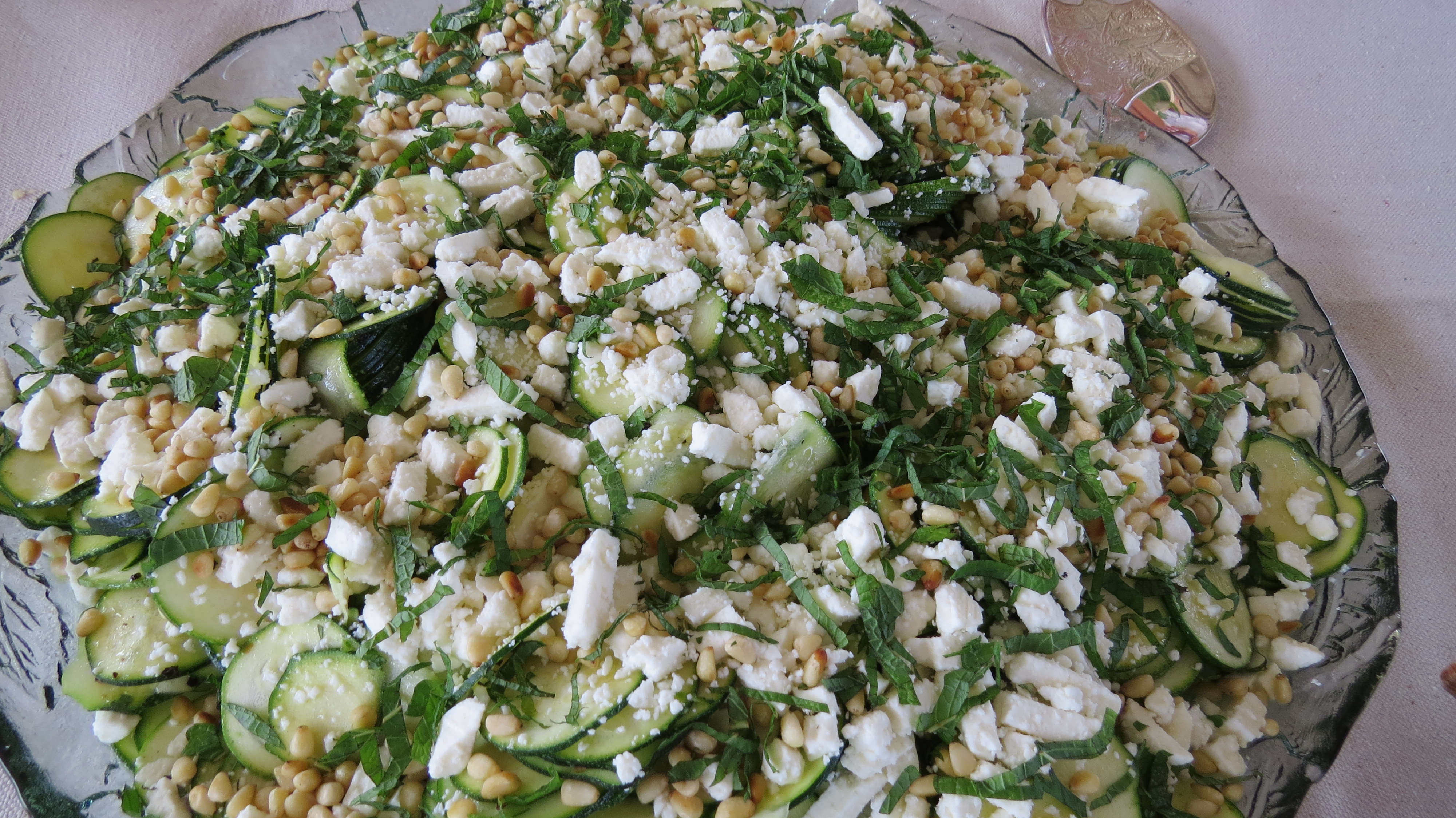
Zucchini Carpaccio

Ingredients:

5 medium zucchini, trimmed

Coarse kosher salt

Freshly ground black pepper

3 tablespoons fresh lemon juice

3 tablespoons extra-virgin olive oil

One cup French feta

½ cup lightly toasted pine nuts

2 tablespoon chopped fresh basil or mint

Directions:

  1. Using knife or mandoline slice, cut zucchini into paper-thin rounds.
  2. Arrange rounds, slightly overlapping, on a large platter.  Sprinkle lightly with coarse salt and pepper.
  3. Whisk lemon juice and oil in a small bowl.  Drizzle dressing evenly over zucchini.
  4. Drop small spoonful’s of cheese all over zucchini.  Sprinkle with the pine nuts, basil or mint and serve.
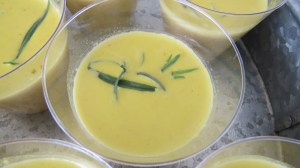
Squash Soup

Squash Blossom and Gruyere Soup with Stuffed Blossom Garnish


Ingredients:

For Soup:

About 1 lb. squash blossoms

1 small onion, diced

4 cloves garlic, minced

3 tablespoons butter

4 cups light vegetable or chicken stock

1 cup heavy cream

1 cup shredded gruyere cheese

Salt and freshly ground pepper to taste

For garnish:

6 large unblemished squash blossoms, prickly stems and interior pistils removed

1 cup ricotta cheese

¼ cup parmesan cheese, grated

A handful of chopped fresh herbs: basil, thyme, tarragon, sage, rosemary

¼ cup pine nuts, lightly toasted and coarsely chopped

Salt and freshly ground pepper

Chopped fresh herbs, for garnish

Directions:

  1. Prepare the blossoms by cutting off the prickly stems and removing the yellow pistils from inside each flower.  Chop coarsely.
  2. In a large heavy pot, sauté the diced onion and garlic in the butter over medium heat until the onion is soft and translucent but has not started to brown.  Stir in the chopped squash blossoms, and sauté for a minute or two until they wilt.  Stir in the stock, and let simmer for about 20 minutes, until everything is soft.
  3. Puree the mixture, either by using an immersion blender or in batches in a blender.  Return the soup to the pot and stir in the cream.  Gradually add the gruyere cheese, stirring occasionally until completely melted.  Season to taste with salt and pepper.  Keep warm without boiling until ready to serve.

For garnish, combine the ricotta with the parmesan and herbs.  Just before serving, stir in the pine nuts so they don’t get soggy.  Season the mixture to taste, and stuff each of the reserved whole blossoms with a spoonful of the mixture.  Float the blossoms on the soup and sprinkle with chopped fresh herbs.

Extra “processing” with an immersion blender, food processor or Vita Mix may be necessary to obtain a velvety smooth consistency.

Serve immediately.
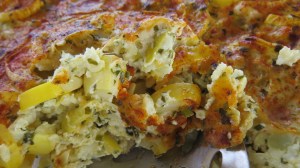
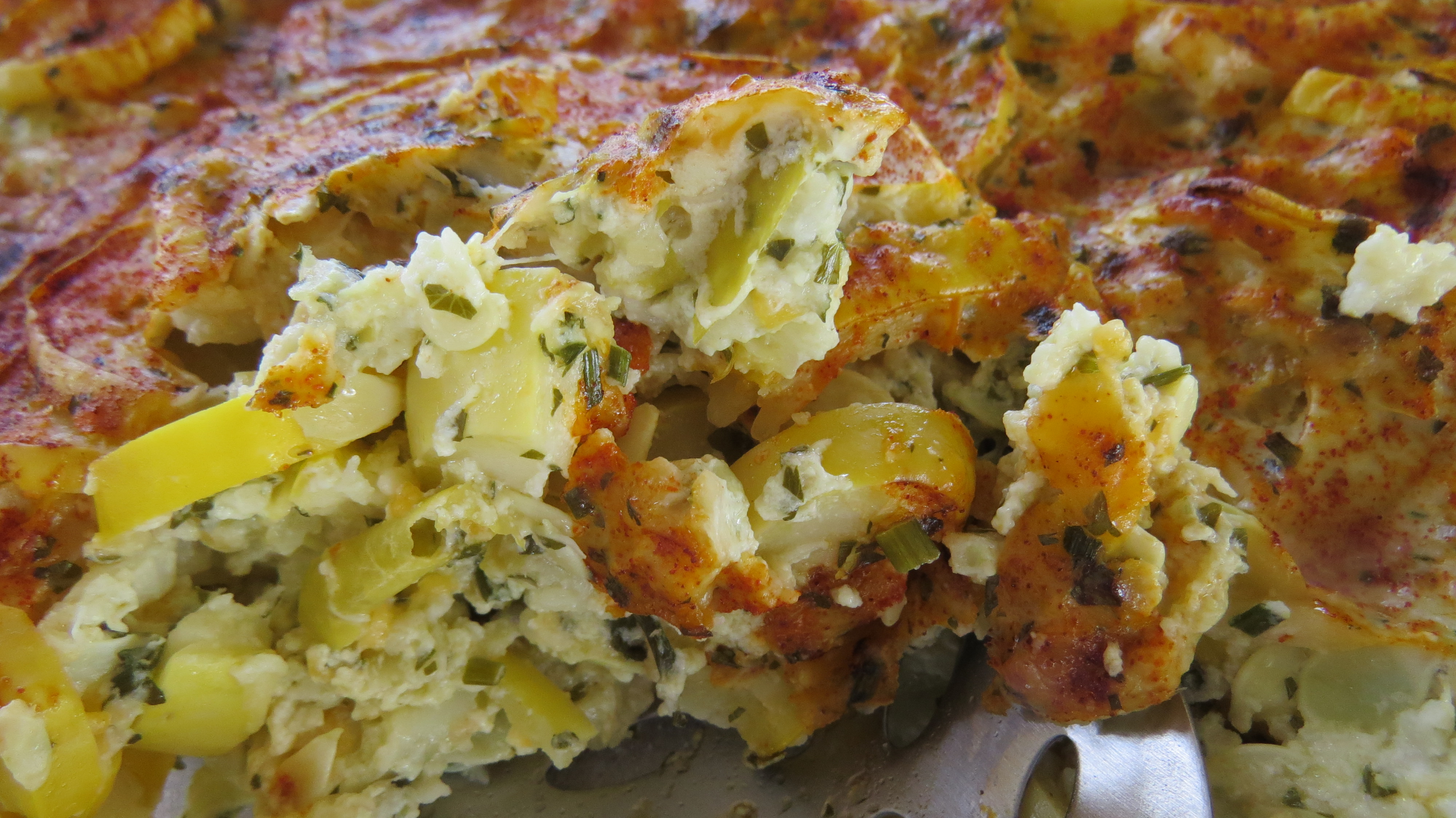
squash casserole close up

Southwestern Squash Casserole

This one made it to our top ten list. Imagine, a casserole with saltine crackers in the filling being a family favorite.

Ingredients:

8 medium yellow squash, sliced

½ cup sour cream

3 tablespoons butter

1 cup shredded cheddar cheese

½ teaspoon salt

2 eggs, beaten

2 tablespoons chopped chives

6 slices bacon, crisp-fried, crumbled

1 (4-ounce) can chopped green chilies, drained

¼ cup chopped fresh cilantro

12 saltine crackers, crumbled

Paprika to taste

Directions:

1. Place the squash in a saucepan with water to cover.  Cook over high heat until tender; drain well.

2. Combine with the sour cream, butter, cheese, salt, eggs, chives, bacon, green chilies, cilantro and crackers in a bowl, mixing well.

3. Spread evenly in a buttered baking dish.  Sprinkle with paprika.

4. Bake at 350⁰ for 30 minutes or until lightly browned.

Yield: 8 servings

Linda

Pictures by Starla


Squash, Squash, and More Squash Coming

We are going to be sharing many, many squash recipes from our SQUASH ME event yesterday.  We had beautiful, lower temperature weather and a fabulous speaker who talked to us about the wide and inviting subject of squash.  While you are waiting for a complete write up, we thought you might like a few of the recipes.  Please also spend a little time reading about The Sex Life of Squash on the blog, Garden Betty to prepare  for the scintillating squash info we will be presenting in the next few days.

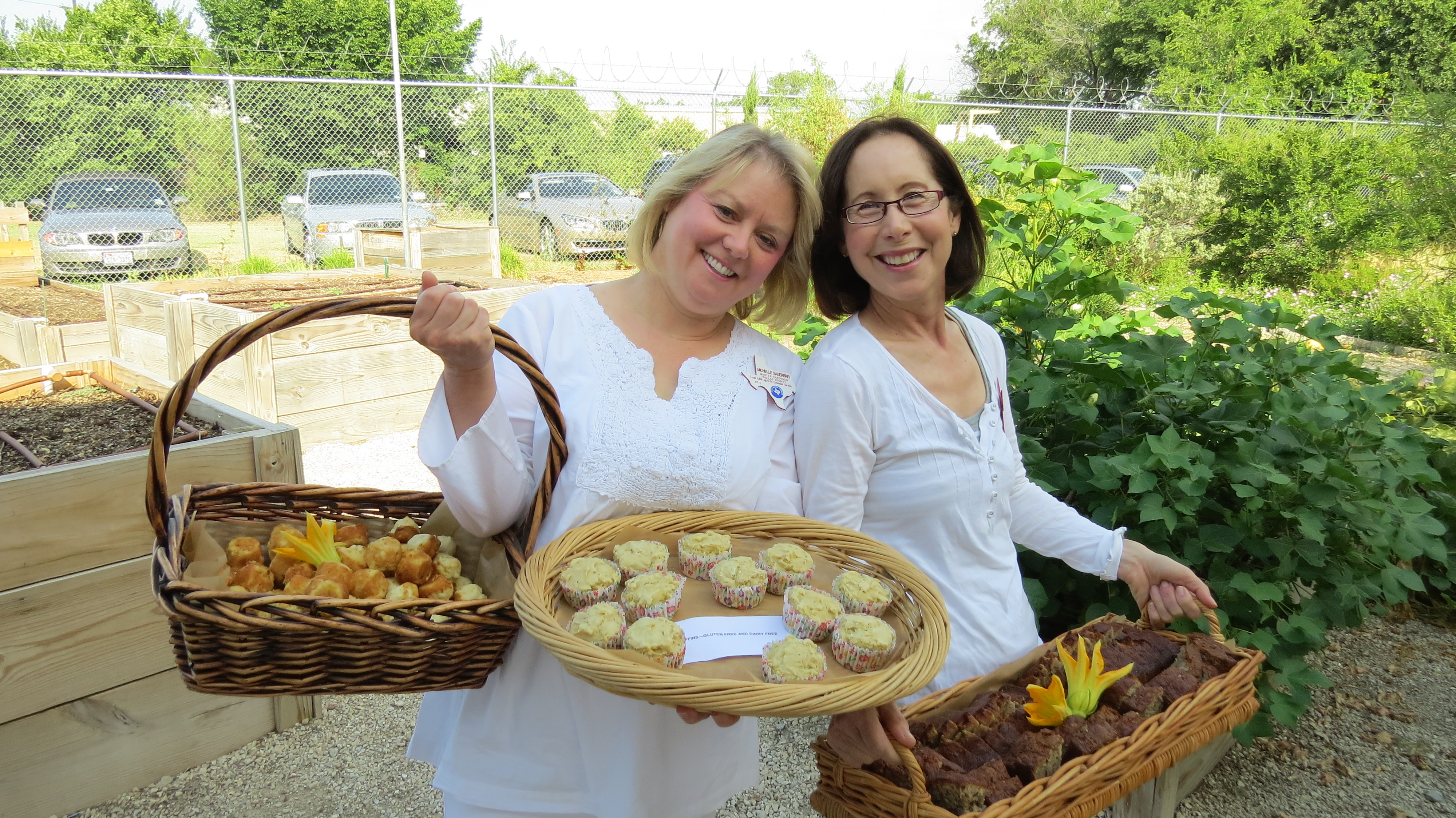
Michele and Sue Serving Squash Muffins with and without Gluten and Banana  Zucchini  Bread

Michele and Sue Serving Squash Muffins with and without Gluten and Banana Zucchini Bread

Squash Muffins 

Ingredients:

2 cups all-purpose flour

1 tablespoon baking powder

¼ teaspoon salt

2 tablespoons sugar

2/3 cup grated yellow squash

1 egg, beaten

¾ cup milk

2 tablespoons vegetable oil

Directions:

  1. Combine flour, baking powder, salt, sugar, and squash in large bowl; make a well in center of mixture.  Combine egg, milk, and oil; add to dry ingredients, stirring just until moistened.
  2. Spoon batter into lightly greased muffin pans, filling two-thirds full.  Bake at 350⁰ for 20 to 25 minutes.  Remove muffins from pans immediately.

Yield:  1 dozen.

Banana-Zucchini Bread

Ingredients:

3 cups all-purpose flour

1 teaspoon baking soda

1 teaspoon salt

1 teaspoon ground cinnamon

½ teaspoon baking powder

1 cup vegetable oil

3 eggs

2 cups sugar

1 tablespoon vanilla extract

2 cups mashed bananas

2 cups unpeeled shredded zucchini

1 cup chopped pecans or walnuts

Directions:

  1. Combine flour, soda, salt, cinnamon, and baking powder in a mixing bowl, and set aside.
  2. Combine oil, eggs, sugar and vanilla extract in a large bowl; beat well.  Stir in bananas and zucchini.  Add flour mixture, stirring just until moistened.  Stir in pecans.
  3. Pour batter into two greased and floured 8 ½- x 4 ½- x 3-inch loaf pans.  Bake at

350⁰ for 1 hour or until a wooden pick inserted in center comes out clean.  Cool in pans 10 minutes; remove from pans, and cool completely on wire racks.

Yield:  2 loaves.

squash chocolate cake

Chocolate-Zucchini Cake

Ingredients:

½ cup plus 1 tablespoon butter, melted

2 cups sugar

3 (1-ounce) squares unsweetened chocolate, melted and cooled

3 eggs

½ cup milk

2 teaspoons grated orange rind

2 teaspoons vanilla extract

2 cups coarsely grated unpeeled zucchini

2 ½ cups flour

2 ½ teaspoons baking powder

1 ½ teaspoons baking soda

½ teaspoon salt

1 teaspoon ground cinnamon

2 tablespoons powdered sugar

½ teaspoon ground cinnamon

Whole fresh strawberries (optional)

Directions:

  1. Cream butter; gradually add 2 cups sugar, beating until light and fluffy.  Beat in chocolate.  Add eggs, one at a time, beating well after each addition.  Beat in milk, orange rind, vanilla, and zucchini.
  2. Combine flour, baking powder, soda, salt, and 1 teaspoon cinnamon; add to creamed mixture, mixing well.  Pour batter into a greased and floured 10-inch Bundt pan.  Bake at 350⁰ for 1 hour or until a wooden pick inserted in center comes out clean.  Cool cake in pan 10 to 15 minutes; remove from pan, and place on a wire rack.
  3. Combine powdered sugar and ½ teaspoon cinnamon; sift over warm cake.  Cool completely.  Fill center of cake with strawberries, if desired.

Yield:  one 10-inch cake.

Ann

Recipes by Linda

Pictures by Starla


Texas Can Academy Visits The Demonstration Garden

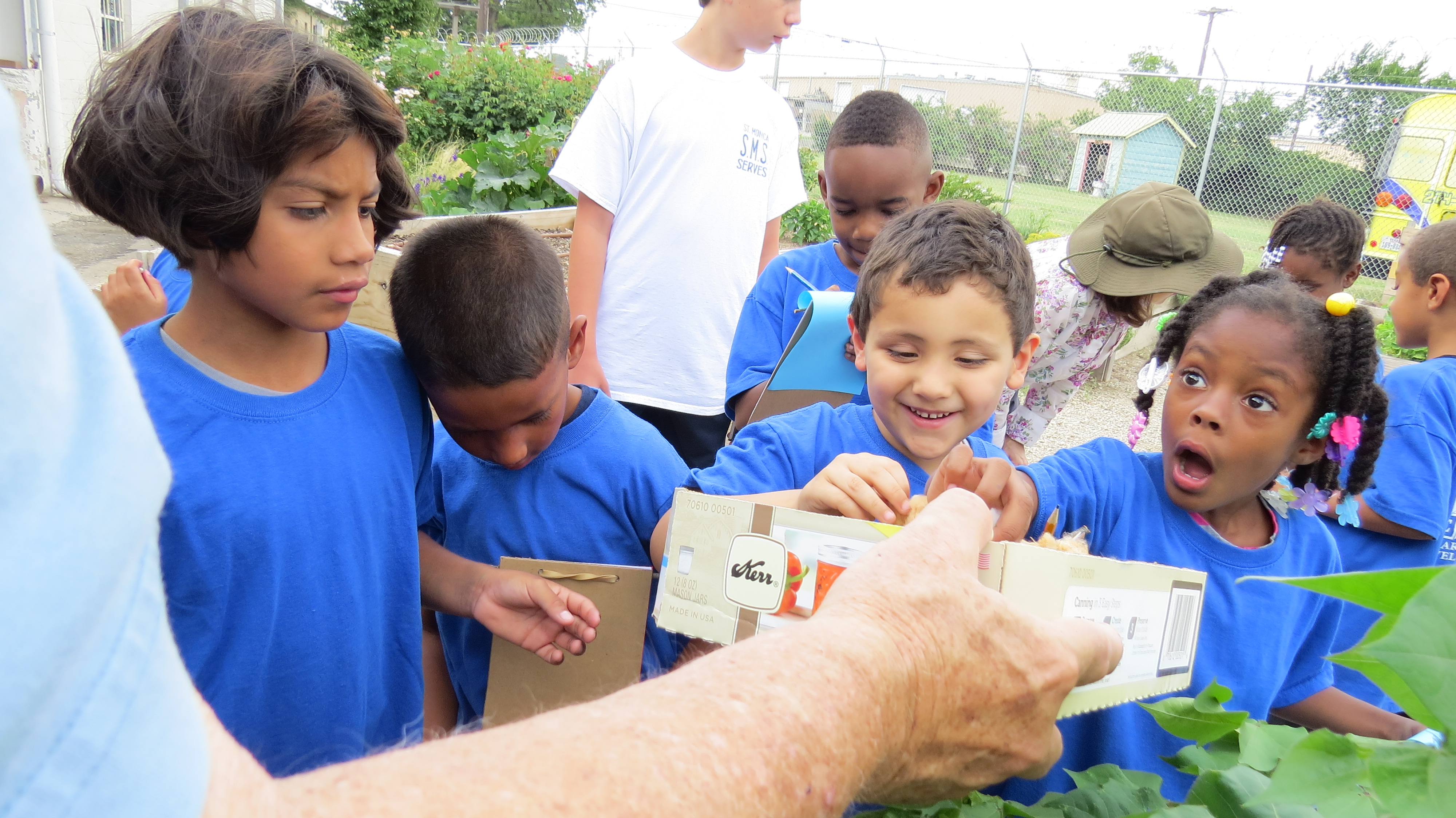
Texas Can Academy visited us Tuesday bringing 39 kids and 3 adults. Instead of the usual field trips to water parks and amusement centers the teachers wanted to build on what they are learning in class about healthy eating and nutrition.  Gardening efforts were already underway at Texas Can Academy with the students planting squash, green beans, peas, and tomatoes. They wanted to learn more about how to set up a “real garden” so a trip to our Demonstration Garden was the perfect next step. 

Keeping a Garden Journal is introduced to our students. This future gardener is writing about herbs he has just tasted, touched, and smelled.

Keeping a Garden Journal is introduced to our students. This future gardener is writing about herbs he has just tasted, touched, and smelled.

We have had 210 students visiting our gardens since the beginning of April, 2014. Our Field Trips are designed to augment the school’s curriculum.  Annette, our educational director, works with teachers to set up learning centers in our gardens taught by Dallas County Master Gardeners.

This little girl is holding up a self watering container she made.  She will be able to take this home and sprout her own seeds.

This little girl is holding up a self watering container she made. She will be able to take this home and sprout her own seeds.

 It’s rewarding to introduce these little children to the joys of gardening.  We like to remind little folks that their t-shirts and jeans are made from the produce of this plant. Note the wonder and surprise in this little girl’s face; a precious moment for us as well. Read more about cotton here.

Excitement in the garden is contagious.  Jim is showing students our cotton plants and cotton bolls.

Excitement in the garden is contagious. Jim is showing students our cotton plants and cotton bolls.

Dallas County Master Gardeners spend a good deal of time and energy with compost! Grass clippings, brown leaves, and vegetable and fruit scraps create the fertilizer for our gardens which eventually feeds us.  We hope to inspire a whole new generation of future composters.

Good compost smells good!

Good compost smells good!

Improve your compost skills by reading Cindy’s Compost tips and you will see why we call her “the compassionate composter”.  For more field trip information click on this link.  Plan your fall visit now.

Thank you Texas Can Academy for visiting us, we will see you again in the fall!

Ann and Annette

Pictures by Starla

Tips for growing and Harvesting French Tarragon.

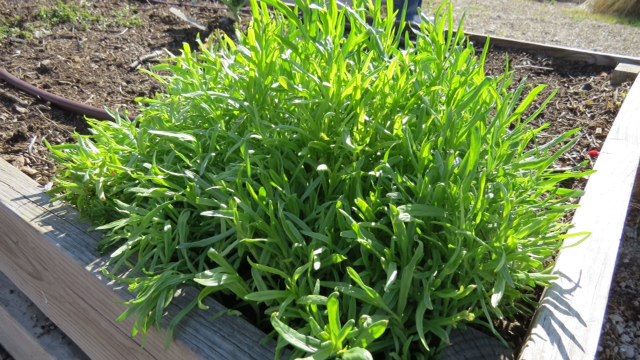
 French Tarragon at the Demonstration Garden


*Botanical name:  Artemisia dracunculus

*Sometimes referred to as “a chef’s best friend”.

*A perennial herb with long, light green leaves and tiny greenish or yellowish white flowers.  For cooking use French tarragon.  Russian tarragon has flavor vastly inferior to French tarragon.

*French tarragon grows best in warm, dry, well-aerated soils and does not tolerate wet or saturated soils.  Before planting, incorporate 1 to 2 inches of well-composted organic matter into the soil.  Work the compost into the top 6 to 8 inches of the soil.  Organic matter additions to soils help improve aeration and water drainage.

*You can’t grow French tarragon from seeds so plant transplants in well-drained soil about 2 to 3 feet apart in order to give each plant room to grow.  A full-grown plant should cover about 12 inches of soil and reach 24 to 36 inches in height.

*French tarragon prefers full sun and warm but not hot temperatures.  In areas where summer temperatures exceed 90 degrees F, (our Zone 8) partial shading of French tarragon increases plant survival.

*French tarragon should be renovated every 2 to 3 years to maintain flavor and vigorous growth.

*Mulch around the plants to retain moisture near the soil surface, since tarragon has shallow roots.

*French tarragon is generally used as a fresh herb and sprigs may be harvested as needed throughout the growing season.  A sprig is typically one-third the length of the stem.

*When growing tarragon as a perennial, which we do at the demonstration garden, shear plants to the ground after frost has killed top growth and mulch heavily before winter to ensure survival.

*To help keep your plants healthy, divide them every 3 to 4 years in the spring or fall.  New plants can grow from stem cutting or root cuttings.

*French tarragon is a source of calcium, niacin, potassium, thiamine, and Vitamin A.

Linda

French Tarragon Triumphs


Who started the rumor; French tarragon doesn’t do well in our Zone 8 climate?  Well, it certainly wasn’t any of the volunteers at the Earth Kind/Water Wise Demonstration Garden.  We know the truth!

Three years ago we planted one tiny little $1.49 French Tarragon plant in our raised bed designated exclusively for herbs.  The first year we weren’t sure if it would survive our brutal Texas summer heat.  During the second year our poor little plant was completely engulfed by an out-of-control Greek Oregano that was determined to reign over the bed.  And then, this spring we decided to take drastic measures.  Out came the oregano giving way to a much more open and friendlier environment for our determined little tarragon.  What happened next was a testament in perseverance as well as a sweet reward for “managing your herbs”.

Just take a close look at that beautiful clump of tender, fresh young spikes standing so upright and proud.  The tarragon has triumphed and we’ve been treated to a surprisingly flavorful spring treasure.

Tarragon Image 7


Today we celebrated the efforts of our work with “A Taste of Tarragon”.

Please enjoy using these recipes once you rush to the garden center and get your own French tarragon in the ground.   You’ll be rewarded!

French Tarragon-Linda's HouseTips for growing and harvesting French Tarragon. 

*Botanical name:  Artemisia dracunculus

*Sometimes referred to as “a chef’s best friend”.

*A perennial herb with long, light green leaves and tiny greenish or yellowish white flowers.  For cooking use French tarragon.  Russian tarragon has flavor vastly inferior to French tarragon.

Recipes

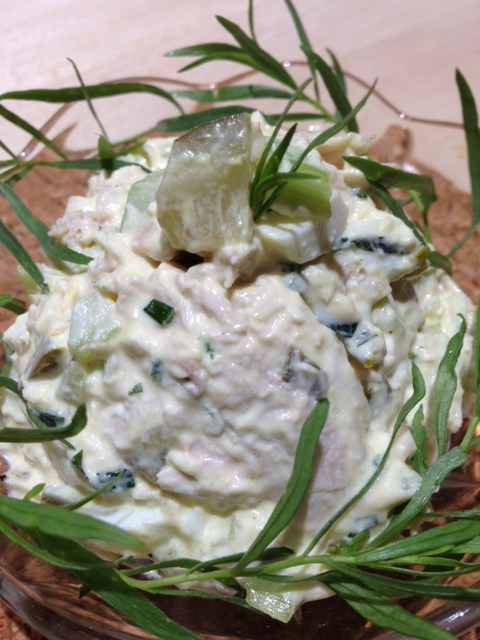
  Tarragon chicken salad

Nana’s Chicken Salad

Ingredients:

1 (3- to 4 ½-pound) chicken

¼ cup olive oil

1 teaspoon minced garlic

4 hard-cooked eggs, chopped

1 dill pickle, chopped

1 bunch celery hearts, chopped

2 tablespoons sweet relish

2 teaspoons fresh lemon balm, chopped

2 teaspoons fresh tarragon, chopped

2 teaspoons fresh basil, chopped

2 teaspoons fresh onion chives, chopped

Salt and pepper to taste

1 cup mayonnaise

1 tablespoon lemon juice

1 tablespoon tarragon vinegar

Fresh parsley and radish flowers for garnish

Directions:

  1. Boil chicken until tender.  Remove from liquid and cool.  Cut into small chunks.
  2. Combine oil and garlic.  Pour over chicken and let stand 30 minutes.
  3. Add eggs and next 7 ingredients.
  4. When ready to serve, combine salt, pepper, and next 3 ingredients.  Add to chicken and mix.  Garnish.

Yield:  4 to 6 servings

Adapted from “Morning Glories”

tarragon wafers

Tarragon Wafers


Ingredients:

1 stick butter, softened

1 cup packed brown sugar

1 teaspoon vanilla

1 egg

½ cup crushed pecans or walnuts

1 ½ teaspoons pulverized tarragon

¼ cup all-purpose flour

¼ teaspoon baking powder

¼ teaspoon salt

Directions:

  1. Cream butter, brown sugar, and vanilla.  Beat in egg.  Stir in pecans and tarragon.
  2. Sift together flour, baking powder, and salt.  Add dry ingredients to creamed mixture.  Mix well.
  3. Drop in small mounds, about 3 inches apart, onto a greased baking sheet.
  4. Bake at 375 degrees for about 8 minutes.  Cool 1 minute before removing from baking sheet.

Yield: 4 dozen wafers

Adapted from “Today’s Herbal Kitchen”

Tarragon tomatoes close up

Tarragon Tomatoes

Ingredients:

5 tomatoes

Sugar

¾ cup grated cheese of choice

½ cup breadcrumbs

½ teaspoon salt

1/8 teaspoon freshly ground black pepper

1 teaspoon fresh tarragon, chopped

Directions:

  1. Cut tomatoes in half.  Arrange, cut side up, in a shallow baking dish that is an appropriate size to snugly fit halves.  Sprinkle halves light with sugar.  Top halves with cheese.
  2. Combine breadcrumbs and remaining 3 ingredients.  Sprinkle mixture over cheese.
  3. Bake uncovered at 375 degrees for about 30 minutes.

Yield:  6 to 8 servings

Adapted from “Today’s Herbal Kitchen”

Tarragon sugar snap peas

Green Sugar Snap Peas with Tarragon

Ingredients:

¾ cup sugar snap peas, trimmed

2 tablespoons butter

2 teaspoons chopped fresh tarragon or parsley

1/8 teaspoon ground cumin

Salt and freshly ground pepper

Directions:

  1. Cook peas in salted water for 4 to 5 minutes or until crisp-tender.  Drain.
  2. Add butter and remaining ingredients.  Mix well to coat peas.

Yield: 4 servings

Adapted from “Today’s Herbal Kitchen”

Tarragon potatoes

Herb-Roasted Potatoes

Ingredients:

4 medium red skinned potatoes

2 teaspoons fresh tarragon, chopped

2 cloves garlic, minced

¼ teaspoon paprika

¼ teaspoon cayenne pepper

1 tablespoon Dijon mustard

1 tablespoon olive oil

Directions:

  1. Cut potatoes into 1-inch cubes.
  2. Mix together tarragon and remaining 5 ingredients.  Toss seasoning mixture with potatoes.
  3. Place on baking sheet and bake at 425 degrees for 30 minutes or until tender.

Yield:  4 servings

Adapted from “Today’s Herbal Kitchen”

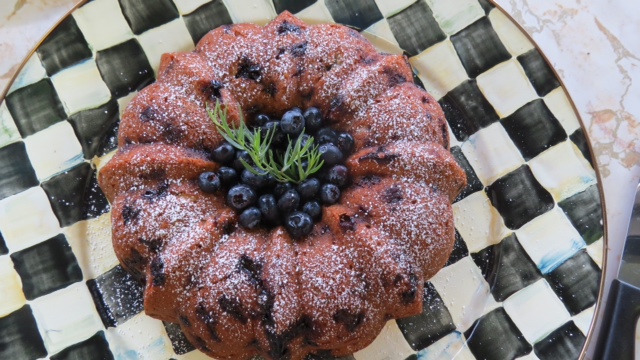
Tarragon image 002


Tarragon Blueberry Bundt Cake


Ingredients:

4 teaspoons (1 tablespoon plus 1 teaspoon) minced tarragon leaves

2 cups all-purpose flour, preferably bleached

1 teaspoon baking powder

½ teaspoon baking soda

½ teaspoon coarse salt

8 tablespoons (1 stick) unsalted butter, softened

1 cup granulated sugar

2 eggs

1 teaspoon vanilla extract

1 cup sour cream

2 cups blueberries (fresh or thawed)

Garnish

Confectioners’ sugar; fresh blueberries (optional)

Directions:

  1. Preheat oven to 350 degrees.  Grease a 10-cup Bundt pan.
  2. In a medium bowl, thoroughly whisk together tarragon leaves, flour baking powder, baking soda, and salt; set aside.
  3. In a large bowl, beat butter and sugar on high speed until light and fluffy.  Beat in eggs, 1 at a time, until mixture is fluffy and well-blended.  Beat in vanilla.  With the mixer on low speed, alternately beat in flour mixture and sour cream, beginning and ending with flour mixture and beating just until blended.  Gently fold in blueberries with a rubber spatula.  Spread batter into prepared pan.
  4. Bake cake for 55 minutes to 1 hour, until top springs back when lightly pressed.  Let cool 5 minutes in the pan, then turn out onto a wire rack to cool completely.
  5. To serve, dust cake (it will be dark) with confectioners’ sugar, and mound berries in the center if desired; slice along and/or between the ridge lines.

Yield: 12 to 14 servings

Adapted from “Morning Glories”

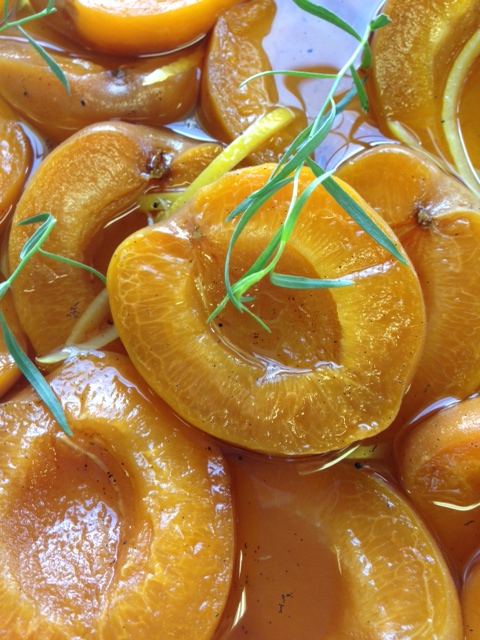
Tarragon-apricots

Apricots Poached in Tarragon Syrup

Ingredients:

2/3 cup sugar

2 pieces lemon zest, cut into thin strips

1 vanilla bean, split lengthwise

6 large sprigs of tarragon, lightly crushed

12 apricots, halved and pitted

1 tablespoon tarragon vinegar or lemon juice

Vanilla ice cream or thick, plain yogurt, to serve

Directions:

  1. Put the sugar and 1 ¼ cups water in a wide saucepan and heat slowly to dissolve the sugar.  Add the strips of lemon zest, the vanilla bean, and tarragon sprigs.  Bring to a boil.
  2. Add the apricots and simmer slowly for about 5 minutes until soft.  Remove the pan from the heat.  Stir in the tarragon vinegar or lemon juice and let cool.
  3. Serve with ice cream or yogurt.

Yield:  serves 6

Adapted from “Today’s Herbal Kitchen”

Plant Sales and Church Potluck Dinners


If you think about it, a plant sale is a lot like a church potluck dinner.  You never know what you’re going to have, the good stuff goes fast, and you get to try new things.  And it’s all homemade, except for the tubs of fried chicken.

Our Sarah outdid herself organizing the Demonstration Garden’s annual plant sale on May 22, held each spring when the Demonstration Garden volunteers host the Master Gardener monthly meeting.  The speakers giving announcements didn’t start until 11:30 a.m., but the early birds were scrambling long before that for the best deals.

Plant sale cashiers

And what deals they found: About 33 bright cardstock plant tags in Elizabeth’s calligraphy hovered over the “Have to Have It Plants” like Purple Coneflower, Lyre Leaf Sage, and White Autumn Clematis.  “Garden Standbys” like Rock Rose and Red Yucca enticed shoppers.  And then there were the “You Don’t Find That Very Often Plants” including horseradish, Jewel of Opar, and Rose Campion.

Plant sale sign

Of course, garden advice was dished out with each purchase.  Want hummingbirds?  Flame Acanthus must be in your basket.  Malabar spinach? Well, it’s sort of like spinach, but it will take hot weather.

Now you don’t just decide to have a plant sale the week before.  This is a multi-month process for our Sarah to keep up with.  In March, eager plants are divided and seeds started.  Then nursemaids take these little guys home to pamper them.  Gardeners also raid their own yards for contributions. We even had many lovely plants donated by a friend of the Demonstration Garden, Master Gardener Margaret Burnette.  Then there’s the “I Don’t Know Exactly What’s Coming In” factor, as Sarah was inundated days before the sale with last minute “I’m Bringing….” emails.

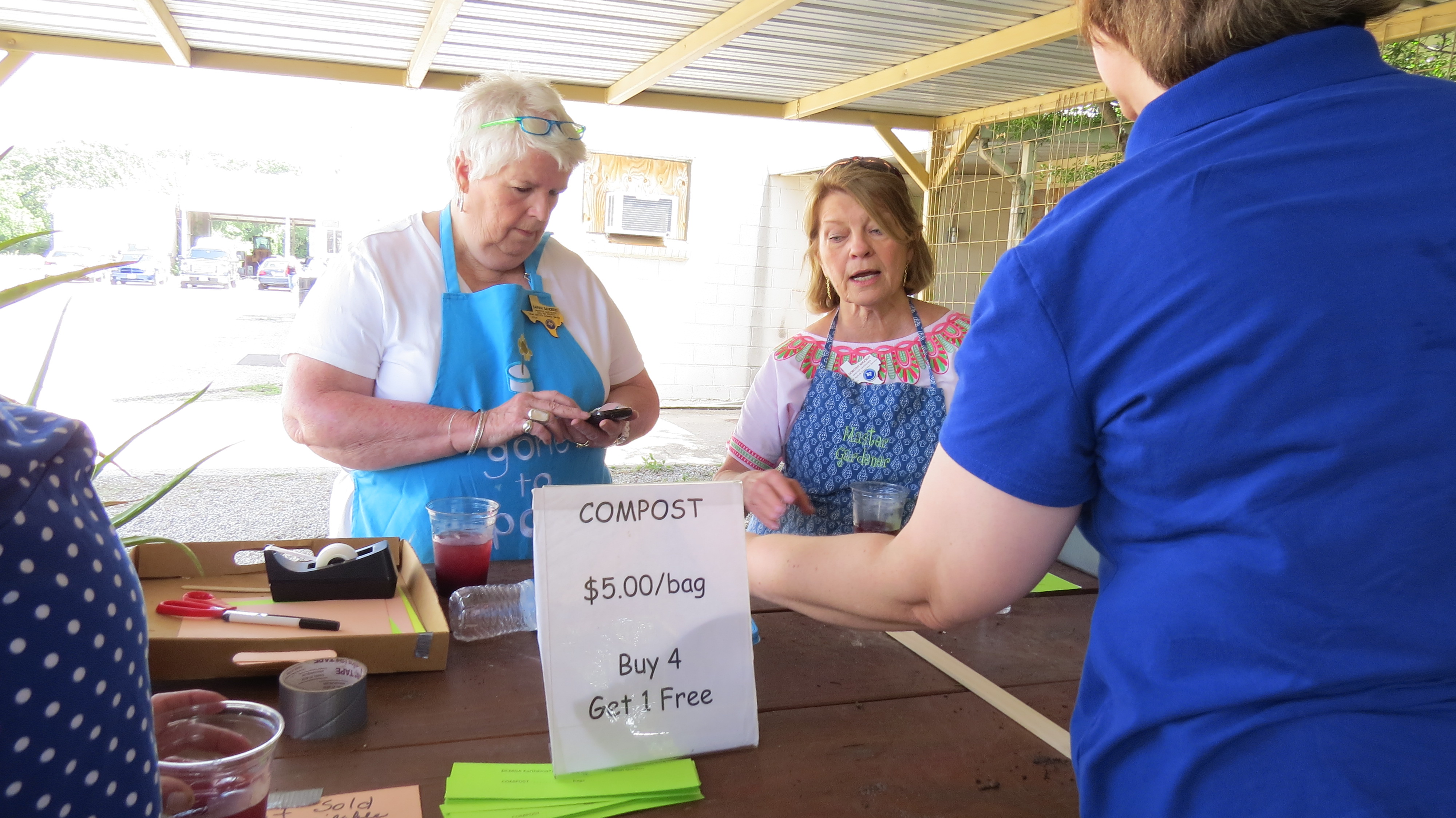
This was a Plant Sale with added attractions.  Shoppers could also bring home some of the Demonstration Garden’s magical compost or worm castings.  Cindy has the knack of coaxing compost out of a mound of clippings and leaves, and shoppers knew to stock up.

Dallas County Master Gardener with Plant Sale Specimens

Dallas County Master Gardener with Plant Sale Specimens

It’s a year until the 2015 Demonstration Garden Plant Sale Extravaganza, and I’m already making my shopping list.

Elizabeth

Pictures by Starla