Linda’s Pond

I found a little oasis last week even though the temperature was 97 degrees.  My friend and Master Gardener, Linda, has a beautiful little pond outside her kitchen doors.

Linda's Pond

Linda’s Pond

Funny thing, this is a garden of greens relying on shape and texture rather than the usual riotous August blooming flowers. Note: no periwinkles!

Linda's Japenese Maple at the Pone

The garden is built of Holly Fern, Japanese Maple, Liriope,  Crinum, small fig ivy and the rounded leaves of Leopard Plant. Linda’s Leopard Plant, Farfugium japonicum ‘Giganteum’, thrives next to the water.

Cookbook August 1 2015 077

Koi darted about. What originally drew me outside was seeing one of the Koi leap into the air.

Koi at Linda's

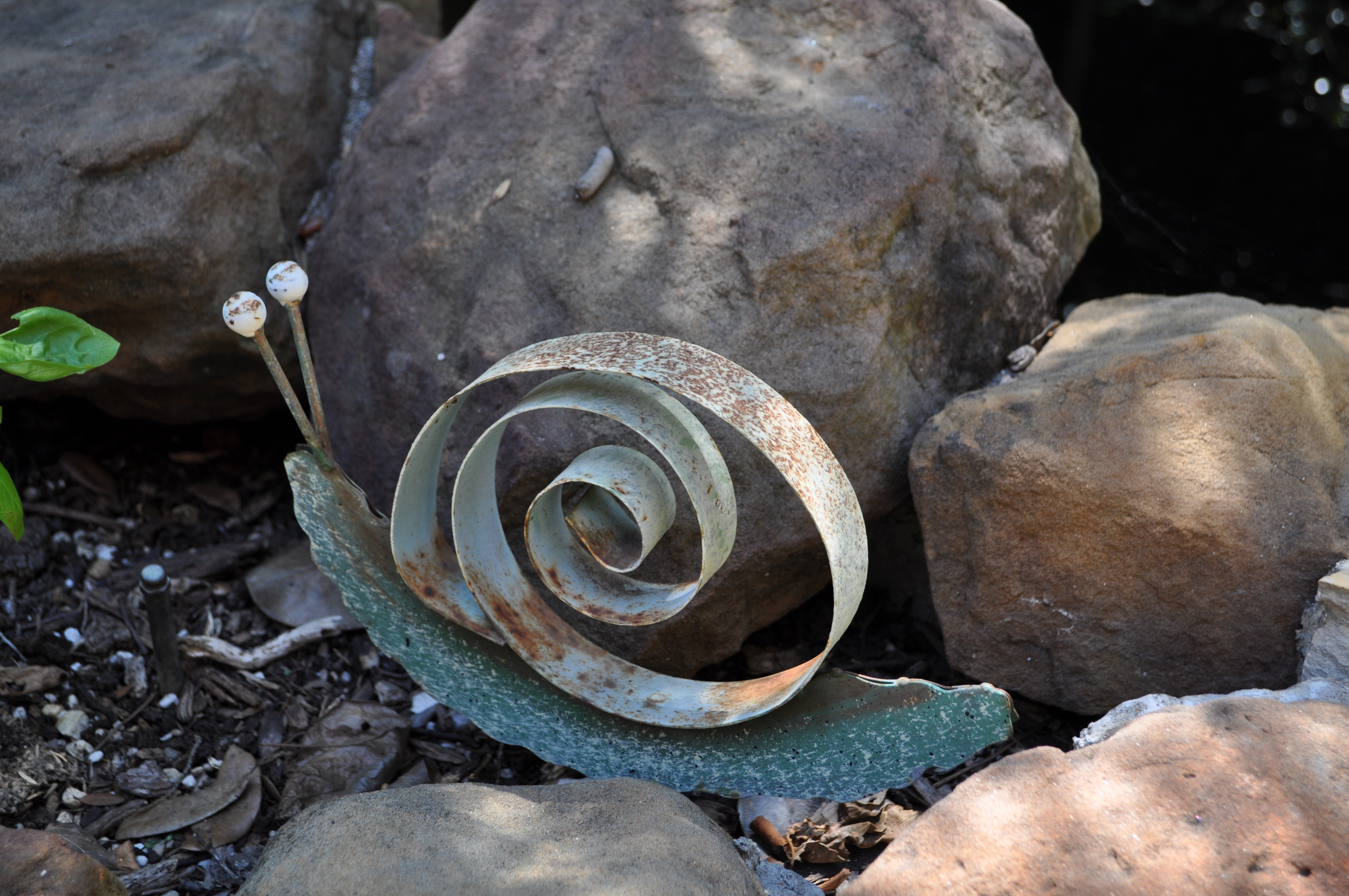
Linda told me a story of a Koi who jumped out of the pond and landed at the foot of a snail.

Linda's pond snail

Luckily she was there and scooped him up and back into the pond. My only question was why would anyone leave this little oasis?

Ann

Pictures by Ann

Other plants along Linda’s pond: Yaupon Holly and Little Gem Magnolia for background color, Star Jasmine on the fence, Hostas, and ‘White by the Gate’ Camellia in the beds and of course a few herbs: pineapple sage, lemon verbena and basil.

Compost vs Mulch, What’s the Difference?

Sometimes, as anyone learning a new language can tell you, even words that have different dictionary meanings can take on new meanings. For gardeners the terms compost and mulch are two terms that are sometimes used interchangeably.. The difference between the compost and mulch can be quite confusing, especially for the novice gardener, since their uses can overlap. Yet, for the sake of your plant’s and soil’s health, there are differences.

Technically speaking, compost is organic matter that has been decomposed, while mulch is a layer of organic or inorganic matter placed on top of the soil as a protective cover. A commenter, RobertZ6, on gardenweb.com defined compost as a ‘What’, while mulch is a ‘Where.’

So what are some of the main functions of the two and how do they differ:

Compost: Compost is a biologically active material resulting from decomposition of organic matter. Bacteria, fungi, soil insects and others help with this decomposition. In general, there are two different methods of making compost: 1) the “fast” method consisting of the ratio of two parts brown/dry material to one part green/juicy material, plus moisture, plus aeration/turning the pile; and 2) the “slow” method where leaves, grass, vegetable refuse, etc. are allowed to build up in a pile and slowly over time decomposition takes place and compost results.

Jane and Cindy at Work Making Compost-Fast Method!

Jane and Cindy at Work Making Compost-Fast Method!

Compost is often considered to be a soil conditioner, rather than a fertilizer since the actually nutrient value of compost can be so variable. Though the fertilizing component of compost is small, www.planetnatural.com says that “compost can aid plants in many ways quite independent of its nutrient content. Because it improves soil structure, adds beneficial microbes, and boosts cation exchange capacity (CEC), compost improves the mobility of air, water and nutrients in the soil, all of which make nutrients more readily available to plants.” Compost that is fully decomposed/”finished” is called humus. It is dark brown, crumbly, with no distinguishable features, and has a sweet, pleasant smell.

Mulch: Mulch can be either organic or inorganic and is spread over the top of the soil to cover it. Examples of organic mulch include leaves, straw, and wood chips. Inorganic mulches include rubber, gravel, and landscape fabric. The purposes of mulch include suppressing weeds, moderating soil temperature, conserving water, maintaining a porous surface, and helping to prevent erosion. The use of organic mulch can improve the soil structure as it gradually decomposes over time.

Chopped Up Native Tree Trimmings and Leaves Can Be Used as Mulch

Chopped Up Native Tree Trimmings and Leaves Can Be Used as Mulch

So… where does the confusion in terms and usage for some gardeners lie? Two main questions come to mind:

1) Can compost can be used as mulch?   The answer to this question is “yes.” It is possible to add a layer of only compost to the top of the soil and use it as mulch. In fact, in the case of using organic mulch such as wood chips in a bed, the layer of wood chips closest to the soil will gradually break down into compost over time. Eventually it will be necessary to add more mulch to a bed or mulched pathway to account for this. One of the Master Gardeners says that she uses her unfinished, not completely decomposed, compost as mulch in her beds. Placing a 1-3 inch layer of this unfinished compost on top of the soil as mulch would enable the mulch to break down quicker into compost. Earthworms will gradually move the finished compost down into the soil.

Many gardeners however never have enough finished (or even unfinished) compost to use pure compost as mulch on top of the soil. Plus the cost of purchasing bags of compost to do this would be prohibitive for many. Therefore most gardeners choose to work their finished compost into the soil and top dress the soil with mulch.

2) Can mulch (for example shredded wood chips) be tilled into the soil? The answer to this is both yes and no.

No: Though it might seem as if this would “cut out the middle man” (i.e. the need to make finished compost), in general it is usually not recommended to incorporate shredded wood chips, or even un-composted leaves, into your soil.

To understand why, it is necessary to know a little about the way that decomposition of organic matter takes place and also the nutrients that plants need. To grossly over-simplify a very complex subject, plants need three primary nutrients (nitrogen (N), phosphorus (P), and potassium (K) plus thirteen secondary and micronutrients nutrients such as magnesium (Mg) and iron (Fe) to grow well. Most soils contain at least some of these nutrients. However many soils in Dallas County have a deficiency in nitrogen. A soil test can confirm whether this is true on your property.

This deficit of nitrogen in many Dallas County soils is important because in order to decompose organic material, the bacteria and fungi, which are the first organisms responsible for decomposition, also need nitrogen to feed on in order to live. When a large amount of un-decomposed material, such as wood chips, is incorporated into the soil, there is an increase in the number of bacteria and fungi needed to break it down. Since the bacteria and fungi need nitrogen as part of their diet, these microbes will start using up what is present in the soil. Since Dallas County soils are often deficit in nitrogen, sometimes not enough nitrogen is left in the soil to feed both this increase in soil microbes and the plants. This in turn can leave plants starved of nitrogen, one of their essential nutrients. Plants that are nitrogen deficient often have pale green or yellow leaves and exhibit poor growth.

              Yes: On the other hand, it is possible that the answer to the question of whether mulch can be tilled into the soil, can be answered “yes.” Though not generally recommended, one can till in mulch, even shredded wood chips or live oak leaves which do not readily decompose, into the soil if certain factors (time and/or supplemental nitrogen) are taken into consideration:

Time: If enough time is available to let a bed lie fallow/unplanted for a season or even one or two years, over time the mulch will gradually decompose into compost.  This can be compared to the “slow” method of making compost.

Supplemental nitrogen: An article in www.motherearthnews.com states that in an apple orchard, it was found that “a high-fiber diet of wood materials is exactly what many soils need. Rotted bits of wood persist as organic matter for a long time, enhancing the soil’s ability to retain nutrients and moisture, which results in bigger, better crops.” However a very high nitrogen source, in that case blood meal, 12-0-0, was also added at the same time as the apple trees were planted. The addition of supplemental nitrogen offset the bacteria’s and fungi’s taking it from the soil and provided nitrogen to the plants.

There is an ancient gardening technique called hugelkultur (which in German means “mound culture”) that makes use of using woody material, even logs, to make beds. According to those who use this technique, these raised beds retain moisture (supposedly needing only very infrequent watering,) improve soil fertility, and improve drainage. In this technique a mound of logs and twigs is built up, and finished compost, manure, kitchen scraps, etc. are packed into the spaces between the woody materials. A layer of top soil is placed on top of the mound and planted. There are several articles and videos on the web showing how to construct a hugelkultur bed.

A few years ago, several community gardens and individuals became interested in trying hugelkultur in the Dallas area. If you know of someone who has tried it, please share their results. We gardeners all learn from one another.

Though most of this article presents an extremely over-simplified explanation of the differences between compost and mulch and why it is important for your plant’s and soil’s health, hopefully the reasoning behind what is taking place will help you to understand the difference and help you grow the healthiest plants possible.

Carolyn

Pictures by Starla


School Days, Time to Schedule 2015 Field Trips!

Welcome to the RAINCATCHER’S GARDEN OF MIDWAY HILLS

A One-acre Garden Designed for Students to Learn about Nature

West Dallas Community School Kids Enjoying a Field Trip to The Raincatcher's Garden

West Dallas Community School Kids Enjoying a Field Trip to The Raincatcher’s Garden

In Our Garden Classroom:

Hold a Chicken

Smell an Herb

Find a Caterpillar

Plant a Seed

Taste a Vegetable Warm from the Sun

Feed a Compost Pile

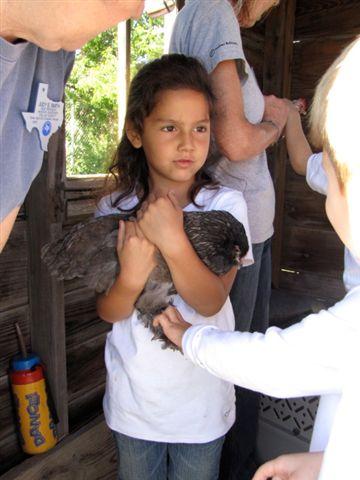
Students are taught by Dallas County Master Gardeners, Gardening Experts with Texas A&M AgriLife Extension using Junior Master Gardener ® Curriculum aligned with Texas standardized testing.


Above: Field Trip and Master Gardeners and Visiting Chickens

Above: Field Trip and Master Gardeners and Visiting Chickens


Schedule a Free Field Trip by contacting dallasgardenbuzz@gmail.com or clicking on the School Field Trip Request Form.


Location:  THE RAINCATCHER’S GARDEN OF MIDWAY HILLS

11001 Midway Road, Dallas (between Forest & Royal Lanes)


 We’ll leave the Garden Gate Open for You

 More information about our Free School Field Trips: page one, page two

Pick a New Landscape Tree

When August does its best to scald North Texas, one is always amazed at the cooling effect of shade. Full sun can be tolerated only to quickly check the mail or move the hose, but one can actually enjoy a shady backyard with temperatures in the nineties.

Gardeners have long done the Tree Shade Two-Step, a dance performed in early morning hours. The only rule is to follow the welcome shade for work in the garden as the sun climbs higher in the sky.

In planning the Raincatcher’s Garden of Midway Hills, we were blessed with the space to plant five demonstration trees. Trees can provide shade, of course, but when correctly chosen can enhance the aesthetics of your house and increase the value your home as well. We also wanted to pick trees that showed alternatives to the monoculture of red oaks and live oaks planted in Dallas.

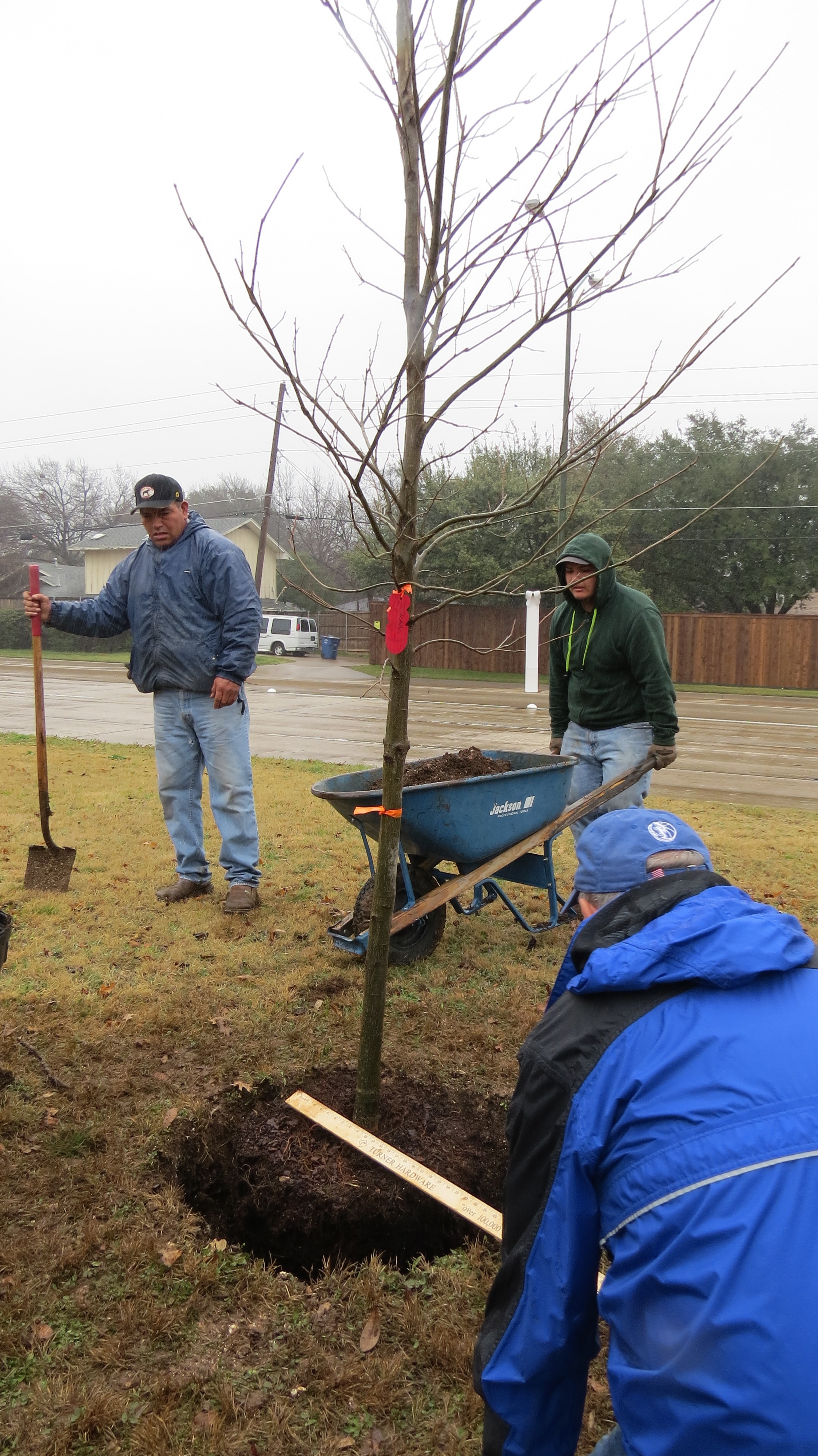
Dallas County Master Gardener Eric Larner and I worked in January to pick a Chinquapin Oak, Mexican or Monterrey Oak, Lacey Oak, Cedar Elm, and an ‘Autumn Gold’ Ginkgo.

January Tree Planting

January Tree Planting

Oak wilt is a lethal fungal disease that has killed hundreds of thousands of live oaks and Texas red oaks in Texas. Red oaks and live oaks, probably the most planted trees in Dallas, are highly susceptible to oak wilt. White oaks, however are more resistant to the fungus.

Three of the new trees planted this spring fall in the white oak family: the Chinquapin, Mexican or Monterrey, and Lacey oaks.

The Chinquapin oak, sometimes spelled Chinkapin, Quercus muehlenbergii is tough enough to thrive in the neglect of a nearby post office parking lot. The Chinquapin has distinctive dark-green, saw-tooth leaves. Its narrow, rounded shape and resistance to diseases and pests endears the tree to homeowners. The Chinquapin is a Texas native and designated as a Texas Superstar by Texas A&M AgriLife Extension. The tree should be planted in full sun and will grow to 50-60 feet tall and 30-50 feet wide.

Chinquapin Oak Tree

Chinquapin Oak Tree

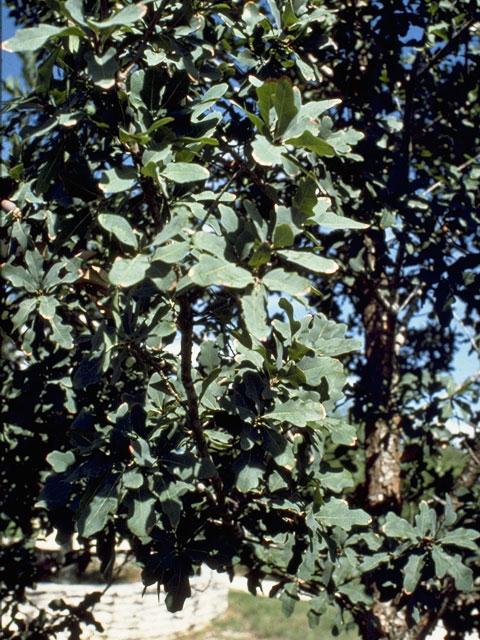
The Mexican white oak or Monterrey oak Q. polymorpha is another tough, drought resistant tree.   The new growth is pinky-peach color, darkening to thick, leathery blue-green leaves. If cold enough, the leaves turn bronze in the fall. (In mild winters, the tree could retain some leaves.) The Texas native grows into an open spreading shape 35-45 feet tall and 25-40 feet wide in full sun.

Mexican White Oak or Monterrey Oak

Mexican White Oak or Monterrey Oak

The Lacey oak Q. laceyi is a gem in the oak family. The tree matures into a small, rounded shape 20-30 feet tall and 20 feet wide. The leaves are peach-colored when young, maturing into a dusky bluish-gray (smoky) color above and a lighter color on the underside. Another Texas native, the tree is extremely drought resistant when established and gives yellow fall color.

Lacey Oak

Lacey Oak

With the cedar elm Ulmus crassifolia, we wanted to include a tree outside of the oak family that is a reliable beauty in the landscape. Instead of a ruler straight leader, cedar elms are known to adopt a wonderful irregular shape. The Texas native is deciduous, its small leaves showing yellow fall color. It flowers in late summer to fall, unlike most spring blooming trees. Cedar elms tolerate our heavy clay soil and grow to be 40-70 feet tall and 30-50 feet wide in full sun.

Cedar Elm Planted at The Raincatcher's Garden

Cedar Elm Planted at The Raincatcher’s Garden

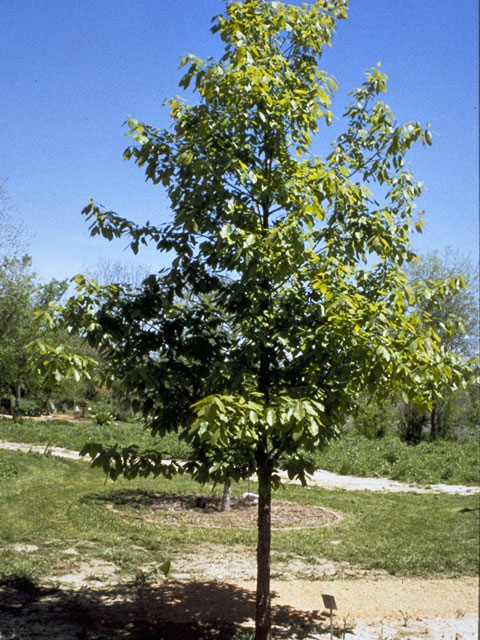
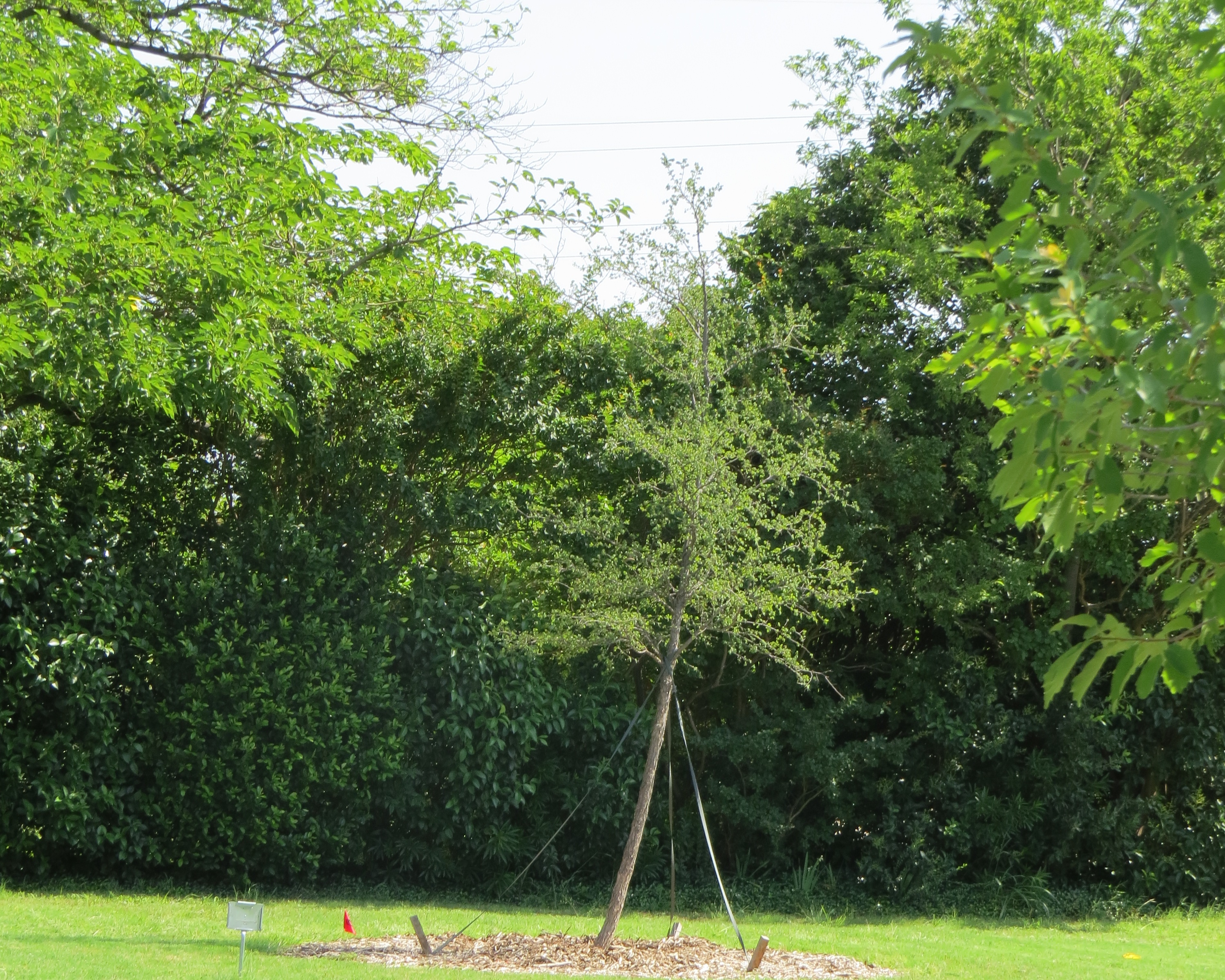
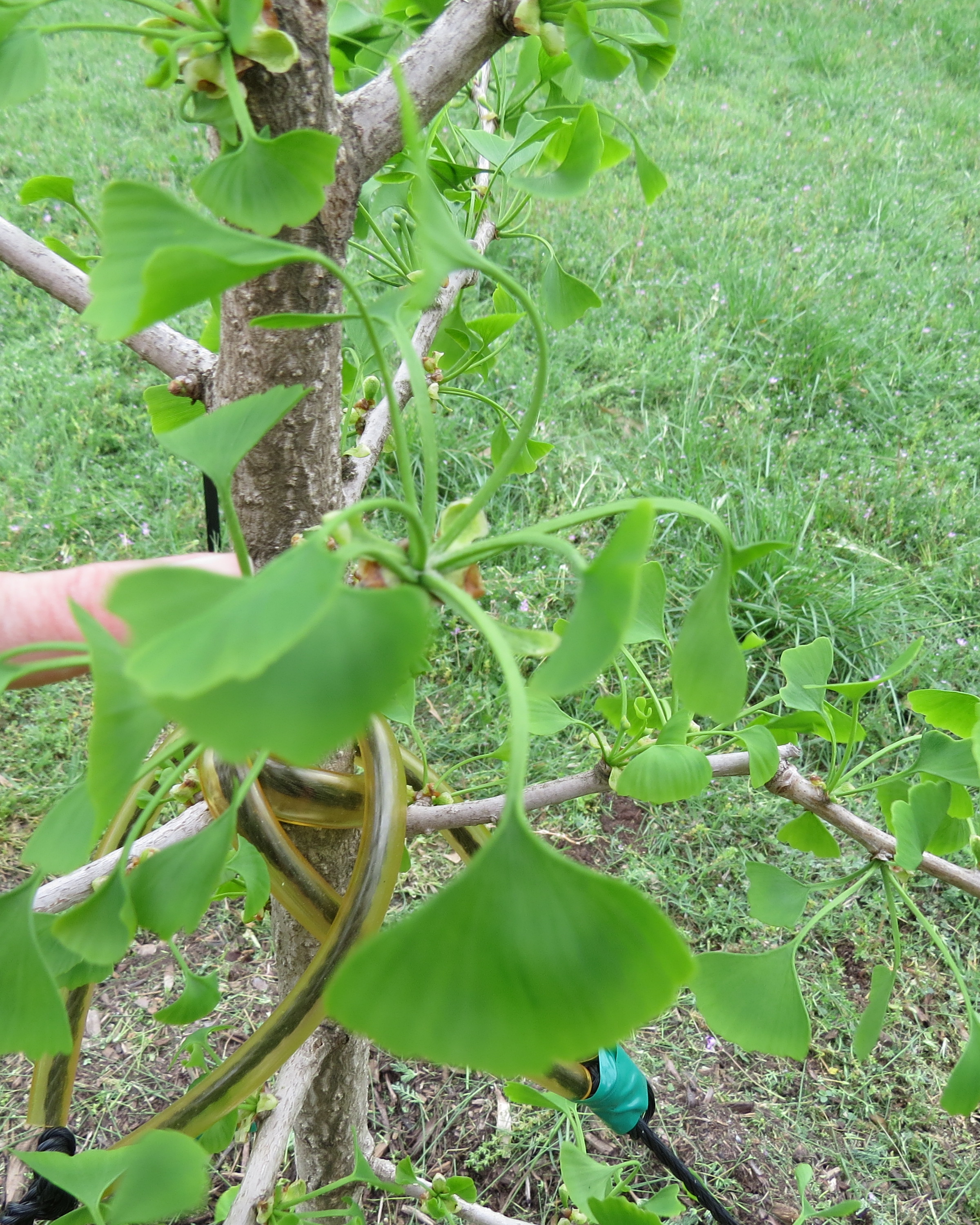
Few trees are as stunning as a ginkgo Ginkgo biloba in the fall. It shimmers with brilliant yellow leaves, then drops them all at once. We planted the aptly named ‘Autumn Gold.’ The gingko is by far the most unusual of our tree quintuplet. Its fan- shaped leaves were part of the prehistoric landscape 200 million years ago, and the tree is often referred to as a living fossil. The gingko is found only in two small areas of China, and seeds are considered a delicacy in Japan and China. Plant only male trees grown from cuttings or grafted; female trees have an offensive smell! (Named varieties are male trees.) A gingko will slowly grow into an oval shape 50 feet tall and 30 feet wide. The trees have no pest problems.

Ginkgo Tree 'Autumn Gold'

Ginkgo Tree ‘Autumn Gold’

 Come see our new trees at the Raincatcher’s Garden and pick a new favorite for your yard.

Elizabeth

Pictures by Starla

Monterrey Oak and Lacey Oak pictures by http://www.wildflower.org

A Texas Connection

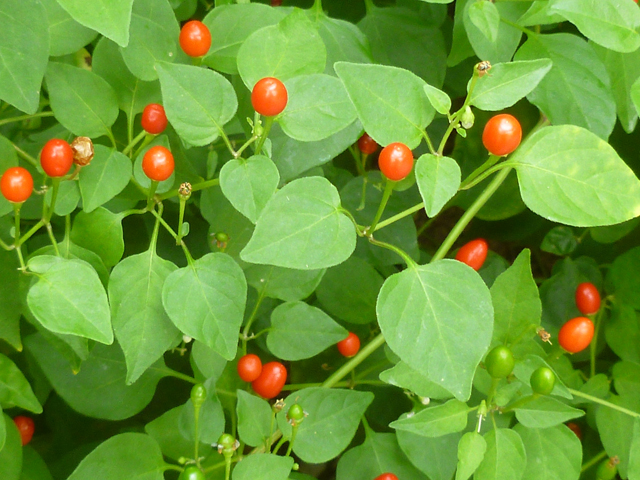
Capsicum annuum var. glabriusculum

Capsicum annuum var. glabriusculum

Most people know of Thomas Jefferson (1743-1826) as the main author of the Declaration of Independence and that he was the third president of the United States.   However we gardeners know that he was also an avid gardener who collected and grew as many as 300 cultivars, representing 99 species of vegetables and herbs, during his 15 year retirement at Monticello. However, did you know that one of the experimental vegetables that he grew has a Texas connection?

Around 1812, Capt. Samuel Brown, who was stationed in San Antonio, sent Jefferson seeds of a bird pepper, Capsicum annuum var. glabriusculum. According to the seed packet from Monticello, Capt. Brown said that the dried peppers were as “essential to my health as salt itself.” He went on to say “The Spaniards use it in fine Powder & seldom eat anything without it. The Americans…make a pickle of the green Pods with Salt & Vinegar which they use with Lettuce, Rice, Fish, etc.”

Jefferson planted what he called “Capsicum Techas” in pots at Monticello and hoped it would be a hardy variety of pepper at his home. He also sent the seeds to a Philadelphia nurseryman, Bernard McMahon, who sold it as an ornamental pepper in Pennsylvania. Food historian William Woys Weaver said that “Old Philadelphians used the potted peppers as a winter table ornament or as window sill plants. The peppers themselves were used to make pepper vinegar, pepper sauce, or pickles.”

Though Jefferson called the pepper “Capsicum Techas,” like many plants it has several common names. One of the common names for the pepper is McMahon’s Texas Bird Pepper, but it also goes under the names of Pequin, Tepin, Petin, Chiltepin, Bird’s Eye Pepper, and Turkey Pepper. The Aztecs called it “chilli” and many people know it by another common name, Chili pequin.

Texas Bird Pepper is the only pepper native to North America. In fact, it is considered to be the official wild pepper of Texas. It gets its name “bird pepper” from the fact that birds, who are not sensitive to the extremely hot taste of capsaicin, love to eat the fruits, which are high in Vitamins A and C. The birds then distribute the seeds through their droppings.

Chili Pequin or Texas Bird Pepper, Common Names

Chili Pequin or Texas Bird Pepper, Common Names

The plant itself is about 12 inches tall and has a compact shape with bright green pointed leaves. The tiny (about ¼”), sparkling round or bullet-shaped red fruits were described by Jefferson as “minutissimum.” But don’t let their miniscule size fool you. They are hot! Very hot! Often 7-8 times hotter on the Scoville Scale than jalapenos’ 30,000-60,000 units.

Though the peppers originated in Central America and are considered reliably perennial in plant hardiness zones 9 through 11, here in Dallas they will often freeze to the ground but come back from the roots once the temperature warms. Because of their ornamental look, they also make a good container plants and can be protected in a greenhouse during the winter. Unlike many peppers that require full sun, Texas Bird Peppers also do well in part shade, though they do get a little leggy. They have few diseases, are drought tolerant, and need little fertility.

They can be used in any recipe requiring hot peppers—but remember to add just one or two little peppers, as their heat can go a long way. One of the most popular uses for the peppers is to make pepper vinegar. The commercial hot sauce brand Cholula lists bird peppers as one of its ingredients. Recipes for pepper vinegar can be easily found on the internet.

So, if you are looking for a very pretty plant with an interesting history, remember the Texas Bird Pepper. Just don’t forget: they are hot!

Carolyn

Pictures Courtesy of http://www.wildflower.org

Chili Pequin is beckoning butterflies at The Raincatcher’s Garden. We have two!

Fried Green Tomatoes

Green Tomatoes for Sale at Local Farmer's Market

Green Tomatoes for Sale at Local Farmer’s Market

Fried Green Tomatoes

Have you failed to savor this traditional Southern favorite? If so, you may want to reconsider and start frying a mess of these beauties while we’re right at the peak of spectacular summer produce.   Thanks to novelist, Fannie Flagg, for modeling her book Fried Green Tomatoes at the Whistle Stop Café, Random House 1987, after Birmingham’s Irondale Café, which her great aunt operated for nearly 40 years. Owner, Jim Dolan says his crew cooks about 135 pounds of fried green tomatoes a day. The book and movie helped the dish’s popularity – visitors come from all over the country to sample this Southern specialty.

The first recipe is from Southern Living 2003 Annual Recipes and is considered a classic. However, you might want to give the second one a try, also from Southern Living Annual Recipes, June 1999. The point is, a good southern recipe will make you a believer!

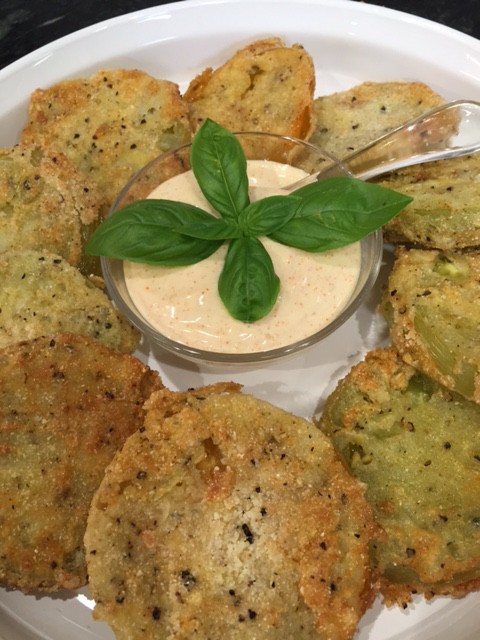
Fried Green Tomatoes with Aioli Sauce

Fried Green Tomatoes with Aioli Sauce

Golden Crispy Fried Green Tomatoes 

Ingredients:

1 large egg, lightly beaten

½ cup buttermilk

½ cup all-purpose flour, divided

½ cup cornmeal

1 teaspoon salt

½ teaspoon pepper

3 medium-size green tomatoes, cut into 1/3 inch slices

Vegetable Oil

Salt to taste

Directions:

  1. Combine egg and buttermilk; set aside.
  2. Combine ¼ cup flour, cornmeal, 1 teaspoon salt, and pepper in a shallow bowl or pan.
  3. Dredge tomato slices in remaining ¼ cup flour; dip in egg mixture, and dredge in cornmeal mixture.
  4. Pour oil to a depth of ¼ to ½ inch in a large cast-iron skillet; heat to 375˚. Drop tomatoes, in batches, into hot oil, and cook 2 minutes on each side or until golden. Drain on paper towels or a rack. Sprinkle hot tomatoes with salt.


Blue Willow Fried Green Tomatoes

From the Southern Living Test Kitchen, this recipe garnered its best marks. The Blue Willow Inn reports that their fried green tomatoes are consumed like there’s no tomorrow in Social Circle, Georgia. 

Ingredients:

1 ½ cups self-rising flour, divided

1 ½ cups buttermilk

2 eggs

1 teaspoon salt, divided

1 teaspoon pepper, divided

3 green tomatoes, each cut into 4 slices

2 cups vegetable oil

Directions:

  1. Whisk together 1 tablespoon flour, buttermilk, eggs, ½ teaspoon salt, and ½ teaspoon pepper in a small bowl.
  2. Stir together remaining flour, ½ teaspoon salt, and ½ teaspoon pepper in a shallow bowl.
  3. Dip tomato slices in buttermilk mixture; dredge in flour mixture.
  4. Heat oil in heavy 10-inch skillet to 350˚. Fry tomato slices 2 ½ minutes on each side or until golden.
  5. Drain tomato slices on paper towels. Sprinkle with salt. Serve fried tomatoes immediately.

Yield: 6 servings

Note: For an extra treat, make up a batch of Spicy Aioli and use as a dipping sauce for these yummy gems.

Spicy Aioli

Ingredients:

2/3 cup mayonnaise

2 cloves garlic, pressed

1 tablespoon lemon juice

1 teaspoon Dijon mustard

½ teaspoon cayenne

Directions:

  1. Mix mayonnaise with garlic, lemon juice, mustard, and cayenne.
  2. Cover and chill to store.

Yield: Makes 2 cups

Linda

Pictures by Ann and Linda


It’s Fall at the Garden, Maybe you Didn’t Realize

Celebrity Tomatoes on the Vine

Celebrity Tomatoes on the Vine

It’s been a good year for tomatoes in Dallas. Dorothy, one of our veggie garden experts, talks about her tomatoes as if they were her best friends. “The Celebrities, the Cherokees and Zebras have been fabulous. I couldn’t pick a favorite.  The Zebras and Cherokees are heirloom, which usually just give me one good round, but with this weather, they have stayed covered. ”

So imagine my surprise when Dorothy told me to radically cut back my tomato plants now and prepare for fall!  She leaves only the limbs bearing large tomatoes, all others are cut to a height of 3 feet.  The smaller tomatoes literally go into the skillet to become fried green tomatoes.

She recommends foliar feeding with fish emulsion every two or three weeks to help the  tomato plants rebound for fall.

Trash the  dead or diseased tomato plants,  they are not worth saving.

What else is Dorothy doing about fall?  Seeds of Carrots, Beets, Kale, Contender and Gold Rush Green Beans, and Oats are being planted at The Raincatcher’s Garden. A few new tomato transplants will be added and  hope abounds for the tomato plants who endured the harsh pruning.

When it gets a little cooler; lettuce, spinach and snow pea seeds along with broccoli and Brussel sprout transplants will be added.

Thank you, Dorothy, now what time is that dinner of friend green tomatoes?

Ann

Pictures by Starla
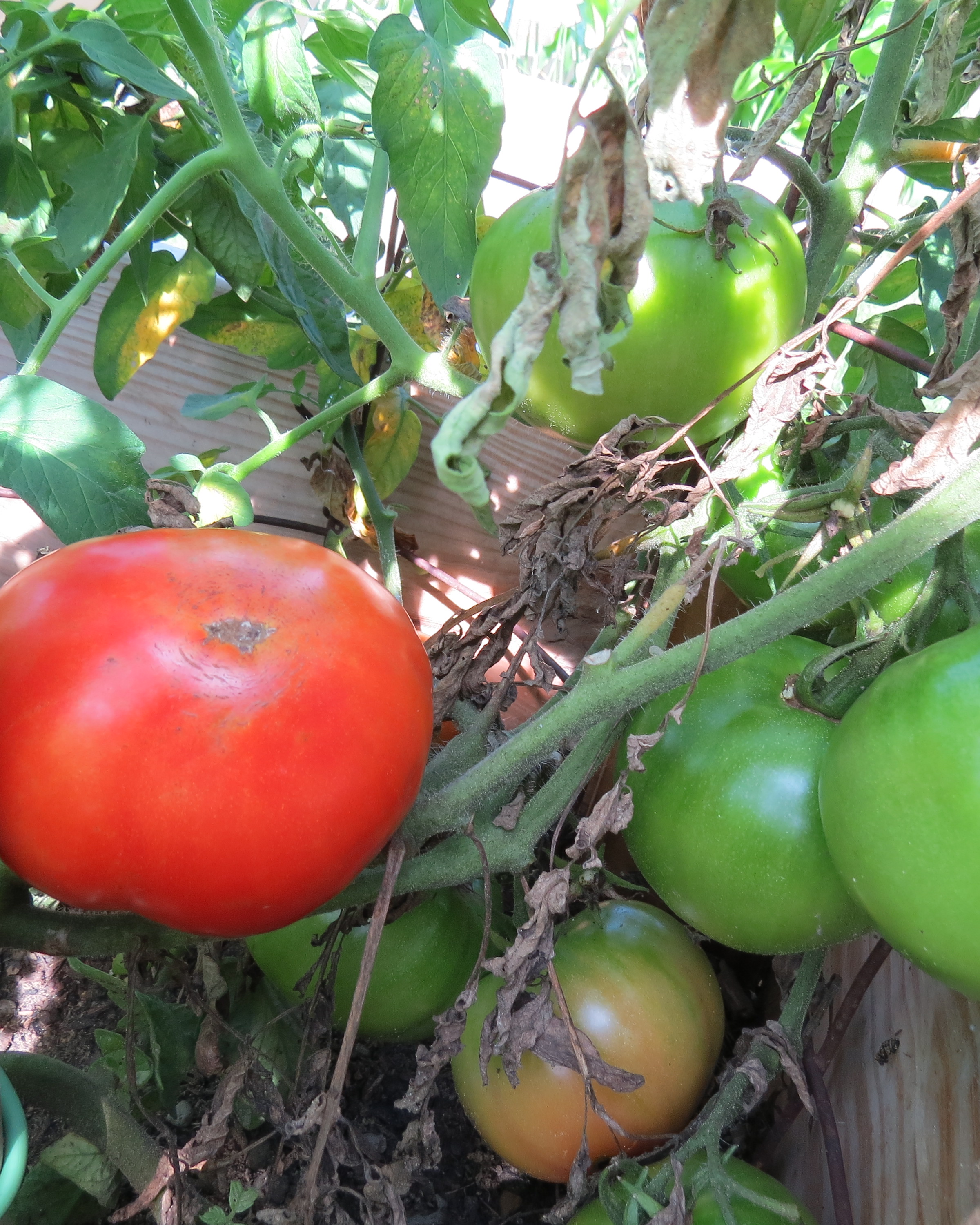
Hoemgrown Tomato Atop a Bed of Rosemary

Homegrown Tomato Atop a Bed of Rosemary

Fall back on some of our good advice: Fall, What’s not to Love and Fall Crops for Dallas Veggie Gardens 


Cycle and Soak Irrigation

May 2015 was the wettest single month on record in Texas. June followed with almost 4 inches of rain. But now things are heating up and you may be thinking it’s time to water your grass.

Here’s advice from Texas A&M: “Rather than watering on the same schedule each week, adjust your watering schedule according to the weather. Irrigate deeply. Then wait until the grass begins to show signs of drought stress before watering again. Symptoms of drought stress include grass leaves turning a dull, bluish color, leaf blades rolling or folding, and footprints that remain in the grass after walking across the lawn. To time watering properly, look for the area of the lawn that shows water stress first. Water the entire lawn when that area begins to show symptoms.”

When it’s time to water, use the cycle and soak irrigation method as described by Dr. Dotty Woodson.


Ann


Happy 4th of July

coreopsis and flag

HAPPY 4TH OF JULY FROM DALLAS GARDEN BUZZ!

4th of July

Pictures by Starla!

The Color Purple

One of the main tasks at The Raincatcher’s Garden right now is installing drip irrigation.  Our liscensed irrigator, Doug Andrews of Double D Landscapes is at the helm.

Doug Andrews, Double D Landscapes

Doug Andrews, Double D Landscapes

The process of irrigating a large garden like The Raincatcher’s Garden is cumbersome.  Purple has become our new favorite color and the reason is that our future plans include harvesting water collected from the roof of  nearby buildings. The color purple is used to identify pumps, tanks and pipes carrying reclaimed water for reuse. Purple or what looks like a pretty shade of lavender  means non potable or non drinkable water.  At our garden on Joe Field Road we had two large 2500 gallon cisterns collecting rainwater off our large shed. We don’t have them yet for our new garden and will judiciously use city water in the meantime. Anyone want to donate rainwater cisterns?

Purple Tubing  for Drip Irrigation Installed at The Raincatcher's Garden

Purple Tubing for Drip Irrigation Installed at The Raincatcher’s Garden

In the meantime, our plant success  depends on our amended soil, heavy mulch application, and hand watering.  More rain is welcome!

Find out more about Drip Irrigation as taught by Dr. Dotty Woodson, here.

Ann