Monthly Archives: April 2018

Wildflowers at the Farm!

First of all, I need to confess this is not my farm and these are not my pictures or Starla’s.

Patti Brewer from the Master Gardener class of 2012 took these pictures and runs the family farm pictured below with her husband and family.

Patti, where is this crazy beautiful place?

The farm is in Lone Camp, Palo Pinto county, Texas.   Palo Pinto county is the beginning of the northern hill country.  I am not sure of our farm’s exact date of purchase but my mom who was born there would be 100 years old this year. Land was purchased at different times and some of it was owned by my great grandparents. Some of the land was partitioned to their sons and daughters including my grandfather.

Your farm is meaningful to your family but also important in terms of habitat. Who shares your farm?

Wild life on this farm include turkey, dove, deer, aoudad-or Barbary sheep, coyotes, cotton tail rabbits, roadrunners, hawks, buzzards and skunks. Of course, we have rattlesnakes and copperheads.We occasionally see horned toad lizards and have a decades old hill of red ants that stretches as wide as my outstretched arms reach. Red ants are  #1 on the diet for horned toads. We have Texas spiny lizards too. Birds we see are hummers, house wrens,  cardinals, blue jays,tufted titmouses, chickadees, meadowlarks, whippoorwills,  and owls. We have once or twice seen painted buntings. In the area are habitats of golden cheeked warblers, an endangered bird.

We have 5 tanks on the ranch and seasonal creeks and a rocky canyon area where the aoudads hang out.

 Patti,  Could you tell us about the barn?
The barn used to hold livestock feed bags.  A hand cranked dried corn shucker driven by gears was in barn until it was stolen. Field corn was grown by my grandfather for supplements for cattle and chickens. It was fun to crank that old thing. The corn shuck was ejected when the kernels all popped off!

What about the wildflowers. We are drinking them in!!! Just gorgeous!

These pictures are from March/April 2017, when we had a trifecta of blooms at one time.

Bluebonnets, pink phlox, orange Indian paintbrush and crossvine on the fence.
This year we only had phlox and bluebonnets at the same time, but amazingly thick stands of bluebonnets.

Bluebonnets, we can’t get enough!

 More about the wildflowers:  we do not mow any bluebonnets until seeds are thrown out. The first mowing of the bluebonnets occurs usually right before July 4th. Mowing continues through about late August if  needed. Texas heat burns everything up by August.  Harvested bluebonnet seeds are given to friends. If you have never been in a field of bluebonnets that are throwing off their dried seeds, then you are missing something to behold.  What you hear sounds just like popping popcorn on the stove.  The first time I heard this I thought a rattlesnake was very close to me in the knee high bluebonnets!

Indian Paintbrush blazing!

The Indian paintbrushes are mostly in pastures that we don’t mow. Unfortunately, our cows  eat the Indian paintbrush that grow in their pastures.  About May or June every year we have another field that sprouts  Indian blankets and then that field is not mowed until the seeds are dried on the plants.  We  have an abundance of antelope horn milkweed and some butterfly weed and I have planted frost weed for years.
 We  see a tremendous variety of butterflies including Monarchs.  Bumble bees and honey bees are busy at our farm. Sitting outside on a summer evening listening to the hum of the honeybees is one of my favorite things to do.

Patti Brewer

Wildflowers at Raincatcher’s


Raincatcher’s Plant Sale, April 26, 2018

Our annual plant sale will be held in conjunction with the April 26, 2018 meeting of the Dallas
County Master Gardener Association. Before the meeting: 10:00 – 11:30 After the meeting:
1:00 – 2:00


Come shop the great variety of plants we have to offer!! We have divided our perennials,
potted volunteers, started seeds, taken cuttings, dug bulbs..

We have herbs, succulents,
bulbs, houseplants, Louisiana iris, annuals, perennials, natives and adapted plants as well as
ornamental plant markers and other garden items.


Don’t forget our tomato and pepper plants, ready to go home with you!


Cash or Check preferred….Credit Cards accepted

11001 Midway Road, Dallas, Texas

Recipes From The Glorious Greens Lecture and Lunch

Our new edible garden, where it all began. More classes to be coming from this garden to you. Subscribe to Dallas Garden Buzz for more info.

Creamy Cauliflower Soup with Greens

Ingredients

1 tablespoon extra-virgin oil, plus more for drizzling

1 medium onion, chopped (about 1 cup)

4 cloves garlic, chopped

Sea salt

1 medium head cauliflower (about 3 pounds), florets and stems cut into 1-inch pieces (8 to 9 cups)

4 ½ cups filtered water

¼ cup chopped fresh dill, plus more for garnish

5 large kale or collard leaves, or a combination, tough ends removed and leaves roughly chopped

Freshly ground black pepper

Directions

Heat oil in a large pot over medium heat; cook onion, covered, until soft, 4 to 5 minutes. Add garlic and a pinch of salt, and cook for 3 minutes more.  Add cauliflower, and pour in filtered water until it reaches just below the top of the cauliflower

Bring to a boil over high heat. Add 2 tablespoons dill. Reduce heat to low, and simmer until cauliflower is just tender, about 10 minutes. Stir in greens, and simmer for 3 minutes.

Let sit for 5 minutes to cool slightly. Stir in remaining 2 tablespoons dill.  Puree soup in batches in a blender until very smooth, adding more water (about ½ cup) if it’s too thick. Return to pot and reheat. Season with salt and pepper. Garnish with dill, black pepper, a drizzle of oil, and pinch of sea salt.

Yield: Makes 8 cups

Evelyn and Susan, pesto making!

Spicy Mustard Green Pesto

Ingredients

3 cups fresh mustard greens, stem removed, washed and rough chopped

2 teaspoons fresh chopped garlic

1 teaspoon fresh lemon juice

3 tablespoons pine nuts, toasted 7-8 minutes at 350˚F

⅛ cup shredded Parmesan cheese

3 tablespoons olive oil

2 teaspoons Kosher salt

1 teaspoon ground pepper (white or black)

Directions

Blanch greens in lightly salted boiling hot water for 15 seconds. Drain thoroughly.

Place all ingredients in a food processor and blend thoroughly to combine. Adjust seasoning as necessary. Refrigerate at 40˚F if not used immediately.

Yield: Makes 2 cups

Dedicated to our greens, note the green nail polish!

The Ultimate Classic Collards

3 (1-lb.) packages fresh collard greens or use fresh from your garden

12 smoked bacon slices, chopped

2 medium-size yellow onions, chopped

3 garlic cloves, minced

3 cups reduced-sodium chicken broth

¼ cup apple cider vinegar

2 Tablespoons honey

1 (12- to 16-ounce) smoked ham hock

Kosher salt

Freshly ground black pepper

Remove and chop collard stems. Chop collard leaves. Cook bacon in a large Dutch oven over medium heat, stirring occasionally, 12 to 15 minutes or until almost crisp.  Add onion, and sauté 8 minutes or until onion is tender. Add garlic, and sauté 1 minute.

Stir in chick broth and next 2 ingredients; add ham hock. Increase heat to high and bring to a boil. Add collards in batches. Reduce heat to medium-low; cover and cook 2 hours or until desired tenderness.

Remove meat from ham hock; chop meat, and discard bone. Stir chopped meat into collards. Season with salt and freshly ground pepper.

Yield: Makes 6 to 8 servings

Ready to plate! Thanks Evelyn, Patty, Abbe, Sarah, Ann, Linda, and other Master Gardeners!

Spring Quiche with Leeks and French Sorrel

For the Crust:

1 ¼ cups all-purpose flour

¼ teaspoon salt

8 tablespoons (1 stick) unsalted butter, chilled and cut into cubes

3-5 tablespoons ice water

1 tablespoon apple cider vinegar

For the Filling:

1 large egg white

2 tablespoons extra virgin olive oil

1 large leek (white and light green parts only), cleaned and sliced into ½-inch pieces (should yield about ½ cup)

3 large eggs

¼ cup grated Parmesan cheese

½ cup 2% milk

½ cup half and half

¼ cup part-skim ricotta

1 teaspoon Kosher salt

½ teaspoon freshly ground black pepper

2 tablespoons chopped dill (fresh or dried)

1 tablespoon chopped rosemary (fresh or dried)

2 cups fresh French sorrel, washed and dried well

Make the Dough:

In a food processor, pulse together the flour and salt a few times to combine. Add the cubes of butter and pulse continuously until the mixtures starts to look like tiny pebbles. With the food processor running, drizzle in the apple cider vinegar, followed by the ice water, stopping when the mixture just begins to come together. Working quickly, form the dough into a flat disk, wrap it in plastic and refrigerate for 1 hour or up to 2 days.

Prepare the Crust:

Preheat the oven to 375˚F. On a large floured surface, roll the dough into an approximately 12-inch circle. Gently press into a 9-inch tart or pie pan, trimming any overhang. Line the dough with aluminum foil and dried beans (or pie weights) and bake for 20 minutes.

Remove the pan from the oven and take out the foil and beans. Brush the crust with the egg white and prick the bottom with a knife or a fork to allow air to release and prevent bubbling. Place back in oven and bake for an additional 5 minutes

Make the Filling:

In a medium-sized pan over medium heat, heat the olive oil and add the leeks. Stir until they are coated in oil, then turn down the heat to medium-low and cover the pan. Cook the leeks until golden brown and caramelized, about 20-25 minutes. Check their progress after 15 minutes to ensure you don’t burn them (depending on what kind of pan you’re using; the cook time can vary slightly).

Meanwhile, whisk together the eggs, Parmesan cheese, milk, half and half, ricotta, salt pepper, dill and rosemary.

When the leeks are done cooling, lay them out on top of the pre-baked crust. Place the pan on top of a cookie sheet for easy transport. Pour the filling on top of the leeks and place the quiche in the oven. Bake for 30 minutes, or until the top of the quiche has puffed and is set in the middle and just slightly golden.

Allow the quiche to cool slightly, about 12 minutes. If you put the sorrel on while the quiche is piping hot, the delicate greens will brown. Sprinkle the sorrel on top, slice and serve. Quiche is best served room temperature the day it is made although it will keep just fine covered in the refrigerator for up to 2 days (the sorrel is just going to get a bit wilty).

Yield: One 9-inch Quiche (Serves 6 as an entrée or 8 smaller slices)
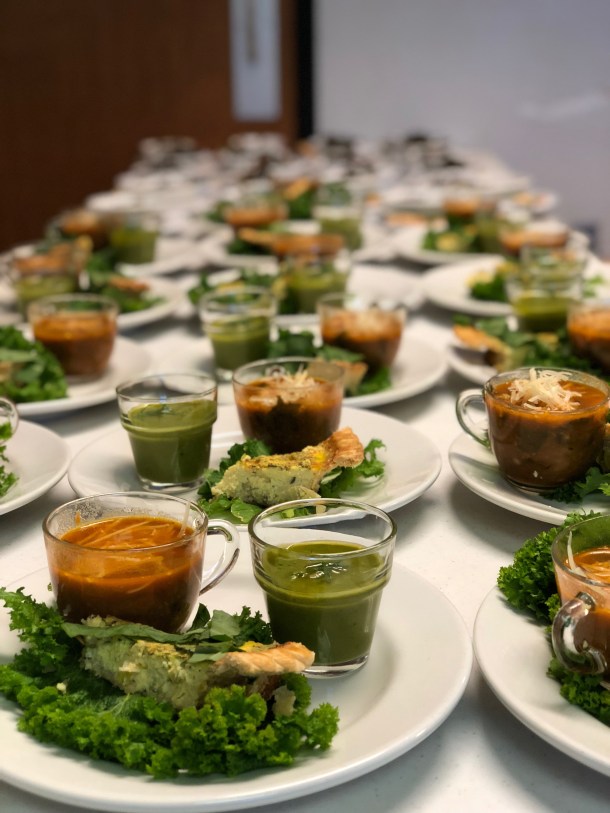
Glorious greens ready to eat. Plates garnished with mustard greens, of course! Both soups delish!

Minestrone Soup

Ingredients:

⅔ cup small pasta, cooked according to package directions, drained and set aside

3 tablespoons olive oil, divided

1 ½ pounds ground beef

1 large onion, chopped

3 large carrots, peeled and cut into ¼ inch rounds

3 large celery stalks, cut into ¼ inch slices

2 garlic cloves, pressed

1 pound fresh Swiss chard, center vein removed, chopped

1 large turnip, peeled and cut into small cubes

1 large baking potato, peeled and cut into small cubes

1 (28-ounce) can crushed tomatoes

2 (16-ounce) cans beef broth

2 (15-ounce) cans cannellini beans

1 (32-ounce) box good beef stock

1-inch piece of Parmesan cheese

½ cup grated Parmesan cheese

3 tablespoons fresh parsley, chopped

Salt and pepper

Directions:

Preheat 1 tablespoon oil in a large pan over medium heat.  Add ground beef and cook, breaking it up, until it is no longer pink.  Season with salt and pepper.  Set aside.

In a large stock pot, add 2 tablespoons olive oil. Add onions, salt and pepper to taste and cook over medium heat until translucent, about 4 minutes.

Add carrots and celery to the pot.  Cook for 10 minutes.  Add garlic and cook for 1 minute more.

Add Swiss chard, turnip and potato to the pan.  Cook for 4 minutes or until the chard begins to wilt.

Add the crushed tomatoes and the 2 cans of beef broth to the pot and simmer for 15 minutes or until the chard breaks down.

Meanwhile, combine half of the drained cannellini beans with ½ cup of beef stock in a blender.  Blend until smooth.

Add the blended cannellini beans, remaining drained beans, remaining beef stock, the 1-inch piece of Parmesan, reserved ground beef, cooked pasta and the handful of Parmesan cheese to the pot.  Stir to mix and simmer for 25 minutes.  Stir occasionally.  Vegetables should be fork tender.

Season with salt and pepper, to taste.  Add fresh parsley and serve.

Yield: 8-10 servings

Linda Alexander

Our thanks to Jeff Raska for the garden education.

Save the date for our next education/lunch event-Peach Fever.

Date: Tuesday, June 26th, reservation information to follow

Peach Tree Pruning

Next summer the peaches you enjoy will be the result of hard work on the part of orchard growers all across Texas. Whether you enjoy East Texas peaches, Parker County peaches, the ‘redskin’ peaches from the hill country or any others remember peach orchards are labor intensive operations. In our small orchard, we gathered around our peach tree as Jeff Raska clipped away at it.

Here’s some of what we learned:

Prune  your peach tree for the best possible peaches at picking height, as disease free as possible, with maximum production. Our peach tree tops out at 8 feet and has 4-5 main branches.

  • Your peach tree should be open in the center so that the fruit receives maximum sunlight and air flow. They call this the wine goblet effect.

    Can you find the goblet shape in the peach tree above?

  • Cut off dead wood, suckers and all branches that cross.
  • Remove any spindly, pencil-thin branches and any that are growing toward the interior of the tree.
  • Remove older gray shoots; they will not fruit. Leave 1 year old reddish color shoots.
  • Remove limbs that grow straight up.  They are called water limbs. We removed 2 water limbs, 10 feet each.
  • Prune out any branches that are growing horizontal or downward. They have a tendency to break when the fruit gets heavy.
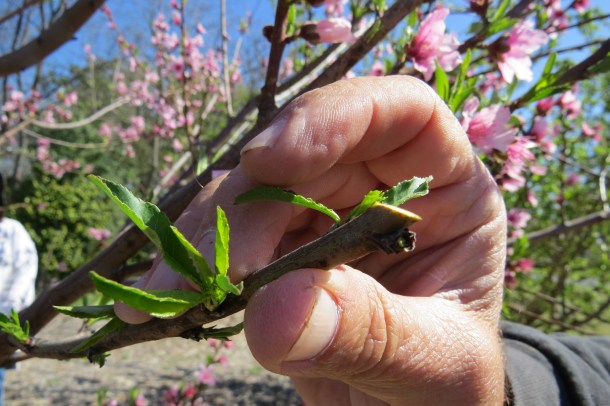
  • Cut back the remaining red shoots to about 18 inches, at an outward facing bud.

    Above: The angle of this cut causes the branch to grow away from the center of the tree.

Fruit thinning will be the next major job.  Fruit thinning can be done by hand when the fruit is the size of a quarter. This allows the remaining fruit to be larger and spaced out on alternate sides of the branches. A mature peach tree should produce 300-400 peaches in a season.

Ann Lamb

Pictures by Starla Willis


Maybe now you want to try grape pruning and planting, Saturday, April 14th from 10am-11:30am. This class will be taught by Stephen Hudkins at The Raincatcher’s Garden. Info here.


New Class Series on Vegetable Gardening to Begin at The Raincatcher’s Garden 2018

We are excited to announce the first in a series of four classes  to be taught at our garden during 2018. Our first class featuring mustard greens, swiss chard, broccoli, collard greens and other spring harvested crops will be taught using our new Edible Garden. Sign up for the lunch following the class.

 Garden Greens Class

What’s in our Spring Picnic Basket?

Everyone welcome, bring a friend!

 Planting, growing, harvesting and enjoying healthy, colorful green vegetables from your garden will  be the class topic.

Tuesday, April 17th, 10:00am at Raincatcher’s Garden of Midway Hills

11001 Midway Road, Dallas, Texas

Led by, Jeff Raska, Dallas County Horticulture Program Assistant, Texas A&M AgriLife Extension Service

This class qualifies for one-hour education credit for Master Gardeners.

Join us for a reservation only garden lunch sampler following Jeff’s presentation.

Menu

Creamy Cauliflower Soup with Greens

Spicy Mustard Greens Pesto on Baguette Slices

Minestrone Soup with Swiss Chard

Spring Quiche with Leeks and Sorrel

The Ultimate Classic Collard Greens

Chocolate Crème de Menthe Brownies

Your lunch reservation is a $15 check made payable to DCMGA

Mail to: Lisa Centala, 5525 Northmoor Dr. Dallas 75230

Reservations close on Saturday, April 14th

Class and Lunch open to the public.

April Plant Sales 2018

SOME OF MY BEST FRIENDS ARE GREEN AND MOSTLY PURCHASED AT PLANT SALES SUCH AS THESE!

Mark your calendars to attend all three. Open to the public!


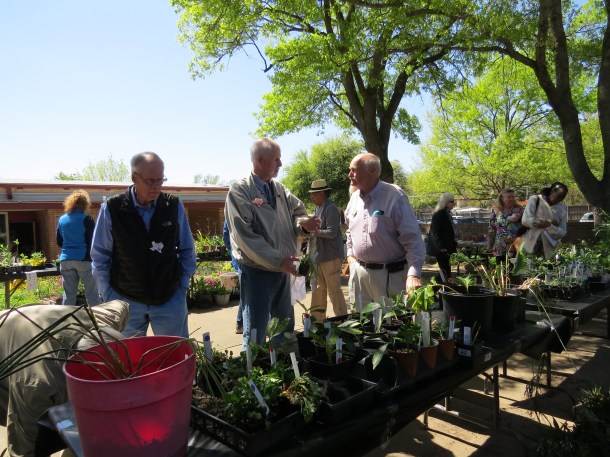
Above: Raincatcher’s Sale, something for every garden.

Texas Discovery Garden Plant Sale

3601 Martin Luther King Junior Boulevard (Gate 6 at Fair )

MEMBER’S PREVIEW SALE: APRIL 6, 4-7 PM
PUBLIC SALE: APRIL 7 & 8, 10 AM-2 PM

Find more than 600 varieties of rare native and adapted pollinator-friendly plants. Many can’t be found in local nurseries! Our Members’ Plant Sale allows you to shop before the Saturday rush! Members also receive 10% off plants.

For more information including plant list click here


22nd Annual Plant Sale at Multiple Careers Magnet School

April 18: 10am-6pm and April 19: 11am-1pm

Selling herbs, perennials for sun and shade, vegetables donated and grown by Dallas County Master Gardeners and their green thumbed students. Pots and Planters, too!

Cash or Check only

4528 Rusk Avenue, 75204

Garden entrance on Deere behind the school

Proceeds will purchase garden supplies for the 2018-19 school year.


The Raincatcher’s Plant Sale

April 26th before and after the DCMGA monthly meeting (meeting starts at 11:30am)

10:00am-2:00pm

11001 Midway Road, Courtyard area of Midway Hills Christian Church

Selling perennials, annuals, tomato plants, and tomato cages crafted by members of The Raincatcher’s Garden. Plants are grown by Dallas County Master Gardeners.

Proceeds will benefit the ongoing demonstration, research and education outreach efforts of The Raincatcher’s Garden.

Cash, check, or credit card accepted

For more information about these sales, call the Dallas County Master Gardener Help Desk 214 904 3053

Ann Lamb

pictures by Starla Willis