March 23, 2026
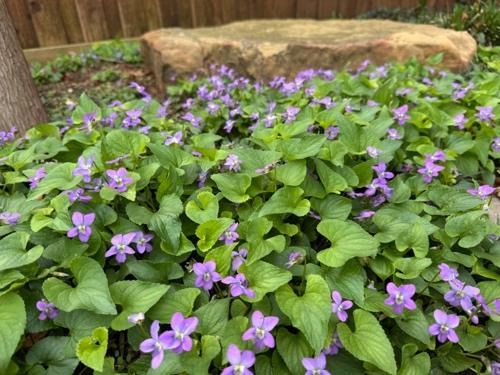
I’ve taken a “walk on the wild side” with a colorful new friend and my perspective has changed. Let me introduce you to the charming little spring bloomers known as wild violets (Viola sororia). Shortly after a refreshing seasonal rain, I was impressed by the meadow-like look the plants added to an otherwise neglected corner of our yard. They were already here, in much smaller numbers, when we purchased the 78-year-old property almost 20 years ago.
During that time, they were continuously treated as nothing more than a nuisance. Sometimes, they were even pulled up and tossed into the compost bin just to prevent them from creeping into our gravel driveway. But now things have changed. Those delicate little heart-shaped leaves and purple five-petaled flowers bring a touch of early spring beauty to that same area. We look forward to their arrival and have given them the freedom to spread as they desire.
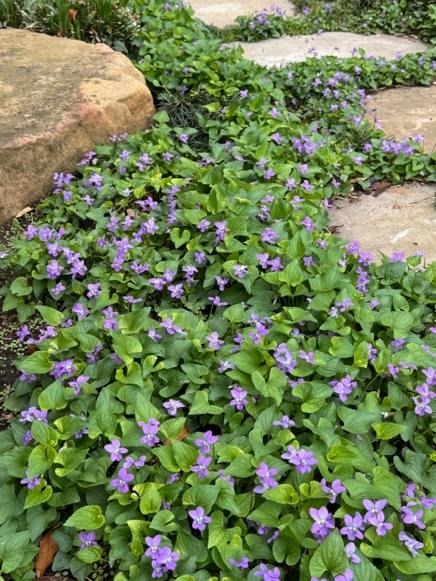
Here are some of the reasons why we are embracing these persistent little perennials and welcome them to stay as long as they desire:
Wild violets provide one of the first nectar sources for pollinators in early spring. They’re food for butterflies, native bees and other pollinating insects. They serve as host plants for caterpillars of several fritillary butterfly species.
Both the flowers and leaves are edible and nutritionally valuable as they are rich in vitamins A and C. Violet flowers can be used in spring salads while leaves can be cooked like spinach. Also, for a very refreshing beverage, the flowers can be used to make violet syrup, the base for Springtime Wild Violet Lemonade.
Wild Violet Lemonade is a new discovery for me. After searching online, I combined the best of two different recipes with pleasing results. Give this simple recipe a try.

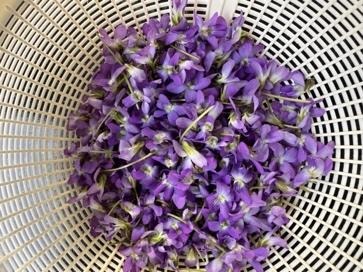
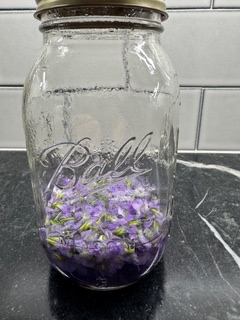
Freshly snipped violet blossoms rinsed and placed in a jar with filtered water
Wild Violet Characteristics
Scientific Name: Viola sororia
Plant Type: Perennial
Hardiness: Thrive in USDA zones 3-9
Sun Needs: Full Sun to Partial Shade
Height and Width: 4-6 inches in Height
Wild violets spread through both seeds and rhizomes. While they prefer partially shaded areas, morning to mid-day sun is tolerated. Violets are very adaptable and will grow in various conditions and soil types. Let them grow!
Linda Alexander, Dallas County Master Gardener Class of 2008













 DALLAS GARDEN BUZZ