Tag Archives: Southern Bulbs

Surprise Lily

July 22, 2025

Surprise Lily-The interesting thing about the name of this lily is that I was the one met with a surprise – in my own back yard!

Just a few days ago, with the temperature hovering around 93 degrees, I decided to run the sprinkler system in my raised edible bed. It was a hot afternoon and overspray from the system felt good hitting me in the face, so I sat down on a bench and waited for it to complete the cycle. Interestingly, something in the blue blooming salvia bed just to my right side kept catching my eye. Curious to figure out “why” a single, and very lovely, pale pink flower was peeking out at me, I got up, walked a few steps and stared in amazement.

Gently pushing back some of the ‘black and blue’ salvias that had been growing in that spot for over 5 years, was the most unexpected sight. Droplets from the sprinkler that had just watered that area were gracefully clinging to the petals and seemed to be inviting me to come closer and take a look. What was this mysterious plant that I had never even noticed in the 19 years we’ve lived here?

After taking a few photos with my iPhone and then doing a quick plant search, the answer was revealed to me. I was pleased to learn that the botanical name Lycoris, is from plants in the Amaryllis family. Some of their common names, however (resurrection flower, surprise lily and magic lily) refer to the trumpet-shaped blooms that resemble lilies. Also known as ‘naked ladies’ for the absence of leaves, these striking lilies start blooming around the end of July. She almost looked like a flamingo standing stiff-legged in my garden bed. I wanted to learn more about her!

Lycoris includes around 20 different species found in China, Japan and a few other Asian countries. However, the tall, pink flowered Lycoris x squamigera is the most common in American gardens. If you are interested in growing this lovely, delicate pink lady, here are a few tips to get started:

*The surprise lily is a perennial bulb in the Amaryllis family and is the hardiest of all the plants in the Lycoris species.

*Bulbs are about 3 inches in diameter with long necks that can persist for many years once established.

*Lycoris prefer full sun to partial shade.

*When planting, bury bulbs to a depth of 8 to 12 inches, spacing them 6 inches apart.

*They grow best in well-drained, fertile soils.

*Foliage emerges in late winter to early spring. Silvery gray greenish strap-like leaves measure 12 inches long and 1 inch wide. They grow in clumps.

*Foliage dies away in late spring followed by the late summer “surprise” lily that emerges like magic and produces 5-7 four-inch pale pink trumpet-like blooms atop the 2-foot tall stalks. 

*Butterflies and hummingbirds are attracted to the fragrant flowers.

Now that I’ve had the pleasure of meeting this remarkable lady, I’ll be especially watchful next spring while awaiting her return!

Linda Alexander, Dallas County Master Gardener Class of 2008

Hardy Amaryllis

Our dear friends Evelyn and the late Harold Womble, have shared Hardy Amaryllis bulbs with us at the Demonstration Garden on Joe Field Road and now at Midway Hills.  Their home is graced with a  large bed of these bulbs that have multiplied over the years and ended up in their son’s gardens and friend’s gardens. Their original bulbs came from Evelyn’s family home place in Brownwood.

Evelyn, Hardy Amaryllis and Daffodils, All Blooming!

Evelyn, Hardy Amaryllis and Daffodils, All Blooming!

Hippeastrum x johnsonii, the St. Joseph’s lily, blooms in early April in Dallas. The bright red blooms, trumpet shaped, are striped with white. The strap like foliage lasts late into the year and looks tropical.

Because the bulb perennializes so well it is often called the finest amaryllis for southern gardens.

Hardy Amaryllis and daffodils 2015

In Perennial Garden Color, Dr Bill C. Welch calls the bulbs “living antiques because they are tangible symbols of success for generations of Southern gardeners.  Many have been lovingly handed down among the families that contribute cultural diversity and richness to our gardens.”

We will now have our own supply of “living antiques” thanks to Harold and Evelyn.

Ann

Pictures by Starla

Daffodil, Jonquil, Narcissus


What’s in a name? That which we call a rose by any other name would smell as sweet.

–Shakespeare’s Romeo and Juliet

     Picture the flower: daffodil, jonquil, narcissus.  If you are like most people, probably a particular flower comes to mind.  However depending in which part of the country you grew up or lived, or even your age, the specific flowers associated with each of these terms may be different.  This confusion, when using common names for plants, is why botanists classify plants using their Latin or scientific names.

So what exactly is the difference between a daffodil, a narcissus, and a jonquil?  The simple answer, according to University of Illinois   Extension specialist Jennifer Schultz Nelson,  “is nothing, or “it depends.”  All three terms are used as common names in many cases and used incorrectly.  Narcissus is technically the only correct scientific name identifying the genus of this group of plants.  It is not a common name, though some use it as such.  Daffodil is typically used as a collective name for all these plants, but is more often used to describe the larger flowered types.  Jonquil is a name sometimes used for this group as well, but actually only applies to a very small subgroup, Narcissus jonquilla and related hybrids, which typically have several small, fragrant flowers on each stem with flat petals.  The foliage is very narrow and reed-like, according to the American Daffodil Society (ADS).”


Daffodil 'Unsurpassable'

Daffodil ‘Unsurpassable’

The American Daffodil Society (ADS) designates 13 divisions of daffodils with, depending on which botanist is asked, over 40 to 200 different daffodil species, subspecies and varieties of species and over 25,000 registered cultivars or named hybrids.  Daffodils are members of the Amaryllis family, of the genus Narcissus.  Narcissus is derived from the Greek word narke, meaning numbness or stupor.   Perhaps the name was given because in Greek mythology Narcissus was a young man so enamored of himself that he stared at his reflection in a pool of water until he eventually drowned as he tried to embrace himself.  Supposedly flowers grew up around the site.  Or the name Narcissus may refer to the flower’s intoxicating fragrance, or because all parts of the daffodil are poisonous.  In fact, not only animals but even humans who have occasionally mistaken a daffodil bulb for an onion, have become ill upon eating the bulb.  There is even a contact dermatitis called “daffodil picker’s rash” which can occur upon repeated handling of the stems.

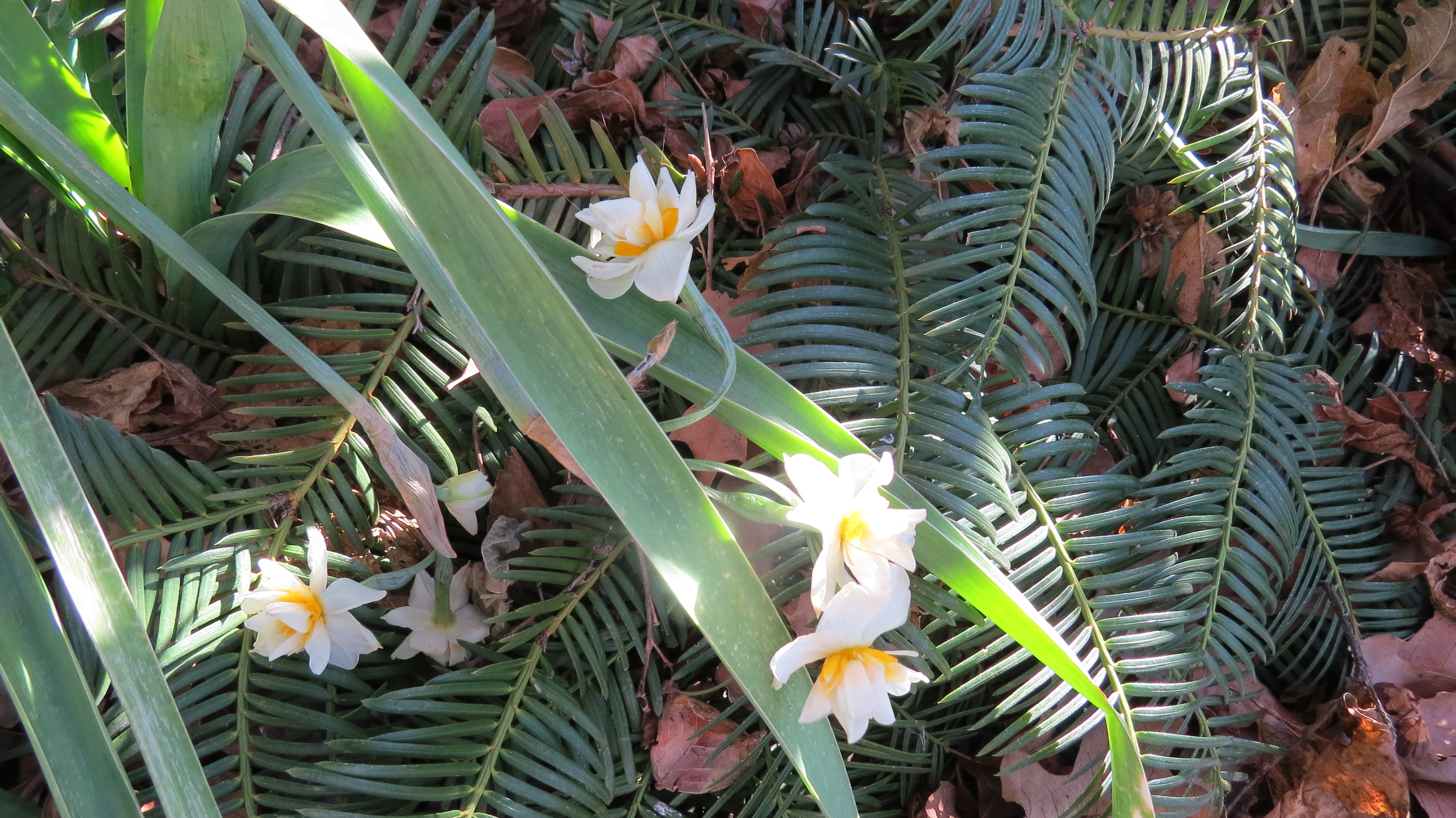
Above: Narcissus tazetta Double Roman peeking our thru leaves of our yew at The Demonstration Garden

Above: Narcissus tazetta Double Roman peeking our thru leaves of our yew at The Demonstration Garden

Daffodils found growing wild in Texas around old homesteads or cemeteries were probably brought over here from Europe by early settlers, according to Dr. Jerry Parsons, retired AgriLife Extension Horticulturist. Daffodils will grow best in a well drained area in full sun though they can naturalize in part shade under deciduous trees.  The bulbs should be planted and divided in the fall or late summer.   It is extremely important that the foliage be allowed to grow, mature and ripen naturally.  According to Dr. Parsons, it should never be cut off or “tied in cute little knots.”  It is the foliage that stores up the food reserves for the next year’s blooms and new bulbs.  In a flower bed, the withering foliage can be disguised by other plants.

Narcissus tazetta '‘Grand Primo’', a bulb that will naturalize in Texas

Narcissus tazetta ‘‘Grand Primo’’, a bulb that will naturalize in Texas

To naturalize daffodils in Texas, it is important to plant the correct varieties.  In general, according to Dr. Parsons, Southern grown stock is genetically superior in vigor to the commercial Dutch forms.  His article on daffodils in Plant Answers lists some of his favorite varieties.  Another excellent source for bulbs of all kinds collected from Texas and neighboring states is The Southern Bulb Company www.southernbulbs.com.  The owner, Chris Wiesinger, collects heirloom and sometimes rare bulbs that will perform very well for the warm-weather gardener.  Many of the daffodils and bulbs planted at the DemonstrationGarden have come from his stock.

So, whether you call them daffodil, narcissus or jonquil,

now is the time to enjoy these delightful flowers.

Carolyn

Picture of ‘Double Roman’ and ‘Grand Primo’ by Starla

Daffodil ‘Unsurpassable’: DaffSeek, American Daffodil Society, Inc., Unsurpassable retrieved on Mar 6, 2014’, available at www.daffseek.org

Take in all things Daffodil at The Annual Texas Daffodil Society Show  this weekend at the Dallas Arboretum.

Spring Is Coming To Dallas!

If you’ve never been thrilled to the very edges of your soul by a flower in spring bloom, maybe your soul has never been in bloom.  — Terri Guillemets

Please don’t take this quote harshly, enjoy these pictures of spring blooms from our garden.  If you have never been thrilled to the very edges of your soul by spring blooms, maybe today is the day!

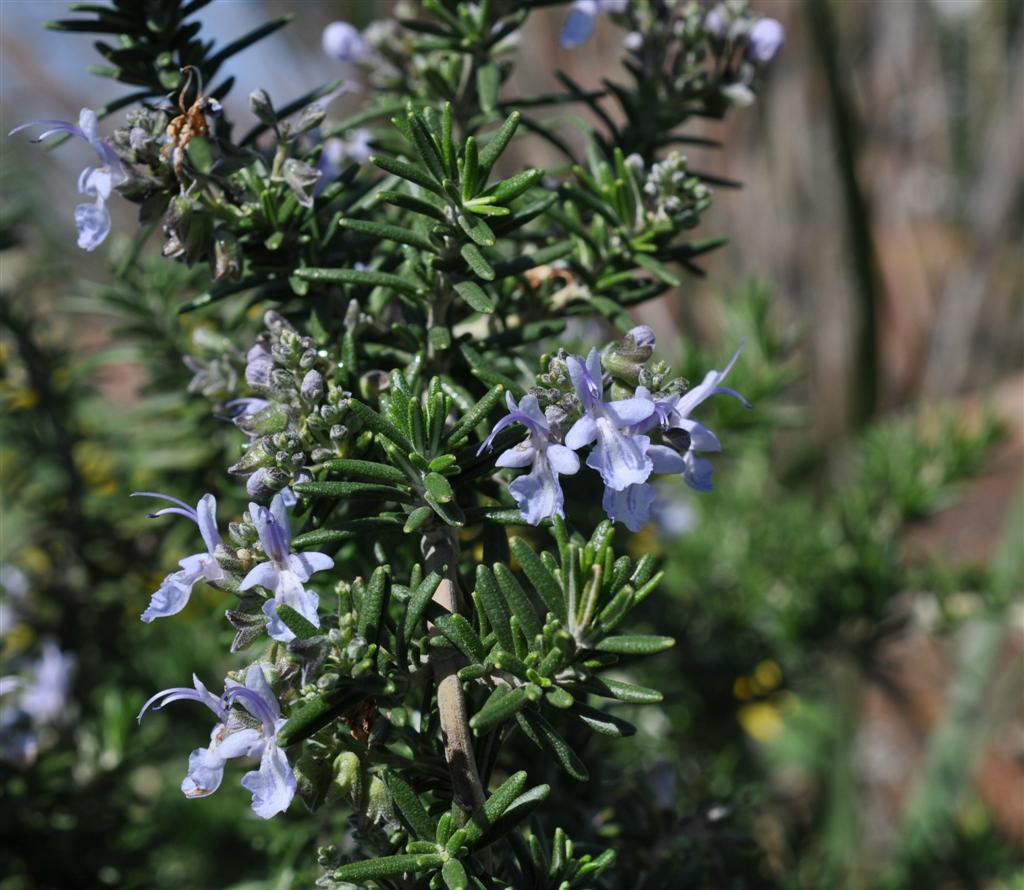
Pale blue blooms of Rosemary in our Entry Garden:

Rosemary In Bloom At The Demonstration Garden

Narciuss Campernelle. This narcissus  has a fragrance so sweet, they are also known in East Texas cirlces as “sweeties”.

Narcissus Campernelle In Front of Red Yucca Foliage

  Narcissus Grand Primo faithfully blooms every year and muliplies into larger and larger clumps to enjoy.  Our bulbs are from The Southern Bulb Company in Golden, Texas.  These Heirloom bulbs are the equivalent of a  ‘slam dunk’ for gardeners. Plant them in the fall.  They will make points for you each spring.Grand Primo Narcissus

Ann

The Oxblood Lily

On New York runways this fall, the trendy color is oxblood.  You will see leather jackets, wool pants, purses, and boots drenched in oxblood.   Last spring the color was tangerine tango, next year it might be beechnut  green.

Not to be out done by the fashion world, Texans have been enjoying Oxblood Lilies (Rhodophiala bifida) for over 150 years. Think back in Texas history to the 1840’s when German settlers immigrated to Central Texas for the early cultivation of this bulb.  Like these settlers, Oxblood Lilies are tough and tenacious and thrive all over the Central Texas area on old farms and abandoned homesteads.

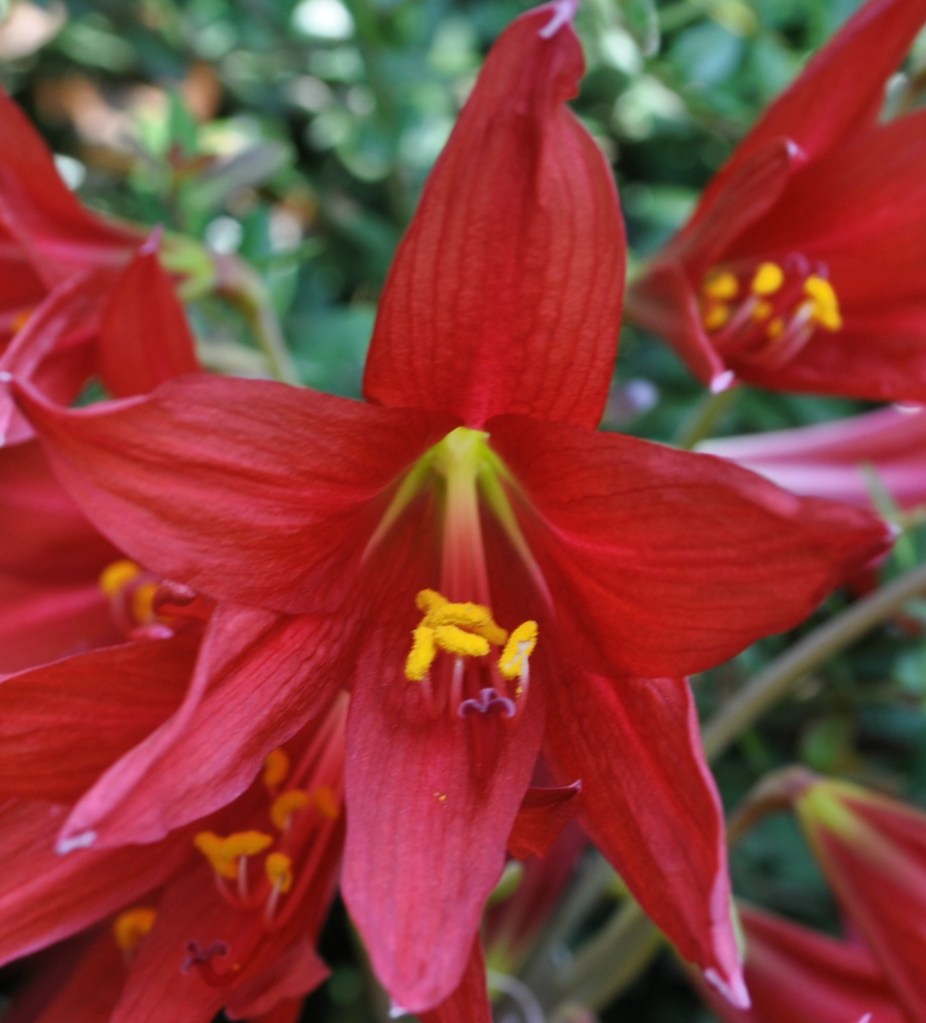
Oxblood Lily Close Up

Unlike fashion dictates for 2012, the oxblood lily will endure for generations and mulitply.  Plant them in part shade or full sun. The red blooms are short lived but will last a little longer with afternoon shade.  They bloom in early September following rain and are also known as School House Lilies.  After the flower dies; thin, deep green leaves will continue until early summer.

For a small investment, your garden can enjoy the bright hues of the Oxblood Lily.  Plant them in the fall through December 1.  Next year what people are wearing will change but your garden will always be in style.

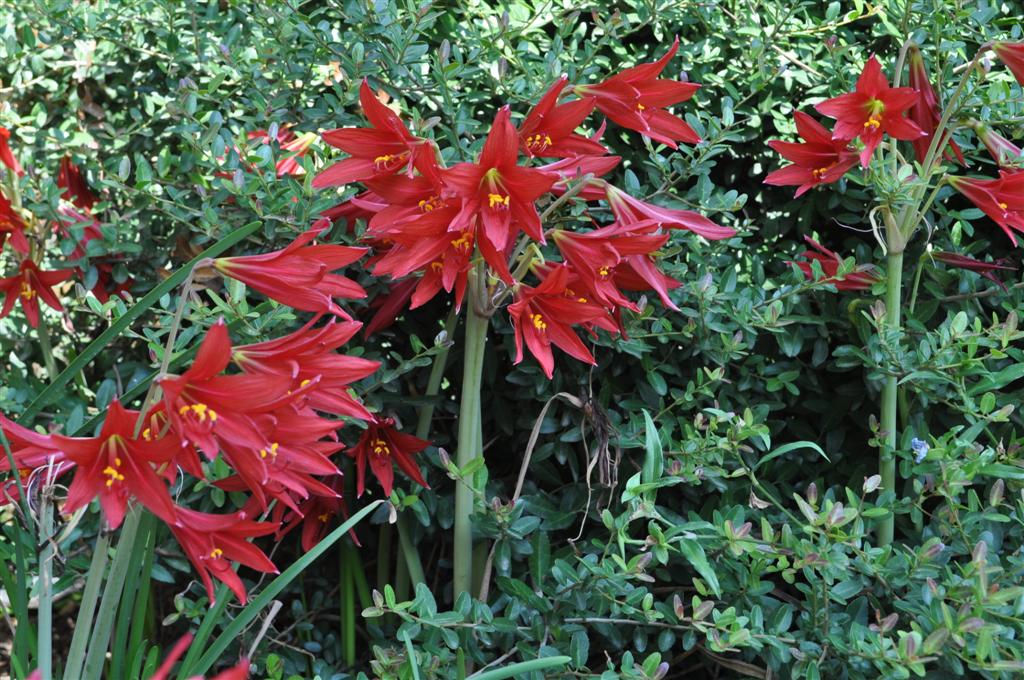
Oxblood Lilies At The Demonstration Garden With Dwarf Yaupon

Ann