Location: The Raincatcher’s Garden at Midway Hills Christian Church,11001 Midway Road, Dallas, Texas 75229
Thursday, May 1st, 2025
10 AM – 3 PM
Great selection of annuals, perennials, herbs and veggies, succulents and sedums, tropicals and house plants, shrubs and trees, groundcovers, bulbs and irises grown by the intrepid Raincatchers volunteers.
All proceeds go to Dallas County Master Gardener projects.
This bit of wisdom came by way of what seems an unexpected source. It was a great many years ago now–in a cartoon a FELIX THE CAT cartoon that was most likely old even then. Thinking back it was a strange cartoon not really designed for children at all. But that hardly matters at all.
Wisdom comes in many ways and forms and can make a lasting impression–so maybe it was a good thing for children–after all wisdom is useful to everyone. Once its firmly in one’s mind it can be called upon when most needed.
It turns out it’s needed now–by gardeners at least. This can be a discouraging time in the garden. Sure its great to have lots of perennials and if you try to remember–they were lovely pretty and then there were bees and butterflies. And the summer and fall were sure improved by the blooming annuals. Oh but now –just how many dead stalks did all that beauty leave behind–sadly alot!! And no way are they lovely now in fact they are awful.
It’s time for the big cutback!!! This just isn’t a happy thought. Let’s face it –its a very unhappy thought. It can seem overwhelming when you look at the whole thing–just too much hard to face.
All gardeners know it has to be done. The health and beauty of the plants require it and there is an absolute need to tidy things up. All the hoped for winter beauty of seed heads and such–its done stalks are falling over and there just isn’t anything pretty about it.
Don’t despair–this is where the wisdom of FELIX THE CAT comes in.
Take a step back from the whole situation. It all doesn’t have to be done at once–more than likely it just can’t be. Just get started–get out the clippers and loppers and sturdy gloves–make it as pleasant for yourself as possible.
Then remember INCH BT INCH. It will get done. You will be happy and justifiably proud of your accomplishment.
Cutting back lots and lots of dead stems just isn’t fun.. That doesn’t mean you can’t get some pleasure from the process.
Take breaks look at what you have done congratulate yourself!!
Look for signs of life among the dead stalks. Remember how valuable your work is. The Spring annuals and the bulbs can’t possibly look good if the garden isn’t ready for them.
Keep saying to yourself inch by inch–and yard by yard–will happen!!
So many dead stems that have to go-It’s a bit discouraging, no way around it.And still more to go!This grass is showing signs of lifeYes, there are weeds but then a baby poppy.Look the Narcissus arae returning.A stem can look very dead but a little plant can be growing from the roots, remember our plant sale is coming.This didn’t look promising but now there are tiny plants. Let’s see what happens.Wonderful baby Larkspur!
Susan Thornbury, Dallas County Master Gardener Class of 2008
I am determined to convince people to consider planting ornamental peppers mixed in with other plants in their garden beds and in containers in the spring and summer. Most people only consider ornamental peppers as a fall plant and, in fact, this is when the ornamental pepper pots show up in the plant nurseries and at grocery stores right along side the pumpkin patches.
At Raincatcher’s Garden, we have been planting peppers in our courtyard garden for the past two years. They add a lot of interest and color mixed in with perennial and annual plants. What we have found is that the peppers start looking good as soon as they produce their small white or sometime purple flowers. Then, the peppers show up usually starting out green but eventually turning orange, red, purple, yellow, etc. The plants put on a good show all summer but when the cooler nights of fall start, these pepper plants will knock your socks off!!!
We have grown several nice ornamental pepper plants for our plant sale on May 7th. Below, I have copied plant information sheets that we will post at the plant sale. Please check out these delightful plants and think about trying ornamental peppers in your garden this summer. I feel confident that you will be happy with the results.
Black Pearl Pepper
Black Pearl Pepper is an extremely heat and drought tolerant plant. It is so beautiful that All America Selections (AAS) awarded it for its beauty in 2006. It is an effective background plant particularly with silver, white or pastel flowering annuals in the foreground. It also pairs well with light green plants because of its deep glossy black leaves. As the plant matures, the black peppers turn red. The peppers are edible but are extremely hot. The plant is 18 inches tall to 12 inches wide.
Ornamental Pepper Pot
These three ornamental pepper plants look great together. The top pepper plant is Wicked Ornamental. It starts out purple and turns a beautiful color of red as it ripens. This would be the “thriller” plant in the pot. The pepper on the left is Santos Orange. This pepper starts out green and turns bright orange. It would be the “filler” plant of the trio. The bottom plant is Hot Pops Purple. It starts out purple and fades to orange and is the “spiller” plant in the container. Or you can create your own ornamental pepper pot by combining any of the peppers above with the Black Pearl or the Orange and Red Ornamental Pepper which will have an abundance of upright peppers.
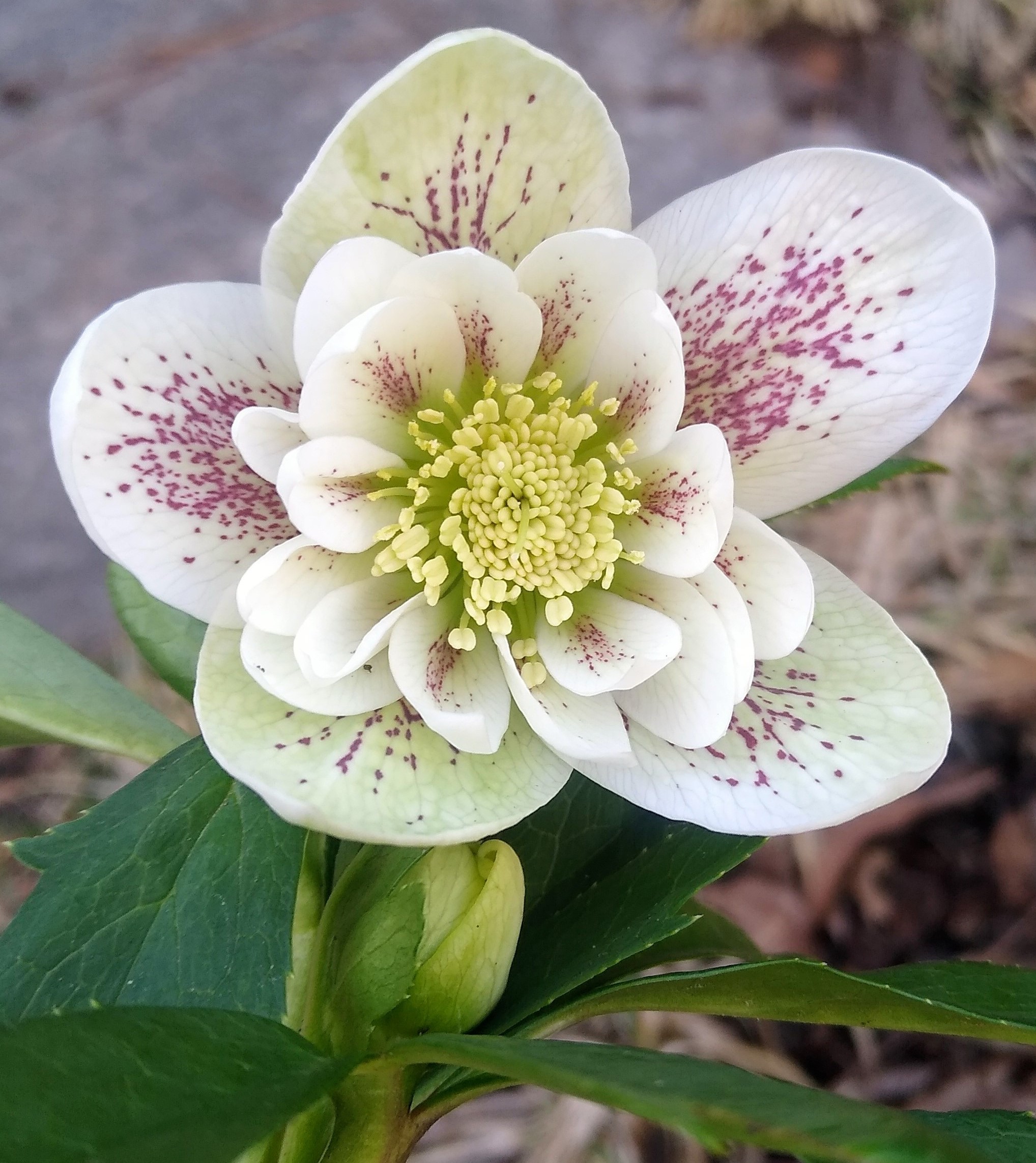
Lenten rose plants (Helleborus x hybridus) are not roses at all but a hellebore hybrid. It was given its name because the flower looks similar to a rose and it blooms in early spring often during Lent. This is another plant that we will have at our annual Raincatcher’s Plant sale on Thursday, May 4th.
It is an evergreen, slow growing perennial and the blooms on the heirloom varieties are downward facing. The flowers are very long lived, sometimes remaining for eight to ten weeks.
Lenten rose thrives in partial to full shade which makes it a good plant for adding color and texture to dark areas of the garden. Try planting it in small groups of 3 to 5 plants (18 to 24 inches apart) or plant along walkways and edging. As you can see from the photo, it looks great planted alongside purple oxalis and holly fern. It is best to keep the soil moist but it can tolerate drier conditions once established.
Lenten Rose foliage with Holly Fern and Purple Oxalis
We hope to see you at our plant sale on Thursday, May 4 from 10 AM to 3 PM. Raincatcher’s Garden is located at 11001 Midway Road, Dallas, Texas on the campus of Midway Hills Christian Church. Raincatcher’s is a Dallas County Master Gardener program and all proceeds from this sale benefit master gardener programs.
Jackie James Dallas County Master Gardener 1993
Come shop the sale on Thursday, May 4th, 10am until 3pm.
Midway Hills Christian Church 11001 Midway Road Dallas, Texas 75229
Four-Nerve Daisy (Tetraneuris Scaposa) is a Texas native perennial plant that blooms almost year round. It is evergreen with gray green foliage and bright yellow flowers that bloom on long leafless stems. The plant itself is 6 – 12 inches tall (including the flower stem) with a 1 foot spread. It is heat and drought tolerant and pest and disease free. It also attracts butterflies and bees!
I have been growing this plant for about 10 years now and it has become my favorite plant. I have paired it with grape hyacinth and have found this to be a great combination because they both bloom in early spring. It’s a great border plant or rock garden plant and does well in full sun. It does not tolerate over watering which is a good thing in my book!!! This plant has a long taproot and does not transplant well. It spreads from seeds and does well if dug when the seedlings are small. I have been digging these tiny seedlings and will have some available at our plant sale at Raincatcher’s Garden on May 4th.
Raincatcher’s Annual Plant Sale
May 4th, 10 AM – 3 PM
We will have annuals, perennials, herbs, peppers, succulents, shrubs, trees, groundcover, bulbs, houseplants, decorative pots, yard art, and more.
Location: The courtyard at 11001 Midway Road, Dallas, Texas 75229
Jackie James, Dallas County Master Gardener Class of 1998
We made a decision last year to fill the courtyard at Raincatcher’s garden in 2022 with lots of pepper plants. Some of the peppers will be grown to use in our very popular pepper jellies but several of the ones we selected are for ornamental purposes. Ornamental peppers are safe to eat but they are typically used for their attractive color or ornamental quality rather than their flavor. They are often considered too hot to eat by most people.
Fish Pepper
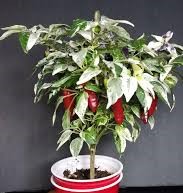
A favorite ornamental pepper that you will see growing in the courtyard is the Fish pepper. Last summer, we fell in love with this pepper plant growing in the edible garden. In fact, most visitors to the garden asked us about this plant because it is so unusual and beautiful. The Fish pepper is an African-American heirloom variety that dates back to the 1800’s. It is a large plant and the leaves range from fully white to part green and fully green. I can testify to the fact that the peppers on this plant pack a lot of heat as I was asked to try it in preparation for the pepper class that was taught at the garden last summer!!!
Fidalgo Roxa
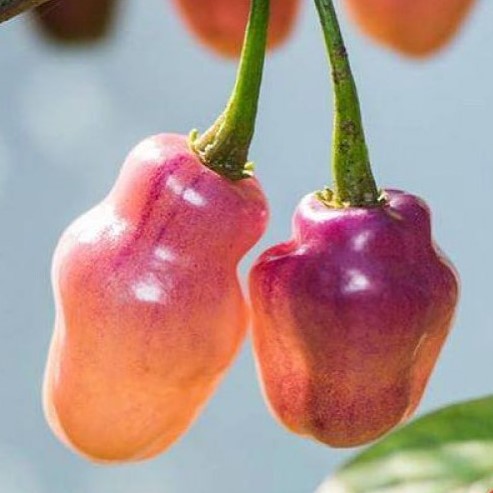
Fidalgo Roxa is a pepper plant from Brazil and is considered to be “one of a kind.” The flowers are white and purple and the plant will eventually be loaded with purple, pink and apricot colored peppers. It is described to have a fruity flavor that is in the upper mid heat range.
Cherry Bomb
Cherry Bomb (AKA Hot Cherry Pepper) is another variety that we chose to grow this year. It is a beautiful compact plant with brilliant red cherry-like peppers. Despite its name, this pepper is described as having a heat level close to a mild jalapeno – medium heat with a sweet taste. The pepper is fleshy and juicy and can be used as a substitute for jalapenos, in vinegars and is good for stuffing and pickling.
Shishito Pepper
Shishito pepper is a Japanese pepper variety that is very trendy right now. They are easy to grow and yield a lot of fruit in a short period of time. The plants are compact and do well in containers. They have thin skin which makes them perfect for quick frying, roasting and grilling. The pepper is considered to be mildly spicy but occasionally you might find one that really packs a punch!
Aji Dulce pepper
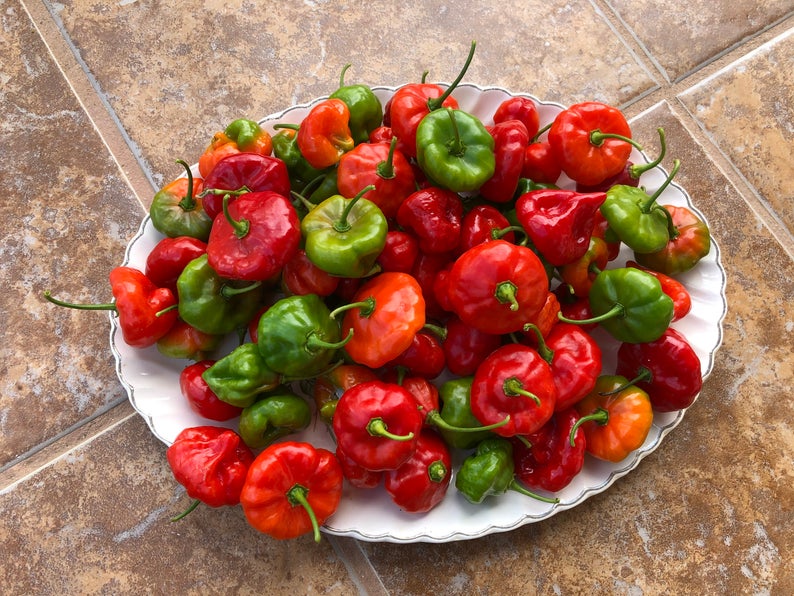
And back by popular demand, we have grown more of the Aji Dulce peppers for the sale this year. This is a fun plant with red and green lantern shaped peppers. They are sweet and can be used in many recipes. If you read the article I wrote for this blog last year, you will remember that the seeds came from Puerto Rico from my good friend Paco. We have had several requests for this “Paco” pepper plant from people who bought and grew this plant last year!!!
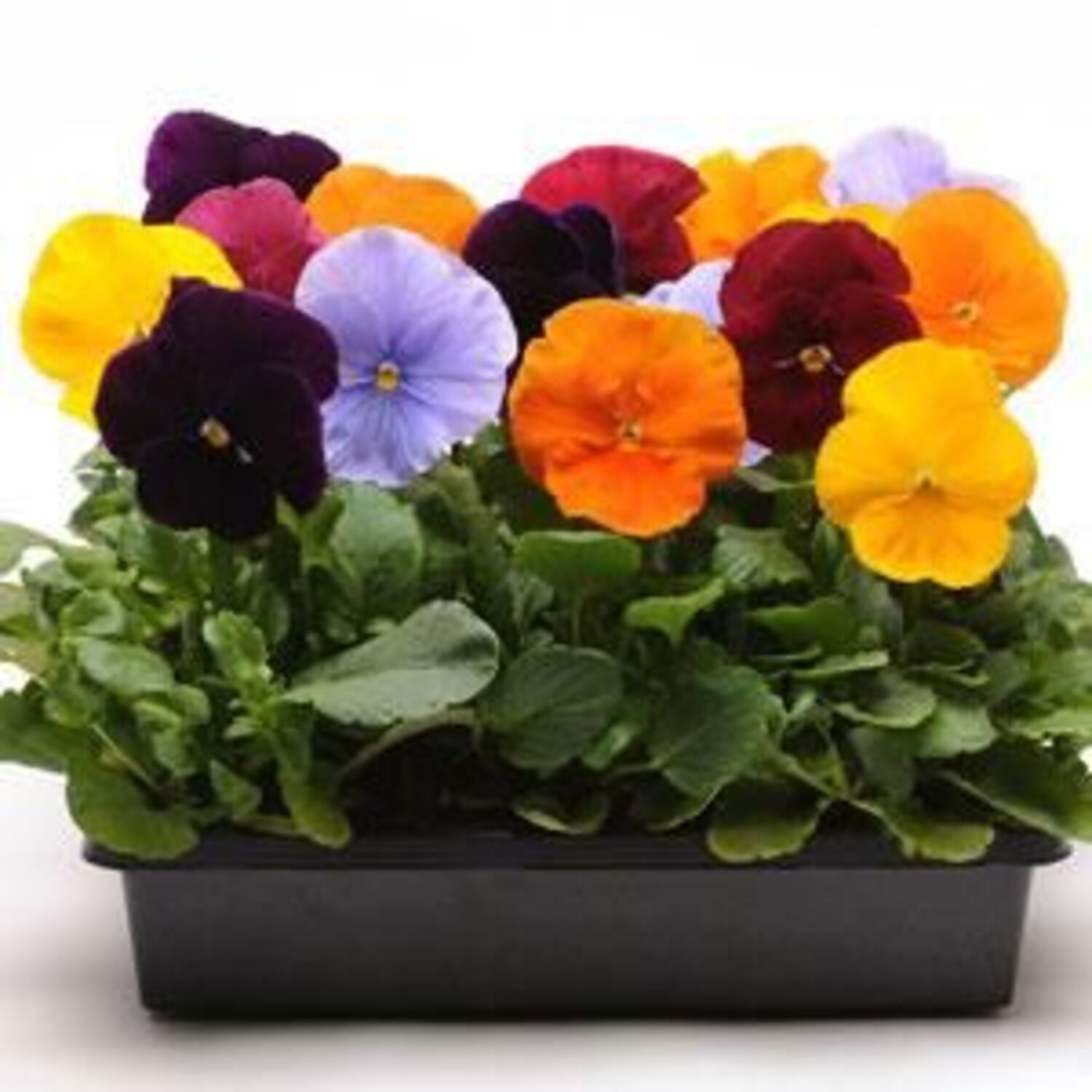
Raincatcher’s Garden of Midway Hills is pleased to offer pansies and violas at a fantastic price for your fall and winter landscape color. “What’s the difference?” you might ask. Pansy blooms are larger than viola blooms, but violas are reported to have more blooms per plant and be somewhat more cold-tolerant. We love them both! We’ve also added alyssum this year – so pretty in container plantings. All plants are sold in 18-count flats of 4” pots.
Sale Date: 10/7 at 7am through 10/11 at noon. All flats $19 (including tax)
Pick up purchased plants at Raincatcher’s on Wednesday, 10/27, 1-4pm (details below)
All pansy orders must be paid for by Thursday, October 14th. If you opt out of paying through Signup Genius, you may bring cash (exact change only please) or check made out to DCMGA to the Raincatcher’s Garden on Tuesday, 10/12, from 9am until noon or email Lisa Centala at lcentala@gmail.com to make other arrangements.
All prepaid pansies and plants may be picked up at Raincatcher’s from the shade pavilion in the north garden on Wednesday, 10/27, from 1pm until 4pm. Raincatcher’s is located on the campus of Midway Hills Christian Church at 11001 Midway Road, Dallas, TX. We offer delivery in the Dallas area for large orders of 10 flats or more. Please indicate “delivery requested” in the comments section of the signup, and we will notify you to make arrangements. Volunteers will be available to help pull and load your order.
Place your order using the following link:
Sale Dates: 10/7 at 7am through 10/11 at noon. All flats $19
This article is about my friend Paco. We met on a pickleball court 5 or 6 years ago and have been good friends ever since. The first time I stepped into his backyard, I discovered we had something other than pickleball in common – gardening! Paco is from Puerto Rico and he has turned his backyard into a tropical paradise. Last year at a summer pool party, I noticed a pepper plant with small, wrinkly looking red and green peppers. He explained that he collected the seeds from peppers he got in Puerto Rico because it is an important ingredient for sofrito. I left the party with a baggie full of seeds.
The Aji Dulce peppers (Capsicum Chinese) are small, sweet peppers. They have the shape and size of a habanera pepper but without the heat. They start out light to dark green and eventually turn red and orange if left on the plant to mature. Aji Dulce is used to season dishes in Puerto Rico, Dominican Republic and Cuba. My research found that in Puerto Rico, it is most commonly used in sofrito (which translates to stir fry or sauté in English). It is a perennial in the tropics but is an annual here.
With the seeds Paco gave me last year, we have been able to start a number of these pepper plants for the Raincatcher’s Garden annual plant sale which will be held at the garden on Thursday, May 13th. I am looking forward to growing a couple of these plants myself this summer and will be looking up sofrito recipes once I get a good crop going!
This plant goes by several names. In Puerto Rico it is know as aji dulce, ajicito or ajies. In the Dominican Rebuplic it is called aji gustoso and in Cuba it is aji cachucha. To me, this plant will always and simply be referred to as Paco’s peppers!
Jackie James
Dallas County Master Gardener Class of 1993
We will be posting more details on this blog about the May 13th plant sale in the near future.
Our annual plant sale will be held in conjunction with the April 26, 2018 meeting of the Dallas
County Master Gardener Association. Before the meeting: 10:00 – 11:30 After the meeting:
1:00 – 2:00
Come shop the great variety of plants we have to offer!! We have divided our perennials,
potted volunteers, started seeds, taken cuttings, dug bulbs..
We have herbs, succulents,
bulbs, houseplants, Louisiana iris, annuals, perennials, natives and adapted plants as well as
ornamental plant markers and other garden items.
Don’t forget our tomato and pepper plants, ready to go home with you!









 DALLAS GARDEN BUZZ