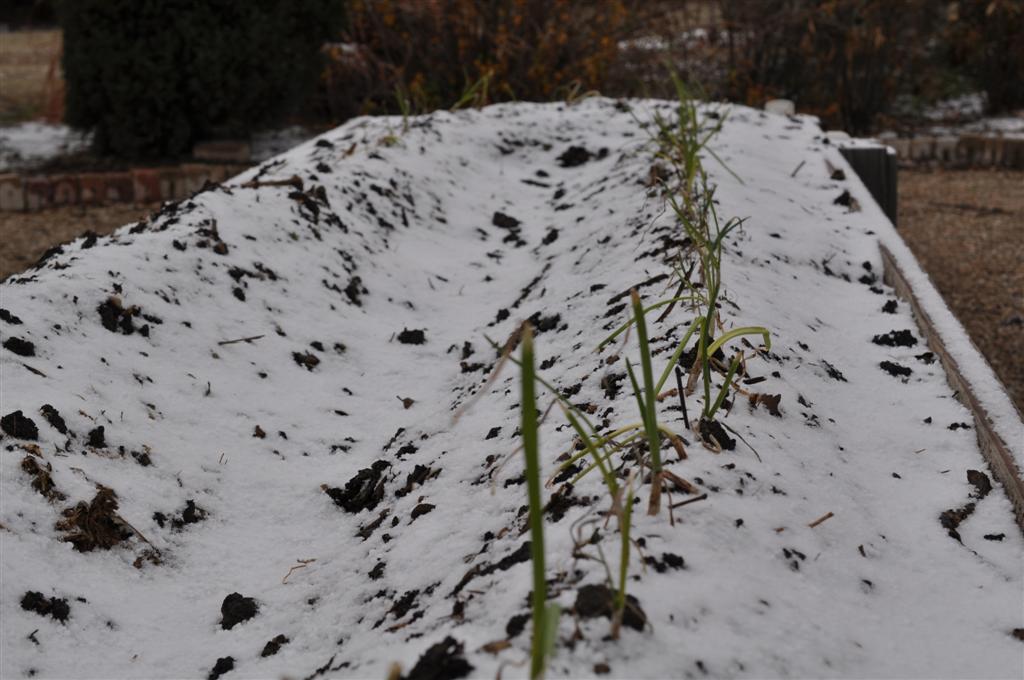
Brrr…it has been cold in Dallas, Texas since our snowy Christmas day. My thoughts have not been about digging in the garden. Sitting by the fireplace with a hot cup of tea and garden catalogs spread at my feet seem right for January.
The gardening calendar has other thoughts. Potatoes and onions are ready to be planted now! Jim and Hans planted our onion sets last week. Jim likes to get an early start on onions and plants them just as soon as he can find them in Dallas garden centers.
To grow fist size onions, you need to select the right variety, plant between January 1st and February 15th, and maintain optimum moisture and fertility. We like the famous 1015Y Texas SuperSweet. Other recommendations from Texas A&M include : Bermuda, Southern Belle, White Granex, Yellow Granex and Burgundy.
Plant your onion sets about 4 inches apart in raised furrows. Keep them moist not wet. At the Demonstration Garden we add compost to provide the nutrients onions crave.
And what’s the payoff for getting outside in January to plant onions? Remember the sweet and savory onion tarts we made last May!
Ann
Next week we will be plant potatoes, and seeds of beets, lettuce, carrots, and radishes.




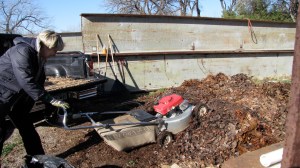 Compost is recycled organic material. Grass clippings, leaves and plant refuse, things that used to be thrown into the landfill, are converted with the help of microbes, molds and insects into food for our garden.
 The outside edge (as much as 12” can dry out fairly quickly so I prefer the round style—acts like an insulator. The interior stays moist and heats up with microbial activity. When the pile is turned, the dry outer material is stirred into the moist interior and helps to aerate the pile. Depending on your available space, it is nice to have more than one container so you can move the compost when turning it. Three containers allow you to have compost at different stages of maturation; new, in-process, finished.
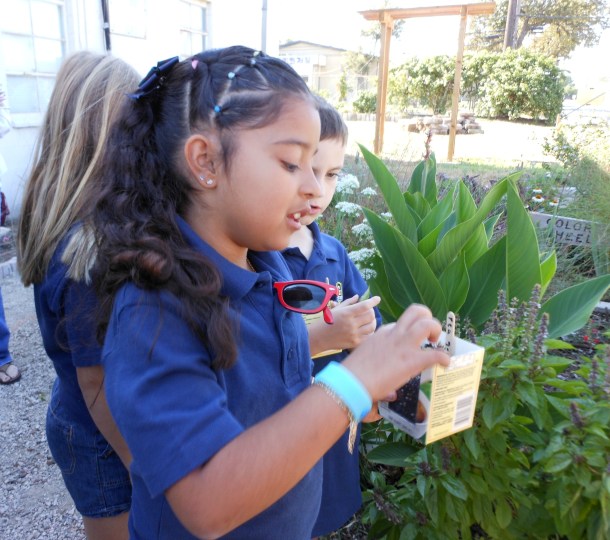
 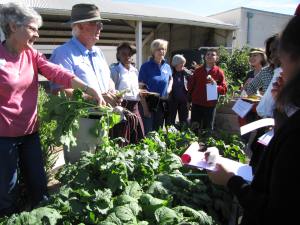 Fifth grade students from West Dallas learn about root crops from Jim and Abbe. Did you know that the turnip or white turnip is a member of the parsley family, Brassica rapa var. rapa? It is a root vegetable known for its bulbous tap root which is high in vitamin C and grown as a food crop for both humans and livestock. Turnips are easy and quick to grow (35-70 days) and can be eaten raw (roots) or cooked (roots and leaves). Turnips like well-tilled soil and constant water. Both of these conditions are provided in our raised organic beds via our home-made compost and drip irrigation system.
 Carolyn demonstrates the technique of hand-spinning cotton thread to the fifth grade students . Did you know that cotton is the most important non-food crop in the world? Cotton has been spun, woven & dyed since prehistoric times. Today, industrial uses for cotton are just as important as the cloth that originally was woven. These products vary widely from cloth-based such as diapers, bandages, and paper to cosmetics, soap and oils; dynamite and plastics; and that sidewalk scourge, chewing gum (cellulose). There are 39 different species of the genus Gossypium, 4 of which were commercially grown since all cotton was domesticated in antiquity. The variety G. hirsutum became known as “upland cotton” and comprises 90% of the world’s cotton crop.
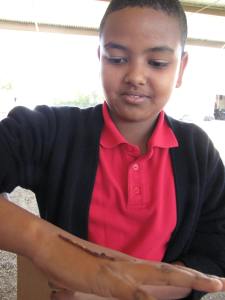 A 5th grade student from West Dallas Community School gets up close & personal with a “red wiggler” worm. During our Vermi-composting lesson, he & his classmates learned that this little ‘Eisenia fetida’ is one of approximately 2700 different kinds of worms of a large variety of species. Did you know that “red wigglers” (aka brown-nose or red worms) work best in container/bin composting. That’s because they are non-burrowing and move horizontally through the soil.
 Journaling is an integral component of the educational program offered by the Demonstration Garden. Our Nature Journals, made from recycled materials are constructed by our student visitors and personalized to reflect their connections with the garden. A 5th grader from West Dallas Community School proudly proclaims, “Nature is My Life.” Her journal became her memory book of observations, descriptions, illustrationsand connections; a special way of carrying a piece of the garden home with her.


 DALLAS GARDEN BUZZ