Winter Honeysuckle

It’s nice to have something blooming in February and it’s nice to have friends like Texas Discovery Garden.

We had all gathered around our Winter honeysuckle to inhale its lovely scent and had questions about this plant.

Winter Honeysuckle Blooming Late January through February at the Demonstration Garden on Joe Field Road

Winter Honeysuckle Blooming Late January through February at the Demonstration Garden on Joe Field Road

Roger, featured in another of our posts, answered:

Ann,

Roseann had forwarded me your e-mail yesterday and I hadn’t realized until then that ours too is in bloom now!  I had gone out to check on it and never got back to respond.

As you already know it’s a non-native (E. China)so might be discouraged by some purists for planting.  Although it is listed as “invasive” by some sources, most gardeners would disagree, as it doesn’t produce many berries and only suckers for a short distance from the bush.  Perhaps in the moist woods of eastern U.S. it might escape cultivation, but doubtful here in our fairly dry habitat.  Probably it has received a bad rap from its many relatives – like the highly invasive Japanese Honeysuckle which is a VINE or Amur Honeysuckle, a bush that used to be fairly invasive in this area.

Anyone that would rather not try it, might try the native White Honeysuckle (Lonicera alba) that has very similar leaves and not quite so bush-like.  I’m not sure of its bloom time, but it probably doesn’t produce the profusion of strong scented flowers this early in the season like the Winter (or Fragrant) Honeysuckle.

As a landscape plant, it apparently is not picky as to soil type and is relatively drought tolerant.  It does have some other distinct benefits for a North Texas landscape.  The flowers this early in the season do provide a rare nectar source for bees and butterflies that venture out on warm days during the winter months (Question Marks, Goatweeds, and Mourning Cloaks are local butterflies that overwinter here as adults).  It is supposed to be an excellent bird attracting bush according to some sources for the berries.  But since ours rarely fruits, it is often the flowers that attract the birds!  They apparently eat the flowers for the nectar and spit out the petals.  One interesting comment I read is that it is sometimes referred to as “Pouting Flower” as the paired flowers face in opposite directions!

Thanks for asking about this!  I needed to write something for my weekly “In The Garden…” part of TDG’s blog, so I’ll just copy what I wrote to you!  Naturally, Roger

Roger Sanderson
Director of Horticulture

Texas Discovery Gardens
at Fair Park
3601 Martin Luther King Jr Blvd
Dallas, Texas 75210
P.O. Box 152537
Dallas, Texas 75315
P (214) 428-7476 ext. 210
F (214) 428-5338

RSanderson@TexasDiscoveryGardens.org
The butterflies are back!

Picture by Starla
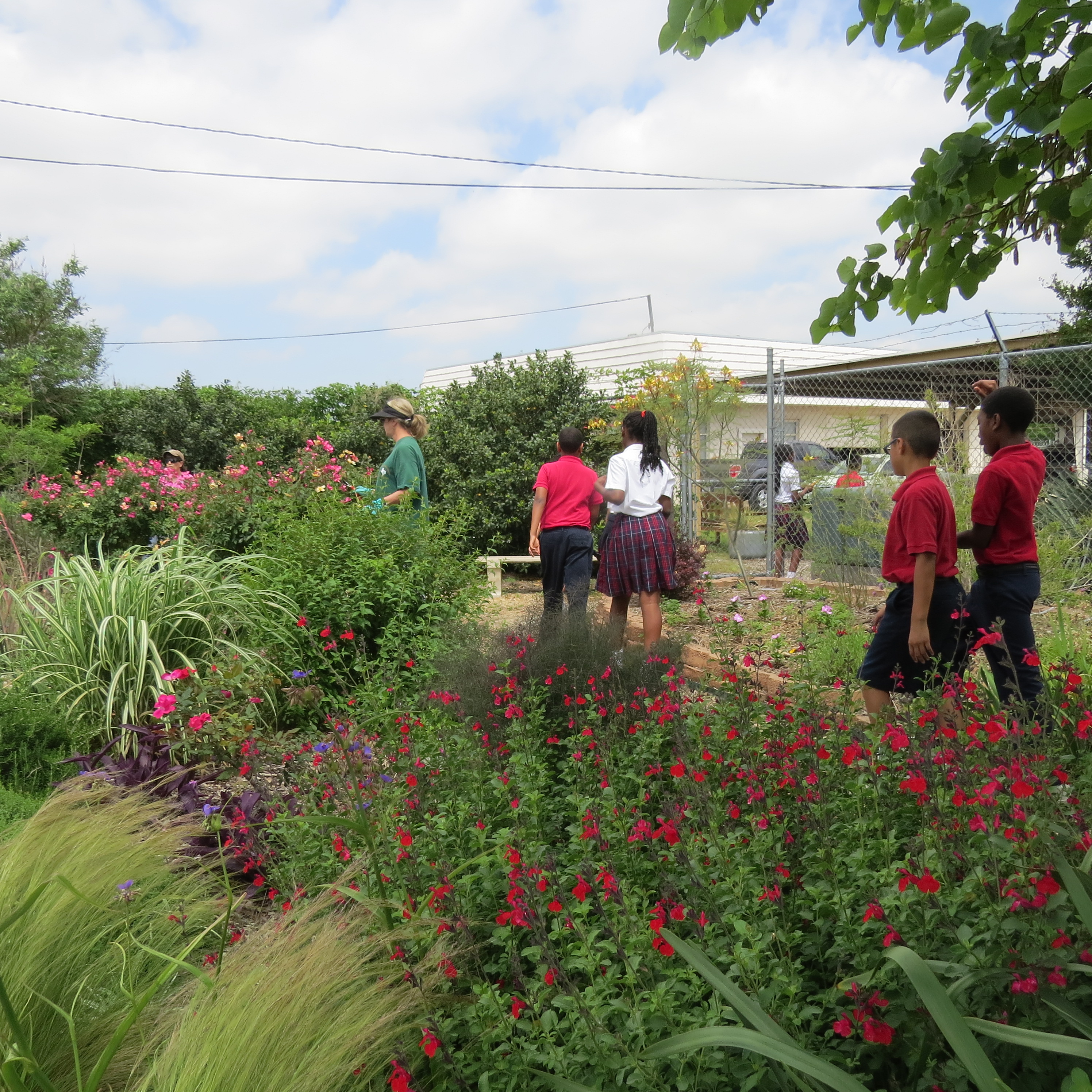
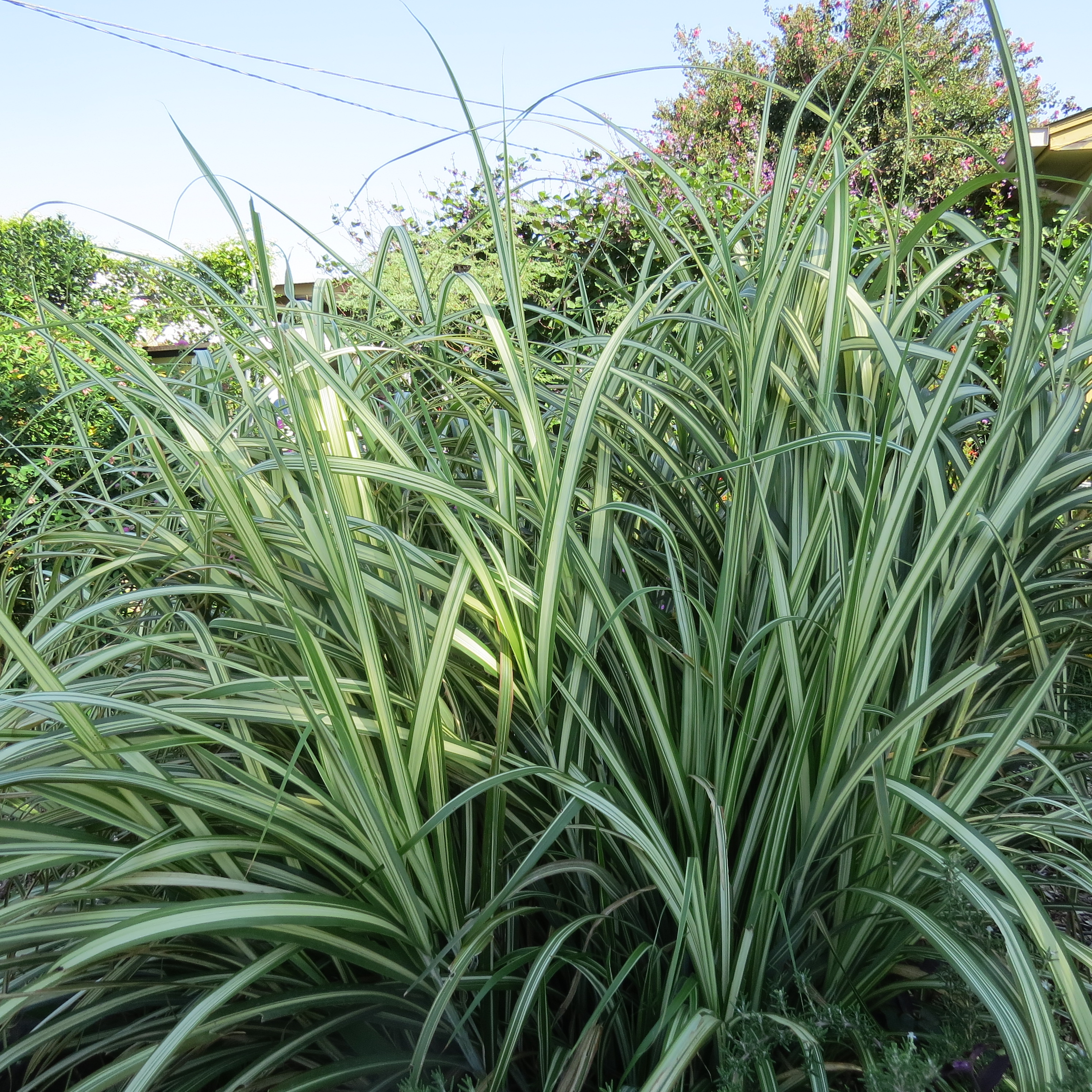
Variegated Maiden Grass – Miscanthus sinensis ‘Morning Light’

Take a look with us at one of our beautiful ornamental grasses, Miscanthus sinensis, “Morning Light’.

Above: Mutablis Rose, Miscanthus, Mexican Feather Grass,and Salvii gregii in our spring garden.  Don't you like the way the children's uniforms compliment the garden colors?

Above: Mutablis Rose, Miscanthus, Mexican Feather Grass,and Salvii gregii in our spring garden. Don’t you like the way the children’s uniforms compliment the garden colors?

In the summer its variegated leaves glisten.

Above: Summer time view of Miscanthus Morning Light

Above: Summer time view of Miscanthus Morning Light

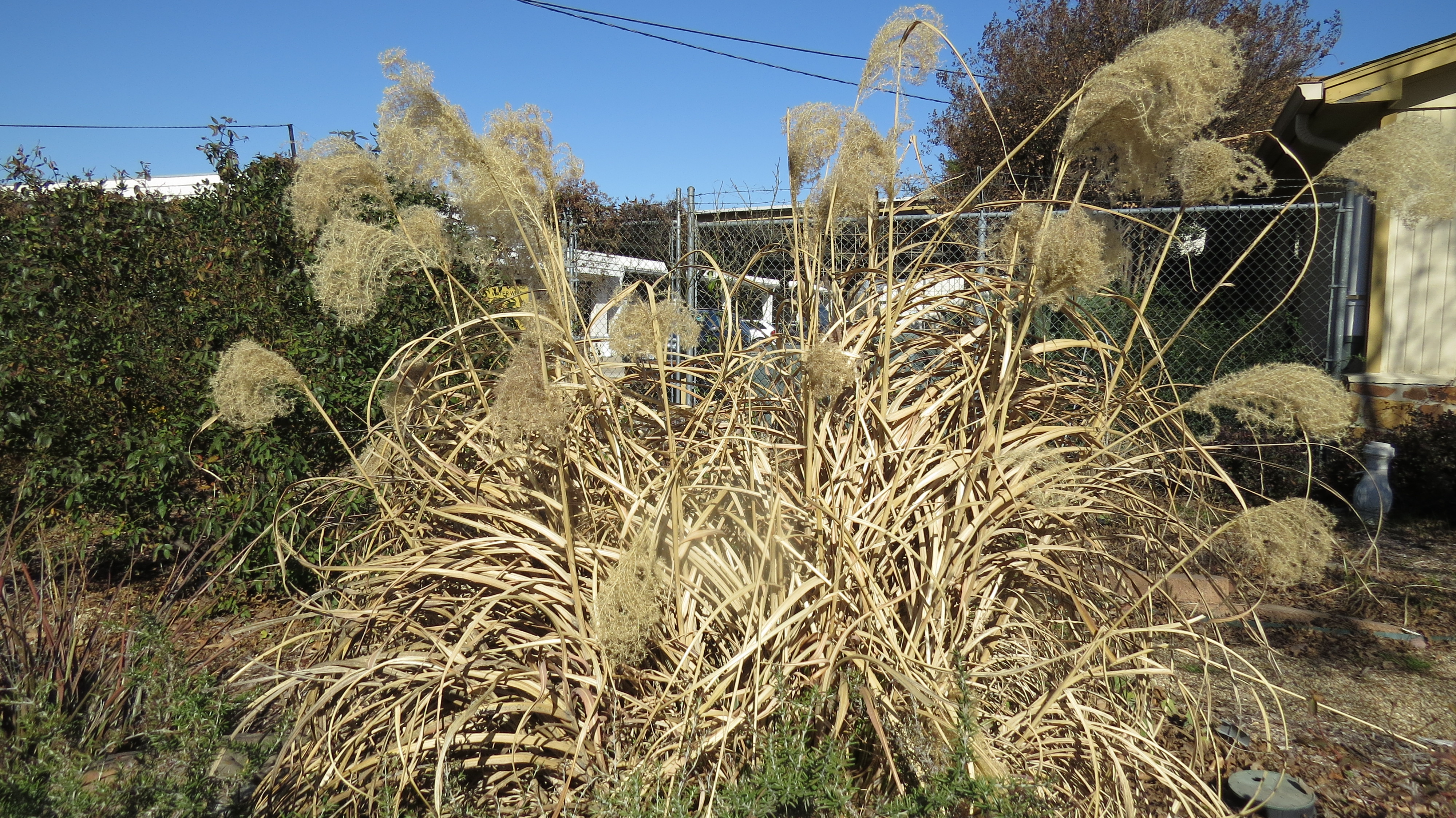
In the Winter the grass turns brown and brightens the sky with its tawny panicles.

Above: Winter Version of Miscanthus

Above: Winter Version of Miscanthus

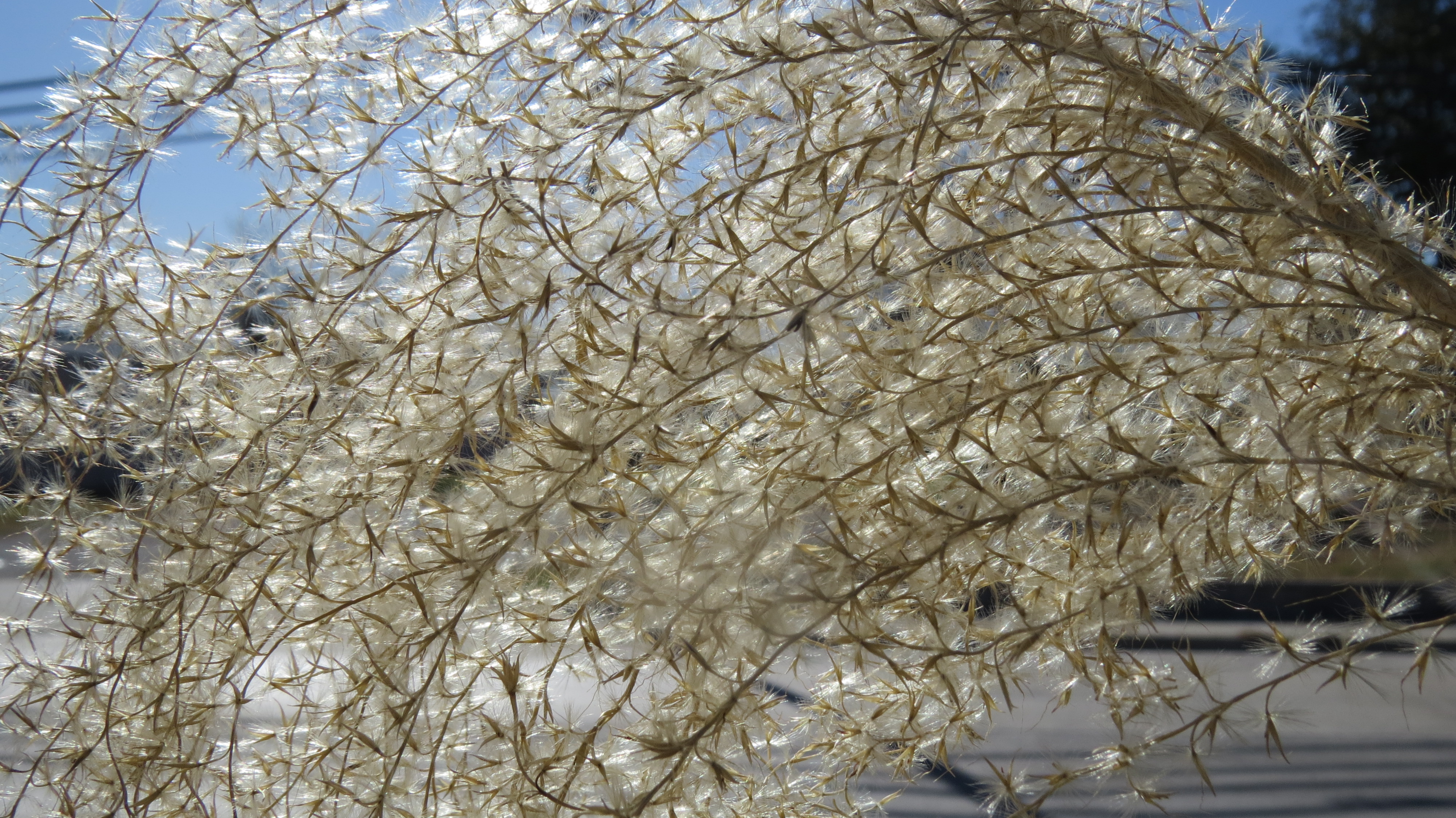
The panicles glow in morning light.

Above: Wintery Miscanthus Panicles

Above: Wintery Miscanthus Panicles

Alas, there is a season for everything and even grasses must be sheared.

To learn more about a new grass pruning method click here.

And don’t grow weary, Morning Light will come again.

Ann

Pictures by Starla

The Lowly Onion

Because of their circle within a circle anatomy, the Egyptians considered them to be the symbol of eternal life, and they buried them along with their dead.  The Greeks, on the other hand, used them to increase the strength and endurance of their athletes before the Olympic Games.  Throughout the ages they have served as food and medicine for both the poor and wealthy.  What is this ancient vegetable?  The lowly onion, of course.

Above: Dallas County Master Gardeners-Cindy, Tim, and Linda with our onions harvested in 2013

Above: Dallas County Master Gardeners-Cindy, Tim, and Linda with our onions harvested in 2013

Onions (Allium cepa or bulb onions) are thought to have first originated in Central Asia or perhaps Iran and Pakistan at least 5000 years ago.  Our earliest ancestors probably ate wild onions and gradually started cultivating and domesticating them since onions are portable, easy to grow, prevent thirst, and could be dried for times when food was scarce.  To the Romans, the onions’ medicinal qualities included to cure vision, induce sleep, and heal mouth sores, dog bites, toothaches, dysentery, and lumbago.  In the Middle Ages their antiseptic qualities were thought to cure snake bites, alleviate headaches and prevent hair loss.  In North America, despite the abundance of wild onions consumed by Native Americans, the Pilgrims in 1648 planted bulb onions as soon as the ground could be cleared.

Today it is estimated that the per capita consumption of onions in the United States is over 20 pounds a year.  The onion is also the official state vegetable of Texas.    If you want to grow onions in North Texas, Jan. 1-Feb. 15 is the time to plant them.  Onion varieties are generally divided into three major categories:  long day, short day and intermediate day onions.  Dixondale Onion Farm in Carrizo Springs, TX, stresses that when selecting onion varieties “the size of the onion bulb is dependent upon the number and size of the green leaves or tops at the time of bulbing.  For each leaf, there will be a ring of onion.  The larger the leaf, the larger the ring will be when the carbohydrates from the leaves are transferred to the rings of the bulb.  The triggering of this transfer or bulbing is dependent upon day length and temperature and not the size or age of the plants.  When selecting your onion varieties, remember that the further north you are, the more hours of daylight you have during the summer.”  The onions that can be grown in Dallas County are those varieties found in the short day and intermediate day category.  This, unfortunately, eliminates some of the “specialty” onions found in some seed catalogues; however there are still white, red and yellow onions that do well in here.  Most garden centers carry onion slips that are selected for our area or go to the Aggie-Horticulture website  to see a list of recommended varieties.

Onions prefer a loose, well drained soil and should be planted 4-6 weeks before the last spring freeze.  To grow larger onions, they can be fertilized with a synthetic or organic fertilizer that has a larger middle number, such as 10-20-10 when they are first planted.  After the original planting, they can be fertilized with ammonium fertilizer (21-0-0) in alkaline soils or calcium nitrate (15.5-0-0) in acidic soils about every 2-3 weeks, if desired.  Stop fertilizing once the onions start to bulb.

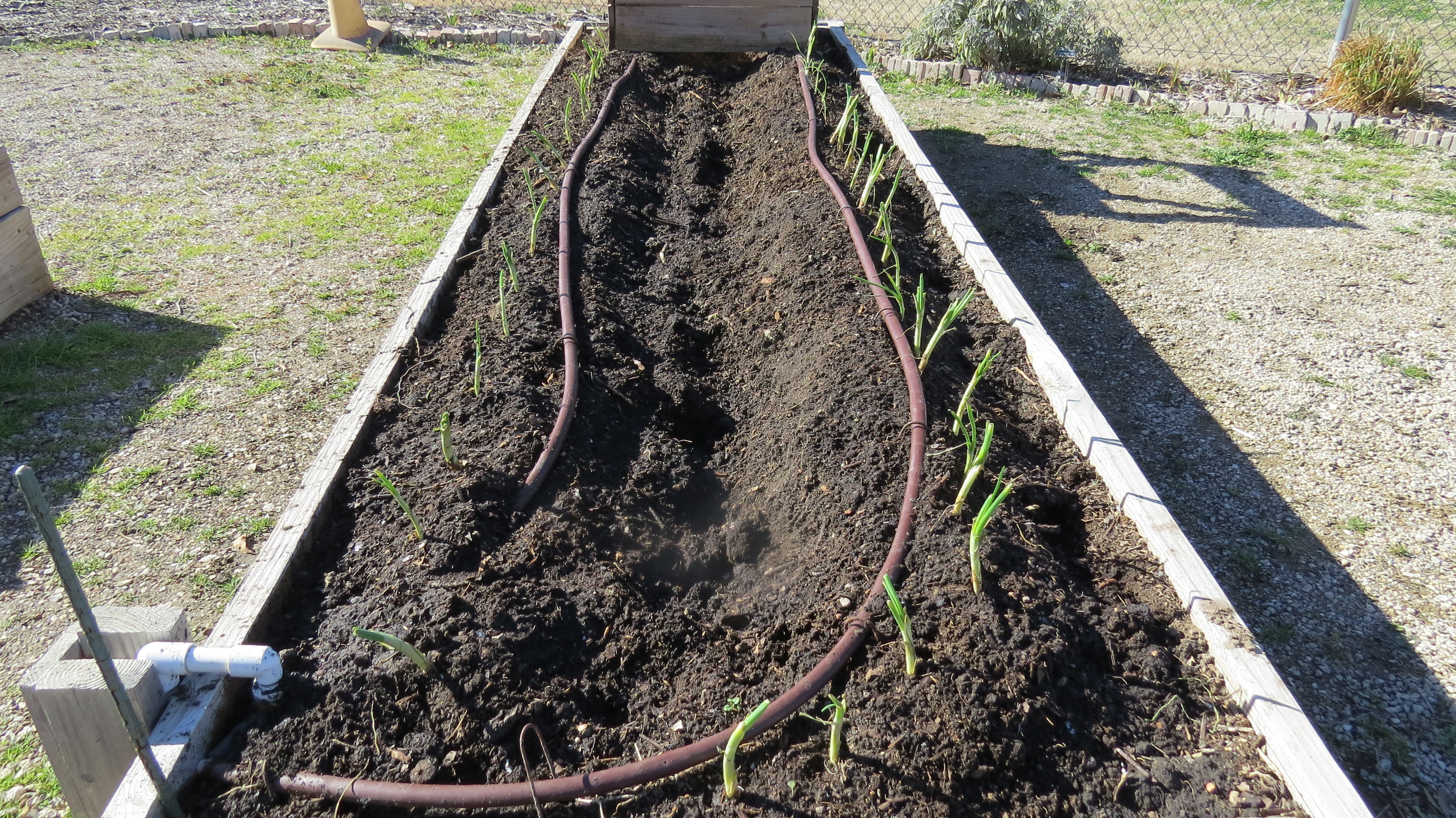
Above: Onions planted at The Demonstration Garden on Joe Field Road in 2014.

Above: Onions planted at The Demonstration Garden on Joe Field Road in 2014.

Plant the onions slips one inch deep and no deeper as their ability to form a bulb will be compromised.  Onions grown to maturity should be planted about 4 inches apart; however, if green onions are desired, the onion slips can be planted about 2 inches apart and every other one pulled for green onions.  Water thoroughly and regularly until the tops turn brown or yellow and fall over, then cut back on water.  At this point a fully mature onion should have about 13 leaves.

When they are harvested, dry them thoroughly for several days to avoid problems with rot.  The entire neck (where the onion meets the bulb) should be dry and not “slip.”  Once the onions are dry, clip the roots and clip the top to 1 inch.  Store them in a cool, dry, well-ventilated location if not consumed right away.  Any onion that shows signs of rot should be removed immediately.  In general, according to Dixondale, sweeter tasting onions do not store as long as the more pungent types.

So, plant yourself some onions—and Bon appetite !!

Carolyn

More about onions click here and for onion recipes click here!

Hearts and Roses Luncheon

rose-demo garden“Hearts and Roses”

An Enchanting Valentine’s Lunch and Lecture

At the Joe Field Earth-Kind/®WaterWise Demonstration Garden

Tuesday*February 11, 2014*11:00am

$14.00 per person*Limited to 25 Guests

Menu 

Apricot-Cheese Truffles

Strawberry Spinach Salad with Poppy Seed Dressing

Old-Fashioned Chicken and Dumplings

Chocolate Boxes filled with Sugared Raspberries or Red Velvet Cake

Vanilla Cinnamon Pecan Coffee*Herbal Iced Tea

***

Special Presentation by Vicki Agee, Dallas County Master Gardener and Rosarian

“Landscaping with Roses” (Earn One Hour Education Credit)

  Your check is your reservation.

 Make checks payable to: DCMG.

 Email dallasgardenbuzz@gmail.com for info about mailing your check.

Payment must be received by February 1st


Starting Seeds Indoors-A Contest!

Mnemonics and memory prompters are a good way for gardeners to remember important facts and dates. 

Around Valentine’s Day, February 14?  Time to prune your roses.

Do you have a better way of saying, other than “Treat Seeds With Loving Hands,” the five critical elements for growing successful transplants discussed in yesterday’s post?  If so, please let us know.

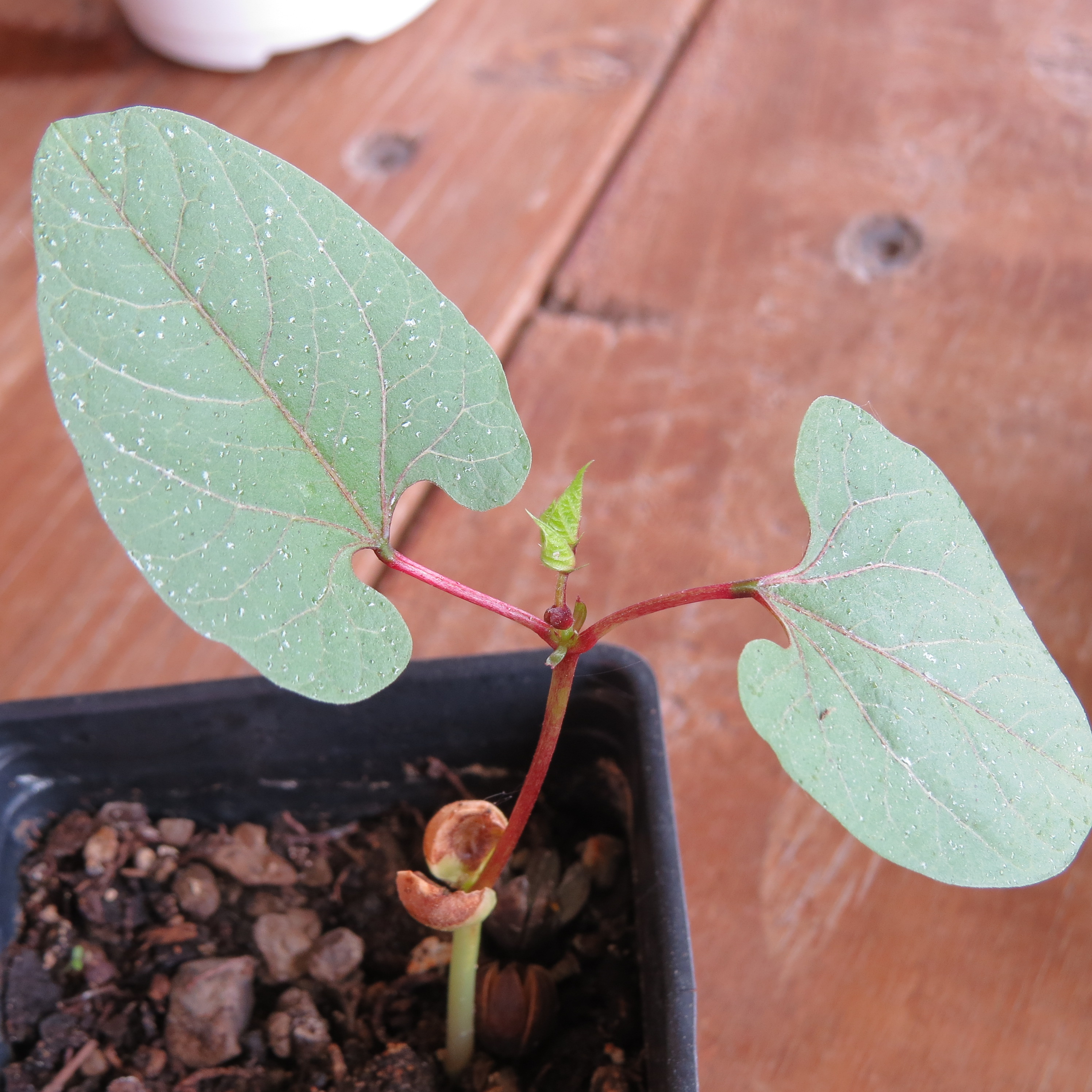
Above:Hyacinth Bean Vine Seedling Ready to be Transplanted

Above:Hyacinth Bean Vine Seedling Ready to be Transplanted

As Ann , the Demonstration Garden’s coordinator, said “There is a lot of interest in gardening but so little real depth of knowledge.  I think of some of the things I hear at the garden centers when I am shopping and feel so bad that plants and seeds are going home with very little chance of survival.  Young gardeners are so handy on the computer but not always in the dirt.  Maybe we can help with that.”

So, put on your creative gardening hat and let us know your suggestion for a way to easily remember the five  elements for successfully starting transplants from seed. The best suggestion, as judged by several of the Joe Field  gardeners, will receive  5  packets of seeds collected from our Demonstration Garden.

Help us teach the general public how to easily remember how to germinate seeds.

Carolyn

Picture by Starla

Seed Starting Indoors

Treat Seeds With Loving Hands

     It’s that time again when a gardener’s mailbox is filled with tempting seed catalogues; and the dreary winter days of January and February give rise to dreams of spring’s colorful flowers and bountiful vegetable gardens.  For those gardeners who want to save money, or may be interested in trying a new variety of plant not found in local nurseries, or who enjoy the educational challenge of growing plants from seed, January and February are the times to start sowing your seeds indoors.

So what are some critical pointers to follow when starting plants from seeds?  Perhaps a mnemonic phrase will help.  As any botany student recalls, two ways to remember the classification of plants from Kingdom to Species are:  “King Phillip Came Over For Good Spaghetti” or “King Phillip Came Over From Gloria Spain.”

To remember the important considerations when germinating seeds, perhaps the mnemonic, Treat Seeds With Loving Hands will help.

Treat Seeds With Loving Hands

Treat Seeds With Loving Hands

     T  =  Timing :  The back of all seed packets contains a lot of information about the plant:  how deep to plant it, days to harvest, etc.  It also usually gives a general recommendation on when it is safe to plant the seeds outside (after the last frost, for example).  Therefore, if you desire to get a head start on growing plants from seeds, most flower and vegetable plants require about four to eight weeks of growing time before transplanting successfully into the garden.  Counting back from when the seeds are recommended to be planted outside will give one the approximate time to start seedlings indoors.

S  =  Soil  :   A soilless medium in which to start seeds is a must.  Garden centers sell seed starting mixtures that are sterile, light, and drain well.  You can also find recipes on the internet to make your own mixture.  However, the important thing to remember is to not use ordinary garden soil to start your seedlings.  Not only does it often not drain well, but it harbors pathogens that can infect the seedlings.  “Damping Off,” a common fungal disease, is bane of any gardener germinating seedlings indoors.  The use of a soilless, sterile growing medium may help prevent this.

Above: Michele using soil mix for seed starting

Above: Michele using soil mix for seed starting

W  =  Water  :  Just a realtors talk about the importance of “location, location, location,” “drainage, drainage, drainage” should be the motto of gardeners.  Seeds may be started in any type of containers, from commercially available seed starting kits to recycled plastic containers.  Just remember, if you are recycling old pots or plastic containers, that they must have adequate drainage holes and they should be sterilized in a dilute mixture of water and bleach.  After the seeds are planting to the correct depth in the soilless medium, very gently water them to thoroughly wet the soil (a spray bottle works well for this), cover with plastic, then place the containers in a warm place (some people put them on top of the refrigerator).  As soon as the seeds germinate, remove the plastic cover and move to a light source.  Keep the soil damp, but do not over water as this may encourage diseases.

L  =  Light  :  Along with drainage, light is the most critical part of growing successful, bushy transplants.  Growing plants on a window sill that gets only a few hours of direct sunlight will often result in failure or, at best, spindly plants.  In general, seedlings need 16-18 hours of light a day to grow into lush, healthy transplants.  Greenhouses with supplemental lighting and heat can be used, or you can purchase commercially made light stands.  There are also many instructions on the internet and magazines on how to make do-it-yourself light stands.

H  =  Hardening Off  :  As the little seedlings outgrow their pots, keep moving them into gradually larger pots using potting soil as the mixture.  If the potting soil does not contain fertilizer, a little slow release fertilizer, either synthetic or organic, can be added to the soil.  Since the plants have been “babied” indoors, gradually start introducing them to the outside temperatures and conditions about one to two weeks before transplanting them to the garden.  Start hardening them off in a protected, shaded area and gradually leave them outside for longer times.   Depending on the weather, they may need to be moved in and out of the house until the correct time to plant them in the garden.   If you remember to Treat Seeds With Loving Hands, your transplants should be off to a successful start.  Happy Seeding !!

Carolyn

Pictures by Starla

More Seed Saving Information Here:

Separating the Seeds From the Chaff

Seed Saving: It’s a Good Thing

Ladybug, Ladybug

Seed catalogs are filling our mailboxes and  thoughts begin to yearn for spring.   A little information about ladybugs may help you  forget these cold, gloomy winter days:

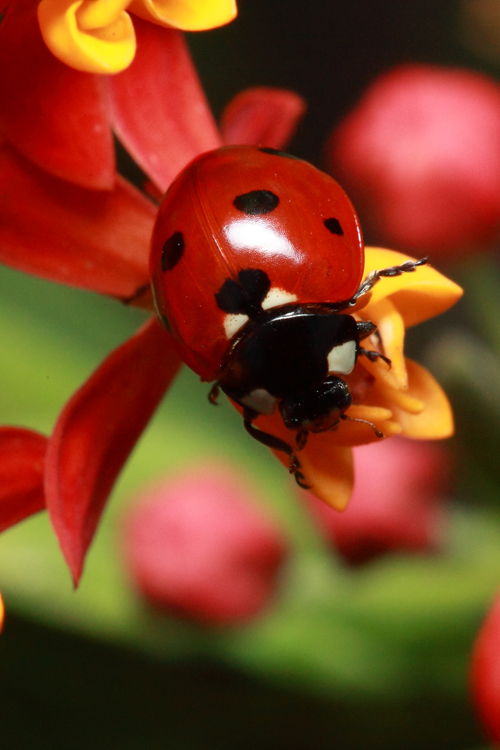
Certainly one of the most beloved of all insects is the ladybug, or more correctly, lady beetle.  And a new citizen science web project may be just the thing for adults and kids with an interest in lady beetles or cameras or both. The Lost Ladybug project started because of concerns about dwindling Ladybug _smnumbers of one kind of lady beetle, the nine-spotted lady beetle, in New York state.  It appears to have evolved into a bigger project where people from any part of the country can participate.  Find a lady beetle?

Photograph it and document the site, time and date of picture.  Then upload the information and contribute to science! What a great way to have fun and do something worthwhile.  In addition to recording your observation, visitors can view and print posters of different kinds of lady beetles, read interesting lady beetle facts and (teachers) can download lady beetle lesson plans.  Scientists will benefit from the photographic record, which should allow more up-to-date range records for common and rare species.

Perhaps most important, over time the project may allow scientists to document changes in range or distribution or abundance of different species.  The scientists are especially interested in rare lady beetles in out of the way locations, like state parks or little trodden trails.  But any site will do.  The thing is, you never know what’s going to happen when thousands of people are looking and clicking.

For anyone who thought a lady beetle is just a lady beetle, think again.  There are over 450 different species of lady beetles in North America, over 5,000 worldwide.  They come in all sizes and color patterns, feeding mostly on aphids and scale insects–two important pests for farmers and gardeners. Lady beetles are true beetles in the Order Coleoptera, not “bugs” in the Order Hemiptera.  Beetles have chewing mouth parts, go through a complete metamorphosis, and have the first pair of wings hardened to protect the body and the hind wings.  Bugs have sucking mouth parts, go through gradual metamorphosis, and have the first pair of wing partly hard and part transparent.

Nevertheless, despite the science, the name ladybug is likely to persist.  After all, Lady beetle, Lady beetle… Fly away home! …it just doesn’t have the same ring.

Photo and Writing by Mike Merchant, first printed on the blog Insects in the City.

If you are interested in learning more about insects and receiving occasional articles from Dr. Merchant on the latest insect pest or interesting insect facts  sign up for his blog, Insects in the City.  He is as good a writer as he is an entomology teacher.

Carolyn

Merry Christmas To You!

Christmas 2013 Garden

MERRY CHRISTMAS FROM OUR GARDEN TO YOURS!

Picture by Starla

Icemeggdon

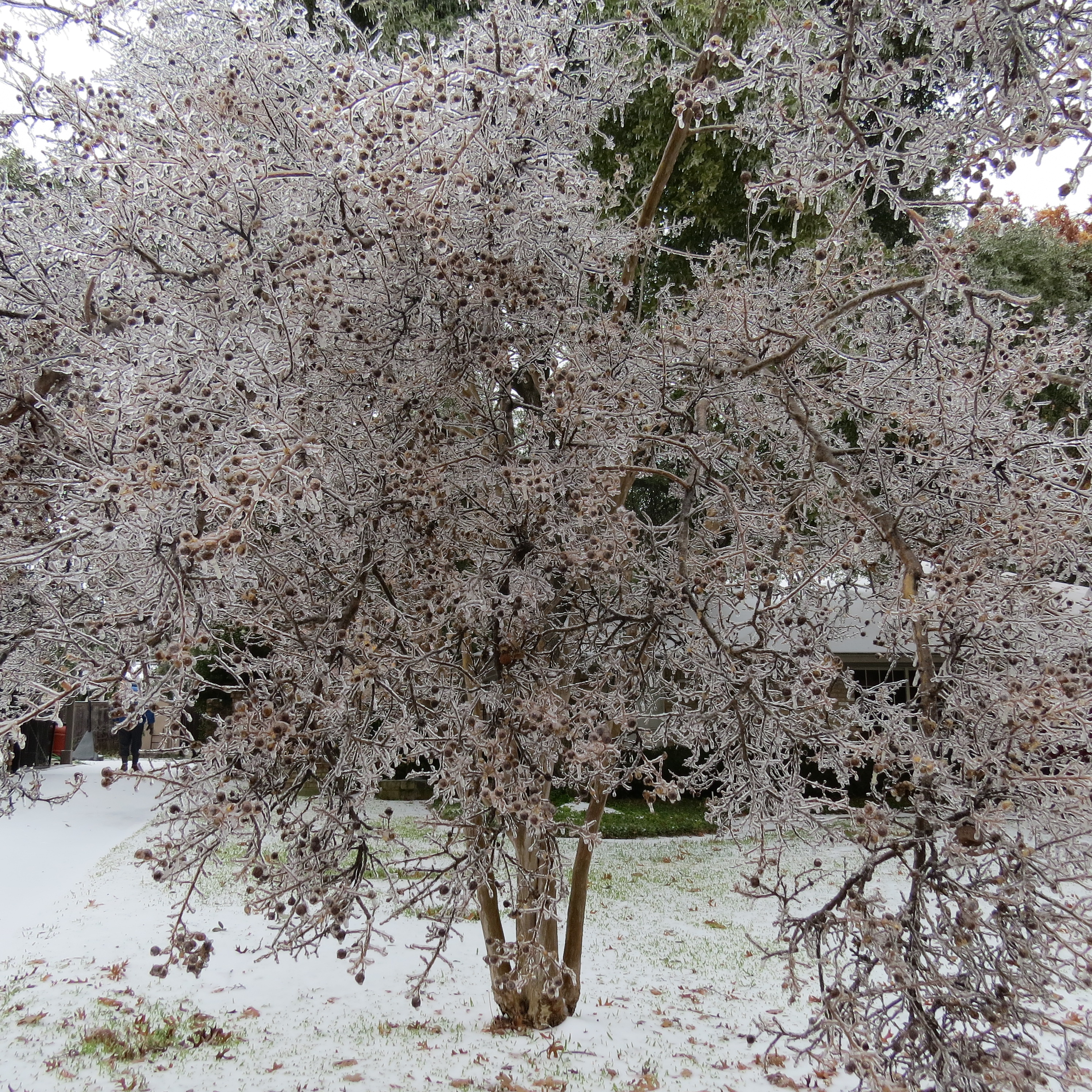
Above:Crepe Myrtle Tree Ensconced in Ice

Above:Crepe Myrtle Tree Ensconced in Ice

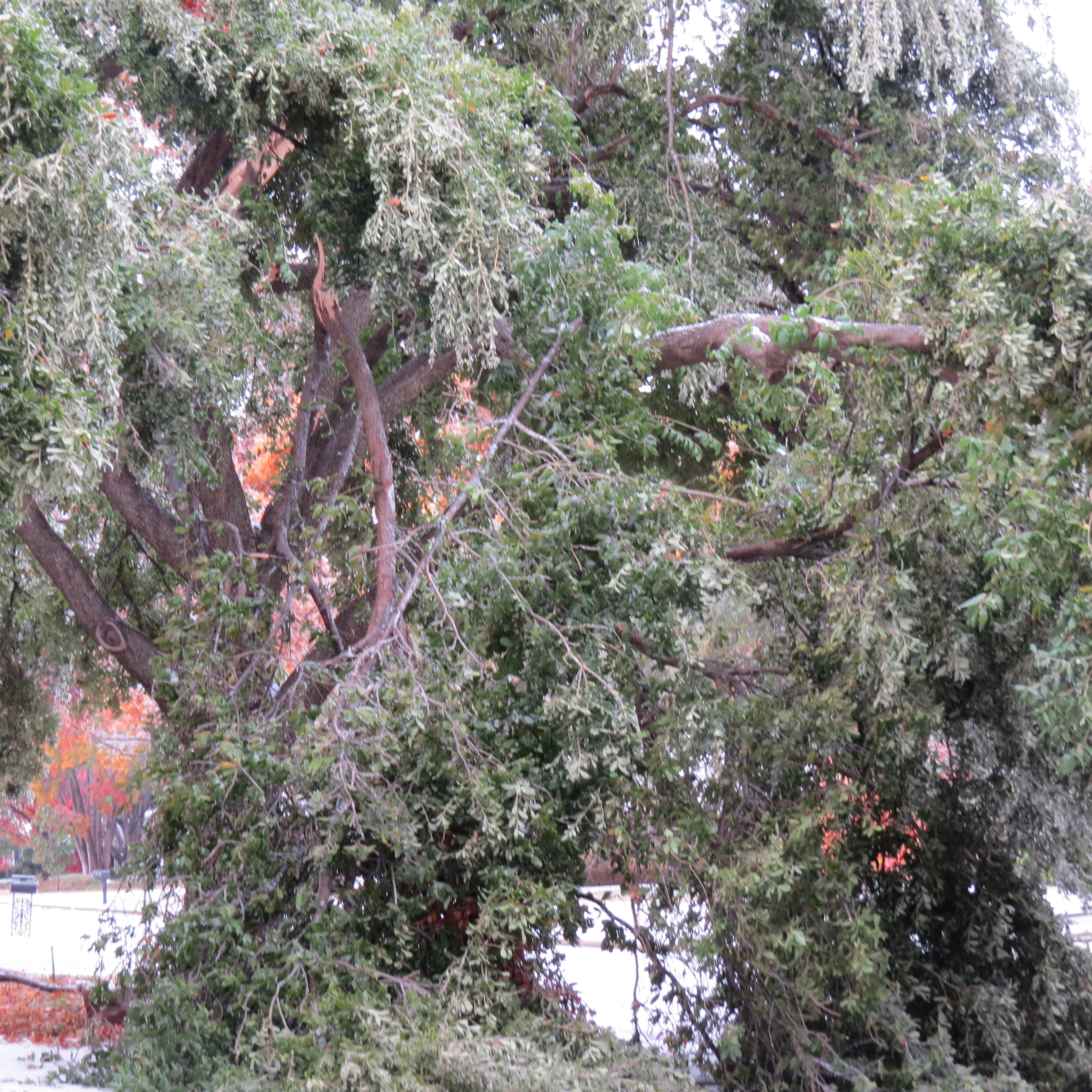
Ice hit  North Texas hard this weekend.  Some of the effects were pretty, some were not.

Above: Broken Tree Limbs, Ice Storm Damage

Above: Broken Tree Limbs, Ice Storm Damage

We asked our fellow Master Gardener, Eric,  for advice. Driving around seeing tree limbs down all over the city is distressing. Although we can’t save every tree from ice damage, we can head off some of the damage by heeding Eric’s words:

The main damage trees sustain during ice storms are limbs that break due to the excess weight from the ice that collects on the end of the tree limbs. This is usually due to improper pruning techniques that strip all the foliage away from the limbs except for a “Lions Tail” on the very end of the limb. The ice collects on the end of the branch thus creating a very strong downward vertical cantilever force. The longer the limb, the greater chance for failure.

Having a certified Arborist prune your trees will not guarantee your trees will never suffer broken limbs during an ice storm but you will suffer far fewer broken limbs than your neighbors who hire the drive by “tree toppers”. Proper “pre-storm” tree maintenance is the key to less damage for your trees.

If your trees do suffer ice damage, be sure to contact a professional tree care company to properly access the damage and suggest the best method of treatment.

Eric

Pictures by Starla

Fall Clean Up in Your Wildlife Garden-Don’t!

There’s a discussion going on in our garden.  How tidy do we want to be?Should we dead head and prune all our perennials and rake our leaves ? Maybe not, our fine feathered friends are looking for food all winter.

“If you’re not careful, you can yank the welcome mat right outfrom under all the birds, insects and small mammals your garden has been home to throughout the rest of the year.”

Debbie Roberts, Fall Clean Up in the Wildlife Garden.

Above: A view into our Wildlife Garden looking through PInk Muhly Grass. Grasses provide cover for wildlife and their seed heads provide food.

Above: A view into our Wildlife Garden looking through Pink Muhly Grass.
Grasses provide cover for wildlife and their seed heads provide food.

Less work? I am all for it. Look at some of the blog titles written on this subject:  Drop Your Rake and Look to the Skies and Fall Wildlife Garden Chores.

Above: Seedheads will be left unpruned to provide  winter food in our garden for wildlife.

Above:  Rudbeckia Seedheads

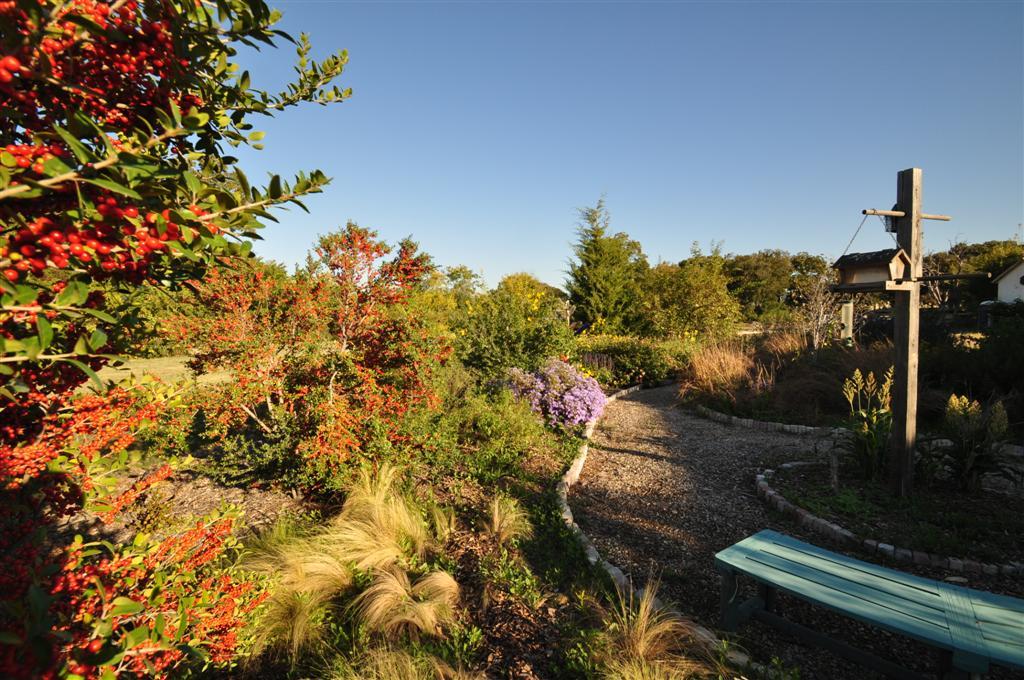
Looking for other ways to accomodate wildlife in your garden? Birds feast on Berries like Beauty Berry and Yaupon Holly in winter months.

A View of our Wildlife Habitat at The Demonstration Garden, looking North.

Yaupon Holly berries on the right, maize on the left under a bird feeder

So less work equals a more friendly wildlife garden; we can handle that!

Ann

Pictures by Starla and Ann