As composters for the Raincatcher’s Garden of Midway Hills, we are continuously looking for ingredients to make compost.
During the spring through fall, we find green grass, leaves, coffee grounds, kitchen scraps, etc. to add to our compost piles.
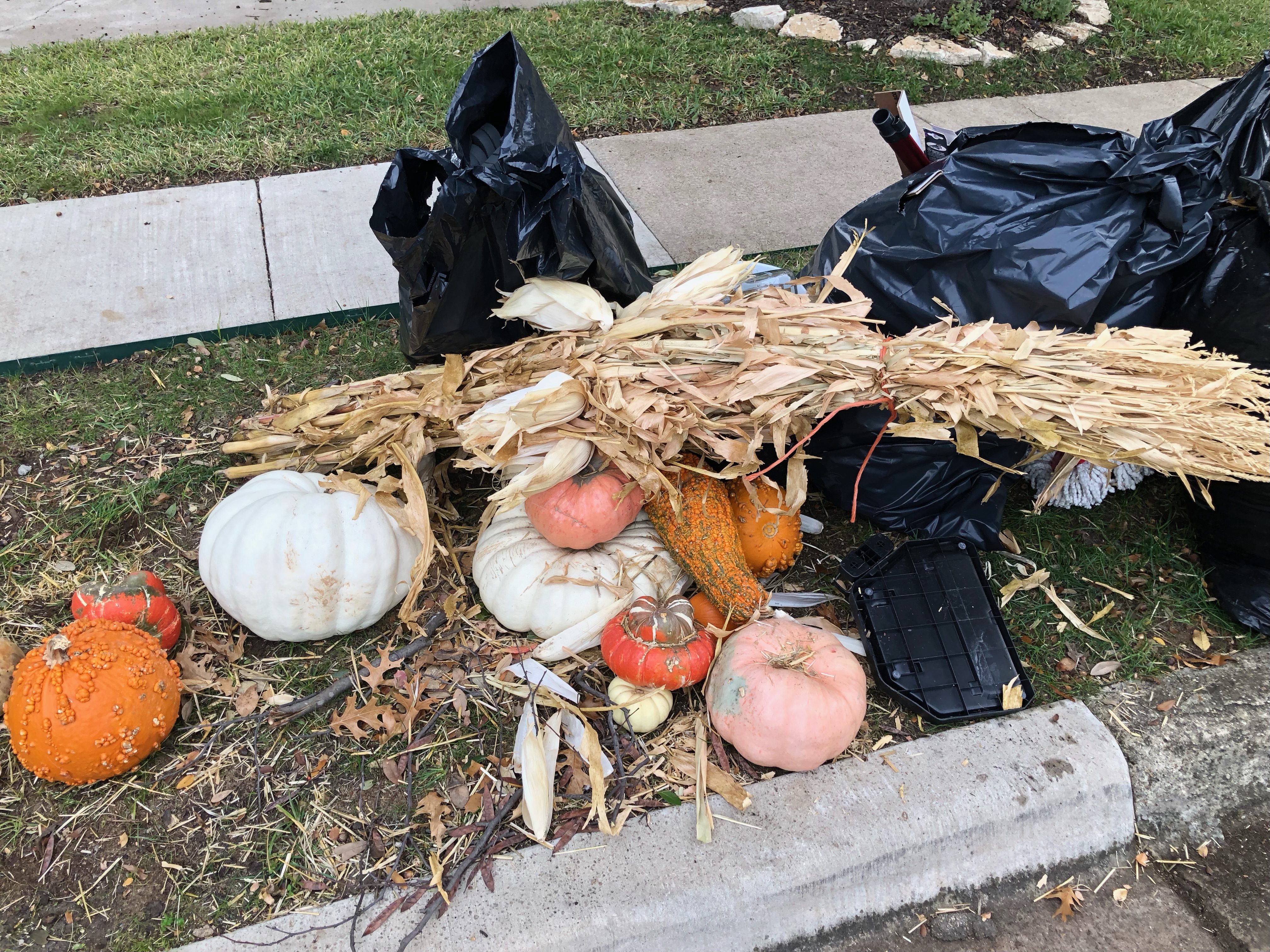
In November we are blessed with the remains of Halloween and Thanksgiving decorations—PUMPKINS! During bulk pick-up weeks we scrounge the neighborhoods looking for the elusive pumpkins and gourds. Rather than allowing them to rot in the dump, we chop them up and add them as the GREEN (nitrogen source)ingredient of compost. The BROWN (carbon source)ingredient of the recipe is, of course, are the dried leaves that are falling everywhere. The BLUE ingredient is water. The CLEAR ingredient is air. The last is TIME.
Result—BLACK GOLD—also known as compost.
This year we “harvested by the side of the road” six pickup loads of pumpkins, gourds, bags & bags of leaves, some grass, and even a bale of hay.
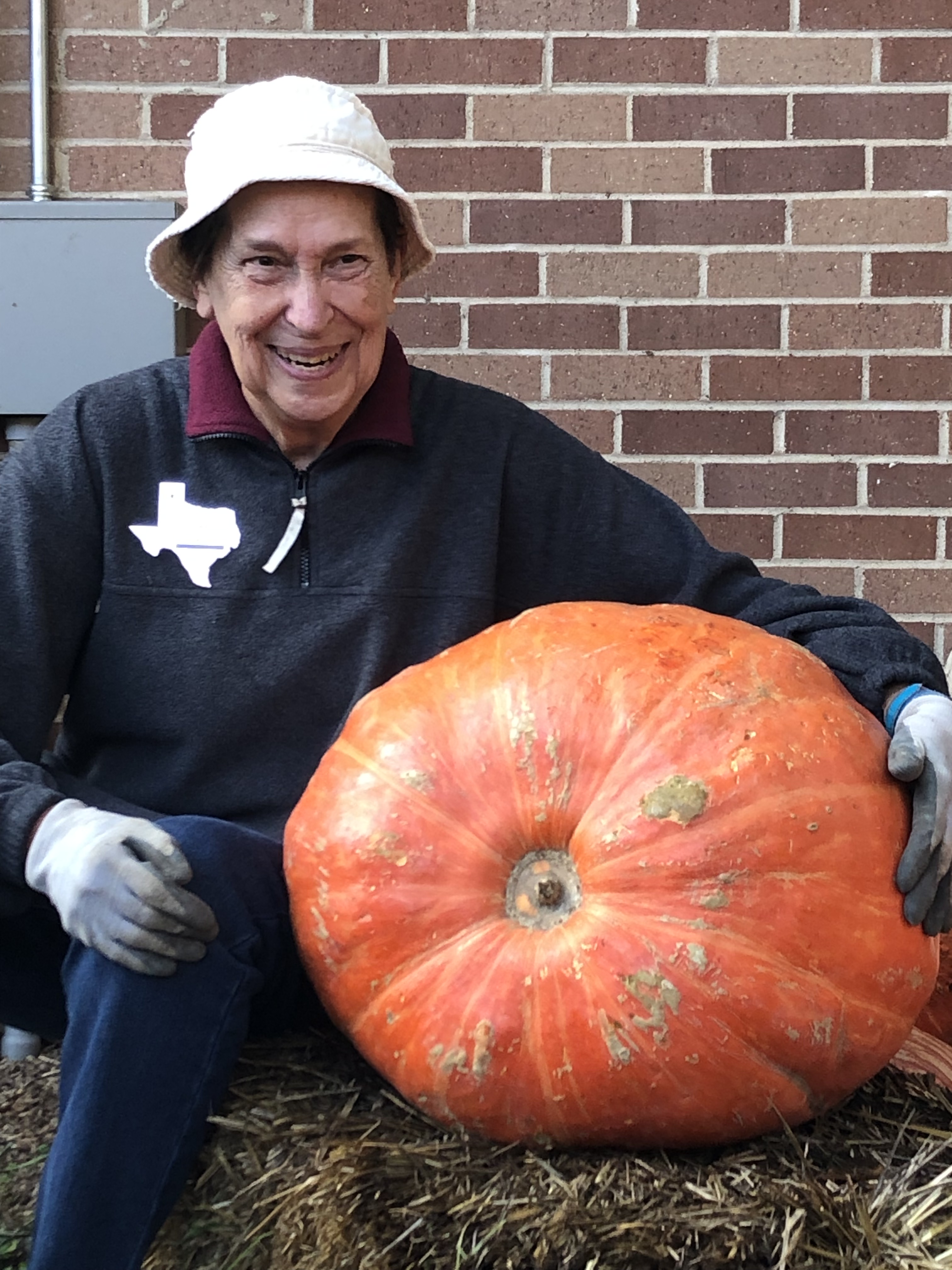
And, at our last stop—THE GREAT PUMPKIN!
Cindy and the great pumpkin!
As winter progresses, we will chop, grind with the mower, mix in water, turn piles as they heat up and cool down (temperatures up as high as 160°). As we turn the piles, the chunks begin to change shape and color. The unseen microbes and fungi consume and break down everything making pieces smaller and smaller, and of course,darker—hence , BLACK GOLD. This process takes time—sometimes as long as 2-4 months, depending on how energetic the humans are in turning the piles.
When we add compost to our heavy clay soil, we lighten it, allowing the plants to absorb the nutrients in the compost, allowing better drainage, thus producing more healthy plants and feeding everything.
Cindy Bicking, Dallas County Master Gardener Class of 2006
Jon and Joe meticoulsly laying the floor for the greenhouse.We’re excited to be getting the space to start seeds for the north garden. The other greenhouse gets extremely crowded in spring with the combination of north garden and plant sale seedlings. Tig said the brick floor is too nice to cover up with a greenhouse!
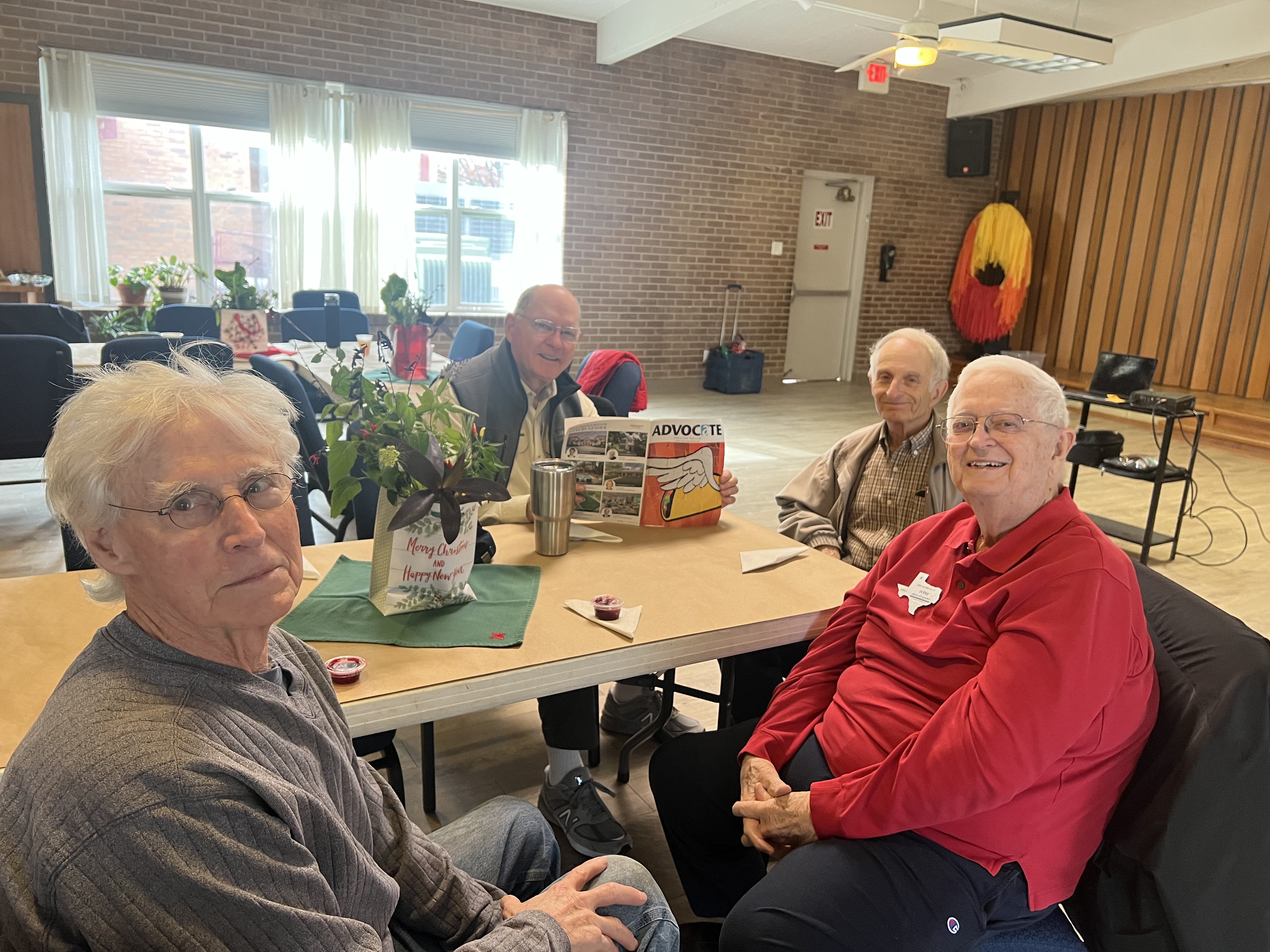
Here are a few pictures by Starla from our recent Christmas lunch.
This season of the year we are often asked to express what we are thankful for, of which there are many things; however, recently I have been reminded of how thankful I am to have a garden to tend, a group to garden with and organizations and friends who support these garden endeavors.
Several weeks ago when there was an impending freeze, I made my way to capture what I expected to be a transition in the looks of our colorful and vibrant landscape to a somewhat muted look. Upon arrival, the brisk fall air welcomed , the pink shades of the muhly grass glistened in the bright morning sunlight – flowers were continuing to burst forth with blooms, and vegetables continued to produce fruit.
As I wandered through the pathways, soaking up the beauty, my memories were not just of the plant material, but the people who have made this garden special to me. Raincatcher’s garden of Midway Hills was begun in November, of 2014. We moved locations that Fall –and began anew. The courtyard plantings have been transformed, a rain garden was added, and the old playground has become home to our Edible Landscape and greenhouse. The most dramatic change has been in the North Field. It went from an acre of land, to a vibrant workspace with vegetable beds, trees, orchards, color wheel, compost area, wildlife habitat and a covered meeting area.
We are truly thankful for the opportunity to garden on the grounds of Midway Hills Christian Church, and for the many hands that make this Dallas County Master Garden project one that educates the residents of this area, but also gives back to the community.
We are grateful; We are thankful. And we are blessed. Thanks for following us on our journey!
OH yes, BTW, we are still awaiting our first significant freeze, so come by the garden and enjoy the beauty of whatever season you find yourself when you are here.
Starla Willis, Dallas County Master Gardener Class of 2011
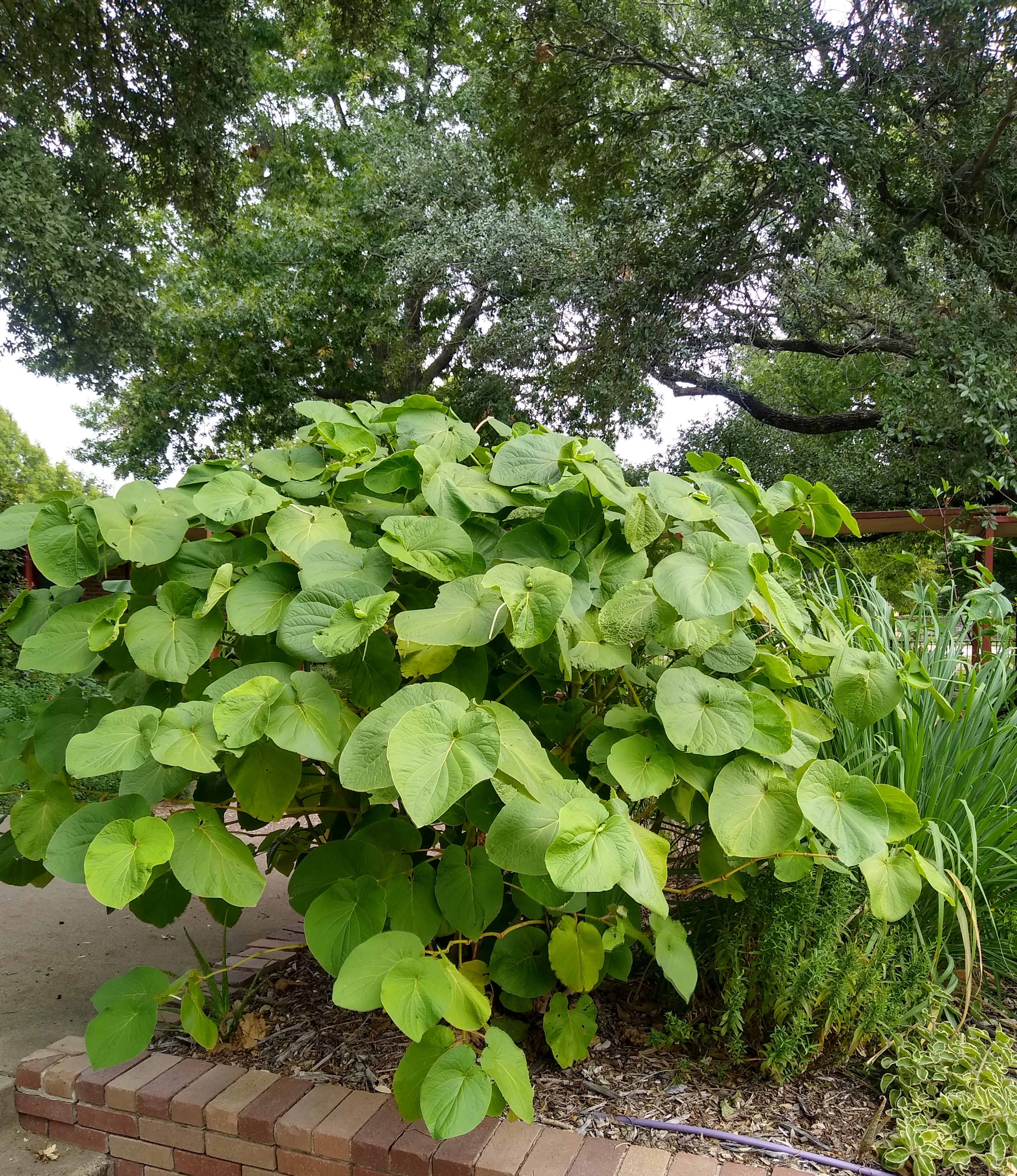
If you visit the courtyard at Raincatcher’s Garden, you will most likely notice a huge plant with heart shaped, velvety leaves in the northwest corner of our herb garden. The plant is Hoja Santa (pronounced O-hah SAN-tah) and it is native to Mexico and South America. The name Hoja Santa means sacred leaf in Spanish.
Hoja Santa in The Raincatcher’s Courtyard
I have also heard this plant referred to as Root Beer Plant. The unusual flavor of this herbaceous perennial has been compared to licorice, mint, tarragon and eucalyptus. It has a strong aroma and flavor of sassafras (hence the name Root Beer Plant). It is often used in Mexican cuisine like tamales, soups, stews and sauces.
Hoja Santa does best in morning sun and afternoon shade. It grows 8-10 feet tall and 6-8 feet wide. It flowers white, cylindrical spikes all summer. Hoja Santa makes a nice addition to an herb garden or as an ornamental plant in the back of a perennial garden but be aware that it spreads quickly by sending out many runners. Growing it in a very large container or galvanized tub would solve this problem!
Jackie James Dallas County Master Gardener Class of 1993
Starla and Ann at Carol Verhake’s garden,Boulderhaven, in Berwyn, Pennsylvania
September 29, 2023
Dear Texans, we are sorry to inform you Texas is not the center of the garden world. Philadelphia is America’s Garden Capital. With over 30 public gardens, arboreta and historic landscapes within 3o miles of Philadelphia and the roots of horticultural history firmly planted in this area, we surrender the title to them.
Starla and I toured 15 private and public gardens in 4 days with The Garden Fling, a group of 100 garden variety bloggers, instagrammers, and podcasters. When walking through Charles Cresson’s gardens of Hedgleigh Spring, Margo, a young author remarked to me “surely there is a better word for what I am experiencing than garden envy.” As I recalled our conversation, it seemed to me she was expressing the yearning we feel when we experience beautiful gardens . They take us to a place of appreciation in our souls. Gardens inspire and turn us from the mundane affairs of the world to something bigger. And so, as we share these photos from The Garden Fling in Philadelphia over the next few weeks, allow yourself to be transported as we were.
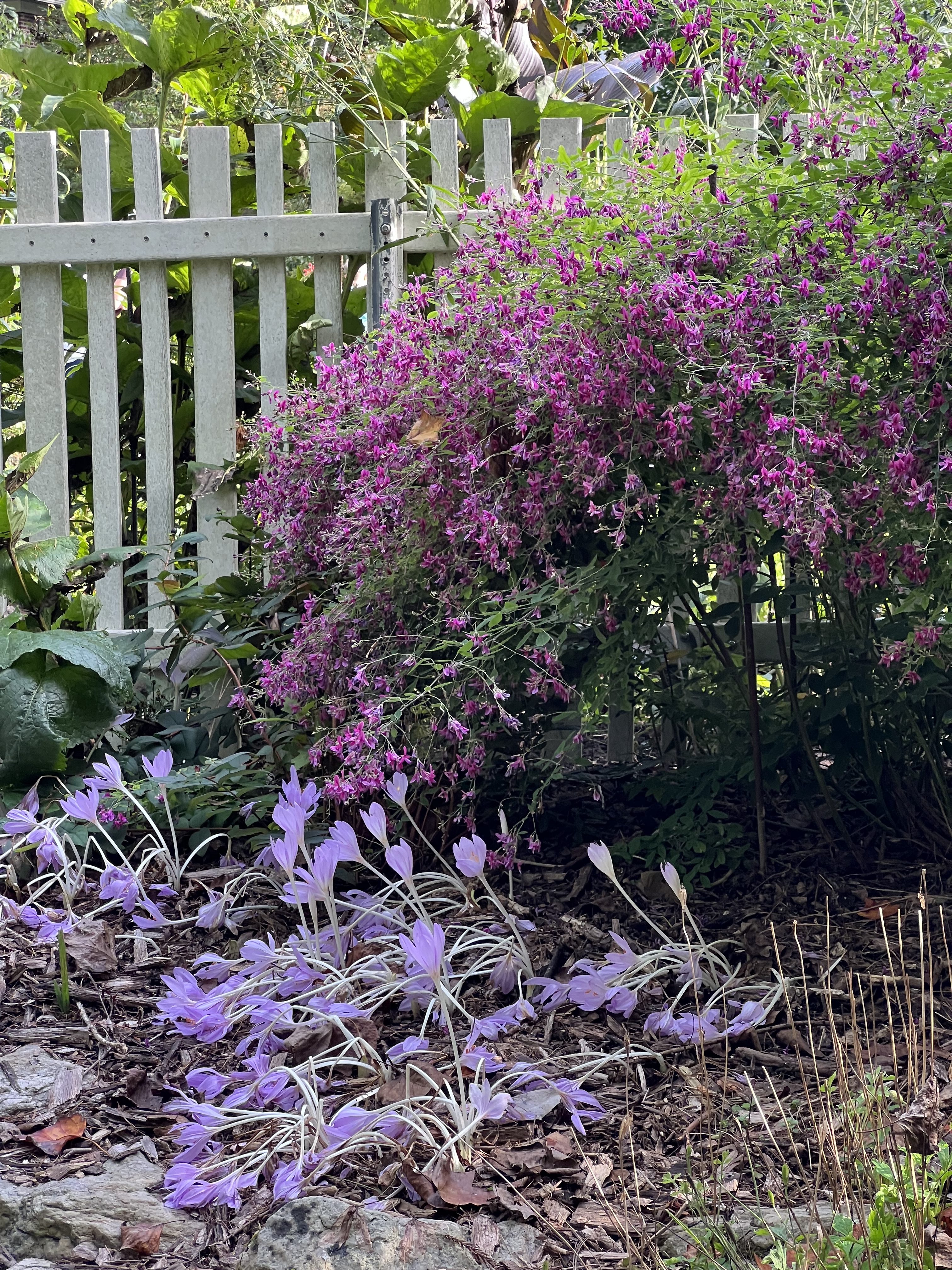
Mature trees and sabal minor palm Lilac Colchicum under LespedezaPeach Salvia Fellow gardener admiring the climbing roses and honeysuckle.Hedgleigh Spring circa 1883, tended by 3 generations
Old sayings are so often true and in the garden this summer, there is no doubt at all.
No way, is this post full of cheer, the summer is miserable for gardeners and plants alike. But as always we can learn a lot and really we have to. Like it or not gardens are just essential for birds and lizards and insects of all sorts. They count on plants for their very life—and what would a gardener be—without a garden —so what to do?
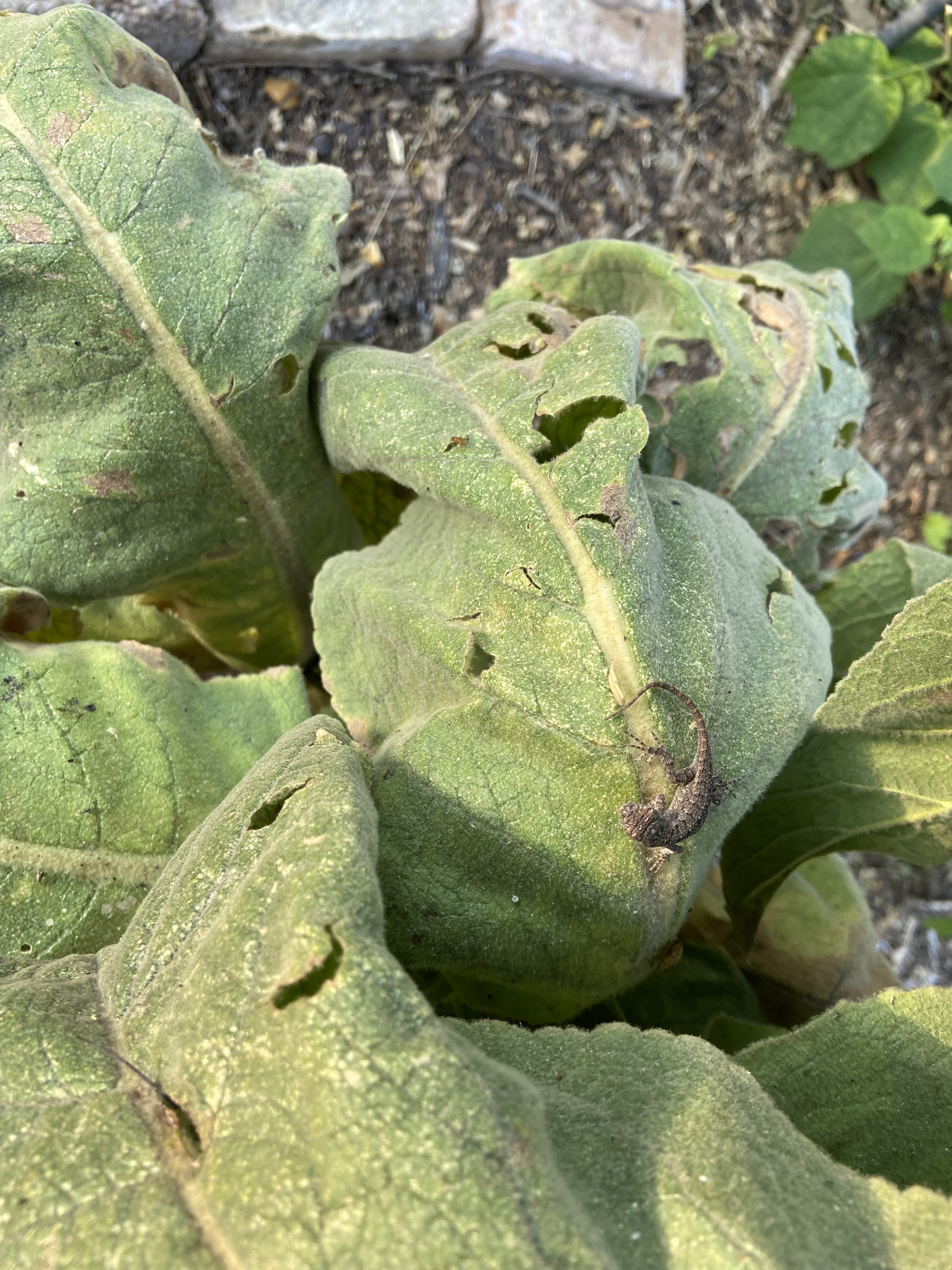
Don’t forget about grasses. This is seep muley, not dramatic but looks good in a quiet way.Common Mullein has lots of bad habits but don’t overlook all the good ones.
Observation comes to the rescue and brings a bit of joy and hope. Some plants are holding on—and even blooming—if not right this minute they are planning to—soon. These are the plants we must remember, be sure to plant again for the next summer—which we sincerely hope will be more pleasant but –we can’t count on it.
Mealey blue sage is a self seeder, sometimes too much, but tries hard and what lovely color in hard times.When plants self seed, they find what works for them and are often far healthier than the ones planted by us.
Some of these plants are not the most spectacular but they are lovely in their own right and most important provide essential nutrition for the little lives counting on the garden. Fennel is a host plant for black swallowtails, plus we can enjoy using fennel and it is still alive.
Carry on watering mulching deadheading and trimming—it honestly isn’t so bad early in the morning. But don’t stop there. Take pictures make notes do what it takes to keep the plants that are surviving and even succeeding in your garden in your mind. That way there will be less wasted work and money next year. Sadly of course remember also what failed miserably. When the going gets tough—some plants just give up. More than likely not their fault at all they just were never intended for this weather. Best to face it and remember it clearly.
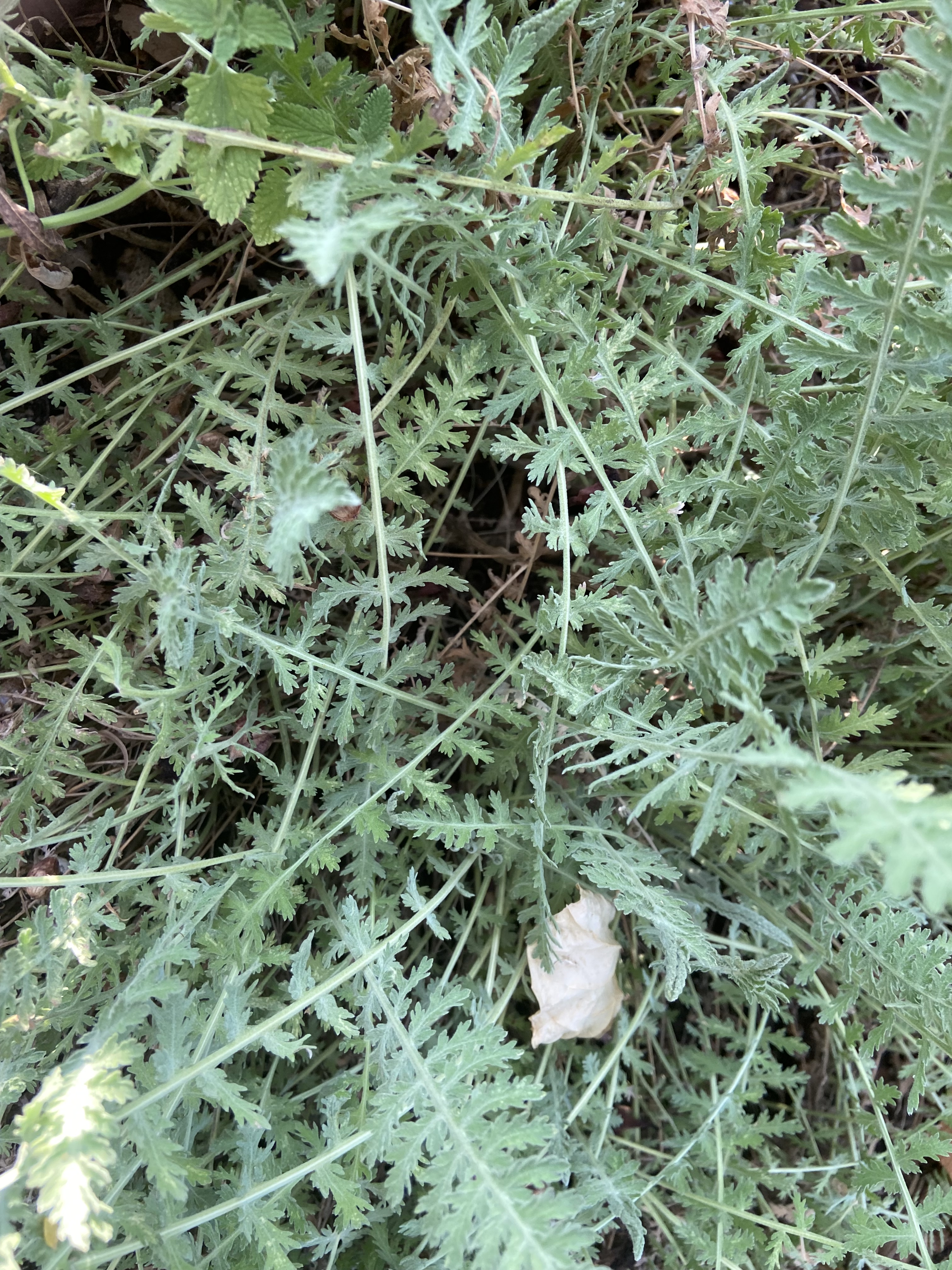
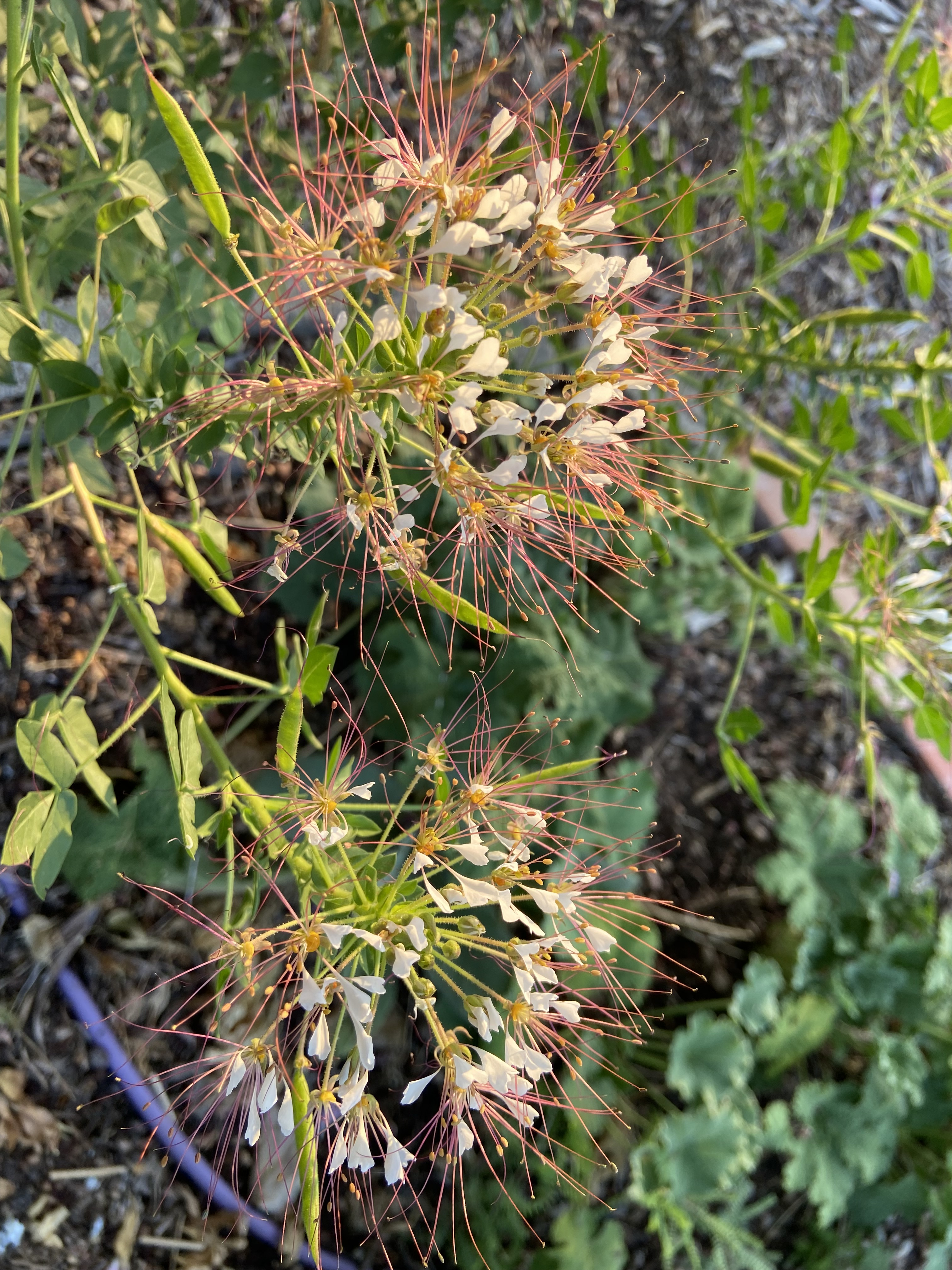
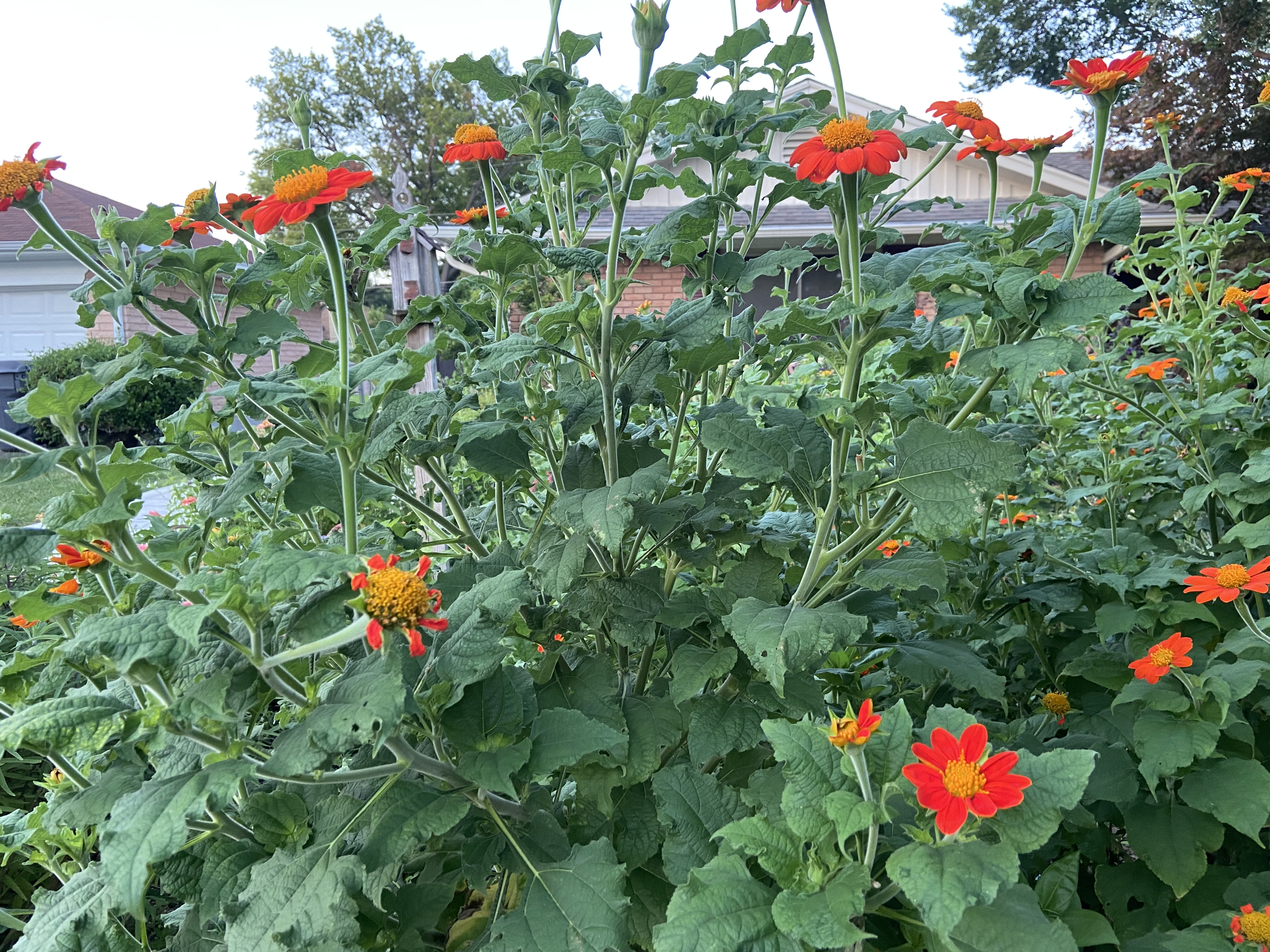
Yarrow, not blooming, but healthy and will bloom again when the time is right.Candelstick trees seend themselves then send down roots before they grow tall. This is a great plant for dealing with adverse conditions.Amaranth has a long history of living in hot places.Clammy weed doesn’t give up. This plant is in a little shade which helps.Tithonia requires upkeep but it’s worth it for flowers in serious heat.
Hope isn’t the best strategy for the summer garden –at least around here. Look at what works in your garden and in gardens you visit, Raincatcher’s welcomes visitors any time. Tuesday mornings there will be gardeners available to answer questions. You might even enjoy summer gardening!
Make experience; even of this dreadful summer—count for knowledge of what works—and what doesn’t. That will make us all better gardeners!
Susan Thornbury, Dallas County Master Gardener Class of 2008
You’ve probably noticed them in numerous landscapes across the metroplex. Their bold, bodacious, fluffy flowers create an eye-catching spectacle in the garden. They grow tall and strong in almost any type of environment from morning sun to full sun, dappled shade to mostly shade. How can you not love those dramatic blooms that hang around from late June until mid-October with colors ranging from lime green to creamy white to dusty rose and sometimes burgundy?
Of course, this proven winner beauty is the plant known as ‘Limelight’, Hydrangea paniculata. It’s a unique hydrangea that has literally revolutionized landscaping across North America. Mine were planted in a backyard bed flanking our fire pit area about a year ago and I am still captivated by their huge, football-shaped irresistible flowers. During periods of extreme heat (100 – 110+) as we’ve experienced most of August, blossoms will go through a time of weeping and loosing their vibrancy. Just hold on until September when a refreshing rain will perk them up!
Driving around neighborhoods in our area and beyond, I’ve seen them used in some pretty imaginative ways: as a showy flowering hedge to screen off those unsightly air conditioning units, in circular beds surrounding old, stately live oaks, and in large entry way stone containers welcoming guests to a front door.
For me, the real bonus is found in the drama they bring to floral displays in my home. When height is needed, Limelight stems are snipped close to the ground and used in long, slender vases. Shorter stems can be carefully arranged in floral foam for a low-profile option. Placed in the center of a dining room table set for dinner with guests or gracing a cherished antique entry chest they never fail to lend an air of elegance to any room.
Another summer flower that goes into my garden around mid-April and stays until late October is the showy, colorful little darling known as Pentas (Pentas lanceolata). Did you know that they are also known as Egyptian stars for the bloom’s five-pointed petals?
Pentas color palate offers gardeners a profusion of jewel tones that range from white to pink, red, lavender and purple. Across Dallas you’ll find everything from single tone beds to the most stunning mixed combinations of two, three or four colors. The possibilities are endless with pentas filling both in ground beds and gorgeous containers. Each year I like to experiment with a different color combination. So far, my favorite is pink, purple and red!
Some of the perks for growing pentas include:
*Pentas are low maintenance plants. Give them plenty of water, sunshine and heat and they will perform beautifully and reward you with an abundance of flowers.
*They are not prone to many diseases.
*Once in the ground, their blooms continue until a cold snap or light freeze. In Zone 8 we get to enjoy them for around six to seven months.
*Pentas can be enjoyed as cut flowers for your indoor arrangements.
*Bees love pentas!
FYI…After taking so many photos of limelight’s, I’ve observed that when the temperature soars to 100+ degrees they tend to do best with some afternoon to evening shade. The limelight’s flanking our firepit are covered with shade starting at 3:00pm and continuing for the remainder of the day.
Limelights in the Spotlight and Pentas on Parade
Linda Alexander, Dallas County Master Gardener Class of 2008
How many of these “truths’ ‘ are there?? Sadly quite a lot but let’s not get discouraged and think about one at present.
That “one” is DEADHEADING and it will give us plenty to think about.
First, what is deadheading? Maybe it would sound more acceptable to just call it removal of spent flowers. Flowers that are obviously going over or past their prime.
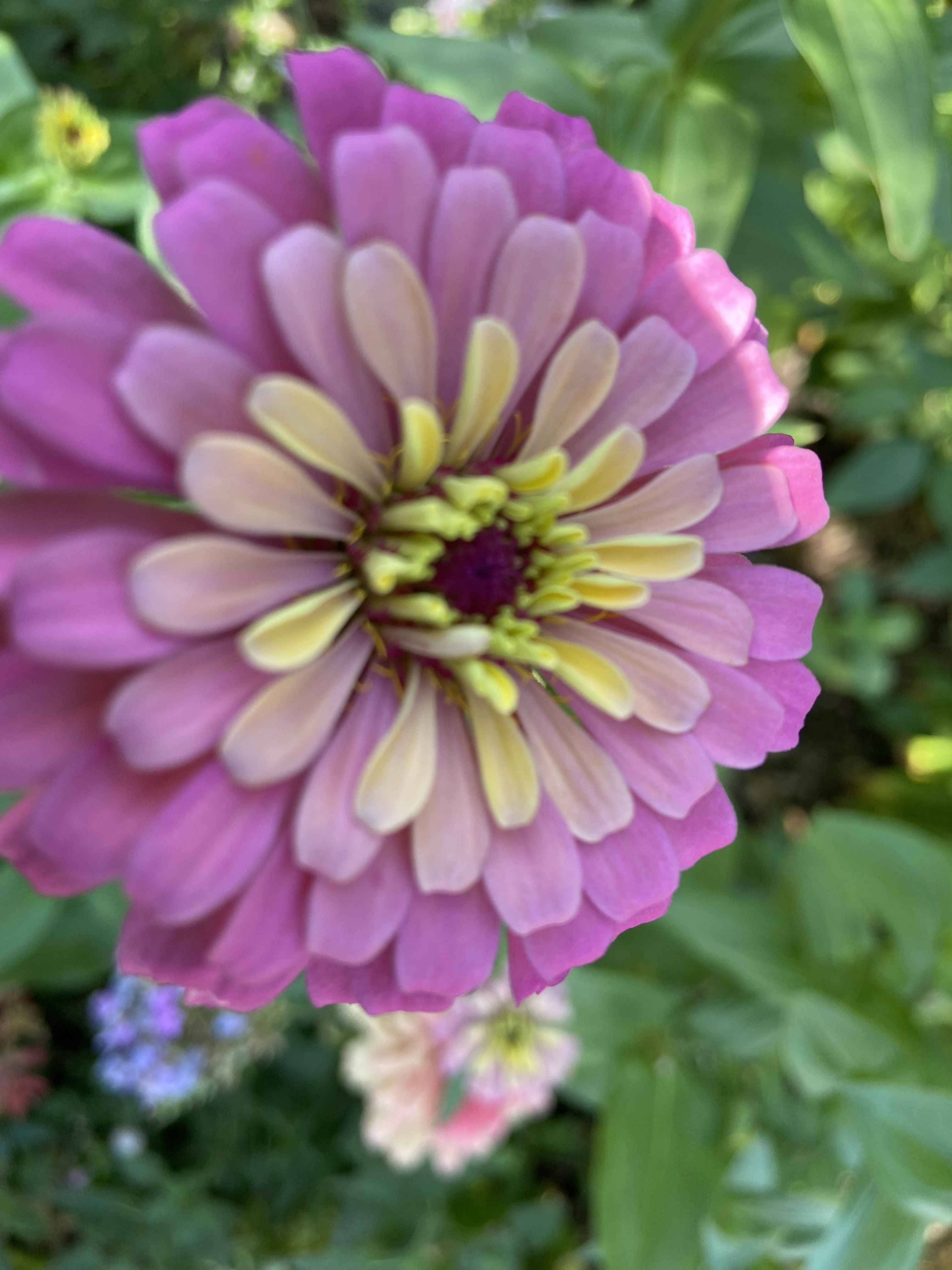
Zinnias must be deadheaded to prolong bloom, bu take time to enjoy the beauty of this common but special flower.
Why do that? It is essential to think like a plant here. For annual flowers there is one goal in life. Literally one and that is to ensure that next year there will be plenty of plants/flowers just like them. They do not care about anything else so setting seeds is their one and only goal. Even perennials want to set seed to ensure more plants for the future.
When the plant succeeds in its goal –well job over—go knowing success was achieved.
The plant may stop or slow down blooming or even die altogether after all it succeeded in what it set out to do.
For the gardener this is not ok. The whole point of the plant from the gardeners point of view is to keep flowers for as long as possible.
For pollinators its also not ok. Sure they assured that the flowers were pollinated but they need to eat they need nectar and pollen for as long as possible.
So how to reconcile these goals? Obviously the answer is deadheading. When the flowers that have already been pollinated they are ready to move on to the seed setting phase. Here is where the gardener must step in and interrupt the process by removing those spent flowers.
Sometimes the plant tags and seed packets ignore this when they promise “season long blooms” and “easy care”.
But it can’t be ignored. So as soon as blooming starts the gardener must be observant and as soon as faded flowers are seen they must be removed.
This isn’t hard but it does need to be done with care. Use sharp clippers and cut the stem back to the next bud or set of leaves. Do not ever just cut the flower and leave its stem this stem will brown and die and make a mess. Ideally the deadheading should be not at all obvious—just takes care and observation—IT IS NOT HARD OR COMPLICATED.
This is Tithonia, butterflies love them but they absolutely must be deadheaded to keep them blooming and in fact, keep them from dying before their time.
What it is-is constant and it happens in the summer. No one likes that. But think of the reward. Flowers will bloom far longer. Your garden will look so much better. A huge consideration is the absolute need for bees and butterflies and hummingbirds to eat. Without flowers, they cannot live their lives and are dependent on gardeners. This is serious and as gardeners we must accept our role in their very lives.
But it’s hot and some of those pollinators bite—what to do??
Getting out to the garden as early as possible first light is ideal but as soon as possible will do. Be careful bees are rarely an issue even wasps are more intent on their work than they are on you but look before you grab a branch or cut a flower. Remember they might not realize how beneficial your actions are!!
Think of the things you will see when you are right in the garden. Tiny creatures can easily be overlooked but not by you—not now. The beauty of individual flowers can be missed just walking by but again when you are close –you see it.
Deadheading is work but it’s a opportunity to look closer. Do you see the tiny lizard?
What about saving seeds? Yes you can still save seeds just wait until the end of the season to do it.
Since you have been so observant and careful, you will know which plants are the healthiest and most beautiful. So you can gather seeds from them and have a much better chance of great plants next year.
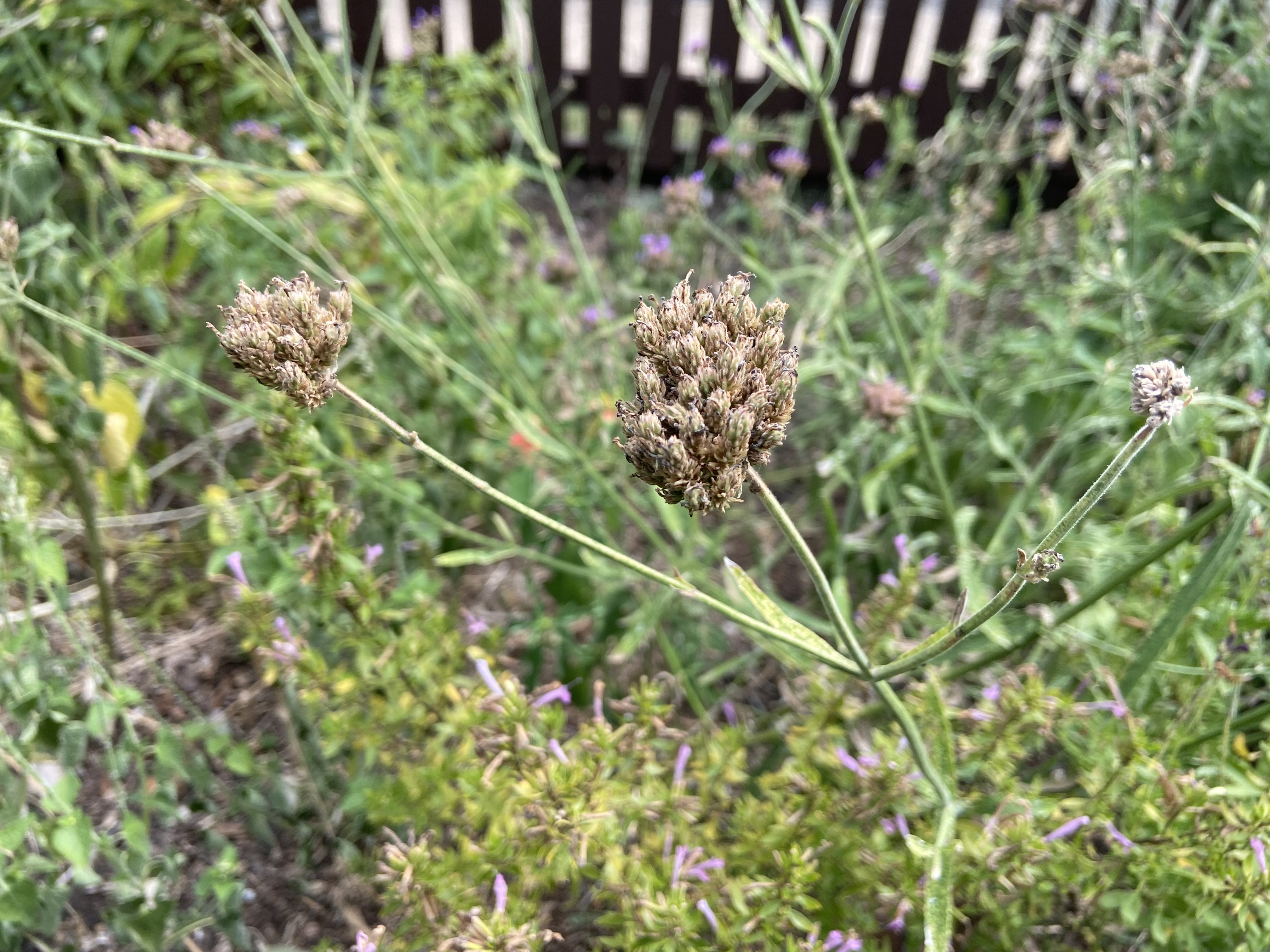
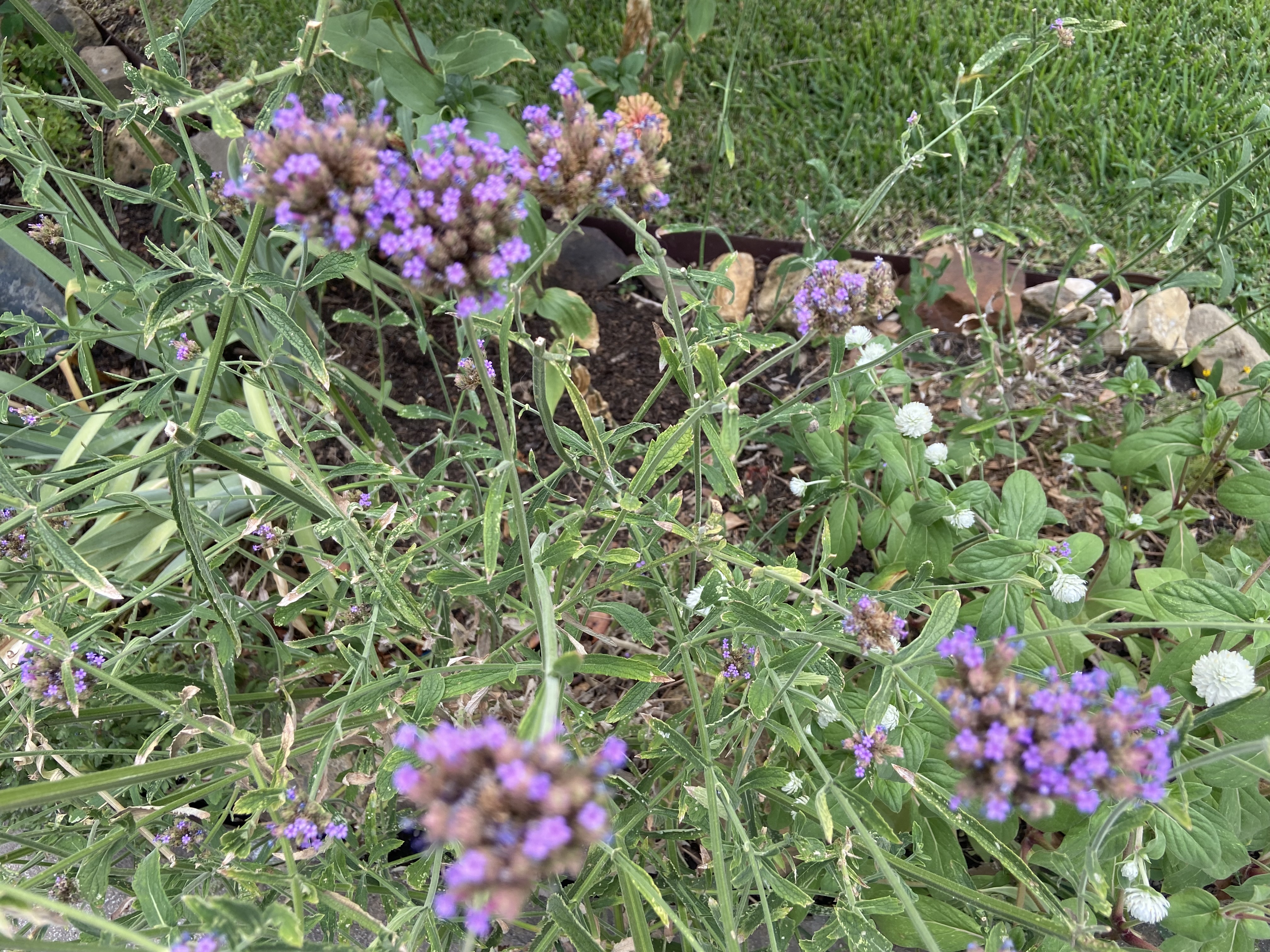
Verbenas on the left in a sad state of neglect. Verbenas on the right after deadheading. Not perfect but still blooming.
Deadheading yes its inconvenient without a doubt—But it’s essential—you will be so glad you did!
Susan Thornbury, Dallas County Master Gardener Class of 2008
A little more information:
Should all flowers be deadheaded?
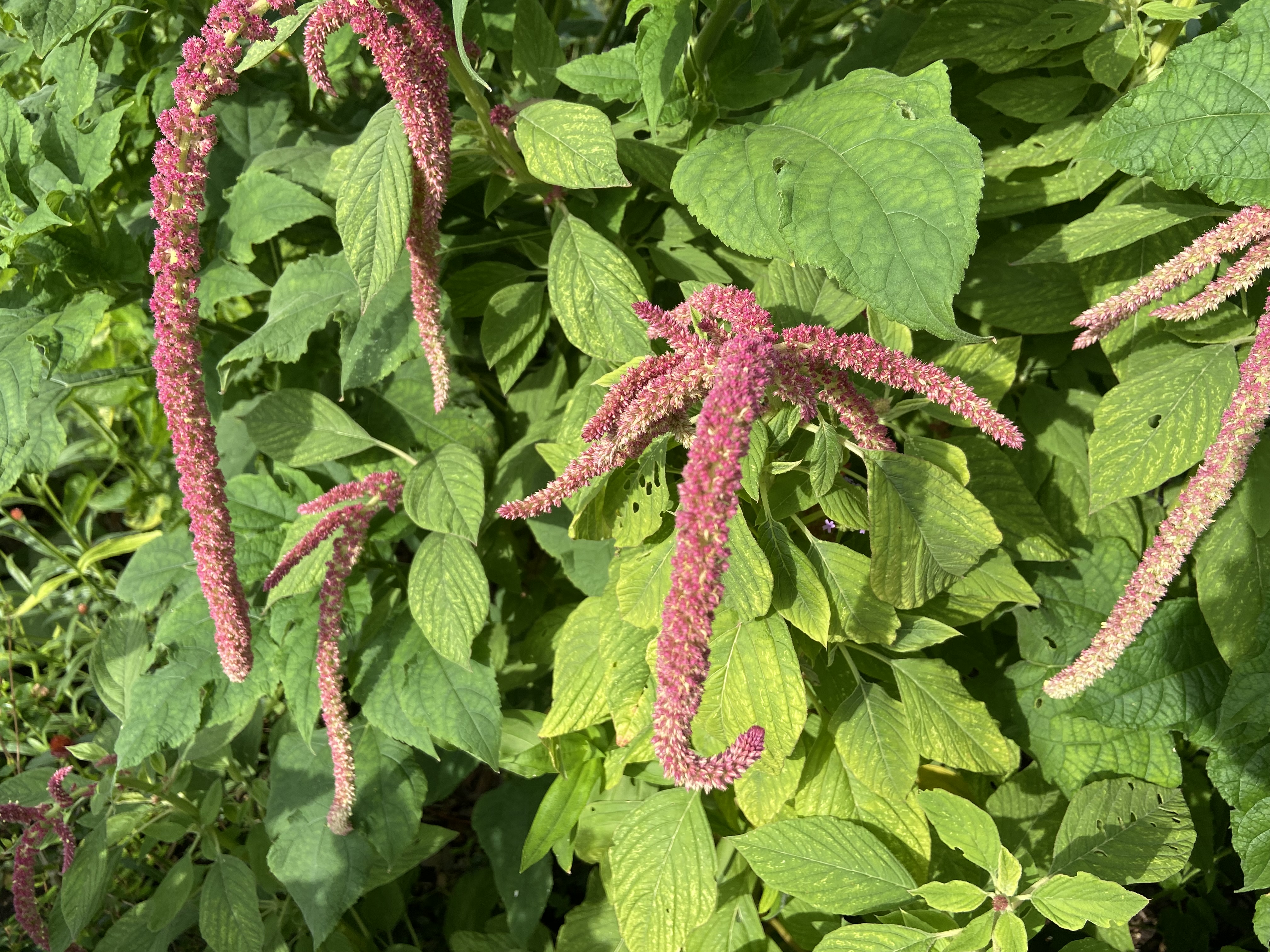
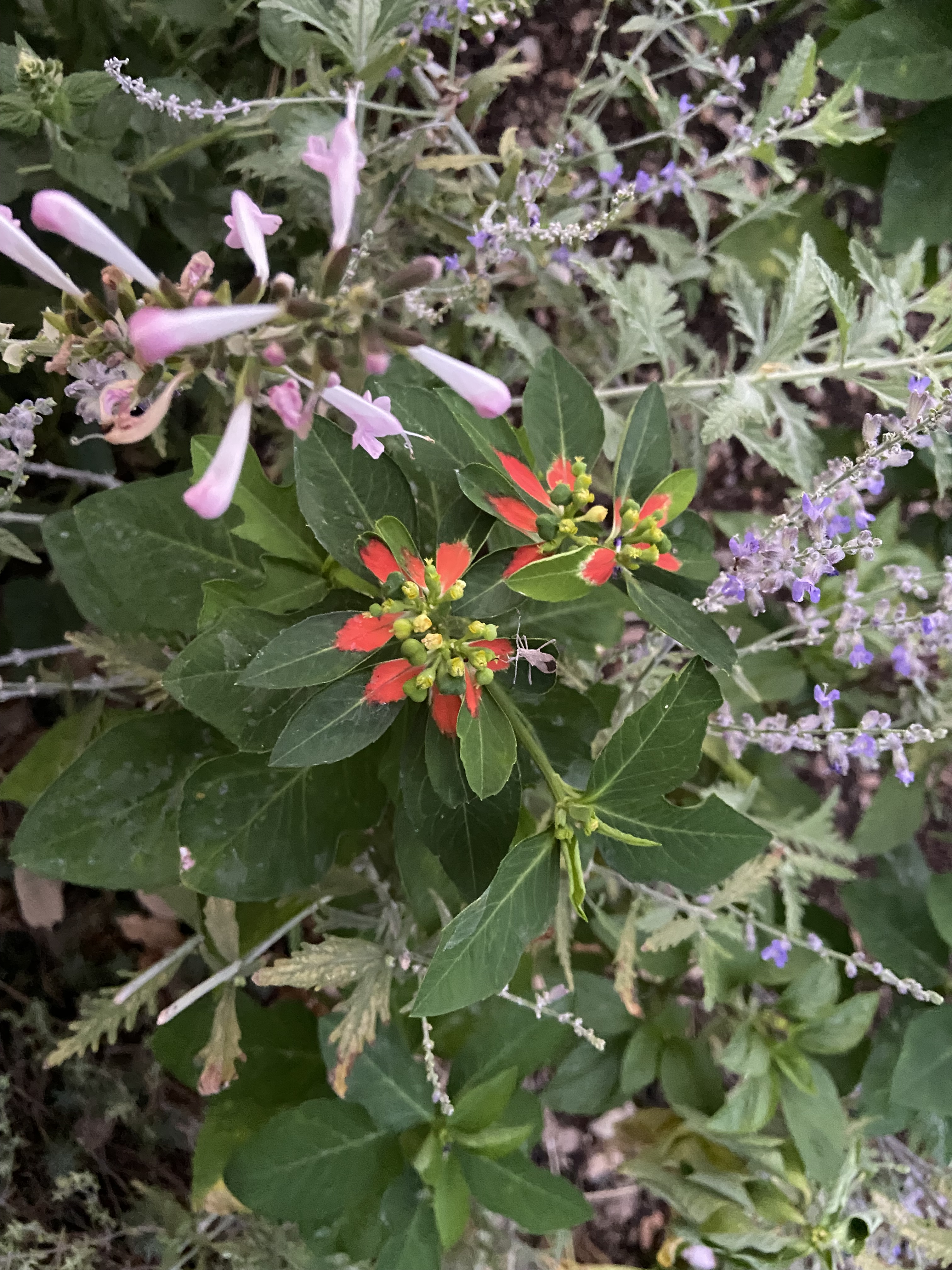
No, Amaranth is an an example. These seed heads are the whole point of growing this plant.The colorful bracts of yard poinsetta do not need to be removed. Bees love the tiny flowers in the center.
If you haven’t high tailed it out of Dallas for a lazy vacation at the beach or cool, comfortable nights in the mountains then, like me, you’ve accepted the undeniable fact that our sweltering summer heat and humidity is overstaying it seasonal appearance. With daytime temperatures hovering in the 100+ degree range, it’s a miserable time to be outdoors. What’s a garden lover to do!
I’m dreaming about a place that my husband and I have visited several times over the years and wishing, somehow, we could be transported there now. Until that happens, let’s spend a few minutes enjoying the remarkable scenery of a global beauty. Our photographic journey will reward us visually as we visit the world-famous Butchart Gardens. Located near Victoria on Vancouver Island in Brentwood Bay, British Columbia, Canada, the gardens were designated a National Historic Site of Canada in 2004.
Robert Pim Butchart (1856-1943) began manufacturing Portland cement in 1888 near his birthplace of Owen Sound, Ontario, Canada. He and his wife Jennie Butchart (1866 – 1950) came to the west coast of Canada because of rich limestone deposits necessary for cement production. In 1904, they established their home near his quarry on Tod Inlet at the base of the Saanich Peninsula on Vancouver Island.
Fast forward to 1909 when the limestone quarry was exhausted, Jenny set about turning it into the Sunken Garden, which was completed in 1921. Over the next few years, other areas were converted into themed gardens. In 1939, the Butchart’s gave the Gardens to their grandson Ian Ross (1918-1997) on his 21st birthday. Ross was involved in the operation and promotion of the gardens until his death 58 years later. And today, ownership of the The Gardens remains within the Butchart family.
Visiting this 119-year-old internationally renowned 55-acre floral display is a breath-taking experience. The gardens provide dramatic floral displays in a variety of garden settings and styles. Starting with The Sunken Garden (the original quarry) to The Rose Garden with over 2,500 roses filling the air with their fragrance, you’ll feel as if you’re walking through a fairytale.
*The Butchart Gardens are open daily. Closed Christmas Day.
Linda Alexander, Dallas County Master Gardener Class of 2008
Are you familiar with an herb whose origin and history can be traced back to medieval times in the Liguria region of northwest Italy? If not, you might want to learn more about Lovage(Levisticum officinale). The name lovage is from “love-ache”, ache being a medieval name for parsley. Lovage is used in many recipes calling for parsley or celery. With its glossy, deep-green leaves that are cut and divided and having a pungent celery taste, some consider it to be the ultimate celery herb.
While not as well known in the United States, lovage has been long cultivated in Europe. Queen Vitoria always carried some candied lovage seeds to satisfy her sweet tooth. Charlemagne, King of Franks, was said to have liked lovage so much that he ordered it grown in all of the gardens on his estate. Over the years, chefs have discovered that cooking with lovage has its benefits. All parts of the plant are usable, from leaves as an herb, the roots as a vegetable and the seeds as an aromatic spice. Even the hollow stems can serve as a straw substitute when sipping a favorite beverage.
(Pink Lemonade with a lovage straw)
Lovage will reach two to three feet, even as high as 6 feet, with a spread of about two feet. Rounded umbels or flat clusters of small yellow-green flowers up to four inches across appear mid- to late summer. Flowers are followed by brown, ridged, crescent-shaped seeds that are about ¼ inch long. Harvest the tender, young leaves at any time and use them in soups, stews and salads. Or, during an early morning stroll, enjoy nibbling on them straight from the garden. Seeds can be used crushed or whole, sprinkled over meat and salads or added to liqueurs, cordials, bread and pastries.
In our Zone 8 climate lovage performs best when planted in a location with partial sun, preferably morning sun. It is easy to grow in any well-drained soil with plenty of compost. Plant from containers in the spring while the weather is still cool. Start from seed in the winter. Divide plants in spring or fall, making sure that each division has some new buds. Though lovage is considered an herbaceous perennial, it sometimes succumbs to summers in the south. Plants die back to the ground in winter, but regrow from the roots in spring.
White Chicken Chili topped with Lovage and Parsley Mixture
Linda Alexander, Dallas County Master Gardener Class of 2008



















 DALLAS GARDEN BUZZ