Benefits of Garden-Based Learning
“Gardening enhances our quality of life in numerous ways: providing fresh food, exercise and health benefits, opportunities for multi-generational and life-long learning, creating pleasing landscapes and improved environment, and bringing people together.
Garden-based learning programs result in increased nutrition and environmental awareness, higher learning achievements, and increased life skills for our students. They are also an effective and engaging way to integrate curriculum and meet learning standards, giving young people the chance to develop a wide range of academic and social skills.
Garden experiences foster ecological literacy and stewardship skills, enhancing an awareness of the link between plants in the landscape and our clothing, food, shelter, and well-being. They also provide children and youth with the time and space to explore the natural world–something that can occur rarely in today’s era of indoor living.” (excerpted from Cornell University, the garden based education blog.)
Last week we had 54 kindergarten students from Providence Christian Academy in our gardens learning about chickens and eggs, veggies and herbs, compost, and observing our gardens full of Monarch butterflies, ladybugs, and bees.
 Meet Opal, named for Judy’s Aunt Opal.
Opal is a Silkie with black skin and bones and 5 toes instead of the normal 4. She is a wonderful brooder and mother.

Eat your veggies! We let the children take home the radishes they picked and they fed the radish tops to the chickens.
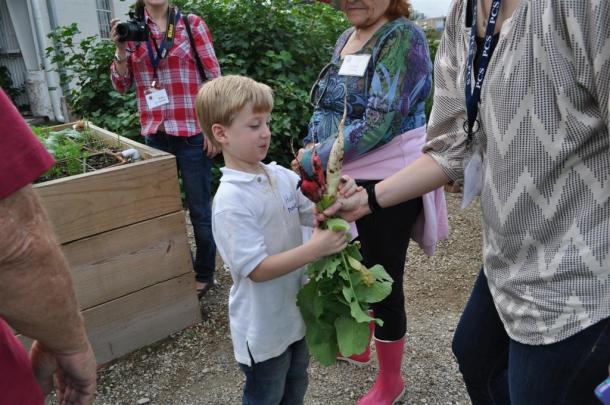
Enthusiastic future vermi-composters!

We are still booking fall field trips. The Gardens and our Dallas County Master Gardeners are always ready to teach in the garden!
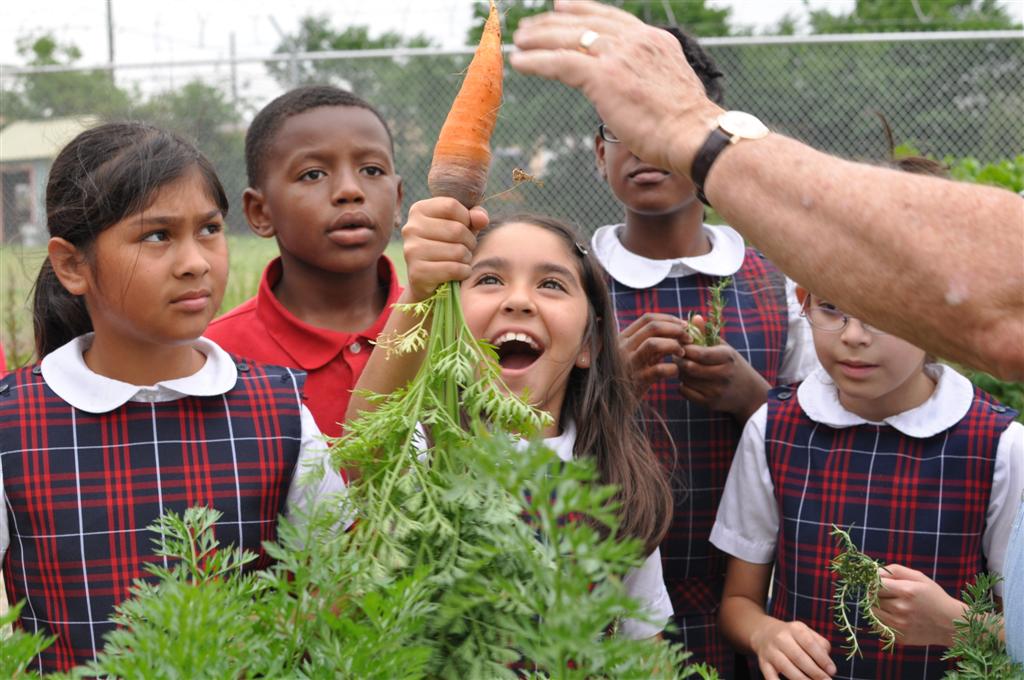 The loved the carrots and took them back to school for afternoon snacks.. Rosemary was another hit. Last week one of the kids said he would sleep with Rosemary under his pillow. Maybe there will be alot of Rosemary under pillows this week!
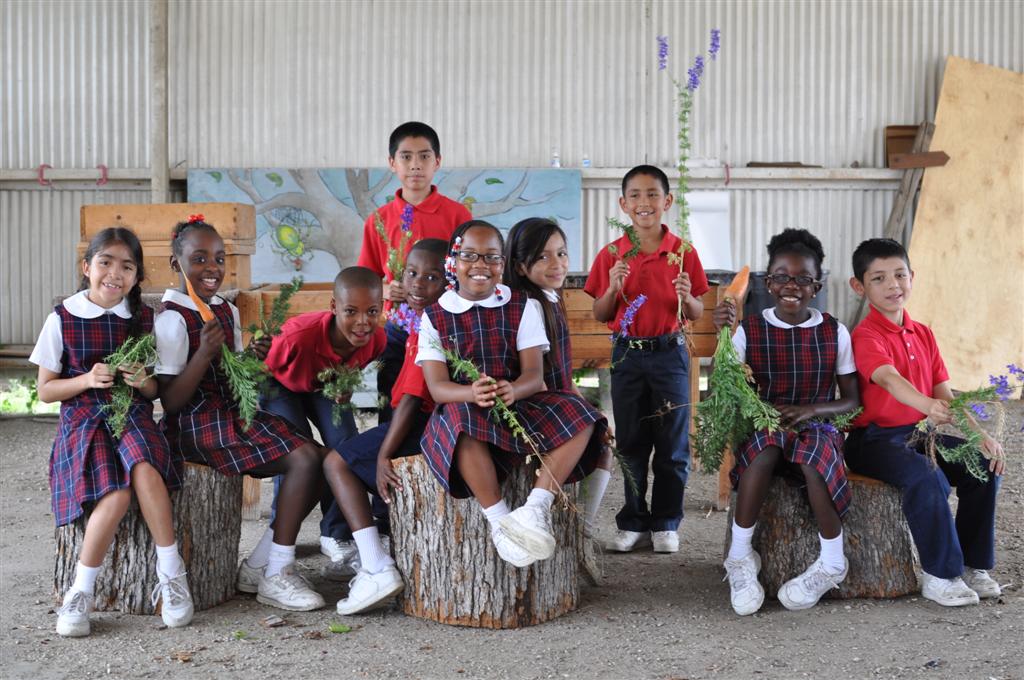
 Fifth grade students from West Dallas learn about root crops from Jim and Abbe. Did you know that the turnip or white turnip is a member of the parsley family, Brassica rapa var. rapa? It is a root vegetable known for its bulbous tap root which is high in vitamin C and grown as a food crop for both humans and livestock. Turnips are easy and quick to grow (35-70 days) and can be eaten raw (roots) or cooked (roots and leaves). Turnips like well-tilled soil and constant water. Both of these conditions are provided in our raised organic beds via our home-made compost and drip irrigation system.
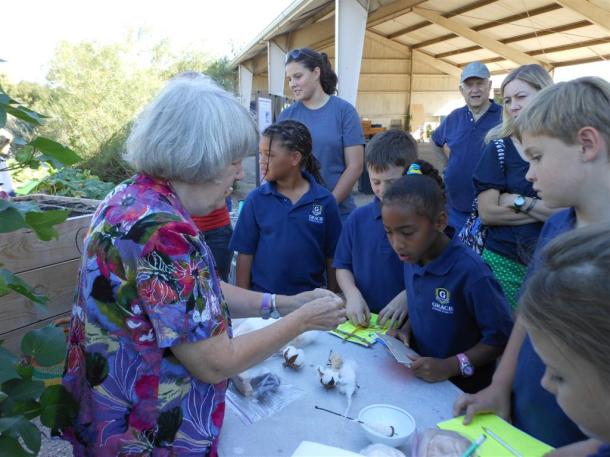
 Carolyn demonstrates the technique of hand-spinning cotton thread to the fifth grade students . Did you know that cotton is the most important non-food crop in the world? Cotton has been spun, woven & dyed since prehistoric times. Today, industrial uses for cotton are just as important as the cloth that originally was woven. These products vary widely from cloth-based such as diapers, bandages, and paper to cosmetics, soap and oils; dynamite and plastics; and that sidewalk scourge, chewing gum (cellulose). There are 39 different species of the genus Gossypium, 4 of which were commercially grown since all cotton was domesticated in antiquity. The variety G. hirsutum became known as “upland cotton” and comprises 90% of the world’s cotton crop.
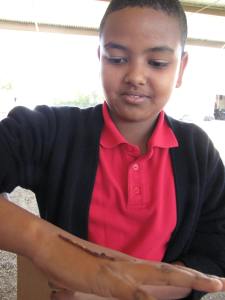 A 5th grade student from West Dallas Community School gets up close & personal with a “red wiggler” worm. During our Vermi-composting lesson, he & his classmates learned that this little ‘Eisenia fetida’ is one of approximately 2700 different kinds of worms of a large variety of species. Did you know that “red wigglers” (aka brown-nose or red worms) work best in container/bin composting. That’s because they are non-burrowing and move horizontally through the soil.
 Journaling is an integral component of the educational program offered by the Demonstration Garden. Our Nature Journals, made from recycled materials are constructed by our student visitors and personalized to reflect their connections with the garden. A 5th grader from West Dallas Community School proudly proclaims, “Nature is My Life.” Her journal became her memory book of observations, descriptions, illustrationsand connections; a special way of carrying a piece of the garden home with her.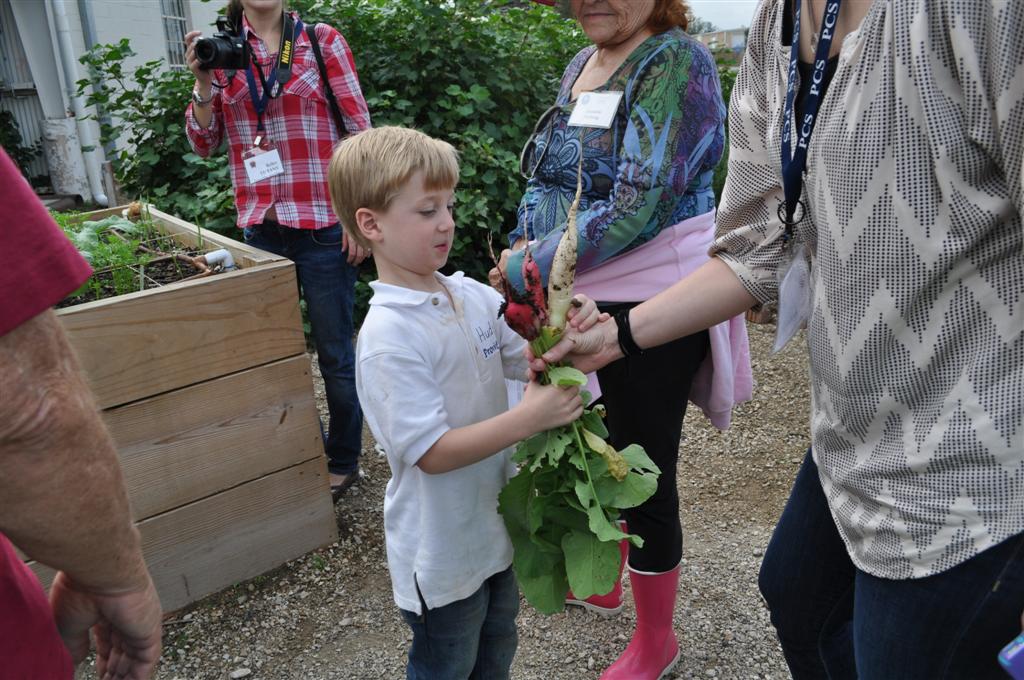






 DALLAS GARDEN BUZZ