Why do gardeners keep going? Its hot—get up really early start to work to beat the heat—and find the mosquitos got up earlier.
Work hard on weeding feel successful–turn around–and find more weeds.
Wonderful to have so many flowers–until its obvious many flowers mean alot of deadheading.
Sometimes the problems pile up. It can be easy to forget the blessings gardening brings. Of course there is the functional fitness aspect–digging those weeds is actually a good thing. Fresh air and sunshine help the body and the mind.. Just being needed by the garden can be seen as a burden–but really its a blessing to be needed.
But remember another aspect of gardening that brings lasting joy. That is the way our plants and gardens connect us to others.
Some of our connections are to friends and family that we see regularly. Those who share successes –and some failures—and sometimes plants. Others are gone now but the plants they shared long ago ensure that they are not forgotten. Somehow they are not gone at all but with us still as we garden.
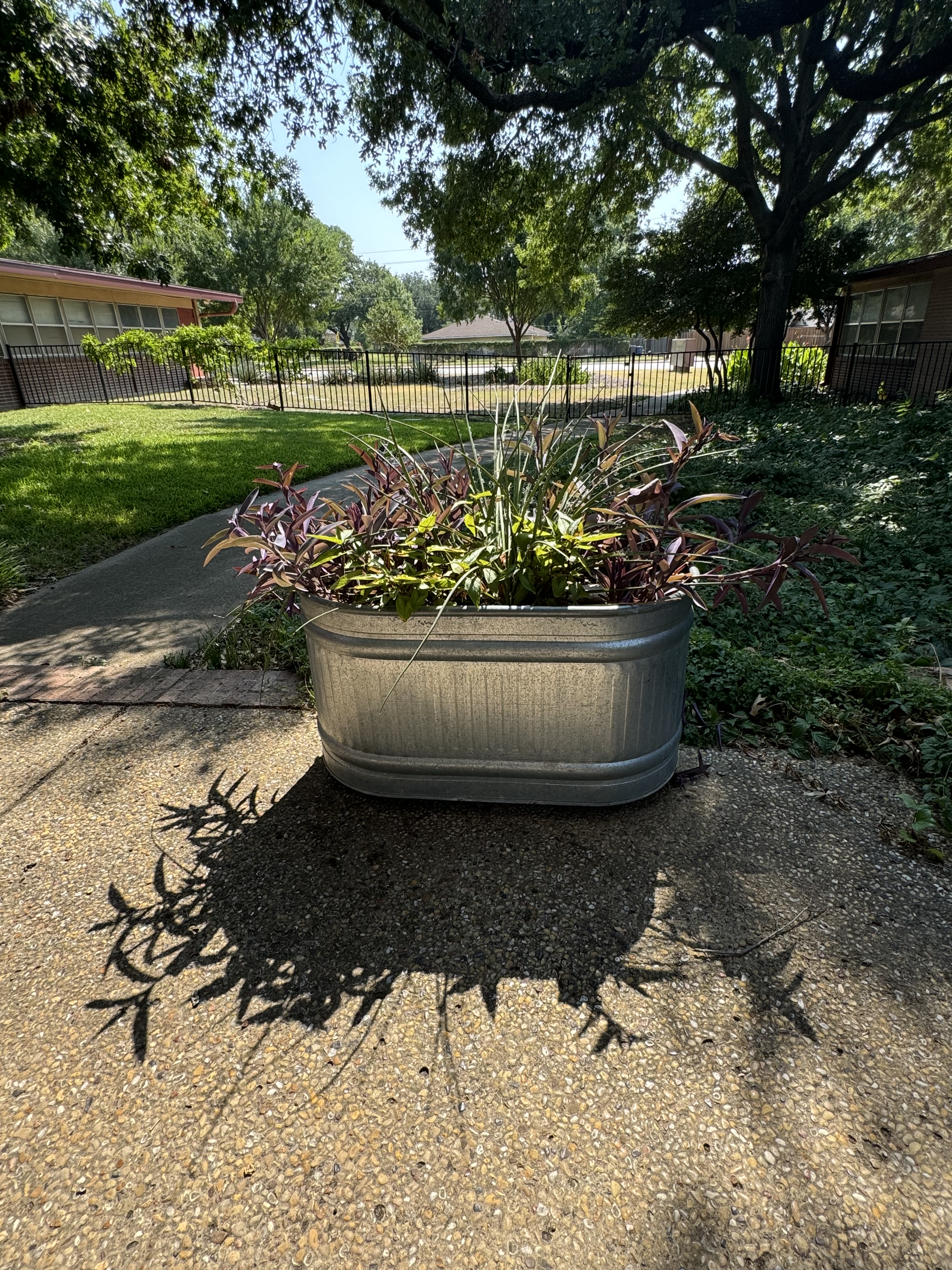
This was the first plant I ever had, well, a descendant, of course. I was about 6 years old. My mother and I were visiting one of her friends. She had Ghost plants in a huge iron kettle used by generations before to heat water over a fire and wash clothes. The plants spilling out of the kettle, now used as a flower pot, enchanted me.
So for sure–gardening is hard work somehow conditions never seem “just right” too hot too cold too dry too wet–it all happens. And we have to get out there anyway.
But don’t just work. Pause and take a step back every so often. Think about all the people and all the stories that surround your plants.
Then you will remember why you keep gardening. Remembering will lift you and bring joy to you even in difficult times.
This is Red Dragon. I was given a few stems in a glass of water by a friend and now it’s being shared.This unknown grass is a descendant of a small plant gathered by my mother near Lake Proctor.Raincatcher’s Garden used to be at Joe Field. I took some cutting of this pink turk’s cap before we left. They continue on!I found this rosemary in a trash pile. It isn’at a particularly good plant but it made me happy to find it and see it growing now years later.A neighbor came by and told me she enjoyed the zinnias in my yard and how much they took her back to her Mother’s garden.Growing a tree from seed reminds us that we can do a lot if we try.
Thank you plant sharing friends:
Jim has grown so many seeds for the plant sale. This is Pride of Barbados, one of his specialty plants. Hope it blooms soon but even if it doesn’t, I am reminded of Jim and all his work for the garden.Mark started these cuttings and generously shared. Be sure to notice Althea when you visit The Raincatcher’s Garden. It has been blooming all summer and thank Mark.
Susan Thornbury, Dallas County Master Gardener Class of 2008
The famous words refer of course not to a person but to the V8 Ford. Just out for a bit of fast driving–those were different days–gas was so cheap and all and the roads less crowded. But now the lesson. The Ford going as fast as it can is passed by Madeline in a Coupe deVille!!
Let’s leave it there for a bit.We need to get back to gardening
In your work at the Master Gardener projects do you get the feeling you must work hard non stop. Do you feel like you couldn’t possibly enter hours for volunteering which weren’t totally filled with your hard best effort?
Lisa collecting seedsVolunteer hard at work in The Raincatcher’s Vegetable GardenJoe and Jon constructing the Raincatcher’s pergola
Do you ever feel that no matter how hard you are working its not quite good enough and maybe others are working harder–or better?
Do you ever feel that even though you do feel you are working hard that what still needs doing seems endless?
Master Gardeners hard at work, tending to the compost.Dedication, hard work and nurturing!Garden labor makes a difference.
Is there ever a feeling of discouragement that creeps in before you even start to work ?
Sometimes we need to take a step back and do a little thinking.
We all need to find fun and joy in your garden work or honestly what is the point?
We need to work hard–yes! But we also need to take little breaks. Sure we need to rest or backs–and knees –and hips–we could go on and on. But also to rest our minds and spirits. We need to take time to connect with our friends–and maybe make some new ones. We need to look around and forget about the weeds for a few minutes and see the beauty and the good things.
Alot needs doing–it does but chances are those things aren’t going anywhere–take time to think about what has been done. Realize and appreciate that our work makes a difference to the garden–to others–and to ourselves.
The physical breaks are essential. The mental ones are too.
Sharing the joy of new plants.Lunchtime at the garden!Master Gardeners taking a well deserved break!
Without breaks–without connection to others–without appreciate and joy the whole point of gardening is lost.
With these breaks we can keep going while avoiding unnecessary injury or worse yet–burnout.
We all know people that it has happened to. Let’s not let it happen to us
Naturally we must end by going back to the V8 Ford.
Remember what happened–a little break–a little water–and ” she caught Madeline at the top of the hill”
Now we cant go too far with this lesson.
Madeline sounds like a bad girl who isn’t going to change so the catching may be a waste–all the Ford’s hard work too.
But we can change we can take time to rest-recharge–rethink-and keep the joy in gardening and in our lives.
Susan Thornbury, Dallas County Master Gardener Class of 2008
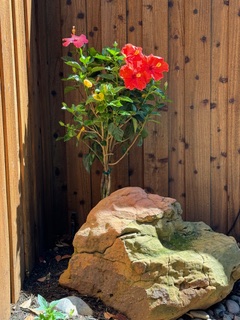
Fall is a good time to plant Hardy Hibiscus and Hydrangeas for spring and summer blooms.
Blissfully soaking rains in April ushered in the arrival of extraordinary May flowers. How refreshing to see these three stalwarts of the garden bursting with blossoms as they made their dramatic appearance in the landscape. New growth started to emerge on these three beauties sometime around early April. Continuing into May, they filled out with tender green leaves, buds and blossoms.
June’s gift to us was an explosion of color. The temptation to selectively snip and arrange them for indoor enjoyment was overwhelming. Restraint was needed but rather difficult to achieve.
Hibiscuses (Malvaceae)are in the Mallow family and, interestingly, also include such plants as okra, cotton and the old-fashioned hollyhock. My preference for dependable seasonal color is the tropical variety, which is considered an annual in our Zone 8 climate. Late winter is when I start planning the layout and design of my seasonal garden beds. Hibiscus is ALWAYS included. Who wouldn’t appreciate a flowering, seasonal plant that can go into the ground during the month of April and continue blooming until the first freeze? Another benefit: it’s the type of plant that manages itself well. During the growing season when glossy green leaves begin to turn yellow and die, they politely fall to ground. Blossoms that open for a few days, do likewise. They really are gardener friendly plants!
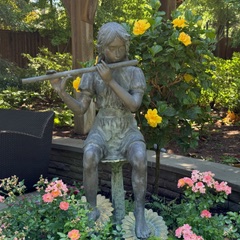
This year I’ve included tropical hibiscus in different shades of pink mixed in with existing limelight hydrangeas. They receive about 6 hours of morning to mid-day sun. And for a bit of whimsy, two hibiscus topiaries were added in areas that benefited from slightly more height. One is my favorite; it was placed behind my sunflower girl statue and features dreamy double yellow blossoms. The other is a sassy 4 foot tall, braided hibiscus topiary tree nestled in a corner bed. The multi-colored blossoms are a standout against our bronze colored fence.
Starting in late June our three hardy hibiscus plants began their seasonal show with those bodacious salad plate size flowers. These herbaceous perennials die to the ground in winter then around mid-April new growth signals their return to the garden.
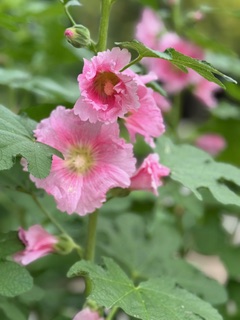
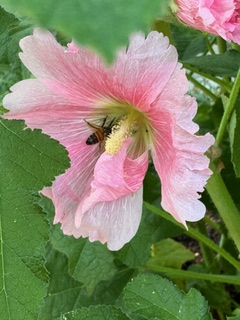
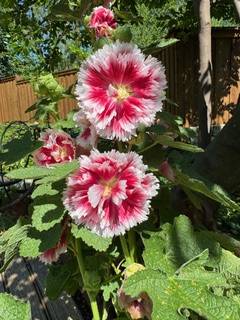
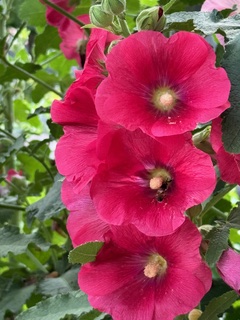
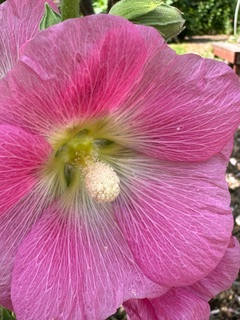
King Henry VIII Pink Hollyhocks with Honeybees Foraging for NectarPlanted 2023 in a location with morning sun and mid-afternoon shade‘Fiesta Time’ was added to my garden in May. Its fringed flowers are stunning
At Raincatcher’s Garden of Midway Hills, Master Gardener Susan Thornbury started seeds of a variety respectfully referred to as ‘Outhouse’. In days past, this treasured garden beauty was supposedly used as the perfect blocking for an unsightly outhouse while helping to mask the smell. Take a closer look at the multi-colored single blooms of white, pink, red and burgundy and you’ll see why it provided a pretty visual barrier.
Hydrangeas: When we moved into our home in May of 2006, oak leaf hydrangeas were already growing in a mostly shaded area of the garden. A few years later, they had overgrown the space and needed to be moved. A successful relocation to an area with filtered sun in the morning gave them more room to stretch their branches.
Since then, we’ve introduced a variety of hydrangeas to our garden beds:
*Big Leaf Hydrangea – Hydrangea macrophylla (Also, known as ‘mopheads’, these are the most common type of hydrangeas grown in home gardens and landscapes. Bloom time is usually late April through July. They are deciduous shrubs with large pom-pom heads of pink, purple or blue flowers. The flowers are greenish-white when young, picking up subtle shades of pink and brown as they age.
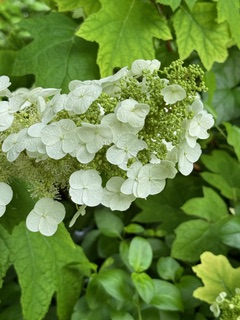
*Oakleaf Hydrangea – (Hydrangea quercifolia) Commonly referred to by its translation oak-leaved or oakleaf hydrangea, this variety offers year-round beauty with seasons of blooms, foliage and peeling bark. Blooms in spring and early summer. These beautiful plants were already growing when we moved to our home in 2006. Since then, I have searched for the compact, well-rounded deciduous hydrangea shrub known as ‘Ruby Slippers’. Finally, in mid-June, our local garden center received a shipment. I was first in line to purchase 3 plants. It was a special Father’s Day gift for my husband whose late mother was Rubye. He was thrilled! Oakleaf hydrangeas bloom on last year’s growth, so prune minimally after they bloom – not in early spring when new flower buds appear.
(This incredibly spectacular display of oakleaf hydrangeas is in the yard directly behind our house. It is the first thing that catches my eye when turning to leave our driveway. The photo on the left was taken in April when the plants were filled with those enormous white blossoms. Early to mid-summer they transitioned to lovely shades of deep pinkish/red. While the specific variety is unknown, something suggests to me that they could possibly be “Ruby Slippers’.)
*Panicle Hydrangea – (Hydrangea paniculata) This is one of the most cold hardy and heat tolerant of all species of hydrangea, thriving in Zones 3 through 9. Reaching 8’ + at maturity, there are now several dwarf varieties that stay under 5’ tall. For the strongest stems and the most abundant flowers, locate them in an area that receives 6+ hours of bright, direct morning sun then shaded during the hottest part of the day. We added ‘Limelight’ to our garden in 2022 and it has been a joy to watch them grow. Their huge, luxuriant conical flowers are mesmerizing. Bountiful blooms appearing in late May gradually turn from lime-green to creamy white in late summer followed by a rich deep pink which fades to beige as fall arrives.
*Of note, these hydrangeas are a recipient of the prestigious Award of Garden Merit of the Royal Horticultural Society and the Gold Medal Award of The Pennsylvania Horticultural Society.
Note: All photos were taken in the April – July time frame. The 100+ degree temperatures of the summer have left some plants struggling to endure the extreme heat. However, just as happened last year, the hardy hibiscuses, hollyhocks and hydrangeas will return next spring. The tropical hibiscus plants are going to be replaced with a new color palette in April of 2025.
Linda Alexander, Dallas County Master Gardener Class of 2008
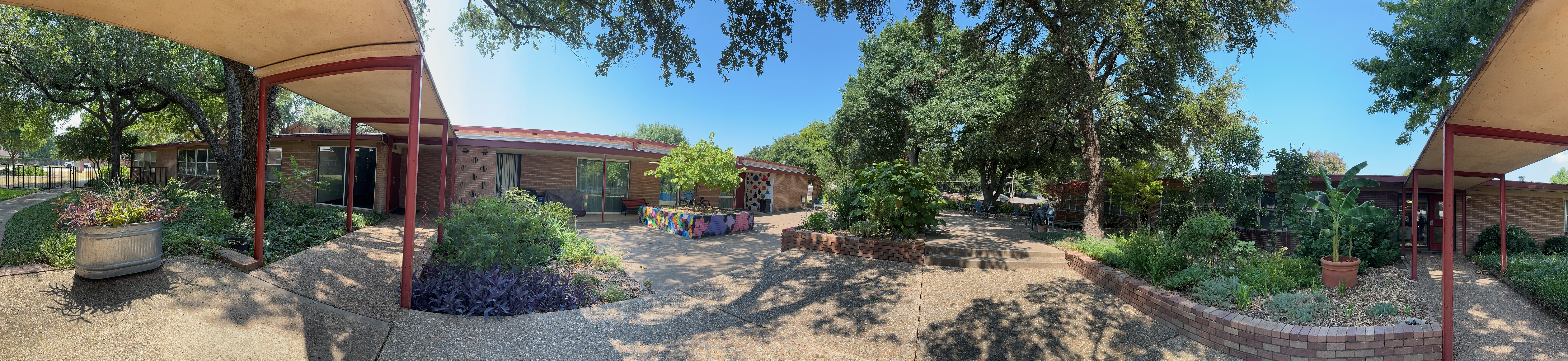
Panoramtic View of the Courtyard, Raincatcher’s Garden
Our garden has survived and even thrived this summer. The Raincatcher’s Garden was built using the 7 principles of Water Wise Landscaping:
Planning and design
Appropriate plant selection
Practical turf areas
Soil improvement
Efficient irrigation
Use of mulches
Appropriate maintenance
With fall temperatures giving us a respite, maybe you are looking for plants and practices that will endure our hot Texas summers. Take a look below at what worked for us and as always we would love to have you come for a vsit.
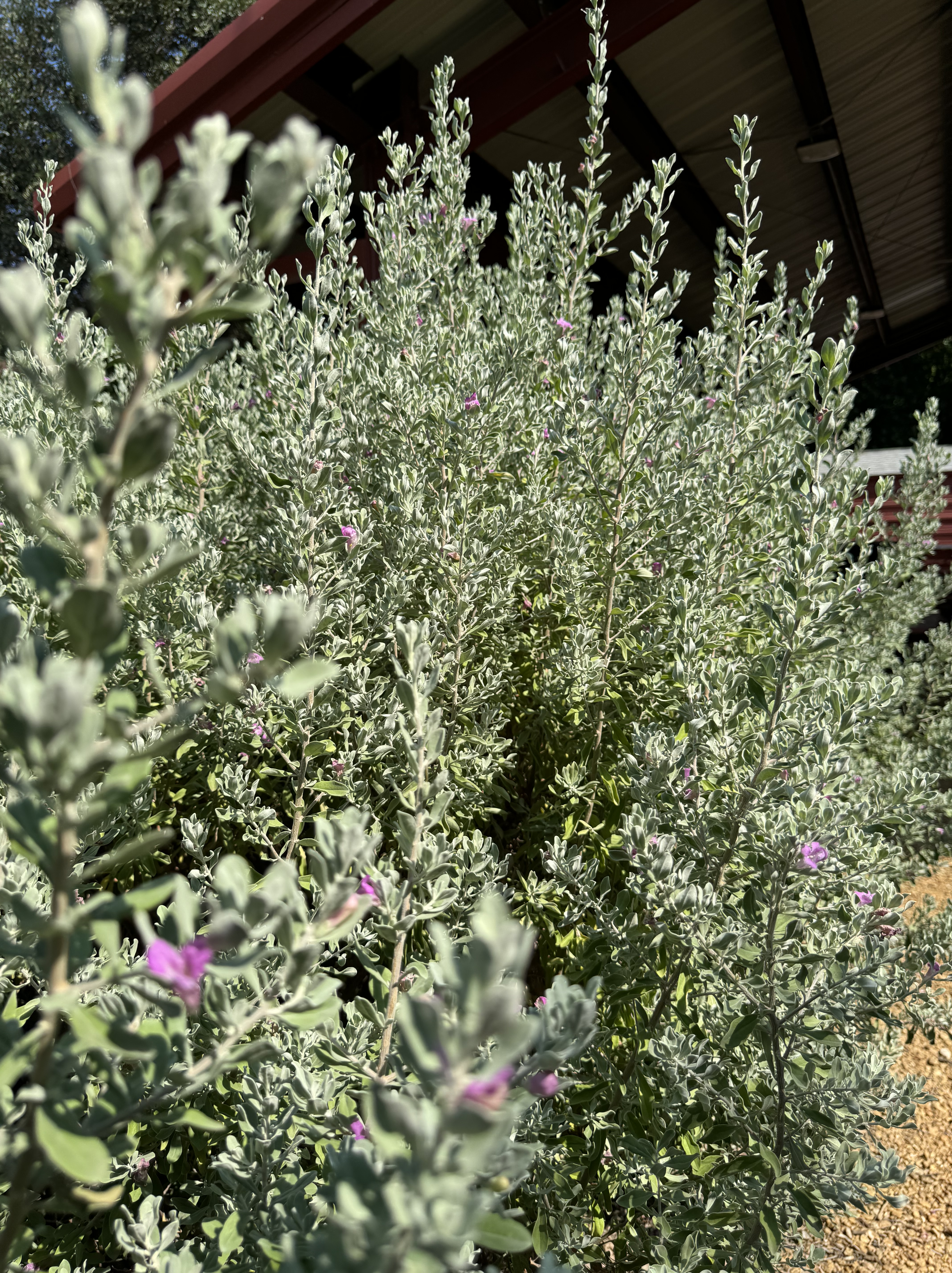
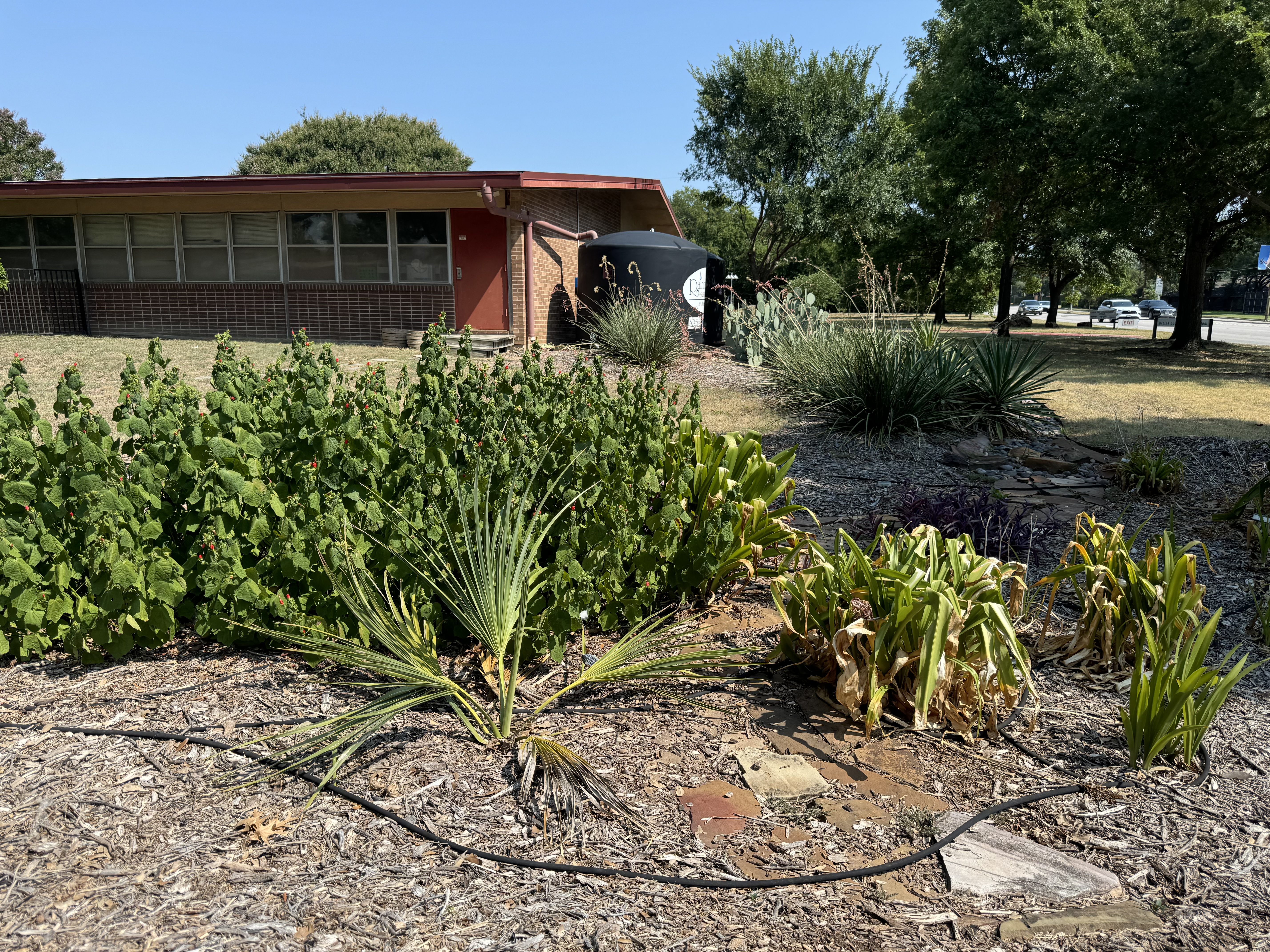
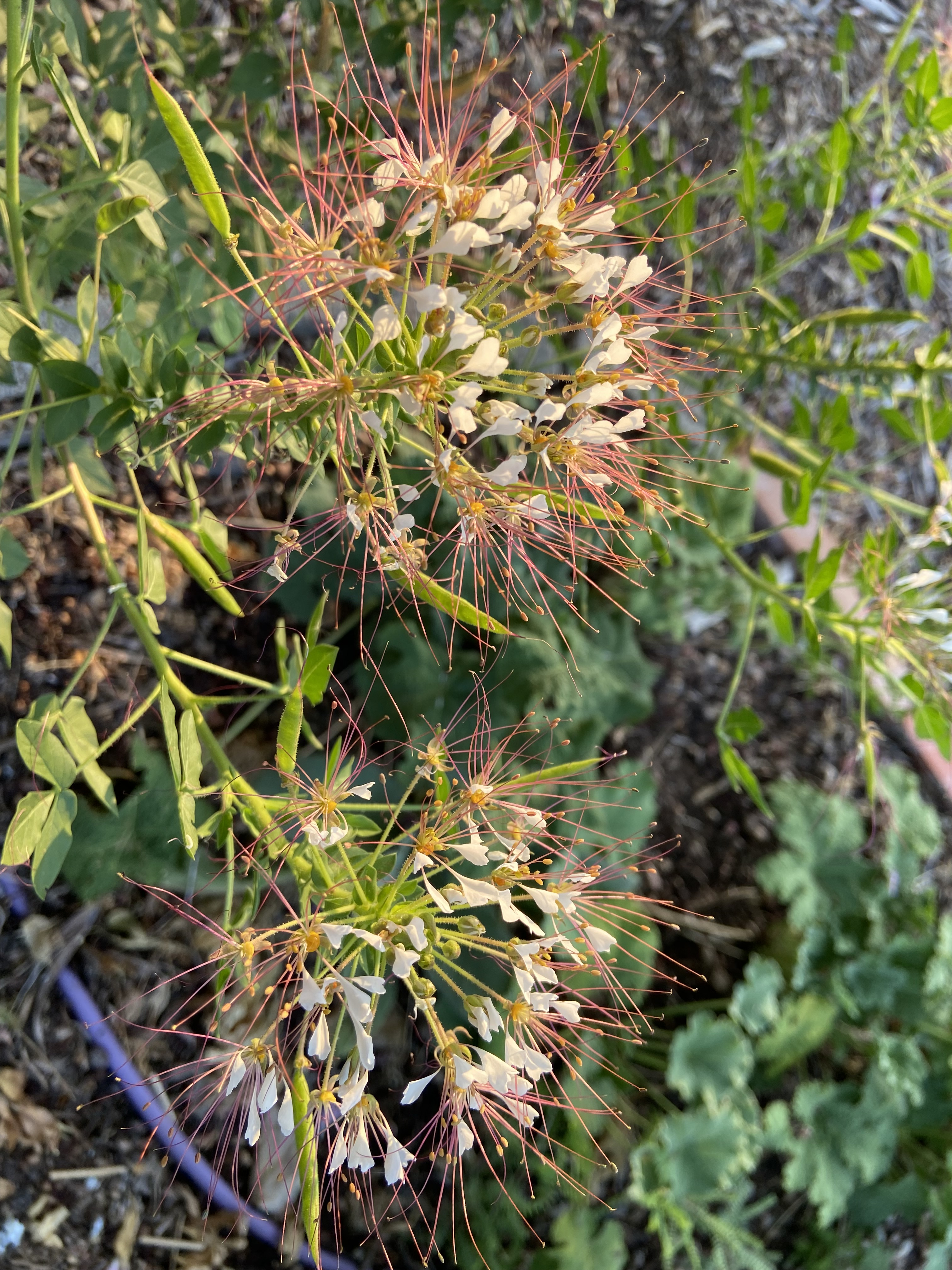
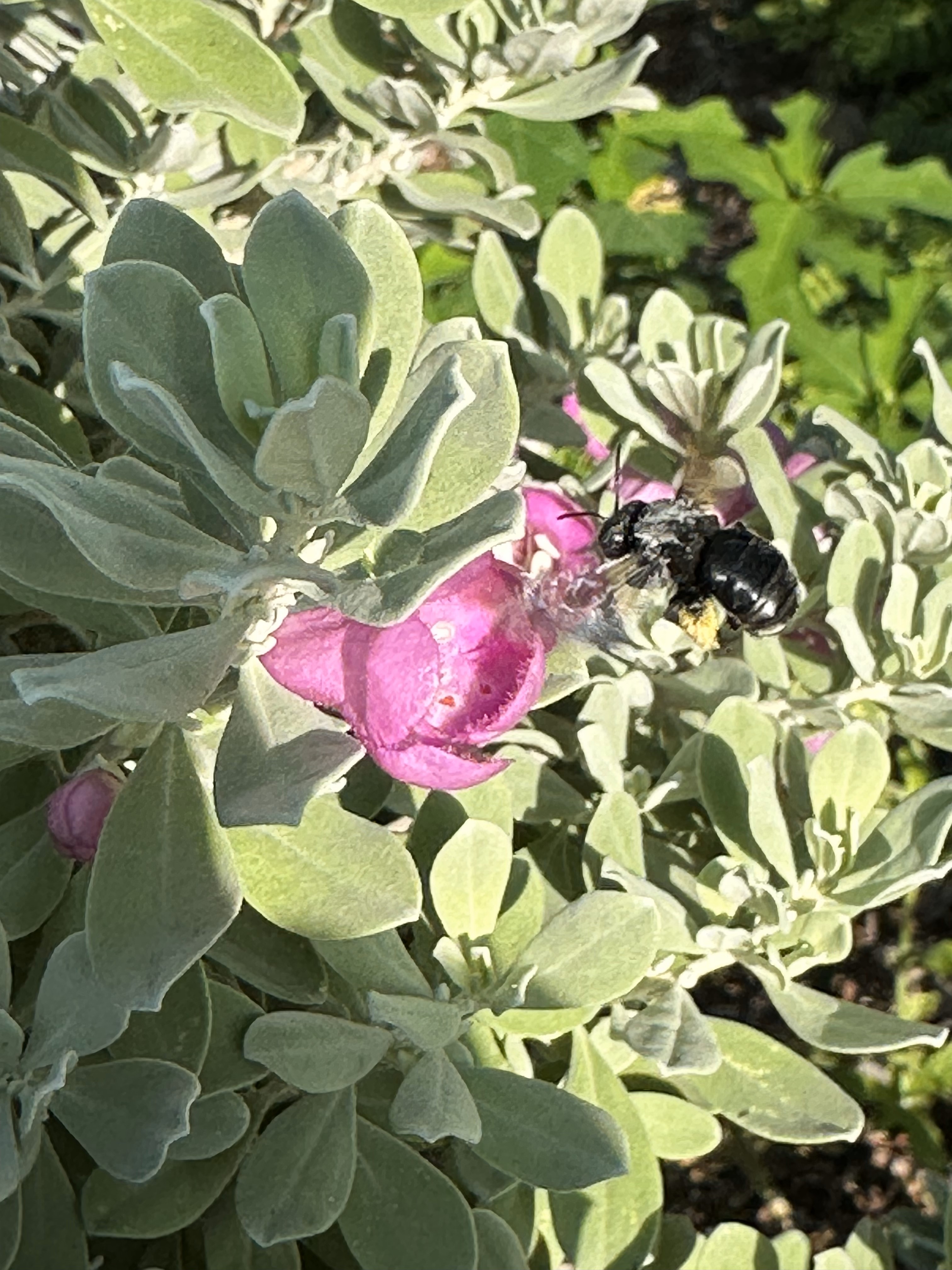
Rainctcher’s Prolific Vegetable GardenDesert Willow with attached polinatorFlame Acanthus for the HummingbirdsOkraTexas Sage, Leucophyllum frutescens, also known as the barometer bush-it blooms in periods of high humidity or rainGarden made Compost for Sale!A Crinum in bloom!Gardeners behind EsperanzaMexican Bird of Paradise, Caesalpinia pulcherrimaPentasA View of the Edible LandscapeZipper Spider-we think!Raincathcher’s Rain Garden with Rain Cisterns in BackgroundEvergreen Wisteria-we have a blog about this plant
Ann Lamb, pictures by Starla Willis- class of 2005 and 2008
Don’t give up, Susan Thornbury has some words of inspiration and an action plan for us during these hot days of summer.
August 15, 2024
Memory is strange. Most thoughts and memories are unhelpful. So much so that often a deep breath and a reminder that they are just thoughts and memories and not reality seems to be indicated. But then when least expected a flash of amazingly helpful inspiration!!
After listening to a weather forecast –given after the meteorologist offers an apology for what will be coming–and then stepping out to look at the garden already in a negative frame of mind and naturally seeing trouble everywhere—a song came –the words very loud and clear: “I”M GOING TO STAND MY GROUND YOU KNOW I WON’T BACK DOWN I’M GOING TO STAND MY GROUND”
Now don’t rush to judgement on that song–in this case it was crystal clear what the meaning was–it was aimed at gardeners!!
Not those in “other places” Places where the nights are cool it rains at least once a week and where things “just seem to grow” Oh no, they don’t get a song–it was not meant for them.
It was meant for gardeners here–it was meant for US!!
It is just such a temptation to give up–Its so hot and yet weeds are thriving–the list of “NOT FAIR” is a long one
But not for us to dwell on that: WE WILL NOT BACK DOWN WE WILL STAND OUR GROUND”
We can’t just think about it though–a plan is needed!
Each plan must suit the planner of course but–there are some important point that might be universal.
First give serious thought to becoming a morning person–if you start at 7AM –its not so bad and you can get a lot done in an hour or two. If this is not your usual habit–well just tell yourself–when November comes you can sleep late!!
Second set priorities. Take a good look and decide what must be done now some things can and should wait until later. One thing is usually deadheading.. The poor plants are stressed they don’t need to be trying to set seeds or supporting yellowing leaves. When you tidy them up they are really helped–and you get some encouragement–things are looking better already.
Third don’t give up on weeding. Weeds are cleaver plants and they can grab water and use it to set their seeds faster than one can believe–so don’t let them–you sure don’t need more weeds and your plants need all the water they can get.
Healthy and happy mulberry weeds edited out of the garden-they thought they were safe hiding in the salvia
Fourth–look for what is working. Which plants are showing a fighting spirit and a will to live they must be encouraged and rewarded–as they are encouraging and rewarding you.
Turk’s Cap loves summerCenzio is ok with heat, even seems to like itRosemary is not complainingYard pointsetta and white veined piple vine are okay with heat but do like shadeSalvia coccinea keeps going when the going gets tough
But of course you must also face what isn’t working–Bite the bullet–remove dying plants there is just no use in trying to care for them and waste precious water on them–make a mental note to avoid them in the future.
Last–congratulate yourself!! you deserve it YOU STOOD YOUR GROUND NO YOU DIDN’T BACK DOWN YOU STOOD YOUR GROUND!!!
Susan Thornbury, Dallas County Master Gardener Class of 2008
A recent Savannah Bee email was so inspiring to read that I immediately ordered three jars of what founder Ted Dennard described as “the happiest honey around”. Sourced from the beekeepers of Ukraine and Romania, it truly is “as sweet as a summer day.”
For more information about the women beekeepers who produce and distribute this remarkable sunflower honey, please follow the link to Savannah Bee. Their story is one of determination and perseverance in continuing the art of beekeeping for future generations.
Also, please revisit a blog article posted by Master Gardener Starla Willis in August of 2022. It features her summer trip to Ukraine where she captured an amazing photo of sunflower fields from her train ride across the country. She has cherished memories of that special experience.
For a quick breakfast treat, spread this yummy, crystallized honey onto a toasted English muffin.
Candied Sunflower Seed Snack
Only 5 ingredients from this to this!
And this might be the summer to grow your own sunflowers for some additional honeybee activity in the garden. I’ve decided to try the big one: Mammoth Sunflower Helianthus annuusIt’s only been in the ground for one month, is already over 4 feet tall and filled with buds
*Note: For all products and references to Savannah Bee go to savannahbee.com
Linda Alexander, Dallas County Master Gardner Class of 2008
Old sayings are so often true and in the garden this summer, there is no doubt at all.
No way, is this post full of cheer, the summer is miserable for gardeners and plants alike. But as always we can learn a lot and really we have to. Like it or not gardens are just essential for birds and lizards and insects of all sorts. They count on plants for their very life—and what would a gardener be—without a garden —so what to do?
Don’t forget about grasses. This is seep muley, not dramatic but looks good in a quiet way.Common Mullein has lots of bad habits but don’t overlook all the good ones.
Observation comes to the rescue and brings a bit of joy and hope. Some plants are holding on—and even blooming—if not right this minute they are planning to—soon. These are the plants we must remember, be sure to plant again for the next summer—which we sincerely hope will be more pleasant but –we can’t count on it.
Mealey blue sage is a self seeder, sometimes too much, but tries hard and what lovely color in hard times.When plants self seed, they find what works for them and are often far healthier than the ones planted by us.
Some of these plants are not the most spectacular but they are lovely in their own right and most important provide essential nutrition for the little lives counting on the garden. Fennel is a host plant for black swallowtails, plus we can enjoy using fennel and it is still alive.
Carry on watering mulching deadheading and trimming—it honestly isn’t so bad early in the morning. But don’t stop there. Take pictures make notes do what it takes to keep the plants that are surviving and even succeeding in your garden in your mind. That way there will be less wasted work and money next year. Sadly of course remember also what failed miserably. When the going gets tough—some plants just give up. More than likely not their fault at all they just were never intended for this weather. Best to face it and remember it clearly.
Yarrow, not blooming, but healthy and will bloom again when the time is right.Candelstick trees seend themselves then send down roots before they grow tall. This is a great plant for dealing with adverse conditions.Amaranth has a long history of living in hot places.Clammy weed doesn’t give up. This plant is in a little shade which helps.Tithonia requires upkeep but it’s worth it for flowers in serious heat.
Hope isn’t the best strategy for the summer garden –at least around here. Look at what works in your garden and in gardens you visit, Raincatcher’s welcomes visitors any time. Tuesday mornings there will be gardeners available to answer questions. You might even enjoy summer gardening!
Make experience; even of this dreadful summer—count for knowledge of what works—and what doesn’t. That will make us all better gardeners!
Susan Thornbury, Dallas County Master Gardener Class of 2008
Every so often one reads something that Is just so honest and truthful that its almost a shock. That recently happened.
For some reason an interview with a tourist information official from Nebraska seemed to jump off the page. He said—“To be honest it’s not for everyone”. Oh my thatis a wonderful thing. One expects technicolor sunsets—incredibly happy couples eating amazing food laughing children at the theme park—but not this time—“To be honest its not for everyone”
That should make anyone want to head for Nebraska—now. Because you would know what to expect—a perfectly nice place where you might have to make an effort to have a great time.
And then it seemed the absolutely perfect motto for the Pollinator garden at Raincatchers.
It’s a wonderful area but people who work there—well they have to work at it. The butterflies and bees and birds—obviously appreciate it but they keep quiet—no rounds of applause or words of thanks.
Often it is said that native and adapted plants are “low maintenance –but work is required and it is repetitive –deadheading trimming weeding—necessary but it can be hard too and somehow—never quite “finished” And without a doubt not at all glamorous.
So—it’s clear now right?? Come and work in the pollinator area you get to see insects and birds and lovely plants—yes it is work and it might not be spectacular—but isn’t that the whole point of a garden.
Cenzio or Texas Sage being pollinatedThanks to Joe and Abbe for the return of our iron butterflyWould you believe we plant salvias like this for our pollinators?For a low key summer exercise, watch black swallowtail larvae devour fennelThis candlestick tree will hopefully be eaten by sulfur butterfly larvae Moth atop Sedum
It’s a wonderful experience but you have to work at it. It may not be for everyone —-but—maybe its for you!! You will always be welcome! And just like Nebraska—the rewards are there with just a little effort!
Susan Thornbury, Dallas County Master Gardener Class of 2008
During the hot summer days, we work early at Raincatcher’s. Monday morning and Tuesdays you will find Master Gardeners in the garden early-even before 8am.
Sunflowers are such happy plants. I fondly remember Maximillian sunflowers at Joe Field Road probably in 2012 as a relatively new Master gardener – Michelle planted them in the nature area, and then they were everywhere! That’s when I first noticed the striking contrast of the golden flowers against the blue sky!
Sunflowers at our first garden on Joe Field Road
In my yard, a few sunflowers have magically appeared, most likely with the help of our feathered friends. These volunteers have brought unexpected color to the area that had once been a shade bed. This year, as Spring started to transform to Summer I began to notice more sprouts and is my habit, I let them grow. The striking flowers started to put on a show the first week in June, and with it came the buzzing bees covered in pollen. Stalks appeared near my very sunny, dry riverbed and shot 8 -10 feet in the air.
These bringers of cheer needed to be shared, so my plan was to begin clipping from the top, bending the stalks down. Cutting didn’t make them shorter, it made them more prolific.
With June being my birthday month, there were opportunities to share these lovelies and some of the other flowers from my yard. These arrangements made it to my former and new workout groups, and their families as well as friends, and neighbors. Sharing these gifts from my yard brings me so much joy!
My gift of sunflowers came anonymously, but they are also readily planted from seeds. and are hardy from zones 2a-11b. Planted in spring after frost, they grow quickly and produce flowers throughout the summer. The blooms track the sun from east to west during the day. This is known as heliotropism.
These yellow disks up against the blue sky reminded me of the opportunity to serve in Ukraine. The fields were covered in miles and miles of Sunflowers. It was seen first-hand from a train across the country. A very powerful memory as well as a present reminder.
Sunflowers in Ukraine
It is well known that the best time to cut flowers is early morning and it is recommended to put them immediately into a bucket of water before arranging. One morning, this plan was implemented, and it went according to plan. The second time, however, there wasn’t a chance to de-bloom the plant till midday. Oh dear, it didn’t take long for my happy flowers and buds to go sad and limp, even in the water. I hurriedly brought them inside, filled the vases with water, cut flower food and used the best specimens. Hours later, most of those became viable once again, but it was a stark reminder of why we heed best practices.
It’s now the end of July and while the flowers still make me smile, it is time to reclaim my sunbed. They are still producing in this 100+ degree heat, although not as readily as earlier in the summer. Stalks will be stripped of flowers and buds, and then chopped down to make room for the Fall plantings. There will be a chance for yet a few more arrangements. Don’t worry though, there are many other flowers in my crazy cottage garden for the pollinators.
Even in the dog days of Summer, there is joy in the unexpected volunteers that grace our yards and there are flowers that thrive and make us happy even in this inferno that we find ourselves in during this season of HOT!
It doesn’t take long for plants to become stressed by this summer’s intense heat and lack of rain. It’s probably safe to say the same for most gardeners.
Here are the strategies we are using to keep the vegetables in the north garden healthy in the heat:
Research to find out which plant varieties are best suited for the region
Water twice a day with two short cycles of 30 minutes using drip irrigation
Mulch heavily
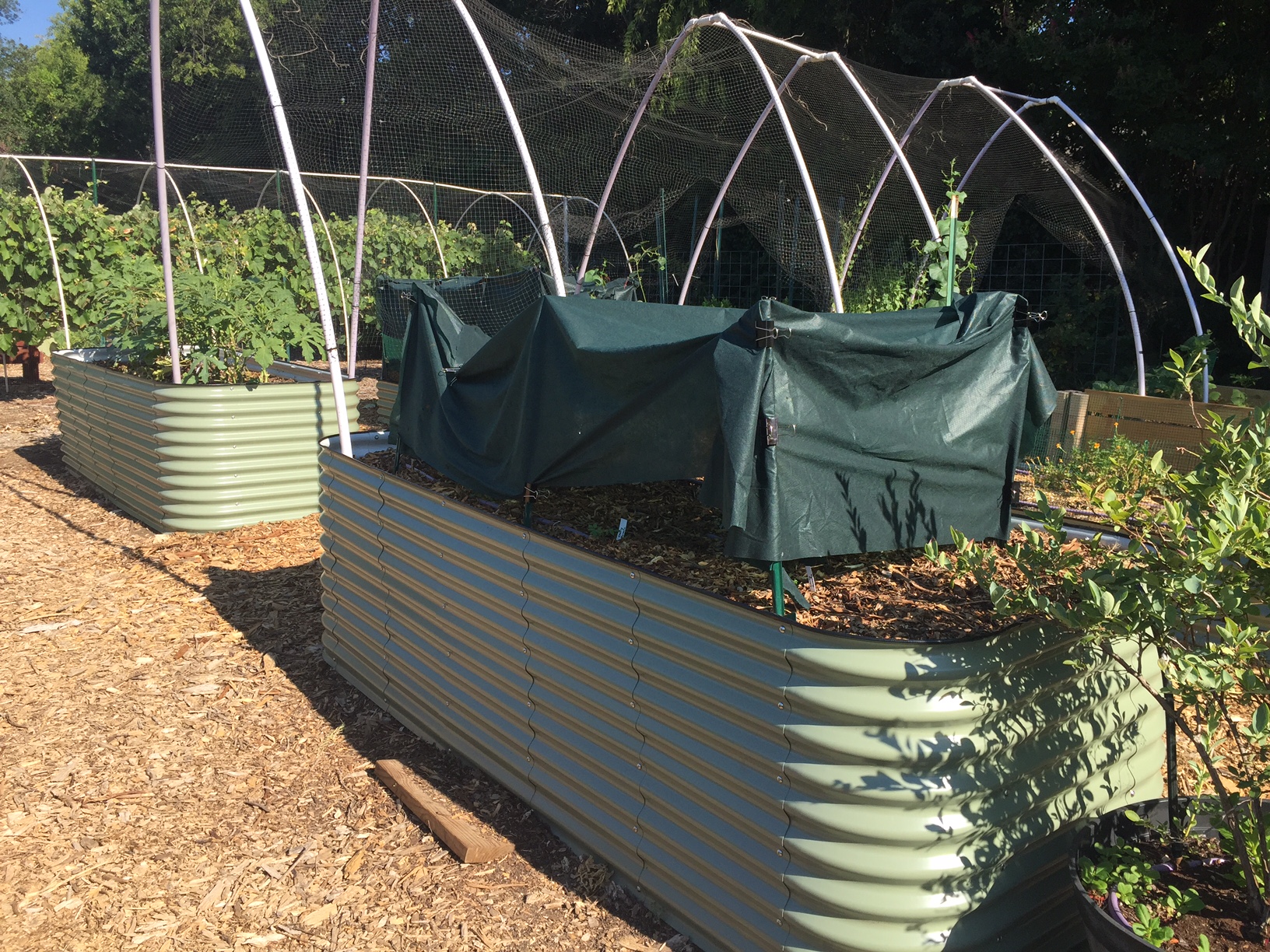
Use shade cloth to protect fall tomato and pepper transplants and plants showing signs of heat stress.
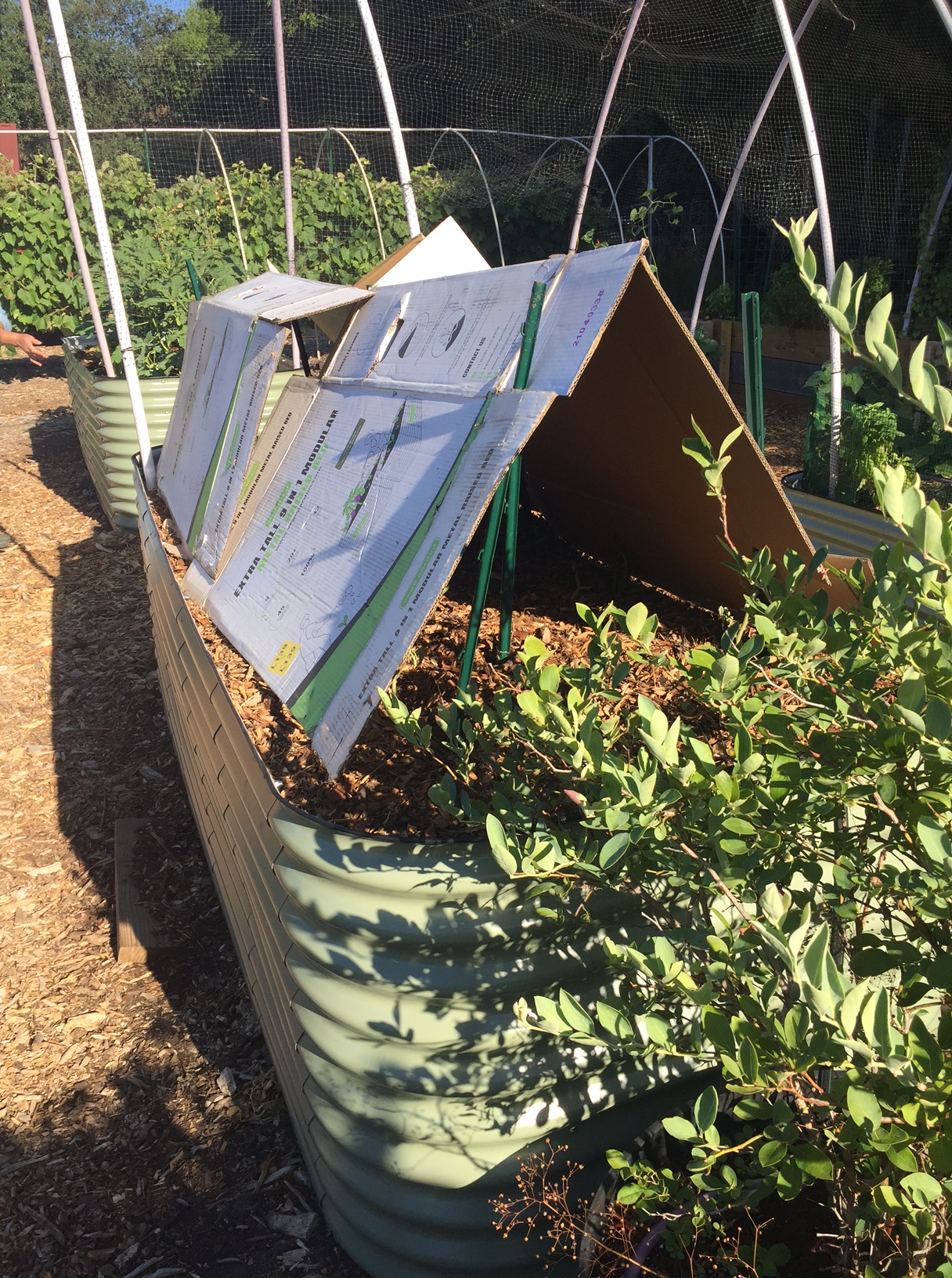
When we realized the fall tomatoes were getting scorched we improvised with cardboard so that we could get ourselves out of the sun that day. Later we used tee posts with binder clips to secure the shade cloth. We removed the shade cloth for about four hours in the morning and replaced it in the afternoon for just a few days before taking it off completely.
We remove plants that no longer look healthy or have slowed down their production. This was true of about half of the cucumbers. They can be restarted by seed outdoors in August.
We are also trying a method called ratooning to improve our late summer and fall production of peppers and okra. Leaving some leaf axils for photosynthesis, we are cutting low performing plants back to eight to ten inches from the ground. The articles below will provide more information about the practice. According to the one from Clemson, ratooned plants will have the benefit of a strong root system and not take as long to produce fruit as a new transplant.
As for our heat stressed vegetable gardeners, a mixture of iced tea and lemonade has become the drink of choice on our Monday workdays. A slice of watermelon or a delicious watermelon salsa helps too.
Beverly Allen, Dallas County Master Gardener Class of 2018, encouraged by Ann Lamb
Pictures by Don Heaberlin, Dallas County Master Gardener Class of 2021











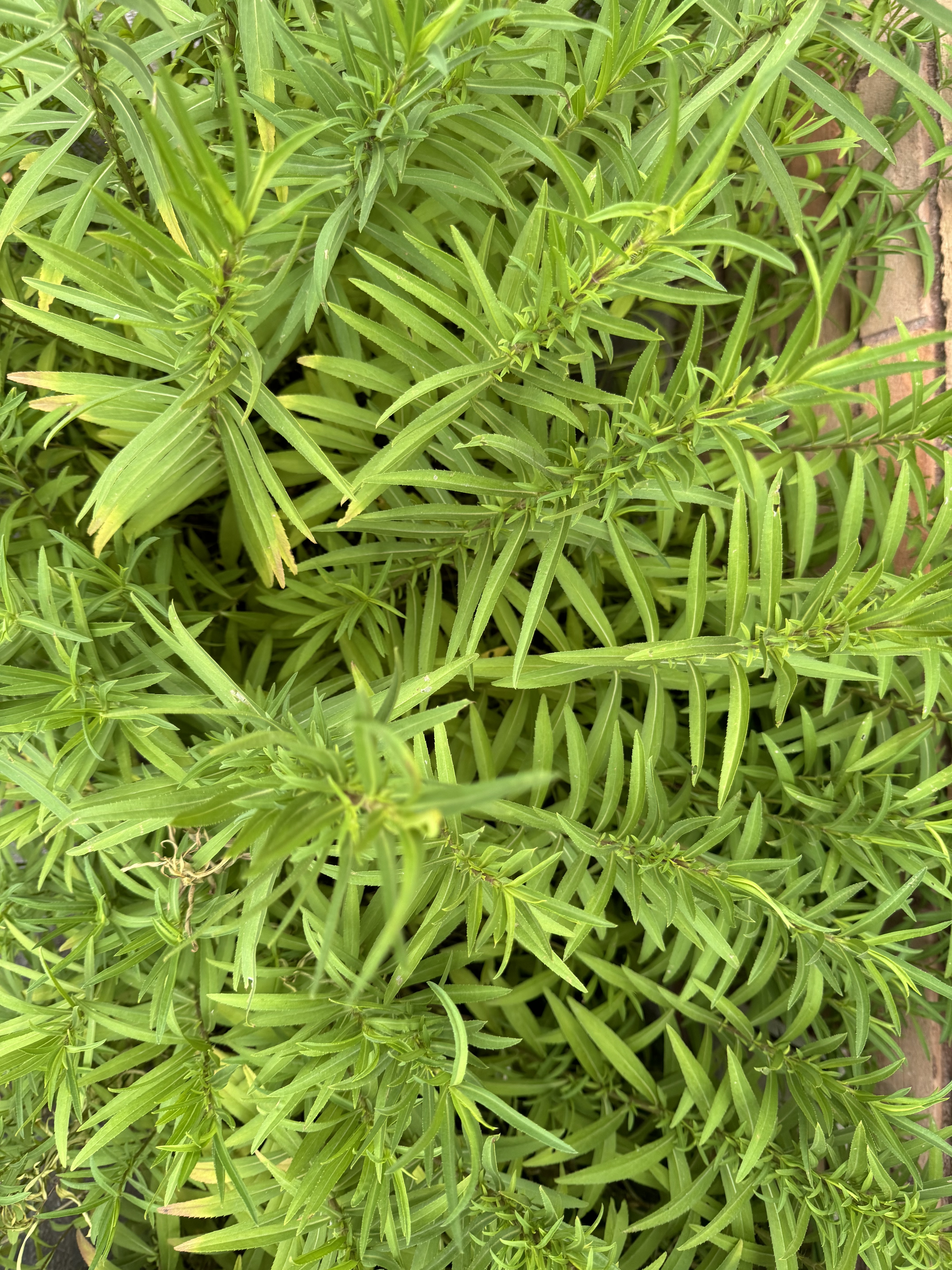

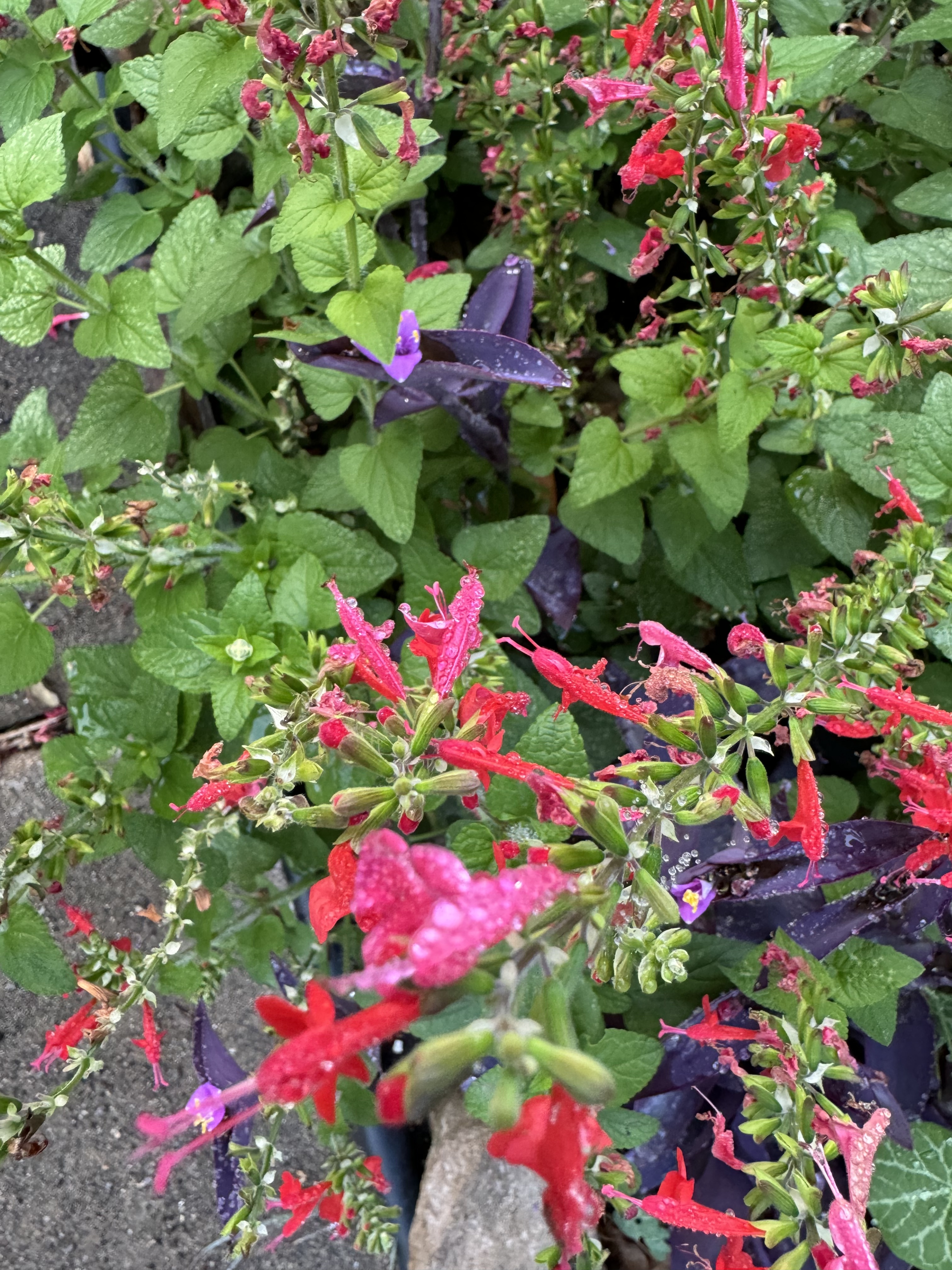


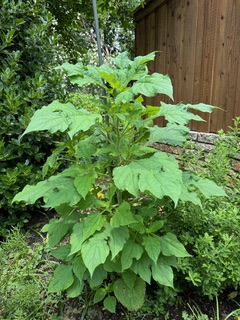


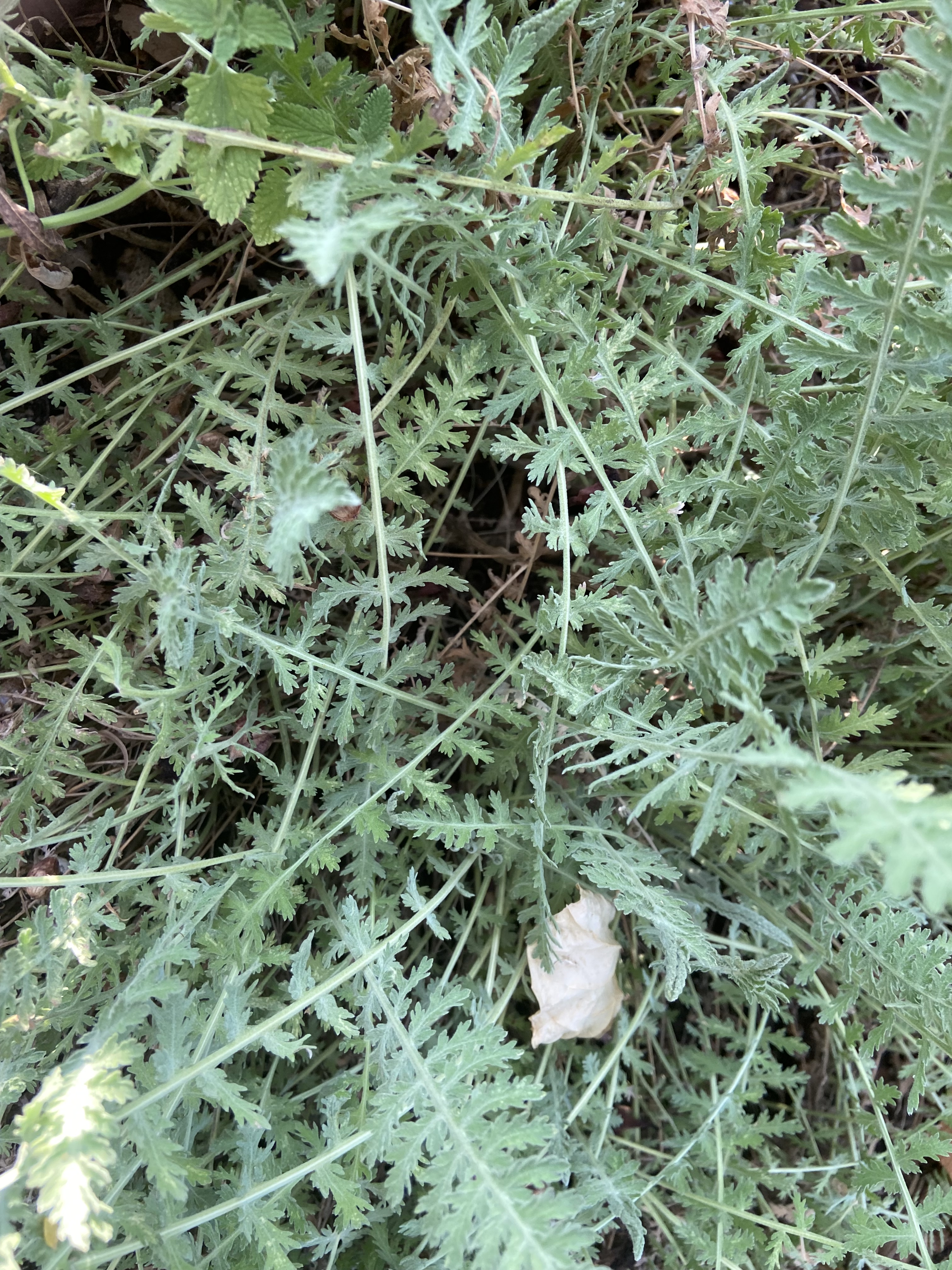





 My gift of sunflowers came anonymously, but they are also readily planted from seeds. and are hardy from zones 2a-11b. Planted in spring after frost, they grow quickly and produce flowers throughout the summer. The blooms track the sun from east to west during the day. This is known as heliotropism.



 DALLAS GARDEN BUZZ