Category Archives: Herbs To Grow In Dallas

Recipes Using Honey

IMG_9763

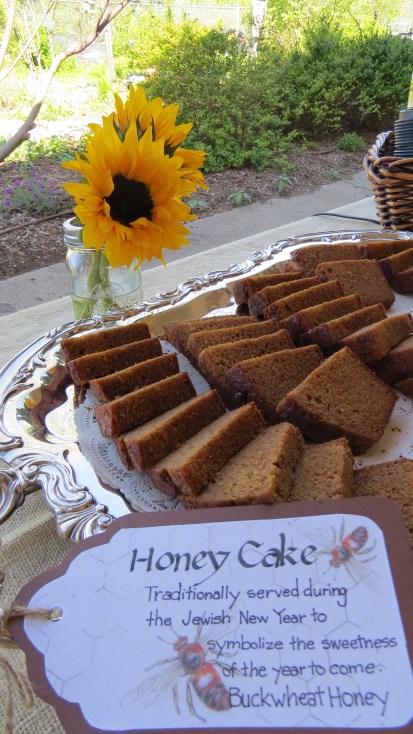
HONEY CAKE

The Gourmet Cookbook edited by Ruth Reichel


Honey cake is traditionally served during Rosh Hashanah, the Jewish New Year celebration, when honey symbolizes the sweetness of the year to come.

1 ¾ cups all-purpose flour

¾ tsp baking soda

½ tsp baking powder

¾ tsp salt

1 tsp ground cinnamon

½ tsp ground ginger

1 cup honey, preferably buckwheat

2/3 cup vegetable oil

½ cup strong brewed coffee, at room temperature

2 large eggs

¼ cup packed brown sugar

2 Tbl apple juice or cider

Put a rack in the middle of oven and preheat oven to 350 degrees F. Oil a 9×5-inch loaf pan well and dust with flour, knocking out excess.

Whisk together flour, baking soda, baking powder, salt, cinnamon, and ginger in a medium bowl.  Whisk together honey, oil, and coffee in another bowl until well combined.

Beat together eggs and brown sugar in a large bowl with an electric mixer at high speed for 3 minutes.  Reduce speed to low, add honey mixture and apple juice, and mix until blended, about 1 minute.  Add flour mixture and mix until just combined.  Finish mixing batter with a rubber spatula, scraping bottom of bowl (batter will be thin).

Pour batter into loaf pan and bake for 30 minutes.  Cover loosely with foil and continue to bake until cake begins to pull away from sides of pan and a wooden pick or skewer inserted in center comes out clean, about 30 minutes more.  Cool on a rack for 1 hour.


IMG_9843

Iced Honey Lemon Tea

 Ingredients:

1 quart cold water

¾ cup fresh lemon juice

4 to 6 tablespoons honey

2 cups ice cubes

1 lemon, seeded and sliced thinly (optional)

Fresh sprigs lavender or a handful of lemon verbena or mint leaves, torn into pieces

Directions:

1.  Combine the water, lemon juice, and honey in a large pitcher and stir to dissolve the honey.

2.  Add the ice cubes and stir to combine.  Taste and add more lemon or honey, if needed.

3.  Add the lemon slices and lavender, lemon verbena, or mint.

Yield:  Makes 4 servings.


Honey Beer Bread

Honey Beer Bread


Ingredients:

3 cups all-purpose flour

1 tablespoon baking powder

2 tablespoons sugar

1 teaspoon salt

2 tablespoons honey

1 can beer

¼ cup unsalted butter, melted

Directions:

1.  Preheat oven to 350 degrees F.  Grease a 9” x 5” x 3” loaf pan.  Line the bottom of the pan with parchment paper.  Set aside.

2.  In a medium bowl, whisk together the flour, sugar, baking powder and salt.

3.  Using a wooden spoon, stir the beer and honey into the dry ingredients until just mixed.

4.  Pour half the melted butter into the loaf pan.  Spoon the batter into the pan then pour the remainder of the butter of top.  Use a pastry brush to spread it around.

5.  Bake for 50 to 60 minutes or until top is golden brown and a toothpick/knife inserted in the middle comes out clean.

Yield:  One loaf.
 

Goat Cheese Hk cropped

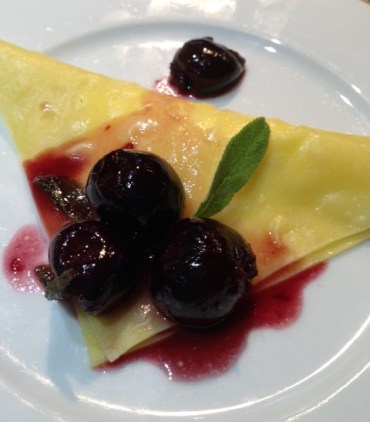
Goat Cheese Handkerchiefs with Tart Cherries and Sage

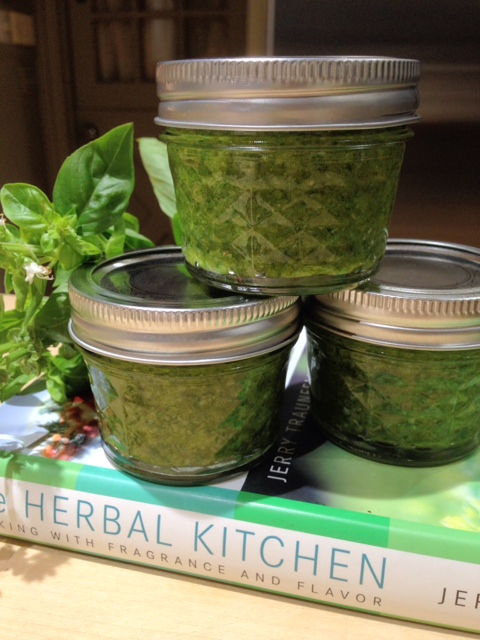
Chef Jerry Traunfeld, author of The Herbal Kitchen, says that each year he counts the days to cherry season, because he can’t wait to put this dish on the menu at The Herbfarm Restaurant in Washington. Tart cherries, also called sour or pie cherries, are a very different fruit from sweet cherries, such as Bings. Raw, they have a pucker-your-mouth sour flavor, but when cooked and sweetened they have the bright intense cherry pie flavor that sweet cherries can never express. You can make this dish with sweet cherries, but the taste will be quite different. You might have to search a little for fresh tart cherries and fresh pasta sheets. We finally found tart cherries in the frozen food section at Central Market after several repeat trips. As for the fresh pasta sheets, they can be found in most groceries in the refrigerated section with other fresh pastas and labeled lasagna sheets. Be encouraged, your searching will reward you. This is a lovely dish that can be offered as the beginning of a multicourse dinner or romantic supper or the main dish for a special luncheon or brunch.


Ingredients:

2 ounces soft mild goat cheese (1/2 cup)

½ cup whole milk ricotta

½ cup hot water

3 ½ tablespoons unsalted butter, softened

¼ cup very small sage leaves, or larger sage leaves cut into ¼-inch strips

12 ounces tart (sour or pie) cherries, pitted

1 ½ tablespoons mild honey

¼ teaspoon kosher salt

Eight 4-inch squares of fresh pasta

Directions:

1. Heat oven to 150 degrees F or its lowest temperature, then turn it off.  Crumble the goat cheese into a small bowl, stir in the ricotta, and put it in the oven to warm.

2.  Put the hot water and ½ tablespoon of the butter in a glass pie plate or shallow baking dish and place it in the oven also (this is for holding the pasta once it’s cooked).  Bring a large pot of salted water to a boil.

3.  Melt 1 tablespoon of the butter with the sage leaves in a medium skillet over medium heat and stir until the sage leaves wilt, then turn a darker green color, about 2 minutes.  Add the cherries, honey and salt, and toss them over the heat until the cherry skins pop and they release a small amount of juice, about 3 minutes.  Add the remaining 2 tablespoon butter to the pan and stir, still over the heat, until it melts and incorporates into the sauce.  Remove the pan from the heat.

4.  Boil the pasta squares until they are tender but firm, usually 2 to 3 minutes.  Lift them out of the water with a skimmer and slip them into the warm water and butter in the pie plate.

5. For assembly:  Lift 4 of the pasta squares from the dish and lay them out on a piece of parchment paper or on a baking sheet (this is easy to do with your hands if you wear disposable latex gloves).  Spread a tablespoon of the warm goat cheese in the center of each square and fold them in half on the diagonal.  Transfer the triangles in pairs to warm dinner plates.  Fill the second batch of pasta squares the same way.  Spoon the cherries and sauce over the handkerchiefs and serve right away.


Yield: 4 servings.

Linda
Smoked Turkey Salad

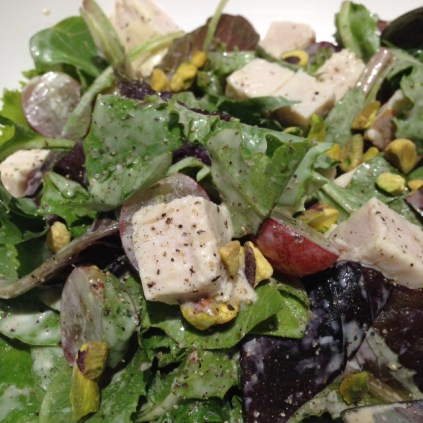
HSG Honey Mustard Dressing

 For the Hello! Honey luncheon, this dressing was served with a salad of organic mixed field greens, Jennie-O Sun-Dried Tomato Smoked Turkey Breast cubed, Grape halves and Pistachios.

Ingredients:


1 quart Kraft Mayonnaise

½ cup plus 2 tablespoons vegetable oil

½ cup plus 2 tablespoons honey

½ cup plus 2 tablespoons French’s Mustard

3 tablespoons plus 1 teaspoon apple cider vinegar

1 ½ teaspoons onion salt or ¾ teaspoon onion powder

¾ teaspoon cayenne pepper

Directions:

1. In a large bowl mix all ingredients together until smooth and creamy.  Refrigerate for a few hours before serving.
 

Honey Roasted Carrots


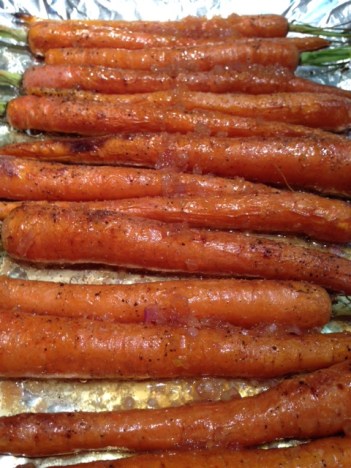
Honey-Roasted Carrots

 Ingredients:

2 lb. baby carrots with tops

2 teaspoons olive oil

3 Tablespoons butter, divided

½ teaspoon kosher salt

¼ teaspoon freshly ground black pepper

1 shallot, finely chopped

2 Tablespoons bourbon

2 Tablespoons honey

1 Tablespoon chicken broth or water

½ teaspoon chopped fresh thyme

Directions:

1.  Place a small roasting pan in oven.  Preheat oven and pan to 500 degrees.

2.  Cut tops from carrots, leaving 1 inch of greenery on each carrot.

3.  Stir together olive oil and 1 tablespoon butter in preheated pan.  Add carrots, salt, and pepper; toss to coat.  Bake 10 minutes.

4.  Meanwhile, melt remaining 2 tablespoons butter in a small saucepan over medium-high heat.  Add shallot; sauté 1 minute.  Remove from heat, and stir in bourbon and next 2 ingredients.  Return to heat, and bring to a boil, stirring occasionally.  Reduce heat to medium, and cook 5 minutes or until mixture is syrupy.

5.  Drizzle syrup over carrots; toss to coat.  Bake 5 to 7 more minutes or until carrots are crisp-tender.  Transfer to a serving dish, and sprinkle with thyme.


Yield:  4 to 6 servings.


Note:  Substitute apple juice for bourbon, if you prefer.  Look for bunches of carrots that are all about the same size so they’ll cook evenly.  If some are too big-or if you can’t find real (sometimes labeled French) baby carrots-just peel the bigger ones and halve them lengthwise before roasting.
 

???????????????????????????????


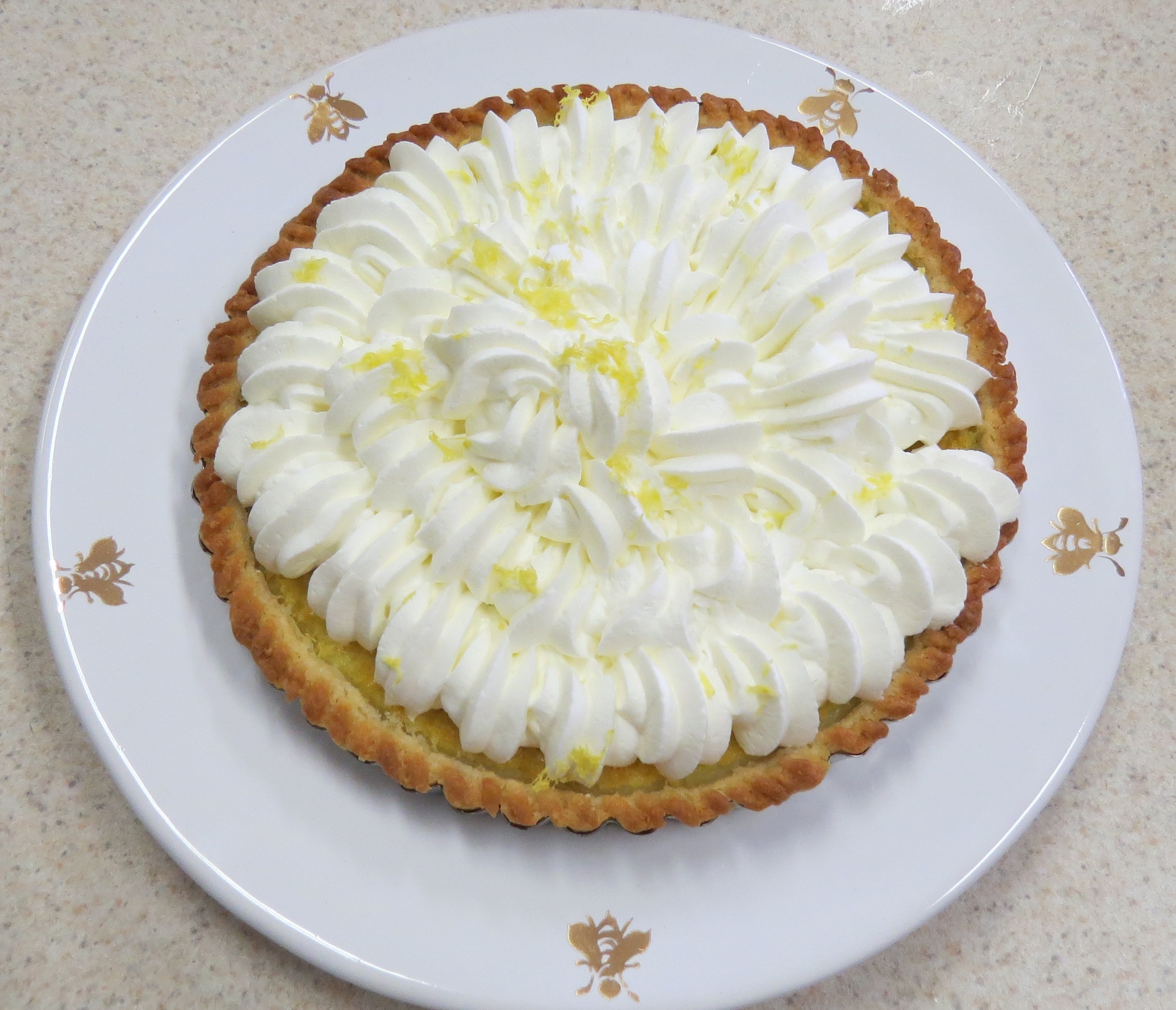
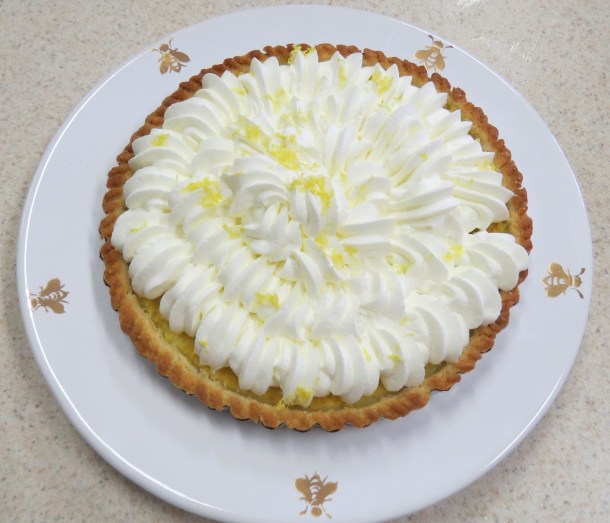
TART CITRON RECETTE

LEMON TART RECIPE


Pâte Sucrée

Tart Pastry


150 g butter

300 g flour

150 g powdered sugar

60 g eggs (one egg)

60 g ground almonds


In a bowl, combine butter, flour, powdered sugar and almonds.  Sablage the mixture, cutting the butter into the flour using your fingers until it is a sandy consistency.  Add the egg and stir with one finger.  Turn out on the counter.  Fraisage two to three times, until dough just comes together by using the palm of your hand to smear the dough across the counter.  Flatten it out on a parchment-lined sheet. Chill.  Form the dough into the tart shell.


Appareil au citron (cru)

Lemon Filling (uncooked)

Juice from 2 lemons

Zest of 1 lemon

135 g granulated sugar

35 g butter

3 eggs


In a saucepan, melt pieces of butter.  In a bowl, whisk the remaining ingredients.  Pour the egg mixture through a fine sieve to remove chalise.  Add the butter and whisk rapidly.  Fill the tart shells to about ¾ full.  Bake at 180°C(360-365°F) for about 30 minutes, or until the top looks like a Crème Brûlée after it’s been torched.

Decorate cooled tart with an abundance of whipped cream in a decorative pattern, sprinkle with lemon zest.  Chill several hours or overnight before serving.


Recipe courtesy of Molly Wilkinson, Certified Pastry Chef, Le Cordon Bleu, Paris

214 808-9231 or mollyjane123@gmail.com

Custom treats from Cupcakes to Tart Citron!


IMG_9924


Honey-Pecan Tart


Ingredients:


1 cup sugar

¼ cup water

1 cup whipping cream

¼ cup unsalted butter, cut into small pieces

¼ cup honey

½ teaspoon salt

2 ½ cups pecan halves, coarsely chopped

1 (15-ounce) package refrigerated piecrusts

2 teaspoons sugar, divided

½ (4-ounce) package bittersweet chocolate, chopped


Directions:


1.  Bring 1 cup sugar and ¼ cup water to a boil in a medium-size heavy saucepan, stirring until sugar dissolves.  Cover and boil over medium-high heat, without stirring, 8 minutes or until golden, swirling pan occasionally.

2.  Remove from heat, and gradually stir in whipping cream (mixture will bubble with addition of cream).

3.  Add butter, honey, and salt, stirring until smooth.  Stir in pecans; simmer over medium heat, stirring occasionally, 5 minutes.  Remove from heat; cool completely.

4.  Unfold 1 piecrust on a lightly floured surface; roll into an 11-inch circle.  Fit into a

9-inch removable bottom tart pan.  Trim edges.  Freeze crust 30 minutes.

5.  Spread pecan mixture into crust.  Unfold remaining piecrust, and roll into a 10-inch circle.  Place crust over mixture, pressing into bottom crust to seal; trim edges.  Sprinkle with 1 teaspoon sugar.  Freeze 30 minutes.

6.  Bake at 400 degrees F for 30 minutes.  Cool on a wire rack.

7.  Place chocolate in a small heavy-duty zip-top plastic bag; seal.  Submerge in hot water until chocolate melts.  Snip a tiny hole in 1 corner of bag; drizzle chocolate over tart.  Sprinkle with remaining 1 teaspoon sugar.


Yield:  1 (9-inch) tart.


???????????????????????????????

Honey Ice Cream


Ingredients:

2 quarts half-and-half

1 ½ cups honey

2 tablespoons vanilla extract

Directions:

1.  Stir together all ingredients, and pour into freezer container of a 1-gallon electric freezer.

2.  Freeze according to manufacturer’s instructions.  Pack with additional ice and rock salt, and let stand 1 hour before serving.

Yield:  3 quarts.

Linda

Pictures by Starla

HELLO, HONEY! LUNCHEON AND LECTURE

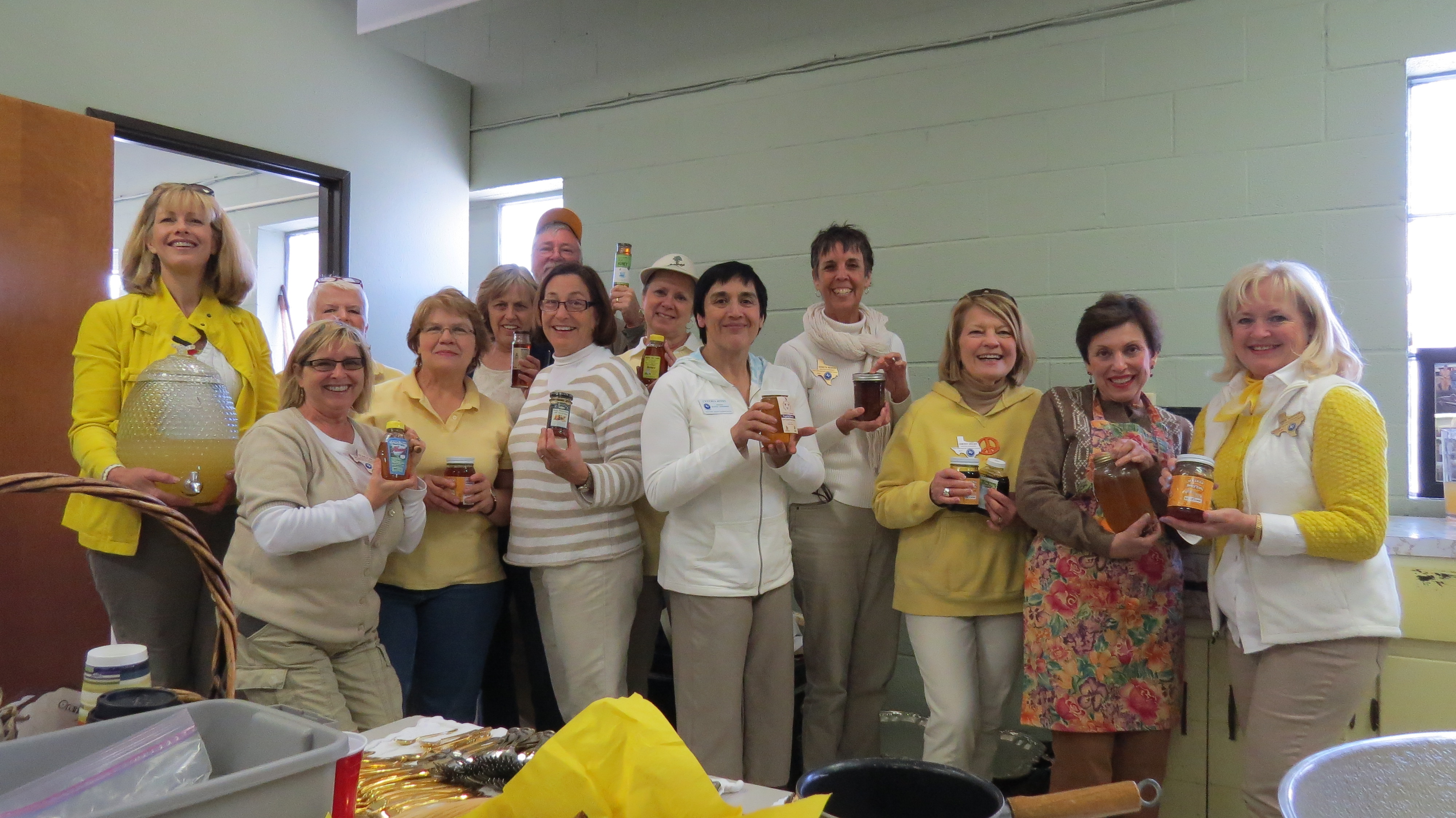
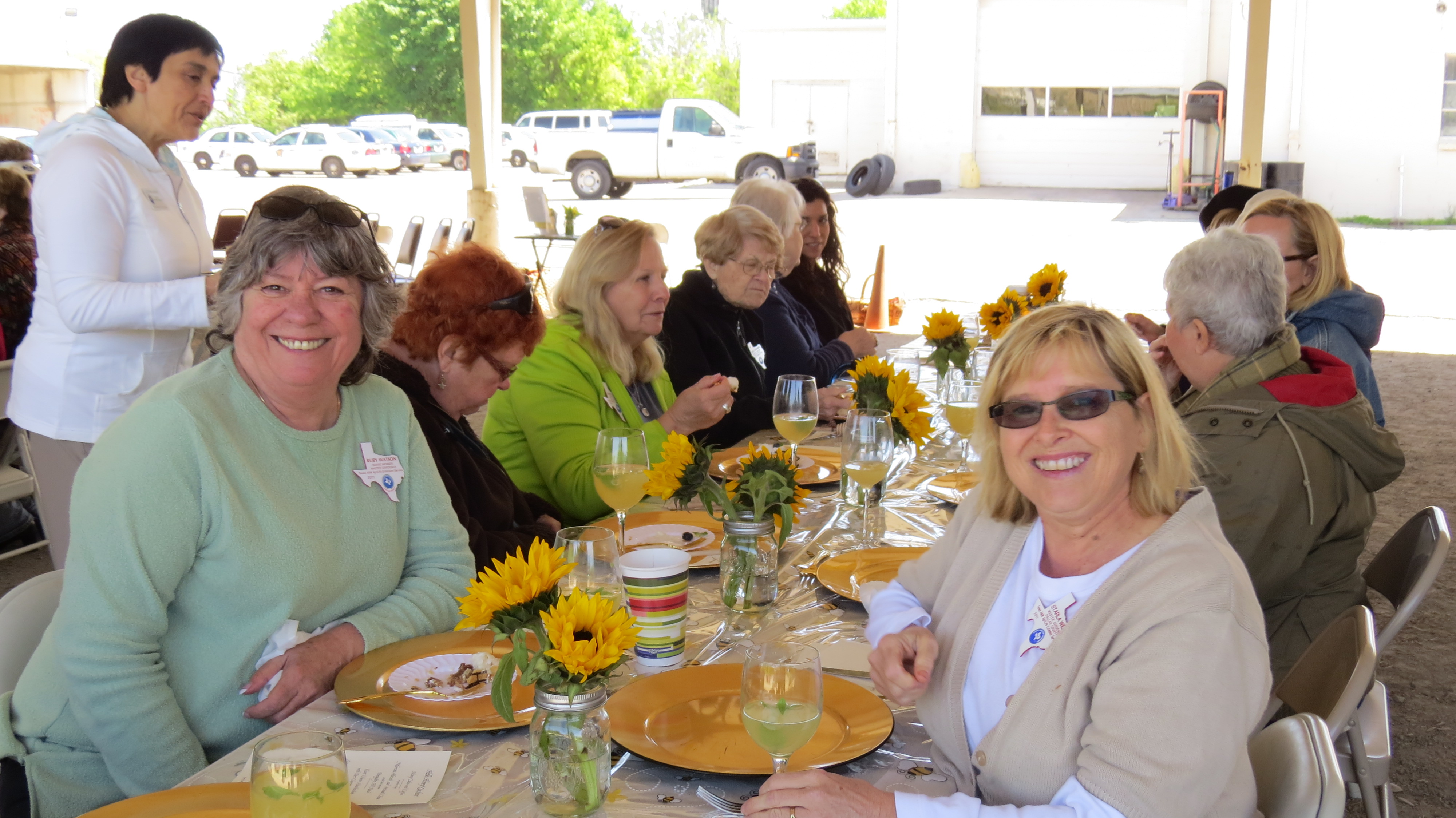
Why spend April 15 with a calculator, a pile of receipts, and a deadline? The Demonstration Garden was buzzing on tax day with more than 30 guests enjoying a packed morning learning all about bees and honey.

IMG_9962


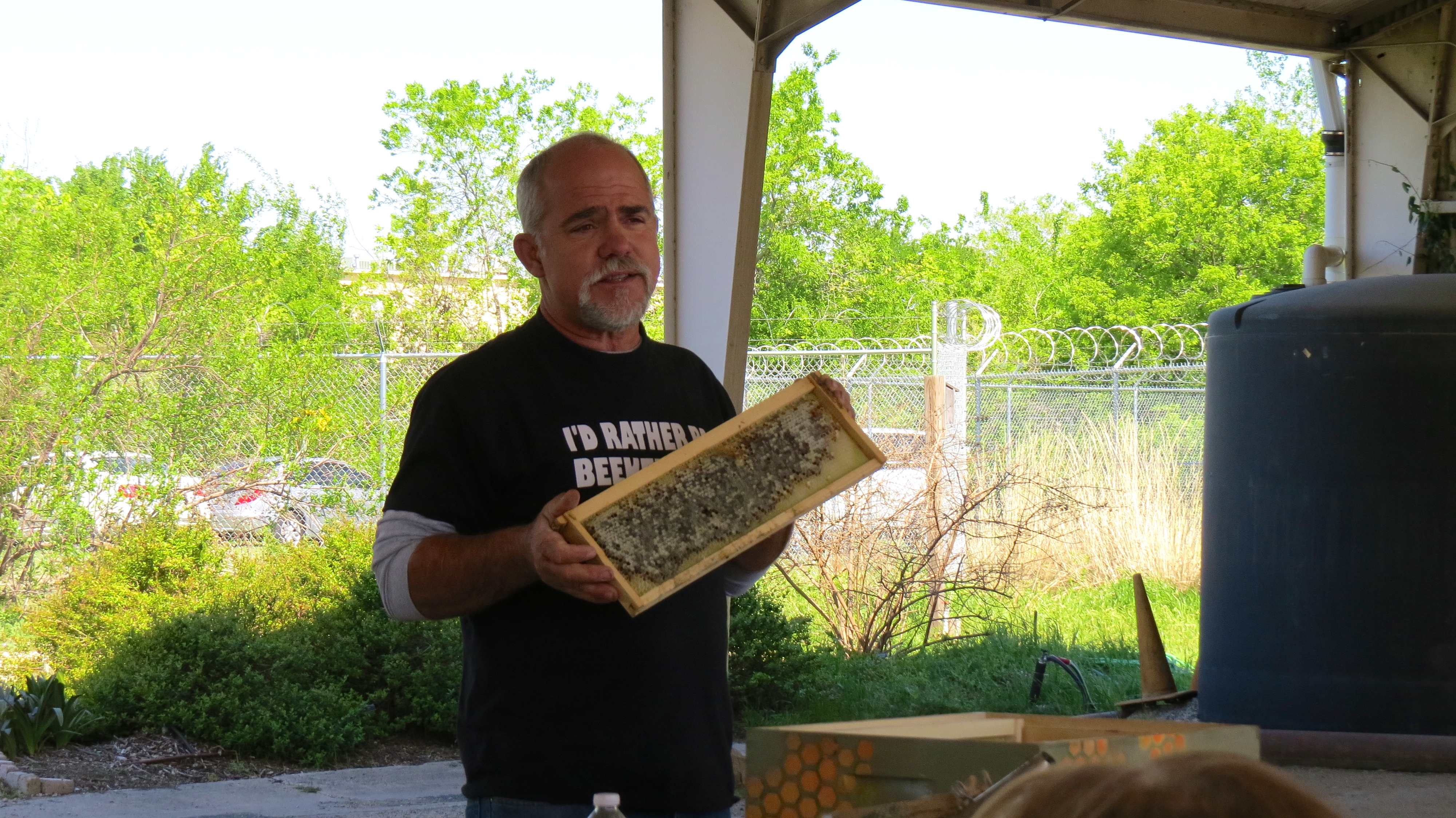
Jewish Honey Cake, a traditional favorite for the Jewish New Year, and coffee helped take the chill off the brisk morning. In his talk, beekeeper David McCarty encouraged guests to purchase local honey. David noted that honey tastes of the nectar from particular flowers visited by bees, and honey from the same hive can have dramatically different flavors. Commercially produced grocery store honey is often so processed that all pollen is destroyed, he said, and may even contain fillers like corn syrup and fructose. (In the worst cases, generic honey may be little more than corn syrup.)

Honey cake was delicious with hot coffee.

David harvests honey, of course, but his passion is the small insects that make it. He works to rescue bees from exterminators and to keep hives healthy. David shares information with other North Texan bee enthusiasts on the Facebook open group, CrossTimbers Beekeepers. (https://www.facebook.com/groups/CTBees/).

Honey Lunch Lecture with bee frame

Joe Field gardener (and beekeeper) Tim helped guests try different honeys with popsicle sticks. It’s hard to pick a favorite when testing Tupelo honey from Florida swamps, Sourwood from southern Appalachia, Orange Blossom from southern Florida, Wildflower from Texas fields, Huajillo from the brush country in Southwestern Texas, and Buckwheat from New York and North Dakota.

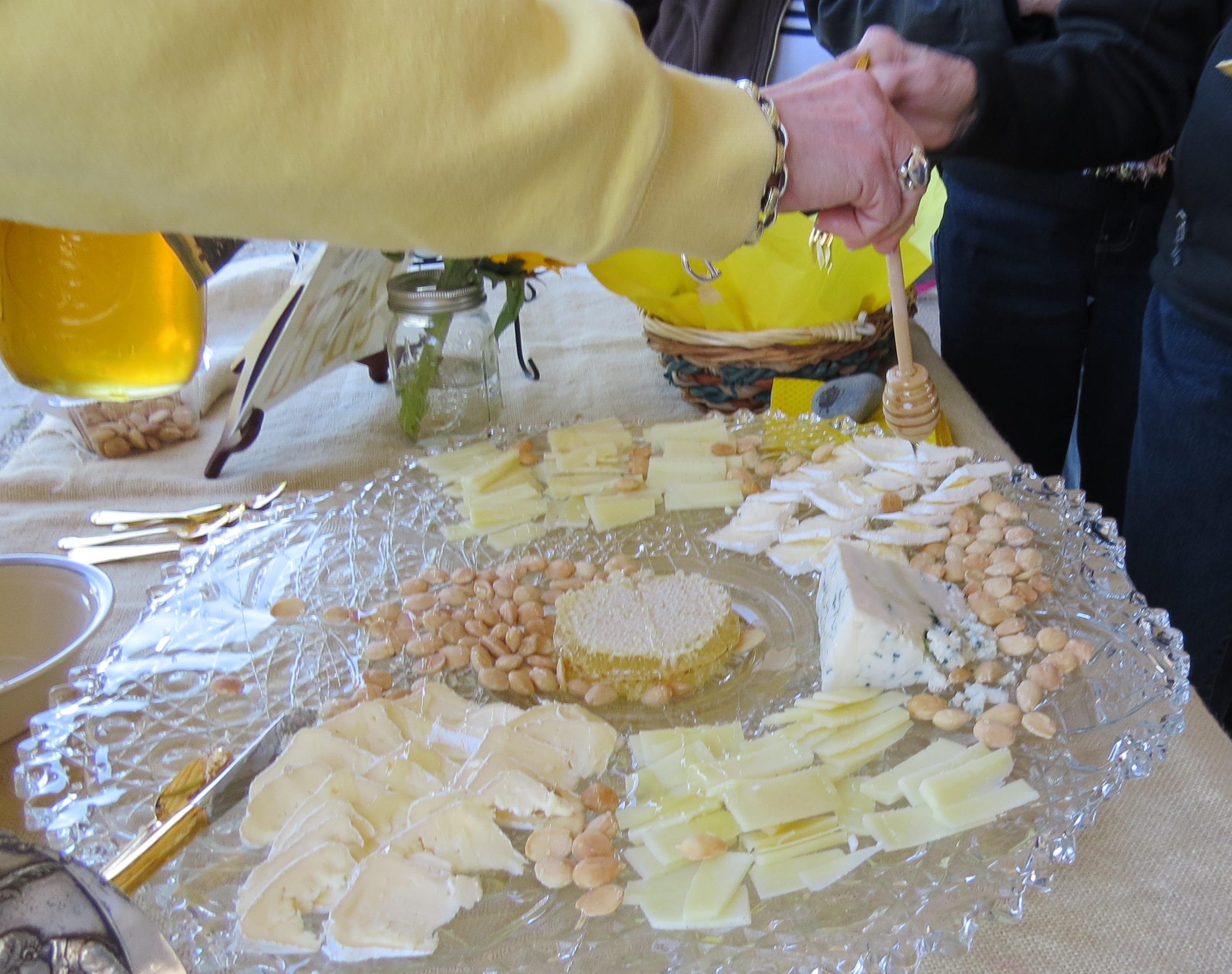
Linda dazzled guests with an appetizer tray of Brie, Manchego, and Point Reyes Blue Cheese from Scardello, an artisan cheese store at 3511 Oak Lawn, scardellocheese.com. She sprinkled the cheese slices and honeycomb with Spanish Marcona Almonds, then drizzled the tray with honey from Master Gardener Jan Ramsey’s Tranquility Hill Ranch.

Cheese Tray Drizzled With Honey

Cheese Tray Drizzled With Honey


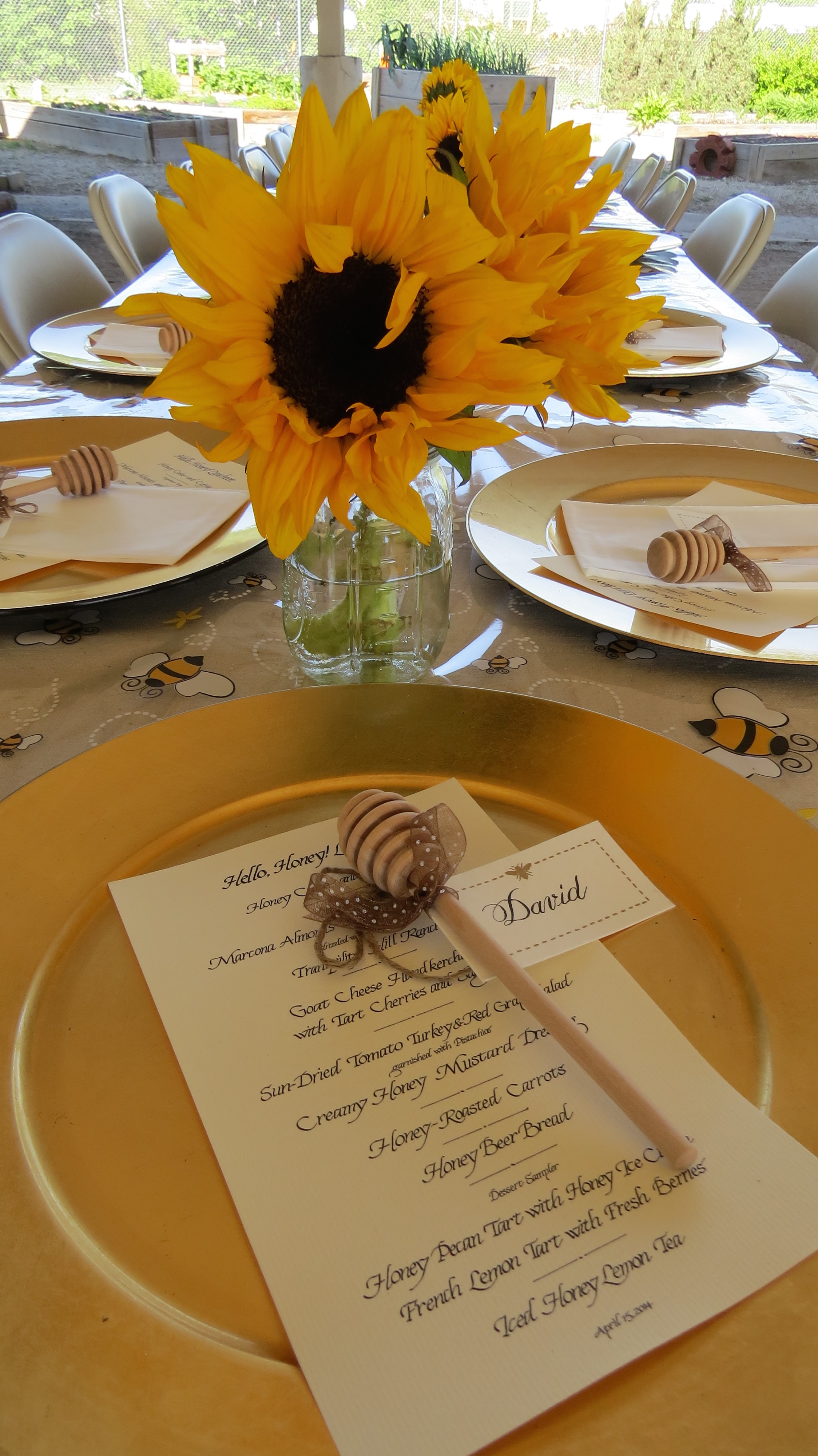
The table featured plates with tiny bees around the rim, bee-friendly bouquets of sunflowers, gold chargers, hand-lettered menus, and neutral tablecloths with a bee-themed runner. A place card with Elizabeth’s calligraphy tied to a honey dipper marked each guest’s place.

IMG_9739

Oh, did we mention lunch?

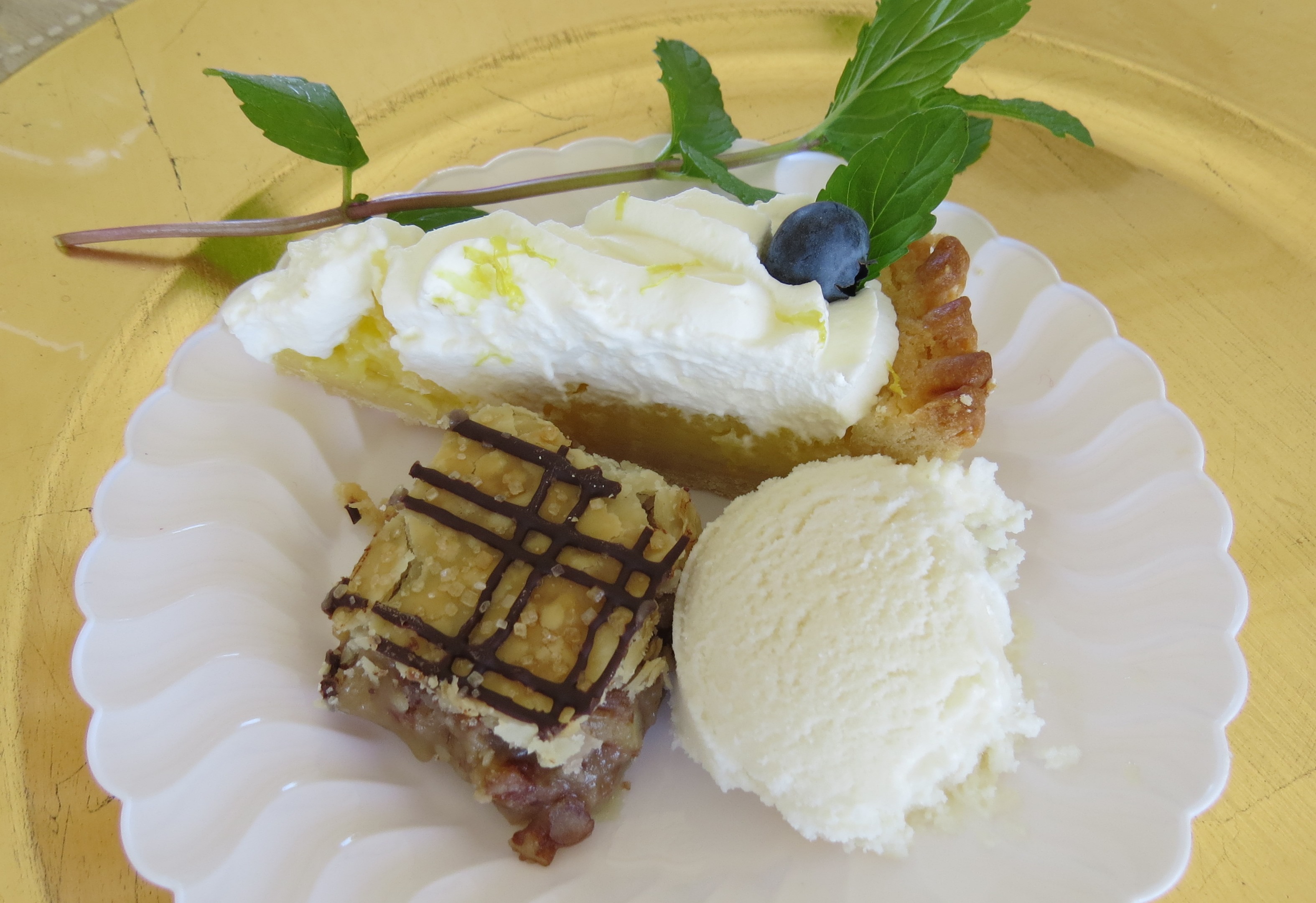
The menu, of course, featured items with a honey twist: turkey and grape salad with honey-Dijon dressing, pasta handkerchiefs with tart cherry, sage (and honey) sauce, honey beer bread, honey-roasted carrots, and honey lemon tea. A dessert sampler tempted guests with a square of honey pecan tart, honey vanilla ice cream, and a French lemon tart topped with an abundance of whipped cream, a mint leaf, and fresh blueberry.

Information from the national Honey Board, a list of bee-friendly flowers, and in-depth information and sources for each honey were given to each guest.

As we planned the event, we were amazed at the intricate and amazing world of bees and honey. We learned the difference between varietal (one source of nectar) and local honey (Texas Wildflower). One thing led to another, and soon we were ordering honey from across the South, visiting our local beekeeper at the farmers market, and purchasing honey on college visitation trips.

Lisa purchased the Huajillo and Buckwheat honey from Walker Honey Farm, which has a retail store about 10 miles from I-35 in Rogers, Texas, near Belton and Temple. She also found a good selection of local honey at Ruibal’s Rosemeade Market in Carrollton, the HEB grocery stores in Georgetown and Temple, and the farmers market behind the famous Monument Cafe in Georgetown (a must stop if only for the homemade lemonade). Elizabeth made multiple trips to the farmers market on Campbell Road (near UTD) to purchase local honey and dippers from Warne Bee Farm in Anna, Texas.

Linda explored cookbooks, magazines, and internet sources including L.L. Lanier, lltupelohoney.com, which has harvested Tupelo honey since 1898 in swamps along the Chipola and Apalachicola Rivers in Florida. She also found the Savannah Bee Co. of Savannah, Georgia, which sells the rare and wonderful Sourwood honey.

Next time you’re at Bruce Miller Nursery on Belt Line Road in Richardson, check out Fain’s Honey from Llano, Texas. Lisa says Fain’s is a family favorite and something she and her family always pick up at Cooper’s Bar-B-Que in Llano after a big platter of brisket and ribs. Turns out there’s a honey of a family connection: Lisa’s dad, after all, was Fain Gibbons.

Elizabeth

Pictures by Starla
Recipes and more buzz about honey coming up in the next few days! Keep posted!


Two Recipes Using Nasturtiums

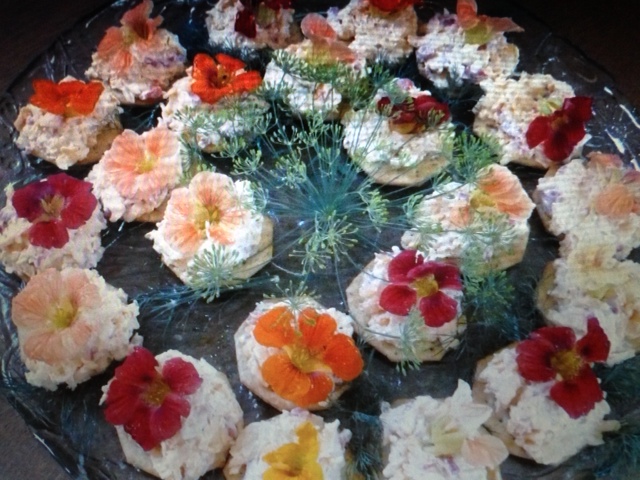
Nasturuims as garnish

Herbed Cream Cheese Appetizer

Ingredients:

1 (8-ounce) package cream cheese, softened

2 Tablespoons chopped fresh basil

2 Tablespoons chopped fresh cilantro

2 Tablespoons chopped fresh tarragon

3-4 cloves minced fresh garlic

Directions:

1.  Mix herbs with cream cheese by hand until blended.

2.  Spread mixture over your favorite crackers.

3.  Garnish each cracker with a nasturtium blossom.

Alternately:  Core a zucchini.  Fill center with cream cheese mixture.  Slice and serve on a cracker.  Garnish with a nasturtium blossom.

Nasturtium Mayonnaise

This recipe is the perfect compliment to chilled summer salmon, or any fish, fresh off the grill.  Also makes a great spread for tea sandwiches, or any sandwich needing some zip.

 Ingredients:

1 cup mayonnaise

¼ teaspoon finely minced garlic

2 teaspoons coarsely chopped capers

1/3 teaspoon grated lemon peel

2 teaspoons chopped nasturtium leaves

Directions:

Combine all ingredients.  Keep chilled until ready to use.

Nasturtium, Tropaeolum majus

It is said that Monet was rather fond of them and planted them in the border of the pathway that led to the front door of his home in Giverny.  With enchanting names like “Empress of India”, “Whirlybird”, “Alaska”, “Peach Melba” and “Butter Cream”, no wonder Nasturtiums are so welcomed in the garden.   They just seem to add a touch of old-fashioned charm.

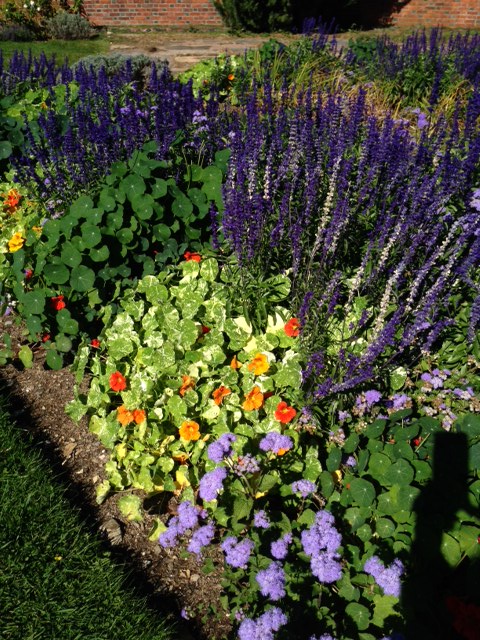
Above: Beautiful fall nasturtiums at Shelburne Farm in Vermont

Above: Beautiful fall nasturtiums at Shelburne Farm in Vermont

Nothing signals spring’s arrival more dramatically than the first bunch of jeweled toned nasturtiums perched on the shelf at your local garden center. If you are looking for decorative, even water lily pad- like foliage, with a wave of brightly-colored blossoms that are tasty to boot, then head for the nasturtiums.  You may be familiar with the varieties that have deep green leaves, but there are now a number of variegated, almost speckled ones, as well.

Above: Lily pads in the garden? No, more fall Nasturtiums from Vermont!

Above: Lily pads in the garden?
No, more fall Nasturtiums from Vermont!

Ideally, nasturtiums like to be in full sun, with moist, well drained soil. However, most varieties can survive when grown in partial sun. These carefree little dazzlers don’t seem to be bothered much by snails, other insects or diseases.  Enjoy them from March until sometime around late June when they succumb to our extreme Texas heat.

You’ll typically find two different kinds of nasturtiums: dwarf bush type and trailing.  The dwarf types are much more commonly available, and are useful as 10- to 12-inch tall colorful borders and for mass plantings.  The trailing variety will cascade dramatically down walls or hanging baskets.  Nasturtiums make a lovely addition to the herb garden with a multitude of culinary benefits.

There is nothing more intriguing than the tissue paper like profusion of blossoms that nasturtiums produce.   Although the blossoms appear delicate, they are actually very durable and make for vibrant and long-lasting garnishes.  Use the blossoms either whole or chopped to decorate creamy soups, salads, butters, cakes and platters.  Their sweet, peppery taste (both in the leaves and in the flowers) adds to the enjoyment.

Above: Organic nasturtium blossoms bundled  up and for sale at the Aspen, Colorado Summer market

Above: Organic nasturtium blossoms bundled up and for sale at the Aspen, Colorado Summer market

Nasturtiums are natives to the cool highlands of mountains extending from Mexico to central Argentina and Chile. The conquistadors brought these brightly colored plants back to Spain in the 1500’s. The Indians of Peru used the leaves as a tea to treat coughs, colds and the flu, as well as menstrual and respiratory difficulties.   Being high in vitamin C, nasturtiums act as a natural antibiotic, once used topically as a poultice for minor cuts and scratches.


Take advantage of the many decorative ways to use nasturtium flowers for your next gathering.  However, don’t be surprised; some people will turn up their noses to a beautiful flower sitting atop a cracker spread with herb-flavored cream cheese.  Others will fully embrace the opportunity to sample such a tasty little gem.  If we could only extend our growing season nasturtiums might grace our tables more often.  Oh, dreaded Texas summers, why do you leave us so little time to enjoy this beloved plant?

Linda

Tip: Texas AgriLife Extension Service recommends planting nasturtium seeds about the time of the average last frost. They are usually planted where they can be allowed to mature, since young seedlings can be difficult to transplant.


Basil Harvest

Today at the garden we harvested buckets full of sweet basil.  With winter’s chill at our doorstep it’s the perfect time to fill our freezers with basil pesto. Basil Harvest

 Here is  Classic Pesto hidden in our Tomato Tart Recipe!

Basil ready for the freezer

Before bedtime and  the freeze tomorrow, review

 Basic Facts About Basil Here!

Sweet Dreams, I will be dreaming about basil and hope you will, too!

Linda

Looking for Joy in Summer

Sometimes when the heat sets in,it can get discouraging; energy seems in short supply. Even the most loved of gardens seems,well not as lovely as it did.  Don’t give in to those thoughts or worse yet actions, such as avoiding your gardening chores.  If you grow lemon verbena,  you can have a delicious treat at the end of  weeding.  In fact, this wonderful herb can be a treat every time you walk by it; it smells more like lemon than a lemon.

Lemon Verbena,Dallas Garden Buzz

Just in case you do not have lemon verbena in your garden, a few facts to know before you head out to buy one.  Lemon verbena is a tender perennial that means it will return year after year, provided it doesn’t freeze to death.  It is hardy to about 25 degrees !   In our experience it seems able to tolerate lower temps for brief periods especially if it is carefully mulched in fall.  This herb is pretty,pale to medium green pointed leaves,very tiny flowers, but to be honest it is not a beauty.  In our herb gardens it will be about 3 to 4 feet tall and tends to sprawl a bit. In ideal growing situations (you already guessed ideal isn’t here) it can reach 15 feet.  But lets not let that upset us,it still will be very happy in good well-drained soil and especially if it gets afternoon shade  and a reasonable, not excessive amount of water.

Lemon verbena is a native of Peru and surrounding countries and wasn’t introduced into Europe until the 18th century–so–no interesting medieval recipes  for amazing cures using our herb.  That’s not a worry either you will love lemon verbena leaves in your tea.

Lemon Verbena Tea, Dallas Garden Buzz

It can be used alone as an herbal tea.  This herb has a strong lemon fragrance so it really doesn’t take a great deal to make a delicious difference in your drink.  Do not be afraid to experiment here–no known dangers associated with lemon verbena. I find that a small stem of herb(perhaps 6 leaves) and the stem can be added when brewing a pot of tea using one family sized or about 3 regular tea bags let this steep for about 10 minutes then cool and serve over ice  you can remove the herb–or one lucky person –that would be you–you grew it after all–can have it in the glass.  The same proportions apply to green tea,maybe a bit prettier since the color sets off the color of the herb.

Just a few more points–if you are just planting your lemon verbena–no tea for you yet!!!  You need to allow the plant to grow  a bit before you harvest; but it grows fast.  Never over harvest. The plant naturally needs leaves to make its food.  Be patient soon you will have plenty. You may consider several plants; once you taste your tea I feel sure this will be the case. This herb is grown from cuttings. The seeds are very difficult to get to grow i’m sorry to say but in spring at least you will be able to find it quite readily in nurseries that sell herbs.

As always, never brew tea from herbs that have been sprayed with chemicals.  The best time to gather any herb is in the morning.  Rinse you lemon verbena briefly in cold water if you feel the need and enjoy!!  This herb is one of the best for drying-no special equipment needed- sniping  small bunches of leaves and laying them in an out of the way place (a word to the wise–away from any possible interference from cats)  just leave to dry and when dry; store airtight.  It stays amazingly fragrant so a hot steaming cup of lemony tea will brighten up a cold day which will come one of these days.

If you come to visit us at The Demonstration Garden on Joe Field Road, don’t forget to crush a leaf of lemon verbena; you will love it and I hope you also grow your own and put it to good use.   It will add joy summer and winter. No calories, no guilt!

Susan T

Cream of Cilantro Soup

Cream of Cilantro Shooters

½ cup butter

½ cup chopped fresh cilantro, divided

1 medium onion, chopped

2 celery stalks, chopped

1 ½ teaspoons ground cumin

1 garlic clove, chopped

2 jalapeno peppers, seeded and chopped

1 shallot, chopped

½ cup all-purpose flour

4 (14 ½ ounce) cans chicken broth

1 bay leaf

¼ teaspoon pepper

2 cups whipping cream

1 cup (4 ounces) shredded Monterey Jack cheese 

Preparation 

Melt butter in a large Dutch oven or stockpot over medium-high heat; add ¼ cup chopped cilantro, onion, and next 5 ingredients.  Cook, stirring constantly, 5 to 7 minutes or until tender. 

Stir in flour, and cook mixture over medium heat, stirring constantly, 7 minutes or until mixture is golden brown. 

Add chicken broth, stirring rapidly until blended; add bay leaf.  Bring mixture to a boil; reduce heat, and simmer 20 minutes. 

Stir in pepper and whipping cream; cook 5 minutes. 

Pour mixture through a wire-mesh strainer into a bowl, discarding vegetables. 

Add shredded Monterey Jack cheese and remaining ¼ cup chopped cilantro. 

Pour soup into individual serving bowls. 

Yield: 2 quarts

Linda

Picture by Starla
April Dallas County Master Gardener Meeting

 Nothing short of a tornado should keep you from the April 25 Master Gardener meeting at the Earth-Kind Water Wise Demonstration Garden, 2311 Joe Field Rd. , Dallas. 

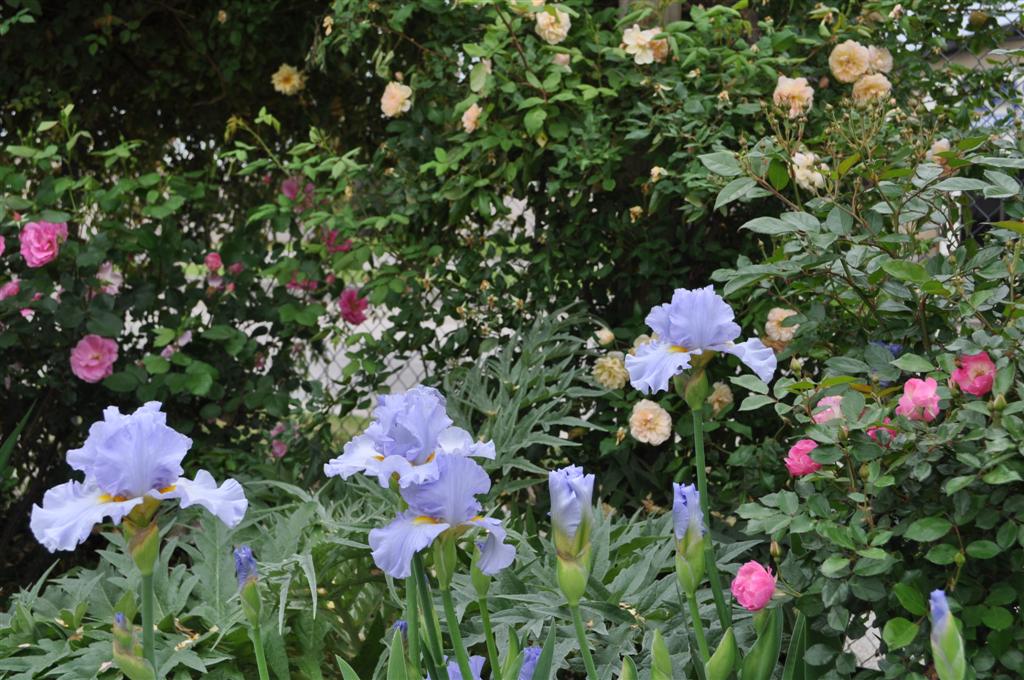
Blue Iris and Earth Kind Roses at the Demonstration Garden

Not only is the Garden in full, best of April, boisterous bloom.  But Linda  tested Mexican recipes for months to perfect a lunch menu using our home grown cilantro that will leave you weak in the knees: Cream of Cilantro Soup; Spinach and Mushroom Enchiladas with Cilantro Cream Sauce; Black Bean Salad with Corn, Red Peppers, Avocado and Lime-Cilantro Vinaigrette; Spicy Salsa; and Mexican Chocolate Cake with Praline Frosting. 

Cilantro Growing In Raised Bed At The Demonstration Garden

What would lunch be without a Plant Sale? Master Jardineros will sell 4-inch, quart, and gallon plants for rock bottom prices.  Plants include: lyre leaf sage, artemesia, Victoria blue salvia, stick verbena, Indigo Spires salvia, Star sedum, fall asters, blackberries, Blue Gamma grass, tall pink “Chi Chi” Ruelia, white and purple Hyacinth bean, and compost.  Check or cash only, please. 

Note: Please bring your own folding chair.  The meeting begins at 11:30.  Gina Woods a fellow Master Gardener will be presenting a program on Tillandsias and Bermulaids .  She will be bringing plants to show and sell.

Elizabeth

The Case for Cilantro

Ina Garten (aka the Barefoot Contessa) says she despises it.  Others say the taste reminds them of dirty dishwater.  Some claim a soapy taste when they chew on it.  How could it be, then, that guacamole wouldn’t make it to a true “TexMex” table without a hefty amount of cilantro mixed in?  And salsa without cilantro?  Not in TEXAS! While there are clearly two sides, the “lovers” and the “haters”, consider these facts before arriving at your own verdict.

 History

Cilantro, Coriandrum sativum, a member of the Apiaceae (Umbelliferae) family has been cultivated as a medicinal and culinary herb for more than three thousand years.  Mentioned first in Egyptian papyri and the Bible, Spanish conquistadors introduced cilantro to Mexico and South America where it quickly became associated with that cuisine.  Also known as Chinese parsley, the herb has a long history in Chinese medicine and cuisine.  One of the ancient uses was as an aphrodisiac.

Cilantro Growing in Raised Bed, Demonstration Garden Joe Field Rd, Dallas

Growing It

Cilantro likes loose, rich, well-draining soil.  Sow seeds in the fall ½” deep, thin seedlings to 1 foot apart.  Plant seeds again in February to give your cilantro time to grow before it gets too hot. If you can find it,  choose variety “Long Standing” for its excellent flavor, improved leafiness and, as the name infers, its slow-to-bolt quality. 

Cilantro  needs full sun and occasional watering if the weather is dry.  Transplants can be put in the ground anytime throughout the fall and winter.  A succession of crops will help your cilantro last longer.  To harvest cilantro, cut the stems down to the ground, a small section at a time.  When cilantro gets ready to flower, it sends up leaves that are lacier and smaller.  The seeds of the cilantro plant are known as coriander.   An aromatic spice, try using coriander in sweets, cakes, breads, and to flavor liqueurs.

Cooking With Cilantro

Every part of the plant is edible.  Cilantro’s  flat and gently serrated dark green leaves, resembling Italian parsley, are best used when the plant is about 6 inches high, and they must always be used fresh.  Toss them into almost any salad.  You can use cilantro anytime you would use parsley.  Make a pesto out of it just as would basil and freeze it for future use.  Store a bunch of cilantro for about a week in the refrigerator in a jar of water loosely covered with a plastic bag.  (Remember to change the water every few days.) 

Enjoy It 

The flowers make an attractive bouquet or addition to other garden flowers for cut arrangements.   Use it to settle the stomach and encourage good digestion.  Or do as the Chinese, use it in a “love potion” which they believed led to a long life.   While true, its unique aroma and pungence often demand an acquired taste, once you acquire the taste for it cilantro can be addicting!  Finally, just be thankful that when summer tomatoes and peppers are beginning to ripen  and cilantro may no longer be found in the garden, a quick trip to the grocery always keeps it within reach.   Case solved!

Linda

Note:  Over the next few weeks we will be sharing some of our favorite “cilantro” recipes with you.

Homegrown, Veggies, Fruits and Herbs

I have a visual image of Master Gardener and nutritionist Barbara Gollman at Kroger: Red hair flying, trim figure running behind a cart, zipping down the frozen food isle flinging packs of frozen veggies into the cart for one of her wonderful soups. 

Barbara, Dallas County Master Gardener Teaches Value of Vegetables

Barbara intrigued a large group of Master Gardeners Tuesday with her talk on the nutritional benefit of vegetables, fruits, and herbs.  Turns out that Mom was correct when she urged us to eat our vegetables.  Carrots, oranges, sweet potatoes, and other fruits and vegetables are full of phytochemicals, substances in plants that have the potential to slow aging, boost immunity, prevent disease, and strengthen our hearts and circulation. 

Cabbage, Broccoli Field Road, Dallas, Texas

Barbara suggests that we eat watermelon and tomatoes, plants that are packed with lycopene, a nutrient which helps prevent macular degeneration.  Pinto beans are rich in fiber, which can prevent cancer and heart disease, and flavonoids, which can curb the oxidation of LDL cholesterol and prevent blood clotting.  Cruciferous vegetables like broccoli and cabbage are high in calcium.  Nuts are filled with Vitamin E, one of the most potent fat-soluble antioxidants. Berries, greens, winter squash—-well, you get the idea.  

Barbara said that new research has shown the health benefits of herbs. Who knew? Turns out that 1 teaspoon of oregano = ¾ cup of brussel sprouts in antioxidants.  

Barbara dries her herbs in the microwave after her husband’s reaction to using his closet as an herb drying rack. Remove the leaves from the stems of the herbs and spread on paper towels.  Put two paper towels on top of the herbs.  Pop in the microwave and zap for one minute.  (If the leaves are charred, try again and use a shorter amount of time. If the leaves aren’t crisp, microwave longer in 15-second increments.)  Remove from the microwave and air dry on the kitchen counter for a few days.  Store in a labeled glass jar.  

Are home grown vegetables better for you than those found in the grocery? Barbara says some research showed up to a 15 percent increase in nutrients in homegrown and organic vegetables.  Some other studies didn’t find an increase in nutrients. 

Many thanks go to Barbara for her research and common sense approach to healthy eating.  Let’s just put it this way: on the way home I stopped at Whole Foods and bought spinach, broccoli, and almonds for dinner.   

Elizabeth

Recipes served in the class will follow.