Category Archives: Fall

Sometimes–it’s time to fold ’em

October 30, 2024

If the key to life is simply living it..  The key to understanding may be simply realizing that wisdom is all around even in unlikely places.  Our job is to realize wisdom when we find it—and then apply it .

     For an example let’s think about these simple lines:

          YOU GOT TO KNOW WHEN TO HOLD EM

          YOU GOT TO KNOW WHEN TO FOLD EM

          YOU GOT TO KNOW WHEN TO WALK AWAY

          YOU GOT TO KNOW WHEN TO RUN

     Few words but the ideas are wise and useful.  No where more so than in the garden at this time of the year.  We start with the first of course.  And actually this idea was most important a little earlier in the year.

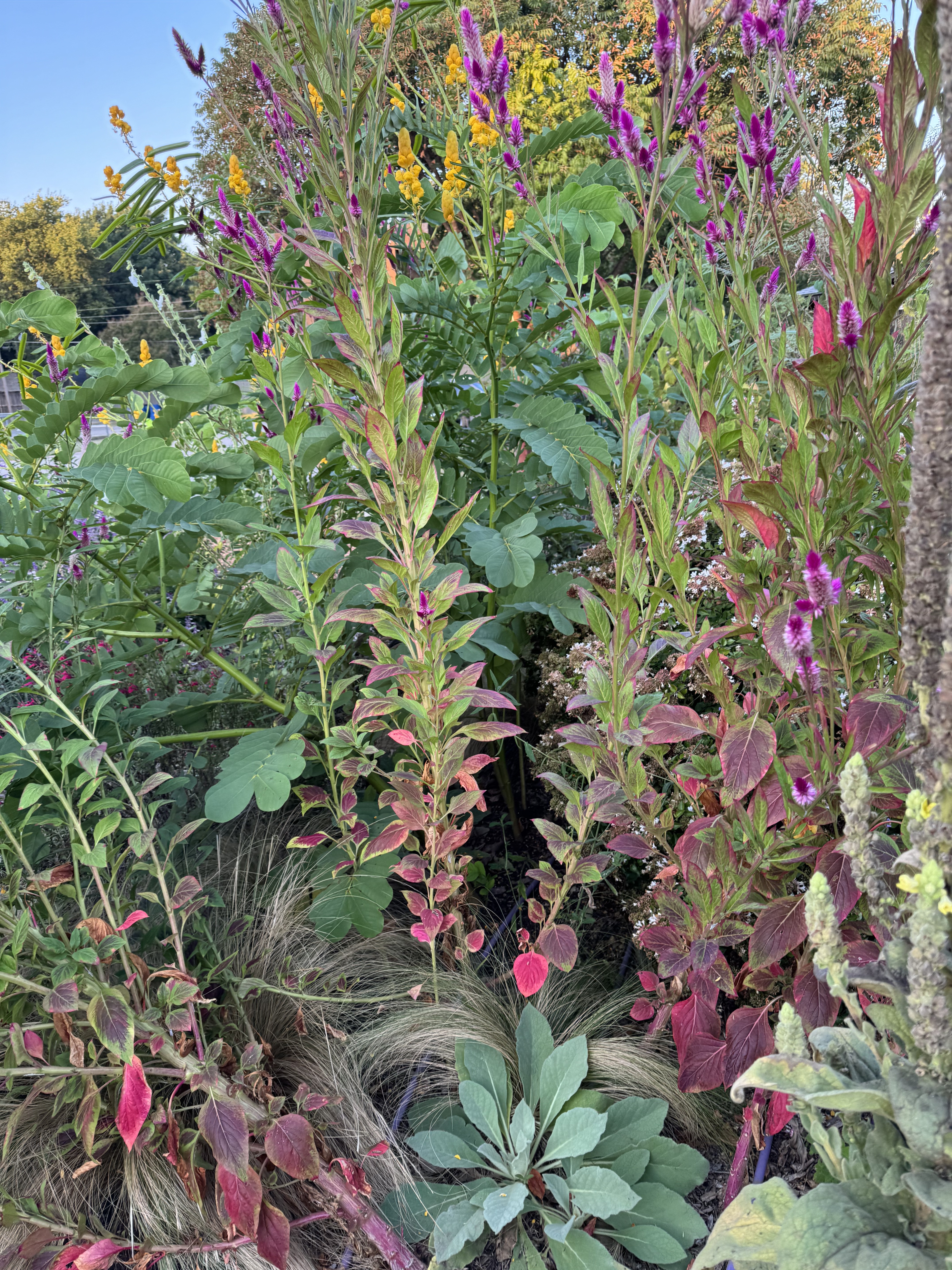
     How was it so useful?  well the yellow cosmos are a great example.  All summer they grew and grew.  No flowers at all.  Some falling over due to the weight of stems and leaves.  A passerby was heard to say ” I don’t know about those green leafy things they sure are big”  Were they a terrible mistake?  Are they ever going to bloom?  Are they going to all fall over?  Temptation grew to pull them all out.  And then all at once they bust into huge numbers of lovely cheerful flowers.  Butterflies and bees are just loving them.  They even look great as cut flowers.  

Yes!!!  holding was the best choice for sure.
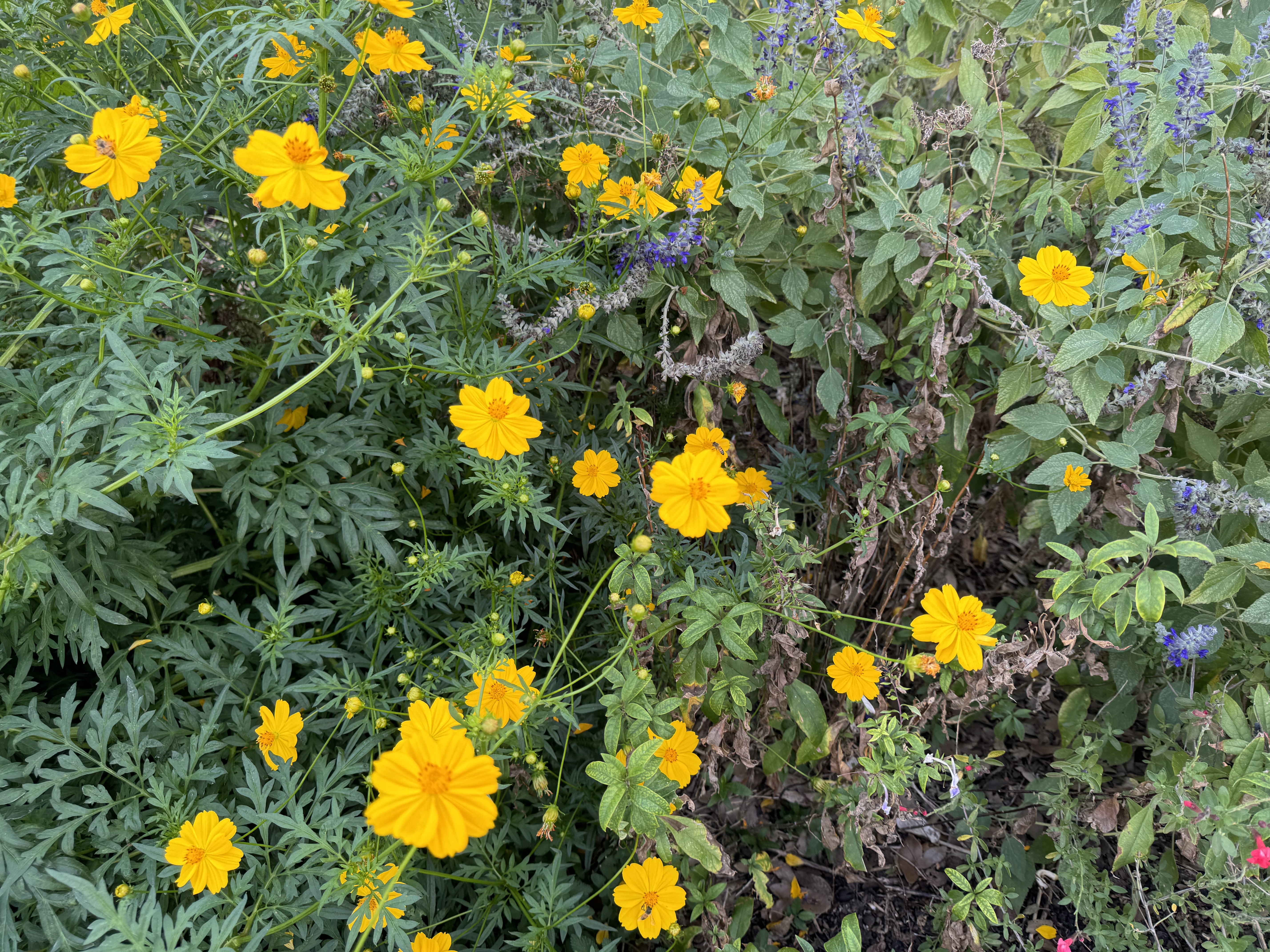
The big green leafy things that were bare all summer are blooming at last and they are amazing. Cosmos!

    Aji dulce peppers –no peppers for months.  All they were doing was taking up space and causing thoughts of “what on earth went wrong?”  They were biding their time. Summer just didn’t suit.  Just a small improvement in the weather–and blooms followed by lots and lots of little peppers.  It was a temptation to give up–but it would have been a shame.
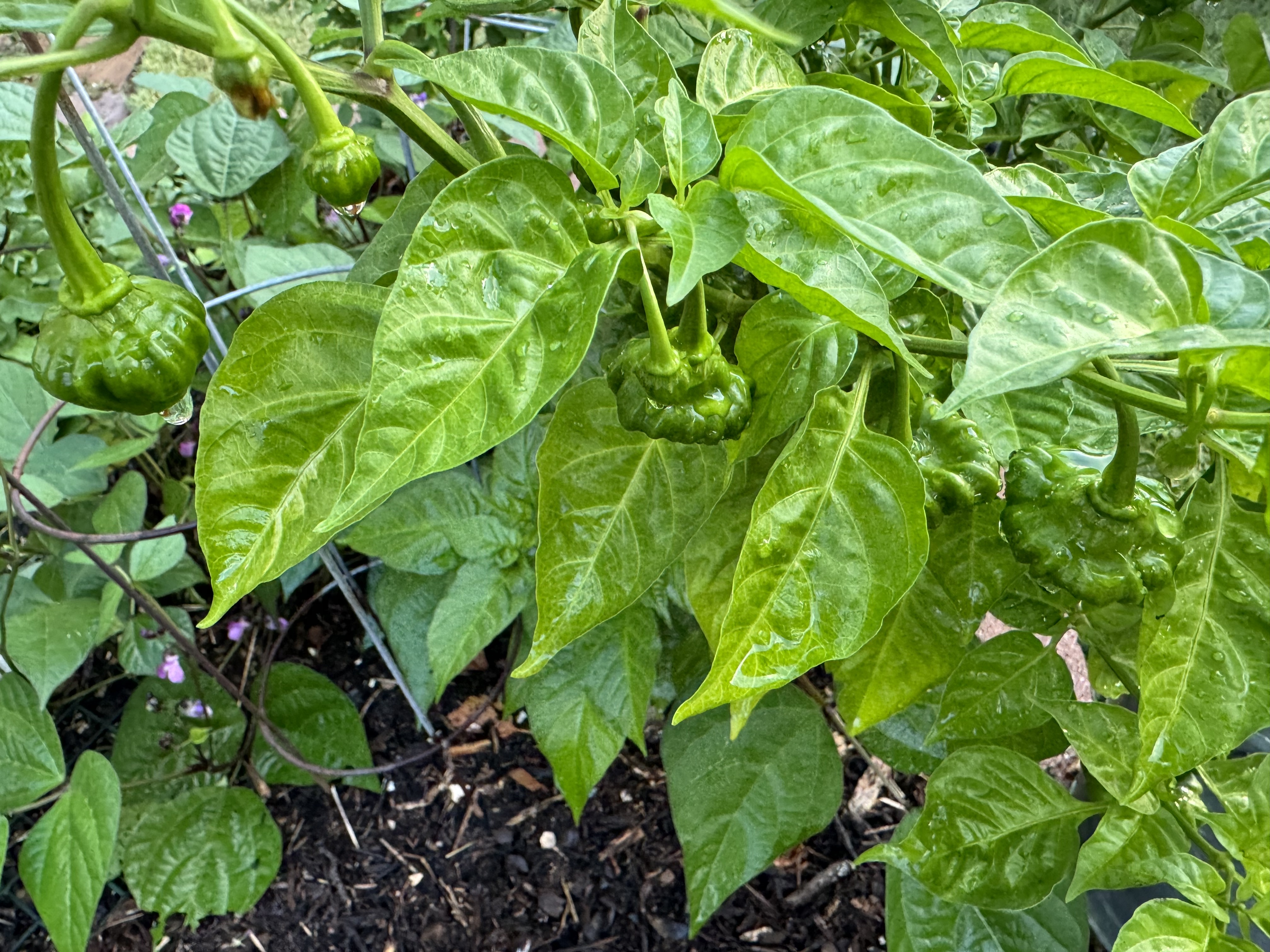
The Peppers finally realizing they have a job to do.

Marigolds–they also seemed to find the past few months not to their liking–the remaining tomatoes are happy maybe because the marigolds are happy.
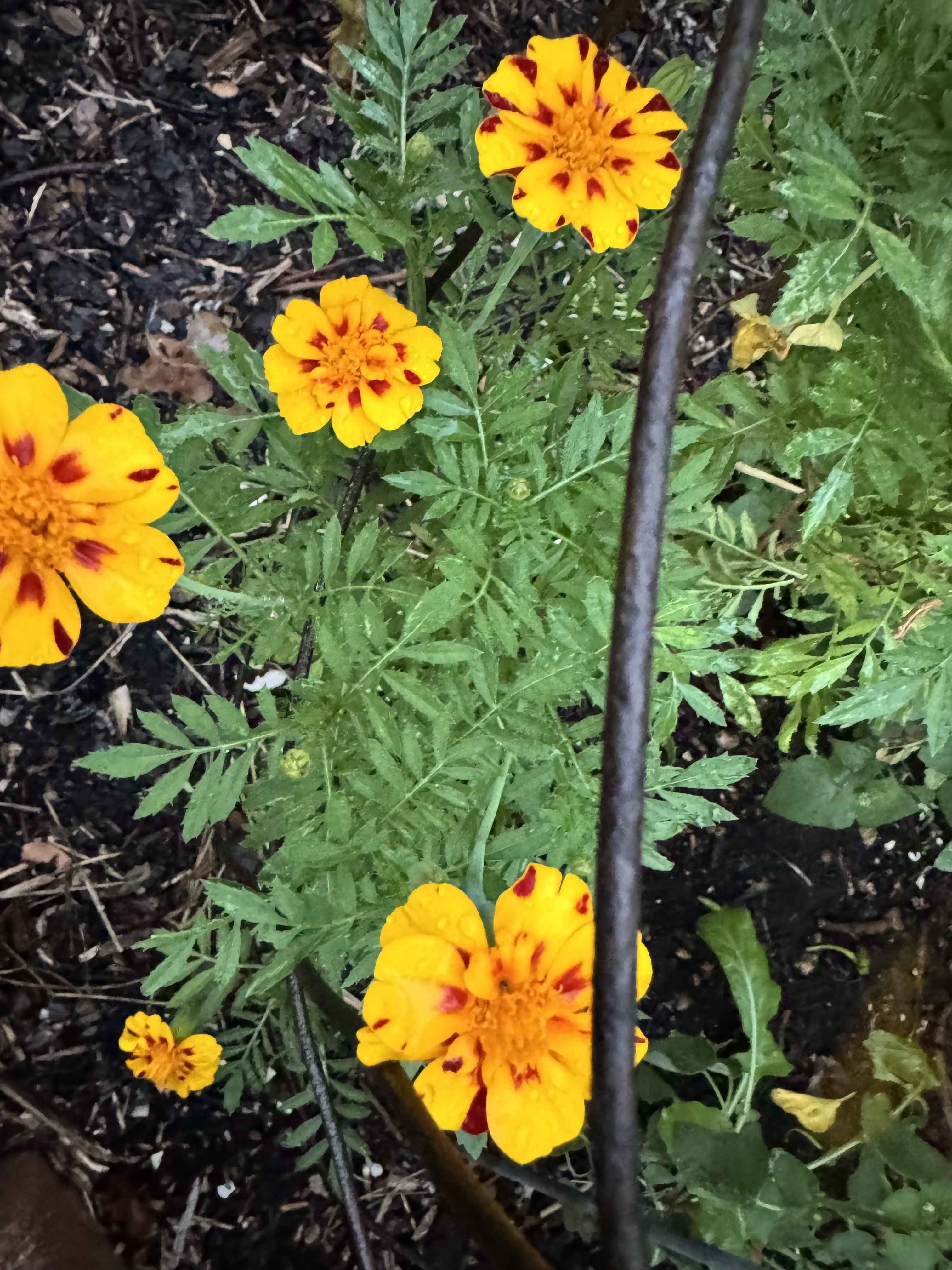
The Marigolds were to keep the tomatoes company all summer. They are doing it now.

Turk’s cap–honestly it seemed to be asking to be cut to the ground–very few blooms and yet requiring constant pruning to keep it withing reasonable bounds–but–again a reward for avoiding extreme measures–countless flowers–and happy creatures.
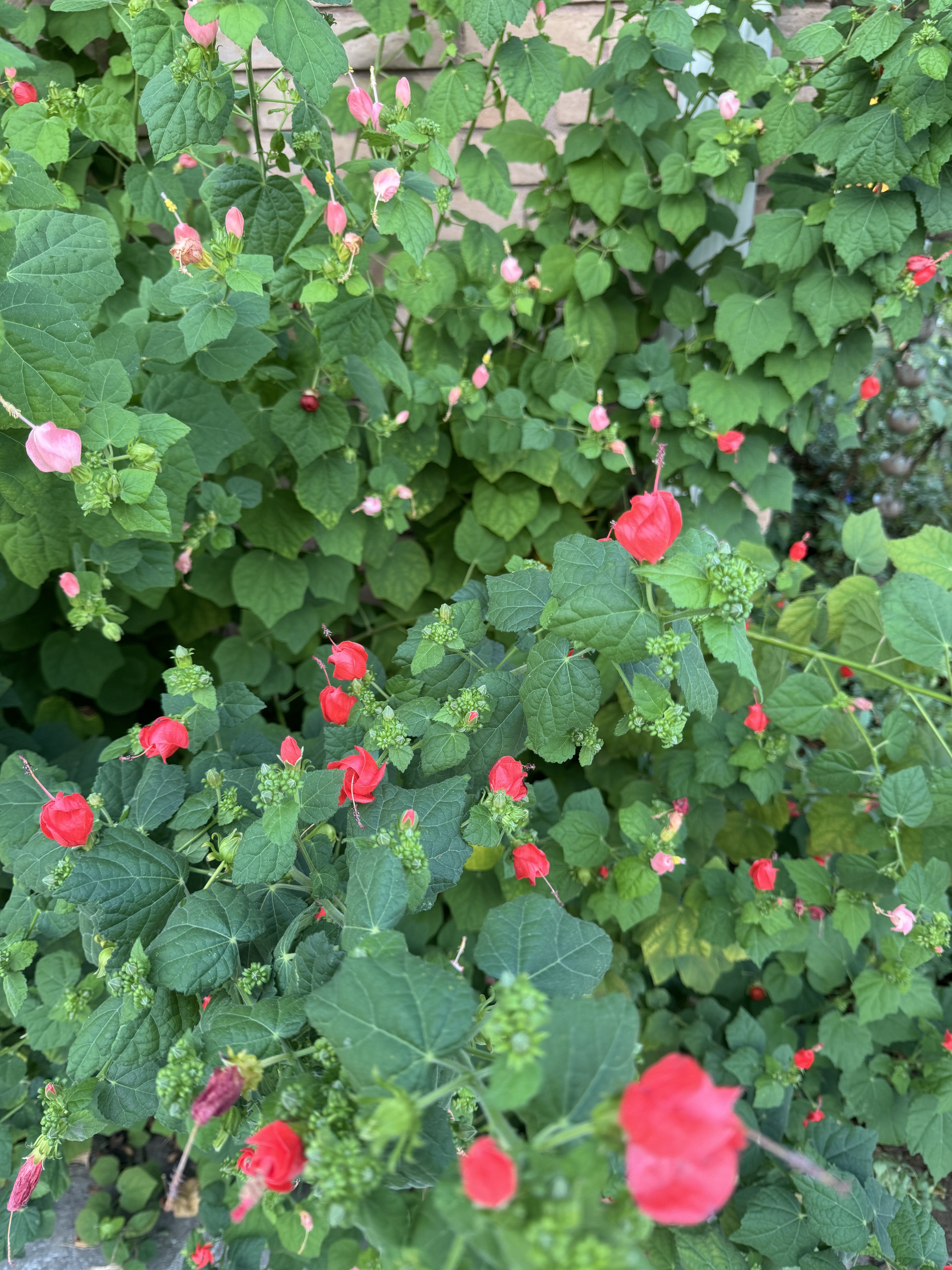
Turk’s cap-all summer, some flowers but now covered in flowers.

     Of course the facts are–that all doesn’t go as hoped.

The most obvious are annuals that have tried really hard but have now reached the end of the line.  It is hard to do this when they aren’t quite done but face it–sad straggliy plants just distract from everything around them.  Let them go its ok.

It’s time for an old friend to go. Sad but true.

Same with vegetable plants.  These plants work hard some can make it on into fall.  But some just can’t.  It is really best to get rid of them they can attract pests and diseases that are just doing what they do to eliminate the weak–but best to beat them to it.
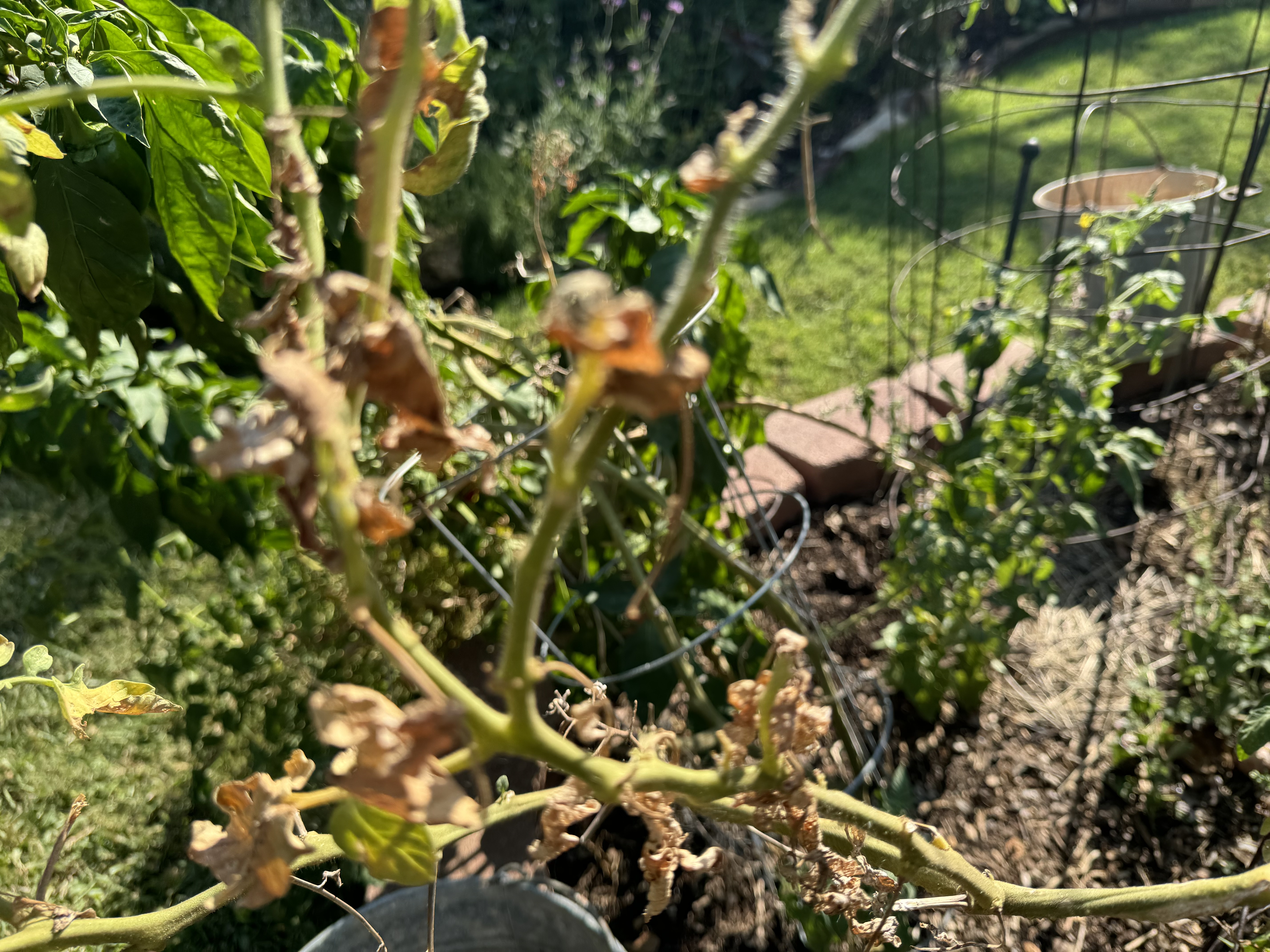
This tomato in my garden just isn’t going to recover.

The really hard part of the fold ’em is facing that some of your efforts really were in vain.  For some reason plants die.  Sure try  to figure out why.  Was it lack of water–a common issue.  Maybe over crowding?  But sometimes its unknown.  Pull them out anyway no use spending resources–including your time and energy on plants that just are not making it.

Perennial doesn’t mean live forever!

Those first two are pretty clear–but what about KNOW WHEN TO WALK AWAY?

 Actually its an important one.  This is the time of the year when plants have pretty well done what they are going to do.  It can be so valuable to step back and away and look at the big picture.  Could you do anything different ?  Is it just that much too much?  Or not quite enough?  Walk away and take a good look and make some mental notes for next year.
Can’t forget YOU GOT TO KNOW WHEN TO RUN.  No it won’t be a big problem don’t worry.  But do keep in mind that wasps and yellow jackets are very active at this time of the year.  Of course they are part of nature and normally not an issue–but  do look around they like to build nests in protected places–who doesn’t of course–but sadly when its right above the back door for example you may have to do what you would rather not.  But be careful at times their temper can be kindly said to be “Uncertain” And i hope you don’t have to run–but—-.

YOU GOT TO KNOW WHEN TO HOLD EM

YOU GOT TO KNOW WHEN TO FOLD EM

YOU GOT TO KNOW WHEN TO WALK AWAAY

YOU GOT TO KNOW WHEN TO RUN.

Susan Thronbury, Dallas County Master Gardener Class of 2008
November Flora Feature

And then it happened…

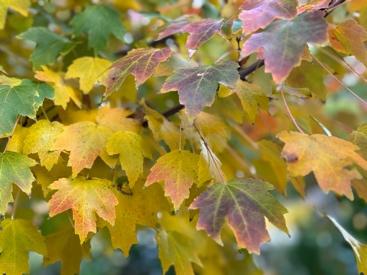
October ushered us into the colorful changes of fall. And then, November arrived with waves of crimson, yellow and orange. Mary Ann Evans, known by her pen name, George Eliot, gave us these endearing words from a letter written to Miss Lewis, October 1, 1841…

“Delicious autumn! My very soul is wedded to it, and if I were a bird I would fly about the earth seeking the successive autumns.” 

How eloquently her words capture the essence of autumn in this beautiful quote. Hopefully, you have taken notice of trees bursting with color, fall foliage ablaze with seasonal splendor and tables graced with a harvest of plenty. As the gathering of family and friends begins, let’s celebrate the abundance of blessings found in the natural world.

Japanese Maples: For the past few years, the Dallas County Master Gardener Association has hosted a fundraiser featuring countless varieties of Japanese maples. Trees are usually “sold out” within hours. This speaks to the popularity of Japanese maples found in landscapes throughout Dallas County and beyond. Everyone seems to have a favorite but for many homeowners, the options typically include several types. 

When we purchased our seventy-five-year-old house in 2006, previous owners (six total) had planted Japanese maples in various locations on the property. One maple, in particular, struggled to survive the below freezing temperatures of 2021, 2022 and 2023. As you can see from the photo, we chose to give it time to recover. After consulting with several arborists, the stately 30+ year-old tree is continuing to fight its way back. Still requiring some special attention, our tree is determined to overcome the odds. Its canopy provides wonderful afternoon shade in an area where we gather by the pool during the heat of the day.

Over the years we’ve added several dwarf Japanese maples and our new favorite variety, coral bark. It is a beautiful small tree with red-coral bark on its young branches with color that intensifies in the winter. 

You’ll find them growing somewhere in most yards, especially on older properties. Overlooked, undervalued, neglected and dismissed, why have they lost favor in the landscaping world? It’s time to revisit a plant with so much to offer but rarely considered for its dramatic effect. More commonly known as heavenly bamboo or sacred bamboo, we know it as Nandina Domestica.

Nandina is native to China, cultivated significantly in Japan, then intentionally introduced to the United States as an ornamental in 1804 for its year-round interest and beauty. As a native Texan who spent my K-College years in southeastern Oklahoma, l am very familiar with nandina. It was growing in yards throughout my small hometown of Durant. However, from what I remember, nandina shrubs were typically used as background plants and located where they didn’t offer much more than a lame effort for “filling in”.

Over the years it has proven to be a very reliable asset for homeowners. Especially desirable for its dependability in extreme temperatures and striking seasonal foliage, it ranks high on the performance scale. Landscapers seem to be taking a fresh, new approach to using it in more creative and eye-catching ways, even with modern architecture. Hopefully this trend will continue with nandina giving us the “heavenly” mention it deserves!

Follow these recommendations when considering nandina for your landscape:

*Nandina is still considered invasive in some areas so choose wisely. 

*Two sterile cultivars that might be a better option are ‘Firepower’ and ‘Blush Pink’.

*Nandina should not be sheared as it destroys the natural beauty of the plant. When nandina becomes too large, irregular in shape or leggy, carefully prune using the one-third rule. 

*Nandina thrives in USDA zones 6 to 9 and grows best in full sun or partial shade. Choose from the numerous cultivars available in most garden centers. ‘Firepower’, Gulfstream’, ‘Obsession’ and ‘Sienna Sunrise’ are strong recommendations.

We’ve just added three new ‘Obsession’ nandinas to a south facing area in our backyard. They are already starting to show those brilliant shades of red in their leaves.

November’s ever-changing tapestry is filled with botanical color. Take a few moments to experience some especially magnificent images of autumn’s brilliance. It may not be Vermont but our local landscapes really know how to take center stage!

Linda Alexander, Dallas County Master Gardener Class of 2008

Autumn’s Abundance, Featured Flora From The October Garden

October 28, 2023

From Mexican Mint Marigold and Pineapple Sage to the tall and stately Frostweed
filled with clusters of white blossoms, stunning displays of seasonal color fill our
gardens with enchanting beauty. Come along, as we find inspiration in the
richness of autumn-hued leaves, pumpkins and an array of natural elements.


Mexican Mint Marigold (Tagetes lucida) seems to stay under the radar for most
of the April to September growing season. And then, something magical happens
in October. Clusters of golden-yellow half-inch flowers begin to appear in early fall
attracting migrating butterflies and other pollinators. Considered by many as the
Texas substitute for French tarragon, it tolerates the hot, humid climate we
experience most summers.


Pineapple Sage (Salvia elegans) is an herbaceous herb used for both culinary and
ornamental purposes. The yellow-green, fuzzy leaves have a tropical, pineapple-
like aroma, especially when crushed. Late in the season, the plant will sprout long
clustered spikes of tubular scarlet-red flowers about an inch long.
While the vibrant red flowers are popular in flower arrangements, they also
attract butterflies and hummingbirds to the garden just in time for their fall
migration. Both the leaves and flowers offer a slightly bitter-sweet citrus and mint
flavor that is delightful to experience.


Frostweed (Verbesina virginica) In the fall of 2008, I was completing the three-
month program to become a Dallas County Master Gardener. During one of the
last few weeks, we were told about a special treat. As tradition would have it,
master gardeners from previous classes would be hosting a “plant give-away” to
offer their congratulations to us for completing the program. We could choose
three or four plants to take home following class that day.


For some peculiar reason, I chose a plant unknown to me but with an interesting
name. Another master gardener casually mentioned that it needed plenty of
room to grow in my garden. That strange plant with a funny name was
Frostweed! The next day it was planted in an uncrowded back area of my garden.

Fast forward to this week, and you can see that my tiny 4” pot from 2008 has
continued to grow prolifically and now covers an area over five feet in diameter.
I didn’t know it at the time but have since learned that Frostweed is a critical
nectar source for monarchs. Clusters of white flowers that appear starting in late
August and lasting until November are a welcome sight for Monarch butterflies
during their fall migration. It is one of the few plants with autumn flowers
consistently in bloom during that time. In addition to monarchs and other
pollinators, our Frostweed is visited daily by hundreds of honeybees.
In winter, prepare to be stunned by Frostweed’s unusual behavior. When a freeze
occurs, the stems will burst and make beautiful ice formations at the base of the
plants. Generically referred to as “frost flowers, it is truly a winter garden
phenomenon. My granddaughter got to experience the thin and delicate icy
ribbons a few years ago and was so mesmerized that her sweet little hands could
not stop touching them as she giggled with delight. Give this unique and
impressive Texas native a try.
In closing, please enjoy a brief video showcasing the magical gifts of autumn as
we celebrate this wondrous time of year!

Linda Alexander, Dallas County Master Gardener Class of 2008

In case you missed September’s flora feature and movie, click here.

Raincatcher’s Online Pansy and Plant Sale is LIVE


Raincatcher’s Garden of Midway Hills is pleased to offer pansies and violas at a fantastic price for your fall and winter landscape color. “What’s the difference?,” you might ask. Pansy blooms are larger than viola blooms, but violas are reported to have more blooms per plant and be somewhat more cold-tolerant. We also have alyssum this year – so pretty in container plantings – as well as ornamental kales, Swiss chard and mustard.

Please be aware that all orders are subject to availability at the nursery.

Pansies and violas are sold by the flat of 18 4″ pots. Each flat is $20 inclusive of tax. Alyssum is $22/flat. Please order with care – chard, kale and mustard plants are priced according to the quantity and size of the pot. Sale ends Sunday, 11/5, at 6pm.

All orders must be prepaid, either through Signup Genius using your credit or debit card (fast and easy), or through Zelle to DCMGA at treasurer@dallasmga.com. Zelle payments should be made no later than 11/5 please.

All pansies and plants will be staged at Raincatcher’s for you to pick up from the west parking lot on the campus of Midway Hills Christian Church, 11001 Midway Road, Dallas, TX. We will offer delivery in the Dallas area within about 5 miles of the garden for large orders of 12 flats or more. If you live farther away and would like a delivery, we’ll work with you to charge a fair price in the neighborhood of $10 or so. You may pick up your order on Wednesday, 11/8, from 10am until 2pm. Volunteers will be available to help pull and load your order.

This sale is open to the public, so please tell your friends, family, social media and Nextdoor.com contacts!

To review the options and place your order, please click here:
https://www.signupgenius.com/go/805084EAFAD22A4FC1-44514196-raincatchers#/

Thank you for your support! Funds raised support Raincatcher’s Garden of Midway Hills, a Dallas County Master Gardener Research, Education and Demonstration project.

Fall 2023

October 9, 2023

After an especially punishing summer, it was refreshing for Raincatcher’s volunteers to pause and reconnect.

Many of us think fall is the best gardening season of the year.  In the north garden we are harvesting okra, peppers, eggplant, long beans, and zucchini as well as preparing space for our new greenhouse. 

Don Heaberlin, Beverly Allen and Ann Lamb, Dallas County Master Gardeners compiled this article.

Raincatcher’s pansy sale is November 8th, more information is coming.

Pumpkins with Pizzazz

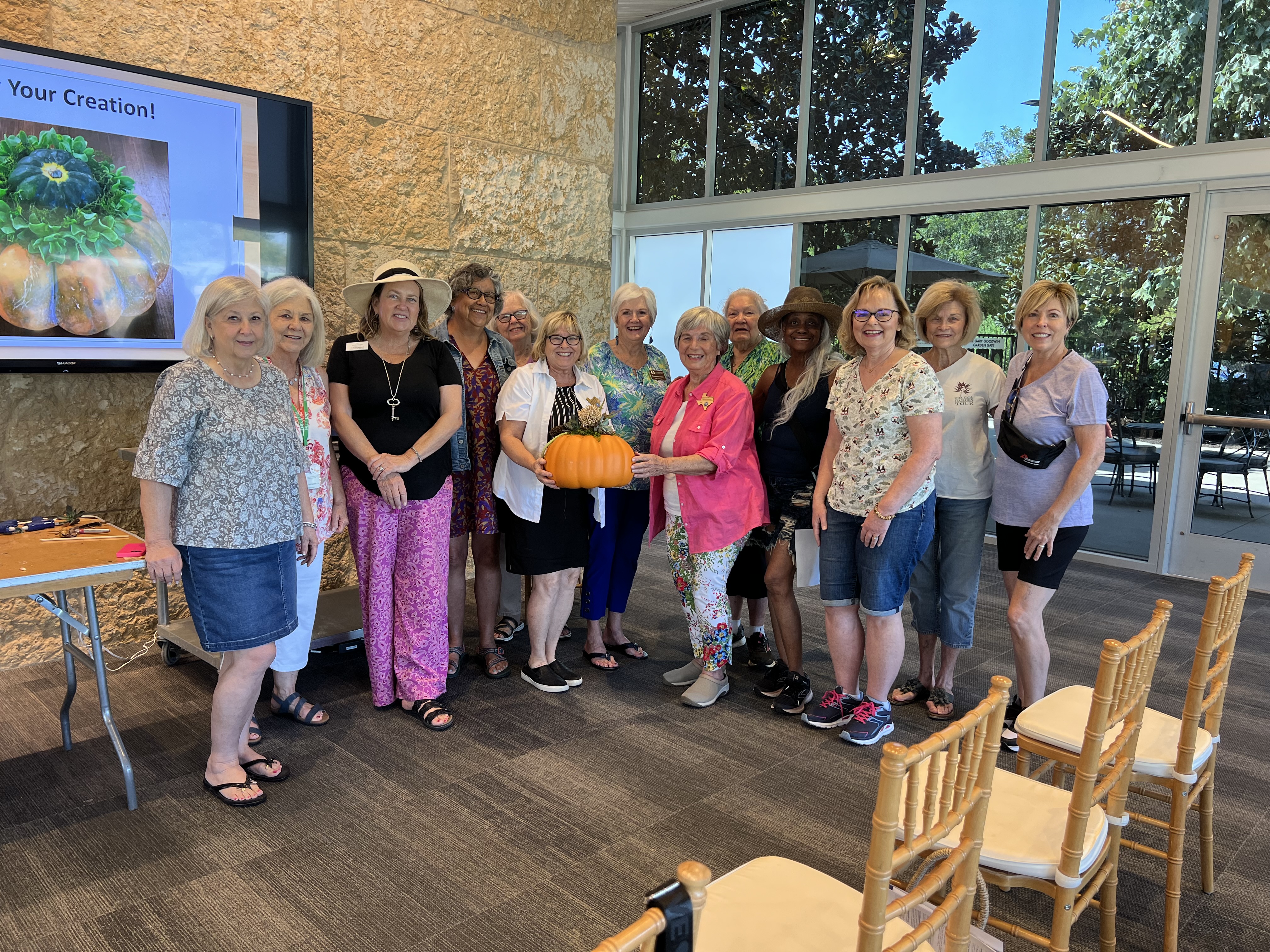
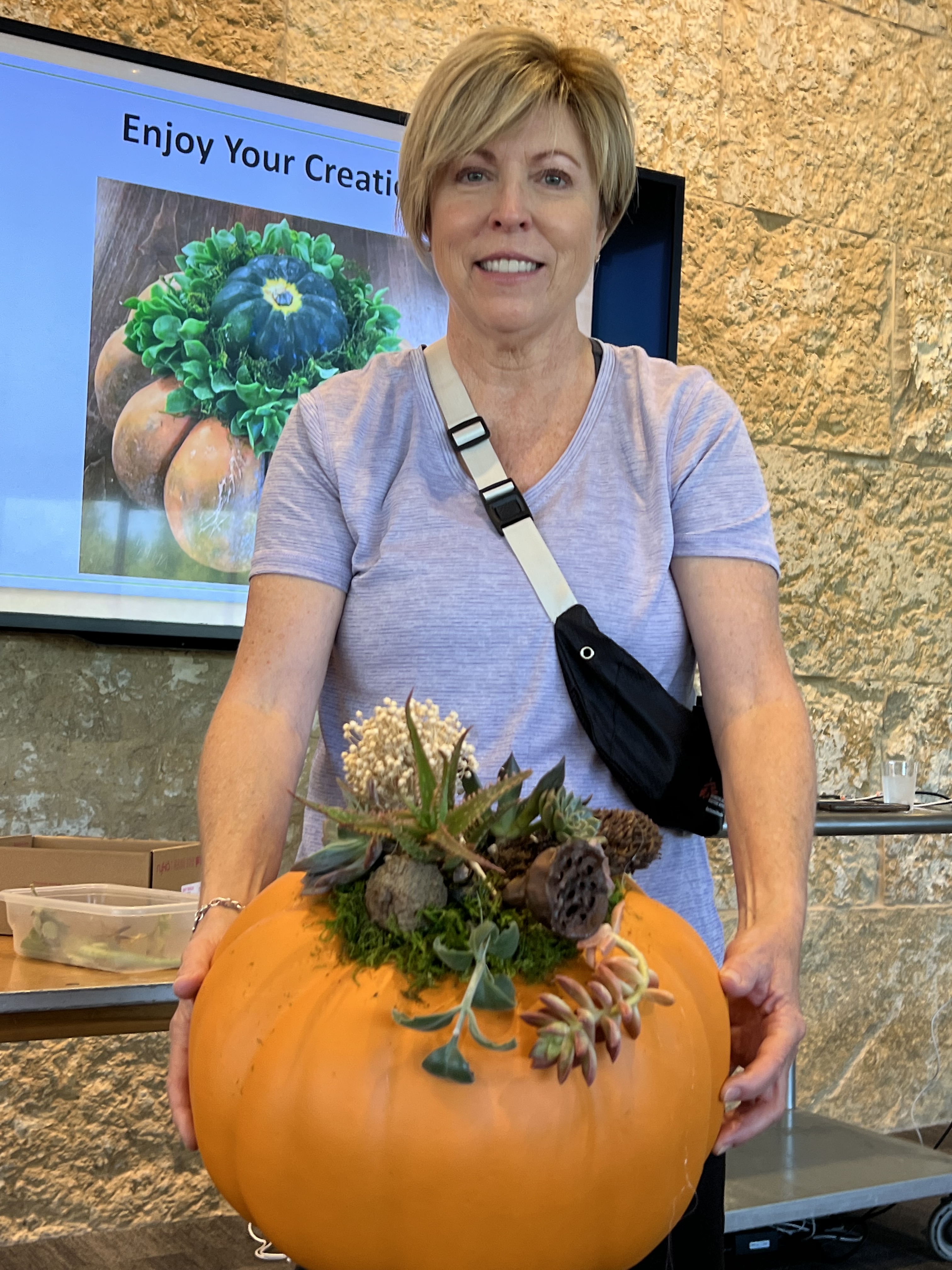
Dallas Arboretum class with Starla and Roseann in center surrounded by more Master Gardeners.

Even though our weather screams sweltering summer, the availability of pumpkin spice aroma is already permeating our neighborhoods. I hear you can get the flavored fall drink now. That must mean that Fall is around the corner, and then comes Halloween, pumpkins, Thanksgiving, and cooler weather (hopefully not in that order)!

Let’s talk pumpkins for a minute – they are a staple of fall decorating, carving for Halloween, cooking for Thanksgiving and Decorations to last through the Holidays. The Arboretum has its campus covered with about 100,000 pumpkins and gourds in all shapes and sizes from a farm in Floydada, Texas(near Lubbock) for its Fall Festival. The “stars” of Fall have not yet arrived but are soon to show.

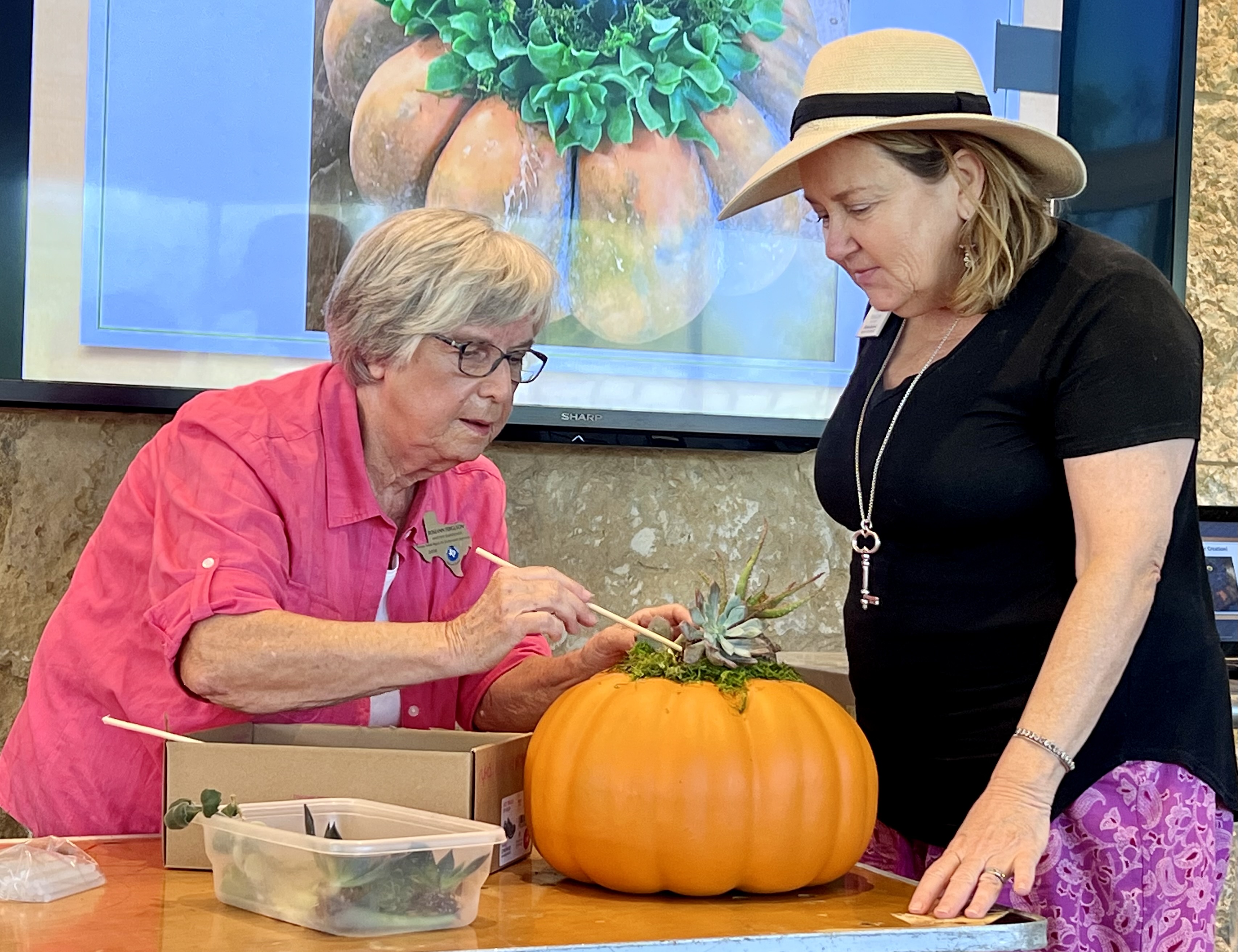
A Tasteful Place at the Dallas Arboretum hosts “Learn to Grow” presentations on most Fridays from 11:00am -12 noon. These talks are informative, inspirational, and interesting. Roseanne Ferguson, DCMG class 0f 2008 shared a demonstration to all ages on how to make “Pumpkins with Pizzazz”, which is creating a unique decoration with succulents and other materials that symbolizes fall and lasts for months.

All sizes and shapes are available for this project, but some guidelines need to be followed:

  • A pumpkin with at flat top will be easier to work with and provide more surface for succulents.
  • The variety Cinderella is a good choice. Smaller pumpkins can also be used.
  • Keep the pumpkin whole – any puncture will cause it to decay quickly. Clean it before you start.
  • Cut a template out of posterboard or cardboard of the top surface where you will be adding succulents- so that the adhesive will only be on the area where you are working.
  • Assemble an assortment of succulents, moss, other nature materials, to use along with spray adhesives, a glue gun, some clippers for stems and a chop stick to work with the hot glue, but don’t stick it in the pumpkin!
  • Arrange and glue down the above items till you have the arrangement you desire.
  • The succulents may need to be misted when they look droopy, but not often. Keep it in a bright light, but not direct sun – not all succulents can handle our sun rays even in the Fall.

Check out your local libraries, garden clubs for opportunities to either see a demonstration, or to participate in making these decorations for your Fall décor. The costs will vary, but it’s a lot of fun!

Starla Willis, Dallas County Master Gardener Class of 2008


September in the Garden

September 30, 2023

Dear Friends,

I am reposting this on the last day of September because we had a few technical difficulties with our video last week. If you love basil or basil in a flower arrangement, you will eat this up! So please watch.

Something in the air feels refreshing and hopeful. Summer heat is beginning to drift away as  cooler nights carry us into autumn’s blissful welcome. Have you felt the delicate whisper of magic moving through the trees as leaves are beginning to reveal their fall color palette?

Our landscapes seem grateful for the transition to rainy days filled with a nourishing gift from the heavens. Plants that were scorched and spent from the blistering heat of summer have lifted their heads in gratitude for the cool breezes of our beloved fall weather. Spending time outdoors is, once again, a delightful and long-awaited experience. Autumn is the season to embrace soothing moments of tranquility in the garden!

Plentiful is one of many ways to describe the variety of botanical options available to us over the next few months. For September, our featured plants are the following: Basil is brimming with a colorful, rich display of foliage that will be used in various ways; some for filling in open spaces of fragrant arrangements, others for making tasty pesto for the freezer. Turk’s Cap survived the summer and is now ending its seasonal performance while the strong stems and slightly rough leaves of Lemon Verbena plodded through the heat of summer with steadfast determination.

In April, my raised stone garden bed was planted with a half dozen, or more, different types of basil. They continued to grow lush and beautiful with blossoms appearing as summer progressed. It was a happy place for bees and butterflies to visit daily. Several varieties I especially enjoyed were:

Balsamic Blooms: Vigorous grower with bright green leaves and deep, purple blooms appearing simultaneously. Both leaves and flowers are edible. Wonderful for pesto, garnishes and more.

Cinnamon Basil: Once again, volunteer plants from last year’s seeds filled one side of our gravel driveway with their showy presence.  Their aromatic cinnamon fragrance is a treat for the senses when used for indoor arrangements.  But I couldn’t resist making several Cinnamon Basil Cakes to share with friends!

Basil, ‘Magic Mountain’: A strong contender for its ornamental value, this plant displays large, deeply colored flowers all summer long. The purple-hued dark green leaves are showy in floral arrangements as well as adding flavor to pesto, sauces, salads and meat dishes.

A few additional observations from my garden:

*Favorite basil for the honeybees: ‘Magic Mountain’ was like a bee magnet throughout the entire summer, especially during the early morning and late afternoon hours. Hundreds of foraging bees buzzed around the blossoms drinking in the nectar. They weren’t even bothered by my camera lens just inches away from the activity.

*Best basil for using in an arrangement: ‘Red Rubin’ proved to be a prolific grower with its coppery, purple leaves and small pink flowers. It offers an interesting branching structure that serves any arrangement well. Next spring, I’ll be using it throughoutmy garden.

*Basil with the most dramatic appearance: ‘Balsamic Blooms’ There’s a good reason why this variety received the Texas Superstar rating. Brilliant, green leaves embracing tightly formed purple blossoms make a striking appearance in the garden.

Turk’s Cap survived the summer heat and is now giving us a final showing. This perennial dies to the ground in winter but emerges in early spring. It’s another great native plant for Texas landscapes attracting bees, butterflies and hummingbirds. Growing up to six feet tall, use it as a background plant alongside other natives suited for a natural growth environment.

Lemon Verbena is my perennial herb of choice and one that I feel saddened to bid farewell to when our first freeze arrives. It was over thirty years ago that lemon verbena captured my attention. During that time, I’ve made countless loaves of lemon verbena bread to share with family and friends who gratefully extend their appreciation. And, of course, every morning from April until November a fresh sprig of lemon verbena garnishes my oversized glass of green tea.

September gently sweeps us out of summer and into the refreshing music of Autumn. Let’s embrace the melody!

Linda Alexander, Dallas County Master Gardener Class of 2008
September in the Garden

Something in the air feels refreshing and hopeful. Summer heat is beginning to drift away as  cooler nights carry us into autumn’s blissful welcome. Have you felt the delicate whisper of magic moving through the trees as leaves are beginning to reveal their fall color palette?

Our landscapes seem grateful for the transition to rainy days filled with a nourishing gift from the heavens. Plants that were scorched and spent from the blistering heat of summer have lifted their heads in gratitude for the cool breezes of our beloved fall weather. Spending time outdoors is, once again, a delightful and long-awaited experience. Autumn is the season to embrace soothing moments of tranquility in the garden!

Plentiful is one of many ways to describe the variety of botanical options available to us over the next few months. For September, our featured plants are the following: Basil is brimming with a colorful, rich display of foliage that will be used in various ways; some for filling in open spaces of fragrant arrangements, others for making tasty pesto for the freezer. Turk’s Cap survived the summer and is now ending its seasonal performance while the strong stems and slightly rough leaves of Lemon Verbena plodded through the heat of summer with steadfast determination.

In April, my raised stone garden bed was planted with a half dozen, or more, different types of basil. They continued to grow lush and beautiful with blossoms appearing as summer progressed. It was a happy place for bees and butterflies to visit daily. Several varieties I especially enjoyed were:

Balsamic Blooms: Vigorous grower with bright green leaves and deep, purple blooms appearing simultaneously. Both leaves and flowers are edible. Wonderful for pesto, garnishes and more.

Cinnamon Basil: Once again, volunteer plants from last year’s seeds filled one side of our gravel driveway with their showy presence.  Their aromatic cinnamon fragrance is a treat for the senses when used for indoor arrangements.  But I couldn’t resist making several Cinnamon Basil Cakes to share with friends!

Basil, ‘Magic Mountain’: A strong contender for its ornamental value, this plant displays large, deeply colored flowers all summer long. The purple-hued dark green leaves are showy in floral arrangements as well as adding flavor to pesto, sauces, salads and meat dishes.

A few additional observations from my garden:

*Favorite basil for the honeybees: ‘Magic Mountain’ was like a bee magnet throughout the entire summer, especially during the early morning and late afternoon hours. Hundreds of foraging bees buzzed around the blossoms drinking in the nectar. They weren’t even bothered by my camera lens just inches away from the activity.

*Best basil for using in an arrangement: ‘Red Rubin’ proved to be a prolific grower with its coppery, purple leaves and small pink flowers. It offers an interesting branching structure that serves any arrangement well. Next spring, I’ll be using it throughoutmy garden.

*Basil with the most dramatic appearance: ‘Balsamic Blooms’ There’s a good reason why this variety received the Texas Superstar rating. Brilliant, green leaves embracing tightly formed purple blossoms make a striking appearance in the garden.

Turk’s Cap survived the summer heat and is now giving us a final showing. This perennial dies to the ground in winter but emerges in early spring. It’s another great native plant for Texas landscapes attracting bees, butterflies and hummingbirds. Growing up to six feet tall, use it as a background plant alongside other natives suited for a natural growth environment.

Lemon Verbena is my perennial herb of choice and one that I feel saddened to bid farewell to when our first freeze arrives. It was over thirty years ago that lemon verbena captured my attention. During that time, I’ve made countless loaves of lemon verbena bread to share with family and friends who gratefully extend their appreciation. And, of course, every morning from April until November a fresh sprig of lemon verbena garnishes my oversized glass of green tea.

September gently sweeps us out of summer and into the refreshing music of Autumn. Let’s embrace the melody!

Linda Alexander, Dallas County Master Gardener Class of 2008

Slow Gardening, Texas Style

REGISTRATION NOW OPEN FOR DCMGA’s EDUCATION DAY

Make plans to join us on Saturday, October 14, for a unique day-long educational event sponsored by the Dallas County Master Gardener Association and Dallas College featuring well-known horticulturalists Felder Rushing and Callie Works-Leary.  The $20 cost of registration includes lunch.  To review the schedule of presentations, to read more about our speakers, and to register, visit dallascountymastergardeners.com.  All who love gardening are welcome to attend!

The Raincatcher’s Garden Fall 2022

November 18, 2022

A note from Jackie:

I thought I would follow up the beautiful fall photos Starla submitted to the blog with these photos of our garden that I recently received from our friend, Diane Washam.

Check out this bee visiting our Mexican Honeysuckle Plant. This plant blooms from late spring to fall.
I have never seen garlic chive seeds look so beautiful!
This lizard looks quite comfortable on the spotted manfreda plant.
Mexican Mint Marigold looking pretty after the rain.
Lambs Quarter is in the same plant family as spinach, chard and beets.
This is the Fidalgo Roxa pepper. We planted it on the courtyard as an ornamental plant. The beautiful, colorful peppers look like candy! However, don’t let the candy like appearance fool you as this pepper is extremely hot.
It was a good year for peppers! This is one of the many pepper plants that we planted in the edible garden, the donation garden and the courtyard garden. Many of these wonderful peppers were donated to the food bank, many of them were used to make our jalapeno jellies and a few were just there as ornamental plants to add interest to our gardens.

Jackie James, Dallas County Master Gardener Class of 1993

Photos by Diane Washam