Monthly Archives: September 2021

Raincatcher’s Welcomes The Pierian Club of Dallas

After waiting for over a year and a half to resume monthly meetings, The Pierian Club of Dallas chose Raincatcher’s Garden of Midway Hills for their first event. The much anticipated gathering was filled with hugs, laughter and smiles of happiness on the faces of those who attended. We were thrilled to welcome them to learn about our approach to gardening in North Texas and to enjoy a garden-themed lunch prepared by our “Friends of the Garden” volunteer culinary team. 

The story of The Pierian Club is very fascinating. It began in 1888 and has continued to evolve for over 133 years. The purpose of the club is to increase knowledge. Their motto states, “A little learning is a dangerous thing; drink deep or taste not the Pierian Spring. Their shallow draughts intoxicate the brain, and drinking largely sobers us again.” In Greek Mythology, it was believed that drinking from the Pierian Spring would bring you knowledge and inspiration.

With a focus on seasonally fresh herbs and vegetables from our edible gardens, we treated them to a flavor-filled menu that stirred the senses. A brief explanation of how the menu was developed includes comments about several carefully chosen items. 

The Pierian Study Club

Wednesday, September 15, 2021

A couple of vases hold yellow flowers

Description automatically generated with low confidence

Lunch Menu

“Finger Sandwich Trio” 

Pimento Cheese topped with a Raincatcher’s Pickle

Cranberry Curry Chicken Salad with Orange Blossom Honey

Sliced Radishes on Salad Burnet Spread Dusted with Fresh Fennel Pollen

Marinated Vegetables with French Tarragon and Anise Hyssop Blossoms

Grilled Figs topped with a Dollop of Mascarpone Cheese, Drizzled with Orange Blossom Honey and Fresh Thyme 

Iced Tea Flavored with Garden Fresh Lemon Verbena
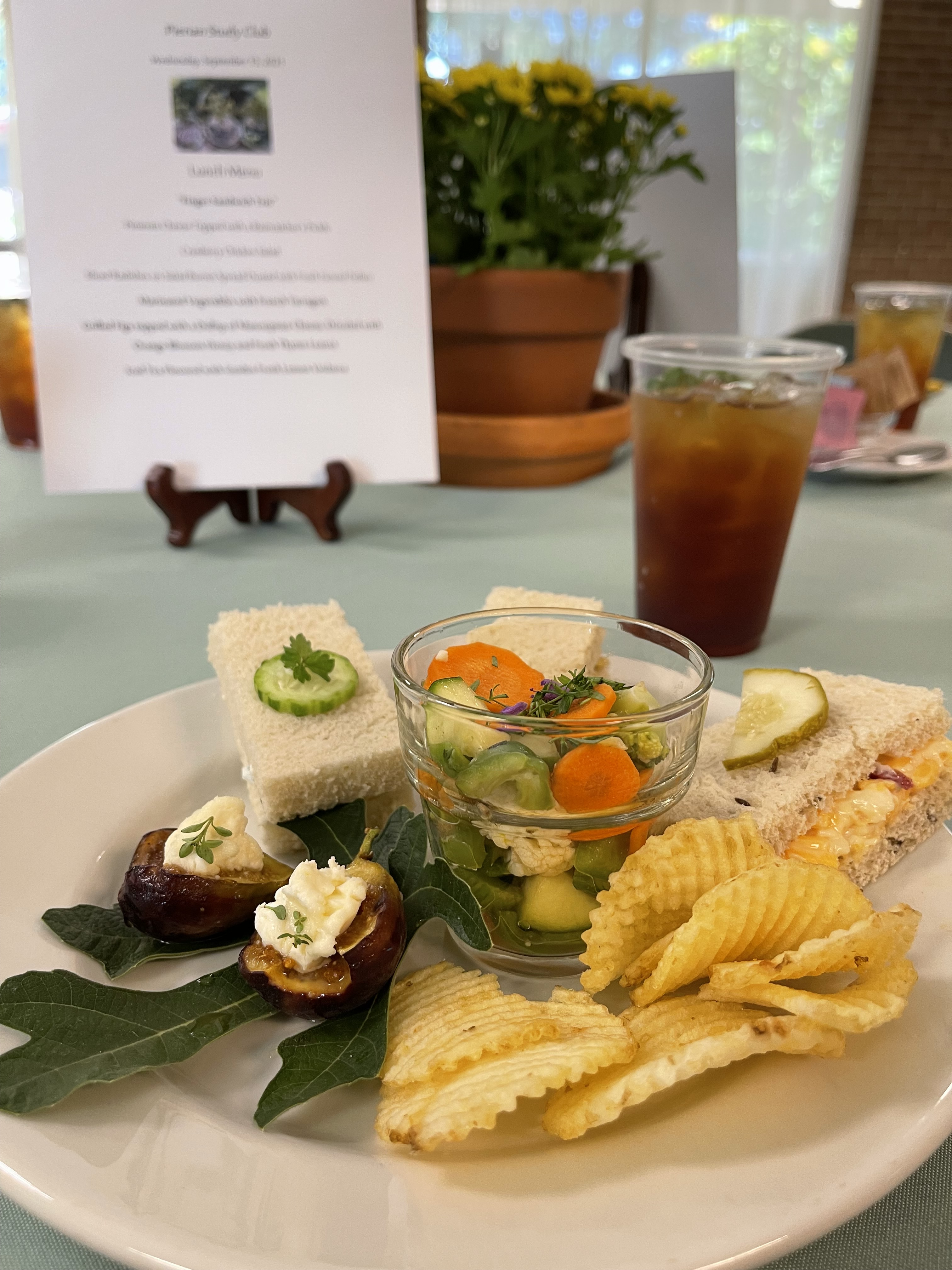
Our finger sandwich trio included the following:

1. A tribute to Martha Stewart’s favorite sandwich…buttered white bread topped with thinly sliced radishes sprinkled with salt. Taking inspiration from herbs growing in our garden, we substituted a spread made with whipped cream cheese, freshly snipped salad burnet leaves and onion chives. Radishes were added next, sprinkled with sea salt and then lightly dusted with delicate fennel fronds. Each sandwich was topped with a thinly sliced Armenian cucumber brought in from the garden.

2. Pimento Cheese. This recipe is a favorite from a recently closed restaurant in Fredericksburg, Texas…The Peach Tree Tea Room. While the original recipe calls for jalapeno juice, we omitted it, as requested, for this event. Each sandwich was topped with a pickle made by one of our volunteers. Pickles were made from the variety, ‘Homemade Pickles,’ currently growing in our garden. 

3. Cranberry Curry Chicken Salad with Orange Blossom Honey. We love using this special honey from Savannah Bee and available locally at Central Market. It adds just the right amount of sweetness to the earthy flavor of curry.

Marinated Vegetables were embellished with fresh-picked French tarragon from our edible landscape. Served in individual clear glass flowerpots, they made a colorful addition to the menu with pretty purple anise hyssop blossoms scattered over the top.

Dessert was on the lighter side. Fig leaves from the garden cradled two figs halves that were lightly grilled and topped with a dollop of mascarpone cheese and a drizzle of Orange Blossom Honey. Tiny lemon-flavored thyme leaves added that fresh from the garden effect that rounded out the meal.

Following lunch, a short program introducing the Raincatcher’s Garden of Midway Hills was presented by Dallas County Master Gardener, Lisa Centala. Master Gardener volunteers then joined Lisa and our guests for a delightful tour of the demonstration gardens. With their newly acquired horticultural knowledge, members of the study group left inspired and feeling as if they had been refreshed by drinking from the Pierian Spring. 

Linda Alexander, Dallas County Master Gardener Class of 2008
From Junk Bug to Green Lacewing

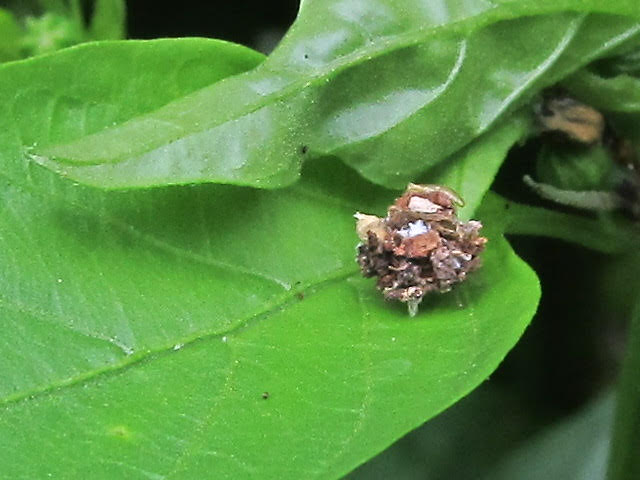
Diane, a frequent visitor to Raincatchers Garden, saw a little bit of debris on a leaf. To her surprise it began to move purposefully. She learned that the debris was called a junk bug. It covers itself with the bodies of insects it has preyed upon. This creates a convincing camouflage that fools birds and the ants that tend aphids. Aphids are a frequent snack.

Junk Bug with a purpose!

The junk bug is a larva that becomes a green lacewing, a beautiful insect with delicately veined gossamer wings.Per Diane, “I almost missed it till it started moving, and this is my very first one to ever see, or even hear of.”

Thanks, Diane, for your close observation. It’s great to know we have an insect ally to help us keep the aphids in check.

P.S. The eggs on a stalk shown in the picture above are also part of the lifecycle of this beneficial insect.

Beverly Allen, Dallas County Master Gardener Class of 2018

PIctures by Diane, a friend of The Raincatcher’s Garden

A Sensory Garden Reimagined

“The greatest gift of the garden is the restoration of the five senses.”

-Hanna Rion

Almost thirty years ago, my husband and I took our first trip to France. Our destination was Paris but along the way we scheduled a romantic anniversary visit to the lovely town of Reims. It is considered an essential stop on France’s champagne trail with big-name bubbly houses headquartered there among wide boulevards and well-preserved medieval churches.

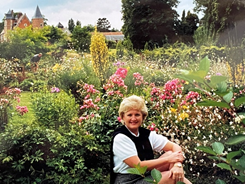
Linda at The Garden of the Five Senses

 Our three-night stay was at an elegant boutique hotel known as Domaine Les Crayeres. Nestled discreetly in a seven-hectare park full of lush vegetation, it remains one of my most treasured travel memories. During our stay, it was suggested that we visit a little-known sensory garden in a charming village just outside of town. We were told that not many tourists take time to visit the garden but because of our desire to experience the lesser-known places, we were excited to make the trip. The cost to enter the garden was minimal but the joy we shared that afternoon was priceless.  Our enchanting visit was to a place called, “The Garden of the Five Senses”.

It was a beautiful day in August with temperatures hovering comfortably in the seventy-degree range. Unlike summer weather in Texas, we had chosen a perfect time to spend the day outdoors. An incredible bottle of French champagne led to countless toasts and smiles as we leisurely enjoyed a beautiful afternoon in the garden.

Each of the five individual gardens were created using a loosely defined circular formation. Plants were carefully selected for the role they would play in stirring up the senses:  sight, smell, taste, sound and touch. Unhurried and totally caught up in the moment, our hearts and souls were rejuvenated. A quaint, little “off the beaten path”, and privately owned garden, had given us the gift of a lifetime memory.

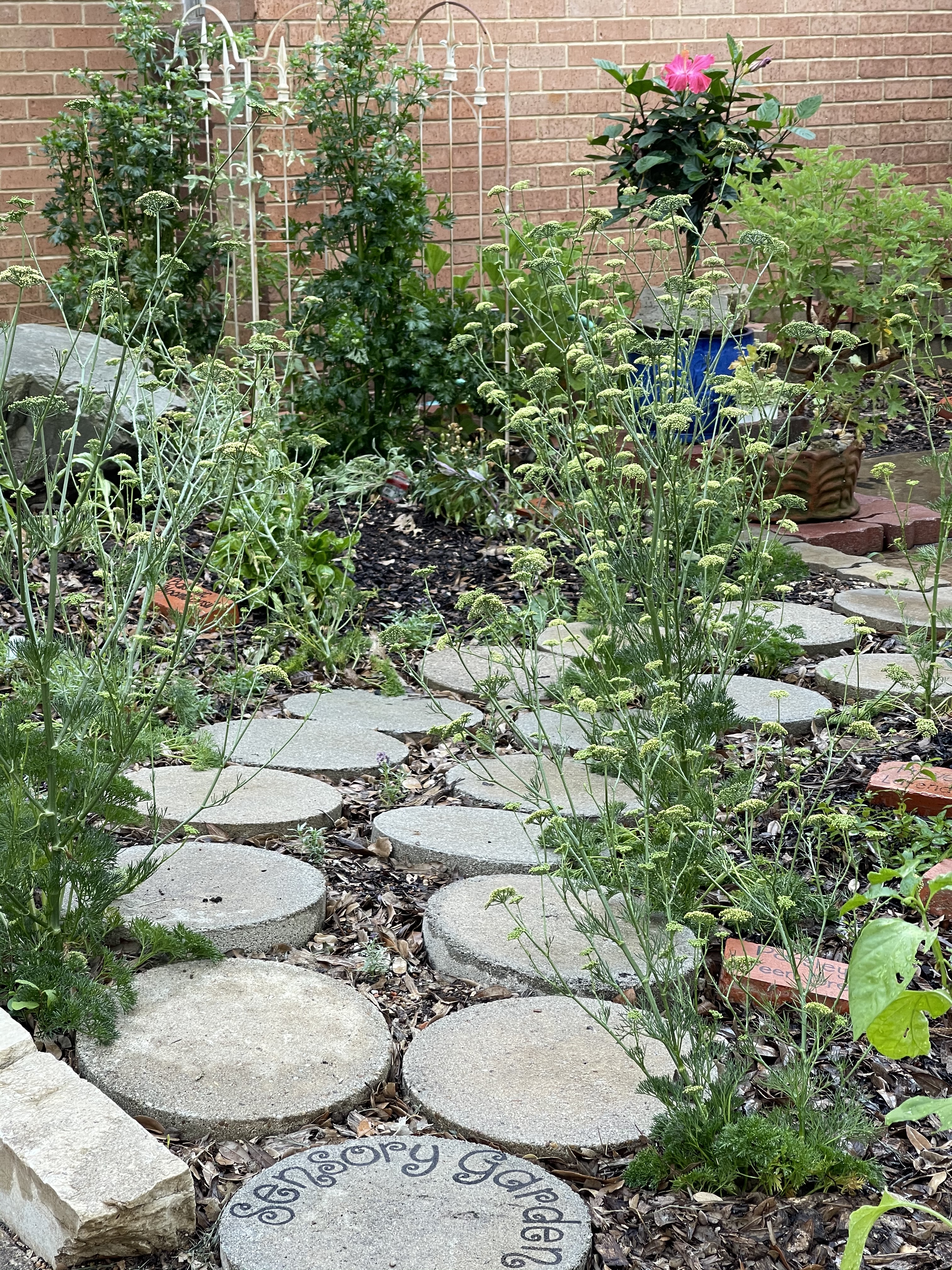
Reflecting on that wonderful day in France, this spring our volunteers introduced a Texas style version of a sensory garden to the edible landscape. Our sensory garden is on a much, much smaller scale than the one in France, but we’ve packed in a pleasing variety of edible plants. Summer into early fall we will be featuring some of the following:

Sight: Variegated Oregano, Variegated Tomato, Hibiscus Topiary, Balsamic Blooms Basil, Calendula, Epazote, Hoja Santa, Red Roselle Hibiscus, Hyacinth Bean ‘Moonshadow’, Lamb’s Quarters

Smell: Alyssum ‘Oriental Nights’, Anise, Apricot Coral Drift Rose, Cinnamon Basil, French Tarragon, Provence Lavender, Red Stemmed Apple Mint, Scented Pelargoniums: Chocolate, Lavender and Peach

Taste: Cutting Celery, Dill, Eggplant, Lemon Variegated Thyme, Mushroom Plant, Peppers, Stevia, Vietnamese Coriander, White Velvet Okra, White Leafed Savory

Sound: Bay Laurel ‘Lil Ragu’ (gently rustling in the breeze), Bees buzzing around all of the pollinator-friendly plants, Wind Chimes

Touch: Archer’s Gold Thyme, Curry Plant, Golden Pineapple Sage, Purple Sage, Rosemary, Variegated Lemon Balm


We invite you to visit the sensory garden anytime you’re in the area.
You might even consider bringing along a bottle of bubbly to celebrate the experience.

10 Tips for Creating a Sensory Garden

1. Choose an ideal location. Find a quiet place in your yard or somewhere that naturally draws you into a “time-out” or relaxing place in the garden. 

2. Measure the space and create a map of the area. Detailed information is beneficial when the time comes for selecting plants.

3. Decide what plants and features will best achieve the atmosphere that is desired. Accessories like gazing balls, mirrors and sculpture can add to the visual effect.

4. Provide a bench, swing, or some place to sit and relax. A unique idea would be to install a chamomile lawn. The recommended variety of chamomile for this particular purpose is Roman Chamomile (C. nobile ‘Treneague’).

5. Create a safe place using plants that are non-toxic, non-allergenic and with no pesticide application.

6. Choose plants that will keep the senses aroused each season of the year.

7. When selecting plants pay close attention to growing conditions whether sun or shade, poor or good drainage, clay or other types of soil.

8. Decide which plants are best for stimulating each of the five senses. Start with 3 plants for each one, then expand as space and growing characteristics allow.

9. Feature elements that appeal to the five senses:

Color – may be seasonal, grouped in clusters or spaced for maximum contrast.

Texture – use plants that add a variety of tactile stimulation.

Water and Wind Chimes – items like bird baths, fountains and small ponds provide a refreshing sensory experience for sight, sound and touch while attracting birds, butterflies and other pollinators to the garden. Enhance the sense of sound with wind chimes and/or whirligigs.

10. Be inspired throughout the process. Creating a sensory garden will elevate your environment into one that gives interest and stimulation to people of all ages.

Linda Alexander, Dallas County Master Gardener Class of 2008