Monthly Archives: September 2018

Brussel Sprouts

As master gardeners, we really dig a good reason to gather around the table. When delicious, garden-fresh food is involved we’re “all in”. That’s what happened a few weeks ago when we surprised our Raincatcher’s team leader, Lisa Centala, with a ‘bring your favorite dish’ salad buffet for her special birthday.

A tantalizing line up of salad bowls and platters was spread out the length of two 8-foot tables. We didn’t hesitate to fill our plates with the most amazing variety of green salads, vegetable salads, chicken salads and more. Approaching the end of the line were Artichoke Bites, Baguette slices spread with basil cream cheese and Hatch chili biscuits. No restraint was shown as evidenced by plates full of our garden-inspired selections.

One particular dish new to many of us and requested by all was the Zesty Brussels Sprouts. True to its name, the apple cider vinegar combined with sugar and horseradish was soaked up by each little sprout. They had just the right amount of zip to satisfy the palate. Kathey Roberts graciously shared the recipe for everyone to enjoy.

Raincatcher’s Iconic Picture of Brussel Sprouts! Agree?

Now is the time to plant Brussels sprouts. With their long maturity date, transplants should be in your garden by October 15th. 

Zesty Brussels Sprouts

Ingredients

2 (10-ounce) bags frozen Brussels sprouts or use fresh from your garden or produce isle

1 ½ cups sugar

1 cup apple cider vinegar

5 Tablespoons prepared horseradish (not cream of horseradish)

Salt to taste

2 teaspoons dry mustard

Directions

Cook the sprouts according to package directions; drain. In a large bowl, mix the sugar, vinegar, horseradish, salt and mustard. Add the sprouts and toss lightly. Refrigerate at least 6 hours or overnight.

For more information about Brussel sprouts and a video about their care read here.

Linda Alexander

By the way, only 6 tickets left for the Apples, Pears, Persimmons and Pomegranates lunch on October 16th.  Lecture is free.
 

Greek Vegan Domaldes Recipe

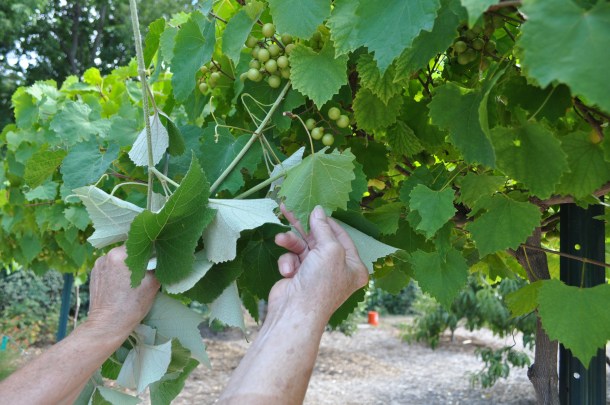
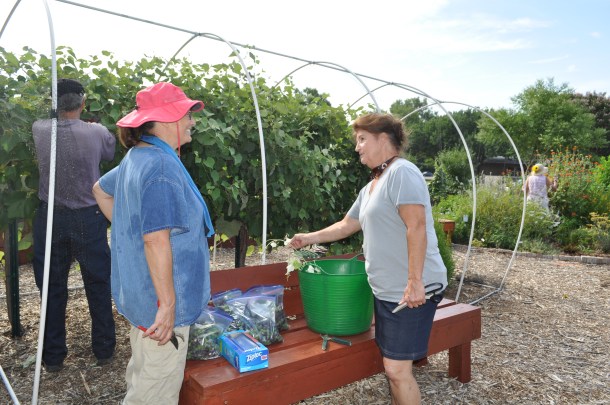
Judy and Yaiyia (Toney) discussing grape leaves at The Raincatcher’s Garden

You remember Yiayia aka Toney Davrados.  Yiayia is Greek for Grandmother and as any Greek Grandma would-she showed us how to make dolmades at our fabulous July  Grape Lecture and Lunch Event.

Now she has offered us the vegan version:

Yiayia’s Greek Dolmades Vegan Style

*Stuffed Grape Leaves with Rice and Herbs

Stuffed Grape Leaves (Greek Dolmades) are often served as part of a mezé (appetizer) plate.  Too often they come from a can and are not fresh. Fresh Greek Dolmades are far superior to the canned.  These can either be a main dish or an appetizer, depending on your appetite. These small bundles of rice and herbs wrapped in grape leaves are a favorite dish in Greece.

Toney surverys our grape leaves to show us leaves that are smooth on the back make better dolmades.

If you have never tried fresh Greek Dolmades, now is the time. They are very easy to make and so delicious!

*Fresh vine leaves: Blanch tender vine leaves for 2-3 seconds in boiling, salted water. Remove them with a slotted spoon and transfer to a bowl full of very cold water. Place in  colander to drain off water. Use a small sharp knife to remove any stems or tough veins they may have.

*When using bottled Grape Leaves:  To prepare bottled grape leaves, rinse well under cold water to remove the brine.  Place them in a colander (back side up) to drain and hold until ready to use

Ingredients

  • 60-70 tender vine leaves
  • 2 bunches fresh green onions, sliced in to very thin rounds
  • 1 large onion or 2 smaller ones, diced
  • 2 cloves of garlic, thinly sliced
  • 1 1/2 cup olive oil
  • 1 1/2 cup rice
  • 1 1/2 cup water
  • 1 bunch fresh parsley, finely chopped
  • 1 bunch dill, finely chopped
  • 1 bunch mint, finely chopped
  • grated zest of 2 lemons
  • salt
  • freshly ground pepper
  • juice from 1 1/2 – 2 lemons

Preparing  filling:

Place a pan over medium to high heat.

Add the green onion, onion and garlic along with ½ the olive oil .

Sauté for 10-15 minutes, until they soften, caramelize nicely and shrink in volume.

Add the rice and sauté for 2-5 minutes.

Add the 1 ½ cup water and stir. Lower heat and simmer for about 5 minutes, until the rice soaks up the water.

When ready, remove from heat and set it aside to rest for at least 10 minutes.

Add the parsley, dill, mint, lemon zest, salt and pepper. Stir to combine.

To assemble:

Spread 4-5 vine leaves, and lemon juice on the bottom of a 22 cm pot. Use any ripped or broken vine leaves.

Place a vine leaf in the palm of your hand or on a cutting board (veins facing up and shiny side down).

Add 1 tablespoon of filling in the center, fold the sides of the vine leaf inward and roll to complete. Review the process here.

Transfer to the pot, placing the stuffed vine leaves in a row, one next to the other.

Repeat the same process for all the vine leaves.

When the first layer has been added, continue with a second and third, if needed until they are all done.

Add the remaining olive oil, and cover the stuffed vine leaves with a plate. This is done so that they don’t fall apart while cooking.

Add the warm or hot water, until they are completely covered.

Simmer for about 40-50 minutes until the rice is done and the vine leaves are tender.

When ready, remove from heat and set them aside to cool in the pot.

Let them cool for a bit, in the pot. They can be served warm or cold and should be enjoyed all on their own!

*Perfect sauce for dolmades

Serve the stuffed vine leaves with yogurt, dill, mint, olive oil and freshly ground pepper.

  • 8oz Yiayia’s Greek strained yogurt
  • 1tsp dill finely chopped
  • 1tsp mint finely chopped
  • 1tbs extra virgin olive oil
  • Fresh ground pepper

Linda Alexander and Ann Lamb

Video by Starla Willis

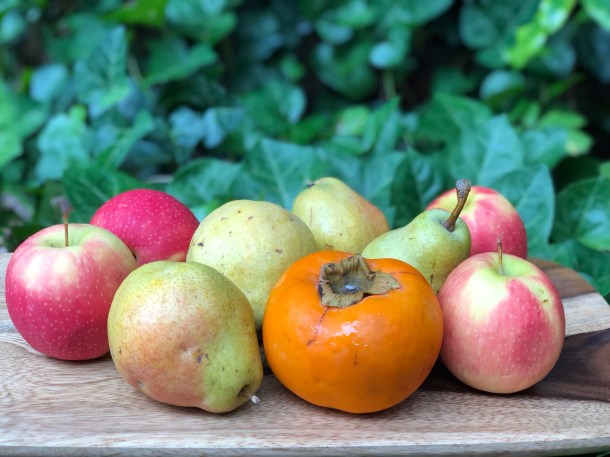
“Apples, Pears, Persimmons and Pomegranates” Class and Lunch


“Apples, Pears, Persimmons and Pomegranates”

Nature has been saving up all year for the grand finale.

You’ll be inspired by this colorful class on planting, growing and harvesting the fruits of the season.

Tuesday, October 16th, 10:00am – 11:30pm

Raincatcher’s Garden of Midway Hills * 11001 Midway Road

Instructor: Jeff Raska, Dallas County Horticulture Program Assistant, Texas A&M AgriLife Extension Service

(The class is free – no reservation required. The public is welcome, and Master Gardeners earn one-hour education credit)

Immediately following Jeff’s presentation in the church sanctuary, you are invited to join us in the Community Hall for a bountiful buffet table bursting with seasonal flavor. This will be a feast for both the eyes and the palate.

Lunch reservations required by Tuesday, October 9th * $15 Per Person * Limited to 60

Eventbrite Ticket Sales for Apples, Pears, Persimmons and Pomegranates

Menu

Baked Brie with Roasted Persimmons

Cinnamon Candied Apple Slices

Butternut Squash-Pear Soup Garnished with Parmesan and Rosemary

Tennessee Ham Balls with Brown Sugar Glaze

Salad of Figs, Pomegranates, Persimmons and Pears with Pomegranate Dressing

Autumn Orchard Crisp, Persimmon Cookies, Caramel Apple Layer Cake with Apple Cider Frosting

Pineapple Sage Infused Water

Linda Alexander

Fall Veggie Gardening Resources


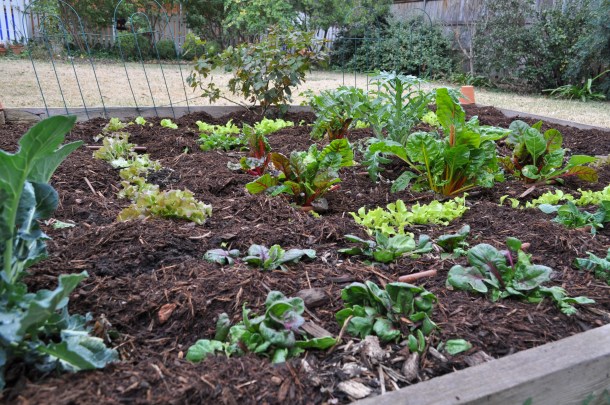
Last year our family chomped through lettuce, spinach, Swiss chard and broccoli out of this little garden fall through spring.

Dallas Garden Buzz asked Daniel Cunningham, Horticulturist and Program Coordinator at Texas A&M AgriLife about fall gardening a couple of weeks ago. He has given us good information and was right on with his *rain prediction:

Fall is a great time for growing vegetables in Texas! Coming off the driest growing season (to date) in 109 years in DFW, even the most seasoned green thumb’s gardens may have struggled in 2018.

Plants and planters can be renewed this fall. Let’s rejoice in the fact that there are cooler temperatures ahead and hopefully some *well-timed rain events. AgriLife has an incredible network of resources to help folks root into fall vegetable gardening!

o    Sustainable Vegetable Gardening brochure

o    TAMU Fall Planting Guide

o    TAMU Vegetable Variety Selector

o    TAMU Vegetable Resources

o    TAMU Vegetable Integrated Pest Managment

o    TAMU Plant Clinic


Dallas Garden Buzz thanks Daniel Cunningham:       

Horticulturist | Program Coordinator     (972) 952-9223

@TXPlantGuy


Cindy’s Secret Garden

What do you do when you want to garden, but the space is not your own, and you’re not exactly sure how long you’ll be there? My friend, Cindy, started with a blank slate.

The triangular area had hardscape already in place in the form of a cemented stone path, and was bordered by fencing on 2 sides and house on the other with almost no plants except some wood ferns and small hollies.

In The Beginnings

Some areas were sun baked but there were also shady areas due to the interesting configuration. Cindy and I walked the area and began to dream about a secret garden — one that would bring color and joy through the windows of the rooms that looked out onto the wasteland.

This transformation took months to visualize – the soil was amended with expanded shale and compost – As winter days were coming to a close, basic plans took root. Shareable plants were introduced, or transplanted from other areas and seeds were cast.

Perennials Shared by Friends Now at Home in Cindy’s Garden

Trips to the bargain bins became a treasure hunt – recycled and reused planters found a home on the fencing. Hanging baskets were hung.

Hanging Planter, a Recycled Find

By May the garden was taking shape and by mid June – blooms were everywhere.

Cindy’s Garden in June

This little space has gone from desert to delightful due to diligence and determination and very little dough!

Thru the Looking Glass, so to Speak, Cindy’s New Garden

Approximate cost of this back yard redo: $250 for soil expanded shale, compost and mulch. $200 for perennials. Total: $450.

Starla Willis