Tag Archives: Turk’s Cap

I’M GOING TO STAND MY GROUND AND YOU CAN TOO

Don’t give up, Susan Thornbury has some words of inspiration and an action plan for us during these hot days of summer.

August 15, 2024

Memory is strange.  Most thoughts and memories are unhelpful.  So much so that often a deep breath and a reminder that they are just thoughts and memories and not reality seems to be indicated.      But then when least expected a flash of amazingly helpful inspiration!! 

After listening to a weather forecast –given after the meteorologist  offers an apology for what will be coming–and then stepping out to look at the garden already in a negative frame of mind and naturally seeing trouble everywhere—a song came –the words very loud and clear:  “I”M GOING TO STAND MY GROUND YOU KNOW I WON’T BACK DOWN I’M GOING TO STAND MY GROUND”  

Now don’t rush to judgement on that song–in this case it was crystal clear what the meaning was–it was aimed  at gardeners!!

Not those  in “other places”  Places where the nights are cool it rains at least once a week and where things “just seem to grow”  Oh no, they don’t get a song–it was not meant for them.  

It was meant for gardeners here–it was meant for US!!

It is just such a temptation to give up–Its so hot and yet weeds are thriving–the list of “NOT FAIR” is a long one

But not for us to dwell on that: WE WILL NOT BACK DOWN WE WILL STAND OUR GROUND”

We can’t just think about it though–a plan is needed!

Each plan must suit the planner of course but–there are some important point that might be universal.

First give serious thought to becoming a morning person–if you start at 7AM –its not so bad and you can get a lot done in an hour or two.  If this is not your usual habit–well just tell yourself–when November comes you can sleep late!!

Second set priorities.  Take a good look and decide what must be done now  some things can and should wait until later.  One thing is usually deadheading..  The poor plants are stressed they don’t need to be trying to set seeds or supporting yellowing leaves.  When you tidy them up they are really helped–and you get some encouragement–things are looking better already.

Third don’t give up on weeding.  Weeds are cleaver plants and they can grab water and use it to set their seeds faster than one can believe–so don’t let them–you sure don’t need more weeds and your plants need all the water they can get.

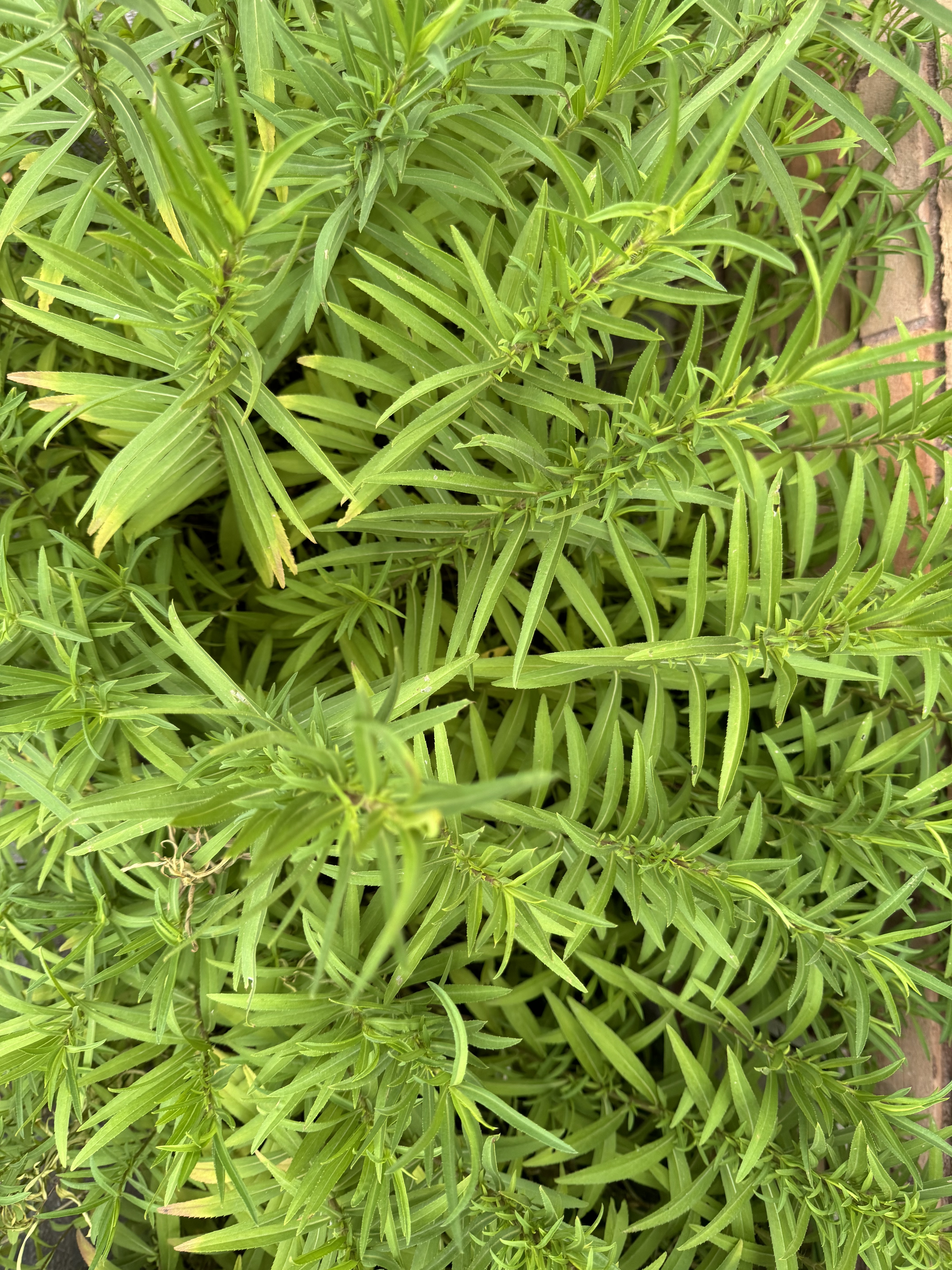
Healthy and happy mulberry weeds edited out of the garden-they thought they were safe hiding in the salvia

Fourth–look for what is working.  Which plants are showing a fighting spirit and a will to live  they must be encouraged and rewarded–as they are encouraging and rewarding you.

But of course you must also face what isn’t working–Bite the bullet–remove dying plants there is just no use in trying to care for them and waste precious water on them–make a mental note to avoid them in the future.

Last–congratulate  yourself!!  you deserve it YOU STOOD YOUR GROUND NO YOU DIDN’T BACK DOWN YOU STOOD YOUR GROUND!!! 

Susan Thornbury, Dallas County Master Gardener Class of 2008

More information about Turk’s Cap

September in the Garden

September 30, 2023

Dear Friends,

I am reposting this on the last day of September because we had a few technical difficulties with our video last week. If you love basil or basil in a flower arrangement, you will eat this up! So please watch.

Something in the air feels refreshing and hopeful. Summer heat is beginning to drift away as  cooler nights carry us into autumn’s blissful welcome. Have you felt the delicate whisper of magic moving through the trees as leaves are beginning to reveal their fall color palette?

Our landscapes seem grateful for the transition to rainy days filled with a nourishing gift from the heavens. Plants that were scorched and spent from the blistering heat of summer have lifted their heads in gratitude for the cool breezes of our beloved fall weather. Spending time outdoors is, once again, a delightful and long-awaited experience. Autumn is the season to embrace soothing moments of tranquility in the garden!

Plentiful is one of many ways to describe the variety of botanical options available to us over the next few months. For September, our featured plants are the following: Basil is brimming with a colorful, rich display of foliage that will be used in various ways; some for filling in open spaces of fragrant arrangements, others for making tasty pesto for the freezer. Turk’s Cap survived the summer and is now ending its seasonal performance while the strong stems and slightly rough leaves of Lemon Verbena plodded through the heat of summer with steadfast determination.

In April, my raised stone garden bed was planted with a half dozen, or more, different types of basil. They continued to grow lush and beautiful with blossoms appearing as summer progressed. It was a happy place for bees and butterflies to visit daily. Several varieties I especially enjoyed were:

Balsamic Blooms: Vigorous grower with bright green leaves and deep, purple blooms appearing simultaneously. Both leaves and flowers are edible. Wonderful for pesto, garnishes and more.

Cinnamon Basil: Once again, volunteer plants from last year’s seeds filled one side of our gravel driveway with their showy presence.  Their aromatic cinnamon fragrance is a treat for the senses when used for indoor arrangements.  But I couldn’t resist making several Cinnamon Basil Cakes to share with friends!

Basil, ‘Magic Mountain’: A strong contender for its ornamental value, this plant displays large, deeply colored flowers all summer long. The purple-hued dark green leaves are showy in floral arrangements as well as adding flavor to pesto, sauces, salads and meat dishes.

A few additional observations from my garden:

*Favorite basil for the honeybees: ‘Magic Mountain’ was like a bee magnet throughout the entire summer, especially during the early morning and late afternoon hours. Hundreds of foraging bees buzzed around the blossoms drinking in the nectar. They weren’t even bothered by my camera lens just inches away from the activity.

*Best basil for using in an arrangement: ‘Red Rubin’ proved to be a prolific grower with its coppery, purple leaves and small pink flowers. It offers an interesting branching structure that serves any arrangement well. Next spring, I’ll be using it throughoutmy garden.

*Basil with the most dramatic appearance: ‘Balsamic Blooms’ There’s a good reason why this variety received the Texas Superstar rating. Brilliant, green leaves embracing tightly formed purple blossoms make a striking appearance in the garden.

Turk’s Cap survived the summer heat and is now giving us a final showing. This perennial dies to the ground in winter but emerges in early spring. It’s another great native plant for Texas landscapes attracting bees, butterflies and hummingbirds. Growing up to six feet tall, use it as a background plant alongside other natives suited for a natural growth environment.

Lemon Verbena is my perennial herb of choice and one that I feel saddened to bid farewell to when our first freeze arrives. It was over thirty years ago that lemon verbena captured my attention. During that time, I’ve made countless loaves of lemon verbena bread to share with family and friends who gratefully extend their appreciation. And, of course, every morning from April until November a fresh sprig of lemon verbena garnishes my oversized glass of green tea.

September gently sweeps us out of summer and into the refreshing music of Autumn. Let’s embrace the melody!

Linda Alexander, Dallas County Master Gardener Class of 2008

September in the Garden

Something in the air feels refreshing and hopeful. Summer heat is beginning to drift away as  cooler nights carry us into autumn’s blissful welcome. Have you felt the delicate whisper of magic moving through the trees as leaves are beginning to reveal their fall color palette?

Our landscapes seem grateful for the transition to rainy days filled with a nourishing gift from the heavens. Plants that were scorched and spent from the blistering heat of summer have lifted their heads in gratitude for the cool breezes of our beloved fall weather. Spending time outdoors is, once again, a delightful and long-awaited experience. Autumn is the season to embrace soothing moments of tranquility in the garden!

Plentiful is one of many ways to describe the variety of botanical options available to us over the next few months. For September, our featured plants are the following: Basil is brimming with a colorful, rich display of foliage that will be used in various ways; some for filling in open spaces of fragrant arrangements, others for making tasty pesto for the freezer. Turk’s Cap survived the summer and is now ending its seasonal performance while the strong stems and slightly rough leaves of Lemon Verbena plodded through the heat of summer with steadfast determination.

In April, my raised stone garden bed was planted with a half dozen, or more, different types of basil. They continued to grow lush and beautiful with blossoms appearing as summer progressed. It was a happy place for bees and butterflies to visit daily. Several varieties I especially enjoyed were:

Balsamic Blooms: Vigorous grower with bright green leaves and deep, purple blooms appearing simultaneously. Both leaves and flowers are edible. Wonderful for pesto, garnishes and more.

Cinnamon Basil: Once again, volunteer plants from last year’s seeds filled one side of our gravel driveway with their showy presence.  Their aromatic cinnamon fragrance is a treat for the senses when used for indoor arrangements.  But I couldn’t resist making several Cinnamon Basil Cakes to share with friends!

Basil, ‘Magic Mountain’: A strong contender for its ornamental value, this plant displays large, deeply colored flowers all summer long. The purple-hued dark green leaves are showy in floral arrangements as well as adding flavor to pesto, sauces, salads and meat dishes.

A few additional observations from my garden:

*Favorite basil for the honeybees: ‘Magic Mountain’ was like a bee magnet throughout the entire summer, especially during the early morning and late afternoon hours. Hundreds of foraging bees buzzed around the blossoms drinking in the nectar. They weren’t even bothered by my camera lens just inches away from the activity.

*Best basil for using in an arrangement: ‘Red Rubin’ proved to be a prolific grower with its coppery, purple leaves and small pink flowers. It offers an interesting branching structure that serves any arrangement well. Next spring, I’ll be using it throughoutmy garden.

*Basil with the most dramatic appearance: ‘Balsamic Blooms’ There’s a good reason why this variety received the Texas Superstar rating. Brilliant, green leaves embracing tightly formed purple blossoms make a striking appearance in the garden.

Turk’s Cap survived the summer heat and is now giving us a final showing. This perennial dies to the ground in winter but emerges in early spring. It’s another great native plant for Texas landscapes attracting bees, butterflies and hummingbirds. Growing up to six feet tall, use it as a background plant alongside other natives suited for a natural growth environment.

Lemon Verbena is my perennial herb of choice and one that I feel saddened to bid farewell to when our first freeze arrives. It was over thirty years ago that lemon verbena captured my attention. During that time, I’ve made countless loaves of lemon verbena bread to share with family and friends who gratefully extend their appreciation. And, of course, every morning from April until November a fresh sprig of lemon verbena garnishes my oversized glass of green tea.

September gently sweeps us out of summer and into the refreshing music of Autumn. Let’s embrace the melody!

Linda Alexander, Dallas County Master Gardener Class of 2008

What Would We Do Without Turk’s Cap?

All gardeners have those tough spots where nothing seems to want to grow.  Dry shade? Morning shade followed by hot west sun? Neglected, hard to water spots? It’s enough to bring on a tension headache.

The bright apple green leaves and red furled blooms of Turk’s cap Malvaviscus arboreus var. drummondii are often just the right solution.  I love easy to grow plants, but this Texas native is almost beyond belief.  Shade, sun, or a little of both? Moist or just on rainfall alone?  Clay, loam, sand, or limestone soils (with good drainage)?  Insect damage? Very minimal. All North Texas gardeners have to do is cut the stems back to the ground after a hard freeze in the fall.

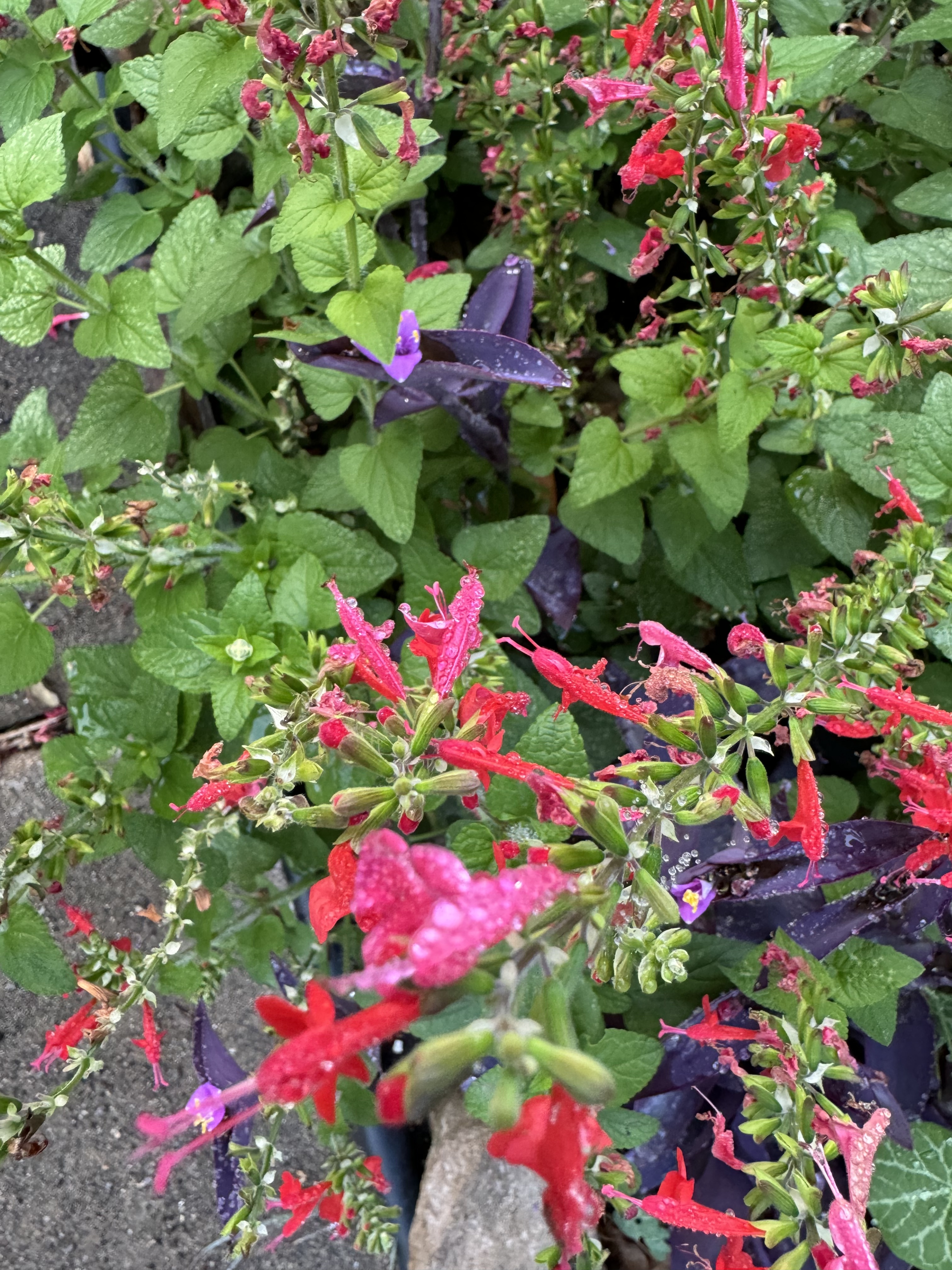
The blooms on Turk’s cap are so unusual.  The vermillion red flowers are twisted into a loose tube of overlapping petals, with a red stamen protruding from the center.  The flowers are said to resemble a Turkish turban, thus the name, Turk’s cap.  Butterflies and hummingbirds are drawn to the blooms.  The marble-sized fruit is edible and is enjoyed by a number of birds and animals.

Red Turk's Cap, Dallas Garden Buzz

At the Demonstration Garden, we have enjoyed a Turk’s cap with pink blooms for many years.  I hope it is the Greg Grant introduction, named after the first woman horticulture student at Texas A&M, Pam Puryear.  Her namesake has been designated a Texas Superstar by the AgriLife Extension Service.

Pink Turk's Cap

Pink Turk’s Cap

The variety name for Turk’s cap, Malvaviscus arboreus var. drummondii,  honors another groundbreaking botanist in Texas.  Thomas Drummond was a Scottish naturalist, born in Scotland about 1790.  In 1830, he came to America to collect plant specimens from the western and southern United States.  He arrived in Velasco, Texas, in March 1833, and collected 750 species of plants and 150 specimens of birds in the almost two years he worked in central Texas.

Although Turk’s cap will adapt to full sun (and I do have several blooming like crazy in west sun), I really think it should be ideally planted in morning sun, afternoon shade.  I have found that if Turk’s cap is in deep shade, the blooms are limited.  Although Turk’s cap is drought tolerant, the plant will wilt noticeably in full sun.  It loves heat, and is a dependable August bloomer.  The bloom season runs from May to November.

For a low maintenance light to medium-shade garden, mix Turk’s cap with southern wood fern and caladiums.

Elizabeth

Pictures by Starla and Ann

For more perennial information see our post on Gardening With Perennials.